Inflation Targeting in Emerging Market Economies Arminio Fraga
- Slides: 23
Inflation Targeting in Emerging Market Economies Arminio Fraga Ilan Goldfajn André Minella Preliminary Version April 2003 Comments are Welcome
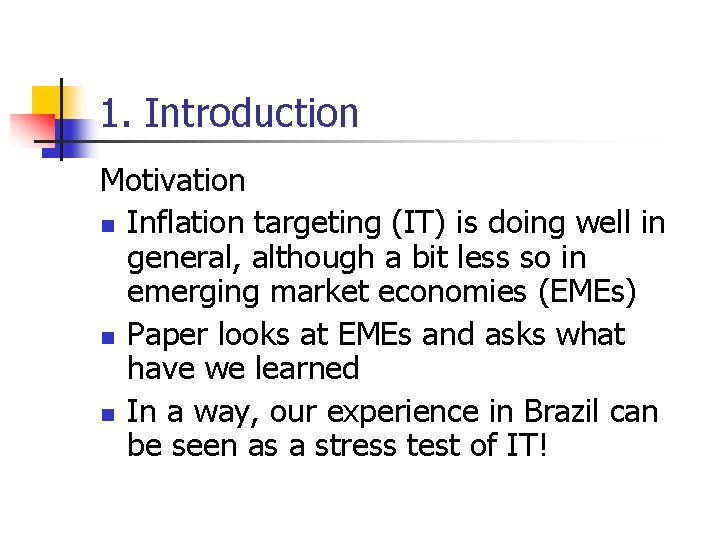
1. Introduction Motivation n Inflation targeting (IT) is doing well in general, although a bit less so in emerging market economies (EMEs) n Paper looks at EMEs and asks what have we learned n In a way, our experience in Brazil can be seen as a stress test of IT!
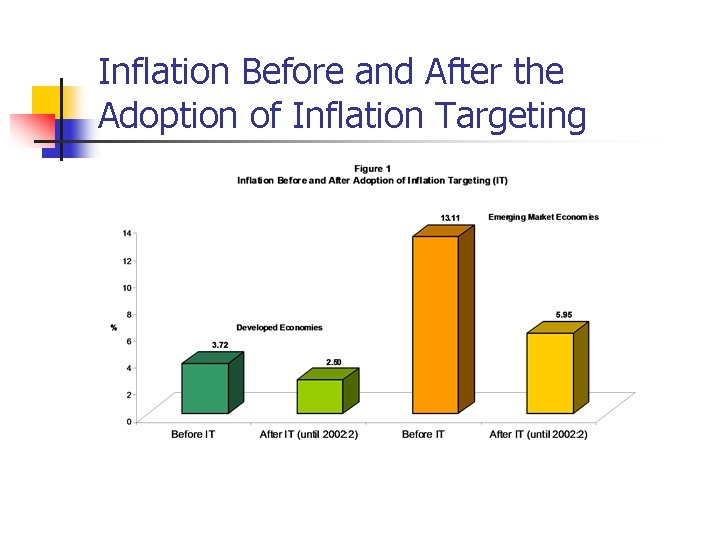
Inflation Before and After the Adoption of Inflation Targeting
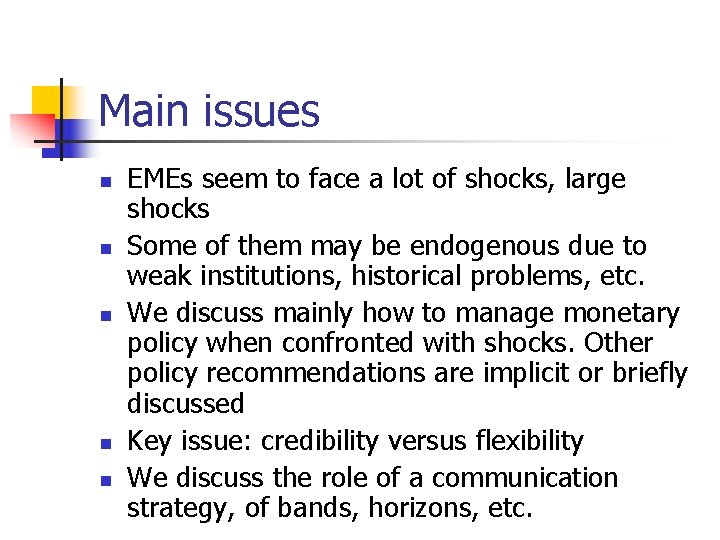
Main issues n n n EMEs seem to face a lot of shocks, large shocks Some of them may be endogenous due to weak institutions, historical problems, etc. We discuss mainly how to manage monetary policy when confronted with shocks. Other policy recommendations are implicit or briefly discussed Key issue: credibility versus flexibility We discuss the role of a communication strategy, of bands, horizons, etc.
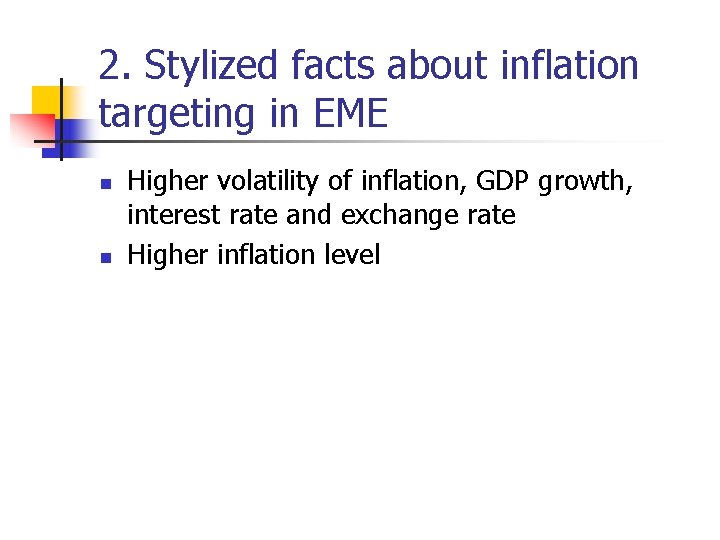
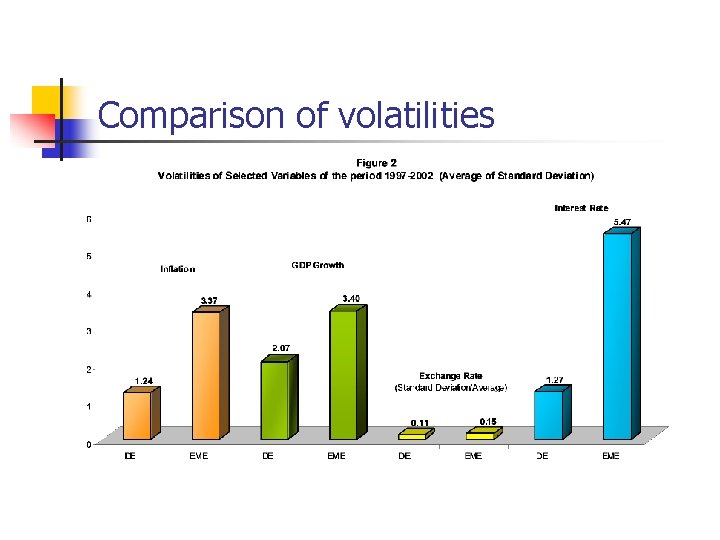
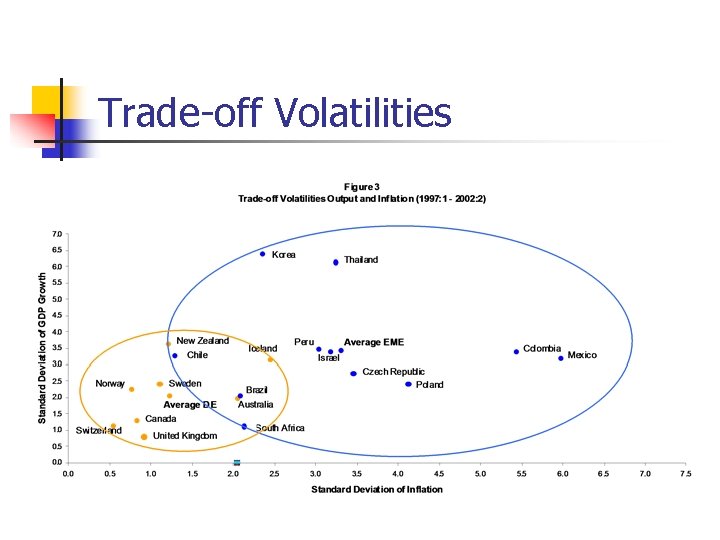
2. Stylized facts about inflation targeting in EME n n Higher volatility of inflation, GDP growth, interest rate and exchange rate Higher inflation level
Comparison of volatilities
Trade-off Volatilities
3. Model n n n Macro model for simulation Small open economy Combines features of Batini, Harrison, and Millard’s (2001), and Mc. Callum and Nelson’s (2001) formulations Derived from the intertemporal optimization of households and firms Price rigidity
4. Why is volatility higher? n Credibility building and disinflationary needs Dominance issues: financial and fiscal n Larger shocks n
4. 1. Credibility building and disinflationary needs n n Both cases appear in the old macro literature: adaptive expectations and inertia (or persistence) IT is an attempt to accelerate the process of building credibility
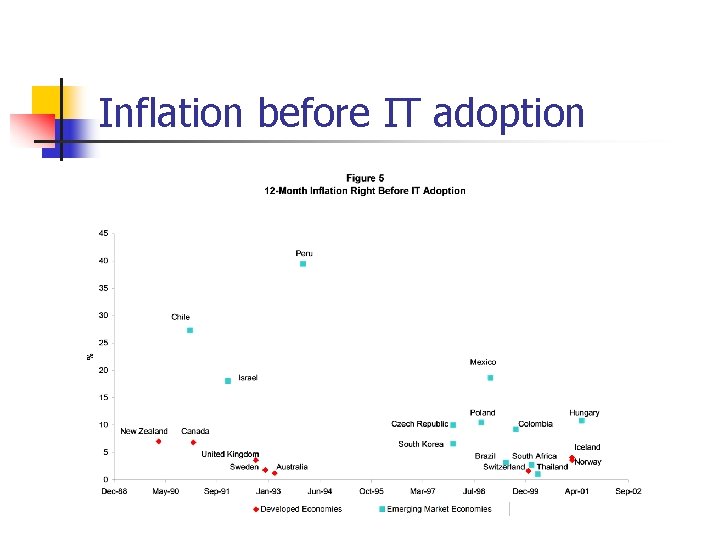
Inflation before IT adoption
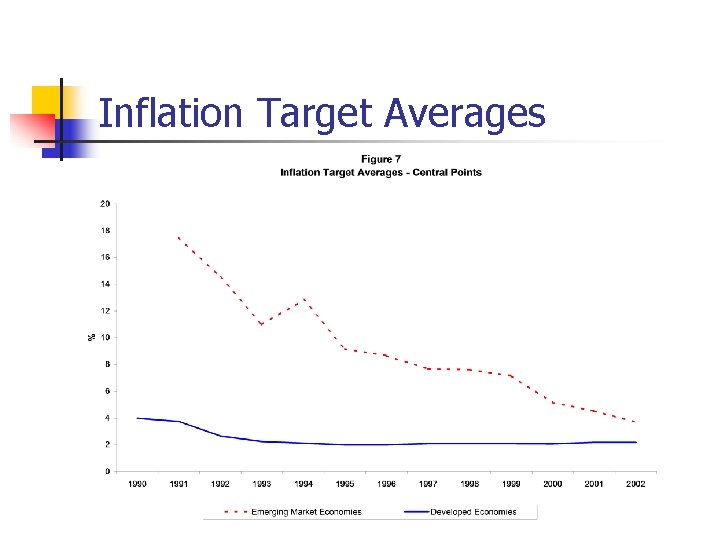
Inflation Target Averages
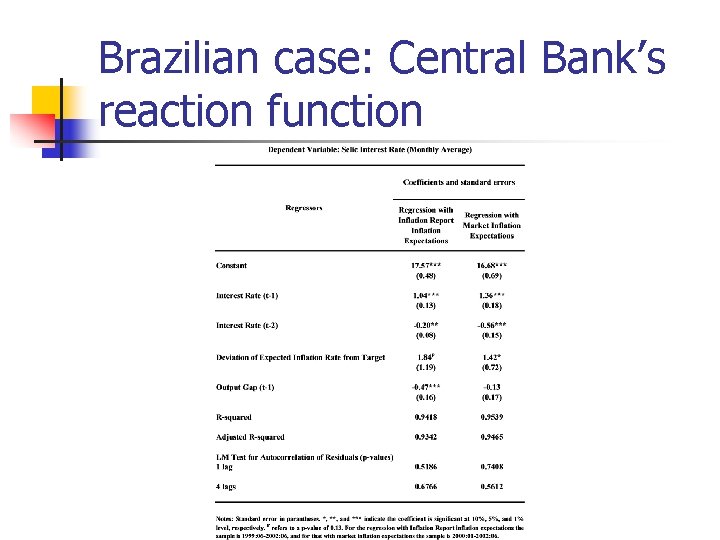
Brazilian case: Central Bank’s reaction function
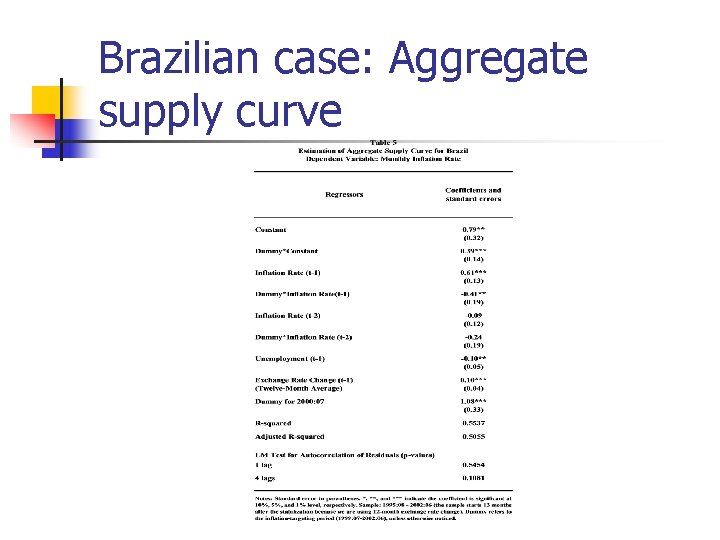
Brazilian case: Aggregate supply curve
4. 2. Dominance issues n n General: central bank will/may inflate Fiscal dominance Financial dominance External dominance (sub-investment grade)
4. 3. Shocks and “sudden stops” n n Exchange rate volatiliy Importance as shock factor
5. How to deal with higher volatility n Answer: good communications and a high degree of transparency
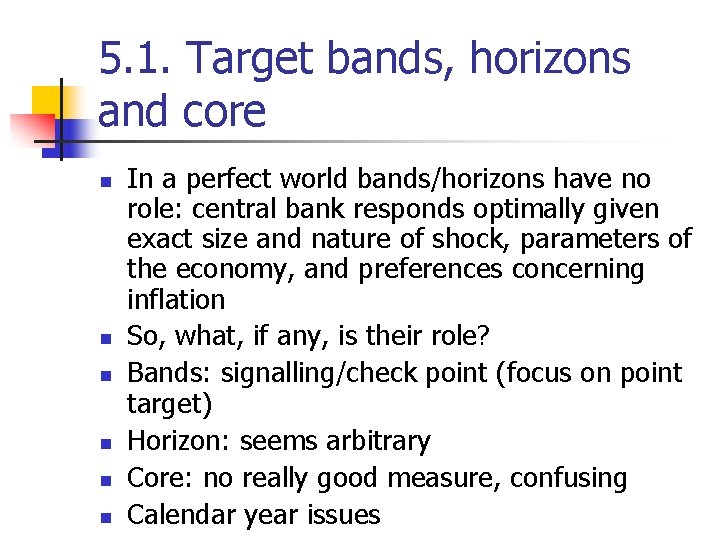
5. 1. Target bands, horizons and core n n n In a perfect world bands/horizons have no role: central bank responds optimally given exact size and nature of shock, parameters of the economy, and preferences concerning inflation So, what, if any, is their role? Bands: signalling/check point (focus on point target) Horizon: seems arbitrary Core: no really good measure, confusing Calendar year issues
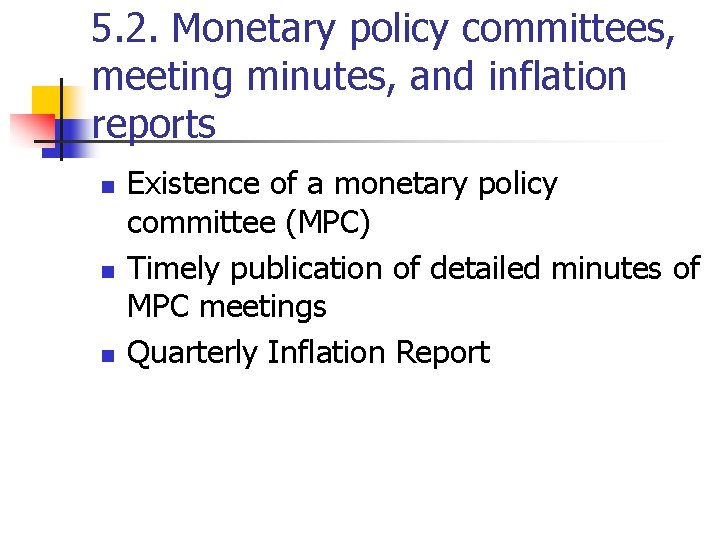
5. 2. Monetary policy committees, meeting minutes, and inflation reports n n n Existence of a monetary policy committee (MPC) Timely publication of detailed minutes of MPC meetings Quarterly Inflation Report
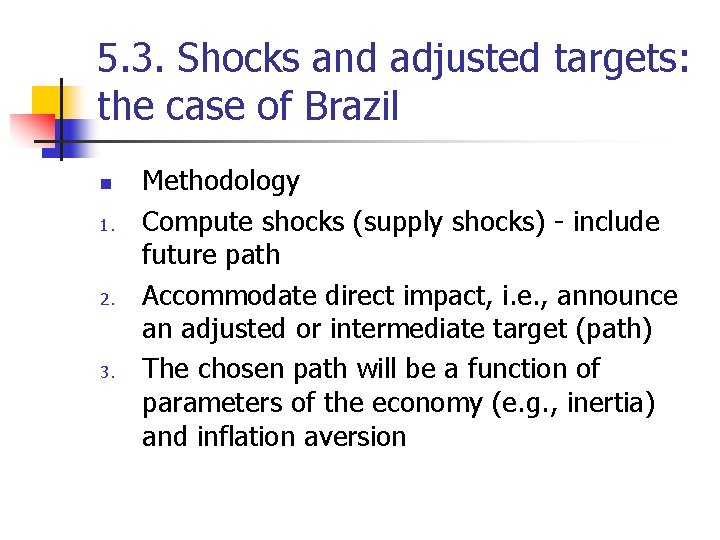
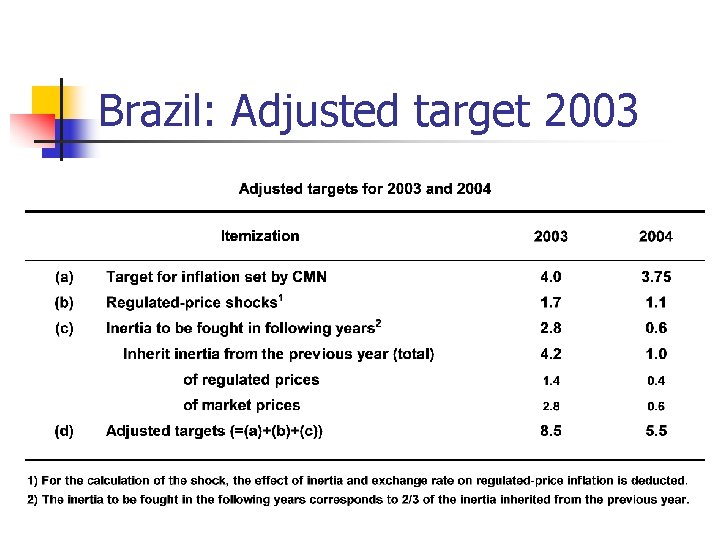
5. 3. Shocks and adjusted targets: the case of Brazil n 1. 2. 3. Methodology Compute shocks (supply shocks) - include future path Accommodate direct impact, i. e. , announce an adjusted or intermediate target (path) The chosen path will be a function of parameters of the economy (e. g. , inertia) and inflation aversion
Brazil: Adjusted target 2003
5. 4. IT and IMF programs n n Net domestic assets (NDA) or monetary aggregates targeting makes little sense Forward-looking quarterly targets with consultation bands was the solution we found
6. Conclusions n n n To deal with this more volatile environment, we recommend: High degree of transparency and a good communications strategy A methodology to calculate the convergence path following a shock (adjusted targets) Better IMF conditionality under inflation targeting