
Indicator Diseases guidedtesting for HIV Antonella dArminio Monforte




- Slides: 36
Indicator Diseases guided-testing for HIV Antonella d´Arminio Monforte Jose M Gatell
Indicator Disease-guided testing for HIV 1. Why more testing ? 2. No rules vs. opt-out policy 3. Indicator disease-guided testing 4. How to identify indicator diseases 5. The HIV in Europe initiative on inidicator disease-guided testing for HIV 6. How to implement the recommendations
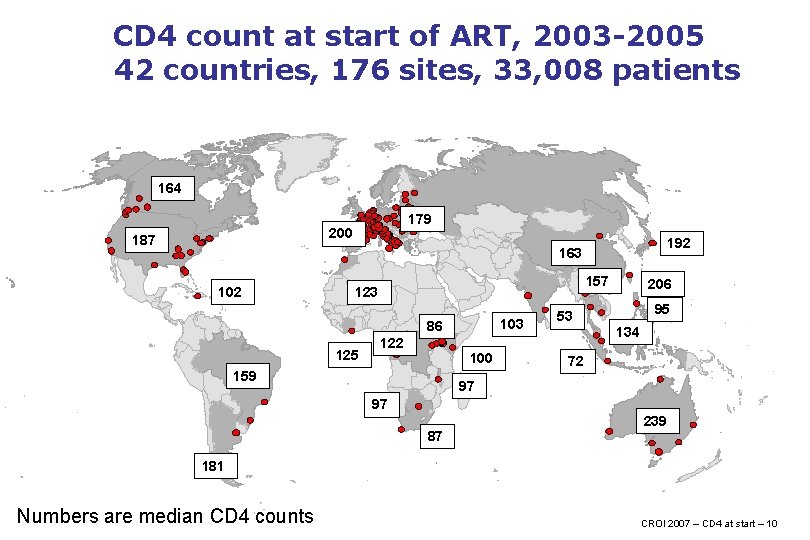
CD 4 count at start of ART, 2003 -2005 42 countries, 176 sites, 33, 008 patients 164 179 200 187 192 163 102 157 123 103 86 125 122 100 159 206 95 53 134 72 97 97 239 87 181 Numbers are median CD 4 counts CROI 2007 – CD 4 at start – 10
Late presenters in Europe Ø Most patients infected with HIV across the Europe remain undiagnosed; this percentage varies markedly from 15 -80% across the continent. Ø Undiagnosed HIV is harmful to the person infected as appropriate health interventions are then delayed until the HIV infection is diagnosed. Ø It is also detrimental to society as persons unaware of their HIV infection may transmit more frequently to others than persons that are aware of their HIV status. Ø Finally, late presentation is associated to increased medical costs
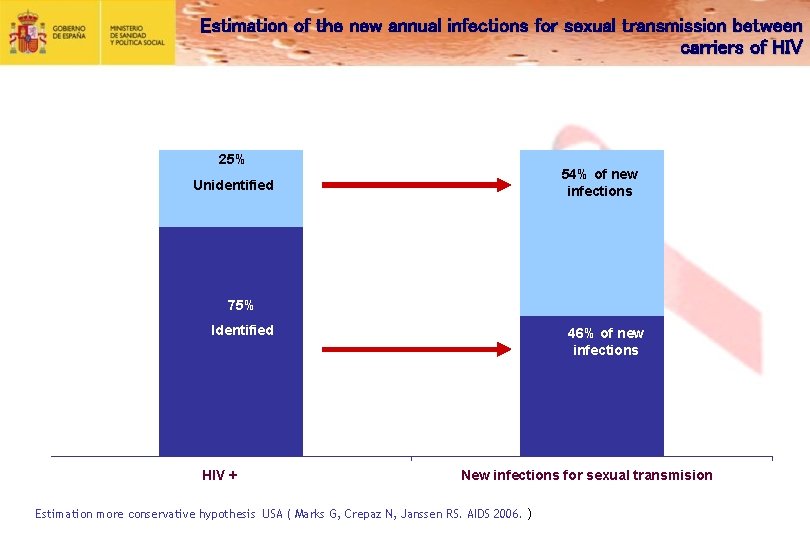
Estimation of the new annual infections for sexual transmission between carriers of HIV 25% 54% of new infections Unidentified 75% Identified HIV + 46% of new infections New infections for sexual transmision Estimation more conservative hypothesis USA ( Marks G, Crepaz N, Janssen RS. AIDS 2006. )
Indicator Disease-guided testing for HIV 1. Why more testing ? 2. No rules vs. opt-out policy 3. Indicator disease-guided testing 4. How to identify indicator diseases 5. The HIV in Europe initiative on inidicator disease-guided testing for HIV 6. How to implement the recommendations
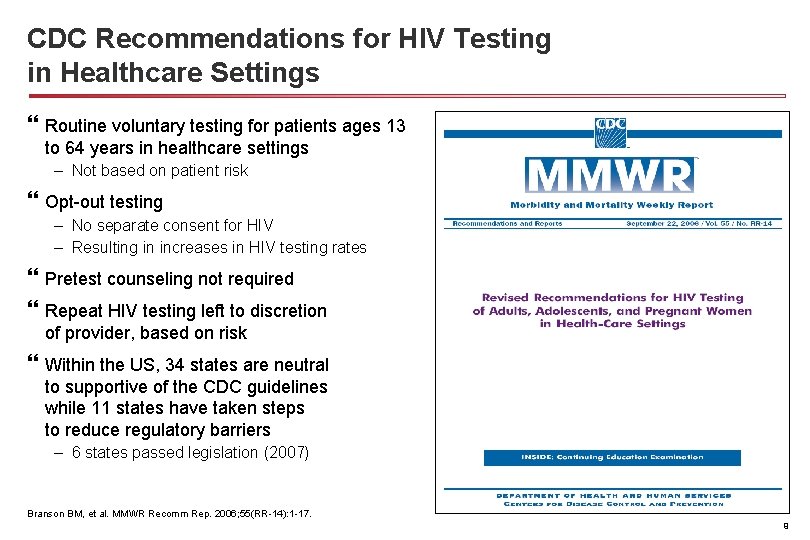
CDC Recommendations for HIV Testing in Healthcare Settings } Routine voluntary testing for patients ages 13 to 64 years in healthcare settings – Not based on patient risk } Opt-out testing – No separate consent for HIV – Resulting in increases in HIV testing rates } Pretest counseling not required } Repeat HIV testing left to discretion of provider, based on risk } Within the US, 34 states are neutral to supportive of the CDC guidelines while 11 states have taken steps to reduce regulatory barriers – 6 states passed legislation (2007) Branson BM, et al. MMWR Recomm Rep. 2006; 55(RR-14): 1 -17. 9
Washington DC HIV Testing Expansion: Earlier Diagnosis Helps Identify HIV+ People at Higher CD 4+ Counts } Expanding HIV testing in jails, Median CD 4 Count at Time of Testing schools, needle exchange, and couples services 350 300 } Through these efforts they were able } In addition, they were able to find patients with higher CD 4 counts at initial testing – 2004 – 198 cells/mm 3 – 2007 – 332 cells/mm 3 262 Median CD 4 Count to increase the number of tests given from 43, 271 tests done in 2007 to 72, 864 tests done in 2008 (68. 4% increase) 332 250 220 215 200 183 187 198 150 100 50 0 2001 2002 2003 2004 2005 2006 2007 Year of HIV Diagnosis Hader, S, 16 th CROI 2009; 57 10
Indicator Disease-guided testing for HIV 1. Why more testing ? 2. No rules vs. opt-out policy 3. Indicator disease-guided testing 4. How to identify indicator diseases 5. The HIV in Europe initiative on inidicator disease-guided testing for HIV 6. How to implement the recommendations
Indicator Disease-guided testing for HIV 2. Indicator disease-guided testing The ‘HIV in Europe’ Conference (2007) recommended further development of focused HIV testing in patients presenting with certain clinical conditions and/or diseases (i. e. the indicator disease testing guidelines). Cost effectiveness analysis suggests cost savings if a population with a HIV prevalence of 1% or more are tested although this rate may be as low as 0. 1%.
Indicator Disease-guided testing for HIV 2. Indicator disease-guided testing AIDS indicator events (former CDC-C category) prevalence of HIV infection is high indication for HIV testing is obvious, but …. .
HIV Screening by Potential AIDS Defining Event in a Privately Insured US Population Review of 8 US Health Plans - 7, 451 patients Potential AIDS Defining Event N Screening Rate Burkitt’s or immunoblastic lymphoma or primary lymphoma of brain 2, 980 3. 0% Encephalopathy 2, 066 5. 0% Invasive cervical cancer 958 4. 4% Candidiasis of bronchi, trachea, lung, or esophagus 542 7. 0% Histoplasmosis, disseminated or extrapulmonary 370 2. 2% Wasting /Cachexia 350 4. 3% Disseminated herpes or herpes meningitis 94 13. 8% M. avium or M. kansasii, disseminated or extrapulmonary 67 13. 4% Pneumocystis carinii pneumonia 48 10. 4% Kaposi's sarcoma 35 8. 6% Progressive multifocal leukoencephalopathy 20 0. 0% CMV pneumonia or retinitis 16 25. 0% Coccidioidomycosis, disseminated or extrapulmonary 13 7. 7% Cryptococcosis, extrapulmonary 11 9. 1% Misc (toxoplasmosis of brain, chronic isosporiasis, salmonella septicemia, chronic cryptosporidosis) 5 20. 0% } 4. 3% Patients Screened for HIV with Any Potential AIDS Defining Event } 12. 5% Patients Screened for HIV with Multiple Potential AIDS Defining Events Chen JY, CROI 2009; 1044 14
Indicator Disease-guided testing for HIV 2. Indicator disease-guided testing Additional potentially indicator diseases prevalence of HIV infection higher than general population but remain largely unknown and substantial variability HIV testing is cost-effective if prevalence of HIV infection above 0. 1 -1%
Indicator Disease-guided testing for HIV 1. Why more testing ? 2. No rules vs. opt-out policy 3. Indicator disease-guided testing 4. How to identify indicator diseases 5. The HIV in Europe initiative on inidicator disease-guided testing for HIV 6. How to implement the recommendations
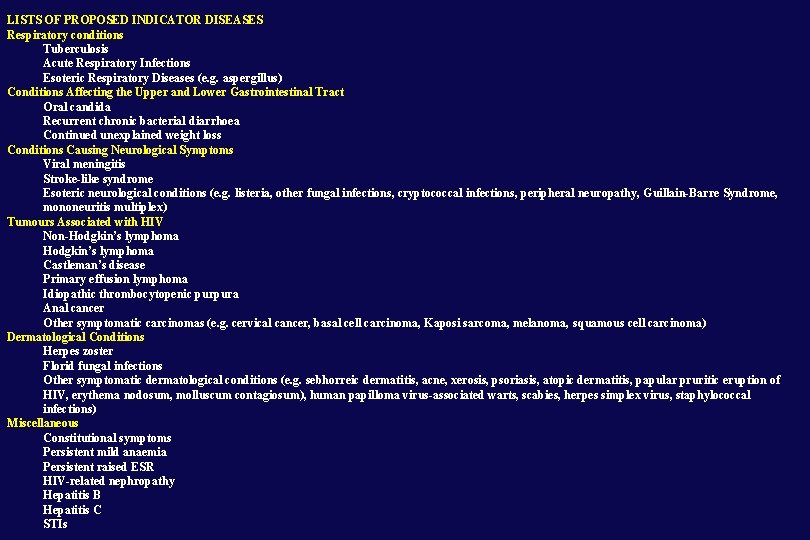
LISTS OF PROPOSED INDICATOR DISEASES Respiratory conditions Tuberculosis Acute Respiratory Infections Esoteric Respiratory Diseases (e. g. aspergillus) Conditions Affecting the Upper and Lower Gastrointestinal Tract Oral candida Recurrent chronic bacterial diarrhoea Continued unexplained weight loss Conditions Causing Neurological Symptoms Viral meningitis Stroke-like syndrome Esoteric neurological conditions (e. g. listeria, other fungal infections, cryptococcal infections, peripheral neuropathy, Guillain-Barre Syndrome, mononeuritis multiplex) Tumours Associated with HIV Non-Hodgkin’s lymphoma Castleman’s disease Primary effusion lymphoma Idiopathic thrombocytopenic purpura Anal cancer Other symptomatic carcinomas (e. g. cervical cancer, basal cell carcinoma, Kaposi sarcoma, melanoma, squamous cell carcinoma) Dermatological Conditions Herpes zoster Florid fungal infections Other symptomatic dermatological conditions (e. g. sebhorreic dermatitis, acne, xerosis, psoriasis, atopic dermatitis, papular pruritic eruption of HIV, erythema nodosum, molluscum contagiosum), human papilloma virus-associated warts, scabies, herpes simplex virus, staphylococcal infections) Miscellaneous Constitutional symptoms Persistent mild anaemia Persistent raised ESR HIV-related nephropathy Hepatitis B Hepatitis C STIs
Indicator Disease-guided testing for HIV 1. Why more testing ? 2. No rules vs. opt-out policy 3. Indicator disease-guided testing 4. How to identify indicator diseases 5. The HIV in Europe initiative on indicator disease-guided testing for HIV 6. How to implement the recommendations
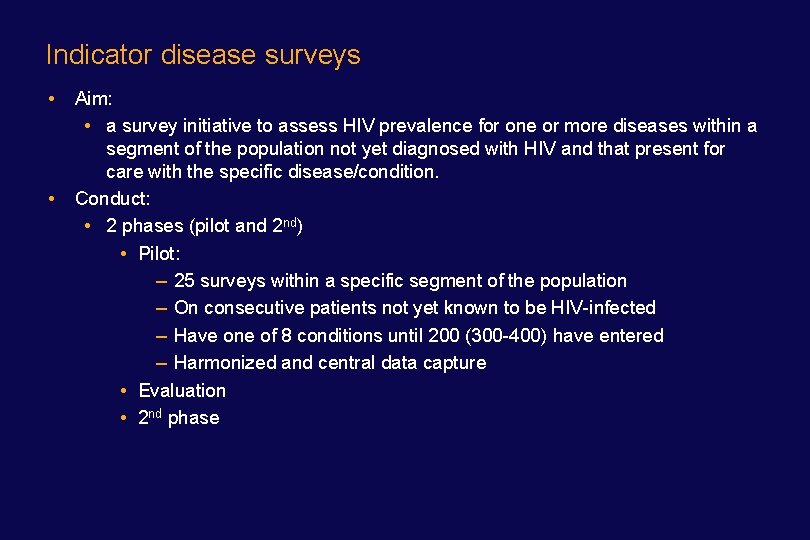
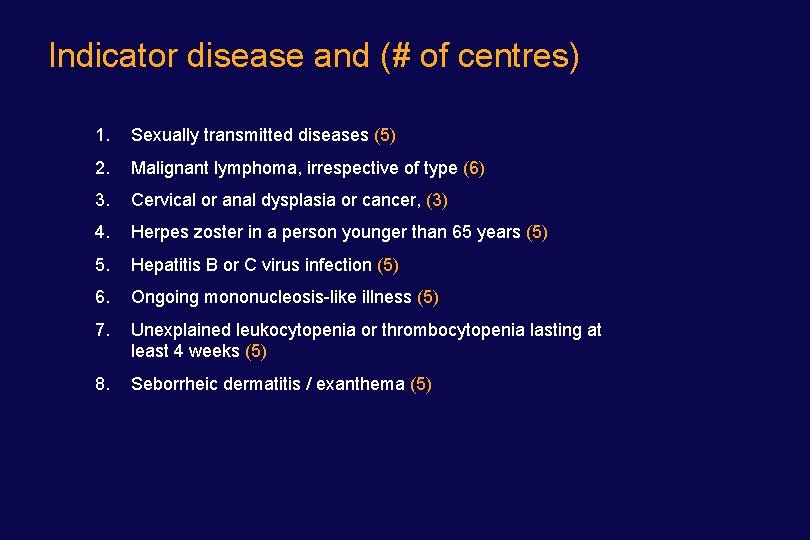
Indicator disease surveys • • Aim: • a survey initiative to assess HIV prevalence for one or more diseases within a segment of the population not yet diagnosed with HIV and that present for care with the specific disease/condition. Conduct: • 2 phases (pilot and 2 nd) • Pilot: – 25 surveys within a specific segment of the population – On consecutive patients not yet known to be HIV-infected – Have one of 8 conditions until 200 (300 -400) have entered – Harmonized and central data capture • Evaluation • 2 nd phase
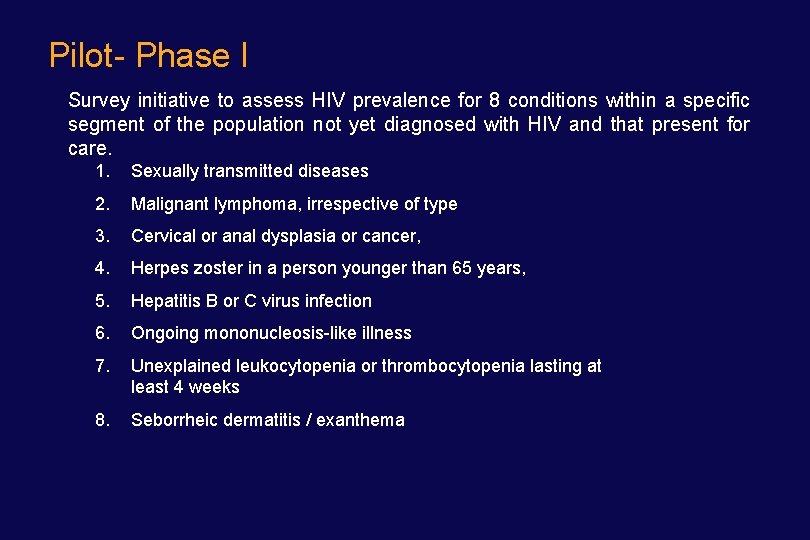
Pilot- Phase I Survey initiative to assess HIV prevalence for 8 conditions within a specific segment of the population not yet diagnosed with HIV and that present for care. 1. Sexually transmitted diseases 2. Malignant lymphoma, irrespective of type 3. Cervical or anal dysplasia or cancer, 4. Herpes zoster in a person younger than 65 years, 5. Hepatitis B or C virus infection 6. Ongoing mononucleosis-like illness 7. Unexplained leukocytopenia or thrombocytopenia lasting at least 4 weeks 8. Seborrheic dermatitis / exanthema
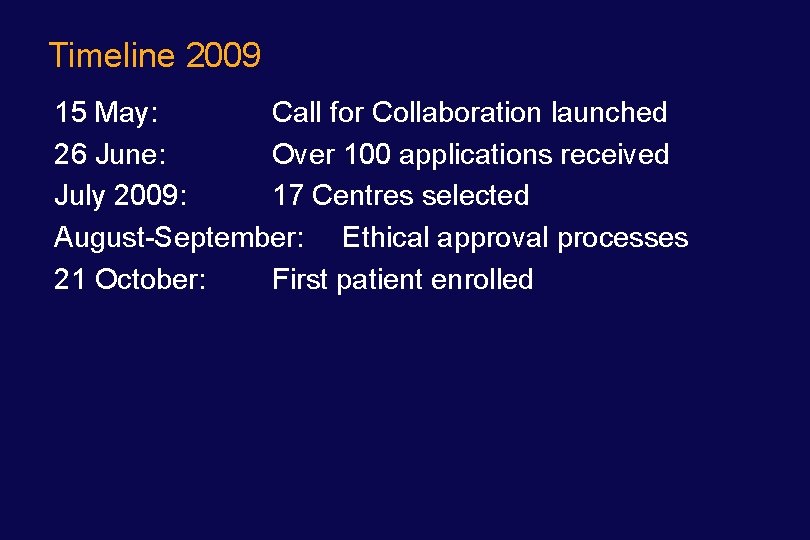
Timeline 2009 15 May: Call for Collaboration launched 26 June: Over 100 applications received July 2009: 17 Centres selected August-September: Ethical approval processes 21 October: First patient enrolled
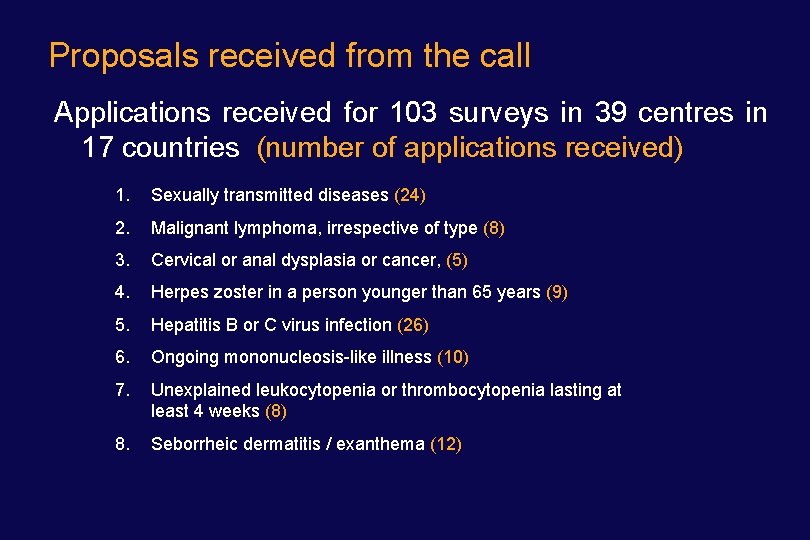
Proposals received from the call Applications received for 103 surveys in 39 centres in 17 countries (number of applications received) 1. Sexually transmitted diseases (24) 2. Malignant lymphoma, irrespective of type (8) 3. Cervical or anal dysplasia or cancer, (5) 4. Herpes zoster in a person younger than 65 years (9) 5. Hepatitis B or C virus infection (26) 6. Ongoing mononucleosis-like illness (10) 7. Unexplained leukocytopenia or thrombocytopenia lasting at least 4 weeks (8) 8. Seborrheic dermatitis / exanthema (12)
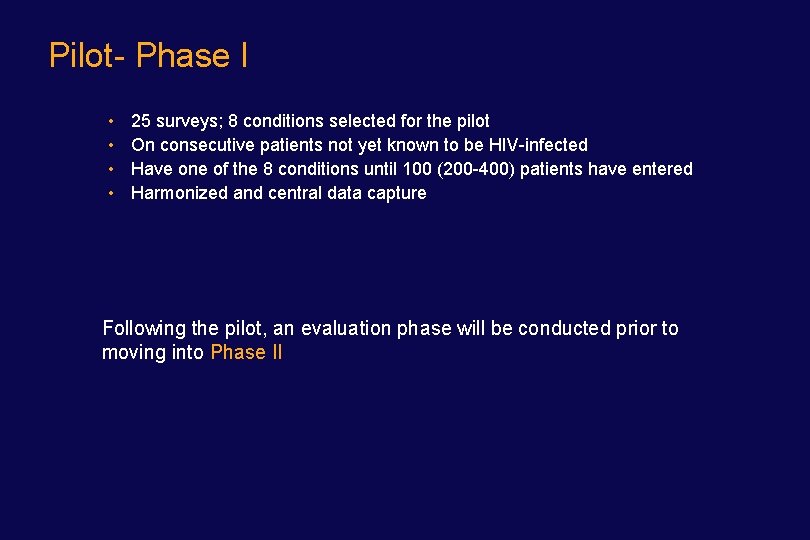
Pilot- Phase I • • 25 surveys; 8 conditions selected for the pilot On consecutive patients not yet known to be HIV-infected Have one of the 8 conditions until 100 (200 -400) patients have entered Harmonized and central data capture Following the pilot, an evaluation phase will be conducted prior to moving into Phase II
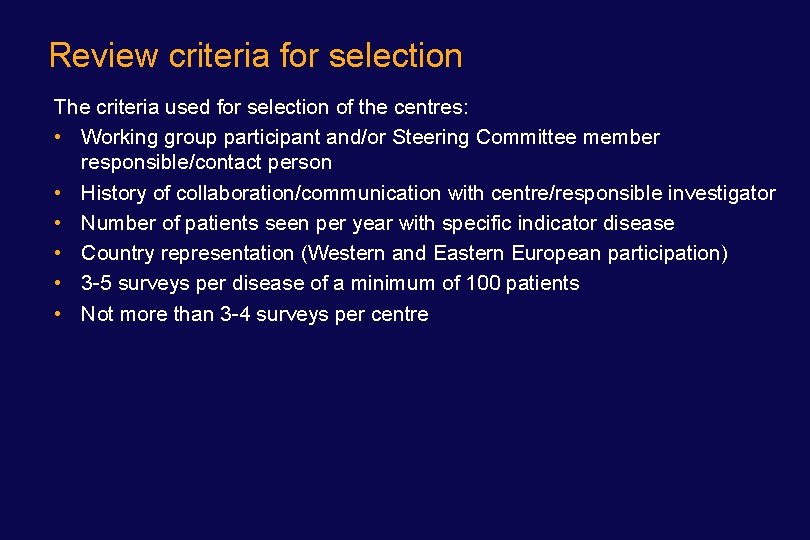
Review criteria for selection The criteria used for selection of the centres: • Working group participant and/or Steering Committee member responsible/contact person • History of collaboration/communication with centre/responsible investigator • Number of patients seen per year with specific indicator disease • Country representation (Western and Eastern European participation) • 3 -5 surveys per disease of a minimum of 100 patients • Not more than 3 -4 surveys per centre
Participating Centres by country
Indicator disease and (# of centres) 1. Sexually transmitted diseases (5) 2. Malignant lymphoma, irrespective of type (6) 3. Cervical or anal dysplasia or cancer, (3) 4. Herpes zoster in a person younger than 65 years (5) 5. Hepatitis B or C virus infection (5) 6. Ongoing mononucleosis-like illness (5) 7. Unexplained leukocytopenia or thrombocytopenia lasting at least 4 weeks (5) 8. Seborrheic dermatitis / exanthema (5)
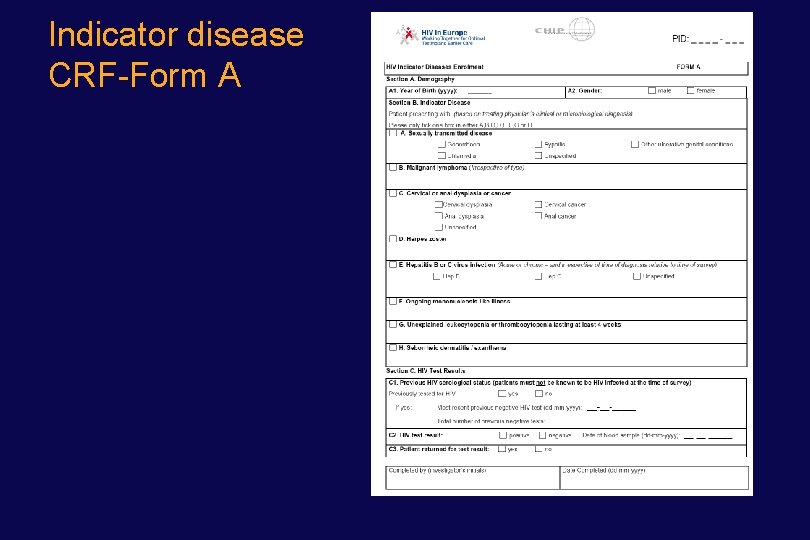
Indicator disease CRF-Form A
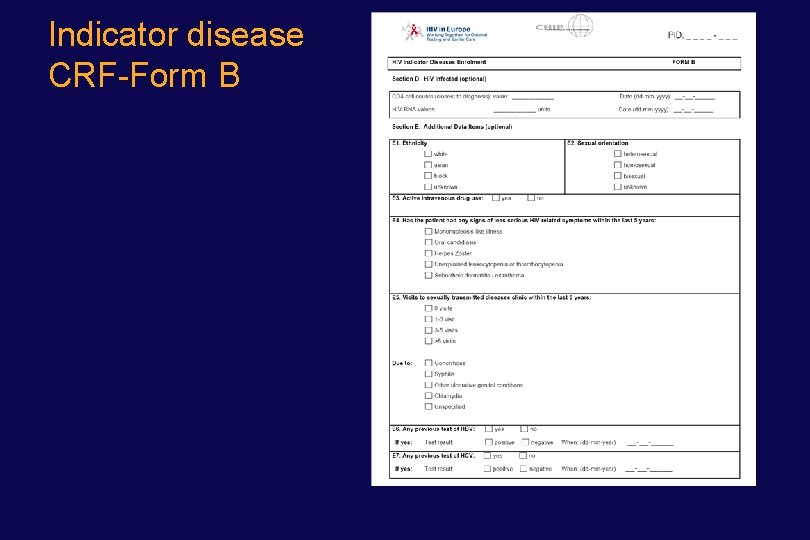
Indicator disease CRF-Form B
Centre decodification list
Indicator Disease-guided testing for HIV 1. Why more testing ? 2. No rules vs. opt-out policy 3. Indicator disease-guided testing 4. How to identify indicator diseases 5. The HIV in Europe initiative on inidicator disease-guided testing for HIV 6. How to implement the recommendations
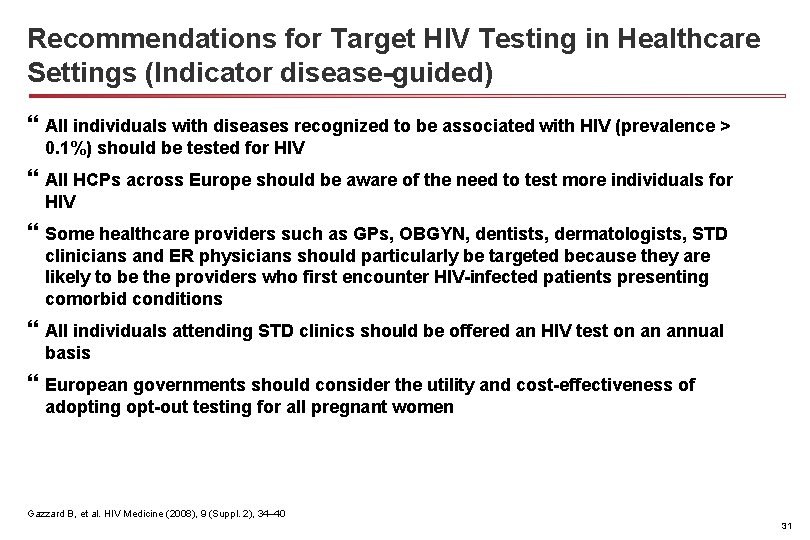
Recommendations for Target HIV Testing in Healthcare Settings (Indicator disease-guided) } All individuals with diseases recognized to be associated with HIV (prevalence > 0. 1%) should be tested for HIV } All HCPs across Europe should be aware of the need to test more individuals for HIV } Some healthcare providers such as GPs, OBGYN, dentists, dermatologists, STD clinicians and ER physicians should particularly be targeted because they are likely to be the providers who first encounter HIV-infected patients presenting comorbid conditions } All individuals attending STD clinics should be offered an HIV test on an annual basis } European governments should consider the utility and cost-effectiveness of adopting opt-out testing for all pregnant women Gazzard B, et al. HIV Medicine (2008), 9 (Suppl. 2), 34– 40 31
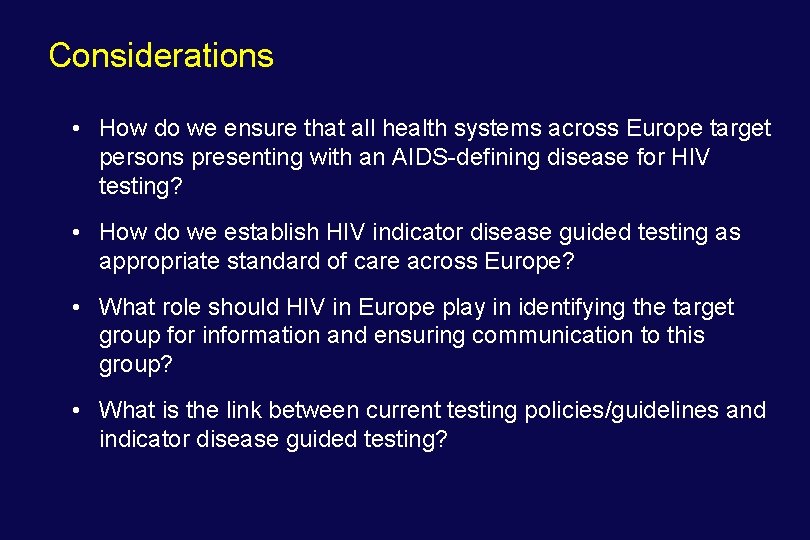
Considerations • How do we ensure that all health systems across Europe target persons presenting with an AIDS-defining disease for HIV testing? • How do we establish HIV indicator disease guided testing as appropriate standard of care across Europe? • What role should HIV in Europe play in identifying the target group for information and ensuring communication to this group? • What is the link between current testing policies/guidelines and indicator disease guided testing?
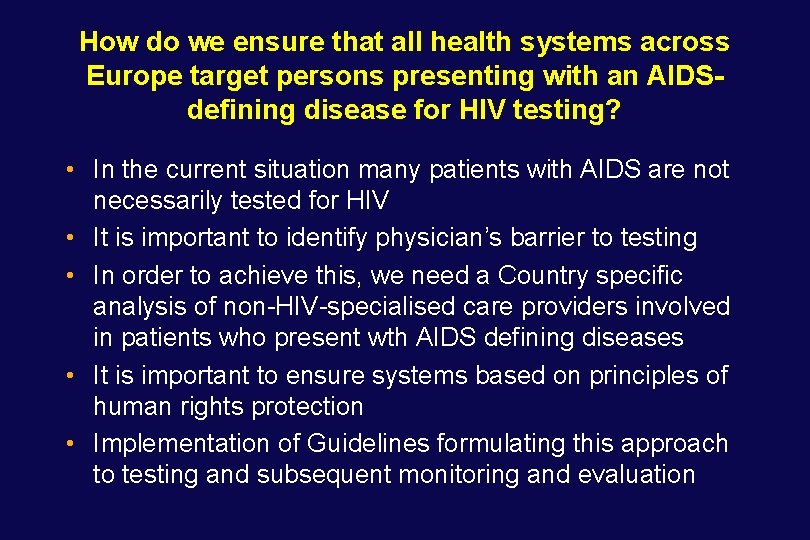
How do we ensure that all health systems across Europe target persons presenting with an AIDSdefining disease for HIV testing? • In the current situation many patients with AIDS are not necessarily tested for HIV • It is important to identify physician’s barrier to testing • In order to achieve this, we need a Country specific analysis of non-HIV-specialised care providers involved in patients who present wth AIDS defining diseases • It is important to ensure systems based on principles of human rights protection • Implementation of Guidelines formulating this approach to testing and subsequent monitoring and evaluation
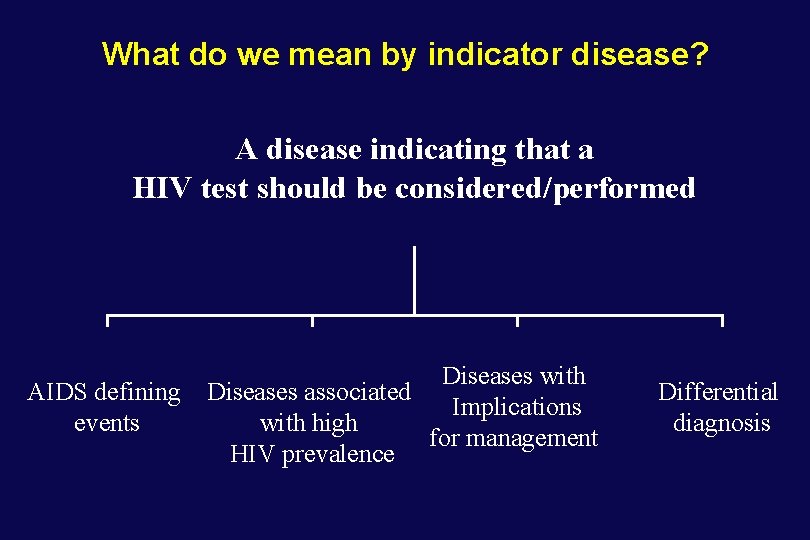
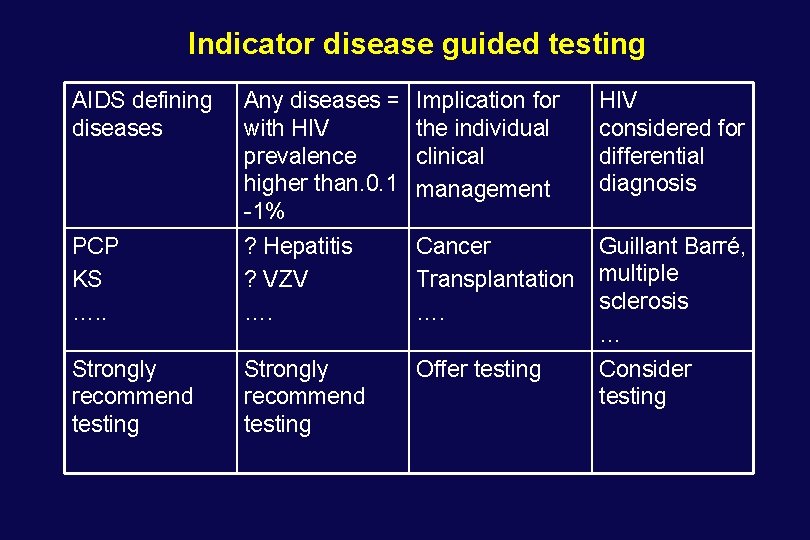
What do we mean by indicator disease? A disease indicating that a HIV test should be considered/performed Diseases with AIDS defining Diseases associated Implications events with high for management HIV prevalence Differential diagnosis
Indicator disease guided testing AIDS defining diseases Any diseases = with HIV prevalence higher than. 0. 1 -1% Implication for the individual clinical management HIV considered for differential diagnosis PCP KS …. . ? Hepatitis ? VZV …. Cancer Transplantation …. Guillant Barré, multiple sclerosis … Strongly recommend testing Offer testing Consider testing
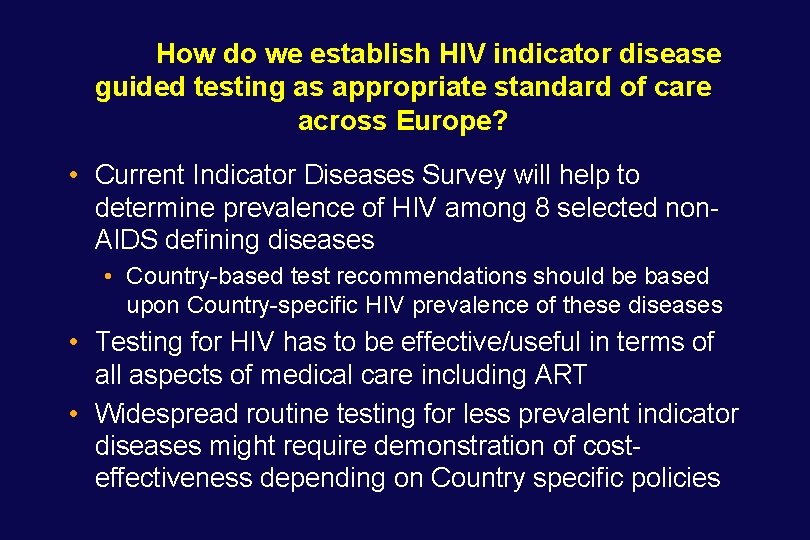
How do we establish HIV indicator disease guided testing as appropriate standard of care across Europe? • Current Indicator Diseases Survey will help to determine prevalence of HIV among 8 selected non. AIDS defining diseases • Country-based test recommendations should be based upon Country-specific HIV prevalence of these diseases • Testing for HIV has to be effective/useful in terms of all aspects of medical care including ART • Widespread routine testing for less prevalent indicator diseases might require demonstration of costeffectiveness depending on Country specific policies
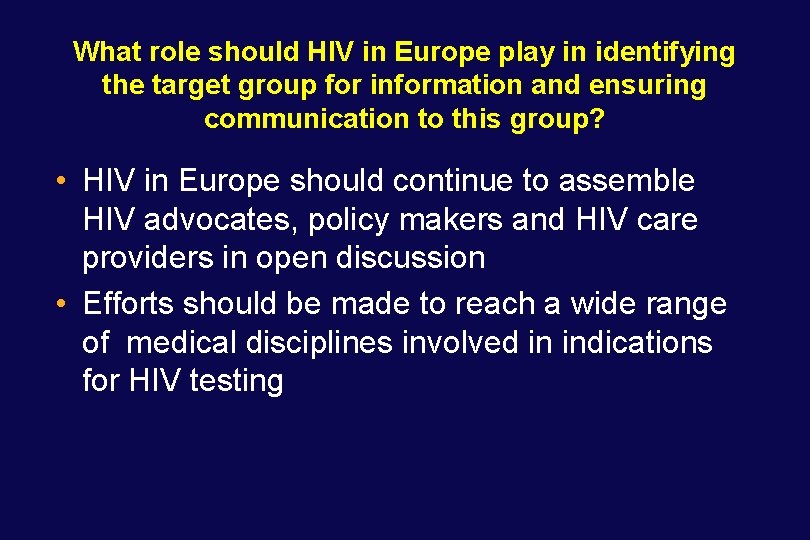
What role should HIV in Europe play in identifying the target group for information and ensuring communication to this group? • HIV in Europe should continue to assemble HIV advocates, policy makers and HIV care providers in open discussion • Efforts should be made to reach a wide range of medical disciplines involved in indications for HIV testing
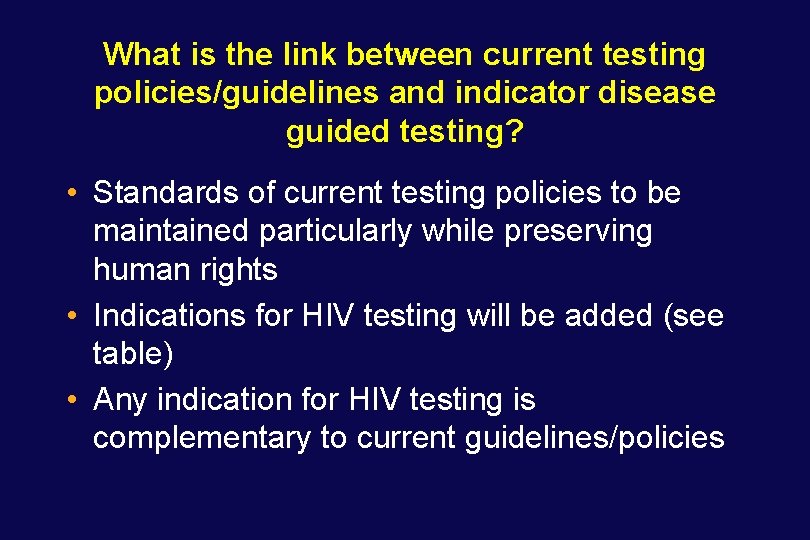
What is the link between current testing policies/guidelines and indicator disease guided testing? • Standards of current testing policies to be maintained particularly while preserving human rights • Indications for HIV testing will be added (see table) • Any indication for HIV testing is complementary to current guidelines/policies