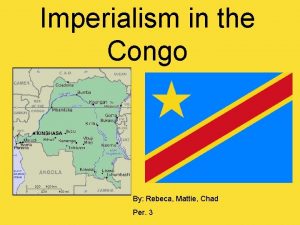
Imperialism in the Congo The Dark Side of
- Slides: 32
Imperialism in the Congo The Dark Side of Empire
In theory, Imperialism, the principle, spirit, or system of empire, is driven by ideology, whereas Colonialism, the principle, spirit, or system of establishing colonies, is driven by commerce. In practice, it is often difficult to distinguish where one ends and the other begins.
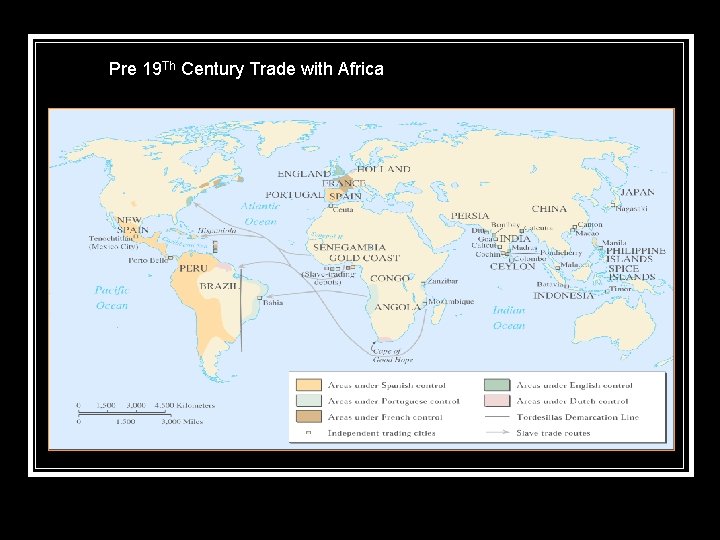
Pre 19 Th Century Trade with Africa
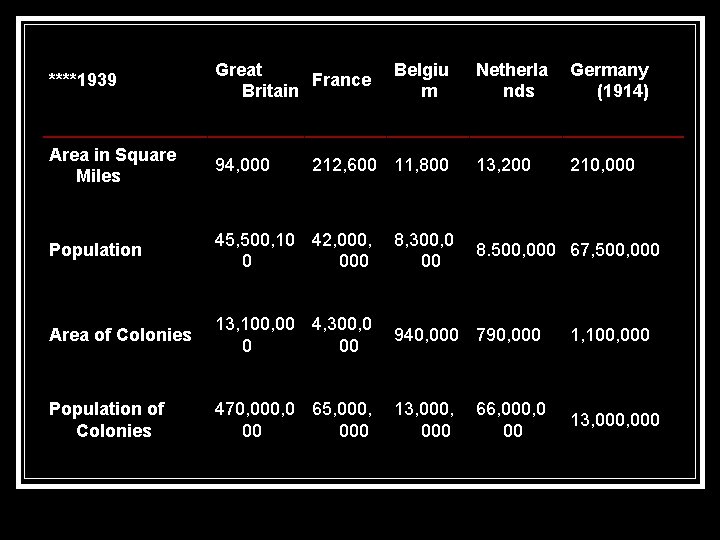
****1939 Great France Britain Belgiu m Area in Square Miles 94, 000 Population 45, 500, 10 42, 000, 0 000 8, 300, 0 00 Area of Colonies 13, 100, 00 4, 300, 0 0 00 940, 000 790, 000 1, 100, 000 Population of Colonies 470, 000, 0 65, 000, 00 000 13, 000, 000 212, 600 11, 800 Netherla nds Germany (1914) 13, 200 210, 000 8. 500, 000 67, 500, 000 66, 000, 0 00
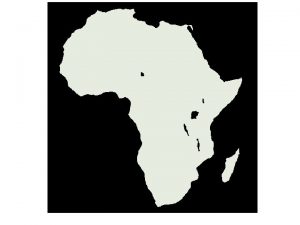
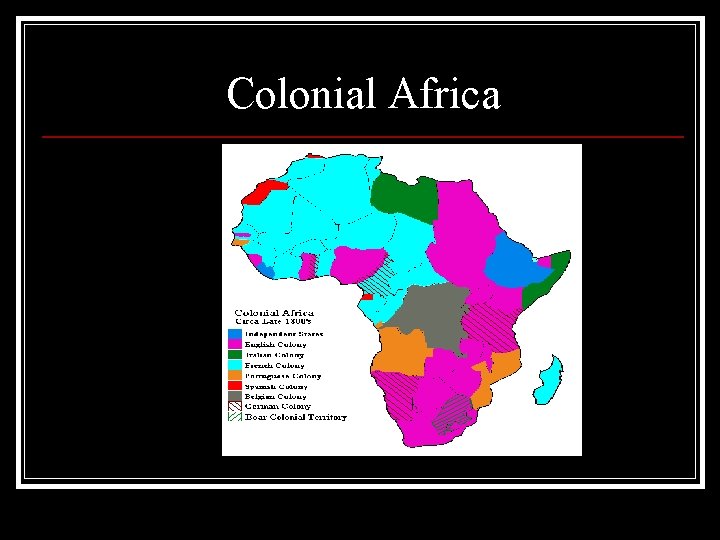
Colonial Africa
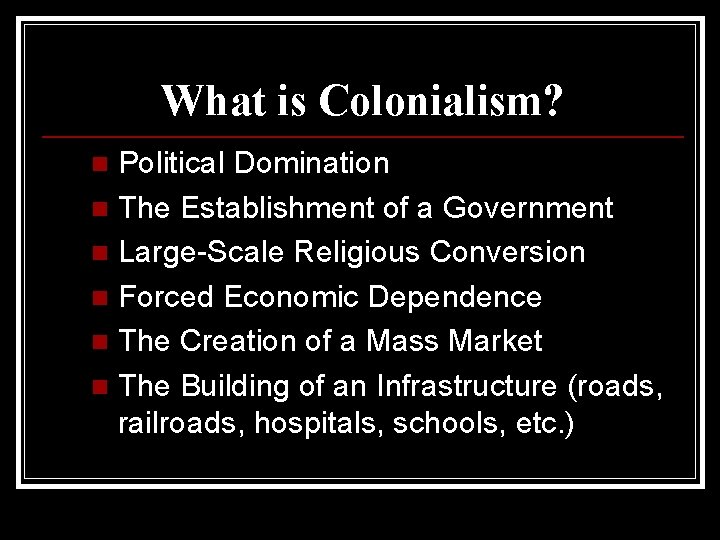
What is Colonialism? Political Domination n The Establishment of a Government n Large-Scale Religious Conversion n Forced Economic Dependence n The Creation of a Mass Market n The Building of an Infrastructure (roads, railroads, hospitals, schools, etc. ) n
Exploration, Imperialism & Racism n n 1863: British explorers Speke & James Augustus Grant, traveling downstream, & Sir Samuel White Baker, working upstream, locate sources of Nile Christian missionaries & European merchants come with European explorers n View of Africans: "primitive, pre-literate, undeveloped” a/c Eurocentric theories of evolution of civilized culture.
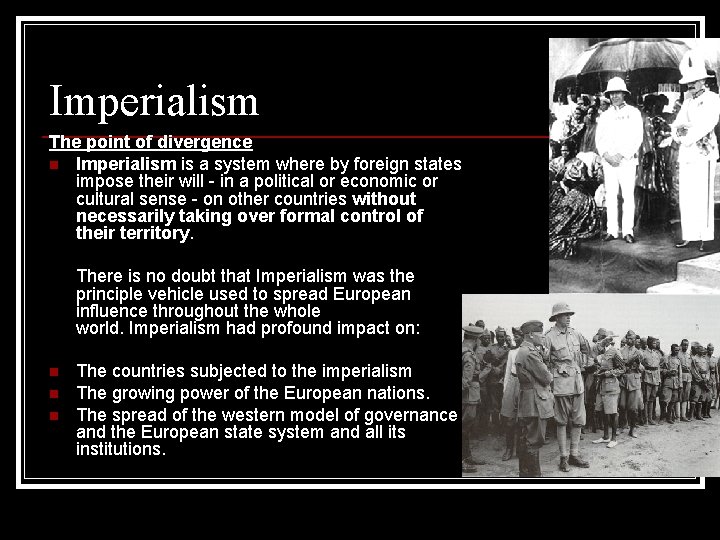
Imperialism The point of divergence n Imperialism is a system where by foreign states impose their will - in a political or economic or cultural sense - on other countries without necessarily taking over formal control of their territory. There is no doubt that Imperialism was the principle vehicle used to spread European influence throughout the whole world. Imperialism had profound impact on: n n n The countries subjected to the imperialism The growing power of the European nations. The spread of the western model of governance and the European state system and all its institutions.
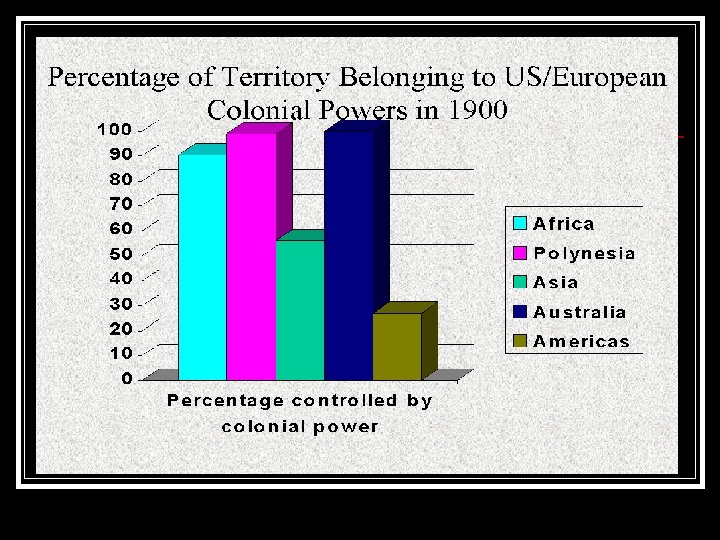
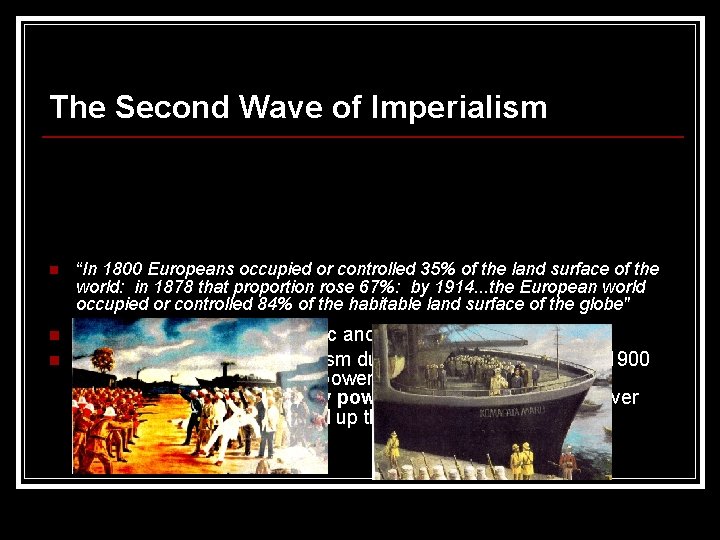
The Second Wave of Imperialism n n n “In 1800 Europeans occupied or controlled 35% of the land surface of the world: in 1878 that proportion rose 67%: by 1914. . . the European world occupied or controlled 84% of the habitable land surface of the globe" Again motivated by economic and political factors Major expansion of imperialism during the thirty years 1870 -1900 during which the European powers, without the need for a display of superior military power extended their control over existing colonies and divided up the rest of the world among themselves
3 types of socio-economic system develop under colonial rule: 1. settler economy 2. Plantations and mines 3. coastal trade based economy
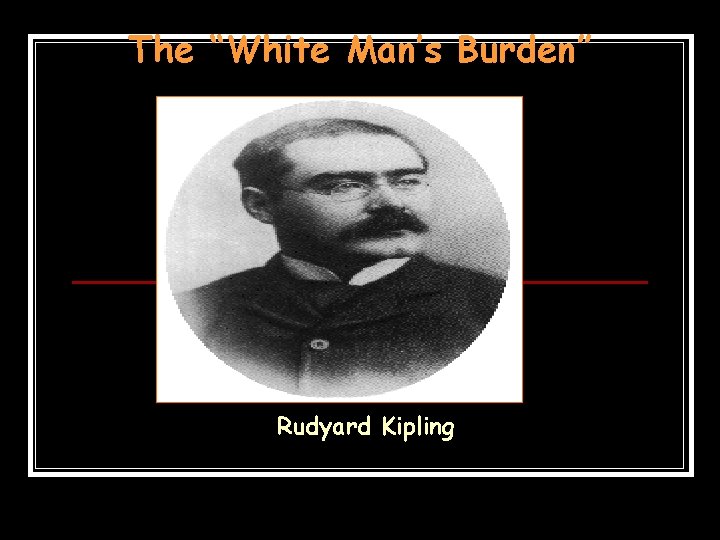
The “White Man’s Burden” Rudyard Kipling
The White Man's Burden Rudyard Kipling Take up the White Man's burden-Send forth the best ye breed-Go, bind your sons to exile To serve your captives' need; To wait, in heavy harness, On fluttered folk and wild-Your new-caught sullen peoples, Half devil and half child. Take up the White Man's burden-In patience to abide, To veil the threat of terror And check the show of pride; By open speech and simple, An hundred times made plain, To seek another's profit And work another's gain. Take up the White Man's burden-The savage wars of peace-Fill full the mouth of Famine, And bid the sickness cease; And when your goal is nearest (The end for others sought) Watch sloth and heathen folly Bring all your hope to nought. Take up the White Man's burden-No iron rule of kings, But toil of serf and sweeper-The tale of common things. The ports ye shall not enter, The roads ye shall not tread, Go, make them with your living And mark them with your dead.
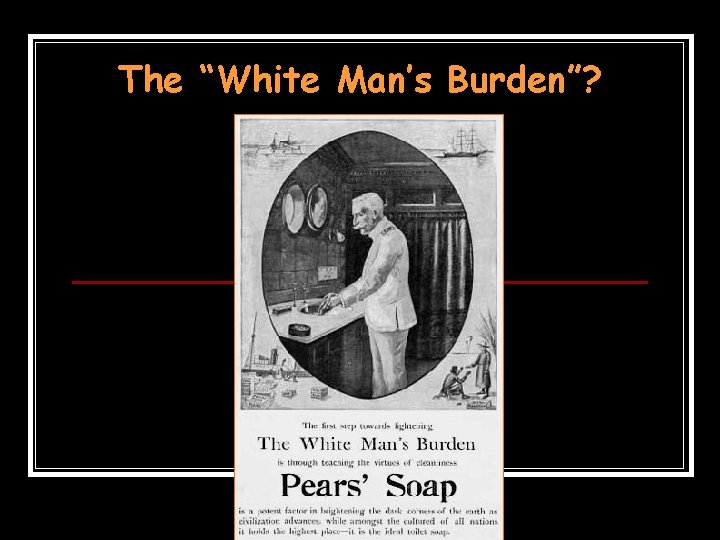
The “White Man’s Burden”?
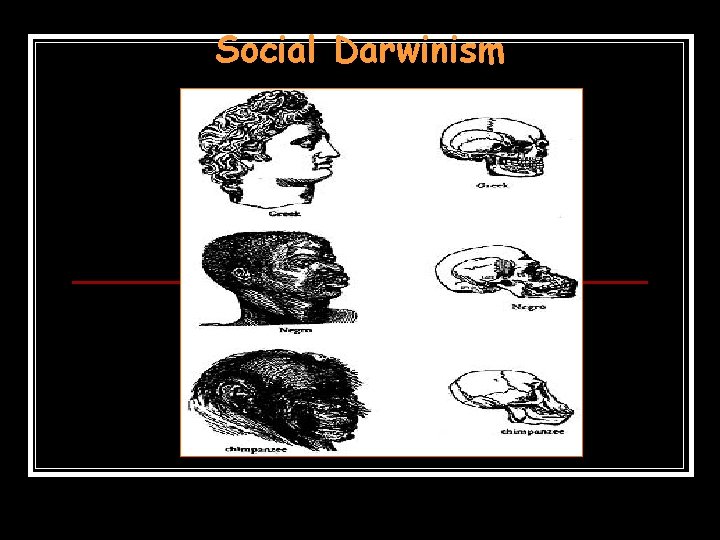
Social Darwinism
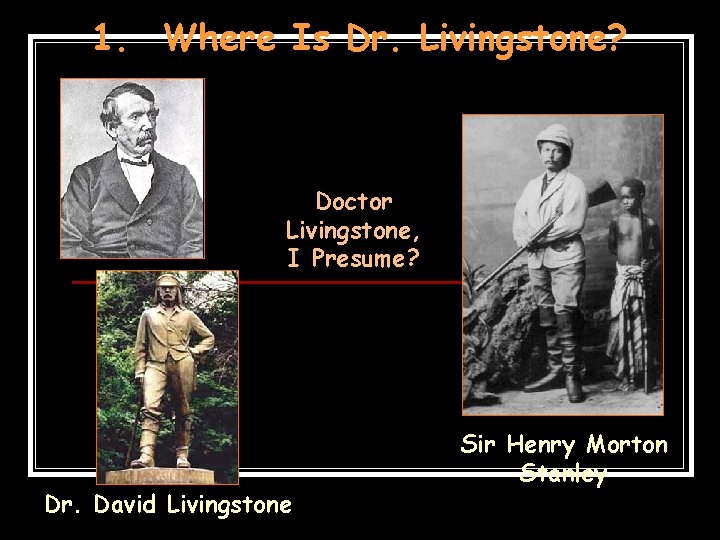
1. Where Is Dr. Livingstone? Doctor Livingstone, I Presume? Dr. David Livingstone Sir Henry Morton Stanley
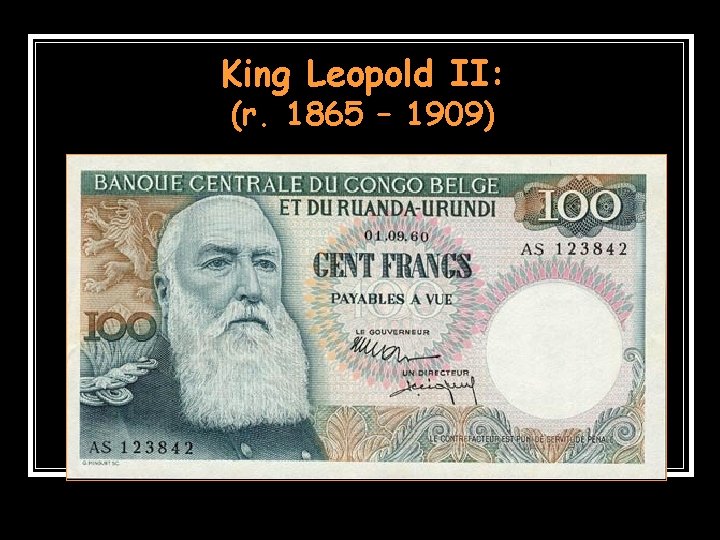
King Leopold II: (r. 1865 – 1909)
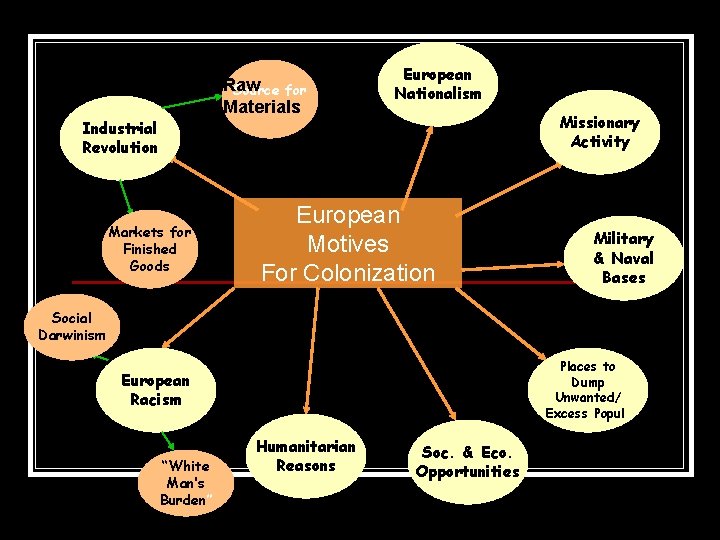
Raw Source for Materials Industrial Revolution Markets for Finished Goods European Nationalism Missionary Activity European Motives For Colonization Military & Naval Bases Social Darwinism Places to Dump Unwanted/ Excess Popul. European Racism “White Man’s Burden” Humanitarian Reasons Soc. & Eco. Opportunities
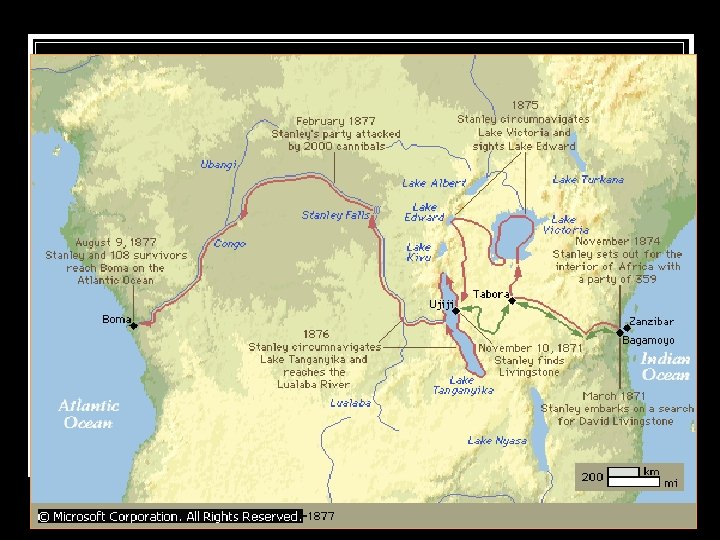
Timeline of Colonisation n n n n Belgian colonisation 1879 -87 - Leopold commissions Stanley to establish the king's authority in the Congo basin. 1884 -85 - European powers at the Conference of Berlin recognise Leopold's claim to the Congo basin. 1885 - Leopold announces the establishment of the Congo Free State, headed by himself. 1891 -92 - Belgians conquer Katanga. 1892 -94 - Eastern Congo wrested from the control of East African Arab and Swahilispeaking traders. 1908 - Belgian state annexes Congo amid protests over killings and atrocities carried out on a mass scale by Leopold's agents. Millions of Congolese are said to have been killed or worked to death during Leopold's control of the territory. 1955 - Belgian Professor Antoin van Bilsen publishes a "30 -Year Plan" for granting the Congo increased self-government. 1959 - Belgium begins to lose control over events in the Congo following serious nationalist riots in Leopoldville (now Kinshasa).
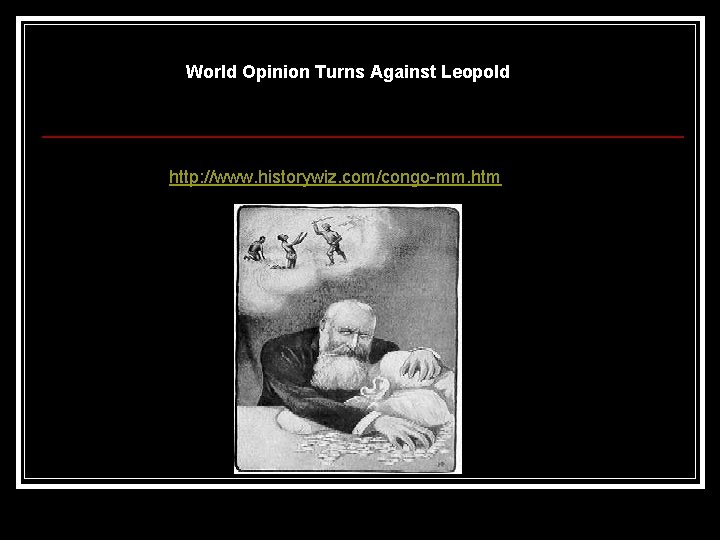
World Opinion Turns Against Leopold http: //www. historywiz. com/congo-mm. htm
Pattern of Takeover In many cases Europeans managed to secure colonial acquisitions by making alliances with local rulers. n Europeans would promise to sustain the local ruler against his enemies in exchange for a degree of control and supply of labour n
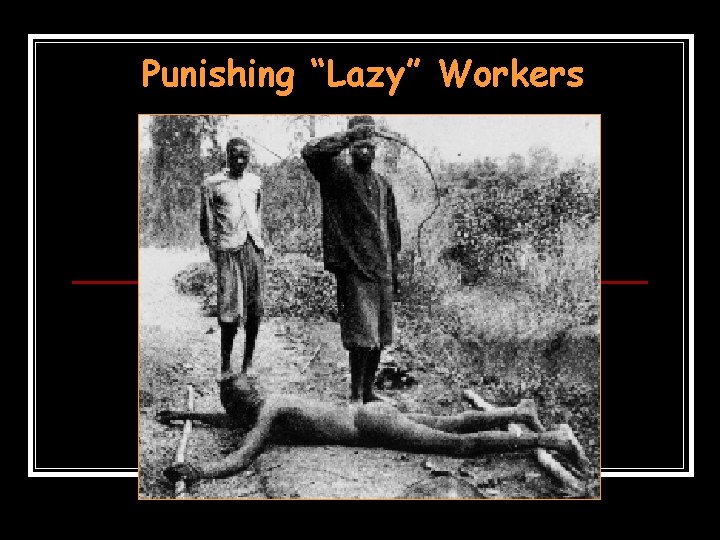
Force Publique n Serving under European officers was an ethnically-mixed African soldiery. Many were recruited from warrior tribes in the Upper Congo. The role required of the Force Publique was to defend Free State territory and combat Arab slavers. Under Leopold however a major purpose of the force was to enforce the rubber quotas, and other forms of forced labor. Armed with modern weapons and the chicotte — a bull whip made of hippopotamus hide — soldiers of the FP often took and mistreated hostages (sometimes women, who were held captive in order to force their husbands to meet rubber quotas).
Impact of colonialism on population: forms of labour forced labour indentured labour waged labour petty commodity production
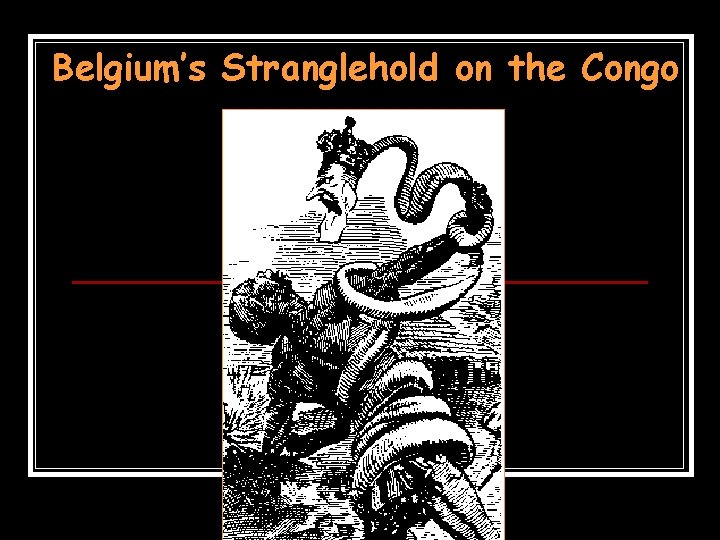
Belgium’s Stranglehold on the Congo
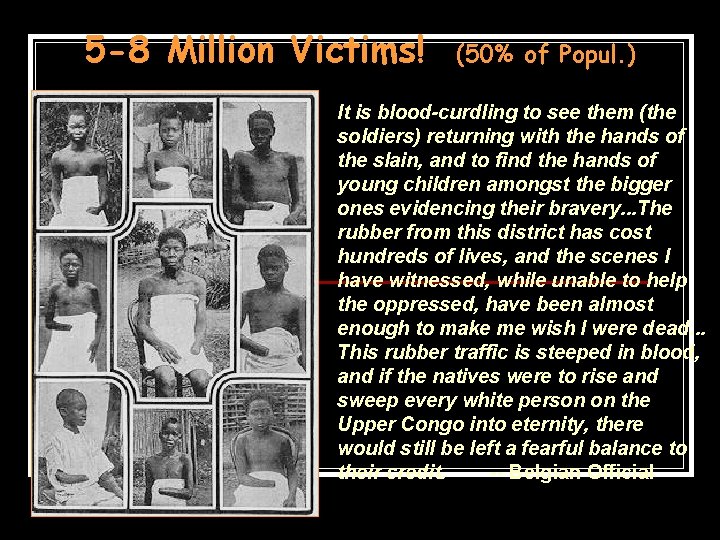
5 -8 Million Victims! (50% of Popul. ) It is blood-curdling to see them (the soldiers) returning with the hands of the slain, and to find the hands of young children amongst the bigger ones evidencing their bravery. . . The rubber from this district has cost hundreds of lives, and the scenes I have witnessed, while unable to help the oppressed, have been almost enough to make me wish I were dead. . . This rubber traffic is steeped in blood, and if the natives were to rise and sweep every white person on the Upper Congo into eternity, there would still be left a fearful balance to their credit. -- Belgian Official
Punishing “Lazy” Workers
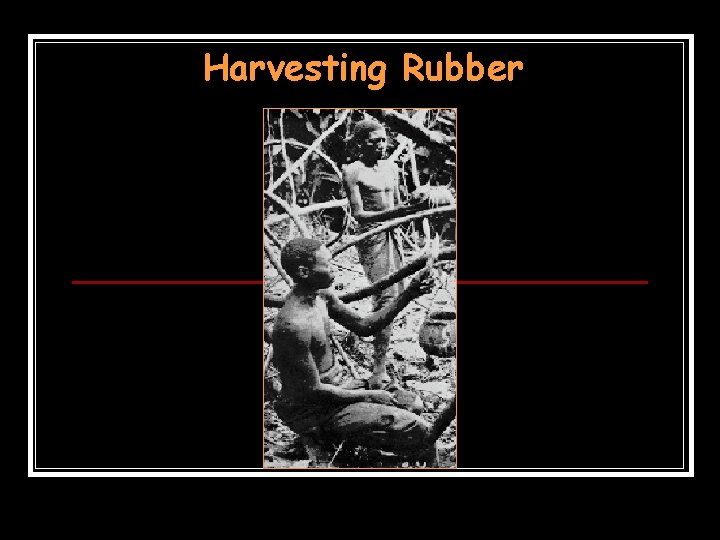
Harvesting Rubber
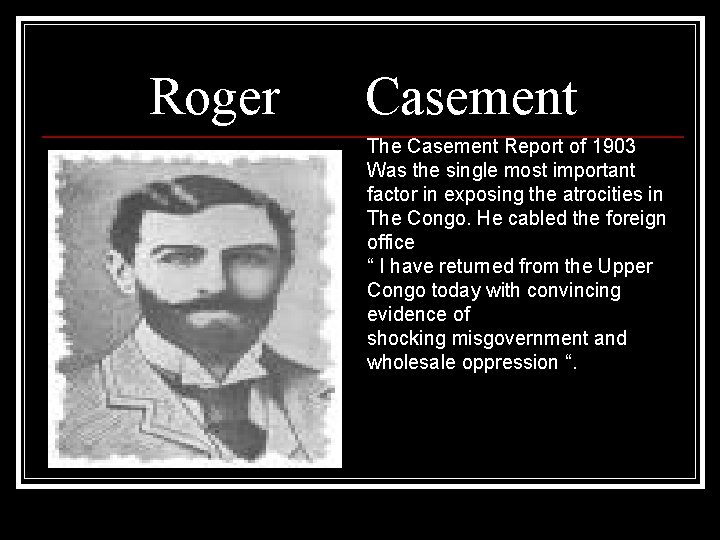
Roger Casement The Casement Report of 1903 Was the single most important factor in exposing the atrocities in The Congo. He cabled the foreign office “ I have returned from the Upper Congo today with convincing evidence of shocking misgovernment and wholesale oppression “.
Some legacies of colonialism * Mono-crop economies * Development of infrastructure but geared mainly to serve export orientation * Very limited industrialisation. Dominance of merchant capital, with much of the profits repatriated * ethnic divisions re-enforced through indirect rule * Urbanisation/proletarianisation
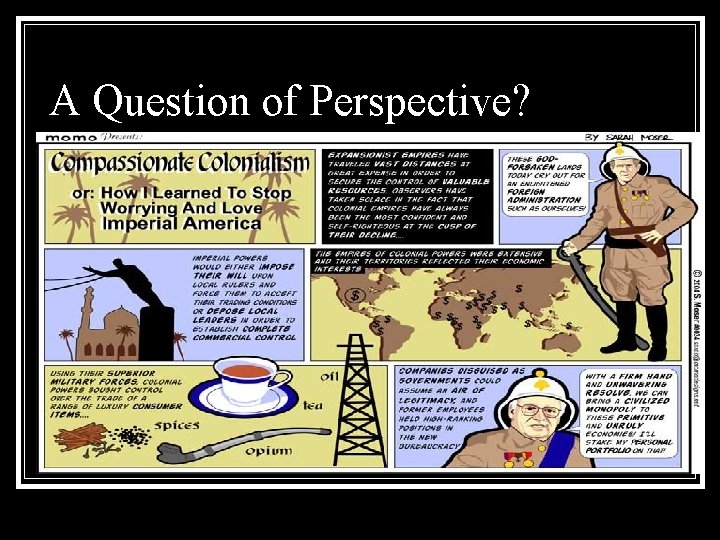
A Question of Perspective?
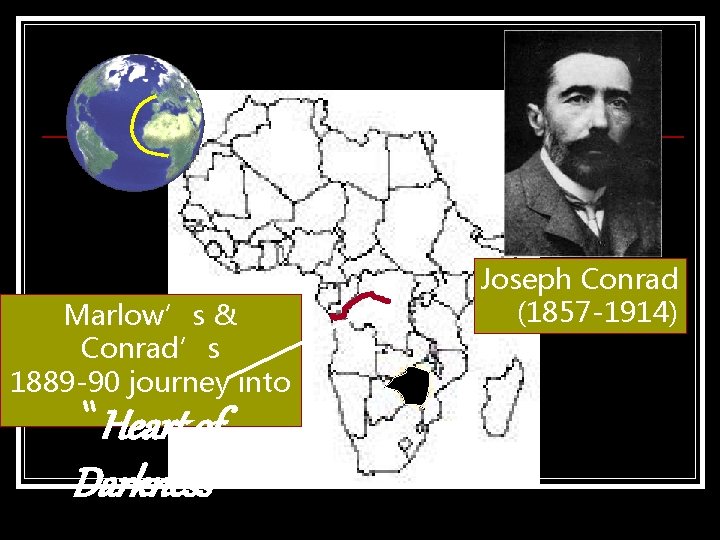
Marlow’s & Conrad’s 1889 -90 journey into “Heart of Darkness” Joseph Conrad (1857 -1914)