Immune Responses to HIV Zoran Galic Ph D
- Slides: 13
Immune Responses to HIV Zoran Galic Ph. D. Division of Hematology/Oncology David Geffen School of Medicine UCLA zgalic@ucla. edu August 19, 2014
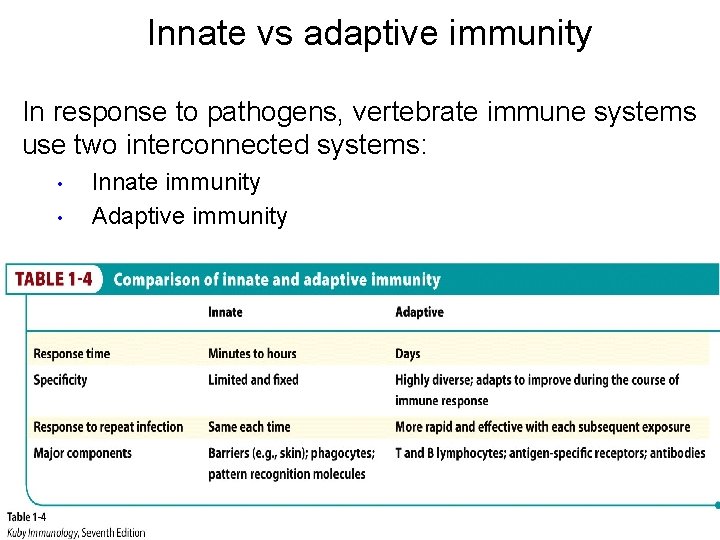
Innate vs adaptive immunity In response to pathogens, vertebrate immune systems use two interconnected systems: • • Innate immunity Adaptive immunity
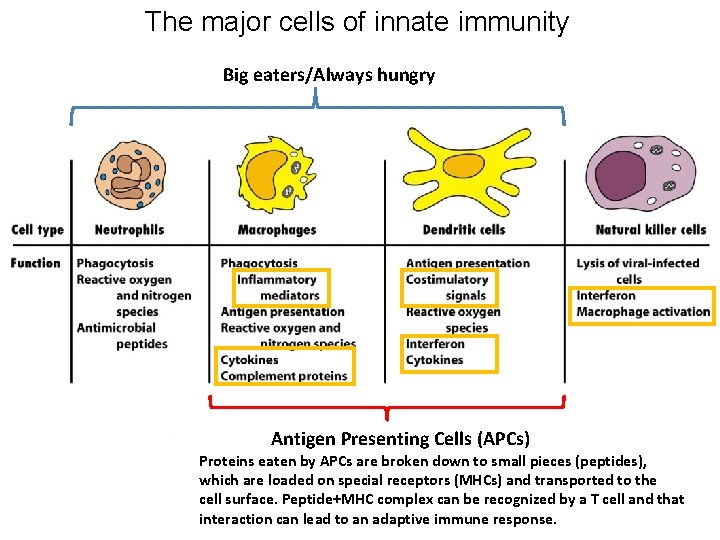
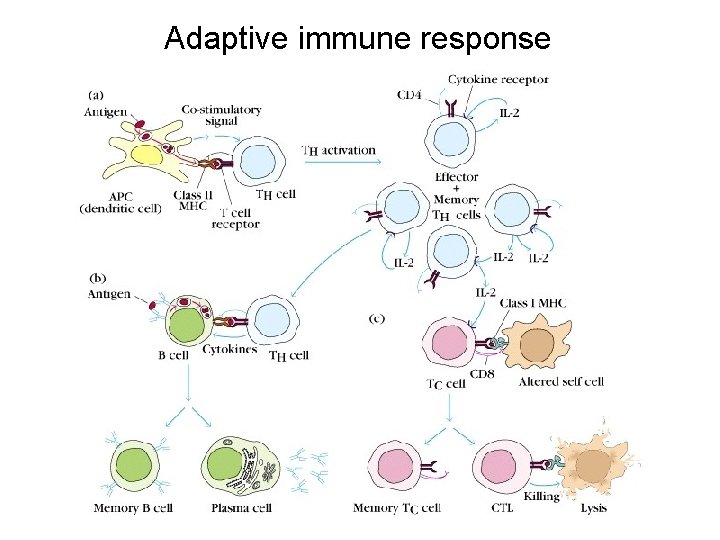
The major cells of innate immunity Big eaters/Always hungry Antigen Presenting Cells (APCs) Proteins eaten by APCs are broken down to small pieces (peptides), which are loaded on special receptors (MHCs) and transported to the cell surface. Peptide+MHC complex can be recognized by a T cell and that interaction can lead to an adaptive immune response.
Adaptive immune response
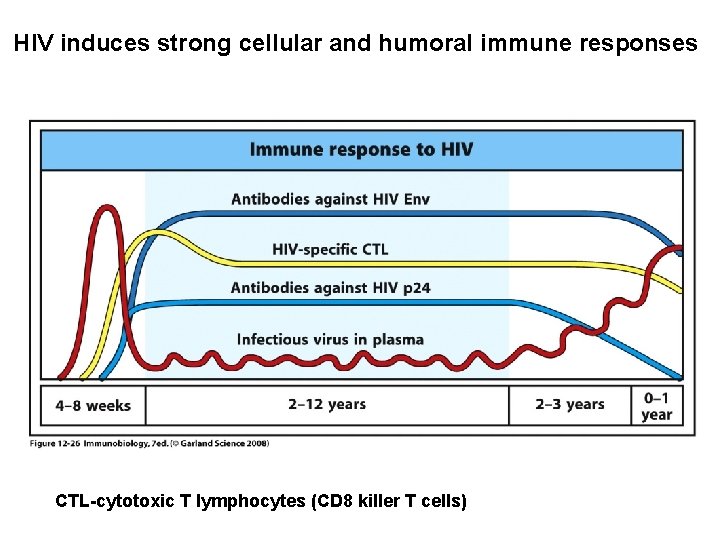
HIV induces strong cellular and humoral immune responses CTL-cytotoxic T lymphocytes (CD 8 killer T cells)
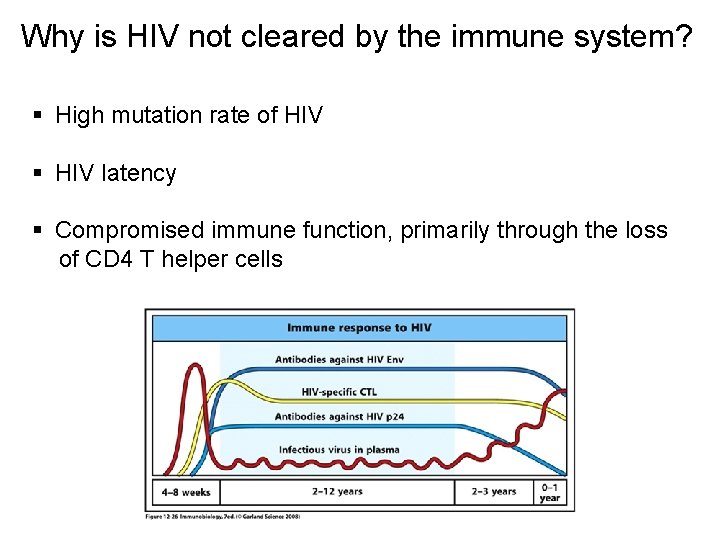
Why is HIV not cleared by the immune system? § High mutation rate of HIV § HIV latency § Compromised immune function, primarily through the loss of CD 4 T helper cells
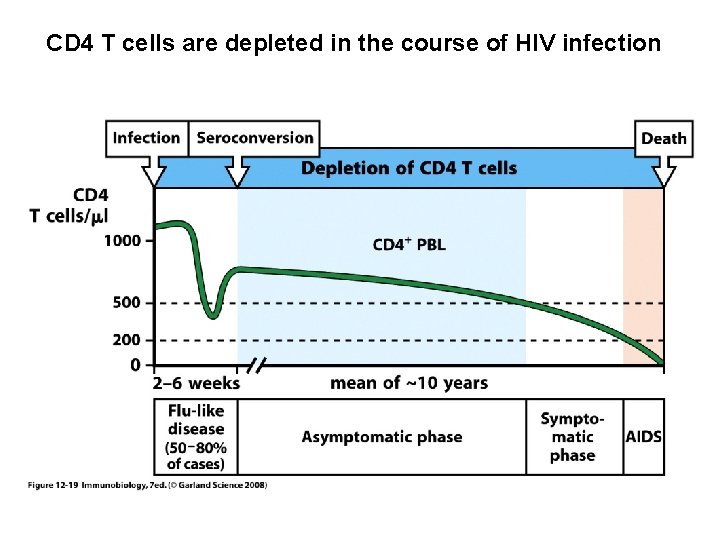
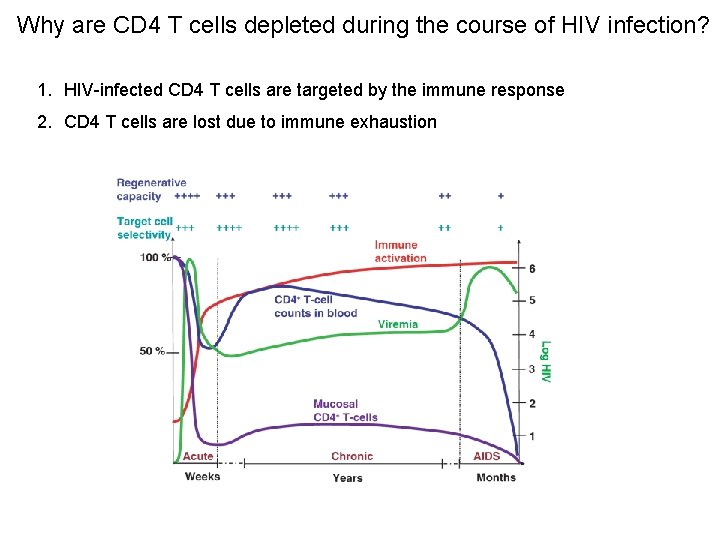
CD 4 T cells are depleted in the course of HIV infection
Why are CD 4 T cells depleted during the course of HIV infection? 1. HIV-infected CD 4 T cells are targeted by the immune response 2. CD 4 T cells are lost due to immune exhaustion
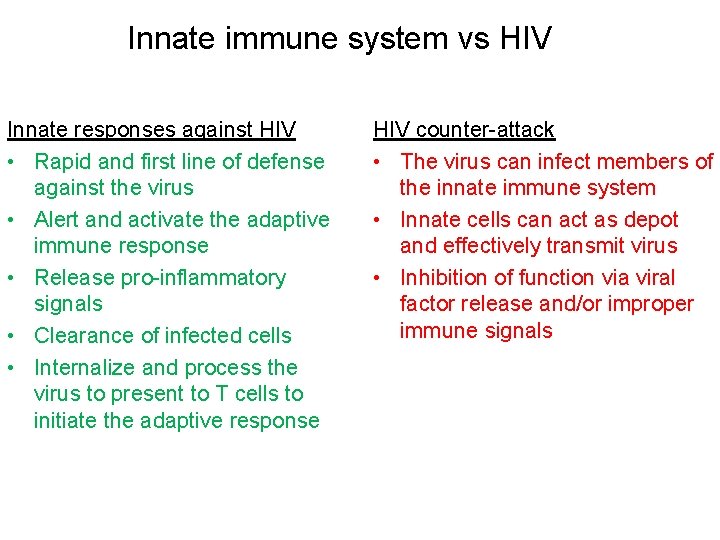
Innate immune system vs HIV Innate responses against HIV • Rapid and first line of defense against the virus • Alert and activate the adaptive immune response • Release pro-inflammatory signals • Clearance of infected cells • Internalize and process the virus to present to T cells to initiate the adaptive response HIV counter-attack • The virus can infect members of the innate immune system • Innate cells can act as depot and effectively transmit virus • Inhibition of function via viral factor release and/or improper immune signals
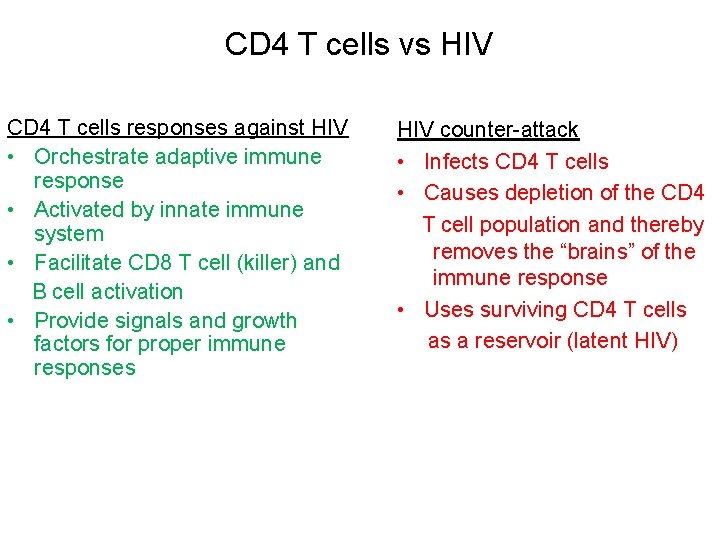
CD 4 T cells vs HIV CD 4 T cells responses against HIV • Orchestrate adaptive immune response • Activated by innate immune system • Facilitate CD 8 T cell (killer) and B cell activation • Provide signals and growth factors for proper immune responses HIV counter-attack • Infects CD 4 T cells • Causes depletion of the CD 4 T cell population and thereby removes the “brains” of the immune response • Uses surviving CD 4 T cells as a reservoir (latent HIV)
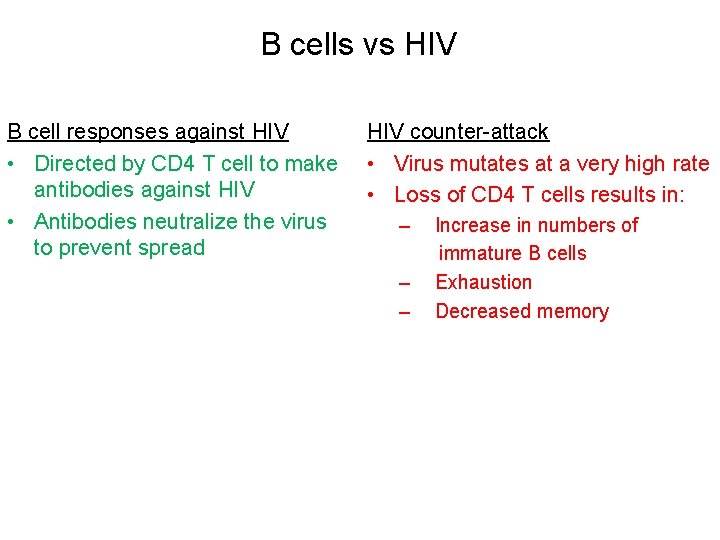
B cells vs HIV B cell responses against HIV • Directed by CD 4 T cell to make antibodies against HIV • Antibodies neutralize the virus to prevent spread HIV counter-attack • Virus mutates at a very high rate • Loss of CD 4 T cells results in: – – – Increase in numbers of immature B cells Exhaustion Decreased memory
CD 8 T cells vs HIV CD 8 T cells responses against HIV • Killer arm of the immune system • Seek, identify and destroy infected cells • Control virus in the initial months of infection HIV counter-attack • Virus mutates and escapes • Chronic inflammation leads to exhaustion • Lack of CD 4 T cells: a. Insufficient signals to activate more killer cells a. Defective memory b. Impaired function
Closing Comments § APCs, B cells, CD 4 and CD 8 T cells work together to fight infection § HIV perturbs APC function, and kills CD 4 T cells § This allows secondary “opportunistic” infections to occur, leading to disease/death § Vaccines have the potential to halt HIV infection, but thus far an efficacious vaccine strategy has proven elusive § A vaccine approach that takes into account all aspects of the immune response will likely have the best chance of success