
Deep Learning For Application Performance Tuning Zoran Sevarac
- Slides: 26
Deep Learning For Application Performance Tuning Zoran Sevarac, Deep Netts @zsevarac, @deepnetts
Vision We want to have applications that are able to learn optimal configuration, and self-tune for best performance in different scenarios
Motivation • Performance is always critical • Performance tuning must be tailored for – Application – Load – Infrastructure • Performance tuning is time consuming, error prone, guesswork • When something changes it has to be repeated • Ideally, that should be turned into systematic, repeatable, even continuous process
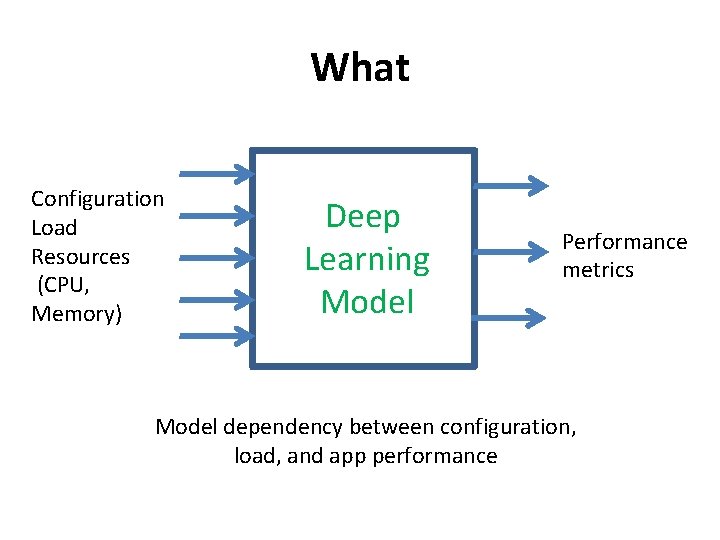
What Configuration Load Resources (CPU, Memory) Deep Learning Model Performance metrics Model dependency between configuration, load, and app performance
Why • Modeling a complex, unknown function – typical use case for machine learning (regression) • Model can give prediction of app performnce metrics for specific load and available resources • It can be used to optimize resource usage or ensure quality of service
Inputs: Load and Configuration • • • Number of concurrent users Request Rate per second Number of CPUs Available Memory Additional configuration settings and runtime parameters (numeric and nominal)
Outputs – Performance metrics • Average response time • Apdex score: (satisfied req+ tolerating requests/2) / total. Requests • Total execution time (batch processing) • Garbage Collection (frequency, time, total time)
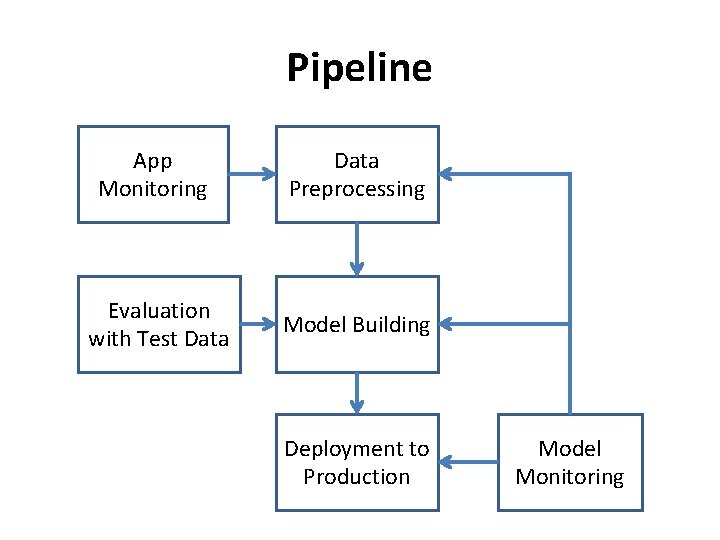
Procedure 1. 2. 3. 4. 5. 6. Data Collection through load testing Data Preprocessing Build model Evaluate model using test data Test model in production Monitor model performance in production and repeat entire procedure as needed with new data (as load or app changes)
Data Collection 1. Prepare a set of configurations and loads 2. Run load using configurations 3. Monitor and record performance metrics (Apache JMeter, logs)
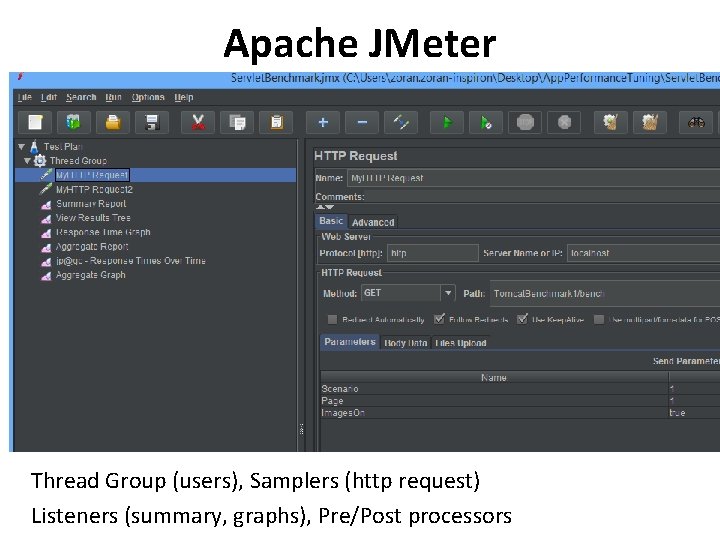
Apache JMeter Thread Group (users), Samplers (http request) Listeners (summary, graphs), Pre/Post processors
Data Preprocessing Clean data Missing values, errors? Visualize Filter outliers? Decorelate data? Normalize (scale to range [0, 1] or event better [0. 1, 0. 9]) Transform nominal inputs (settings) to one-hot binary vectors • Prepare data for model building (calculate avg responses (time window size? ), Apdex score etc. ) • •
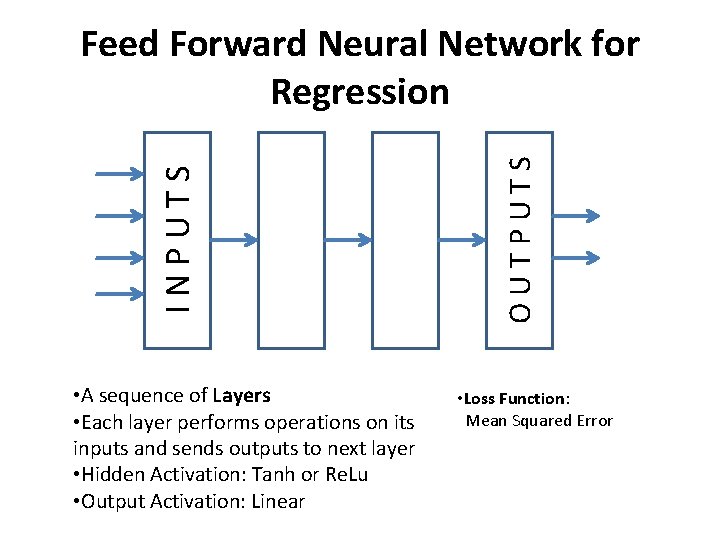
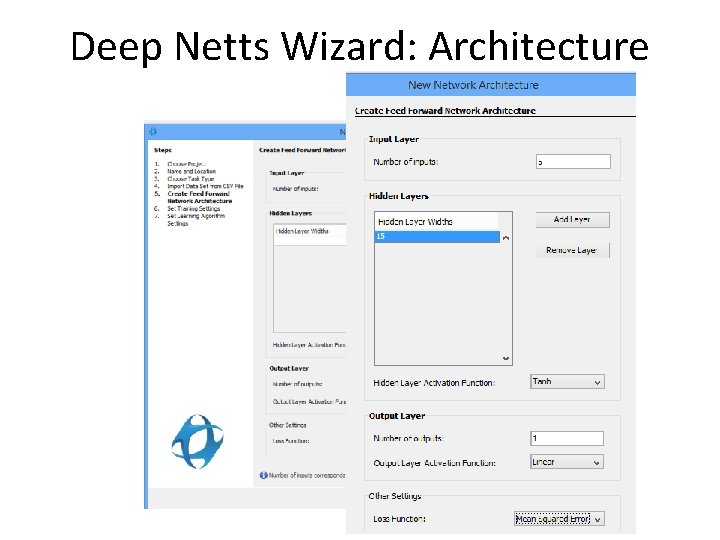
Model Building • Feed Forward Neural Network • Network inputs correspond to input parameters (numeric & nominal values) • Outputs correspond to performance metrics that we want to guess • Our goals is to build a neural network that can map inputs to outputs – model the app behaviour
• A sequence of Layers • Each layer performs operations on its inputs and sends outputs to next layer • Hidden Activation: Tanh or Re. Lu • Output Activation: Linear OUTPUTS INPUTS Feed Forward Neural Network for Regression • Loss Function: Mean Squared Error
Network Training – Backpropagation • Each layer has a number of learnable parameters called ‘weights’ • Training consists of tuning these parameters • In every training iteration, learning algorithm changes all weights for a small amount thats proportional to the network error – a value of loss function
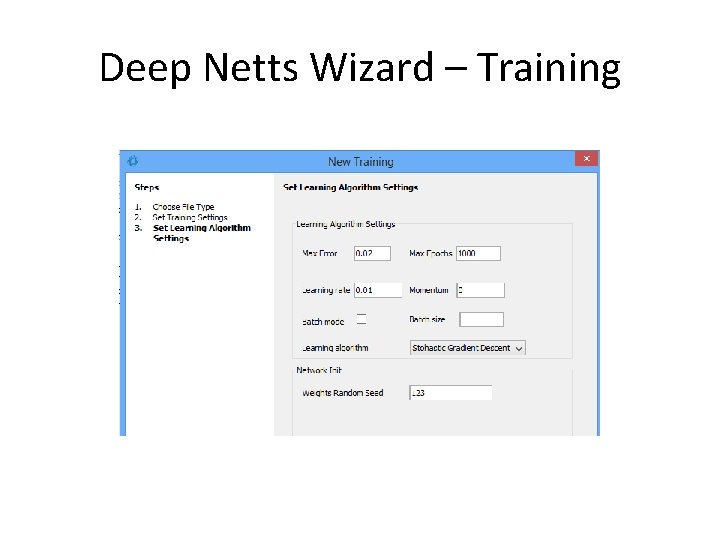
Network Training – Backpropagation • Iterative error minimization procedure • Seeks for set of layer weights that produce min value of Loss Function • Optimization Algorithm: Stochastic Gradient Descent with Momentum – Learning Rate: 0. 01 - how fast weight changes – Momentum 0. 9 - accelerate learning • Mini batch
Model tuning • How many hidden neurons/layers and layer sizes • More layers bigger capacity, but possible overfitting • Optimization algorithm: start with Stochastic gradient descent with momentum • Other options: Adam, Ada Delta, RMS Prop • Automated procedures: Grid and Random search
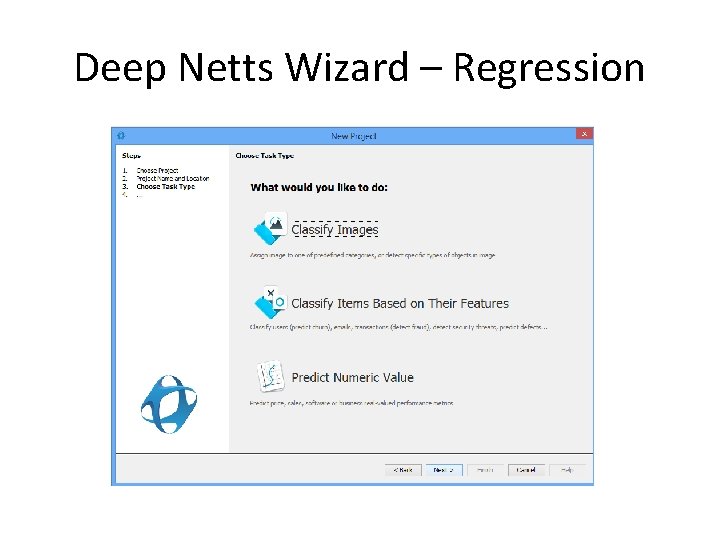
Deep Netts Wizard – Regression
Deep Netts Wizard: Architecture
Deep Netts Wizard – Training
Pipeline App Monitoring Data Preprocessing Evaluation with Test Data Model Building Deployment to Production Model Monitoring
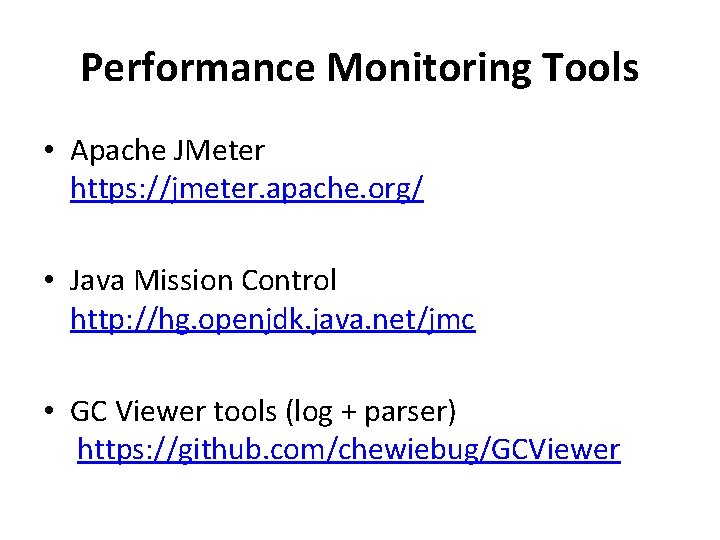
Performance Monitoring Tools • Apache JMeter https: //jmeter. apache. org/ • Java Mission Control http: //hg. openjdk. java. net/jmc • GC Viewer tools (log + parser) https: //github. com/chewiebug/GCViewer
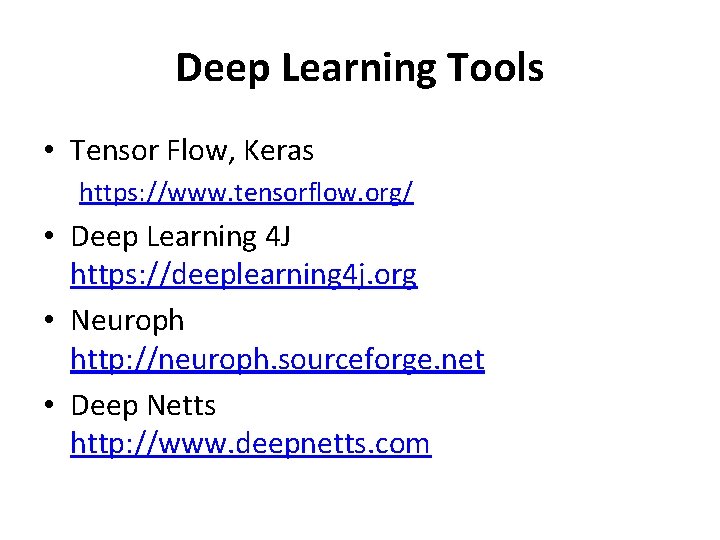
Deep Learning Tools • Tensor Flow, Keras https: //www. tensorflow. org/ • Deep Learning 4 J https: //deeplearning 4 j. org • Neuroph http: //neuroph. sourceforge. net • Deep Netts http: //www. deepnetts. com
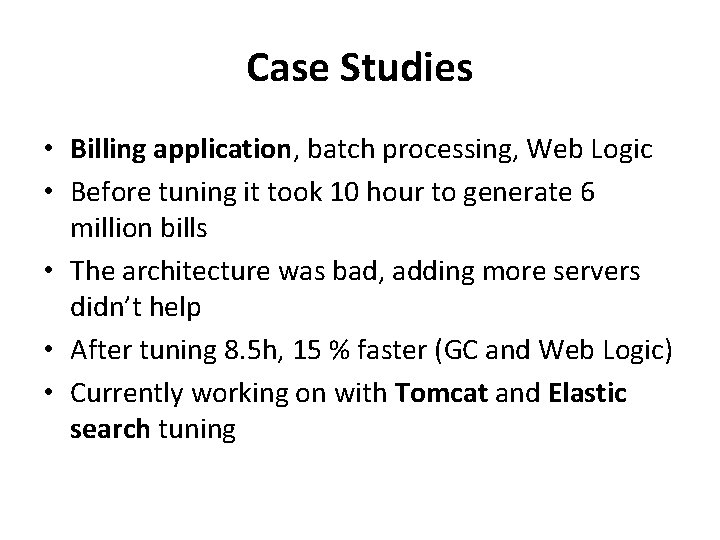
Case Studies • Billing application, batch processing, Web Logic • Before tuning it took 10 hour to generate 6 million bills • The architecture was bad, adding more servers didn’t help • After tuning 8. 5 h, 15 % faster (GC and Web Logic) • Currently working on with Tomcat and Elastic search tuning
Why Deep Learning • Less feature engineering – features are learned • Good with high dimensional data • Good with large amounts of data • Flexible model (easyily supports custom settings)
Conclusion • Many tools exist to support the process • Achieved promising results in our test cases • ML/DL approach is already used by several app performance solution providers • ML/DL have potential to revolutionize application performance management • We are open for collaboration and we’re looking for interesting use cases – contact us: contact@deepnetts. com
Usefull Links • Dzone’s Performance and Monitoring Guide • https: //dzone. com/guides/performance-and-monitoring • 8 Key Application Performance Metrics & How to Measure Them • https: //stackify. com/application-performance-metrics/ • A Step By Step Guide to Tomcat Performance Monitoring • https: //stackify. com/tomcat-performance-monitoring/ • Misc Related Tutorials and How. To • http: //www. deepnetts. com/blog