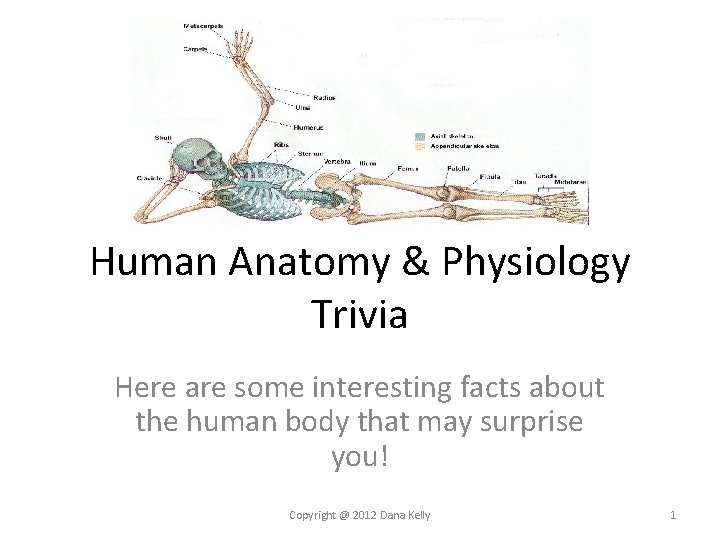
Human Anatomy Physiology Trivia Here are some interesting



- Slides: 25
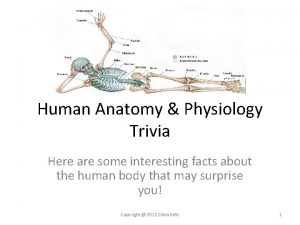
Human Anatomy & Physiology Trivia Here are some interesting facts about the human body that may surprise you! Copyright @ 2012 Dana Kelly 1
Can you name the 9 body systems? Copyright @ 2012 Dana Kelly 2
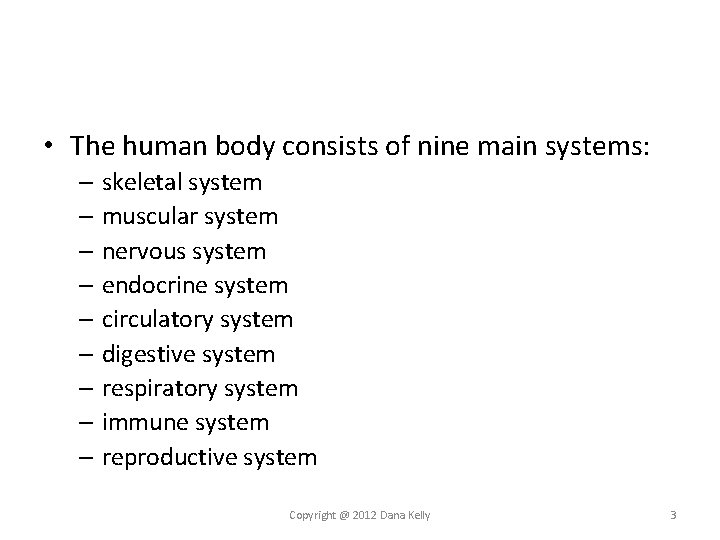
• The human body consists of nine main systems: – skeletal system – muscular system – nervous system – endocrine system – circulatory system – digestive system – respiratory system – immune system – reproductive system Copyright @ 2012 Dana Kelly 3
Bones & Blood How many bones are in the human body? How many muscles? Copyright @ 2012 Dana Kelly 4
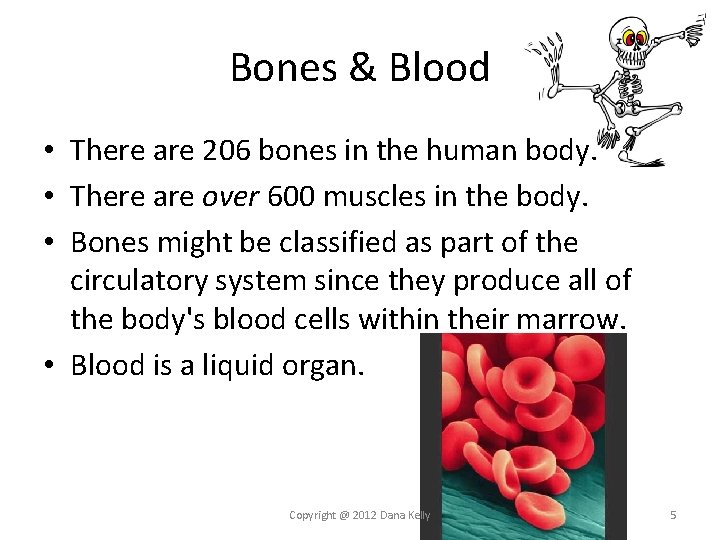
Bones & Blood • There are 206 bones in the human body. • There are over 600 muscles in the body. • Bones might be classified as part of the circulatory system since they produce all of the body's blood cells within their marrow. • Blood is a liquid organ. Copyright @ 2012 Dana Kelly 5
How many blood types & can you name them? Copyright @ 2012 Dana Kelly 6
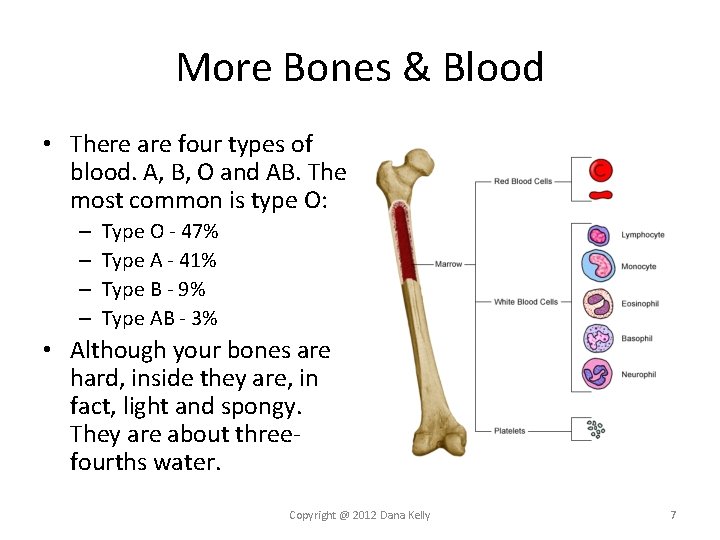
More Bones & Blood • There are four types of blood. A, B, O and AB. The most common is type O: – – Type O - 47% Type A - 41% Type B - 9% Type AB - 3% • Although your bones are hard, inside they are, in fact, light and spongy. They are about threefourths water. Copyright @ 2012 Dana Kelly 7
Can you name three parts of the brain? ? ? Copyright @ 2012 Dana Kelly 8
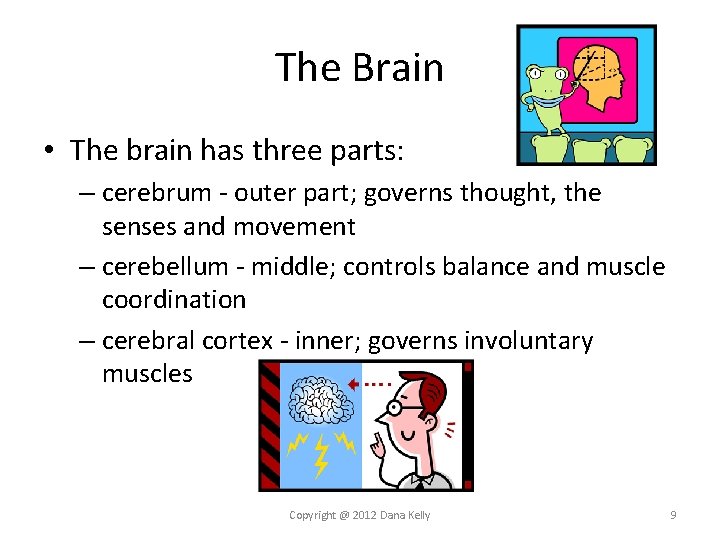
The Brain • The brain has three parts: – cerebrum - outer part; governs thought, the senses and movement – cerebellum - middle; controls balance and muscle coordination – cerebral cortex - inner; governs involuntary muscles Copyright @ 2012 Dana Kelly 9
What is the central nervous system is composed of…………. Copyright @ 2012 Dana Kelly 10
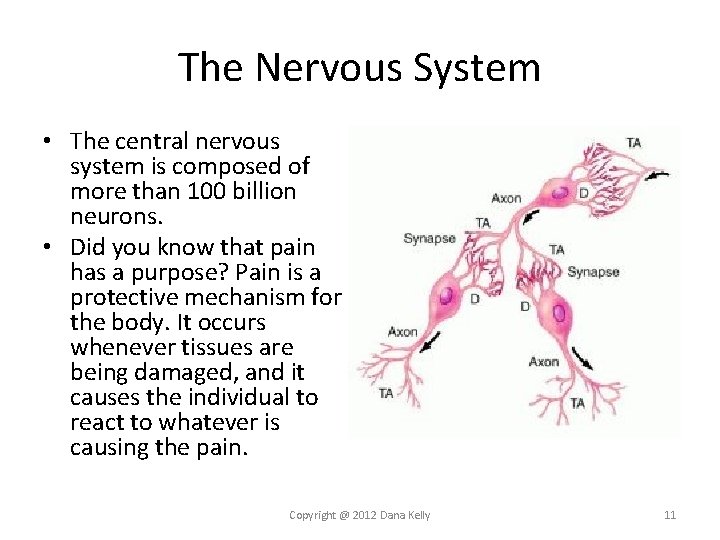
The Nervous System • The central nervous system is composed of more than 100 billion neurons. • Did you know that pain has a purpose? Pain is a protective mechanism for the body. It occurs whenever tissues are being damaged, and it causes the individual to react to whatever is causing the pain. Copyright @ 2012 Dana Kelly 11
When does digestion begin? Copyright @ 2012 Dana Kelly 12
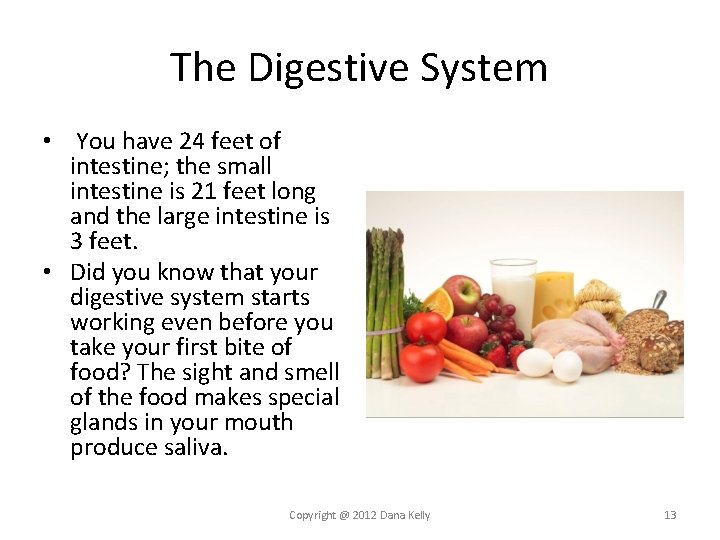
The Digestive System • You have 24 feet of intestine; the small intestine is 21 feet long and the large intestine is 3 feet. • Did you know that your digestive system starts working even before you take your first bite of food? The sight and smell of the food makes special glands in your mouth produce saliva. Copyright @ 2012 Dana Kelly 13
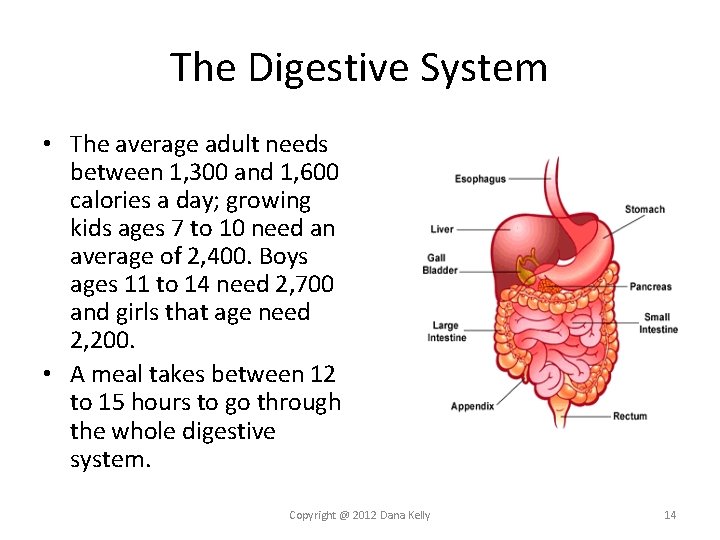
The Digestive System • The average adult needs between 1, 300 and 1, 600 calories a day; growing kids ages 7 to 10 need an average of 2, 400. Boys ages 11 to 14 need 2, 700 and girls that age need 2, 200. • A meal takes between 12 to 15 hours to go through the whole digestive system. Copyright @ 2012 Dana Kelly 14
More Digestive System. . • What job does your appendix do? Nothing. It is a little dead-end tube or sac that dangles about three inches from the lowest part of your large intestine. Food particles sometimes get caught in the tube and bacteria grows, irritating the appendix. It swells up and needs to be removed. • Hiccupping occurs when your normal breathing pattern gets interrupted. Your diaphragm sends an unusual gust of air to your lungs. At the same time, your brain sends a message to your tongue and upper part of your throat to clamp down to stop the rush of air. Copyright @ 2012 Dana Kelly 15
Why do we need kidneys? Copyright @ 2012 Dana Kelly 16
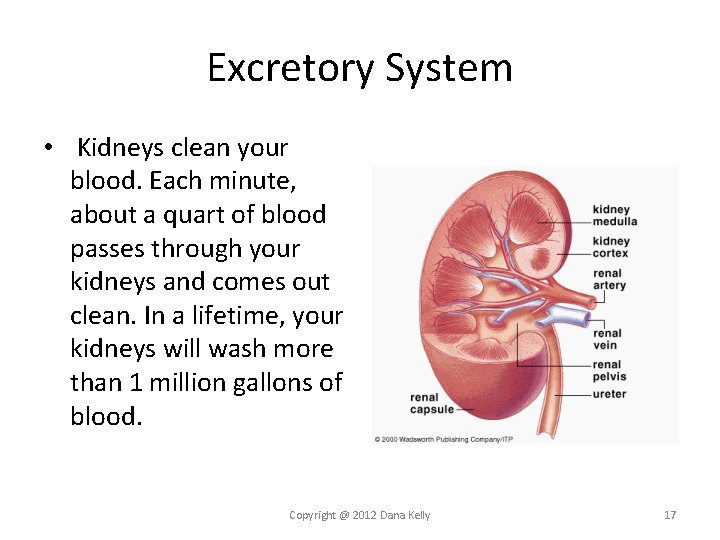
Excretory System • Kidneys clean your blood. Each minute, about a quart of blood passes through your kidneys and comes out clean. In a lifetime, your kidneys will wash more than 1 million gallons of blood. Copyright @ 2012 Dana Kelly 17
How big is your heart? Copyright @ 2012 Dana Kelly 18
The Heart (cardiac system) • Your heart is a hollow muscle about the same size as your fist. • Your heart beats about 100, 000 times a day. • Your heart pumps a total of 8, 000 gallons of blood 12, 000 miles through your body every day. • The heart beats 3 billion times in an average lifetime. • The heart beats an average of 72 beats a minute. Copyright @ 2012 Dana Kelly 19
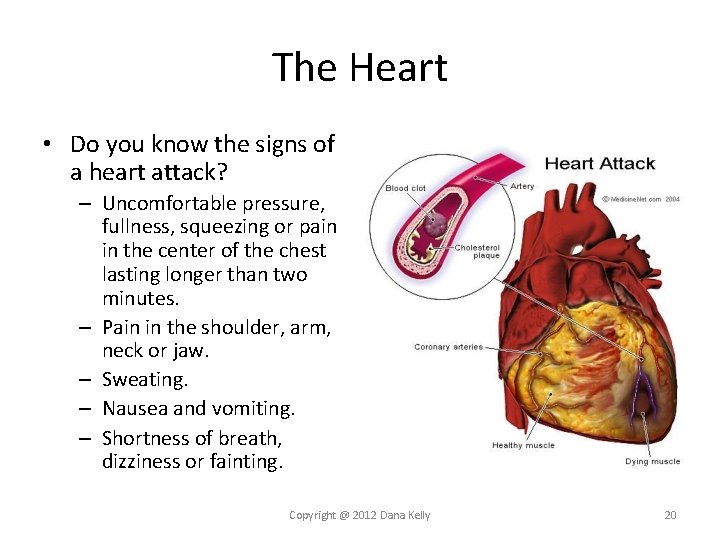
The Heart • Do you know the signs of a heart attack? – Uncomfortable pressure, fullness, squeezing or pain in the center of the chest lasting longer than two minutes. – Pain in the shoulder, arm, neck or jaw. – Sweating. – Nausea and vomiting. – Shortness of breath, dizziness or fainting. Copyright @ 2012 Dana Kelly 20
The Senses • What are the primary sensations of taste? – – Sour Salty Sweet Bitter There as many as 50 or more primary sensations of smell. Copyright @ 2012 Dana Kelly 21
The Senses - Vision • Everyone is color-blind at the beginning of life. That's because cone cells don't develop in the eyes until a baby is about six to eight months old. Copyright @ 2012 Dana Kelly 22
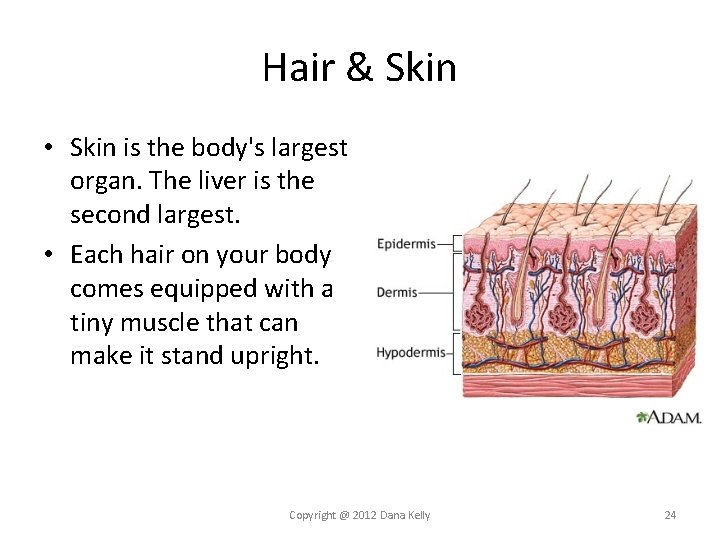
Name three layers of the skin… Copyright @ 2012 Dana Kelly 23
Hair & Skin • Skin is the body's largest organ. The liver is the second largest. • Each hair on your body comes equipped with a tiny muscle that can make it stand upright. Copyright @ 2012 Dana Kelly 24
Did you know. . . ? • There are over 200 different cold viruses. • The entire body contains about 100 trillion cells. • Donated organs need to be transplanted quickly. How long can donated organs last outside the body? – A heart lasts three to five hours – A liver lasts for 10 hours – A kidney lasts for 24 to 48 hours Copyright @ 2012 Dana Kelly 25