Home learning English and Guided Reading Summer 1


- Slides: 46
Home learning – English and Guided Reading Summer 1 – Week 3
Day 1 - WALT: Edit and improve
Spelling Shed To practice your spellings you need to spend 10 minutes on spelling shed. Click on the face to access the Spelling Shed website. If you’re having any problems logging in please contact us via the contact form at the bottom of the home learning page.
Do now - Suffix A suffix goes at the end of the word. For example –ation is a suffix. The root word is coronate but with the suffix it becomes coronation. Write a list with all the word you can think of that you can add –ation to. Here are some freebies to get you started: • Coronation • Determination • Palpitation • Illumination
Today we are going to be looking back over our story that we wrote on Friday. We’re going to start with a few simple jobs to check our work through. You’ll have a few examples to do on each slide. You need to do these under today’s do now. Then you’ll be going back through your own work. We’re going to focus on only 3 jobs this week for our editing. Job 1: Sense Job 2: Full stops and capital letters Job 3: Description
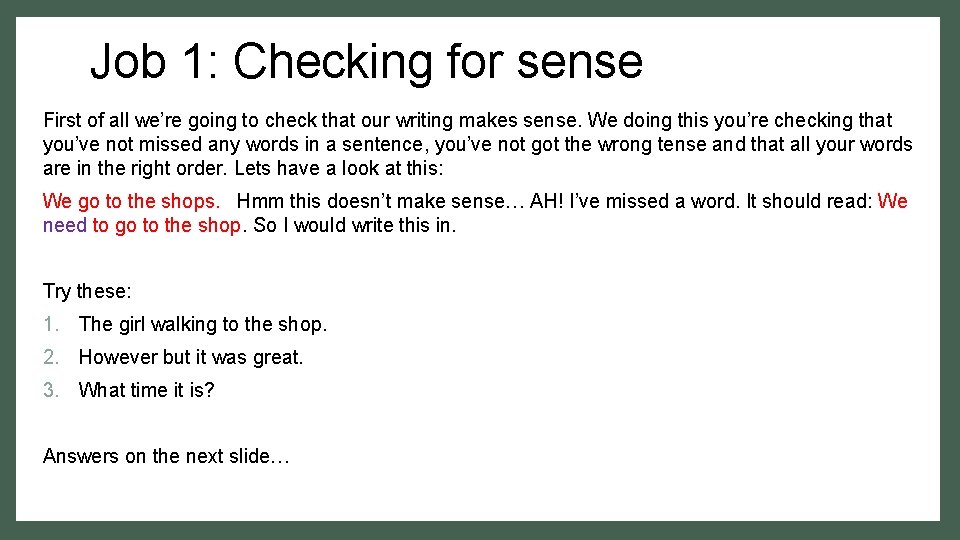
Job 1: Checking for sense First of all we’re going to check that our writing makes sense. We doing this you’re checking that you’ve not missed any words in a sentence, you’ve not got the wrong tense and that all your words are in the right order. Lets have a look at this: We go to the shops. Hmm this doesn’t make sense… AH! I’ve missed a word. It should read: We need to go to the shop. So I would write this in. Try these: 1. The girl walking to the shop. 2. However but it was great. 3. What time it is? Answers on the next slide…
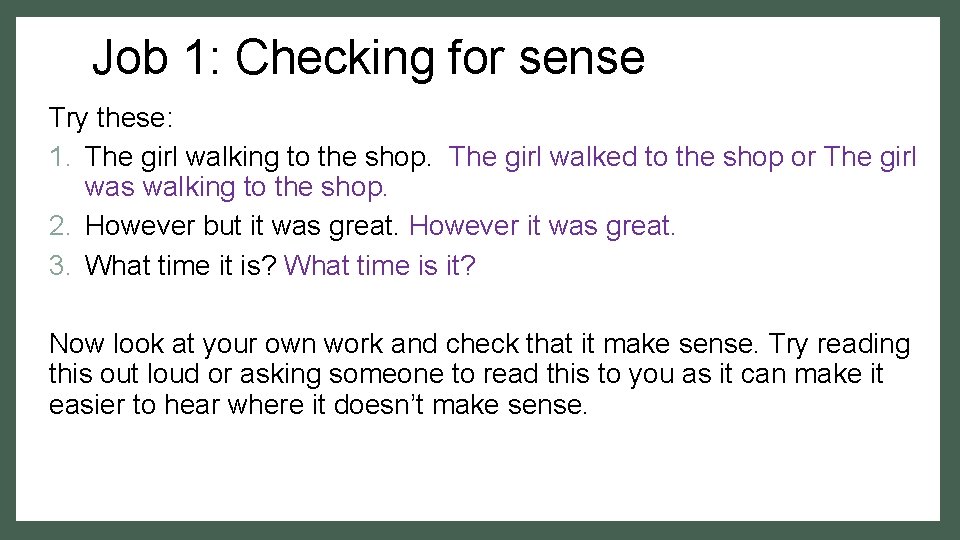
Job 1: Checking for sense Try these: 1. The girl walking to the shop. The girl walked to the shop or The girl was walking to the shop. 2. However but it was great. However it was great. 3. What time it is? What time is it? Now look at your own work and check that it make sense. Try reading this out loud or asking someone to read this to you as it can make it easier to hear where it doesn’t make sense.
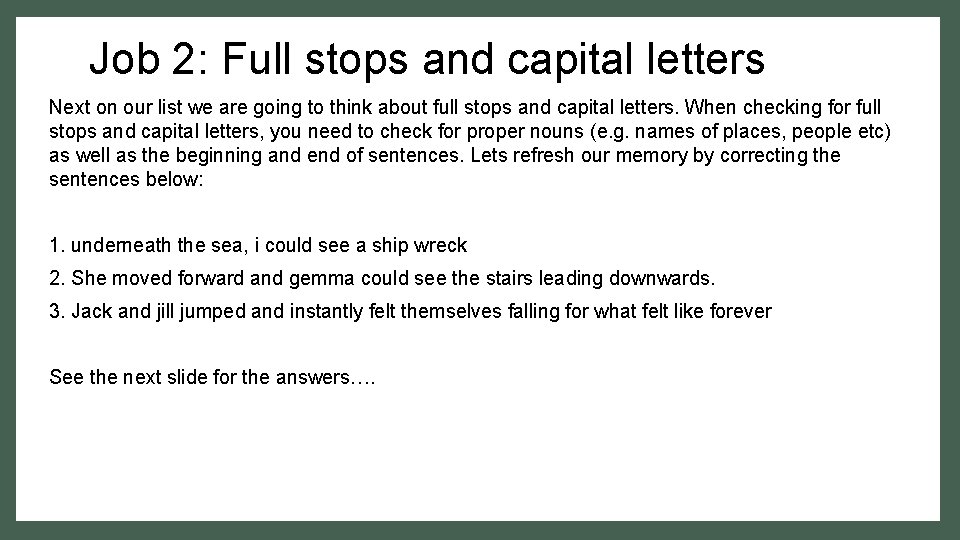
Job 2: Full stops and capital letters Next on our list we are going to think about full stops and capital letters. When checking for full stops and capital letters, you need to check for proper nouns (e. g. names of places, people etc) as well as the beginning and end of sentences. Lets refresh our memory by correcting the sentences below: 1. underneath the sea, i could see a ship wreck 2. She moved forward and gemma could see the stairs leading downwards. 3. Jack and jill jumped and instantly felt themselves falling for what felt like forever See the next slide for the answers….
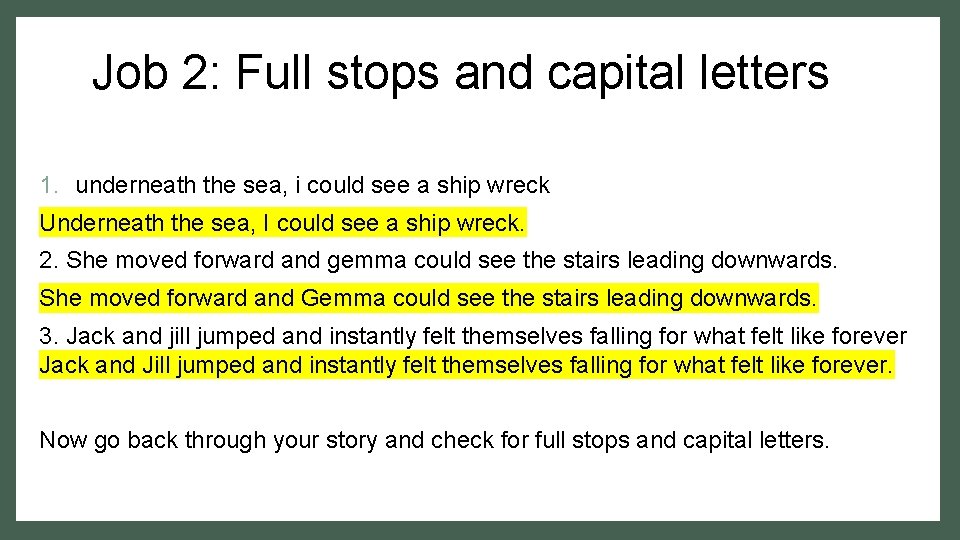
Job 2: Full stops and capital letters 1. underneath the sea, i could see a ship wreck Underneath the sea, I could see a ship wreck. 2. She moved forward and gemma could see the stairs leading downwards. She moved forward and Gemma could see the stairs leading downwards. 3. Jack and jill jumped and instantly felt themselves falling for what felt like forever Jack and Jill jumped and instantly felt themselves falling for what felt like forever. Now go back through your story and check for full stops and capital letters.
Job 3: Description is a really important part of creative writing. Although you can imagine the story in your head you need to be able to communicate that to your reader. For example: The girl walked along the beach. The young, thoughtful girl with lustrous long lock walked slowly along the warm, sandy beach whilst thinking about her long, busy day. Try adding some of the following things to your writing: Expanded noun phrases – adjective, adjective noun – young, thoughtful girl Fronted adverbial – Suddenly, excitedly, Adverbs – describing the verb – slowly, quickly, sleepily
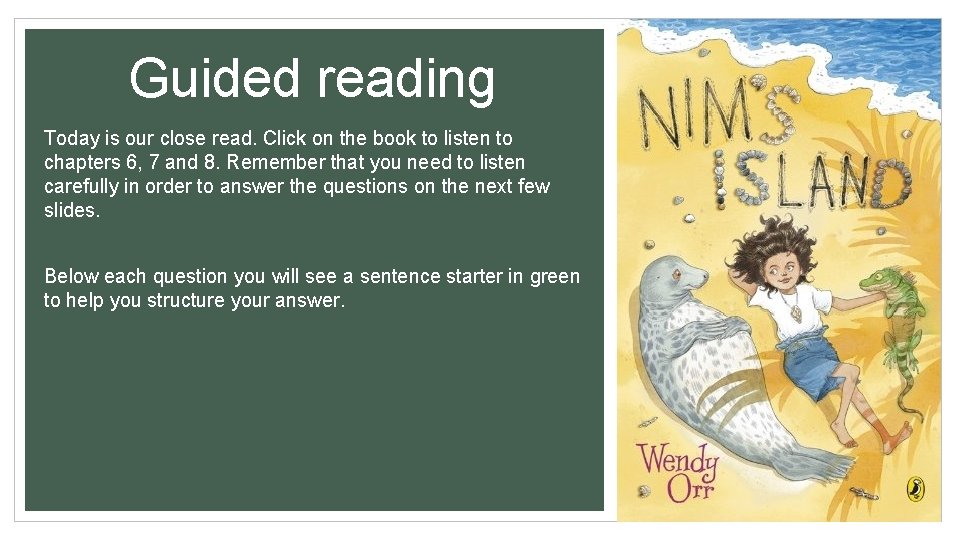
Guided reading Today is our close read. Click on the book to listen to chapters 6, 7 and 8. Remember that you need to listen carefully in order to answer the questions on the next few slides. Below each question you will see a sentence starter in green to help you structure your answer.
1. Why did Nim and Fred run down the mountain? Nim and Fred ran down the mountain… 2. Why doesn’t Nim want the Troppo Tourists to find the island? Nim doesn’t want to the Troppo Tourists to find the island because… 3. Name the two things that Nim does to keep the Troppo Tourists away from the island? 1. ________ 2. ________
ANSWERS 1. Why did Nim and Fred run down the mountain? Fred and Nim ran down the mountain to get away from the volcano which was erupting. 2. Why doesn’t Nim want the Troppo Tourists to find the island? Nim doesn’t want the Troppo Tourists to find the island because they will destroy the island with their ‘holidays and noise’. 3. Name the two things that Nim does to keep the Troppo Tourists away from the island? 1. Dead shark 2. Iguanas on the beach
Day 2 – WALT: Use appositives.
Spelling Shed To practice your spellings you need to spend 10 minutes on spelling shed. Click on the face to access the Spelling Shed website. If you’re having any problems logging in please contact us via the contact form at the bottom of the home learning page.
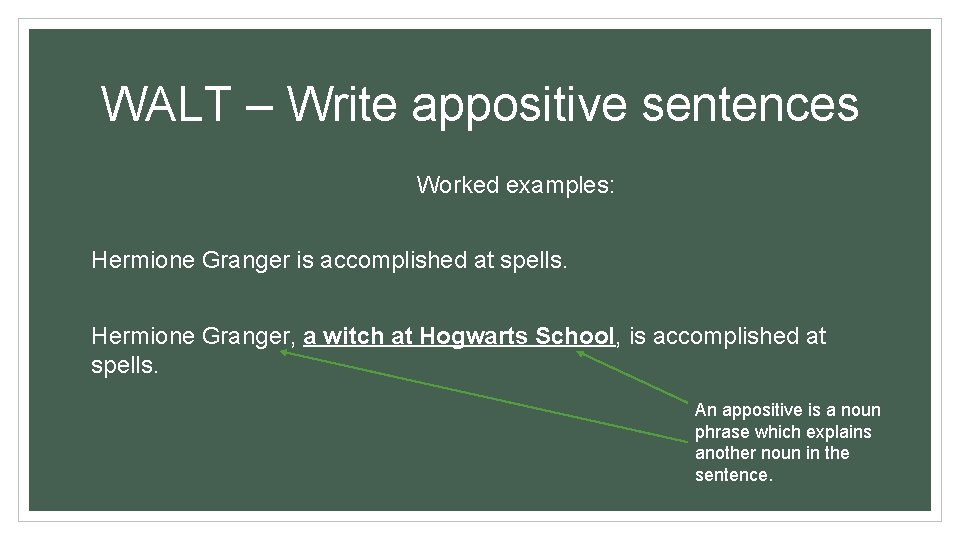
WALT – Write appositive sentences Worked examples: Hermione Granger is accomplished at spells. Hermione Granger, a witch at Hogwarts School, is accomplished at spells. An appositive is a noun phrase which explains another noun in the sentence.
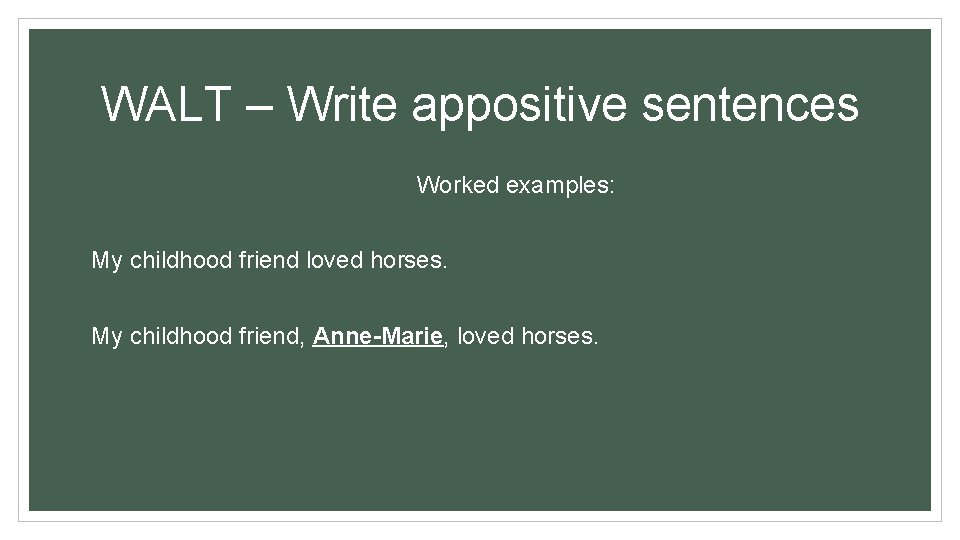
WALT – Write appositive sentences Worked examples: My childhood friend loved horses. My childhood friend, Anne-Marie, loved horses.
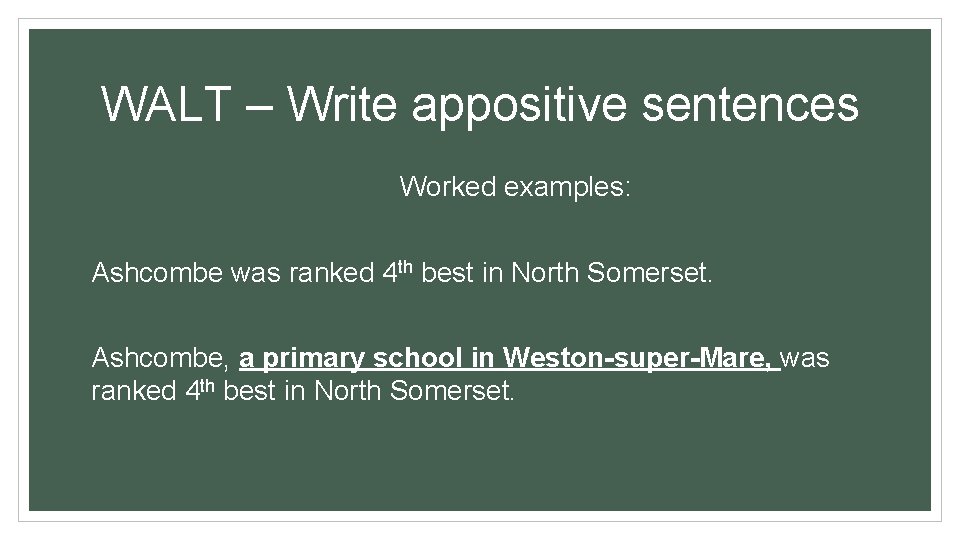
WALT – Write appositive sentences Worked examples: Ashcombe was ranked 4 th best in North Somerset. Ashcombe, a primary school in Weston-super-Mare, was ranked 4 th best in North Somerset.
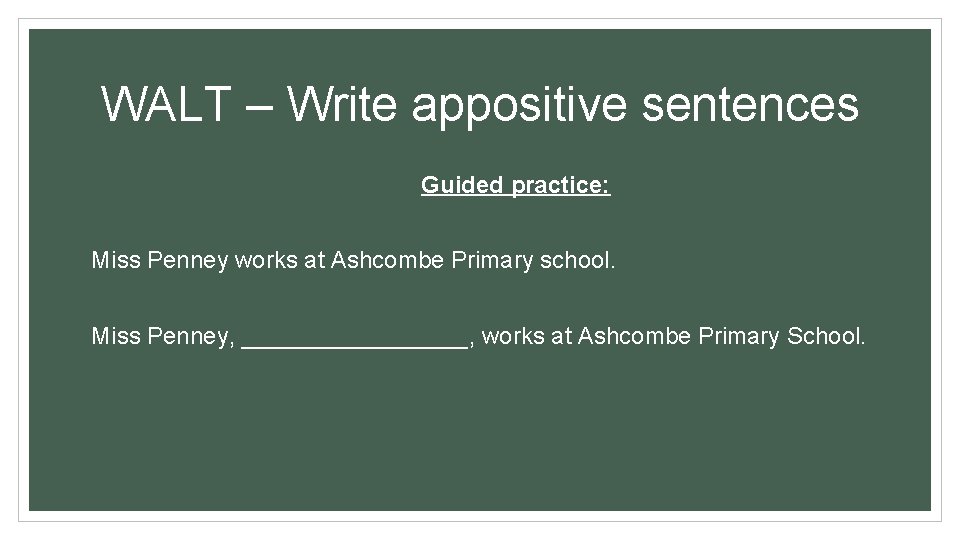
WALT – Write appositive sentences Guided practice: Miss Penney works at Ashcombe Primary school. Miss Penney, _________, works at Ashcombe Primary School.
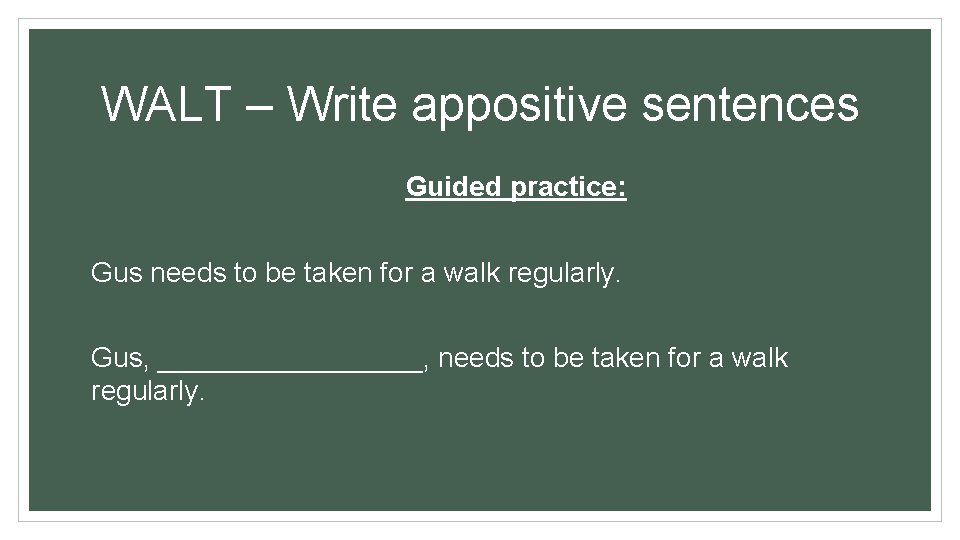
WALT – Write appositive sentences Guided practice: Gus needs to be taken for a walk regularly. Gus, _________, needs to be taken for a walk regularly.
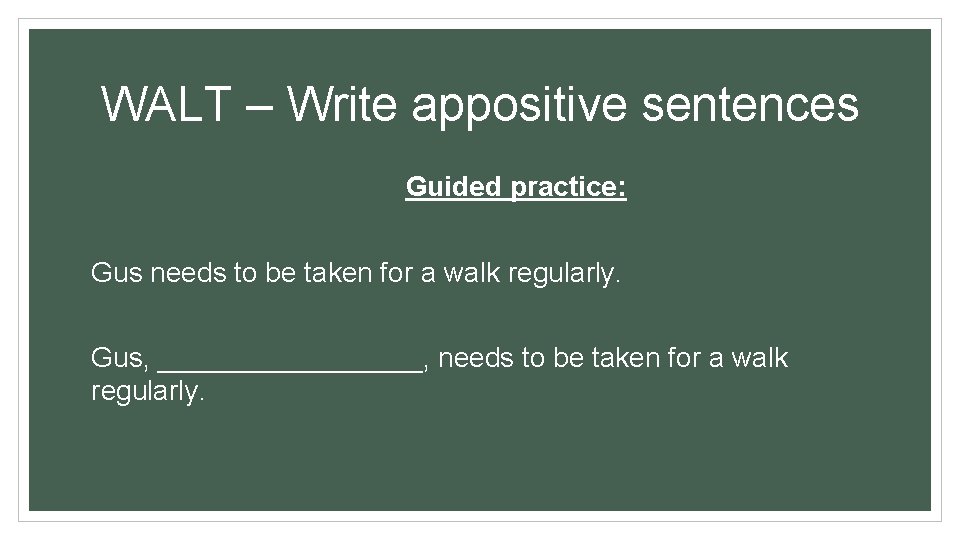
WALT – Write appositive sentences Guided practice: Gus needs to be taken for a walk regularly. Gus, _________, needs to be taken for a walk regularly.
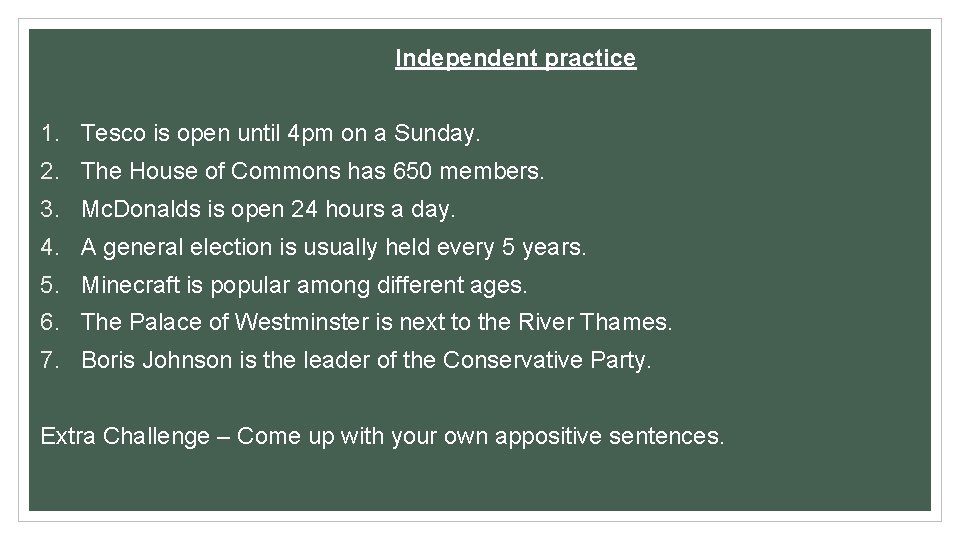
Independent practice 1. Tesco is open until 4 pm on a Sunday. 2. The House of Commons has 650 members. 3. Mc. Donalds is open 24 hours a day. 4. A general election is usually held every 5 years. 5. Minecraft is popular among different ages. 6. The Palace of Westminster is next to the River Thames. 7. Boris Johnson is the leader of the Conservative Party. Extra Challenge – Come up with your own appositive sentences.
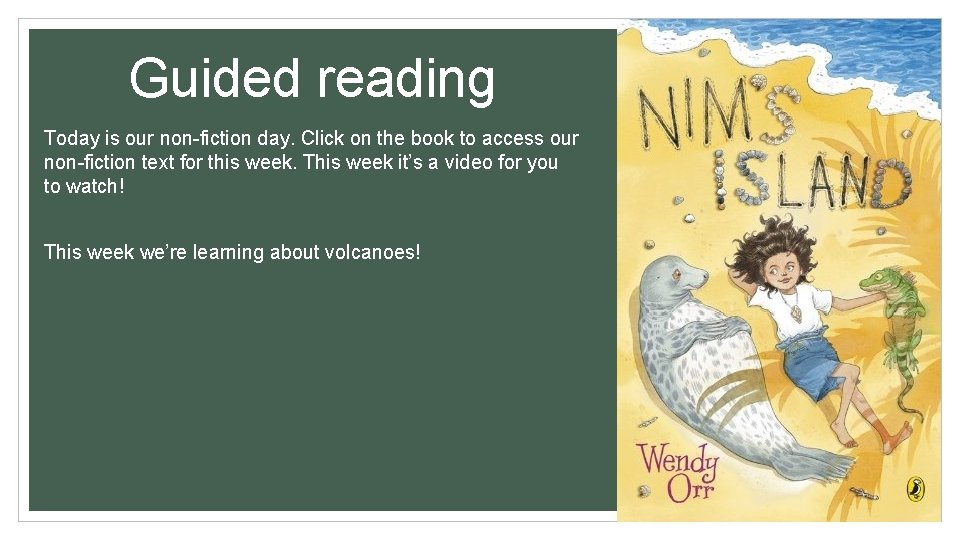
Guided reading Today is our non-fiction day. Click on the book to access our non-fiction text for this week. This week it’s a video for you to watch! This week we’re learning about volcanoes!
Day 3 – WALT: Write a diary entry
Spelling Shed To practice your spellings you need to spend 10 minutes on spelling shed. Click on the face to access the Spelling Shed website. If you’re having any problems logging in please contact us via the contact form at the bottom of the home learning page.
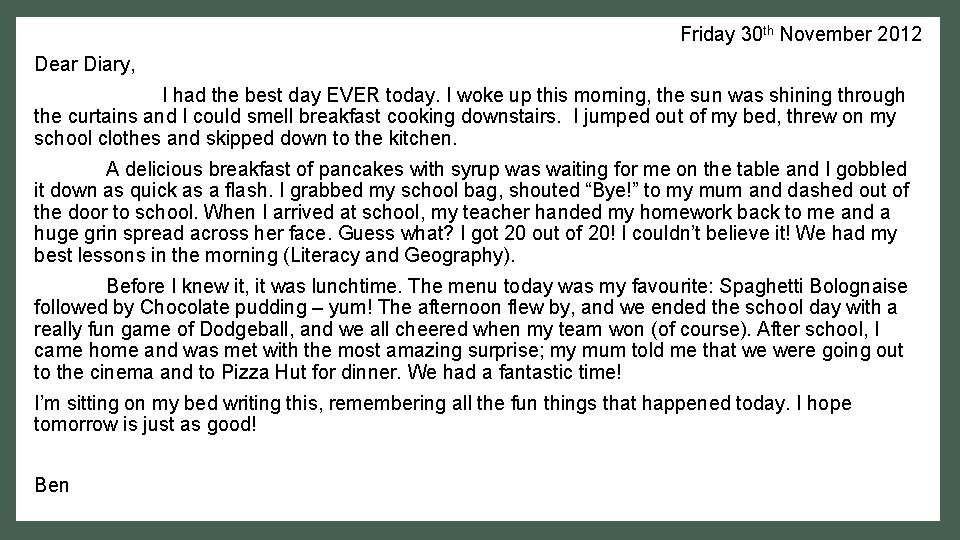
The situation we are all in at the moment will make history. Therefore, this maybe something which you look back at later in your life. Therefore today we are going to think about starting a diary where you record things such as: • How you are feeling • What you are doing • Who you’re with • What you’re thinking Let’s take a look at a WAGOLL
Friday 30 th November 2012 Dear Diary, I had the best day EVER today. I woke up this morning, the sun was shining through the curtains and I could smell breakfast cooking downstairs. I jumped out of my bed, threw on my school clothes and skipped down to the kitchen. A delicious breakfast of pancakes with syrup was waiting for me on the table and I gobbled it down as quick as a flash. I grabbed my school bag, shouted “Bye!” to my mum and dashed out of the door to school. When I arrived at school, my teacher handed my homework back to me and a huge grin spread across her face. Guess what? I got 20 out of 20! I couldn’t believe it! We had my best lessons in the morning (Literacy and Geography). Before I knew it, it was lunchtime. The menu today was my favourite: Spaghetti Bolognaise followed by Chocolate pudding – yum! The afternoon flew by, and we ended the school day with a really fun game of Dodgeball, and we all cheered when my team won (of course). After school, I came home and was met with the most amazing surprise; my mum told me that we were going out to the cinema and to Pizza Hut for dinner. We had a fantastic time! I’m sitting on my bed writing this, remembering all the fun things that happened today. I hope tomorrow is just as good! Ben
Try writing yours! Start with what you’ve been doing today or yesterday. Even if it was a boring day you could write about what you would liked to of done.
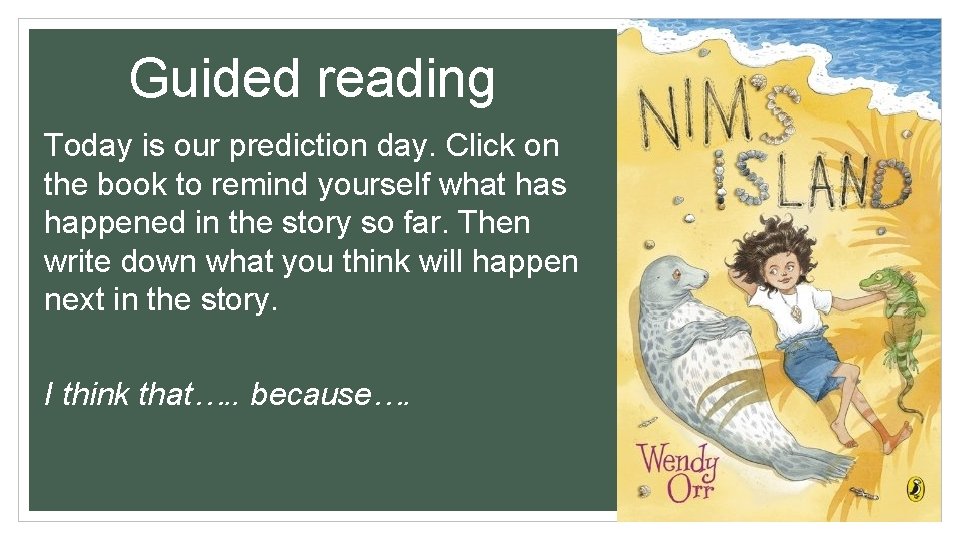
Guided reading Today is our prediction day. Click on the book to remind yourself what has happened in the story so far. Then write down what you think will happen next in the story. I think that…. . because….
Day 4 - WALT: Use inverted commas
Spelling Shed To practice your spellings you need to spend 10 minutes on spelling shed. Click on the face to access the Spelling Shed website. If you’re having any problems logging in please contact us via the contact form at the bottom of the home learning page.
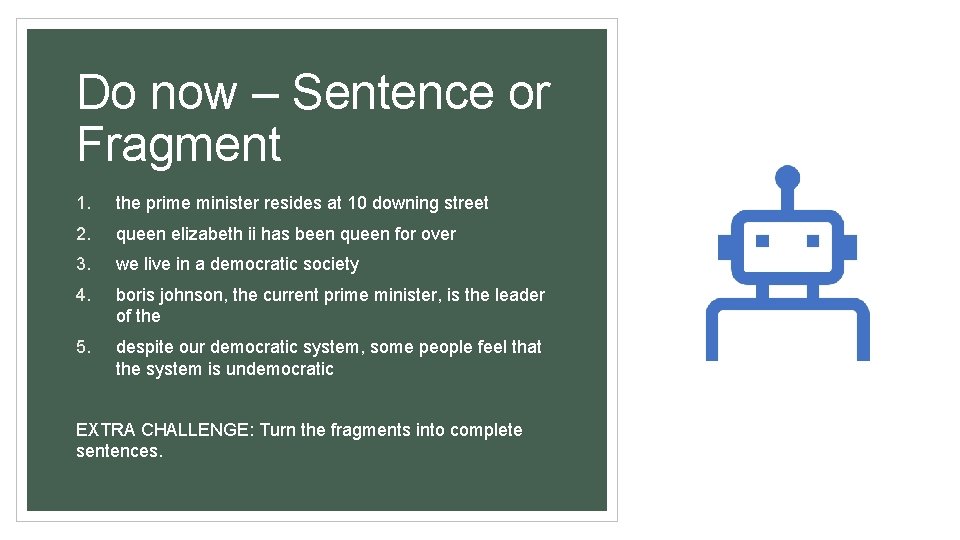
Do now – Sentence or Fragment 1. the prime minister resides at 10 downing street 2. queen elizabeth ii has been queen for over 3. we live in a democratic society 4. boris johnson, the current prime minister, is the leader of the 5. despite our democratic system, some people feel that the system is undemocratic EXTRA CHALLENGE: Turn the fragments into complete sentences.
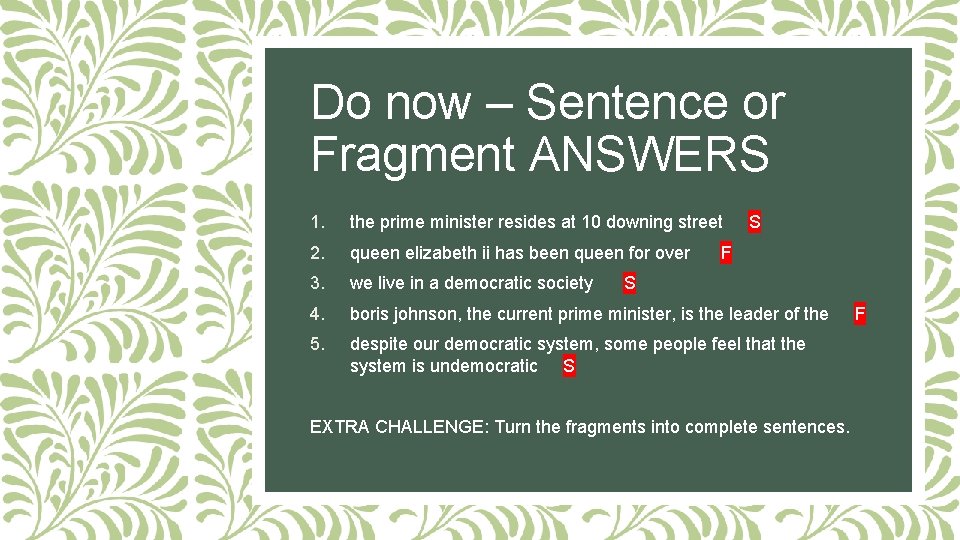
Do now – Sentence or Fragment ANSWERS 1. the prime minister resides at 10 downing street S 2. queen elizabeth ii has been queen for over F 3. we live in a democratic society S 4. boris johnson, the current prime minister, is the leader of the F 5. despite our democratic system, some people feel that the system is undemocratic S EXTRA CHALLENGE: Turn the fragments into complete sentences.
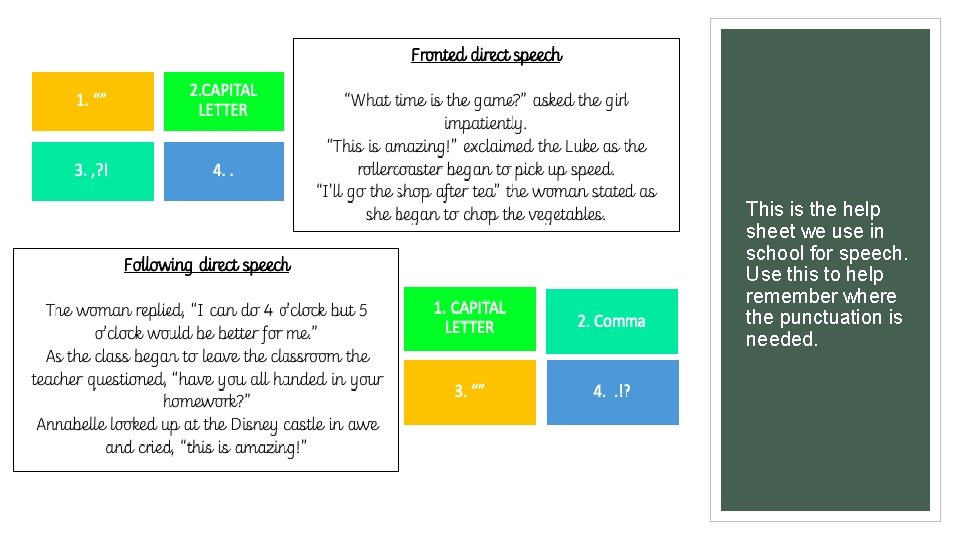
This is the help sheet we use in school for speech. Use this to help remember where the punctuation is needed.
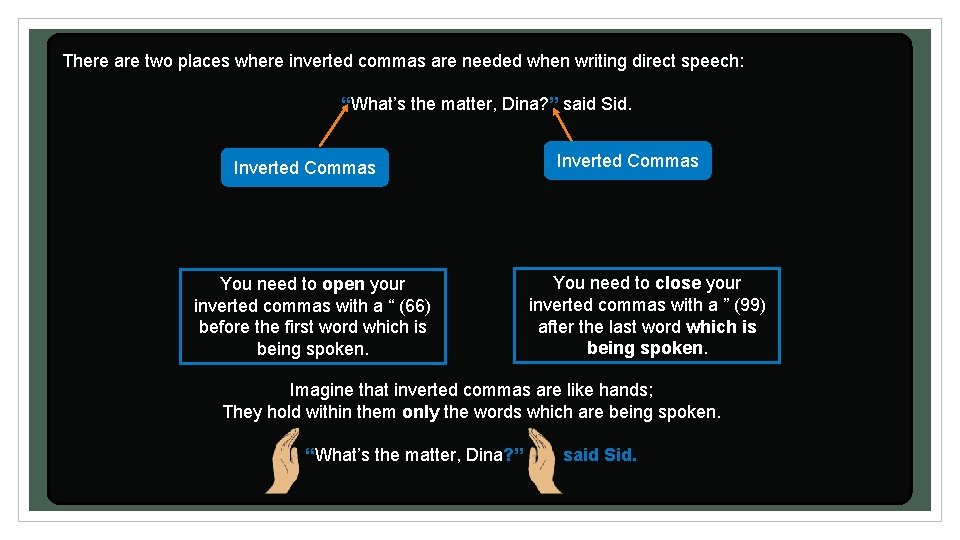
There are two places where inverted commas are needed when writing direct speech: “What’s the matter, Dina? ” said Sid. Inverted Commas You need to open your inverted commas with a “ (66) before the first word which is being spoken. You need to close your inverted commas with a ” (99) after the last word which is being spoken. Imagine that inverted commas are like hands; They hold within them only the words which are being spoken. “What’s the matter, Dina? ” said Sid.
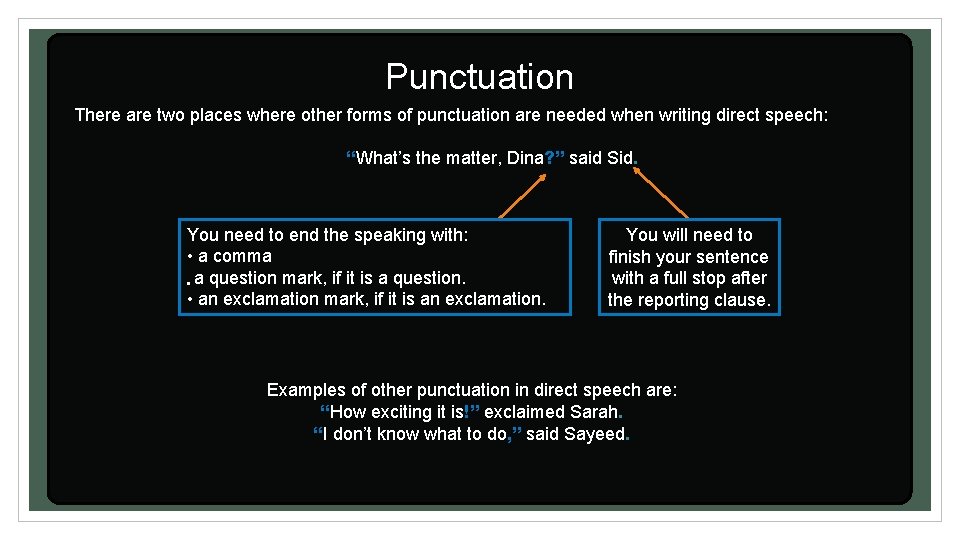
Punctuation There are two places where other forms of punctuation are needed when writing direct speech: “What’s the matter, Dina? ” said Sid. You need to end the speaking with: • a comma a question mark, if it is a question. • • an exclamation mark, if it is an exclamation. You will need to finish your sentence with a full stop after the reporting clause. Examples of other punctuation in direct speech are: “How exciting it is!” exclaimed Sarah. “I don’t know what to do, ” said Sayeed.
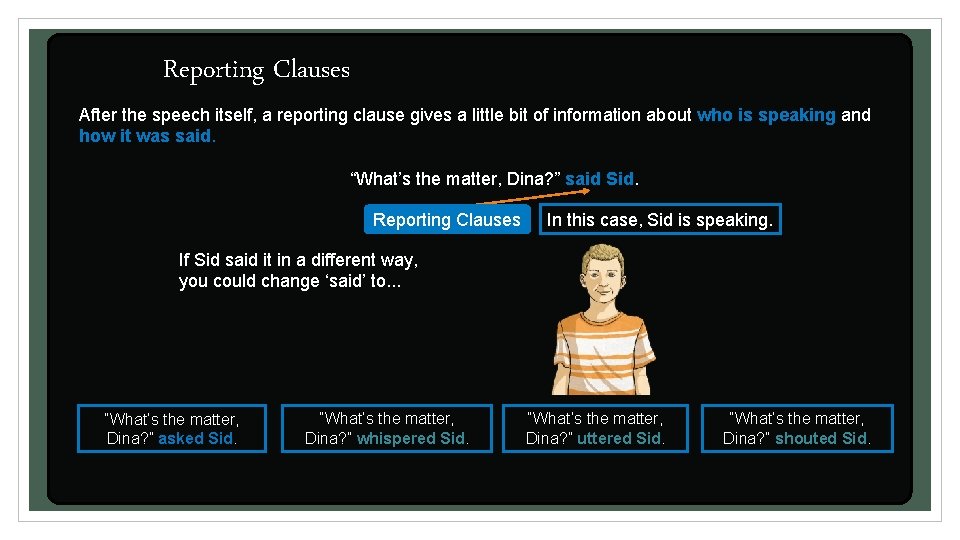
Reporting Clauses After the speech itself, a reporting clause gives a little bit of information about who is speaking and how it was said. “What’s the matter, Dina? ” said Sid. Reporting Clauses If Sid said it in a different way, you could change ‘said’ to. . . “What’s the matter, Dina? ” asked Sid. “What’s the matter, Dina? ” whispered Sid. In this case, Sid is speaking. “What’s the matter, Dina? ” uttered Sid. “What’s the matter, Dina? ” shouted Sid.
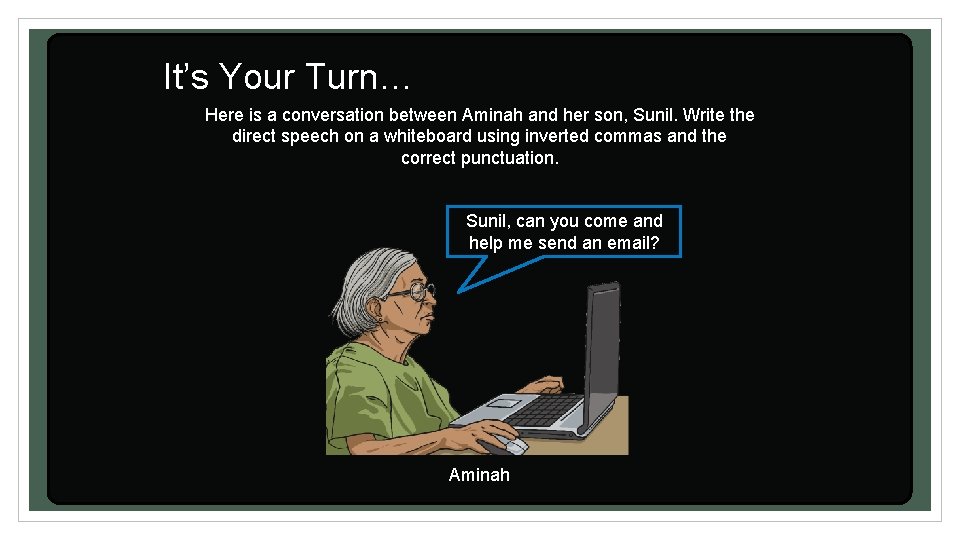
It’s Your Turn… Here is a conversation between Aminah and her son, Sunil. Write the direct speech on a whiteboard using inverted commas and the correct punctuation. Sunil, can you come and help me send an email? Aminah
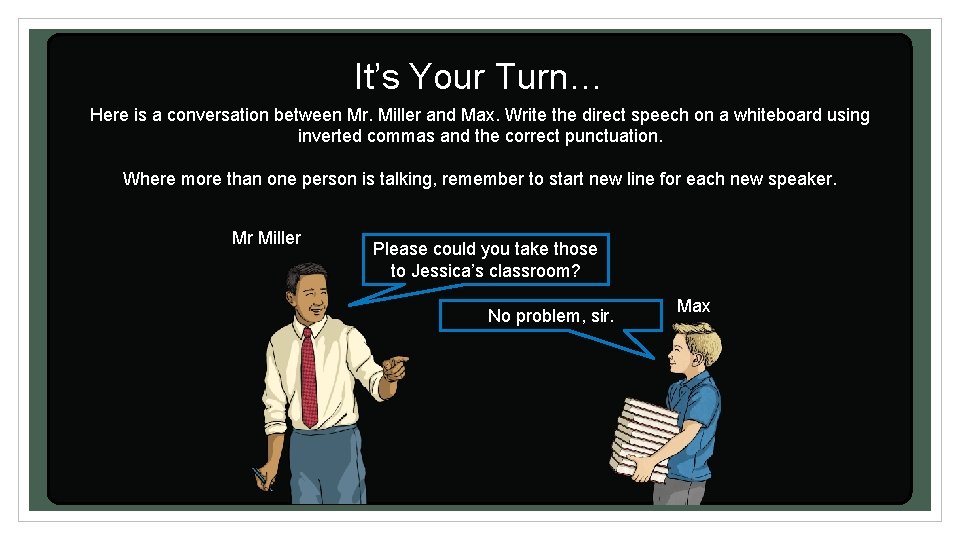
It’s Your Turn… Here is a conversation between Mr. Miller and Max. Write the direct speech on a whiteboard using inverted commas and the correct punctuation. Where more than one person is talking, remember to start new line for each new speaker. Mr Miller Please could you take those to Jessica’s classroom? No problem, sir. Max
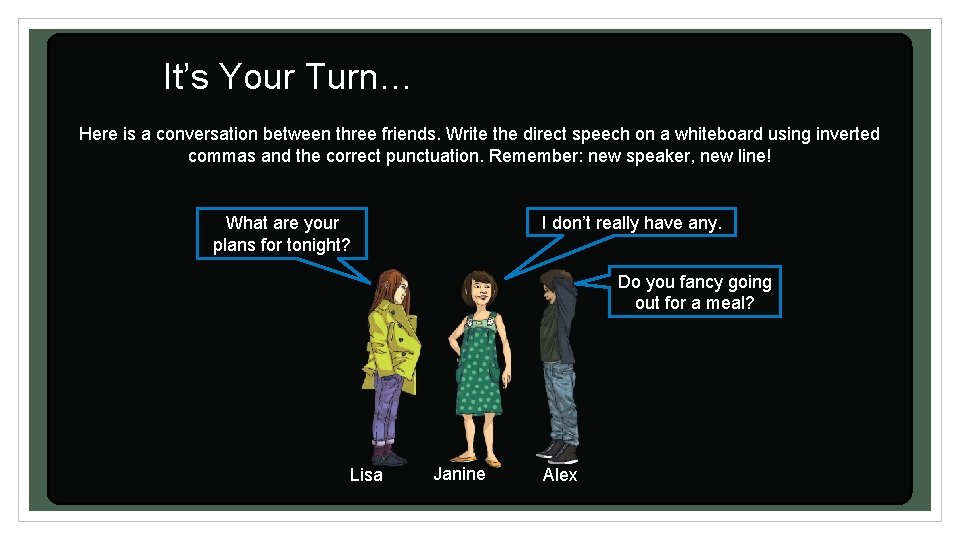
It’s Your Turn… Here is a conversation between three friends. Write the direct speech on a whiteboard using inverted commas and the correct punctuation. Remember: new speaker, new line! I don’t really have any. What are your plans for tonight? Lisa Janine Do you fancy going out for a meal? Alex
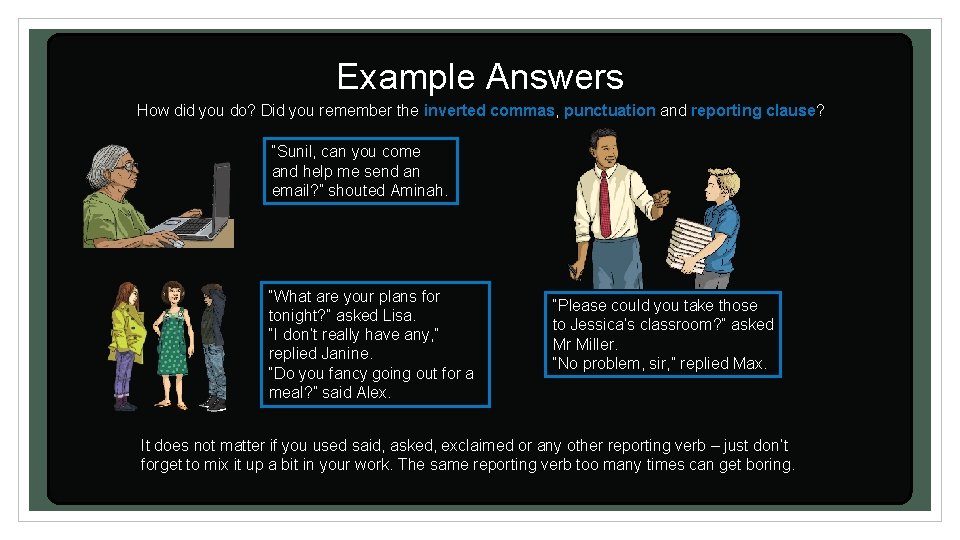
Example Answers How did you do? Did you remember the inverted commas, punctuation and reporting clause? “Sunil, can you come and help me send an email? ” shouted Aminah. “What are your plans for tonight? ” asked Lisa. “I don’t really have any, ” replied Janine. “Do you fancy going out for a meal? ” said Alex. “Please could you take those to Jessica’s classroom? ” asked Mr Miller. “No problem, sir, ” replied Max. It does not matter if you used said, asked, exclaimed or any other reporting verb – just don’t forget to mix it up a bit in your work. The same reporting verb too many times can get boring.
Guided Reading Today is news day. Click on the Newsround logo to access the Newsround logo. Select a few articles that of interest to you. You might also like to watch today’s Newsround episode.
Day 5 – WALT: Answer questions about a text
Spelling Shed To practice your spellings you need to spend 10 minutes on spelling shed. Click on the face to access the Spelling Shed website. If you’re having any problems logging in please contact us via the contact form at the bottom of the home learning page.
Today your English and Guided Reading are rolled into one! You have a reading comprehension to complete. You will find this underneath the slides named ‘Day 5 – Reading Comprehension’. Make sure you read the text carefully and mark your answers at the end.
You made it! Well done Year 4 another great week of learning. Keep yourself safe and well over the weekend and we’ll return on Monday.