HOH 609 MANAGING RESORT OPERATIONS Lecture 9 Managing

- Slides: 29
HOH 609 MANAGING RESORT OPERATIONS Lecture 9: Managing Quality
Learning Objectives § Define quality and understand the importance of it in the hotel sector § Understand explain the concept of quality gaps and quality costs § § Explain the differences between the various quality approaches: § Quality Inspection (QI) § Quality Control (QC) § Quality Assurance (QA) § Total Quality Management (TQM) § Continuous Improvement (CI) Develop an understanding of the different tools and techniques to manage quality in the resort environment
QUALITY
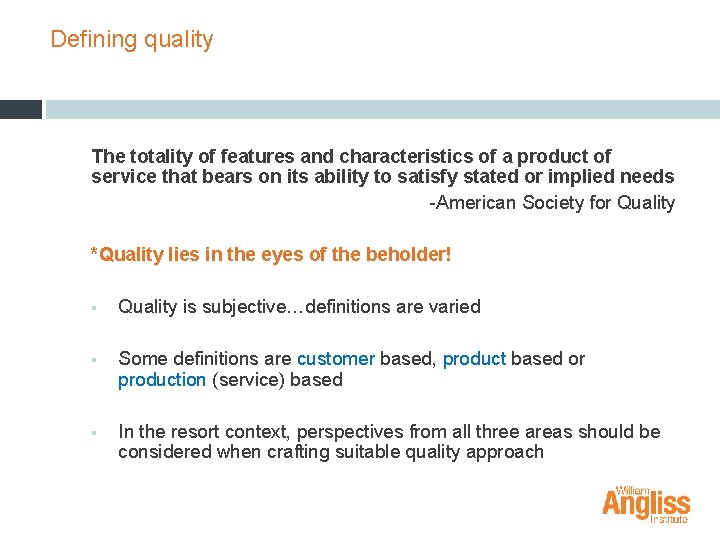
Defining quality The totality of features and characteristics of a product of service that bears on its ability to satisfy stated or implied needs -American Society for Quality *Quality lies in the eyes of the beholder! § Quality is subjective…definitions are varied § Some definitions are customer based, product based or production (service) based § In the resort context, perspectives from all three areas should be considered when crafting suitable quality approach
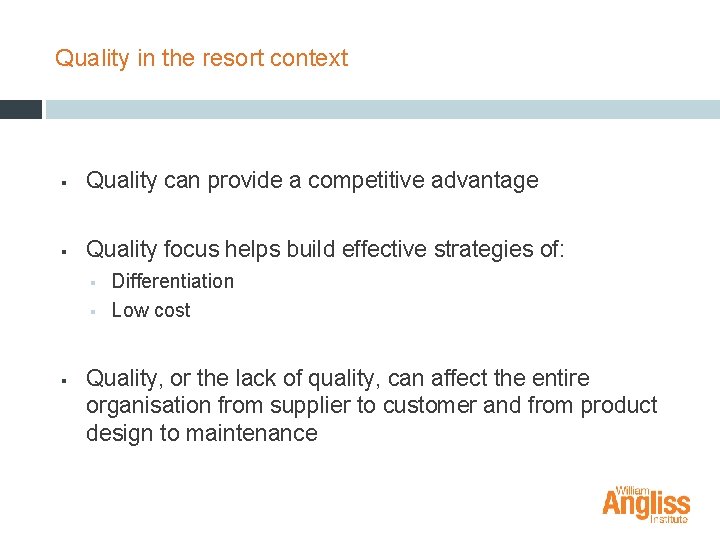
Quality in the resort context § Quality can provide a competitive advantage § Quality focus helps build effective strategies of: § § § Differentiation Low cost Quality, or the lack of quality, can affect the entire organisation from supplier to customer and from product design to maintenance
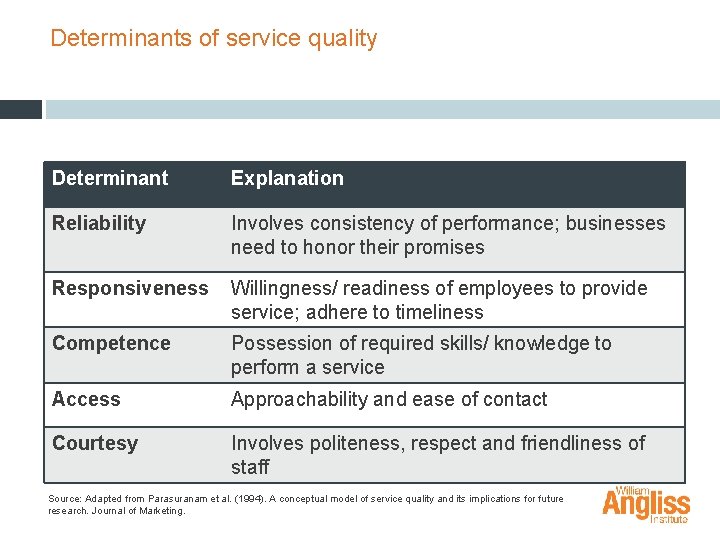
Determinants of service quality Determinant Explanation Reliability Involves consistency of performance; businesses need to honor their promises Responsiveness Willingness/ readiness of employees to provide service; adhere to timeliness Competence Possession of required skills/ knowledge to perform a service Access Approachability and ease of contact Courtesy Involves politeness, respect and friendliness of staff Source: Adapted from Parasuranam et al. (1994). A conceptual model of service quality and its implications for future research. Journal of Marketing.
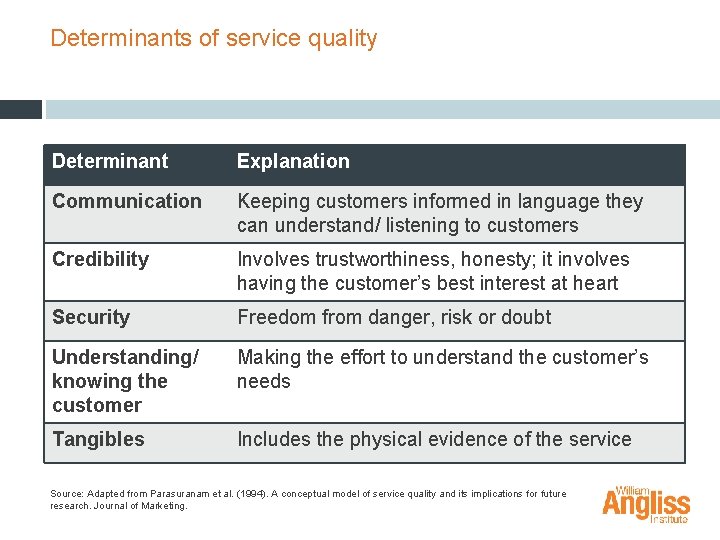
Determinants of service quality Determinant Explanation Communication Keeping customers informed in language they can understand/ listening to customers Credibility Involves trustworthiness, honesty; it involves having the customer’s best interest at heart Security Freedom from danger, risk or doubt Understanding/ knowing the customer Making the effort to understand the customer’s needs Tangibles Includes the physical evidence of the service Source: Adapted from Parasuranam et al. (1994). A conceptual model of service quality and its implications for future research. Journal of Marketing.
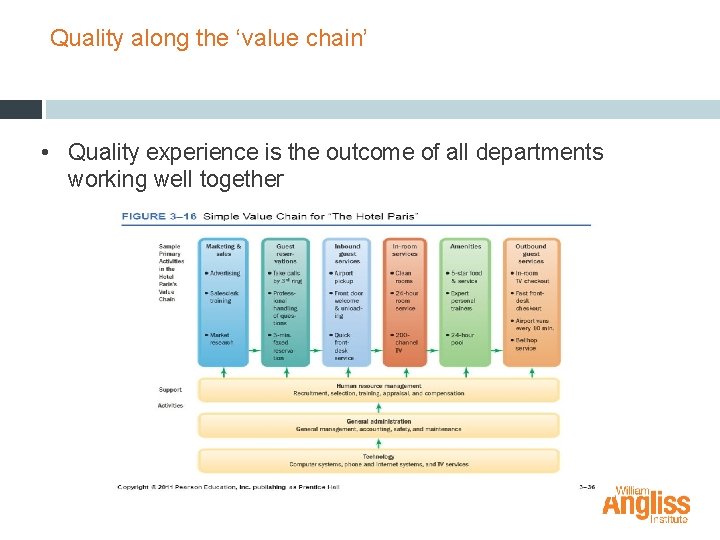
Quality along the ‘value chain’ • Quality experience is the outcome of all departments working well together
Value Chain Primary Activities § § Suppliers: high quality products / services, following rules and obligations, ethical, good relationships Marketing & sales: marketing communication and promotion (meeting expectations) § Operations (various departments): efficient & effective § Service: presenting products & services § After service: customer support and follow up (complaints)
Value Chain Support Activities § § § HR: recruitment, training and development… Technology: to improve customer satisfaction by making fast and instant customer service Administration: support and facilitation
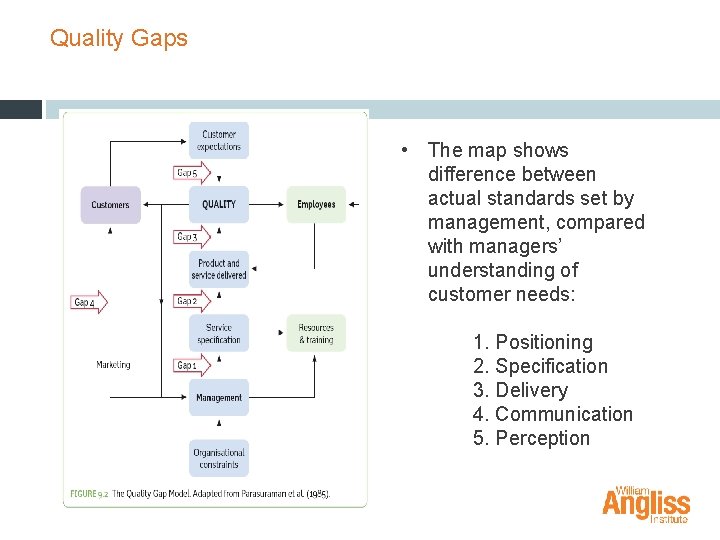
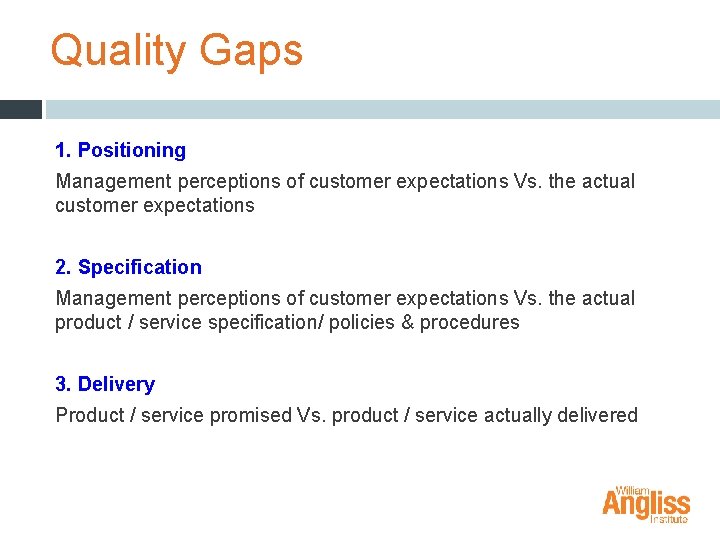
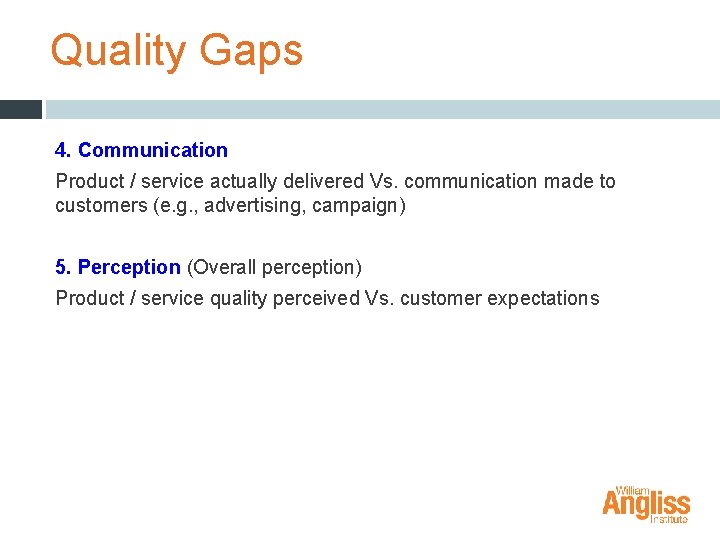
Quality Gaps • The map shows difference between actual standards set by management, compared with managers’ understanding of customer needs: 1. Positioning 2. Specification 3. Delivery 4. Communication 5. Perception
Quality Gaps 1. Positioning Management perceptions of customer expectations Vs. the actual customer expectations 2. Specification Management perceptions of customer expectations Vs. the actual product / service specification/ policies & procedures 3. Delivery Product / service promised Vs. product / service actually delivered
Quality Gaps 4. Communication Product / service actually delivered Vs. communication made to customers (e. g. , advertising, campaign) 5. Perception (Overall perception) Product / service quality perceived Vs. customer expectations
Quality at the Ritz Carlton https: //www. youtube. com/watch? v=f 8 v. Pfo 9 Hm 8 I
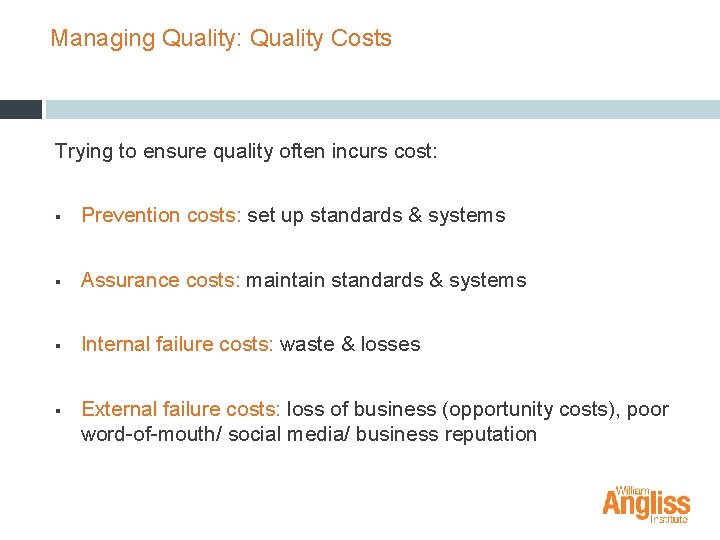
Managing Quality: Quality Costs Trying to ensure quality often incurs cost: § Prevention costs: set up standards & systems § Assurance costs: maintain standards & systems § Internal failure costs: waste & losses § External failure costs: loss of business (opportunity costs), poor word-of-mouth/ social media/ business reputation
How to manage quality?
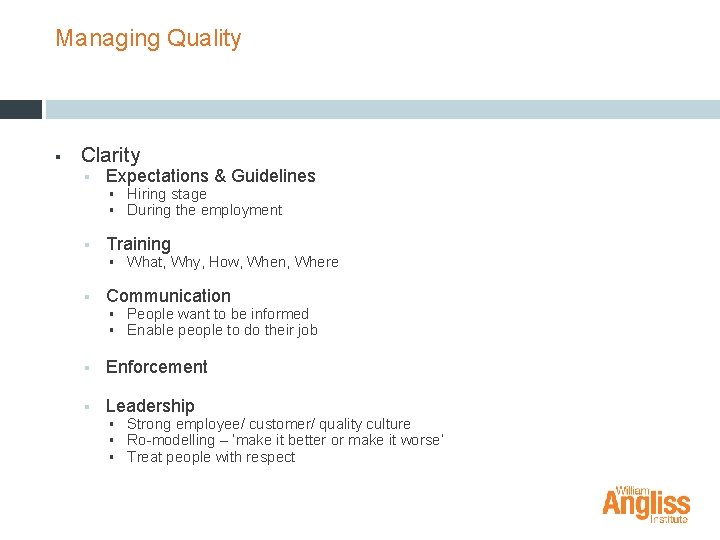
Managing Quality § Clarity § Expectations & Guidelines § § § Training § § Hiring stage During the employment What, Why, How, When, Where Communication § § People want to be informed Enable people to do their job § Enforcement § Leadership § § § Strong employee/ customer/ quality culture Ro-modelling – ‘make it better or make it worse’ Treat people with respect
Quality concepts
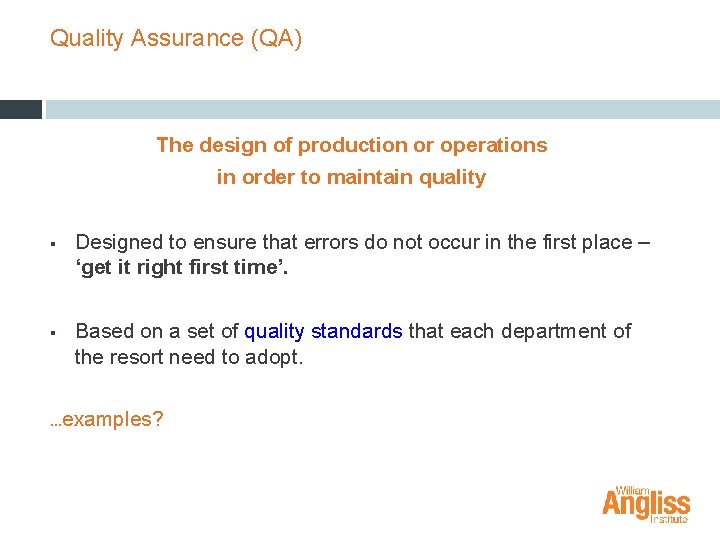
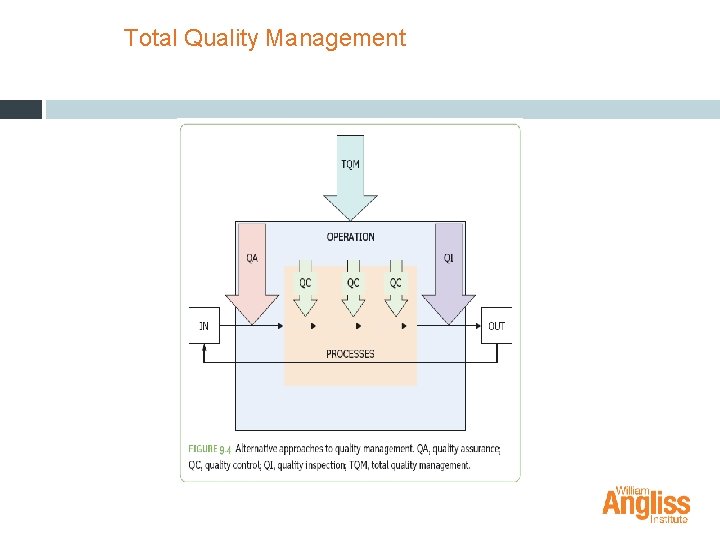
Quality Assurance (QA) The design of production or operations in order to maintain quality § § Designed to ensure that errors do not occur in the first place – ‘get it right first time’. Based on a set of quality standards that each department of the resort need to adopt. …examples?
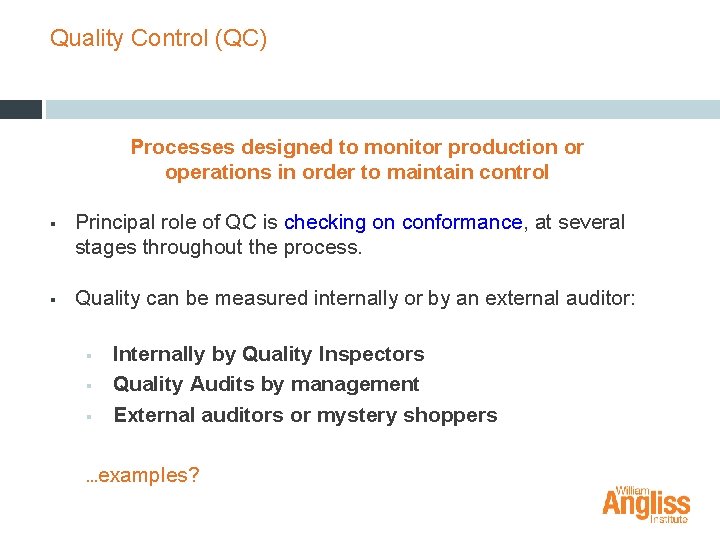
Quality Control (QC) Processes designed to monitor production or operations in order to maintain control § § Principal role of QC is checking on conformance, at several stages throughout the process. Quality can be measured internally or by an external auditor: § § § Internally by Quality Inspectors Quality Audits by management External auditors or mystery shoppers …examples?
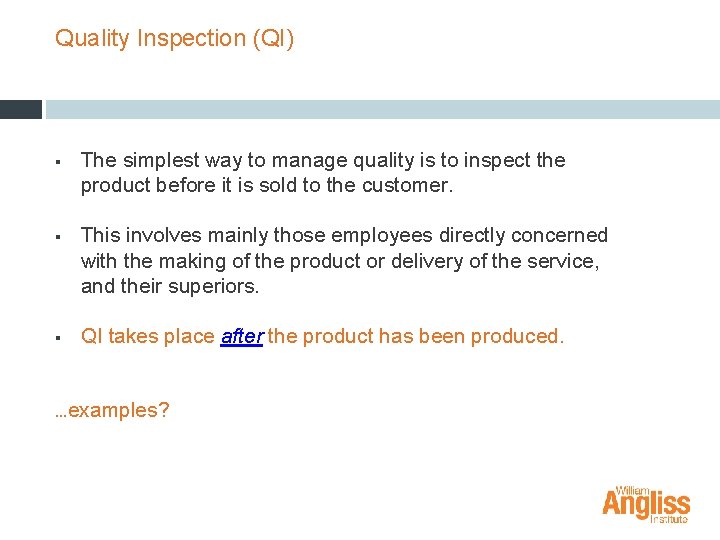
Quality Inspection (QI) § § § The simplest way to manage quality is to inspect the product before it is sold to the customer. This involves mainly those employees directly concerned with the making of the product or delivery of the service, and their superiors. QI takes place after the product has been produced. …examples?
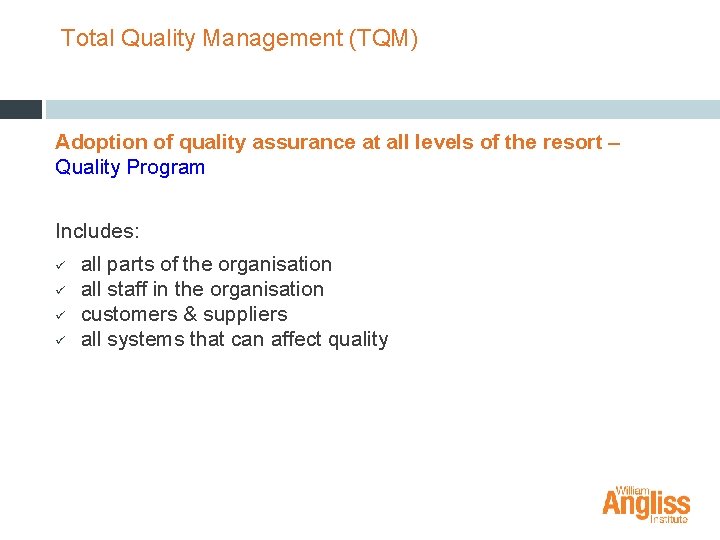
Total Quality Management (TQM) Adoption of quality assurance at all levels of the resort – Quality Program Includes: ü ü all parts of the organisation all staff in the organisation customers & suppliers all systems that can affect quality
Total Quality Management
Quality methods
6 Sigma/ Lean management • Method and tools used to improve business performance – operational variance • Outcome – reduction in defects, improvement in profits, employee morale, and quality of products or services - overall performance • • This requires an examination of the whole supply chain https: //www. youtube. com/watch? v=kxxrzh 3 Ognk
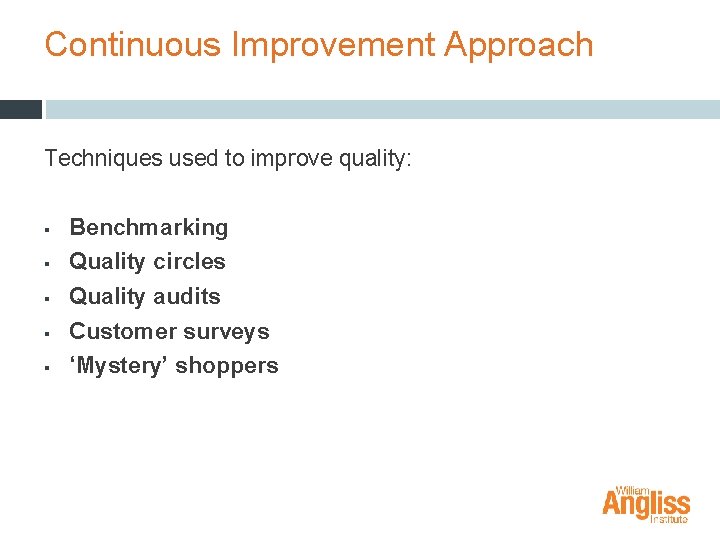
Continuous Improvement Approach Techniques used to improve quality: § Benchmarking § Quality circles § Quality audits § Customer surveys § ‘Mystery’ shoppers
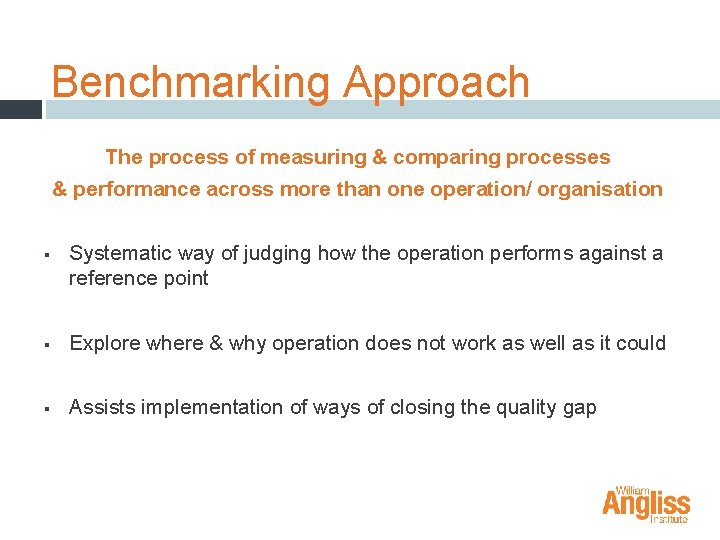
Benchmarking Approach The process of measuring & comparing processes & performance across more than one operation/ organisation § Systematic way of judging how the operation performs against a reference point § Explore where & why operation does not work as well as it could § Assists implementation of ways of closing the quality gap
Quality & High Performing Brands § § Employee and quality oriented workplace culture Management team that empowers and supports staff to resolve problems on the spot & go the ‘extra mile’
Summary § § Leading resort operations have quality built in to their organisation’s philosophy & ways of working They continually strive for continuous quality improvements Developing & managing quality assurance requires commitment from everyone in the operations Always has been a challenge given the nature of hospitality operations § Contemporary practices e. g. outsourcing, integrated supply chain, social media, ethical marketing