Hilary Janks writing a critical literacy approach hilary

- Slides: 26
Hilary Janks writing: a critical literacy approach hilary. janks@wits. ac. za Writing Development: Multiple Perspectives IOE July 2009
Overview • journal writing • critical approach • design • the redesign cycle • interdependent model CL Wits University 2009
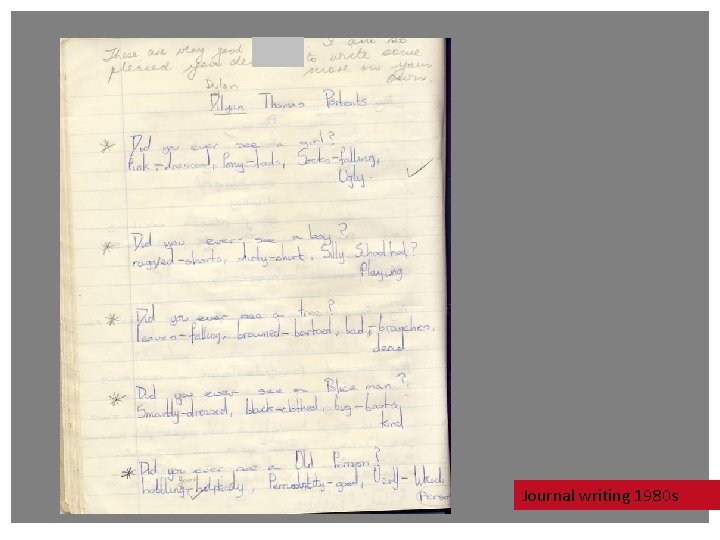
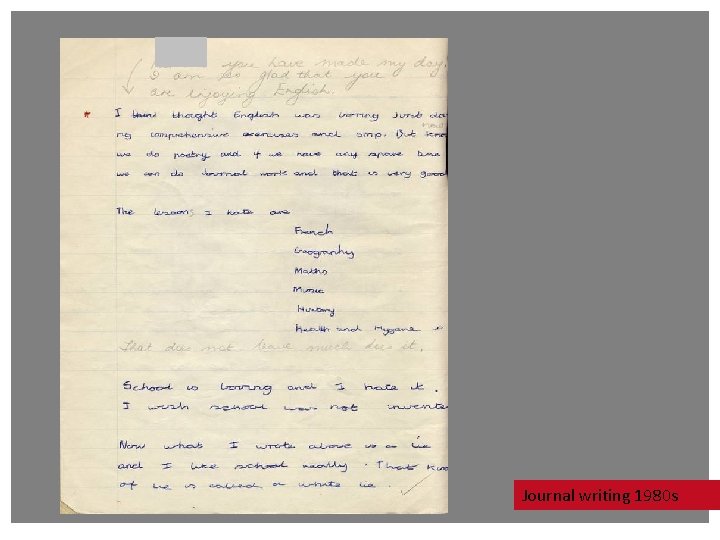
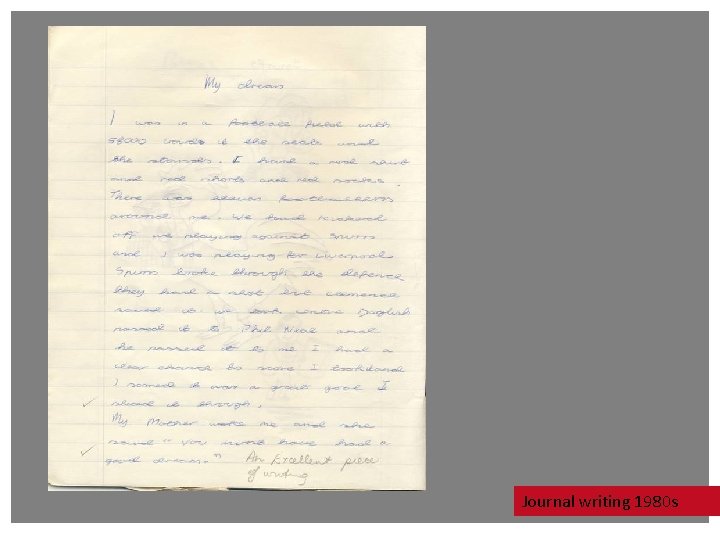
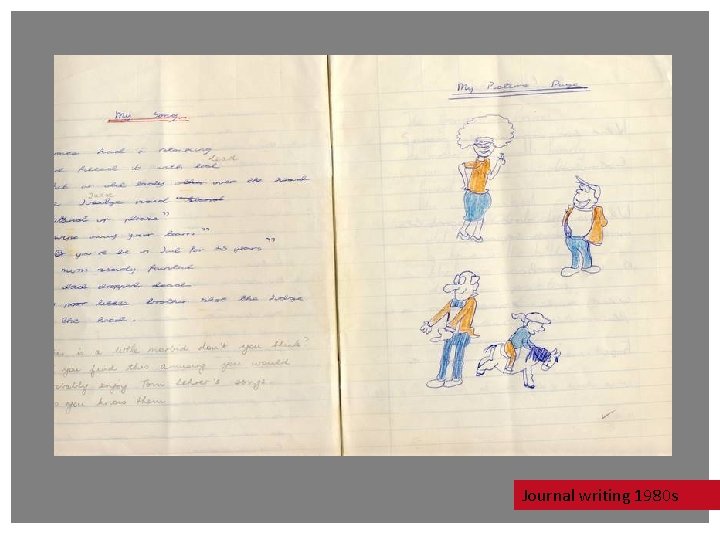
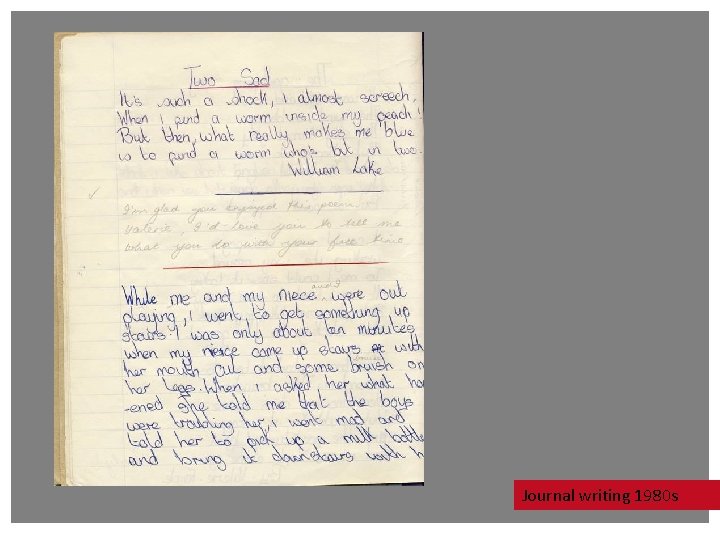
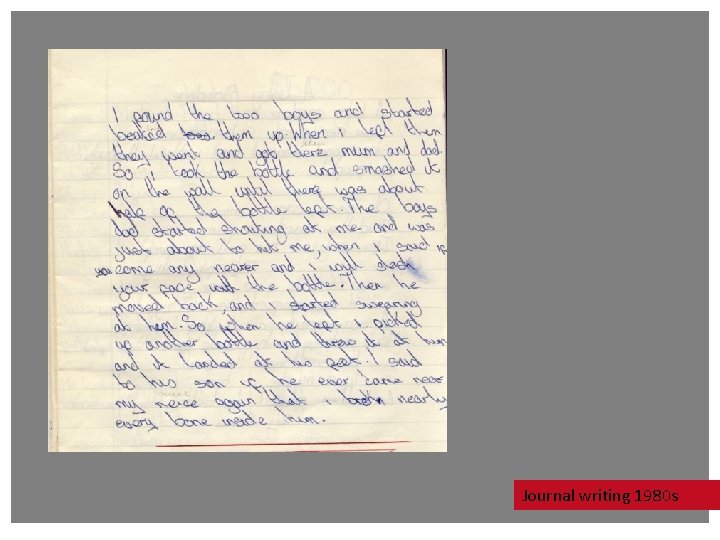
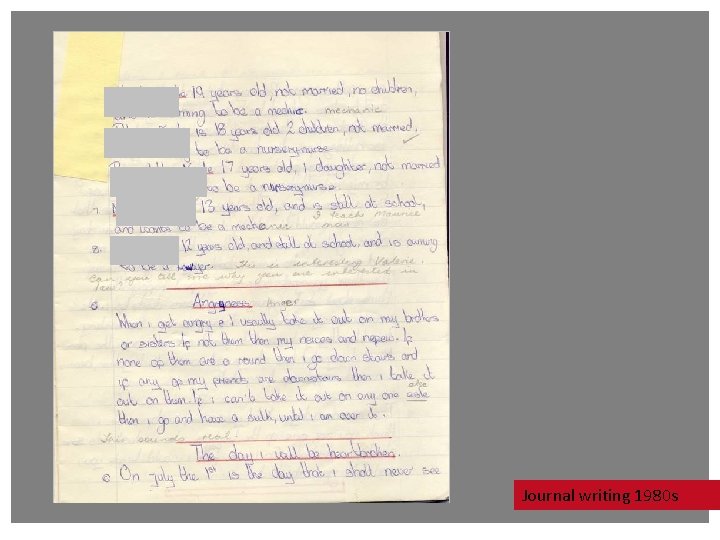
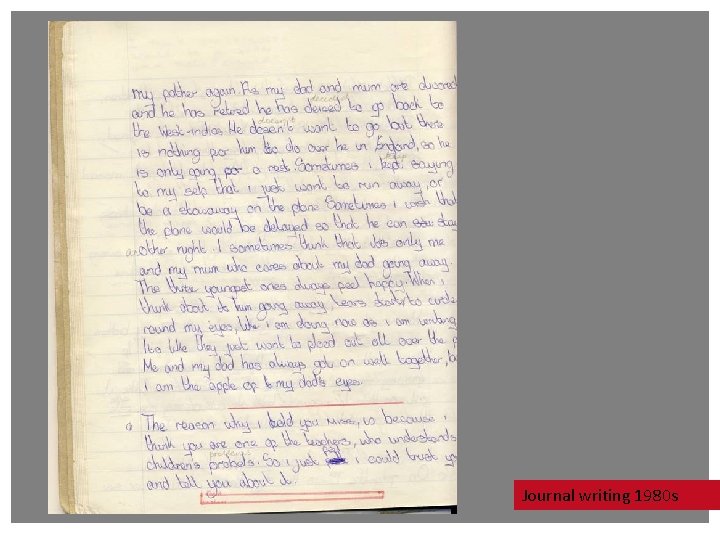
Journal writing • 1980 s • context • now Journal writing
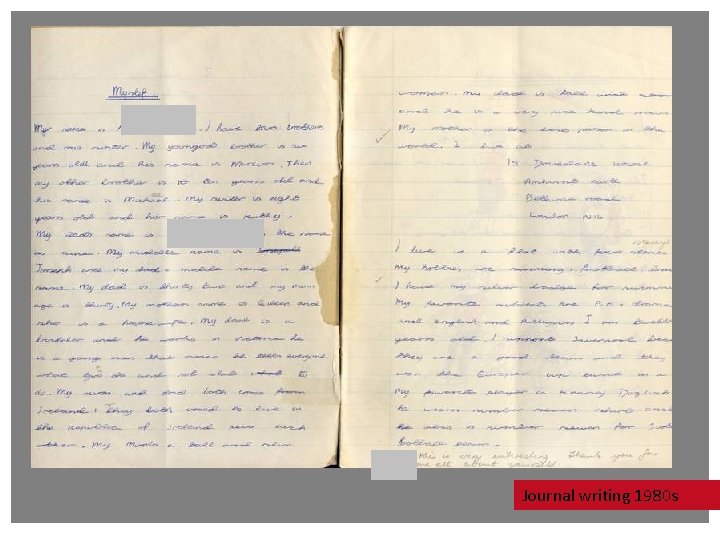
Journal writing 1980 s
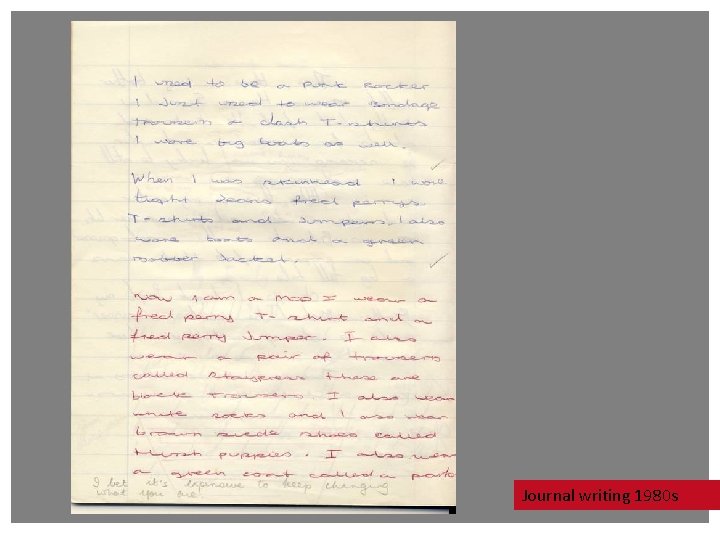
Journal writing 1980 s
Journal writing 1980 s
Journal writing 1980 s
Journal writing 1980 s
Journal writing 1980 s
Journal writing 1980 s
Journal writing 1980 s
Journal writing 1980 s
Journal writing 1980 s
Journal writing 1980 s
Journal writing • Context • where • when Journal writing
Critical approach • Freire • Clarke and Ivanic • School based • Kamler Critical approach
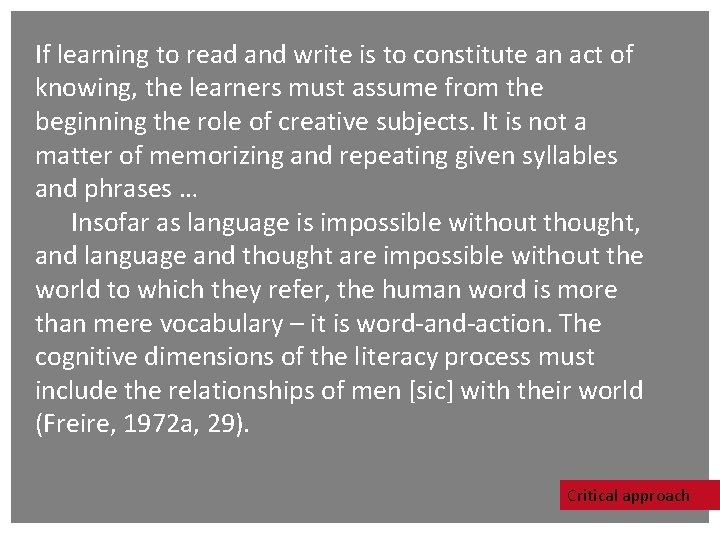
If learning to read and write is to constitute an act of knowing, the learners must assume from the beginning the role of creative subjects. It is not a matter of memorizing and repeating given syllables and phrases … Insofar as language is impossible without thought, and language and thought are impossible without the world to which they refer, the human word is more than mere vocabulary – it is word-and-action. The cognitive dimensions of the literacy process must include the relationships of men [sic] with their world (Freire, 1972 a, 29). Critical approach
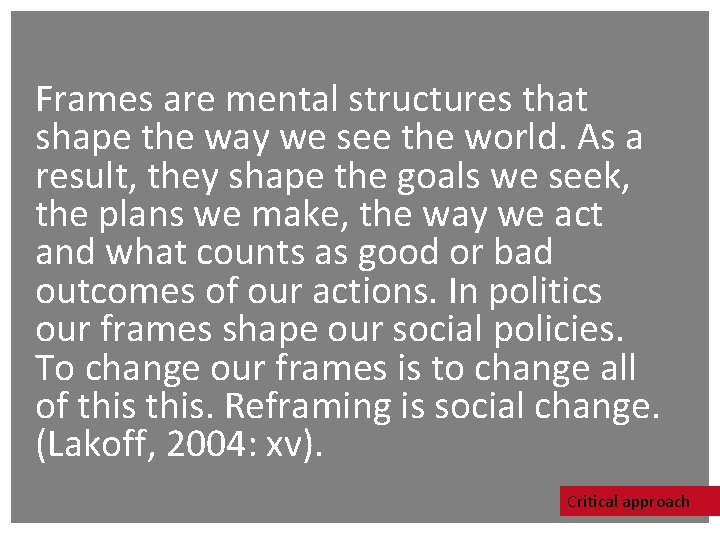
Frames are mental structures that shape the way we see the world. As a result, they shape the goals we seek, the plans we make, the way we act and what counts as good or bad outcomes of our actions. In politics our frames shape our social policies. To change our frames is to change all of this. Reframing is social change. (Lakoff, 2004: xv). Critical approach
Design • multimodality • text production • redesign Design
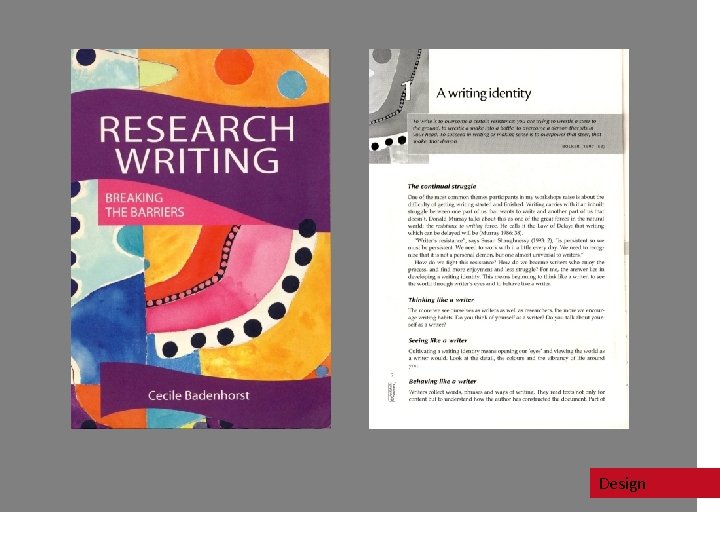
Design
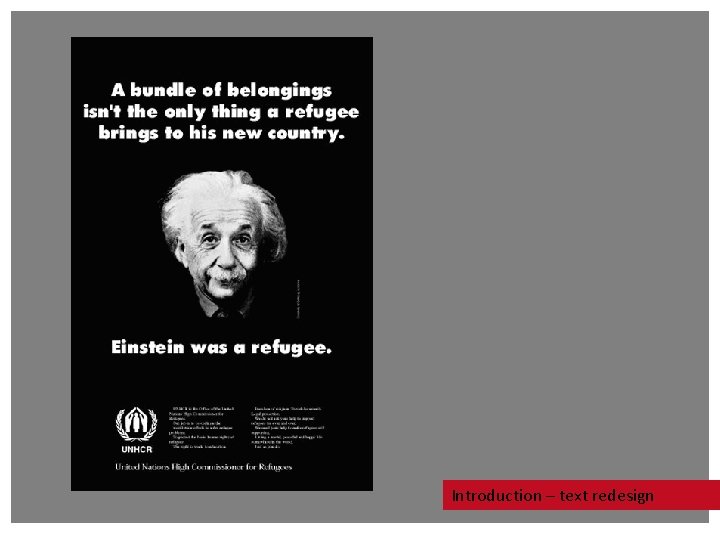
Introduction – text redesign
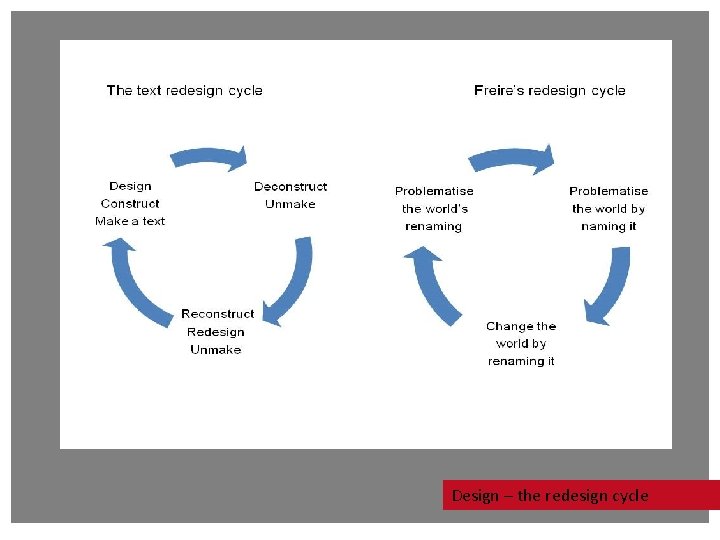
Design – the redesign cycle
Interdependence • power • access • diversity • design/redesign An interdependent model of critical literacy
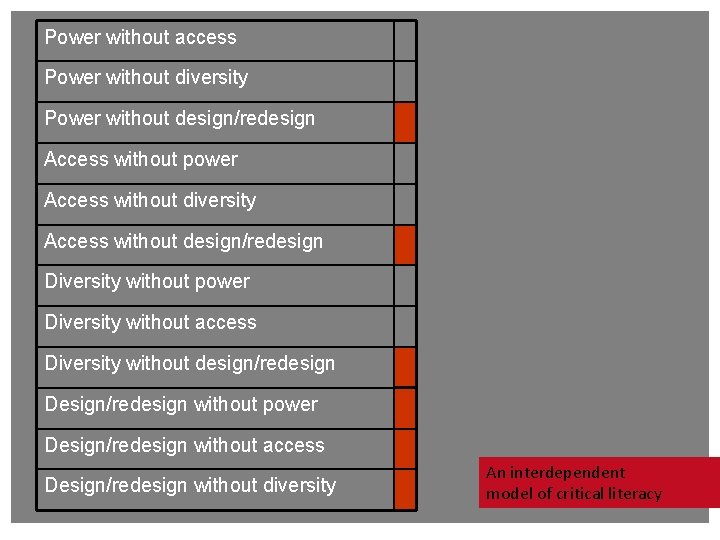
Power without access Power without diversity Power without design/redesign Access without power Access without diversity Access without design/redesign Diversity without power Diversity without access Diversity without design/redesign Design/redesign without power Design/redesign without access Design/redesign without diversity An interdependent model of critical literacy
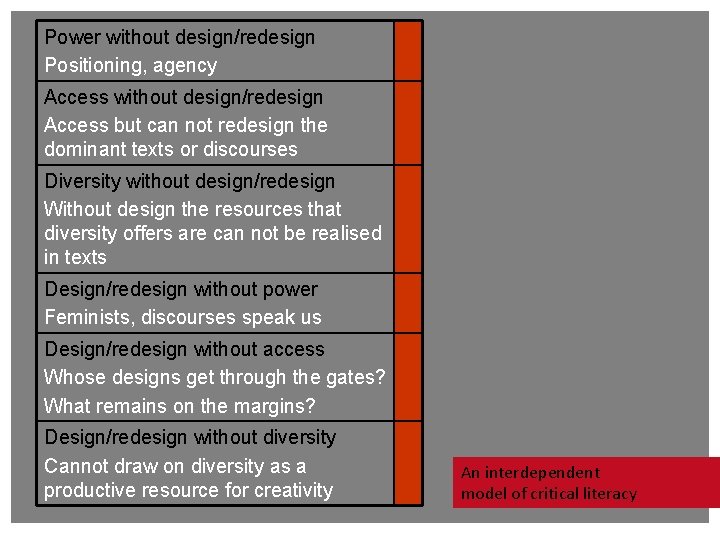
Power without design/redesign Positioning, agency Access without design/redesign Access but can not redesign the dominant texts or discourses Diversity without design/redesign Without design the resources that diversity offers are can not be realised in texts Design/redesign without power Feminists, discourses speak us Design/redesign without access Whose designs get through the gates? What remains on the margins? Design/redesign without diversity Cannot draw on diversity as a productive resource for creativity An interdependent model of critical literacy
Conclusion Bolinger (1980) described language as a loaded weapon. As writers, we need to recognize the power of words to be used in the interests of good or evil. Ultimately, the choice is an ethical one which will determine how we ‘name’ our world and, in so doing, ourselves. The end