
HN 2018 PROMOTING TEACHING PROFESSIONALISM LEARNING Hilary Neve


- Slides: 56
HN 2018 PROMOTING TEACHING PROFESSIONALISM LEARNING Hilary Neve GP & Professor of Medical Education
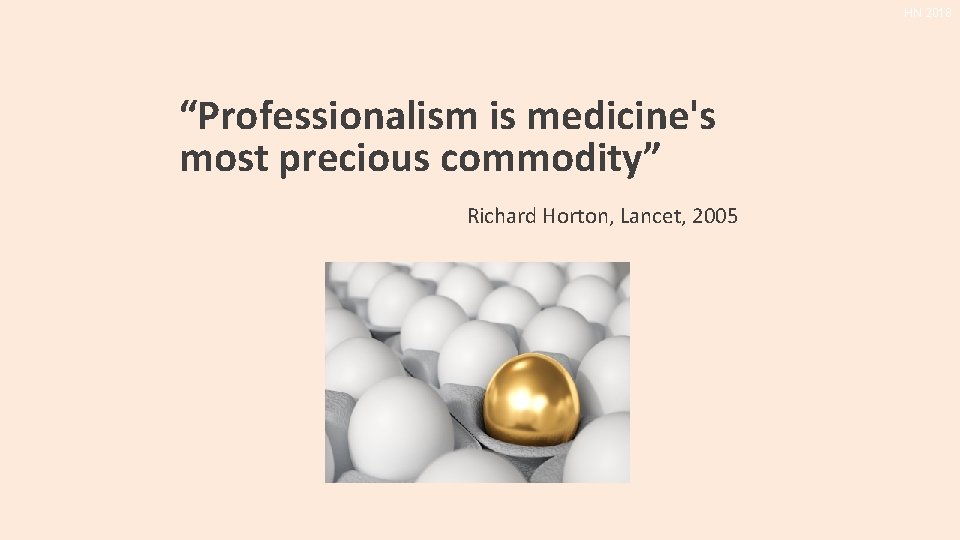
HN 2018 “Professionalism is medicine's most precious commodity” Richard Horton, Lancet, 2005
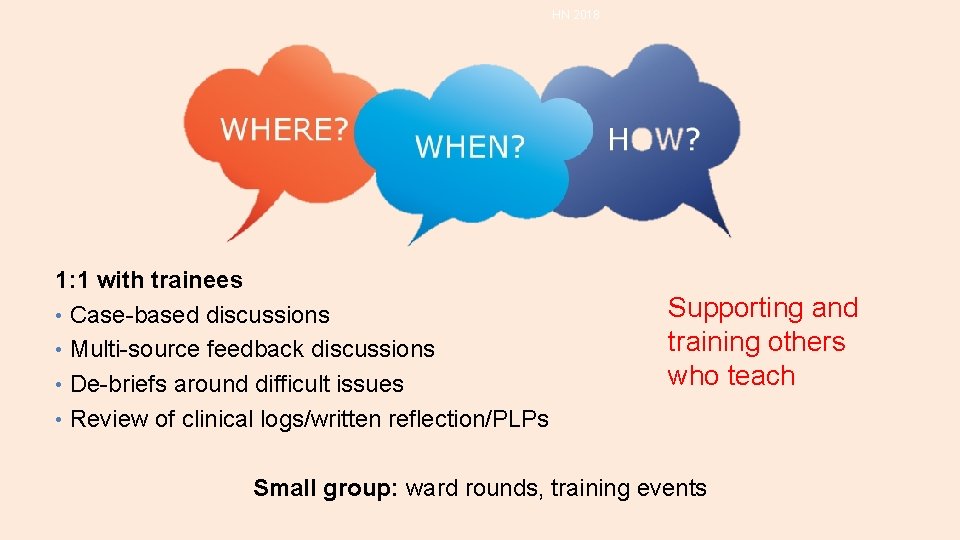
HN 2018 1: 1 with trainees • Case-based discussions • Multi-source feedback discussions • De-briefs around difficult issues • Review of clinical logs/written reflection/PLPs Supporting and training others who teach Small group: ward rounds, training events
HN 2018 WHAT?
HN 2018 WHAT DO YOU FIND CHALLENGING? Facilitating learning and engagement around professionalism?
HN 2018 THINGS I HAVE LEARNT
HN 2018
HN 2018 DEFINING PROFESSIONALISM
HN 2018
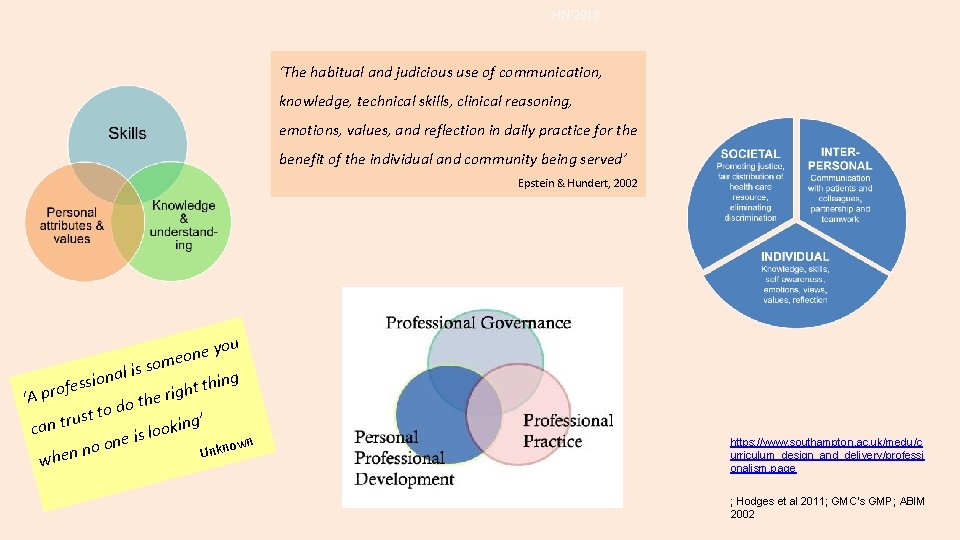
HN 2018 ‘The habitual and judicious use of communication, knowledge, technical skills, clinical reasoning, emotions, values, and reflection in daily practice for the benefit of the individual and community being served’ Epstein & Hundert, 2002 you e n o ome s s i l ing siona h s t e f t o h e rig ‘A pr h t o t to d s u r t ing’ k o can o l one is nown o k n n U n whe https: //www. southampton. ac. uk/medu/c urriculum_design_and_delivery/professi onalism. page ; Hodges et al 2011; GMC’s GMP; ABIM 2002
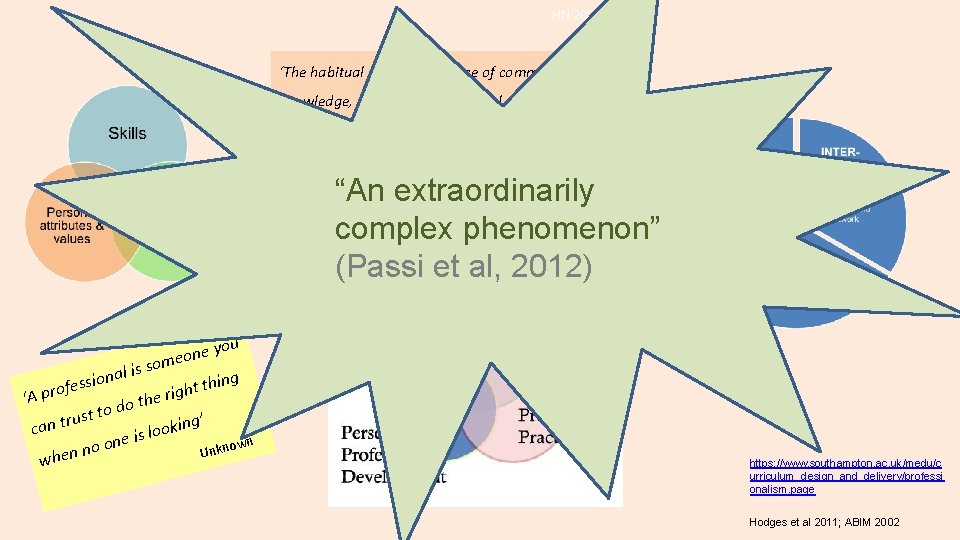
HN 2018 ‘The habitual and judicious use of communication, knowledge, technical skills, clinical reasoning, emotions, values, and reflection in daily practice for the benefit of the individual and community being served’ “An extraordinarily complex phenomenon” (Passi et al, 2012) Epstein & Hundert, 2002 you e n o ome s s i l ing siona h s t e f t o h e rig ‘A pr h t o t to d s u r t ing’ k o can o l one is nown o k n n U n whe https: //www. southampton. ac. uk/medu/c urriculum_design_and_delivery/professi onalism. page Hodges et al 2011; ABIM 2002
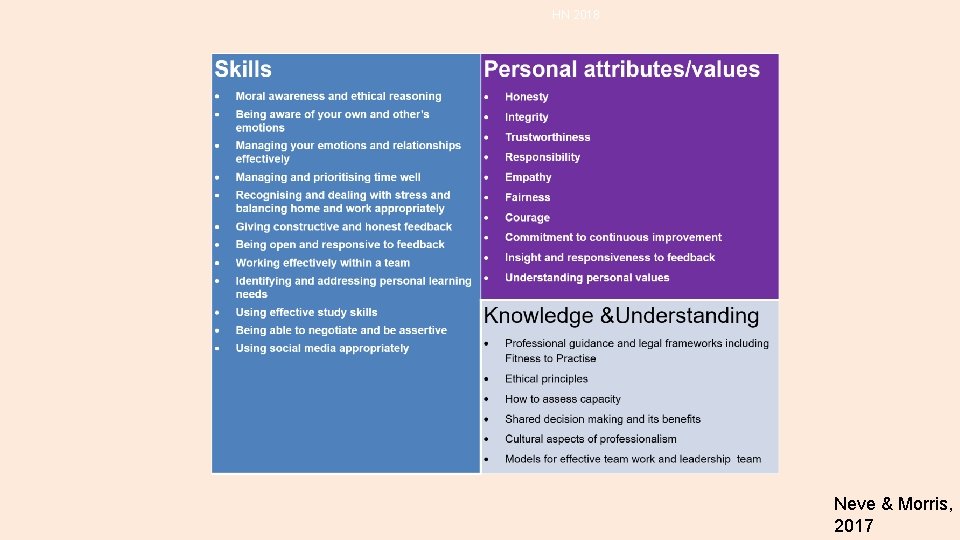
HN 2018 Neve & Morris, 2017
HN 2018
HN 2018
Comparative study across 3 medical schools “Students who experienced opportunities to engage in conversations about professionalism issues within clinically led small-group sessions demonstrated complex, embodied understandings of professionalism. Students predominately learning through lectures used a restricted range of discourses, focusing on dressing/acting like a professional” Monrouxe et al 2011
PROFESSIONAL IDENTITY Thinking, feeling, acting and becoming a doctor Cruess et al 2015
HN 2018
HN 2018 TIP 1: SUPPORT TRAINEES TO BUILD THEIR OWN UNDERSTANDINGS OF PROFESSIONALISM
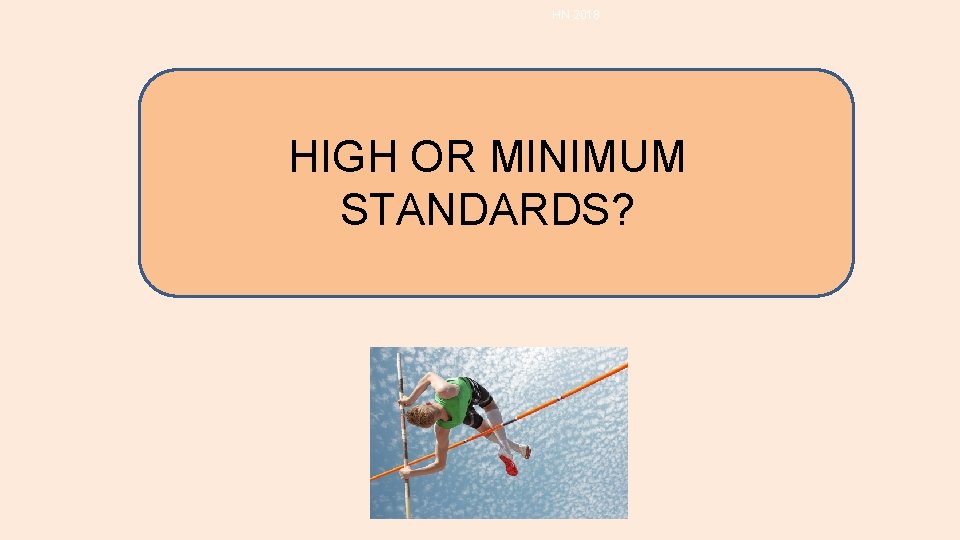
HN 2018 HIGH OR MINIMUM STANDARDS?
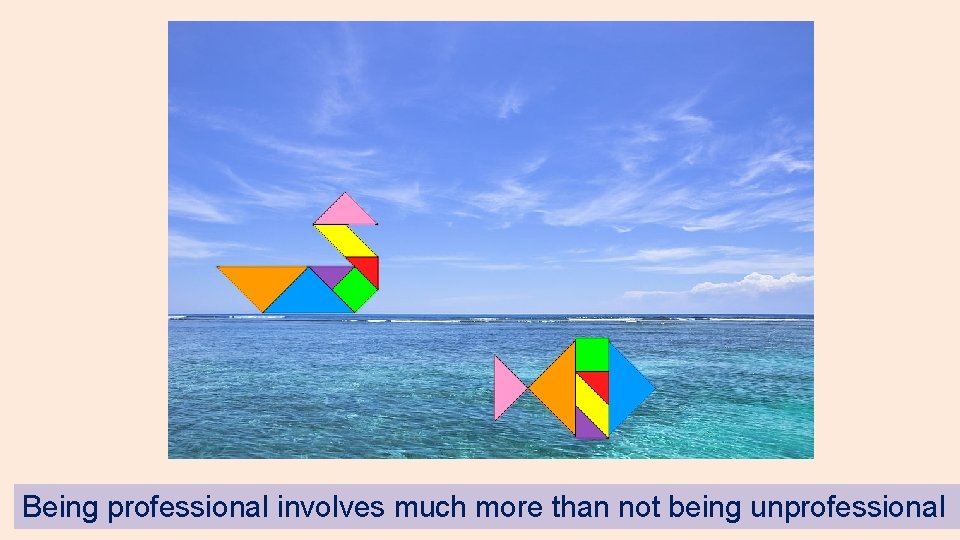
HN 2018 Being professional involves much more than not being unprofessional
Research commissioned by the General Medical Council 2014 showed newly qualified doctors encountered difficulties with: • • Prioritisation Angry or confused patients Clinical Disagreement Team issues Dealing with complexity & uncertainty Dealing with own emotional response Self care Monrouxe et al 2014
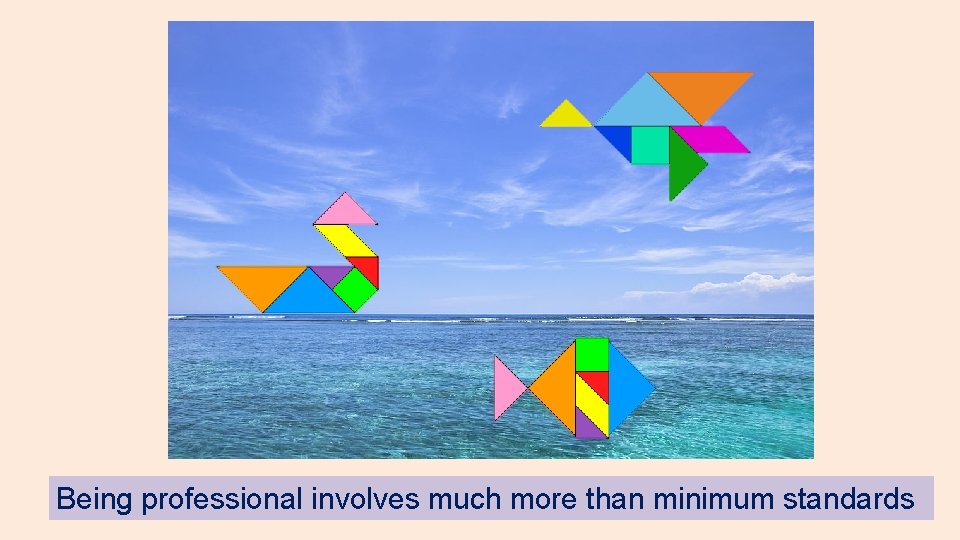
HN 2018 Being professional involves much more than minimum standards
HN 2018 MORE THAN….
HN 2018 TIP 2: EXPECT AND ASSESS FOR HIGH STANDARDS
HN 2018 WHAT WORKS? Your experiences?
Professionalism learning: what works? • Reflecting on and learning from experiences • Multiple different learning opportunities • Powerful influence of role models and the hidden curriculum
HN 2018 Reflection on experiences and dilemmas • Experience itself does not necessarily lead to learning (Epstein & Hundert 2002) • Reflection is vital in developing and maintaining lifelong competence (Mann et al 2009)
HN 2018 Critical Thinking and Questioning • What was good and bad – and in whose eyes? • What assumptions were you making? • Are there alternative explanations? • What choices did you have? • What could he/she have done differently? • What else?
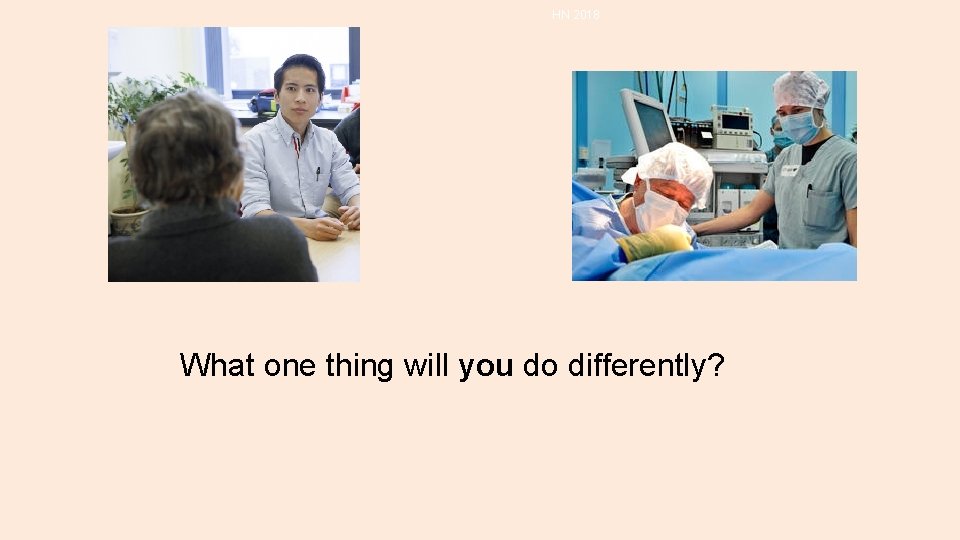
HN 2018 What one thing will you do differently?
HN 2018 Critical reflection in small groups • Offer multiple perspectives, mutual support • Support learners’ professional identity formation • Help reduce ethical erosion • Help prepare learners to for participation in interprofessional teams • Help learners confront uncertainty and complexity of real world • Helps develop self awareness and curiosity Wald 2015, Feudtner et al 1994, Mann et al 2009, Fraser & Greenhalgh, Salmon & Young 2011; Dyche & Epstein 2011
HN 2018 TIP 3: USE TRAINEES’ EXPERIENCES AND DILEMMAS TO TRIGGER PROFESSIONALISM DISCUSSIONS
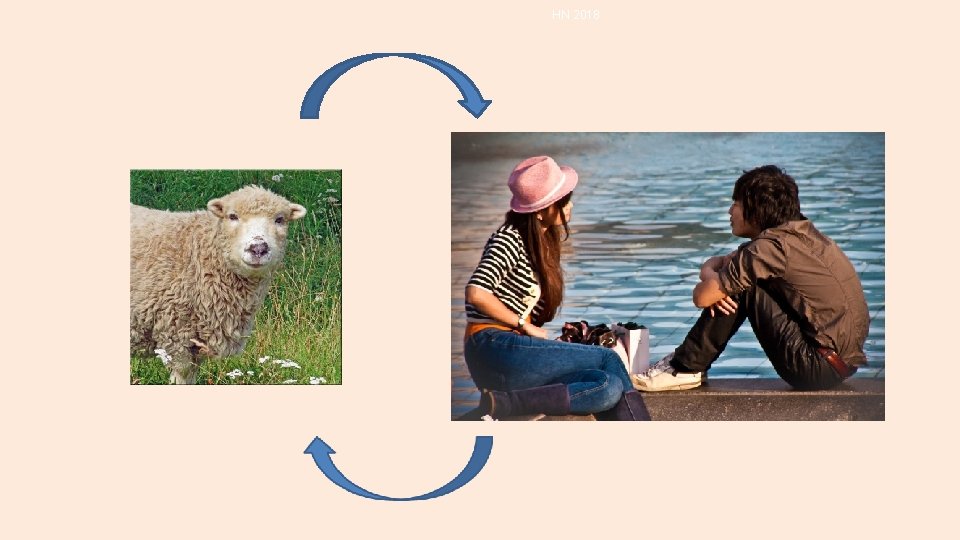
HN 2018 PROFESSIONALISM AS CHALLENGE
HN 2018
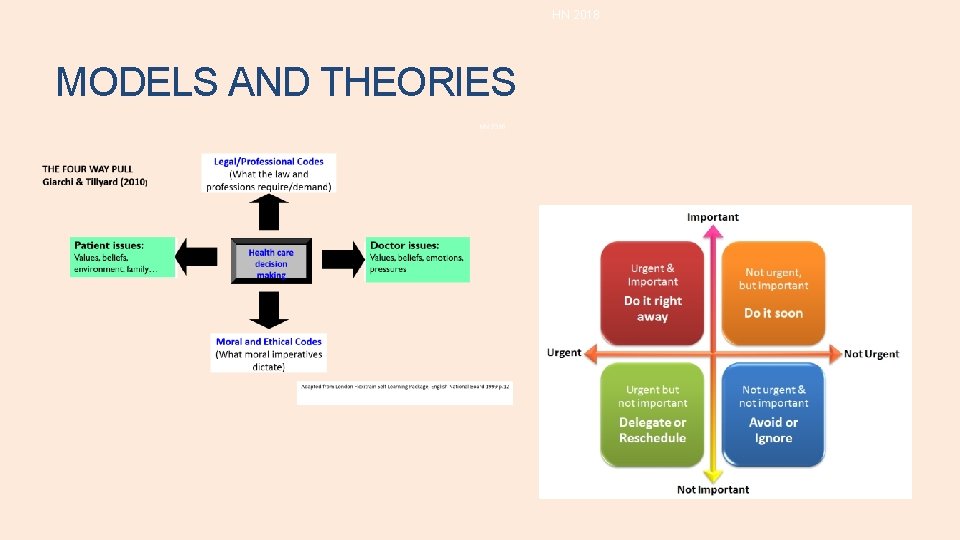
HN 2018 S T R E T C H and challenge • Ask: What is the evidence? • Expect learners to make and justify decisions using guidelines, law and ethical principles • Role play difficult scenarios (not just “what would you do? ”) e. g. giving feedback to a colleague, dealing with conflict or complaint • Support them to use these approaches in the real world
HN 2018 MODELS AND THEORIES
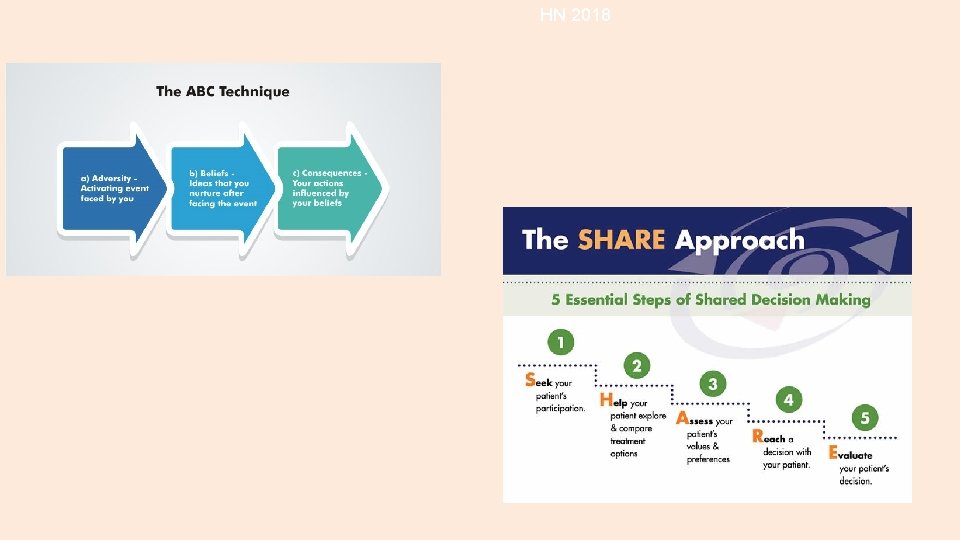
HN 2018
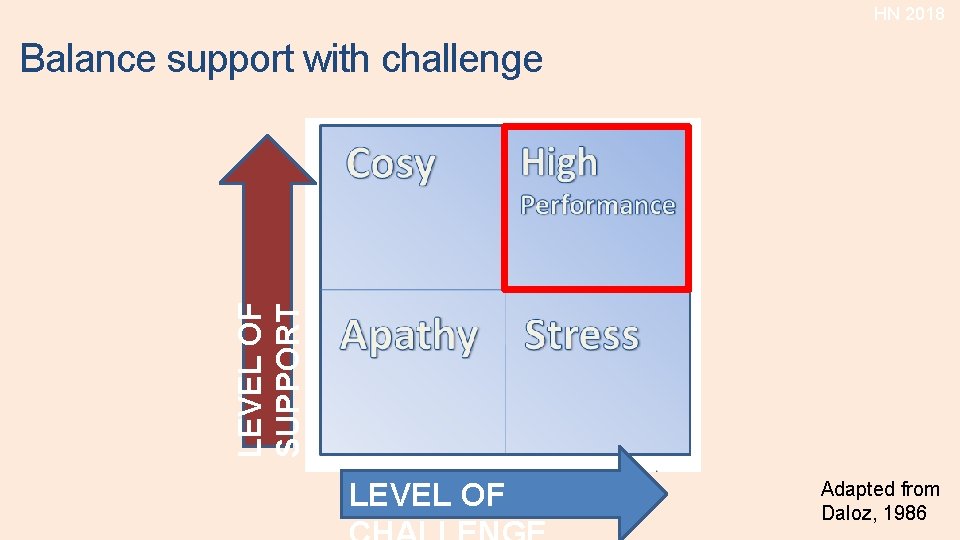
HN 2018 LEVEL OF SUPPORT Balance support with challenge LEVEL OF Adapted from Daloz, 1986
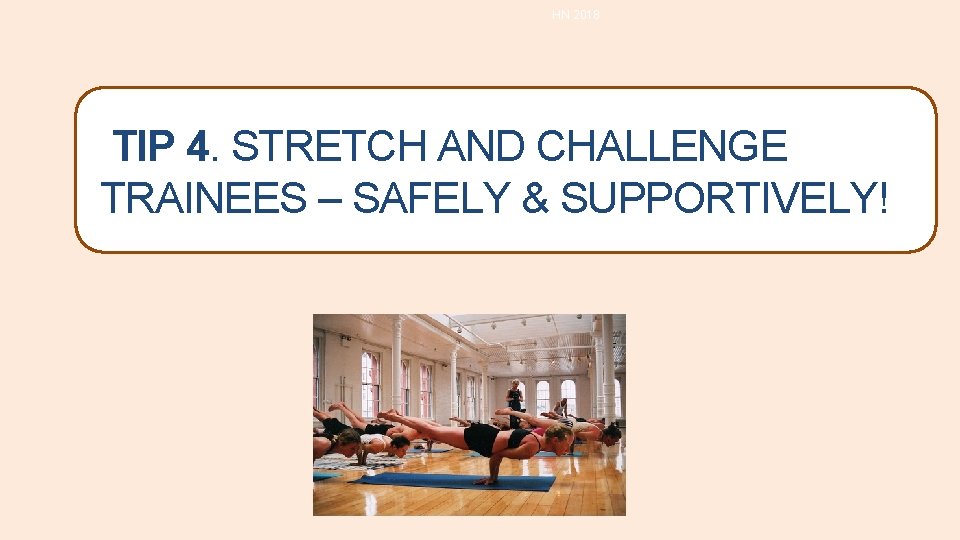
HN 2018 TIP 4. STRETCH AND CHALLENGE TRAINEES – SAFELY & SUPPORTIVELY!
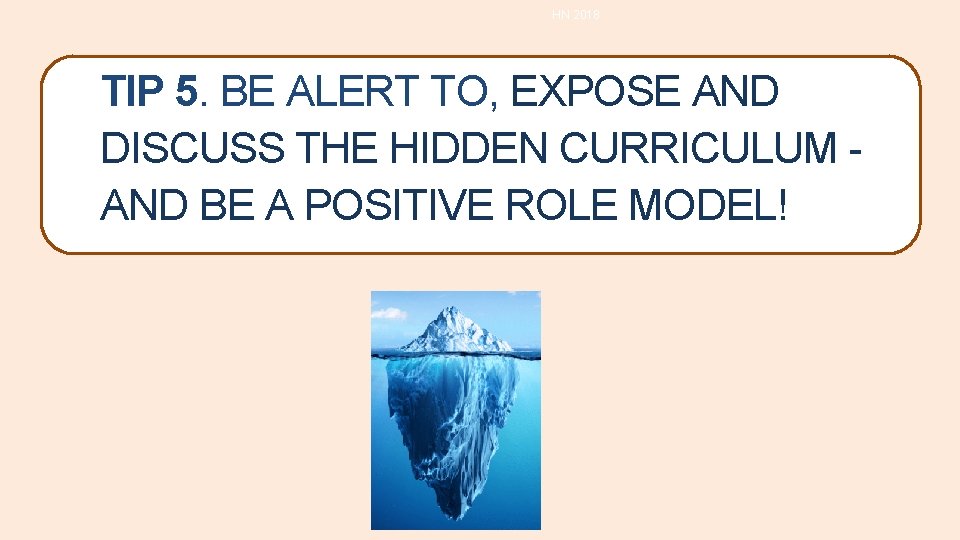
HN 2018 ROLE MODELLING & THE HIDDEN CURRICULUM
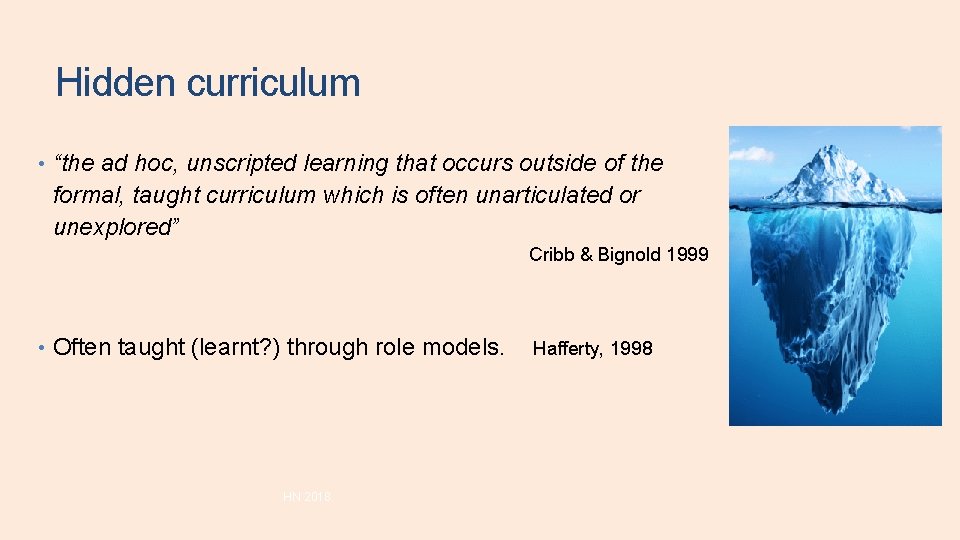
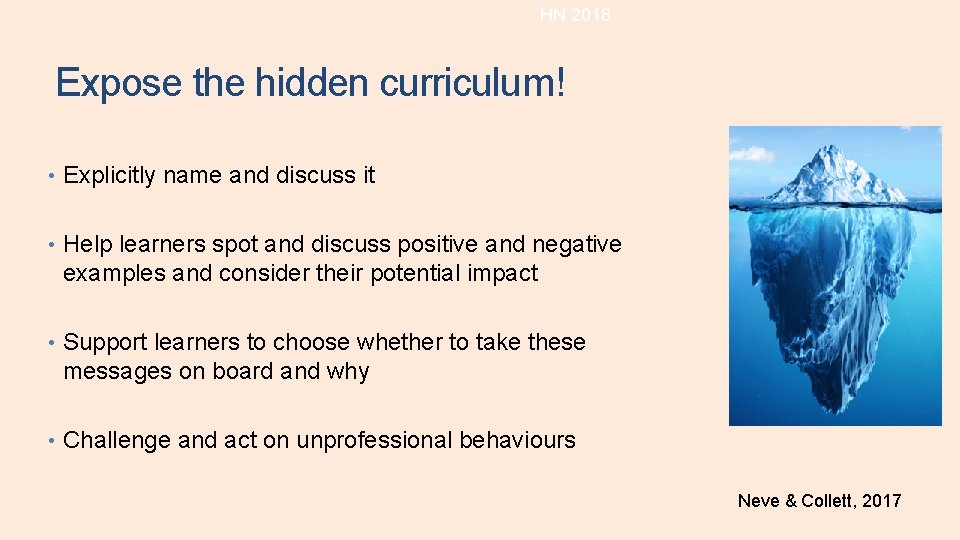
Hidden curriculum • “the ad hoc, unscripted learning that occurs outside of the formal, taught curriculum which is often unarticulated or unexplored” Cribb & Bignold 1999 • Often taught (learnt? ) through role models. HN 2018 Hafferty, 1998
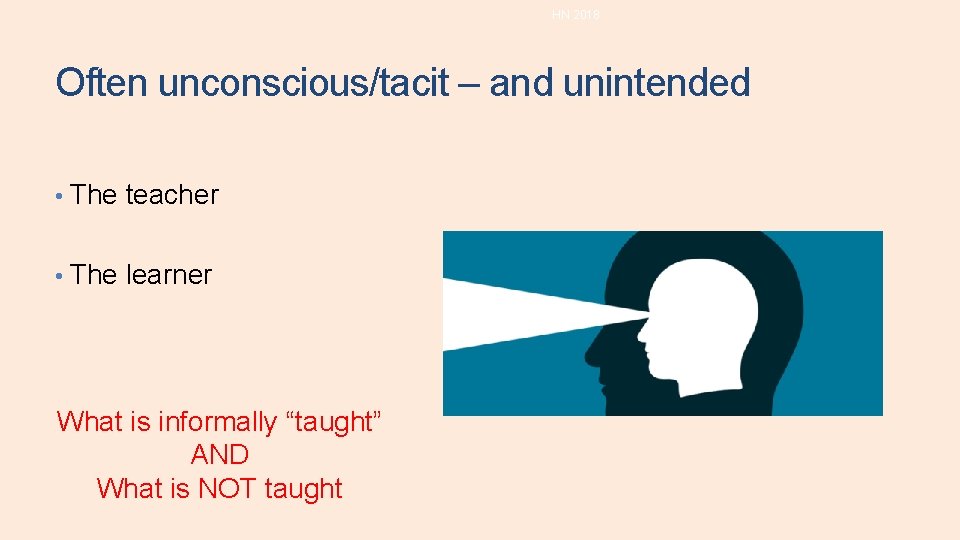
HN 2018 Often unconscious/tacit – and unintended • The teacher • The learner What is informally “taught” AND What is NOT taught
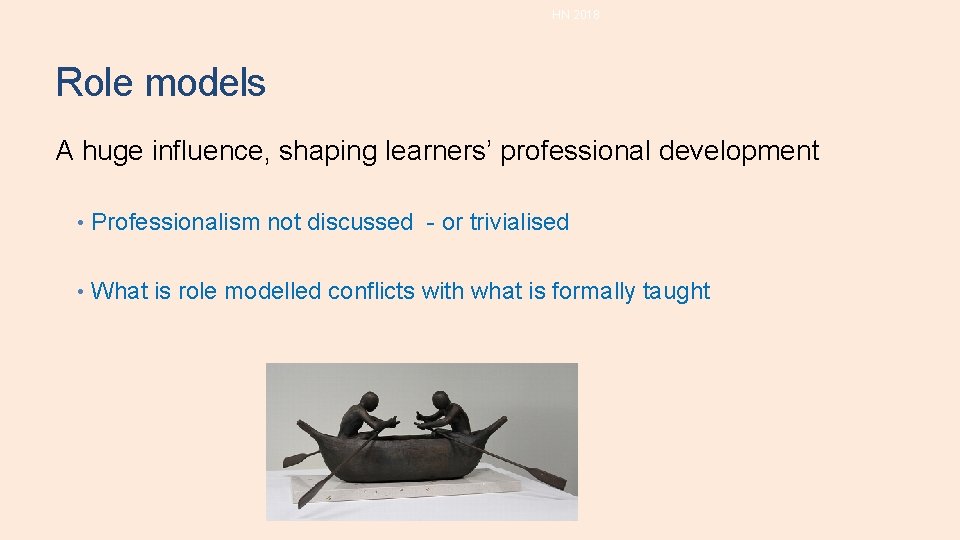
HN 2018 Role models A huge influence, shaping learners’ professional development • Professionalism not discussed - or trivialised • What is role modelled conflicts with what is formally taught
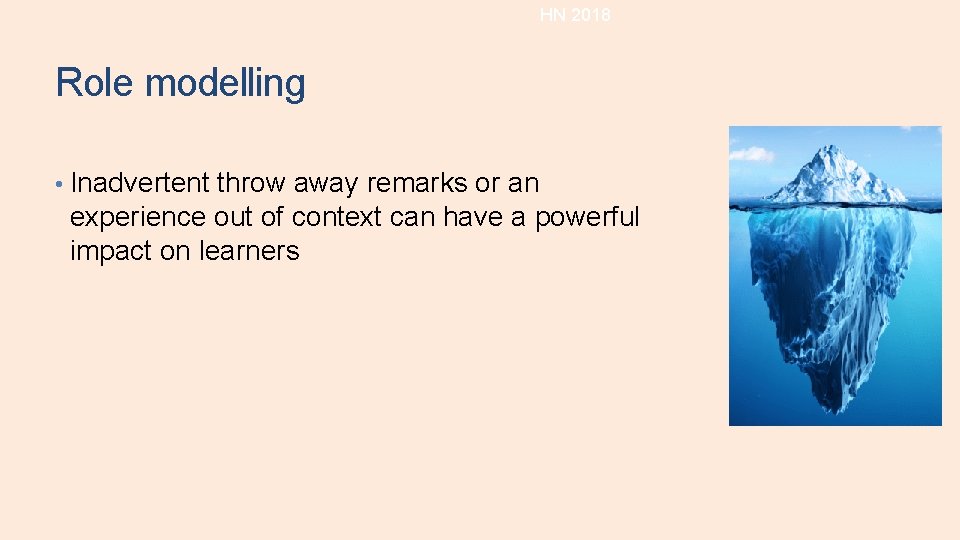
HN 2018 Role modelling • Inadvertent throw away remarks or an experience out of context can have a powerful impact on learners
• Derogatory humour • Lack of commitment to, poor or haphazard teaching • Hierarchy, use of power, gender issues • Doctors being critical of other doctors, departments, careers • Unethical practice • Patient dehumanisation Lempp & Seale, 2004; Gaufberg et al, 2010; Monrouxe et al, 2014; Doja et al, 2015 HN 2018
HN 2018 Impact • Influence “basic assumptions about what are ‘acceptable’ and ‘unacceptable’ medical practices” • Reduction in empathy • Ethical erosion • Loss of idealism Bleakley et al, 2011; Feudtner et al, 1994; Bellini & Shea, 2005
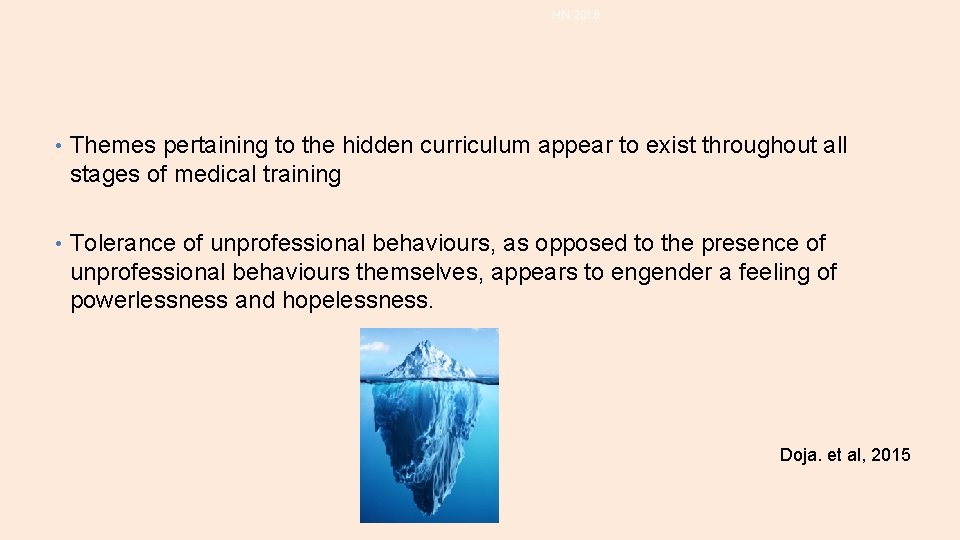
HN 2018 • Themes pertaining to the hidden curriculum appear to exist throughout all stages of medical training • Tolerance of unprofessional behaviours, as opposed to the presence of unprofessional behaviours themselves, appears to engender a feeling of powerlessness and hopelessness. Doja. et al, 2015
HN 2018 Expose the hidden curriculum! • Explicitly name and discuss it • Help learners spot and discuss positive and negative examples and consider their potential impact • Support learners to choose whether to take these messages on board and why • Challenge and act on unprofessional behaviours Neve & Collett, 2017
HN 2018 The hidden curriculum can be positive! Model: • Respect and kindness • Admit errors and mistakes • Model reflection and learning by discussing: • Things that have not gone well and how you might improve • What you find hard/stressful and how you deal with this
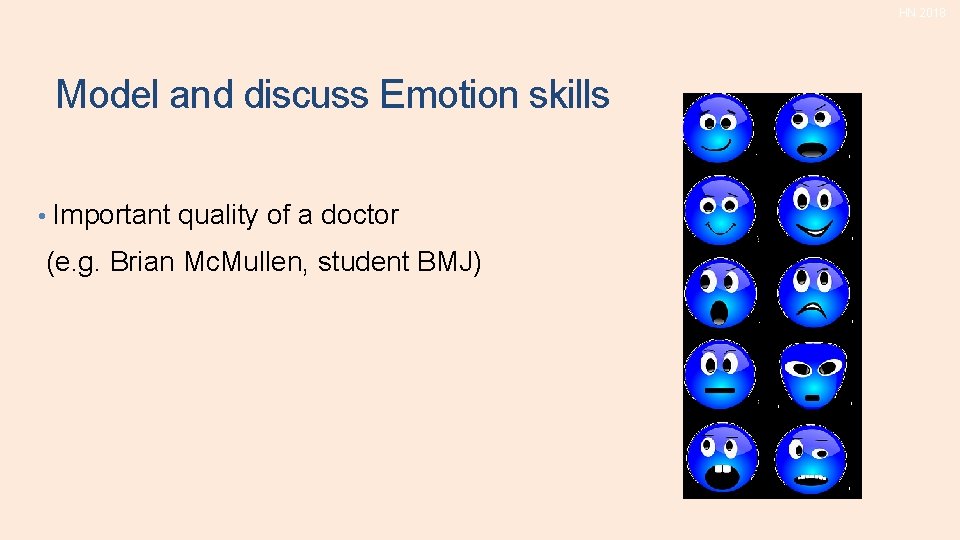
HN 2018 Model and discuss Emotion skills • Important quality of a doctor (e. g. Brian Mc. Mullen, student BMJ)
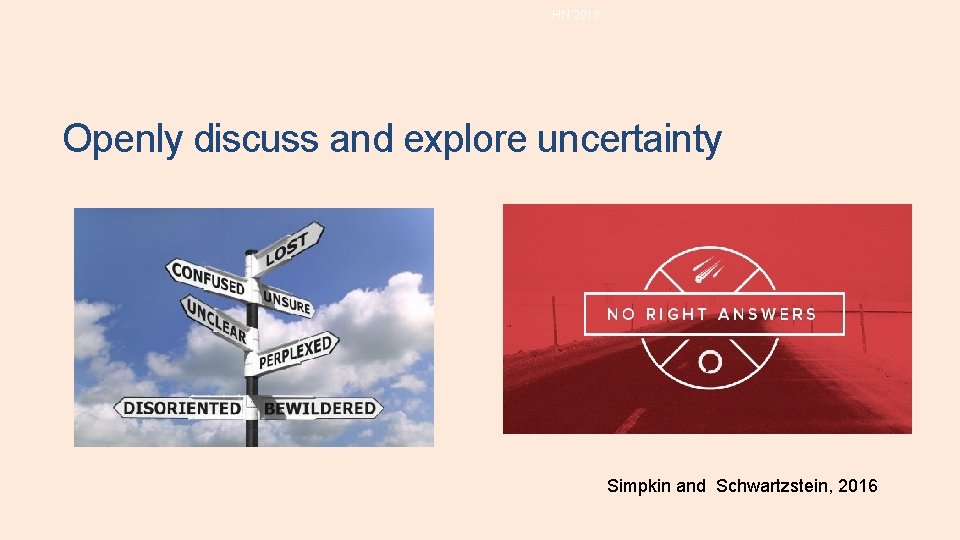
HN 2018 Openly discuss and explore uncertainty Simpkin and Schwartzstein, 2016
HN 2018 TIP 5. BE ALERT TO, EXPOSE AND DISCUSS THE HIDDEN CURRICULUM AND BE A POSITIVE ROLE MODEL!
HN 2018 WHAT DO YOU FIND DIFFICULT? Facilitating learning and engagement around professionalism?
HN 2018 1. Support learners to build their own understandings of professionalism 2. Expect and assess for high standards 3. Use learners’ experiences & dilemmas as a starting point for discussion and reflection 4. Stretch and challenge students – safely & supportively! 5. Expose and discuss the hidden curriculum and be a positive role model!
HN 2018 THANK YOU!
HN 2018 REFERENCES • ABIM Foundation. American Board of Internal Medicine. ACP-ASIM Foundation. American College of Physicians-American Society of Internal Medicine; European Federation of Internal Medicine. Medical professionalism in the new millennium: a physician charter. Ann Intern Med. 2002 Feb 5; 136(3): 243 -6. • Bellini LM, Shea JA. Mood change and empathy decline persist during three years of internal medicine training. Academic Medicine 2005; 80 164– 167. • Bleakley A, Bligh J, Brice J. Medical Education for the Future: Identity, Power and Location. Springer; 2011. Bellini • Cribb A, Bignold S. Towards a reflexive Medical School: the hidden curriculum and medical education research. Studies in Higher Education 1999; 24(2): 195– 208. • Cruess RL, Cruess SR, Boudreau JD et al (2015) A schematic representation of the professional identity formation and socialization of medical students and residents: A guide for medical educators. Academic Medicine 90(6): 718 -725. • Daloz LA. Mentor: Guiding the journey of adult learners (with new foreword, introduction, and afterword). John Wiley & Sons; 2012 Sep 13. • Doja A, Bould MD, Clarkin C, Eady K, Sutherland S, Writer H. The hidden and informal curriculum across the continuum of training: A cross-sectional qualitative study. Med Teach 2016; 38(4): 410– 418. • Eddy DM. Variations in physician practice: the role of uncertainty. Health Affairs (Millwood) 1984; 3(2): 74– 89. • Epstein RM, Hundert EM. 2002. Defining and assessing professional competence. Jama 287(2): 226 -35. • Feudtner C, Christakis DA, Christakis NA. 1994. Do clinical clerks suffer ethical erosion? Students' perceptions of their ethical environment and personal development. Academic Medicine 69(8): 670 -9. • Fraser S & Greenhalgh T. 2001. Coping with complexity: educating for capability. BMJ 323: 799 -803. • Gaufberg EH, Batalden M, Sands R, Bell SK. The hidden curriculum: what can we learn from third-year medical student narrative reflections? Acad Med 2010; 85(11): 1709– 1716. • Hafferty FW. Beyond curriculum reform: confronting medicine’s hidden curriculum. Acad Med 1998; 73(4): 403– 407. • Hodges B, Ginsburg S, Cruess R, et al (2011) Assessment of professionalism: recommendations from the Ottawa 2010 Conference. Med Teach 33: 354 -63 (dx. doi. org/10. 3109/0142159 X. 2011. 577300)
HN 2018 • Horton R. Medicine: the prosperity of virtue. Lancet 2005; 366: 1985 -7 • Llemp H, Seale C. The hidden curriculum in undergraduate medical education: qualitative study of medical students’ perceptions of teaching. BMJ 2004; 329: 770– 773. • Mann K, Gordon J, Mac. Leod A. 2009. Reflection and reflective practice in health professions education: a systematic review. Advances in Health Sciences Education 14(4): 595 -621. • Monrouxe LV, Rees C, Hu W. Differences in medical students’ explicit discourses of professionalism: acting, representing, becoming. Medical Education 2011; 45(6): 585– 602 • Morris R, Neve H. Learning and teaching professionalism. In: The ABC of Learning and Teaching in Medicine, 3 rd edition. BMJ Books: Wiley Blackwell. 2017 • Neve H, Collett T. The hidden curriculum: a tool for empowering medical students? Clinical Teacher. Published Online Nov 2017 • Passi I, Manjo D, Peile E, Thistlewaite J, Johnson N. 2012. Developing Professionalism in future doctors: a systematic review. International Journal of Medical Education 1: 19 -29. • Salmon P, Young B. 2011. Creativity in clinical communication: from communication skills to skilled communication. Medical Education. 45(3): 217 -26. • Simpkin AL, Schwartzstein RM. Tolerating uncertainty—the next medical revolution? . New England Journal of Medicine. 2016 Nov 3; 375(18): 1713 -5. • Wald HS. 2015. Professional Identity (Trans) Formation in Medical Education: Reflection, Relationship, Resilience. Academic Medicine 90(6): 701 -6.