Hawaii Conservation Conference 2015 and the Kpaepae K


- Slides: 13
Hawaiʻi Conservation Conference 2015 and the Kīpaepae Kā Mauli Kuauli (Opening Ceremony) Monday, August 3 rd, 2015 Orientations BEGIN AT 4: 00 pm, Kīpaepae BEGINS AT 5: 00 pm University of Hawaiʻi at Hilo - Gymnasium
Making Kīhei for Kīpaepae Kā Mauli Kuauli Workshops and resources are currently being coordinated on each island to help prepare conference participants for the Kīpaepae Kā Mauli Kuauli. The following slides provide some basic information about making kīhei. . .
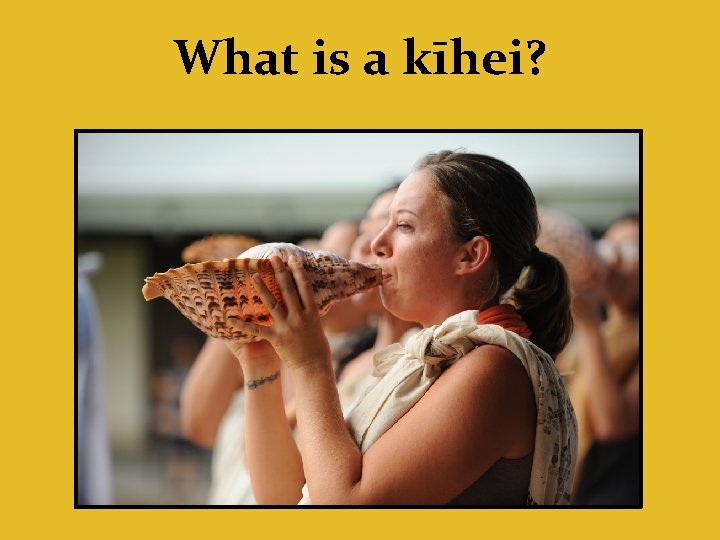
What is a kīhei?
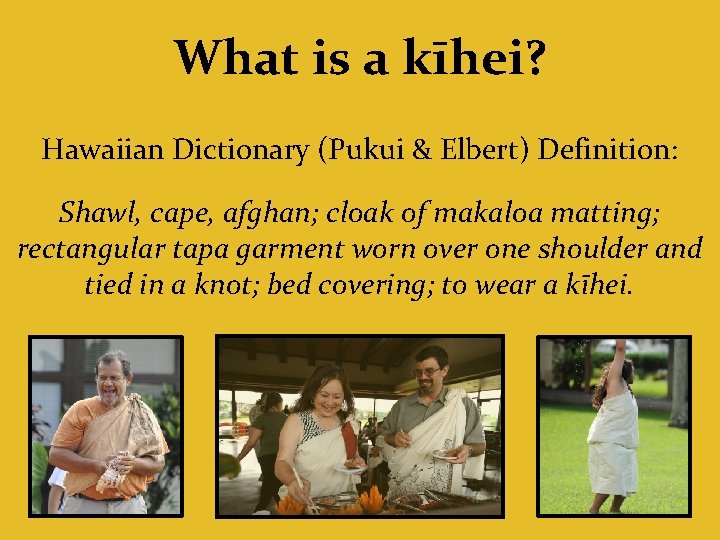
What is a kīhei? Hawaiian Dictionary (Pukui & Elbert) Definition: Shawl, cape, afghan; cloak of makaloa matting; rectangular tapa garment worn over one shoulder and tied in a knot; bed covering; to wear a kīhei.
What is a kīhei? ʻŌlelo Hawaiʻi : The language itself provides insight to Hawaiian pedagogy, thought processes, and environmental kinship. kī an intensifying prefix hei to ensnare During an event in which kīhei are worn, we look to “ensnare” & provide direction for the focus, energy and intent of the group in that moment.
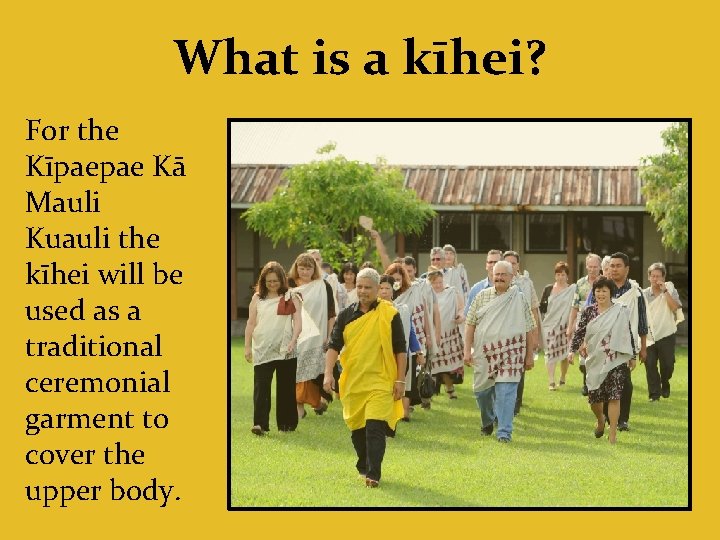
What is a kīhei? For the Kīpaepae Kā Mauli Kuauli the kīhei will be used as a traditional ceremonial garment to cover the upper body.
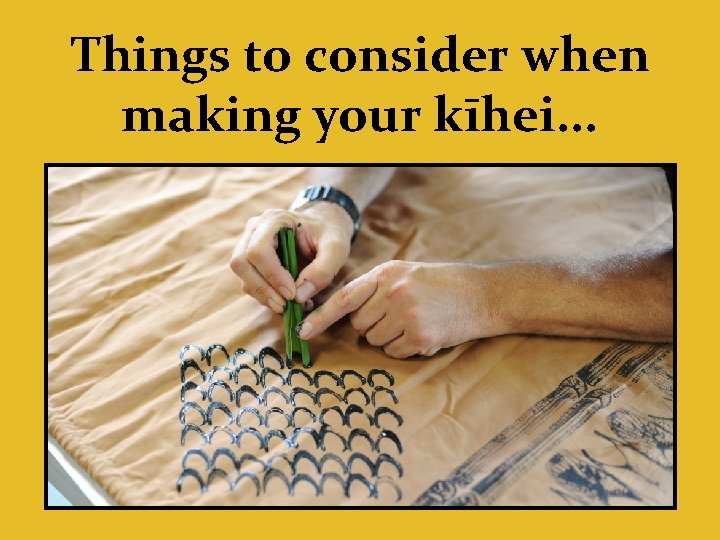
Things to consider when making your kīhei. . .
Components of a kīhei There are many different styles and types of materials that can be used to make kīhei. The style and materials used will depend on the purpose and meanings that one is portraying through their kīhei. Traditional Resources Modern Resources Kapa Muslin Natural Dyes Synthetic Dyes Natural Paints Acrylic Paints
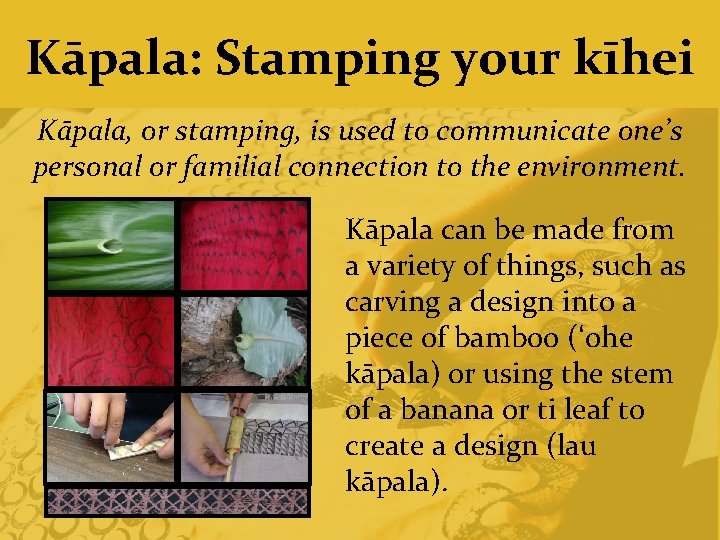
Kāpala: Stamping your kīhei Kāpala, or stamping, is used to communicate one’s personal or familial connection to the environment. Kāpala can be made from a variety of things, such as carving a design into a piece of bamboo (ʻohe kāpala) or using the stem of a banana or ti leaf to create a design (lau kāpala).
Kāpala: Stamping your kīhei We encourage all participants to enhance their kīhei with a kāpala. Each plant and design included should carry intent and connection for you. Perhaps have the conversation with you organization to weave a common theme for your group. This process should help to demonstrate a common foundation for all of you involved.
Making your kīhei Below are some basic and simple guidelines to making kīhei with modern materials: • Maintain a positive mindset & intention throughout • Muslin or natural colored fabric can be used • 2 -yards in length is recommended • Full or half width (personal preference) • Hem all raw edges of the material • Kāpala (print) with acrylic paint • Heat set your print when finished
Making your kīhei Your organization and community is filled with information and cultural resources. We encourage you to ask and begin this dialogue with those people you know and invite them to share their process with your group. Utilize the resources in your environment wisely; our verdant landscapes serve a function not only to the environment but also to the relationships we create within them.
See you in Hilo, Hawaiʻi at the Kīpaepae Kā Mauli Kuauli!