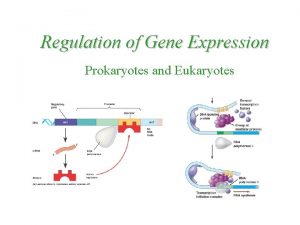
GENE EXPRESSION I Mehmet Candas Xinqiang He Susan
- Slides: 16
GENE EXPRESSION I Mehmet Candas Xinqiang He Susan Keenan Judith Leatherman Stephen Spiro Ming Tian Facilitator: Peggy Brickman
Group 1: Gene Expression I Ribo-regulation: controlling gene expression at the level of RNA Gene expression can be regulated by multiple mechanisms that influence the activity of messenger RNA • This teachable unit will be presented to a student body consisting of majors at the junior/senior level, in the context of a course covering molecular mechanisms of gene regulation • The unit assumes that the students will have competency in genetics and molecular biology
Unit Learning Goals Students will be able to describe examples of mechanisms of gene regulation involving m. RNA localization, degradation, capping and tailing, splicing, editing, and by RNA interference Outcome Students will be able to discuss ribo-regulation in the context of gene regulatory mechanisms that operate at other levels of the central dogma.
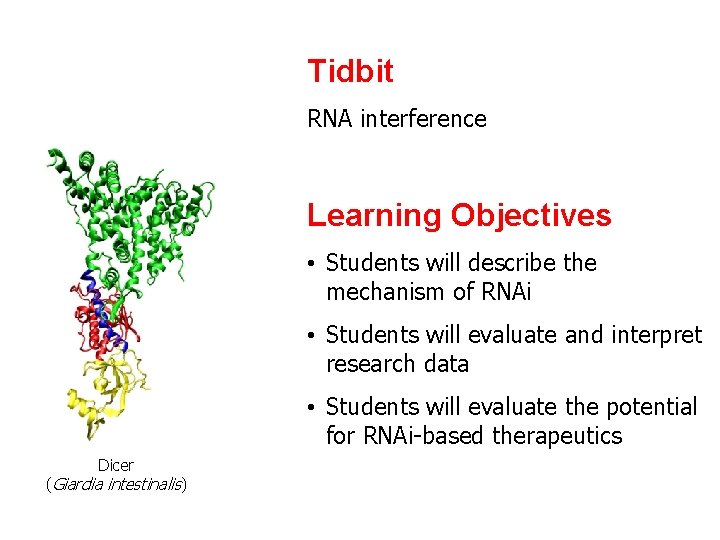
Tidbit RNA interference Learning Objectives • Students will describe the mechanism of RNAi • Students will evaluate and interpret research data • Students will evaluate the potential for RNAi-based therapeutics Dicer (Giardia intestinalis)
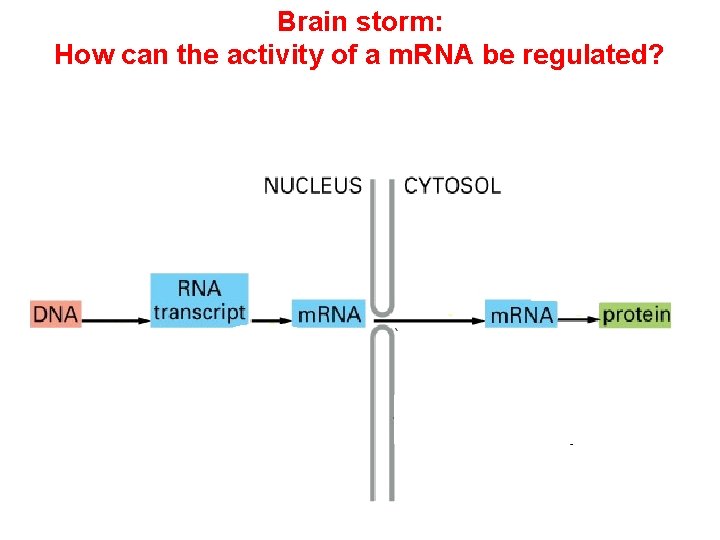
Brain storm: How can the activity of a m. RNA be regulated?
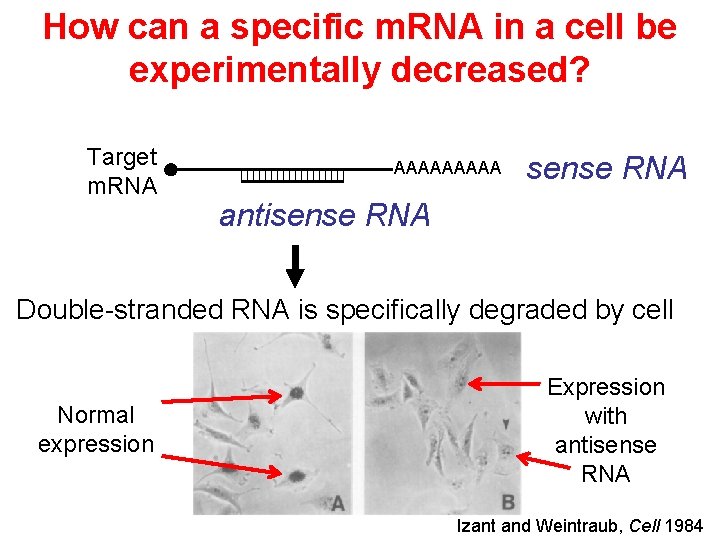
How can a specific m. RNA in a cell be experimentally decreased? Target m. RNA AAAAA sense RNA antisense RNA Double-stranded RNA is specifically degraded by cell Normal expression Expression with antisense RNA Izant and Weintraub, Cell 1984
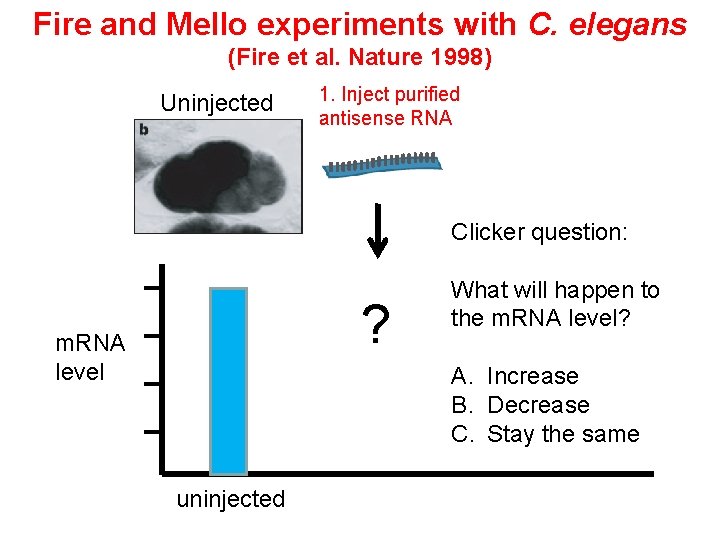
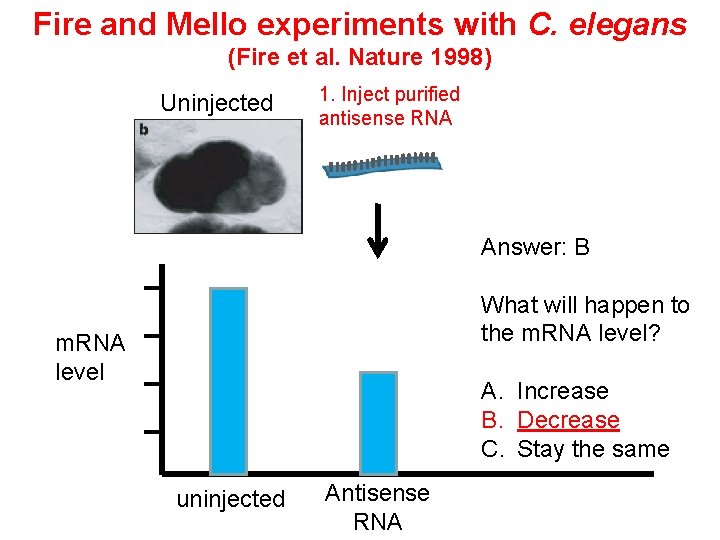
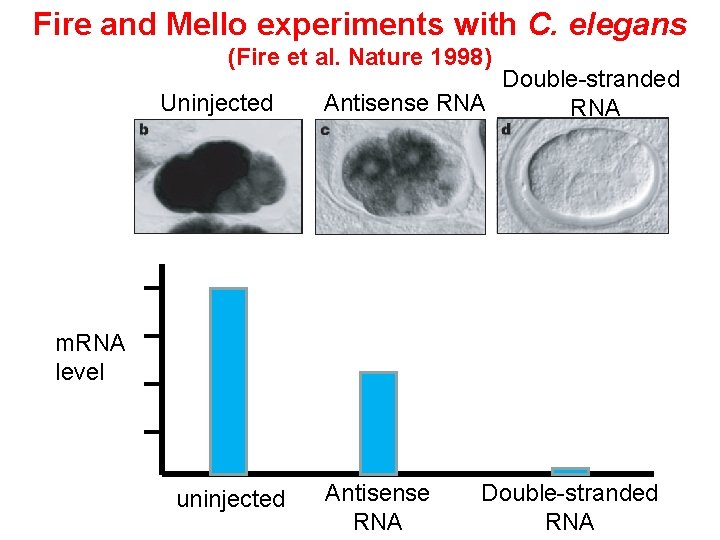
Fire and Mello experiments with C. elegans (Fire et al. Nature 1998) Uninjected 1. Inject purified antisense RNA Clicker question: ? m. RNA level What will happen to the m. RNA level? A. Increase B. Decrease C. Stay the same uninjected
Fire and Mello experiments with C. elegans (Fire et al. Nature 1998) Uninjected 1. Inject purified antisense RNA Answer: B What will happen to the m. RNA level? m. RNA level A. Increase B. Decrease C. Stay the same uninjected Antisense RNA
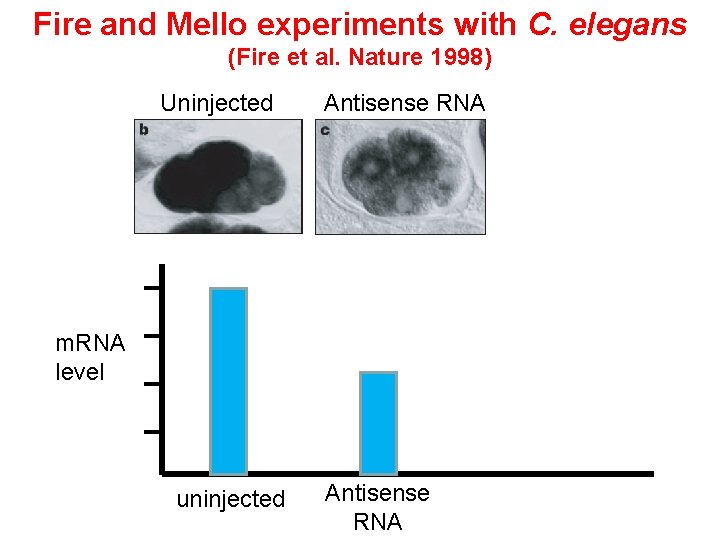
Fire and Mello experiments with C. elegans (Fire et al. Nature 1998) Uninjected Antisense RNA m. RNA level uninjected Antisense RNA
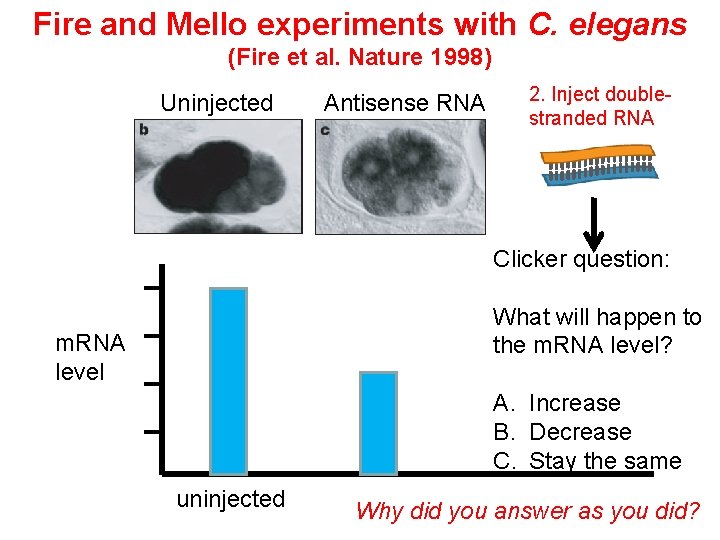
Fire and Mello experiments with C. elegans (Fire et al. Nature 1998) Uninjected Antisense RNA 2. Inject doublestranded RNA Clicker question: What will happen to the m. RNA level? m. RNA level A. Increase B. Decrease C. Stay the same uninjected Why did you answer as you did?
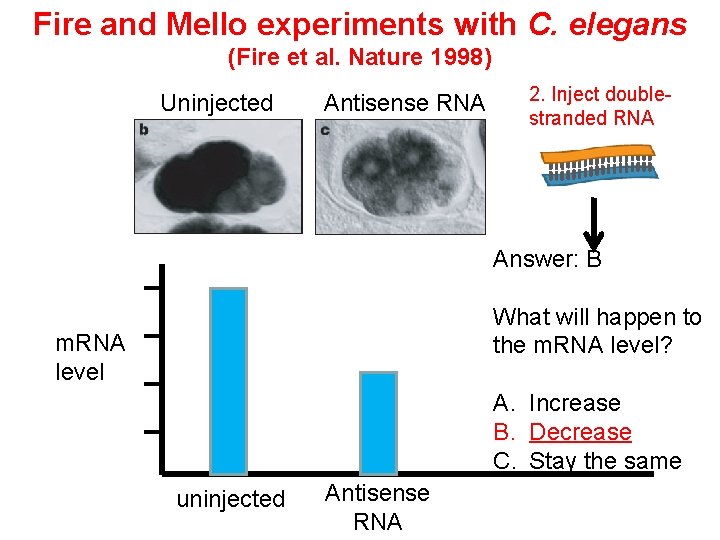
Fire and Mello experiments with C. elegans (Fire et al. Nature 1998) Uninjected Antisense RNA 2. Inject doublestranded RNA Answer: B What will happen to the m. RNA level? m. RNA level A. Increase B. Decrease C. Stay the same uninjected Antisense RNA
Fire and Mello experiments with C. elegans (Fire et al. Nature 1998) Uninjected Double-stranded Antisense RNA m. RNA level uninjected Antisense RNA Double-stranded RNA
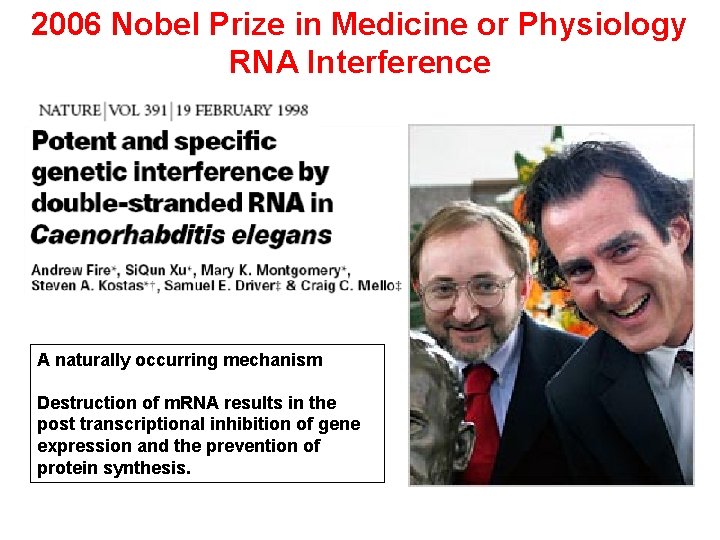
2006 Nobel Prize in Medicine or Physiology RNA Interference A naturally occurring mechanism Destruction of m. RNA results in the post transcriptional inhibition of gene expression and the prevention of protein synthesis.
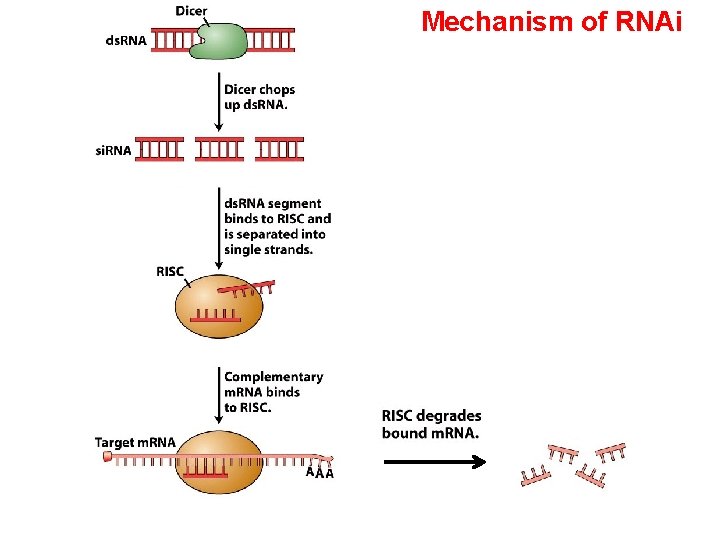
Mechanism of RNAi
Group Discussion • Which one of the following diseases is amenable to RNAi-based threapy? • Lymphoma – overexpression of bcl 2 • Cystic fibrosis – loss-of-function mutation of CFTR • PKU – loss of enzyme to breakdown phenylalanine • What are the challenges and potential pitfalls in using RNAi-based therapies?
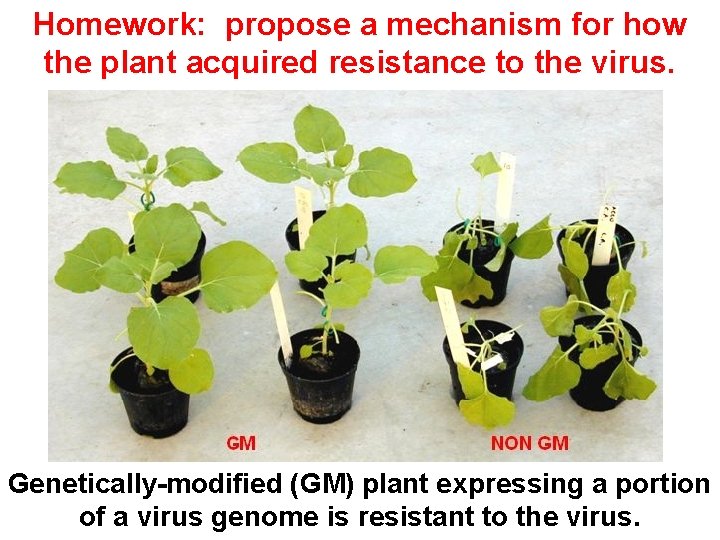
Homework: propose a mechanism for how the plant acquired resistance to the virus. Genetically-modified (GM) plant expressing a portion of a virus genome is resistant to the virus.