FUNGI EQ How do scientists classify fungi F

- Slides: 29
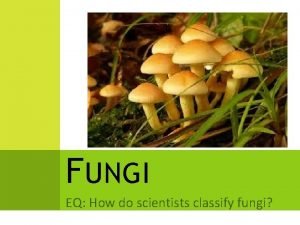
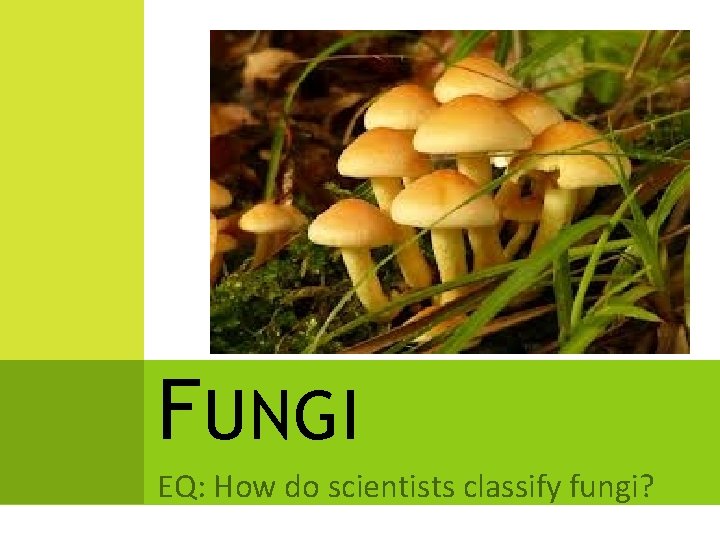
FUNGI EQ: How do scientists classify fungi?
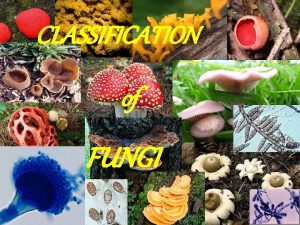
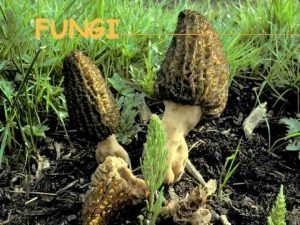
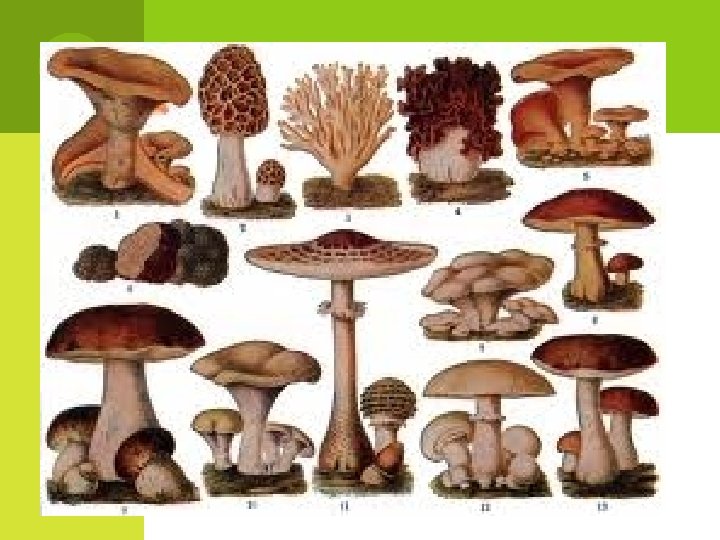
F UNGI Come in a variety of shapes and colors Range in size from one- celled organisms to masses as wide as 1 ft or more.
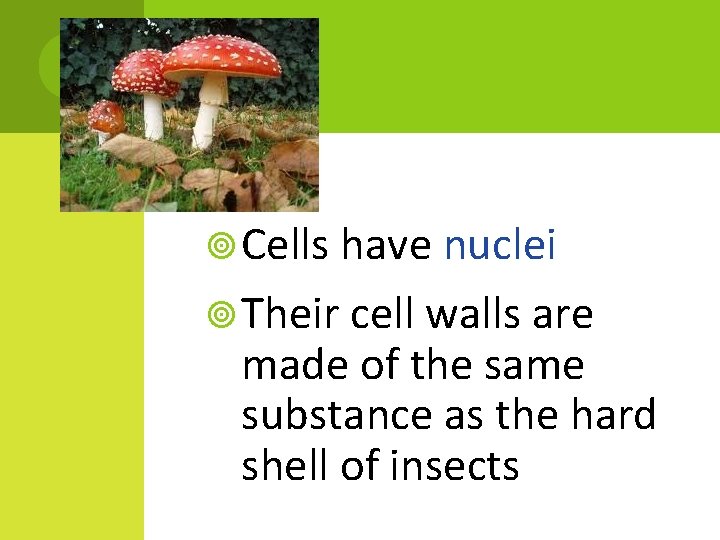
Cells have nuclei Their cell walls are made of the same substance as the hard shell of insects
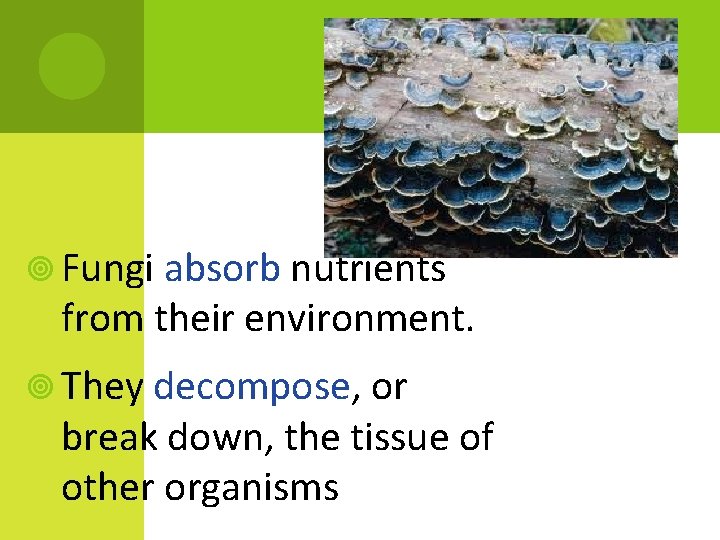
Fungi absorb nutrients from their environment. They decompose, or break down, the tissue of other organisms
Cannot move Fungi grow fast and reproduce through spores Spores can travel by wind and water.
EQ: H OW DO SCIENTISTS CLASSIFYPLANTS?
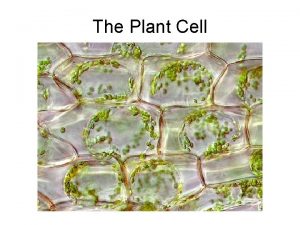
P LANTS Plants are multicellular organisms that have tissues and organs. Their cells have cell walls The cells have chloroplast, the cell part that uses the Sun’s energy to make food.
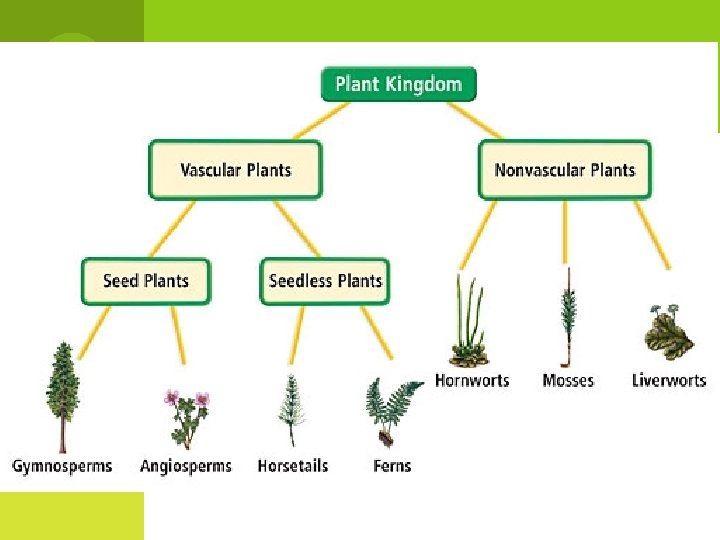
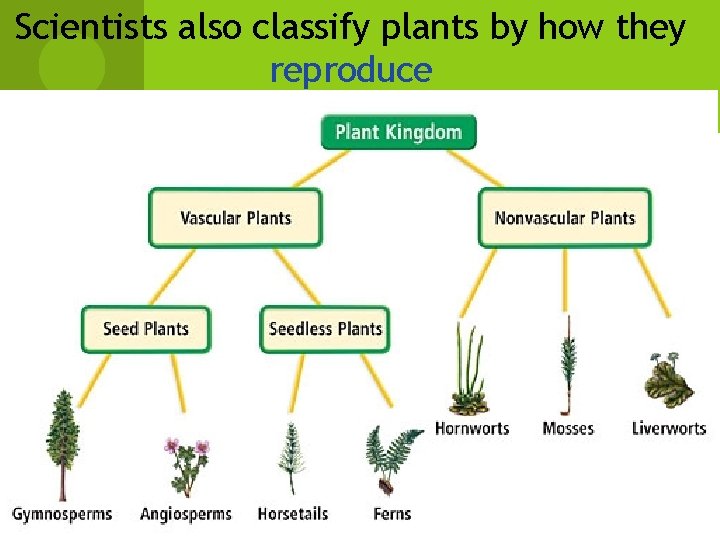
V ASCULAR AND N ONVASCULAR One of the ways scientists divide plants into groups is by the way the plant gets water. The two groups are vascular and nonvascular
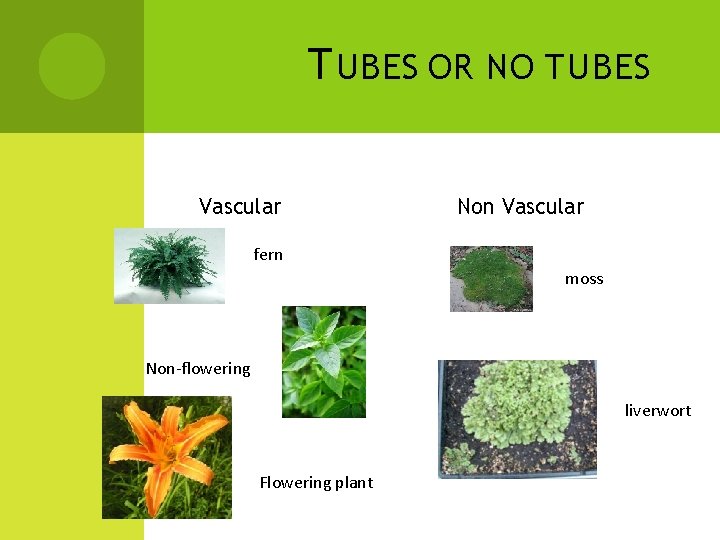
T UBES OR NO TUBES Vascular Non Vascular fern moss Non-flowering liverwort Flowering plant
V ASCULAR P LANTS
V ASCULAR P LANTS Vascular plants have tissues that act like tubes to transport water through the plant Tubes transport water and nutrients taken up from soil through the plants roots
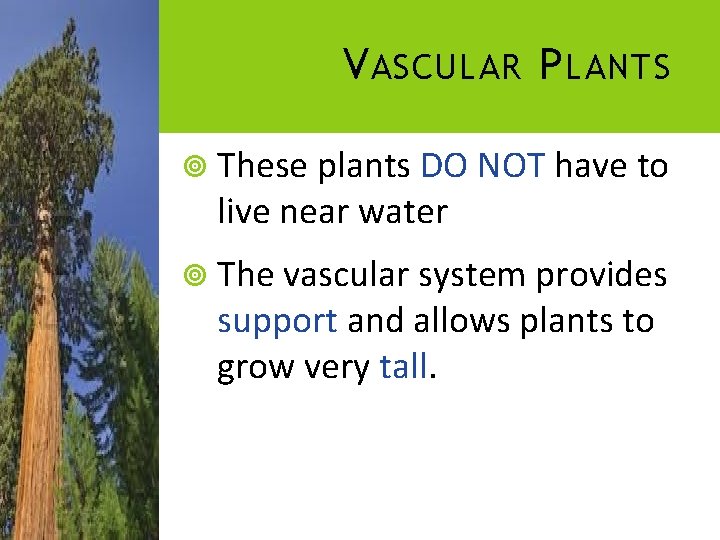
V ASCULAR P LANTS These plants DO NOT have to live near water The vascular system provides support and allows plants to grow very tall.
Scientists also classify plants by how they reproduce
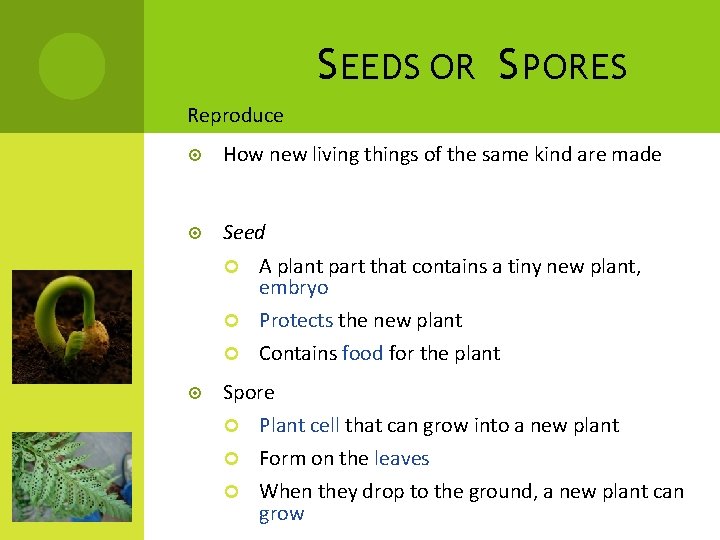
S EEDS OR S PORES Reproduce How new living things of the same kind are made Seed A plant part that contains a tiny new plant, embryo Protects the new plant Contains food for the plant Spore Plant cell that can grow into a new plant Form on the leaves When they drop to the ground, a new plant can grow
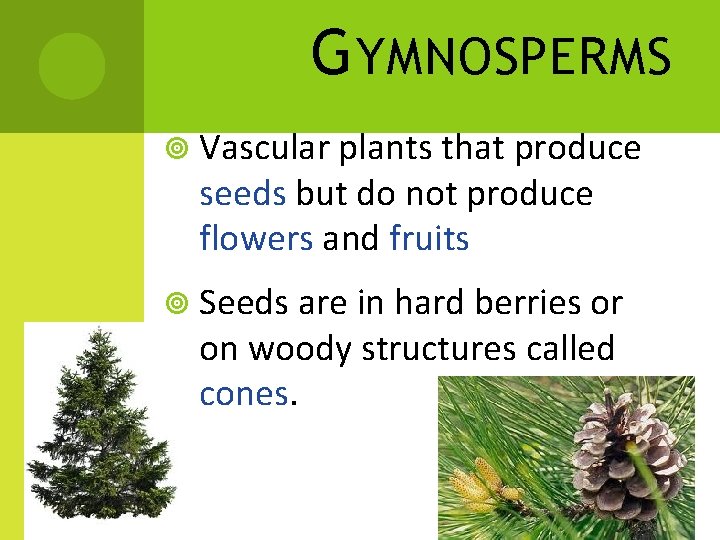
G YMNOSPERMS Vascular plants that produce seeds but do not produce flowers and fruits Seeds are in hard berries or on woody structures called cones.
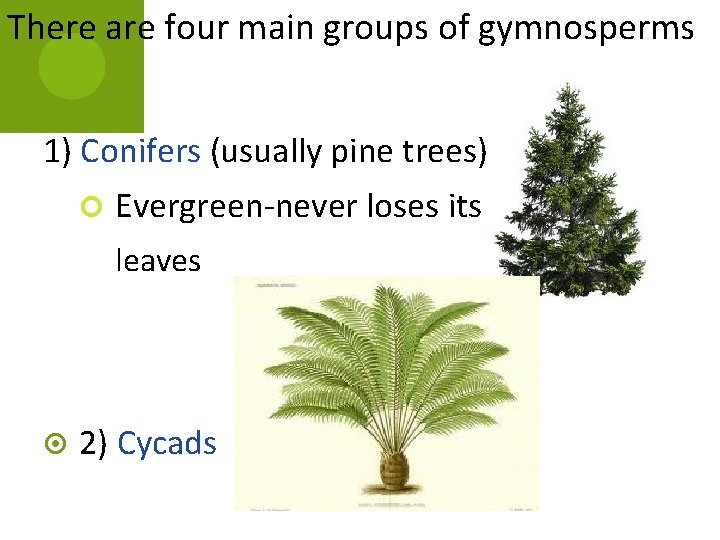
There are four main groups of gymnosperms 1) Conifers (usually pine trees) Evergreen-never loses its leaves 2) Cycads
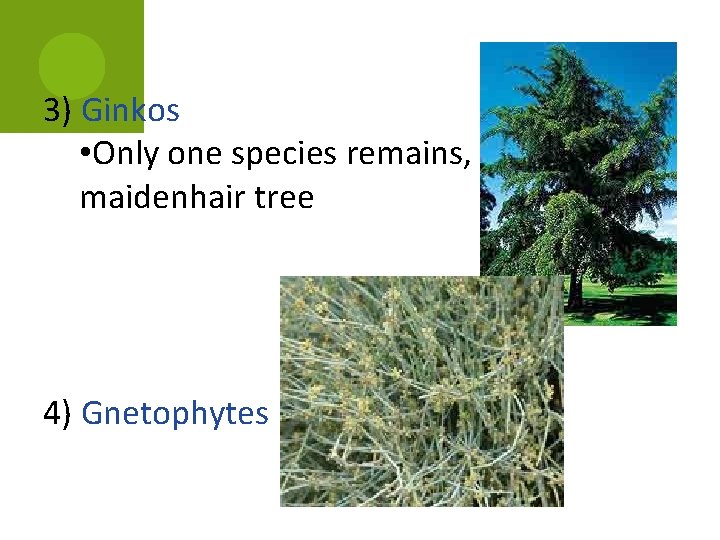
3) Ginkos • Only one species remains, maidenhair tree 4) Gnetophytes
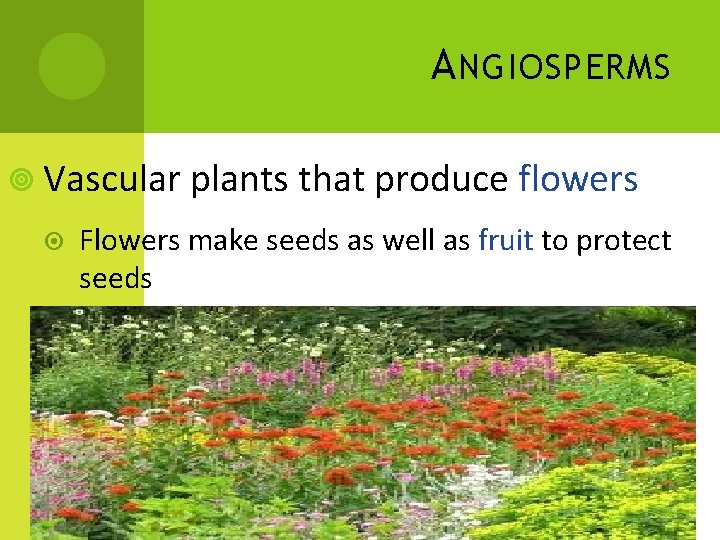
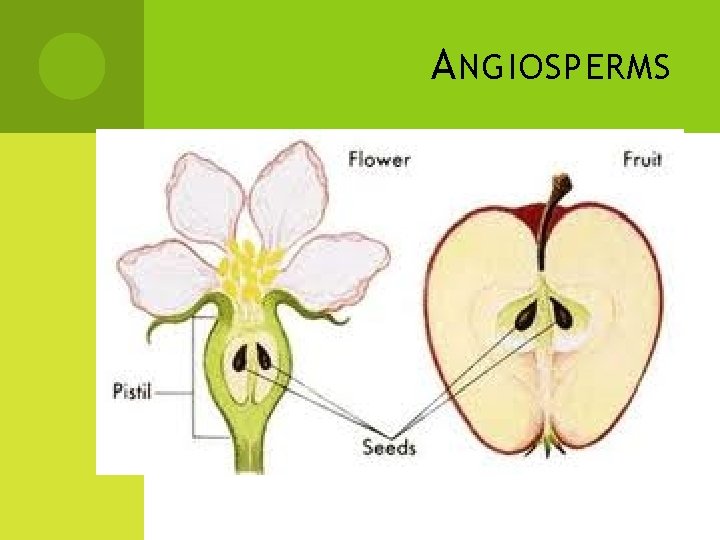
A NGIOSPERMS Vascular plants that produce flowers Flowers make seeds as well as fruit to protect seeds
A NGIOSPERMS
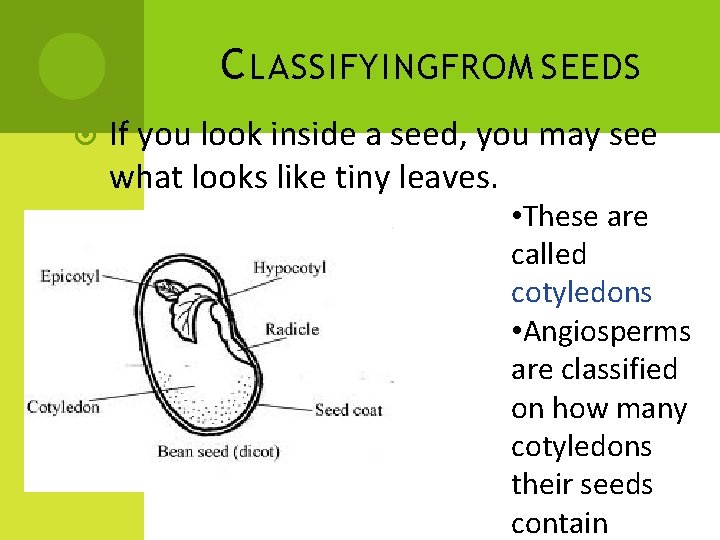
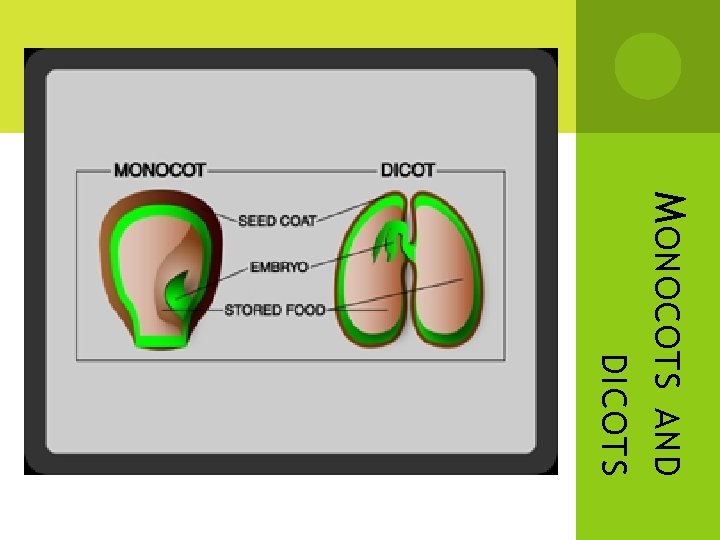
C LASSIFYINGFROM SEEDS If you look inside a seed, you may see what looks like tiny leaves. • These are called cotyledons • Angiosperms are classified on how many cotyledons their seeds contain
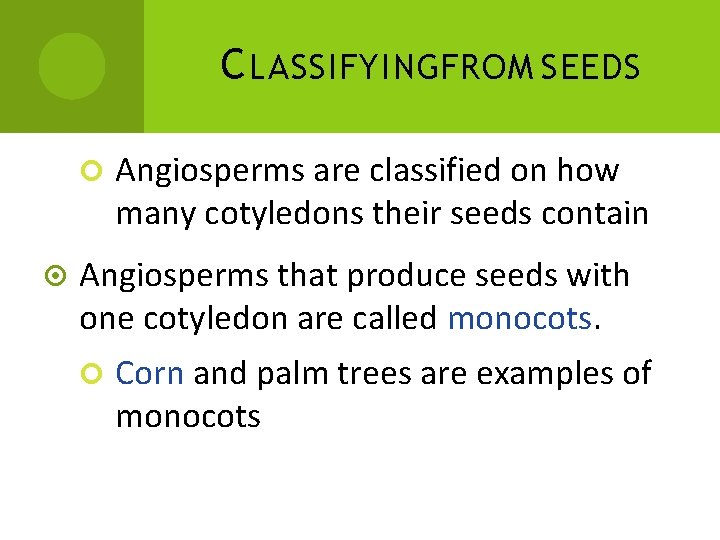
C LASSIFYINGFROM SEEDS Angiosperms are classified on how many cotyledons their seeds contain Angiosperms that produce seeds with one cotyledon are called monocots. Corn and palm trees are examples of monocots
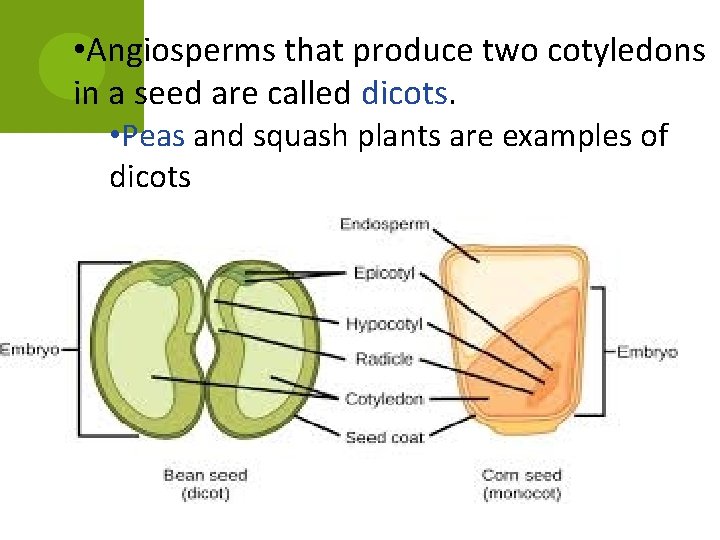
• Angiosperms that produce two cotyledons in a seed are called dicots. • Peas and squash plants are examples of dicots
M ONOCOTS AND DICOTS
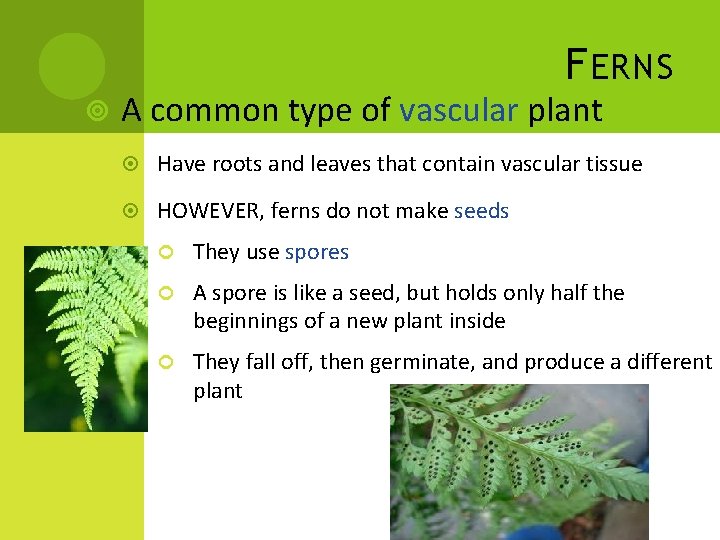
F ERNS A common type of vascular plant Have roots and leaves that contain vascular tissue HOWEVER, ferns do not make seeds They use spores A spore is like a seed, but holds only half the beginnings of a new plant inside They fall off, then germinate, and produce a different plant
W HAT IS THE KEY DIFFERENCE BETWEEN FERNS AND MOST VASCULAR PLANTS? Ferns reproduce by spores instead of seeds.
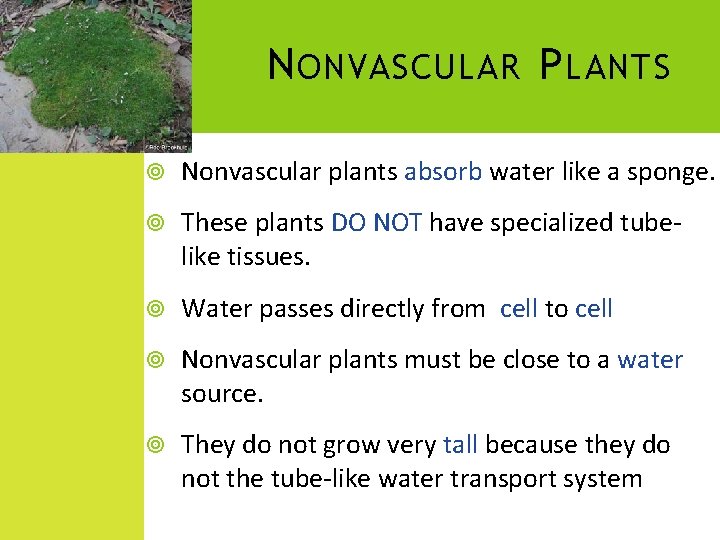
N ONVASCULAR P LANTS Nonvascular plants absorb water like a sponge. These plants DO NOT have specialized tubelike tissues. Water passes directly from cell to cell Nonvascular plants must be close to a water source. They do not grow very tall because they do not the tube-like water transport system
C LASSIFYINGPLANTS INTO SMALLER GROUPS Scientists compare plants’ roots, stems, and leaves. Leaves have many shapes and sizes Vein patterns are different Flowering plants have different flowers and seeds. They have different colors, sizes, shapes and number of petals. Seeds also have different shapes, sizes and colors