FSHD 101 4282019 Jacinda Sampson MD Ph D


- Slides: 14
FSHD 101 4/28/2019 Jacinda Sampson MD Ph. D Neurogenetics
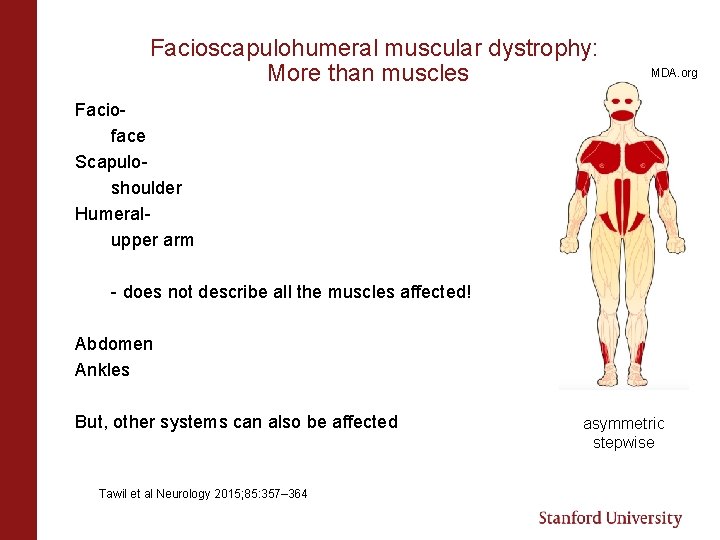
Facioscapulohumeral muscular dystrophy: More than muscles MDA. org Facioface Scapuloshoulder Humeralupper arm - does not describe all the muscles affected! Abdomen Ankles But, other systems can also be affected Tawil et al Neurology 2015; 85: 357– 364 asymmetric stepwise
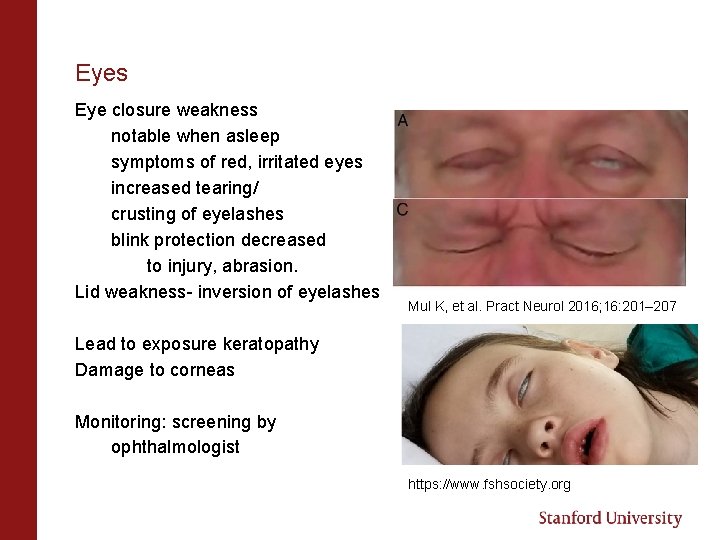
Eyes Eye closure weakness notable when asleep symptoms of red, irritated eyes increased tearing/ crusting of eyelashes blink protection decreased to injury, abrasion. Lid weakness- inversion of eyelashes Mul K, et al. Pract Neurol 2016; 16: 201– 207 Lead to exposure keratopathy Damage to corneas Monitoring: screening by ophthalmologist https: //www. fshsociety. org
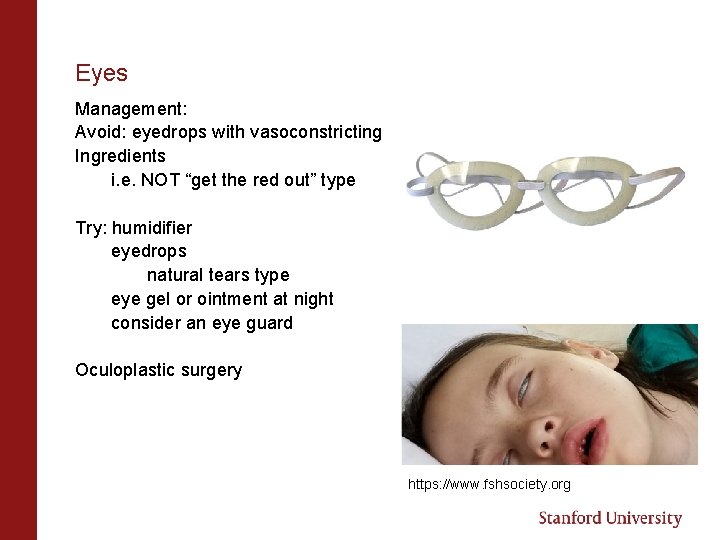
Eyes Management: Avoid: eyedrops with vasoconstricting Ingredients i. e. NOT “get the red out” type Try: humidifier eyedrops natural tears type eye gel or ointment at night consider an eye guard Oculoplastic surgery https: //www. fshsociety. org
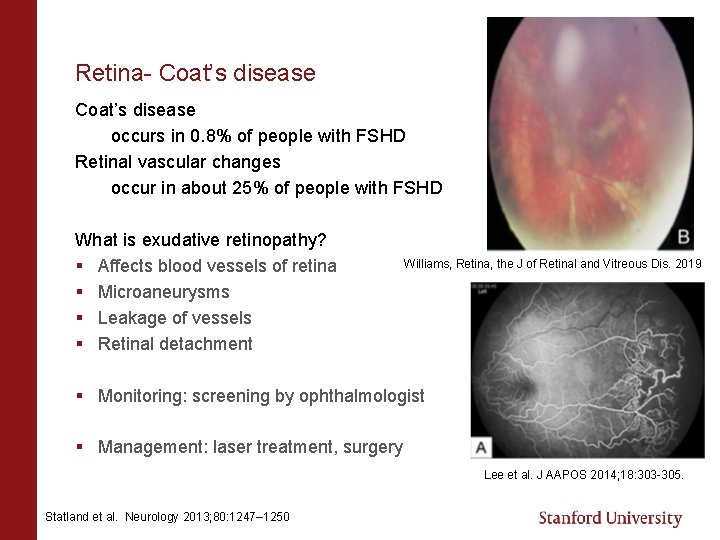
Retina- Coat’s disease occurs in 0. 8% of people with FSHD Retinal vascular changes occur in about 25% of people with FSHD What is exudative retinopathy? § Affects blood vessels of retina § Microaneurysms § Leakage of vessels § Retinal detachment Williams, Retina, the J of Retinal and Vitreous Dis. 2019 § Monitoring: screening by ophthalmologist § Management: laser treatment, surgery Lee et al. J AAPOS 2014; 18: 303 -305. Statland et al. Neurology 2013; 80: 1247– 1250
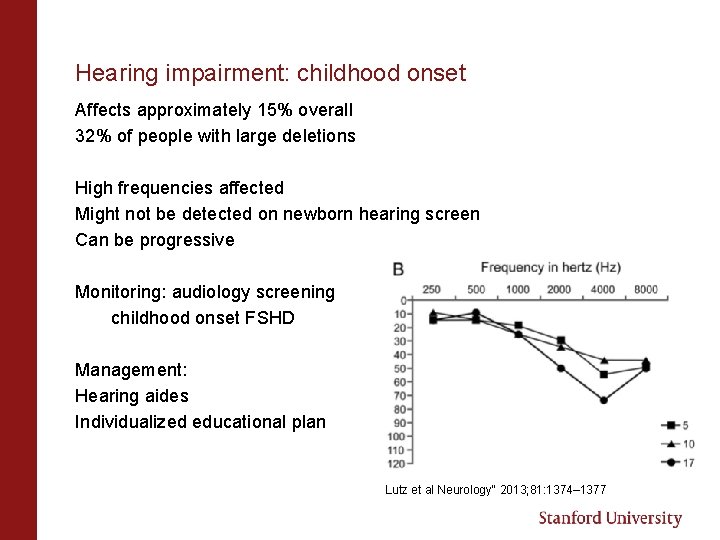
Hearing impairment: childhood onset Affects approximately 15% overall 32% of people with large deletions High frequencies affected Might not be detected on newborn hearing screen Can be progressive Monitoring: audiology screening childhood onset FSHD Management: Hearing aides Individualized educational plan Lutz et al Neurology" 2013; 81: 1374– 1377
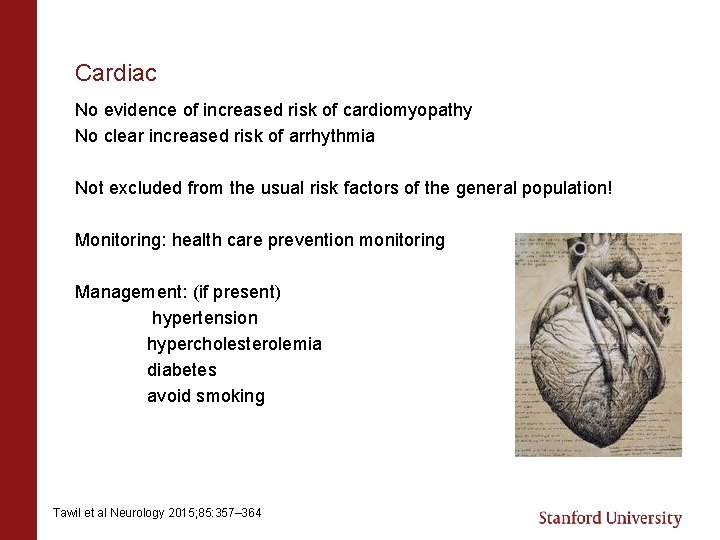
Cardiac No evidence of increased risk of cardiomyopathy No clear increased risk of arrhythmia Not excluded from the usual risk factors of the general population! Monitoring: health care prevention monitoring Management: (if present) hypertension hypercholesterolemia diabetes avoid smoking Tawil et al Neurology 2015; 85: 357– 364
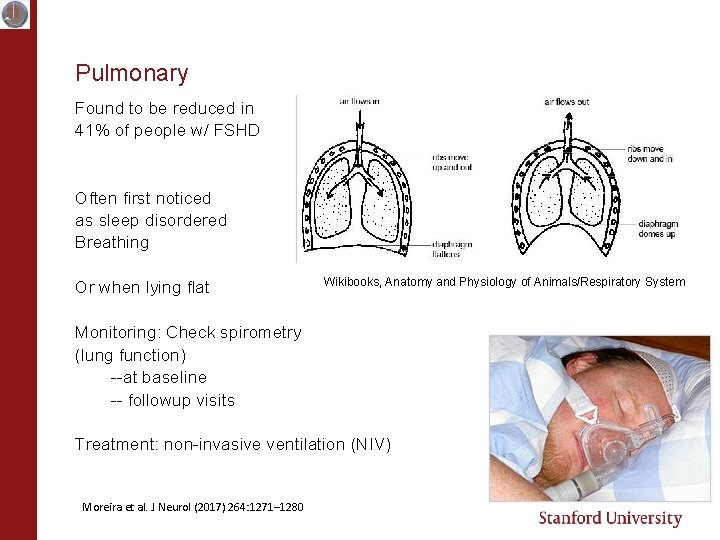
Pulmonary Found to be reduced in 41% of people w/ FSHD Often first noticed as sleep disordered Breathing Or when lying flat Wikibooks, Anatomy and Physiology of Animals/Respiratory System Monitoring: Check spirometry (lung function) --at baseline -- followup visits Treatment: non-invasive ventilation (NIV) Moreira et al. J Neurol (2017) 264: 1271– 1280
Fatigue ““Fatigue is a subjective, unpleasant symptom which incorporates total body feelings ranging from tiredness to exhaustion, creating an unrelenting overall condition which interferes with individuals’ ability to function to their normal capacity” physical/neuromuscular emotional cognitive Reported by 61% of people w/ FSHD, significant impact on quality of life affect mood, stress limitations in activities (social, professional) Monitoring: talk with your doctor, physical therapist, social worker identify manageable factors Treatment: physical therapy, adaptive strategies Schipper et al, Disability and Rehabilitation, 39: 18, 1840 -1846
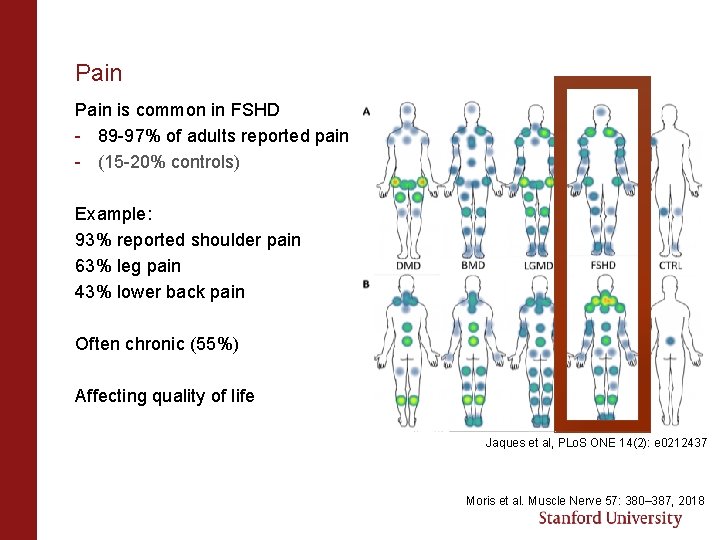
Pain is common in FSHD - 89 -97% of adults reported pain - (15 -20% controls) Example: 93% reported shoulder pain 63% leg pain 43% lower back pain Often chronic (55%) Affecting quality of life Jaques et al, PLo. S ONE 14(2): e 0212437 Moris et al. Muscle Nerve 57: 380– 387, 2018
Pain Monitoring: § Discuss with your physician and physical therapist Non-pharmacologic Management: § Postural support § Stretching § Physical therapy– stay tuned for Tina Duong’s presentation § Sufficient sleep Medical management: nonsteroidal anti-inflammatories ex: ibuprofen, naproxen, celecoxib antidepressants imipramine, amitriptyline duloxetine antiepileptic medications gabapentin, pregabalin avoid or minimize opiates no research published on CBD or medical cannabis
FSHD 101 - Conclusion FSHD is a multisystemic disorder: not only involving muscles Important to follow regularly with your care team physicians and therapists Management is: Preventative Supportive Adaptive Proactive
References