FINDING A MODEL PHYSICAL THEORY FOR LIGHT ANDREA
- Slides: 19
FINDING A MODEL (PHYSICAL THEORY) FOR LIGHT
ANDREA GIORDANO
ALICE TARDIVO
FEDERICA CAPELLINO
CHIARA PASTURA
VITTORIA CHIARPENELLO
ELENA ROSSO
LET'S DO SOME EXPERIMENT!! We made some experiment with light rays: our goal was to verify what model was the right one to justify the result of those experiments.
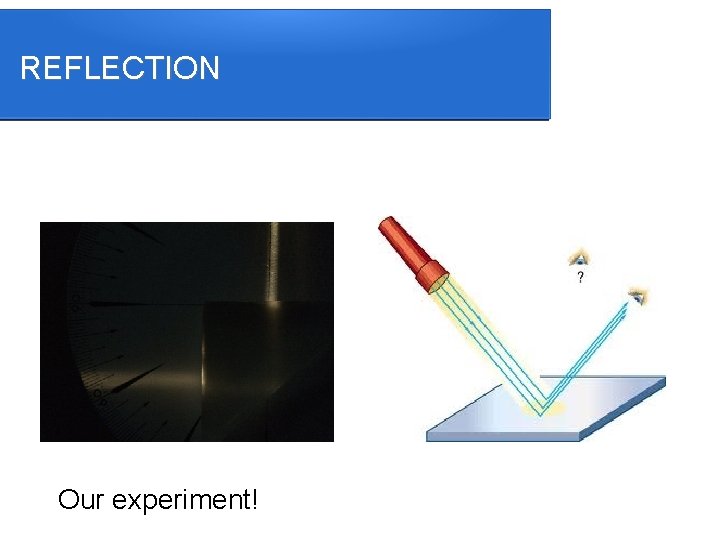
REFLECTION Our experiment!
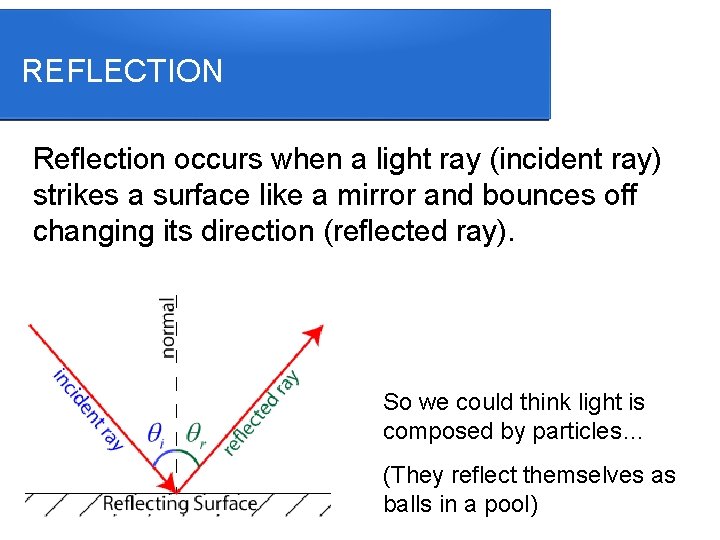
REFLECTION Reflection occurs when a light ray (incident ray) strikes a surface like a mirror and bounces off changing its direction (reflected ray). So we could think light is composed by particles… (They reflect themselves as balls in a pool)
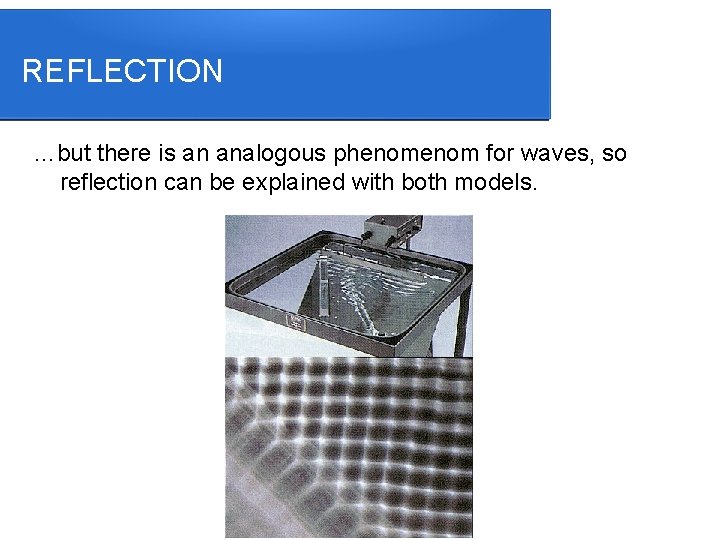
REFLECTION …but there is an analogous phenom for waves, so reflection can be explained with both models.
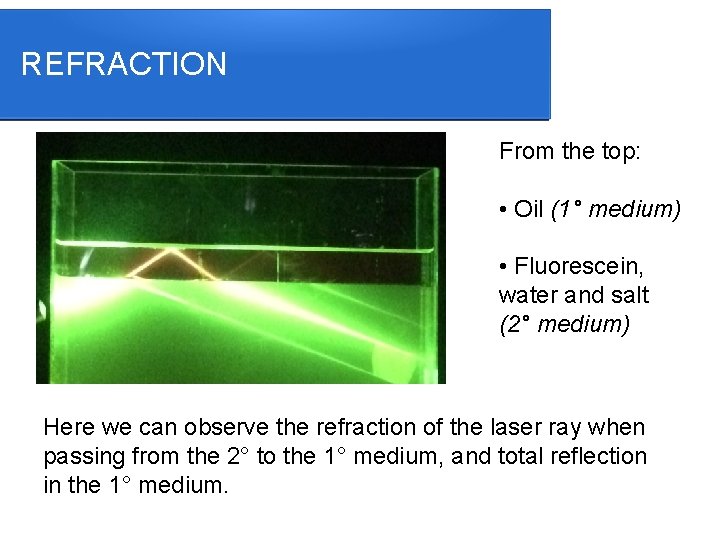
REFRACTION From the top: • Oil (1° medium) • Fluorescein, water and salt (2° medium) Here we can observe the refraction of the laser ray when passing from the 2° to the 1° medium, and total reflection in the 1° medium.
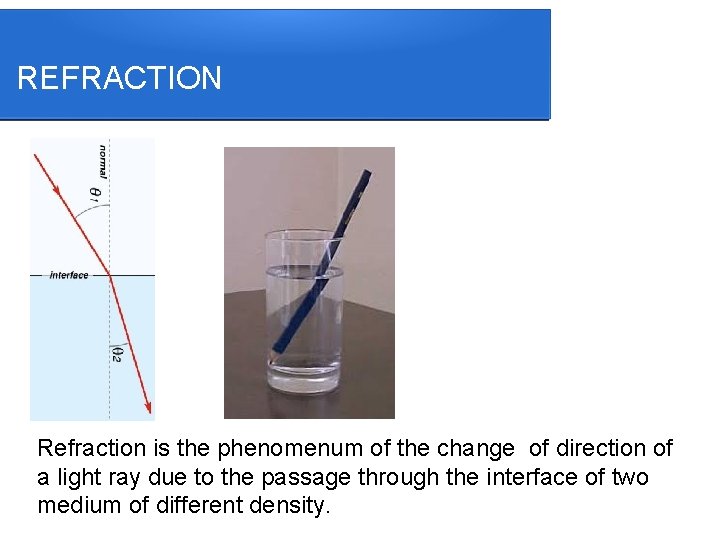
REFRACTION Refraction is the phenomenum of the change of direction of a light ray due to the passage through the interface of two medium of different density.
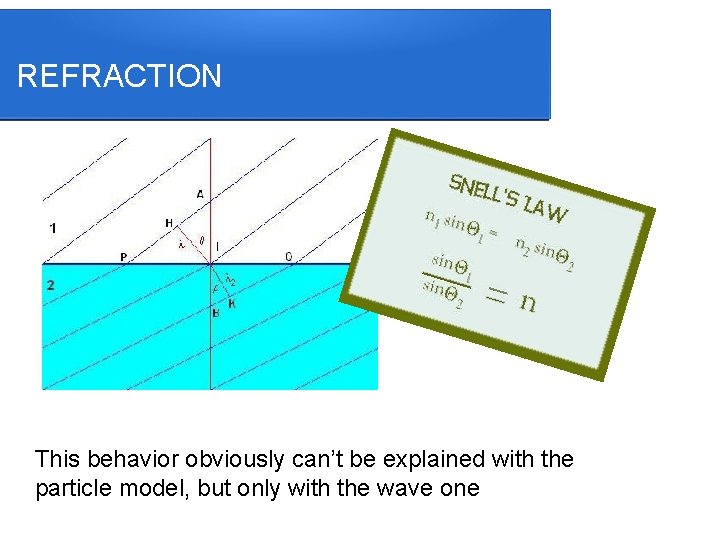
REFRACTION This behavior obviously can’t be explained with the particle model, but only with the wave one
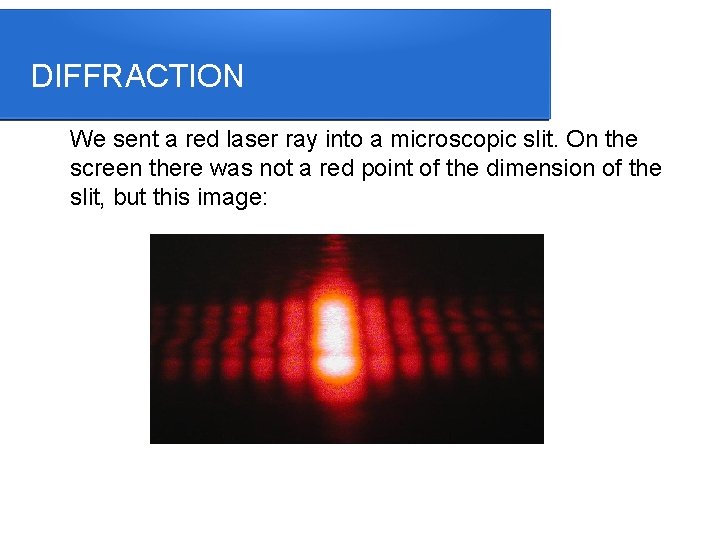
DIFFRACTION We sent a red laser ray into a microscopic slit. On the screen there was not a red point of the dimension of the slit, but this image:
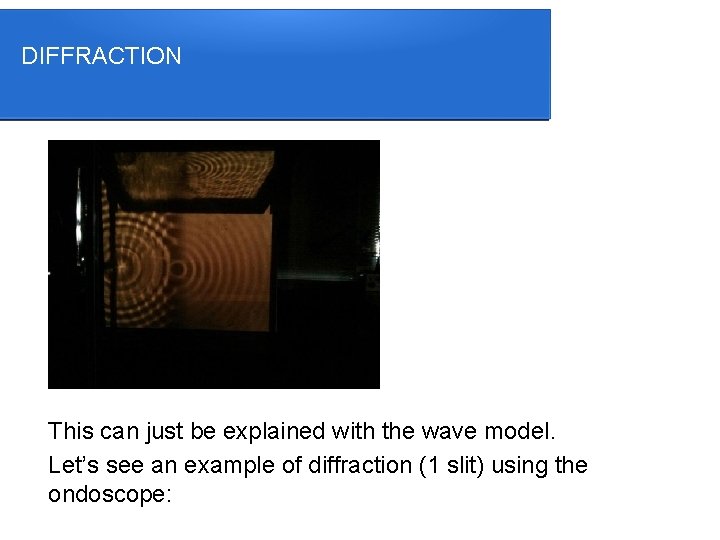
DIFFRACTION This can just be explained with the wave model. Let’s see an example of diffraction (1 slit) using the ondoscope:
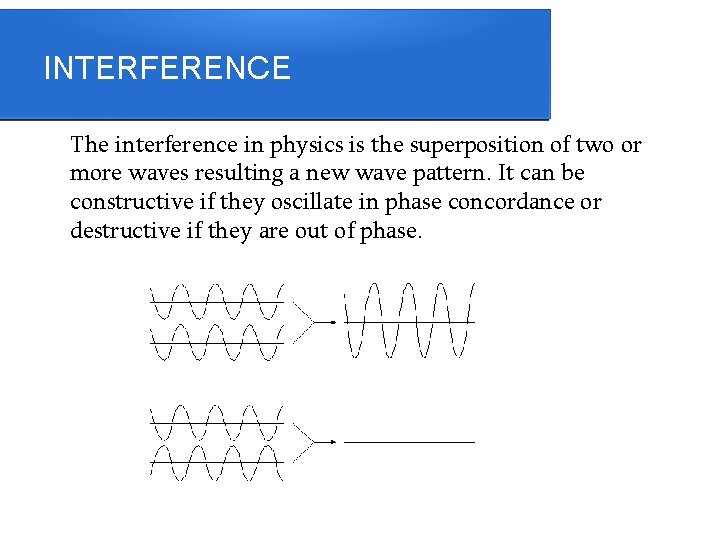
INTERFERENCE The interference in physics is the superposition of two or more waves resulting a new wave pattern. It can be constructive if they oscillate in phase concordance or destructive if they are out of phase.
SO DOES THE WAVE MODEL TRIUMPH ON THE PARTICLE ONE? Yes but… . . . in the beginning of the XX century the photoelectric effect had been pointed out (1905, Albert Einstein).
CONCLUSION Today light is considered to have a dual nature: it offen behaves as a wave, and sometimes as particle. When we will have a unique model…. . well, let’s wait till that day!!!