FIN 440 International Finance Larry Schrenk Instructor Video

- Slides: 26
FIN 440: International Finance Larry Schrenk, Instructor Video 8. 4 International Fisher Effect II 1
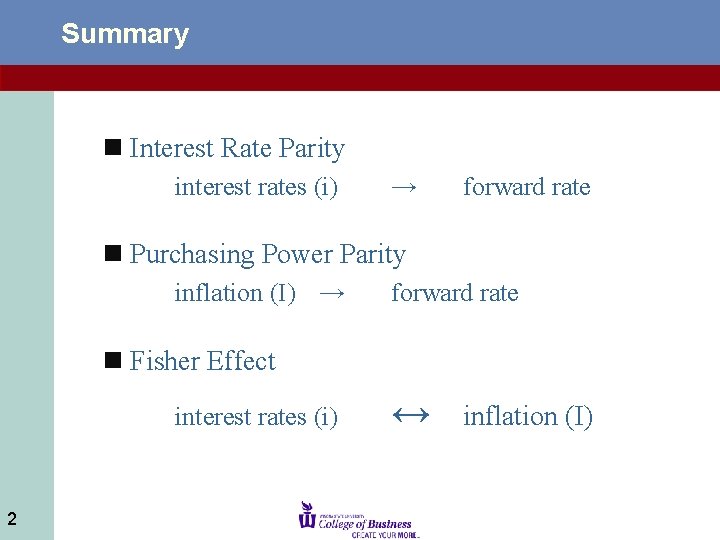
Summary n Interest Rate Parity interest rates (i) → forward rate n Purchasing Power Parity inflation (I) → forward rate n Fisher Effect interest rates (i) 2 ↔ inflation (I)
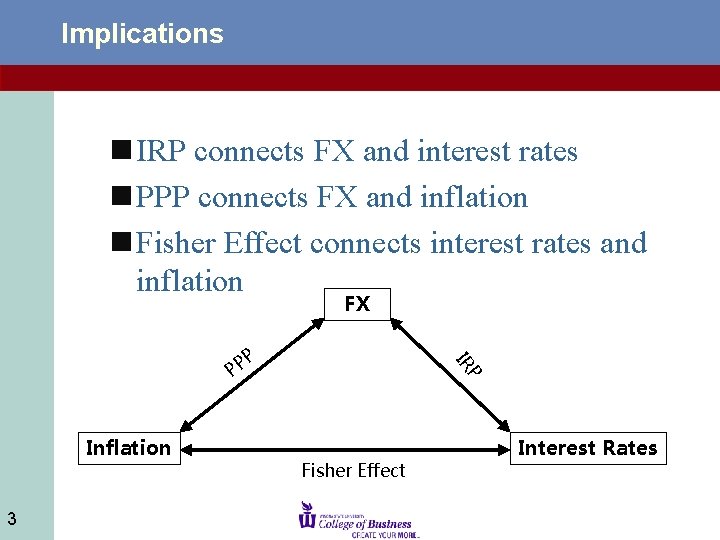
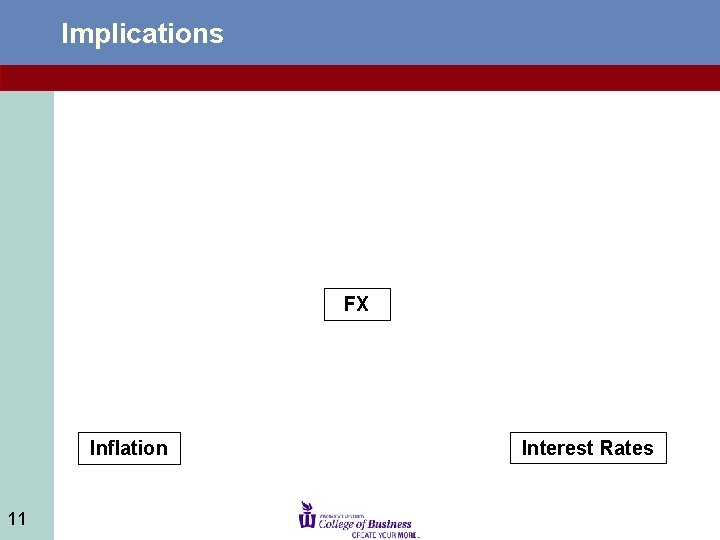
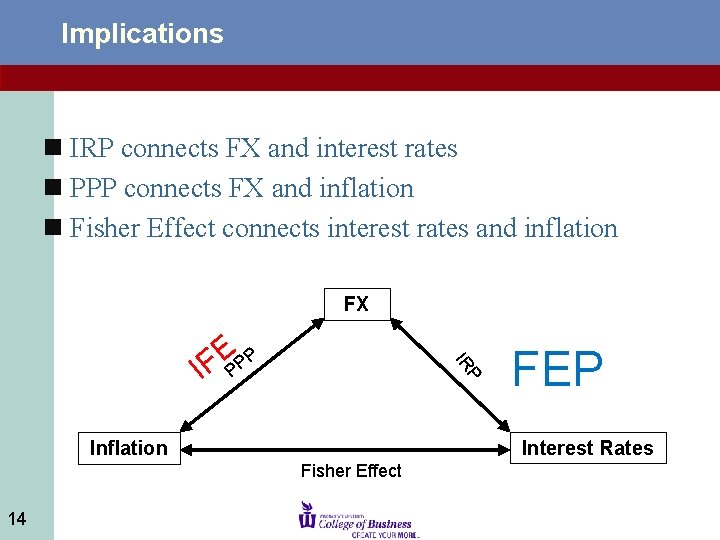
Implications n IRP connects FX and interest rates n PPP connects FX and inflation n Fisher Effect connects interest rates and inflation FX 3 P Inflation IR P P P Fisher Effect Interest Rates
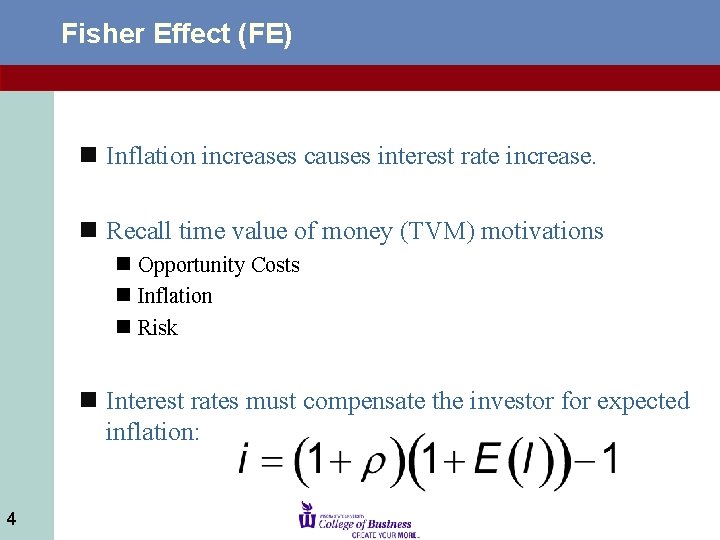
Fisher Effect (FE) n Inflation increases causes interest rate increase. n Recall time value of money (TVM) motivations n Opportunity Costs n Inflation n Risk n Interest rates must compensate the investor for expected inflation: 4
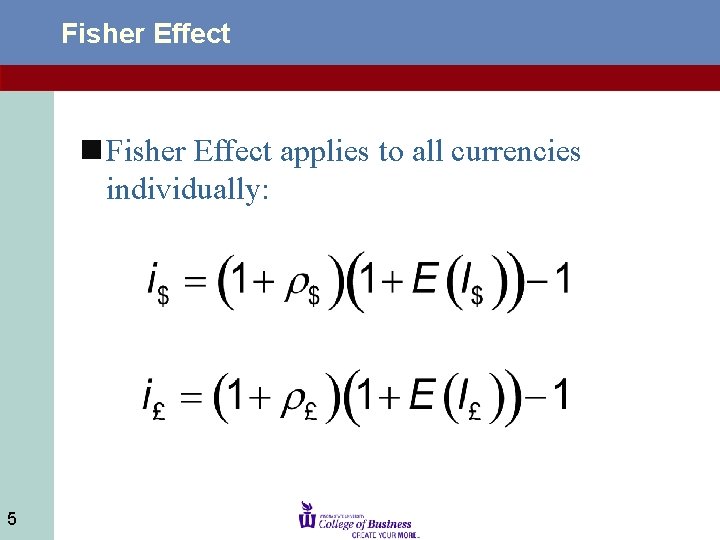
Fisher Effect n Fisher Effect applies to all currencies individually: 5
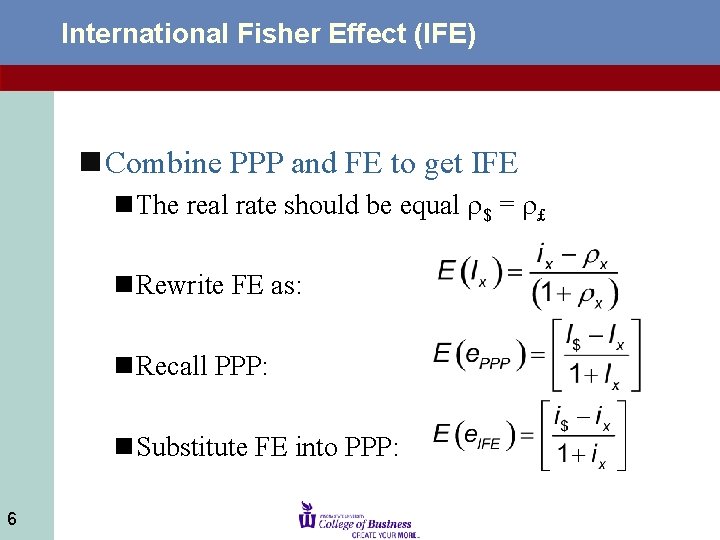
International Fisher Effect (IFE) n Combine PPP and FE to get IFE n The real rate should be equal r$ = r£ n Rewrite FE as: n Recall PPP: n Substitute FE into PPP: 6
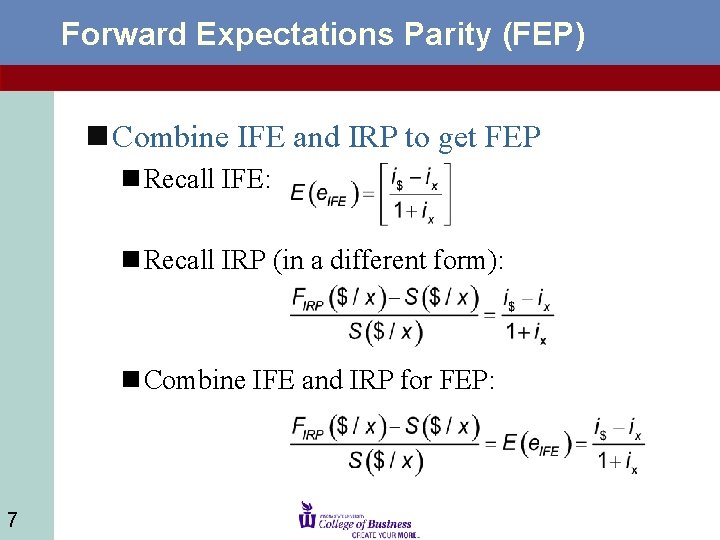
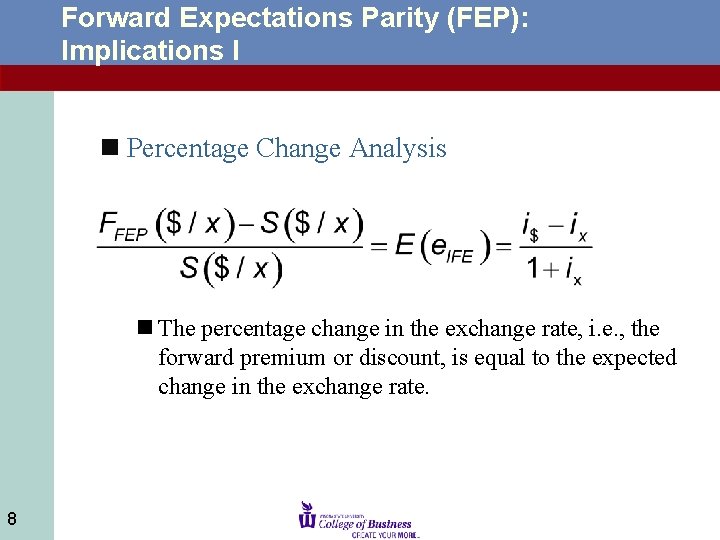
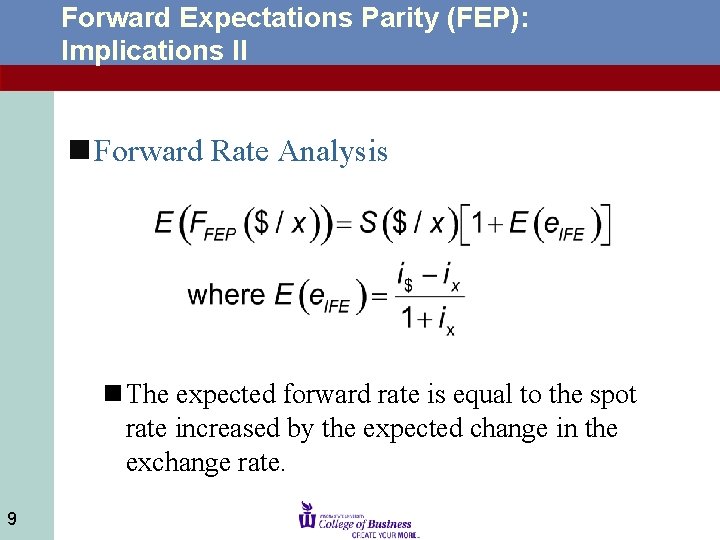
Forward Expectations Parity (FEP) n Combine IFE and IRP to get FEP n Recall IFE: n Recall IRP (in a different form): n Combine IFE and IRP for FEP: 7
Forward Expectations Parity (FEP): Implications I n Percentage Change Analysis n The percentage change in the exchange rate, i. e. , the forward premium or discount, is equal to the expected change in the exchange rate. 8
Forward Expectations Parity (FEP): Implications II n Forward Rate Analysis n The expected forward rate is equal to the spot rate increased by the expected change in the exchange rate. 9
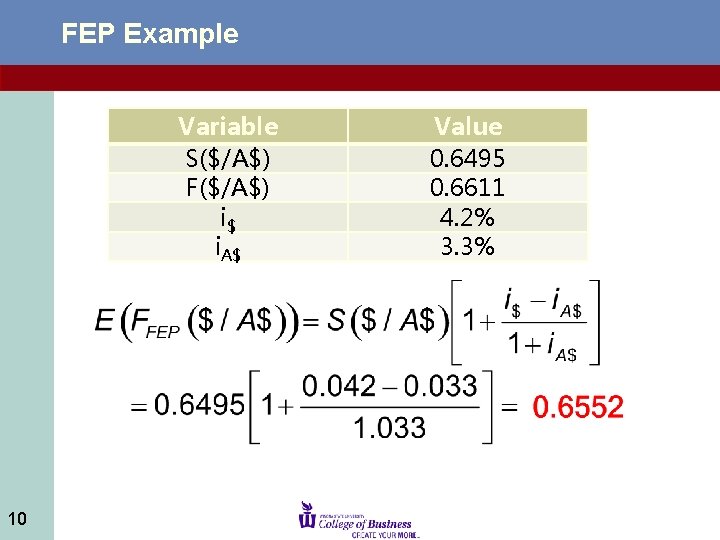
FEP Example Variable S($/A$) F($/A$) i$ i. A$ 10 Value 0. 6495 0. 6611 4. 2% 3. 3%
Implications FX Inflation 11 Interest Rates
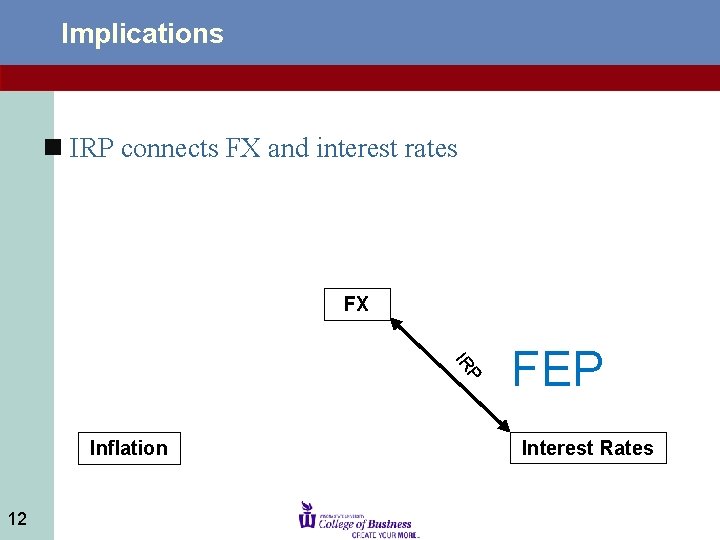
Implications n IRP connects FX and interest rates FX P IR Inflation 12 FEP Interest Rates
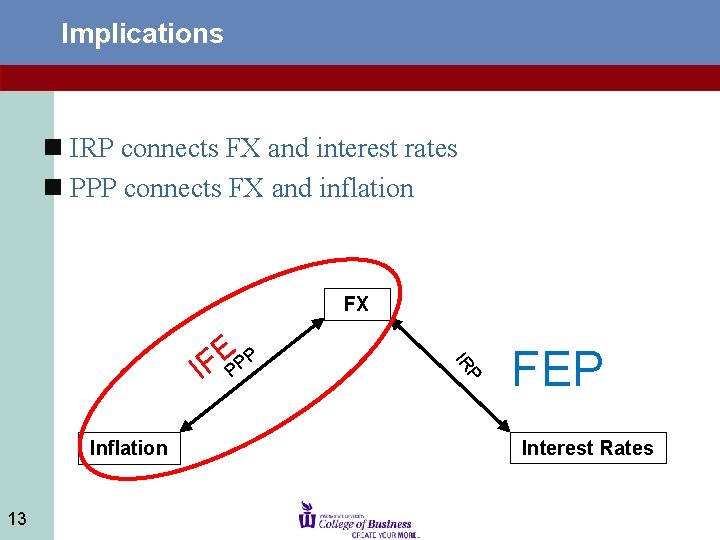
Implications n IRP connects FX and interest rates n PPP connects FX and inflation FX 13 P Inflation IR EPPP F I FEP Interest Rates
Implications n IRP connects FX and interest rates n PPP connects FX and inflation n Fisher Effect connects interest rates and inflation FX P IR EPPP F I Inflation Interest Rates Fisher Effect 14 FEP
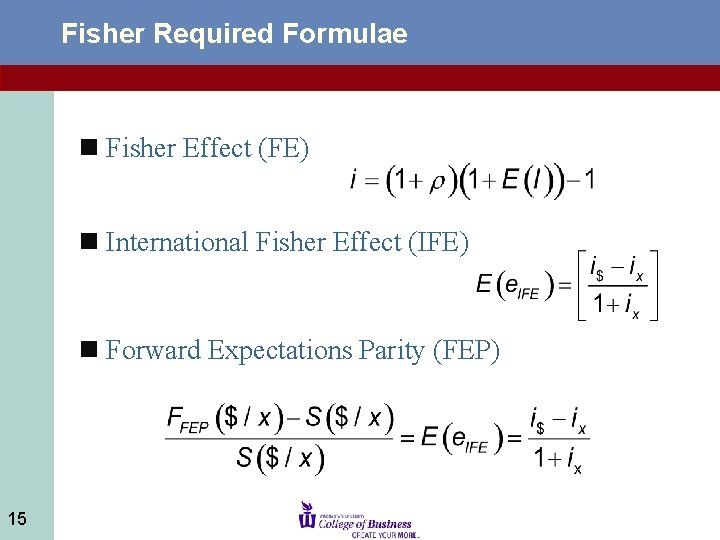
Fisher Required Formulae n Fisher Effect (FE) n International Fisher Effect (IFE) n Forward Expectations Parity (FEP) 15
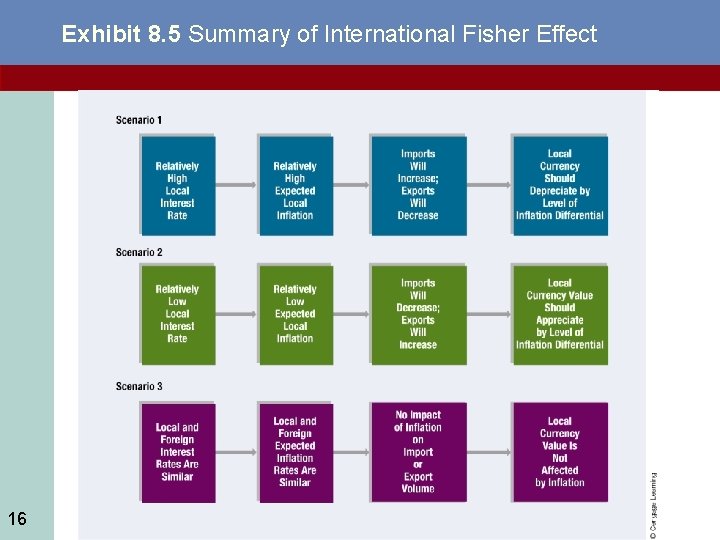
Exhibit 8. 5 Summary of International Fisher Effect 16
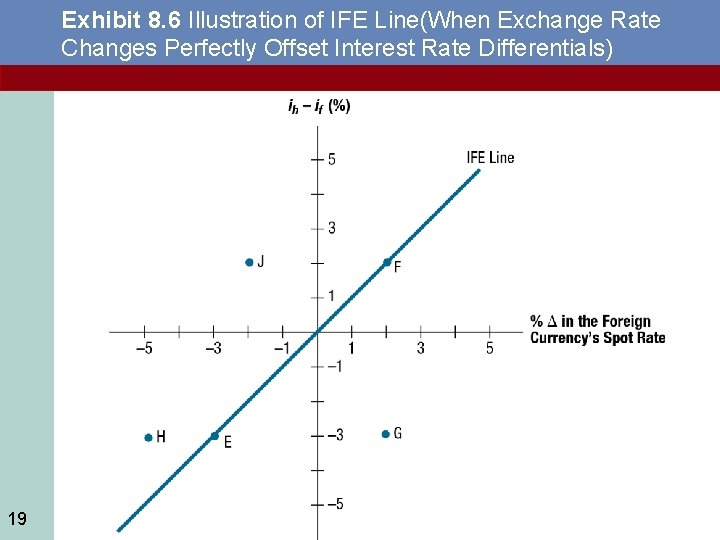
International Fisher Effect (IFE) (7 of 8) Graphic Analysis of the International Fisher Effect § Point E in Exhibit 8. 6 reflects a situation where the foreign interest rate exceeds the home interest rate by three percentage points. The foreign currency has depreciated by 3% to offset its interest rate advantage. § Point F represents a home interest rate 2% above the foreign interest rate. IFE theory suggests that the currency should appreciate by 2% to offset the interest rate disadvantage. 17 § Point F illustrates the IFE from a foreign investor’s perspective. The home interest rate will appear attractive to the foreign investor. However, IFE theory suggests that the foreign currency will appreciate by 2%.
International Fisher Effect (IFE) (8 of 8) Graphic Analysis of the International Fisher Effect (cont. ) § Points on the IFE Line § All the points along the IFE line reflect exchange rate adjustments to offset the differential in interest rates. This means investors will end up achieving the same yield (adjusted for exchange rate fluctuations) whether they invest at home or in a foreign country. § Points below the IFE Line § Points below the IFE line generally reflect the higher returns from investing in foreign deposits. § Points above the IFE Line § Points above the IFE line generally reflect returns from foreign deposits that are lower than the returns possible domestically. 18
Exhibit 8. 6 Illustration of IFE Line(When Exchange Rate Changes Perfectly Offset Interest Rate Differentials) 19
Tests of the International Fisher Effect What Can be Tested (Exhibit 8. 6) § If the actual points (one for each period) of interest rates and exchange rate changes were plotted over time on a graph, we could determine whether: § the points are systematically below the IFE line (suggesting higher returns from foreign investing), § above the line (suggesting lower returns from foreign investing), or § evenly scattered on both sides (suggesting a balance of higher returns from foreign investing in some periods and lower foreign returns in other periods). § Statistical Test of the IFE § Apply regression analysis to historical exchange rates and the nominal interest rate differential. 20
Tests of the International Fisher Effect (1 of 2) Limitations of the IFE § The IFE theory relies on the Fisher effect and PPP § Limitation of the Fisher Effect § The difference between the nominal interest rate and actual inflation rate is not consistent. Thus, while the Fisher effect can effectively use nominal interest rates to estimate the market’s expected inflation over a particular period, the market may be wrong. § Limitation of PPP § Other country characteristics besides inflation (income levels, government controls) can affect exchange rate movements. Even if the expected inflation derived from the Fisher effect properly reflects the actual inflation rate over the period, relying solely on inflation to forecast the future exchange rate is subject to error. 21
Tests of the International Fisher Effect (2 of 2) IFE Theory versus Reality § The IFE theory contradicts how a country with a high interest rate can attract more capital flows and therefore cause the local currency’s value to strengthen (Ch. 4). § IFE theory also contradicts how central banks may purposely try to raise interest rates in order to attract funds and strengthen the value of their local currencies (Ch. 6). § Whether the IFE holds in reality is dependent on the countries involved and the period assessed. § The IFE theory may be especially meaningful to situations in which the MNCs and large investors consider investing in countries where the prevailing interest rates are very high. 22
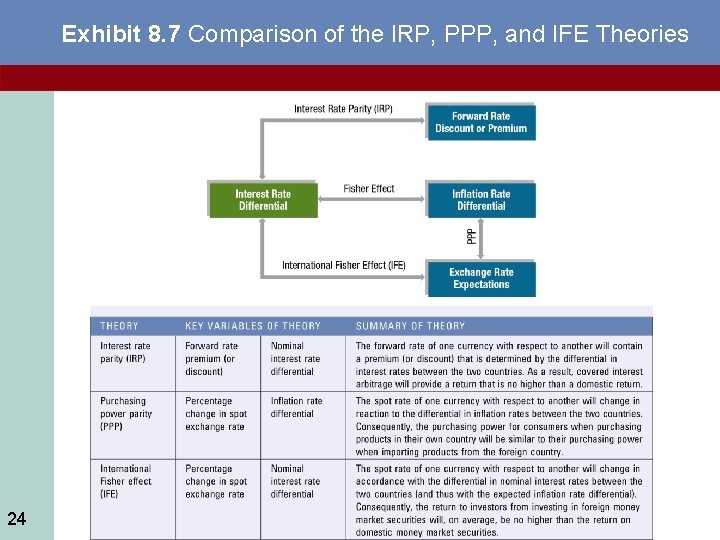
Comparison of the IRP, PPP, and IFE Although all three theories relate to the determination of exchange rates, they have different implications. (Exhibit 8. 7) § IRP focuses on why the forward rate differs from the spot rate and on the degree of difference that should exist. It relates to a specific point in time. § PPP and IFE focus on how a currency’s spot rate will change over time. § Whereas PPP suggests that the spot rate will change in accordance with inflation differentials, IFE suggests that it will change in accordance with interest rate differentials. § PPP is related to IFE because expected inflation differentials influence the nominal interest rate differentials between two countries. 23
Exhibit 8. 7 Comparison of the IRP, PPP, and IFE Theories 24
SUMMARY (1 of 2) n Purchasing power parity (PPP) theory specifies a precise relationship between the relative inflation rates of two countries and their exchange rate. PPP theory suggests that the equilibrium exchange rate will adjust by about the same magnitude as the difference between the two countries’ inflation rates. While there is evidence of significant real world deviations from theory, PPP offers a logical explanation for why currencies of countries with high inflation tend to weaken over time. 25
SUMMARY (2 of 2) § 26 The international Fisher effect (IFE) specifies a precise relationship between relative interest rates of two countries and their exchange rates. It suggests that an investor who periodically invests in interest -bearing foreign securities will, on average, achieve a return similar to what is possible domestically. This implies that the exchange rate of the country with high interest rates will depreciate to offset the interest rate advantage achieved by foreign investments. Yet there is evidence that the IFE does not hold during all periods, which means that investment in foreign short-term securities may achieve a higher return than what is possible domestically. However, a firm that attempts to achieve this higher return also incurs the risk that the currency denominating the foreign security depreciates against the investor’s home currency during the investment period. In that case, the foreign security would generate a lower return than a domestic security even though it exhibits a higher interest rate.