Film Studies Visual Literacy Did you know 13

- Slides: 25
Film Studies Visual Literacy
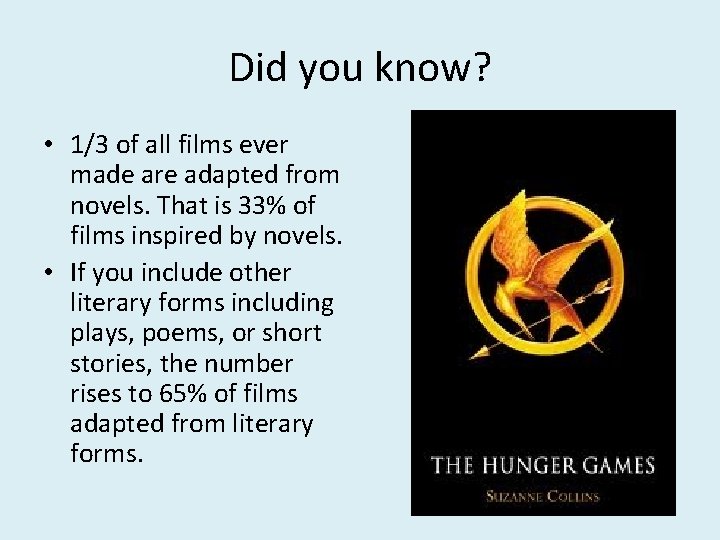
Did you know? • 1/3 of all films ever made are adapted from novels. That is 33% of films inspired by novels. • If you include other literary forms including plays, poems, or short stories, the number rises to 65% of films adapted from literary forms.
Visual Literacy • Visual literacy involves all the processes of knowing and responding to a visual image, as well as all the thought that might go into constructing or manipulating an image. • Students must actively view films in order to analyze the meaning communicated through the images.
Visual Literacy • Films, like literature, use effective techniques that force viewers to focus on significant events that develop character, theme, plot, mood, conflict and symbolism. • Visual literacy is the ability to interpret, critically respond, discuss, and develop meaning from information presented in images or film.
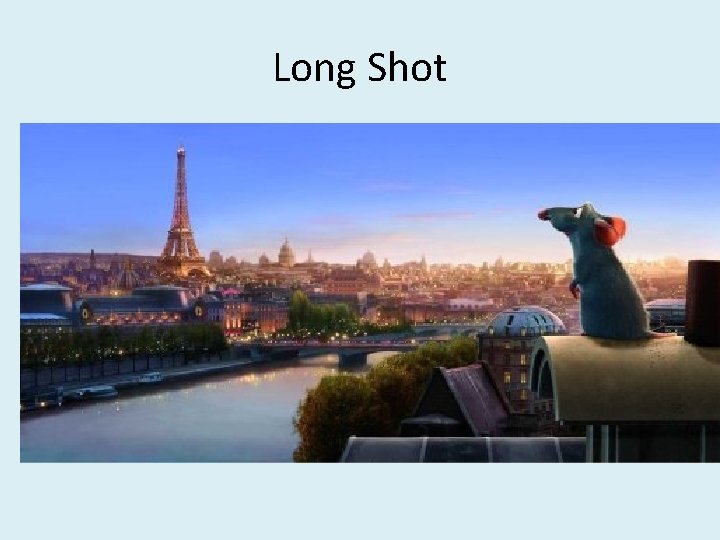
Camera Distance Long Shot: • A shot in which the background dominates. • Figures are often included to give a sense of scale and space. • Long shots can be used to establish setting.
Long Shot
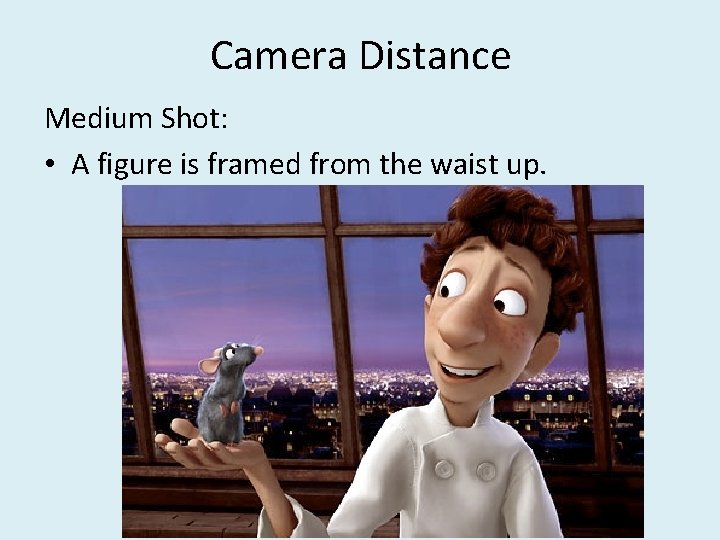
Camera Distance Medium Shot: • A figure is framed from the waist up.
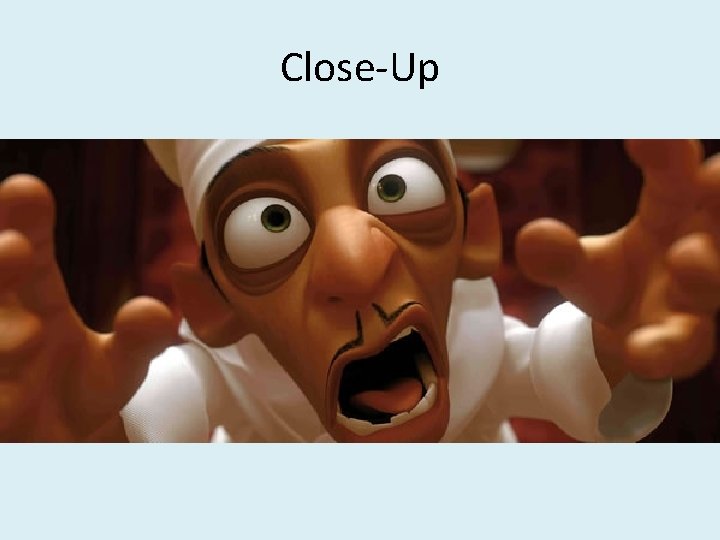
Camera Distance Close-Up: • A detailed shot usually showing just the head or significant object. • Draws attention to an object or facial expression of a character.
Close-Up
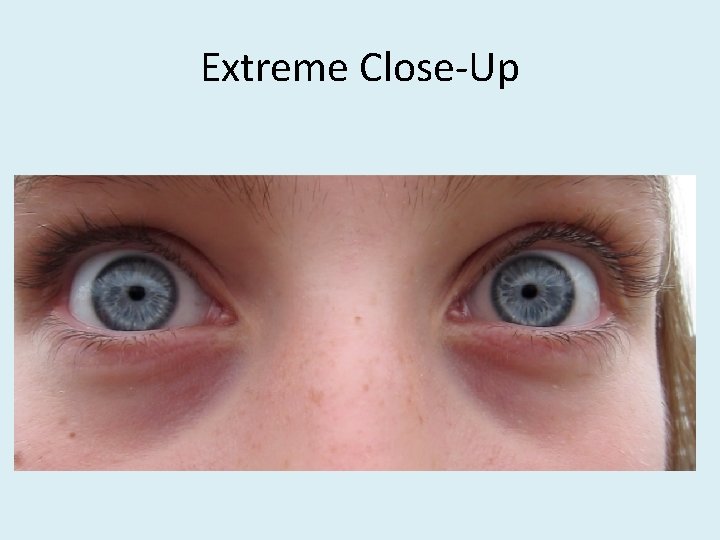
Camera Distance Extreme Close up: • A shot that singles out a specific portion of the body or isolates a detail. • Reinforces the significance of an object.
Extreme Close-Up
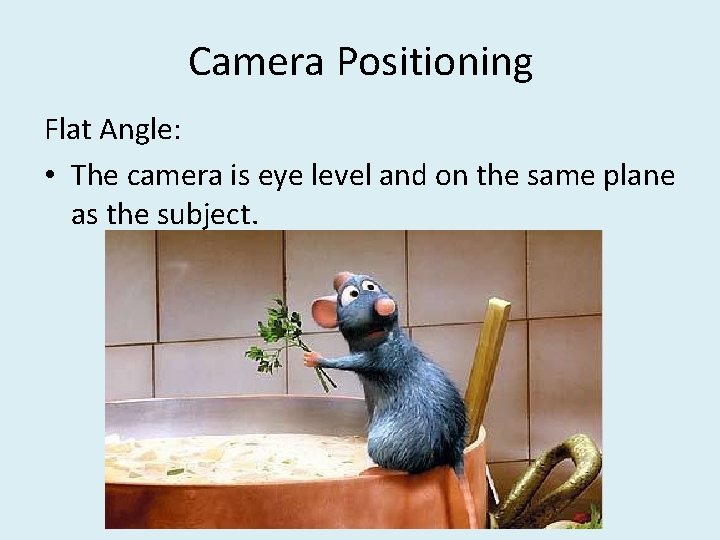
Camera Positioning Flat Angle: • The camera is eye level and on the same plane as the subject.
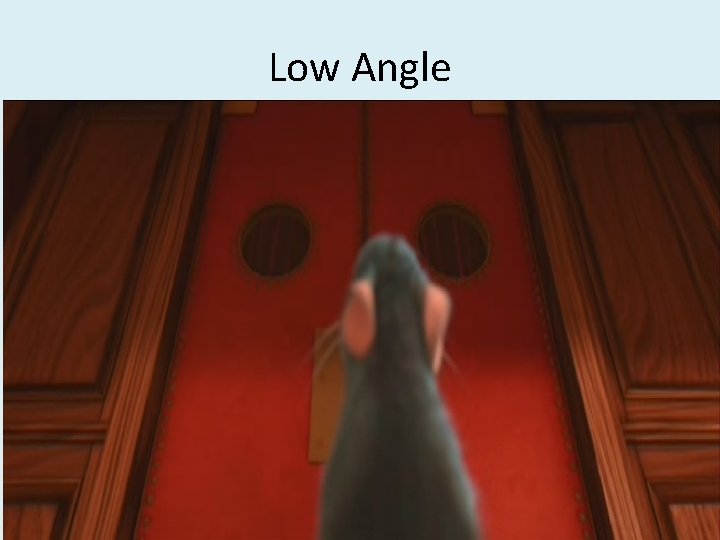
Camera Positioning Low Angle: • A shot in which the camera literally and figuratively looks up at the subject. • This angle is often used to give the subject a dominating or powerful presence. • The audience is made to feel submissive or small.
Low Angle
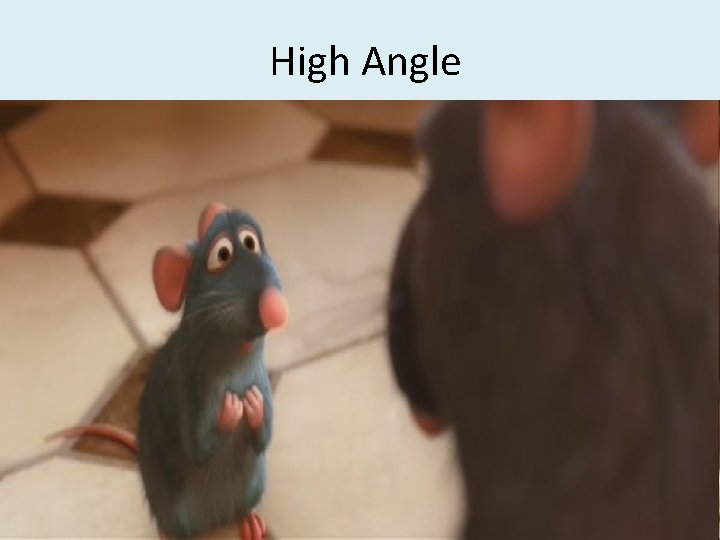
Camera Positioning High Angle: • A shot in which the camera literally and figuratively looks down on the subject. • It can be used to make the subject seem small or insignificant.
High Angle
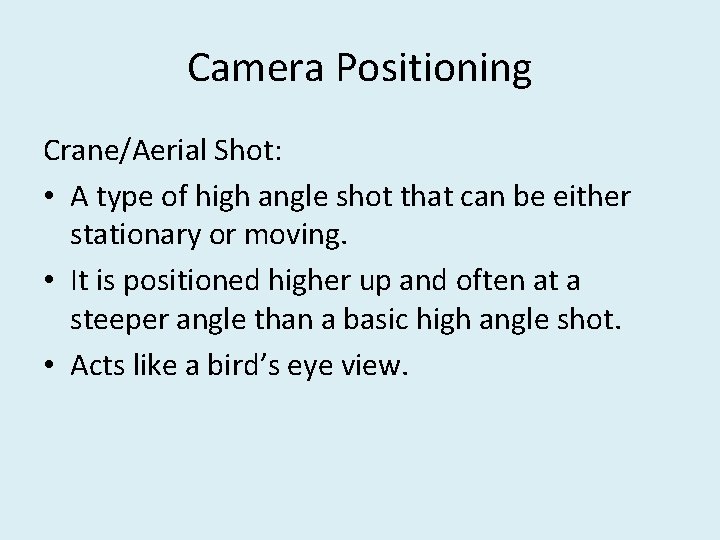
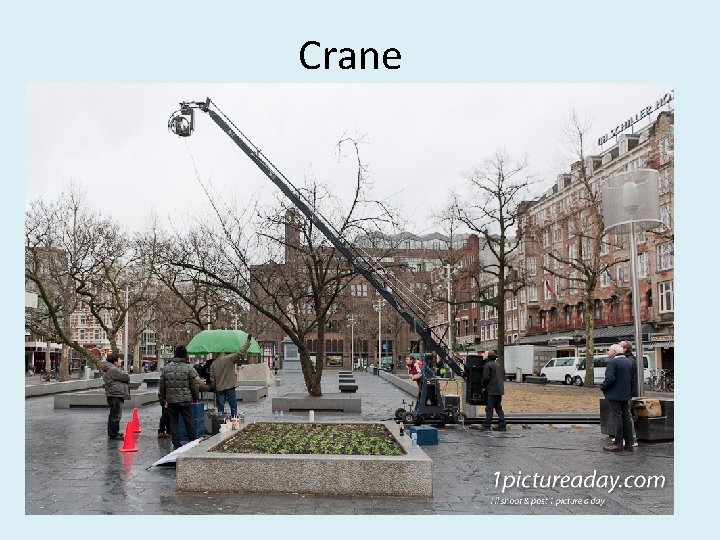
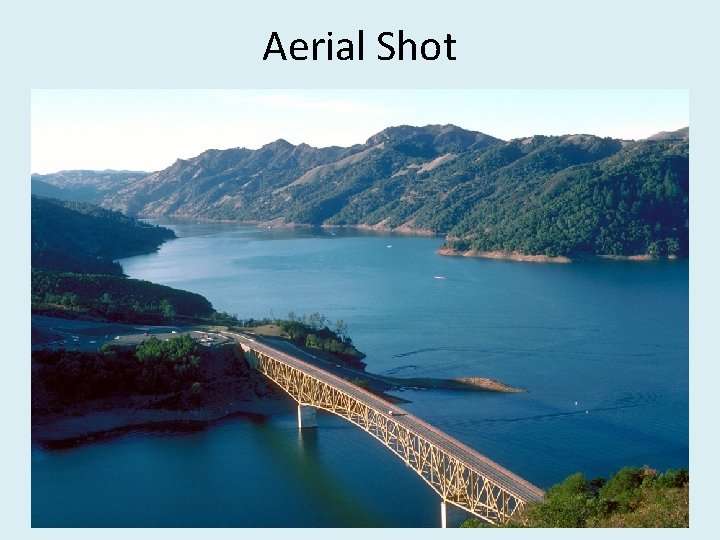
Camera Positioning Crane/Aerial Shot: • A type of high angle shot that can be either stationary or moving. • It is positioned higher up and often at a steeper angle than a basic high angle shot. • Acts like a bird’s eye view.
Crane
Aerial Shot
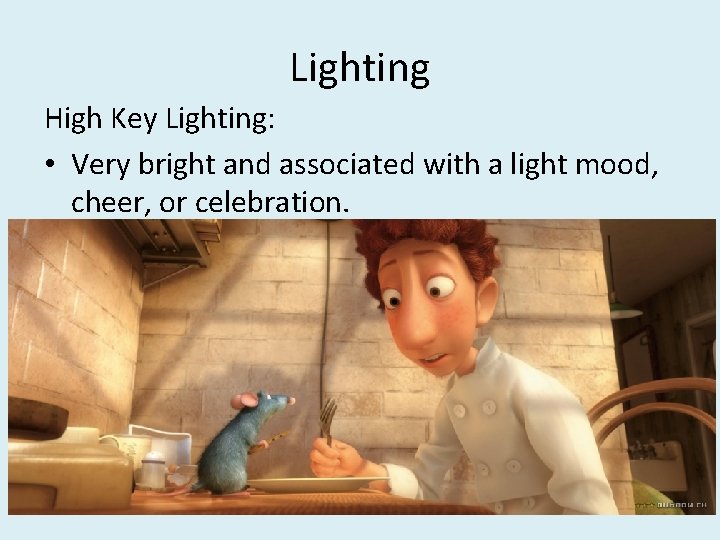
Lighting High Key Lighting: • Very bright and associated with a light mood, cheer, or celebration.
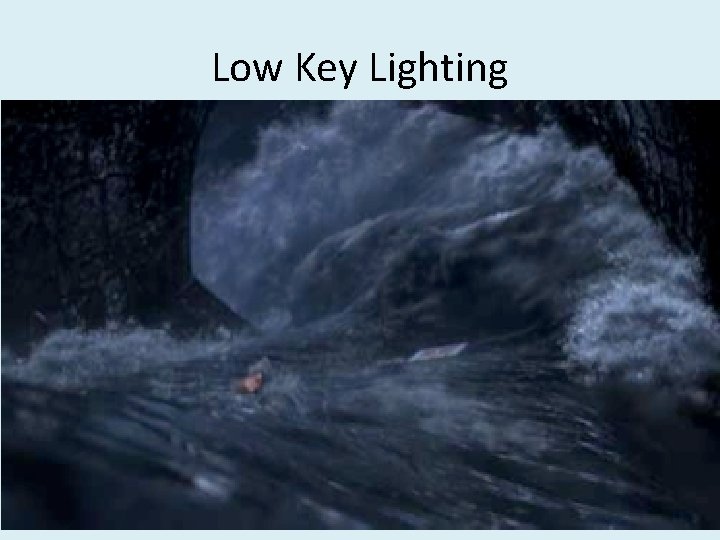
Lighting Low Key Lighting: • Very dark and full of shadows. • There is a strong contrast between light and dark areas of the shot. • Used in scenes that are frightening, suspenseful, or gloomy.
Low Key Lighting
Camera Movement Panning: • The horizontal movement of the camera from side to follow the action in a scene. • Can be used as point of view shot in which the camera movement indicates a character scanning an area.
Camera Movement Tilt: • The vertical movement of the camera. • The camera points up or down from a fixed base. • Can be used to establish setting by showing the height of something. • Ex. The camera can tilt up to show the height of the Empire State Building or tilt down to show the height of a cliff.
Camera Movement Boom: • The camera moves vertically up or down through space. • The camera is not on a fixed point in space like the tilt movement.