Exploring Angle Pairs Unit 1 Lesson 5 Exploring



- Slides: 29
Exploring Angle Pairs Unit 1 Lesson 5
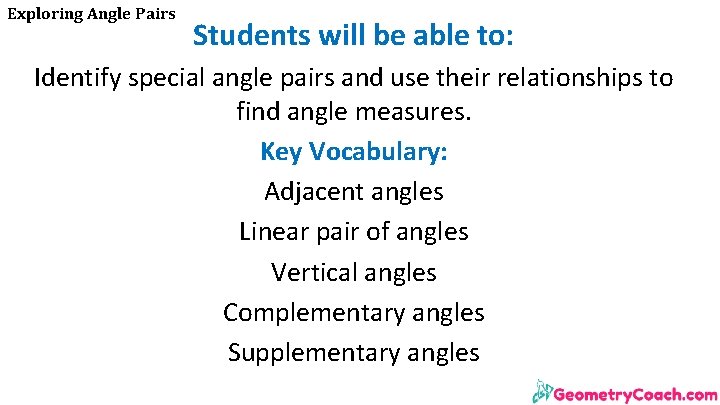
Exploring Angle Pairs Students will be able to: Identify special angle pairs and use their relationships to find angle measures. Key Vocabulary: Adjacent angles Linear pair of angles Vertical angles Complementary angles Supplementary angles
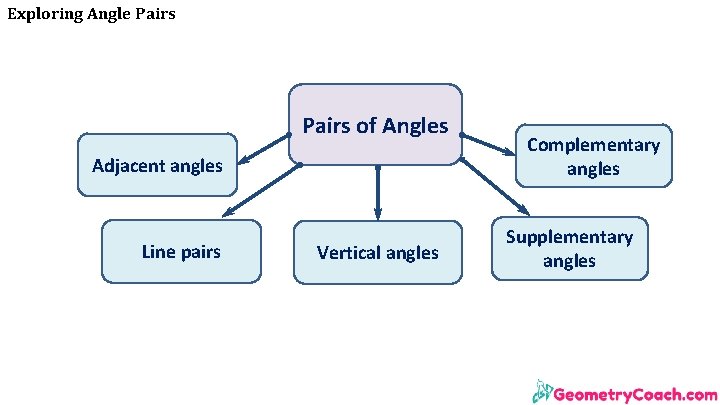
Exploring Angle Pairs of Angles Adjacent angles Line pairs Vertical angles Complementary angles Supplementary angles
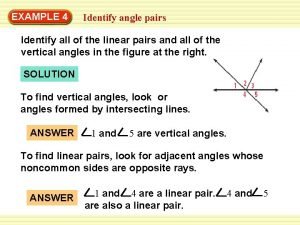
Exploring Angle Pairs Adjacent Angles Adjacent angles are angles that share a common side and have the same vertex, but have no interior points in common.
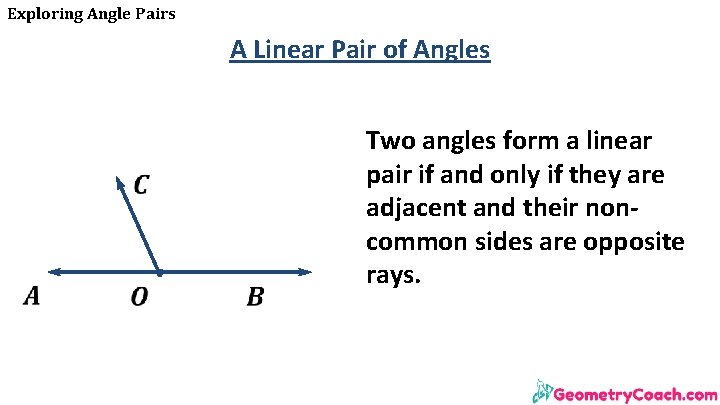
Exploring Angle Pairs A Linear Pair of Angles Two angles form a linear pair if and only if they are adjacent and their noncommon sides are opposite rays.
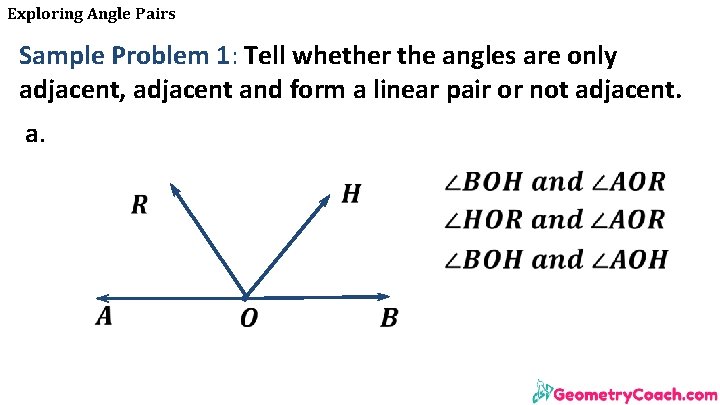
Exploring Angle Pairs Sample Problem 1: Tell whether the angles are only adjacent, adjacent and form a linear pair or not adjacent. a.
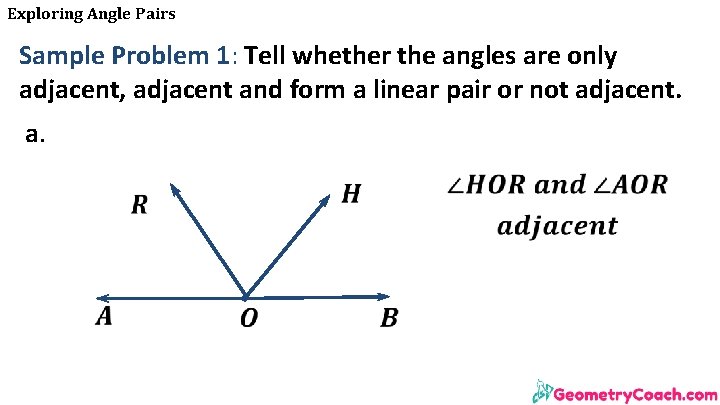
Exploring Angle Pairs Sample Problem 1: Tell whether the angles are only adjacent, adjacent and form a linear pair or not adjacent. a.
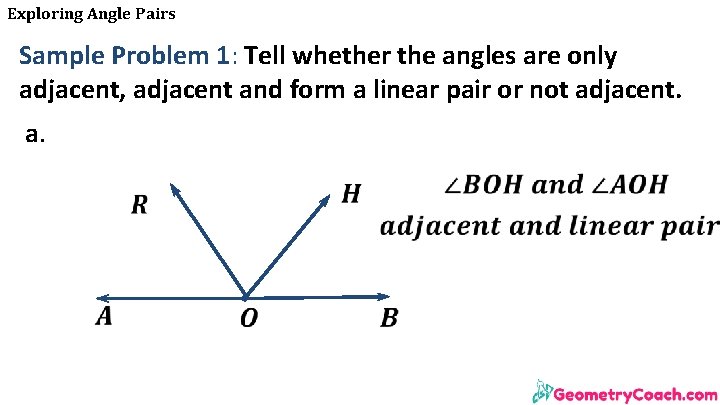
Exploring Angle Pairs Sample Problem 1: Tell whether the angles are only adjacent, adjacent and form a linear pair or not adjacent. a.
Exploring Angle Pairs Sample Problem 1: Tell whether the angles are only adjacent, adjacent and form a linear pair or not adjacent. a.
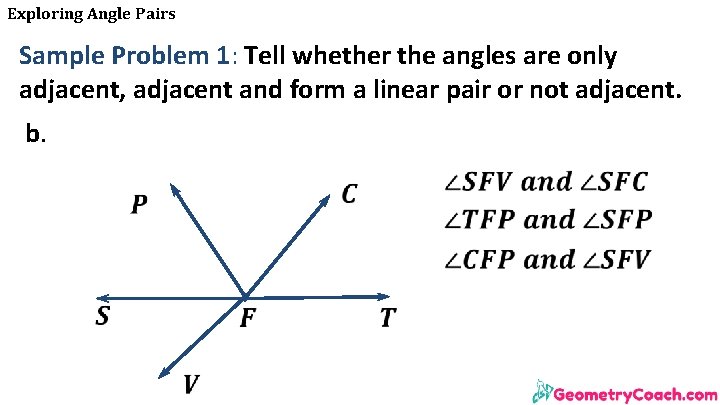
Exploring Angle Pairs Sample Problem 1: Tell whether the angles are only adjacent, adjacent and form a linear pair or not adjacent. b.
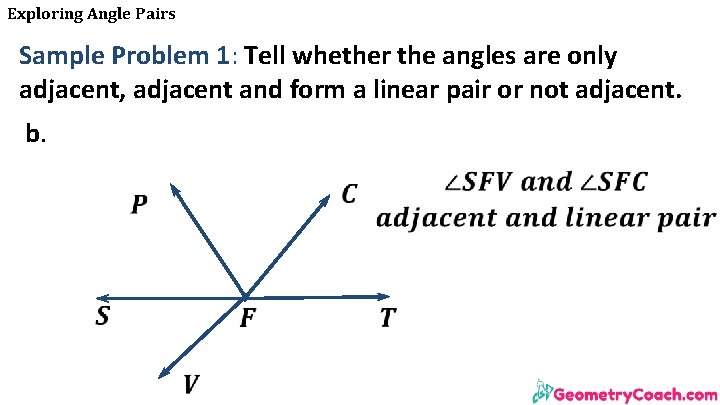
Exploring Angle Pairs Sample Problem 1: Tell whether the angles are only adjacent, adjacent and form a linear pair or not adjacent. b.
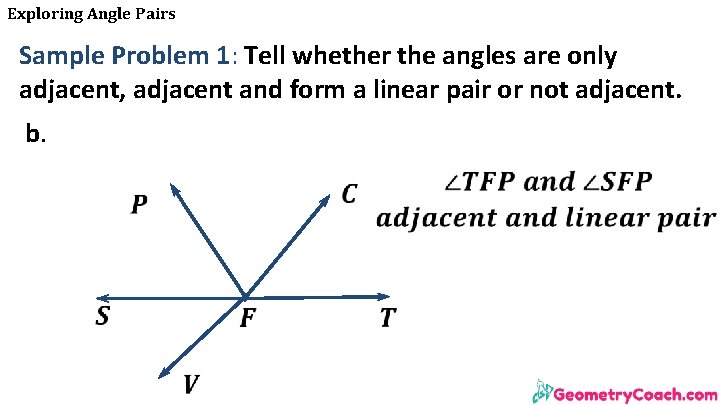
Exploring Angle Pairs Sample Problem 1: Tell whether the angles are only adjacent, adjacent and form a linear pair or not adjacent. b.
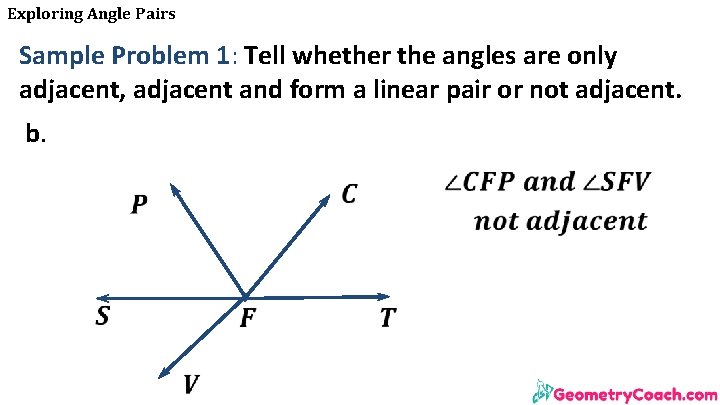
Exploring Angle Pairs Sample Problem 1: Tell whether the angles are only adjacent, adjacent and form a linear pair or not adjacent. b.
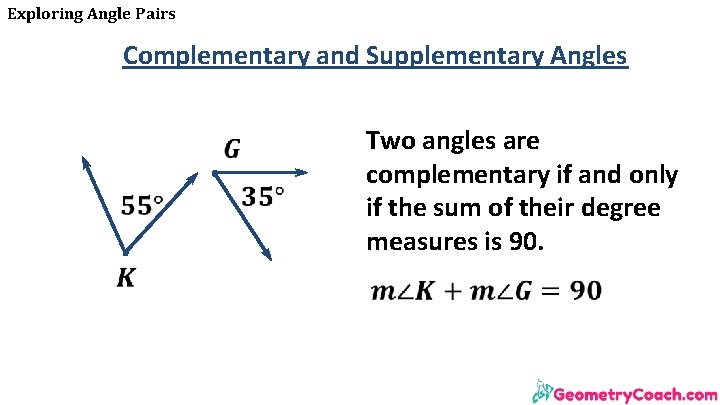
Exploring Angle Pairs Complementary and Supplementary Angles Two angles are complementary if and only if the sum of their degree measures is 90.
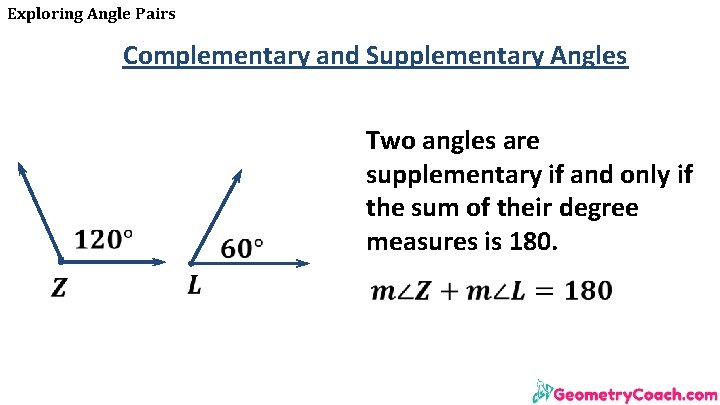
Exploring Angle Pairs Complementary and Supplementary Angles Two angles are supplementary if and only if the sum of their degree measures is 180.
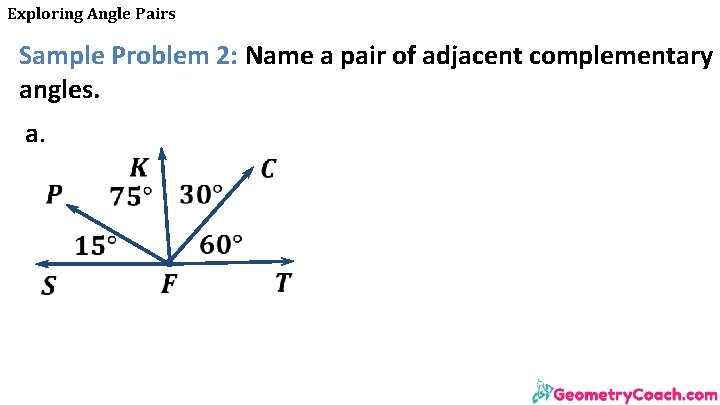
Exploring Angle Pairs Sample Problem 2: Name a pair of adjacent complementary angles. a.
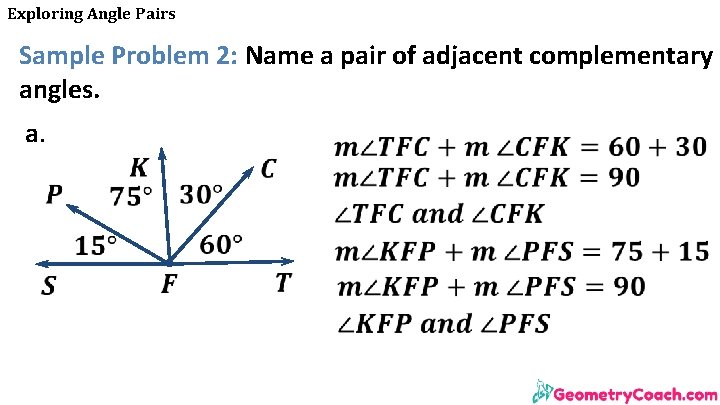
Exploring Angle Pairs Sample Problem 2: Name a pair of adjacent complementary angles. a.
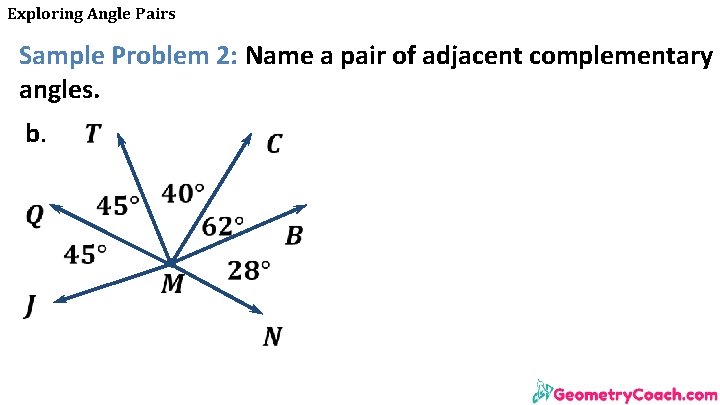
Exploring Angle Pairs Sample Problem 2: Name a pair of adjacent complementary angles. b.
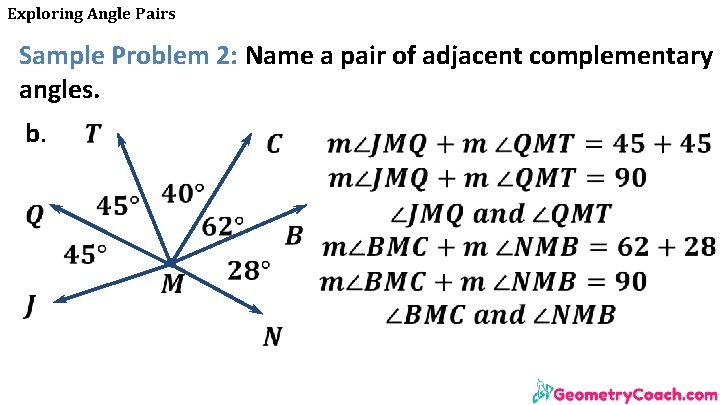
Exploring Angle Pairs Sample Problem 2: Name a pair of adjacent complementary angles. b.
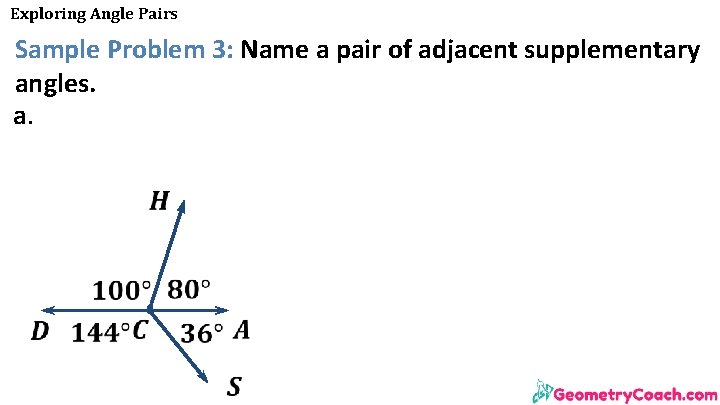
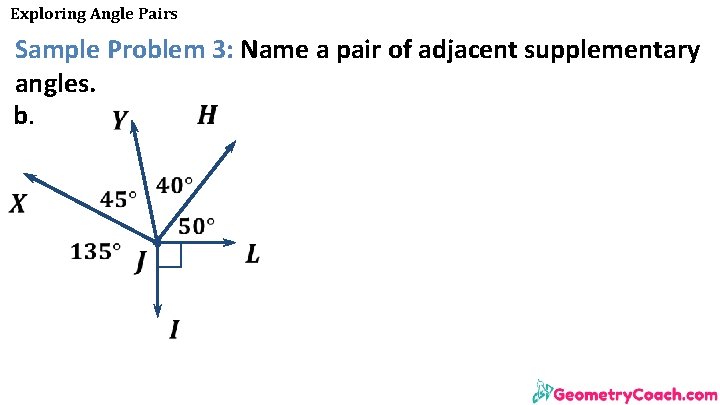
Exploring Angle Pairs Sample Problem 3: Name a pair of adjacent supplementary angles. a.
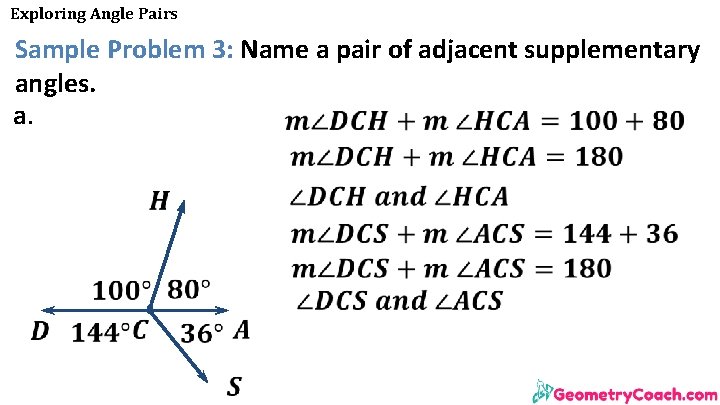
Exploring Angle Pairs Sample Problem 3: Name a pair of adjacent supplementary angles. a.
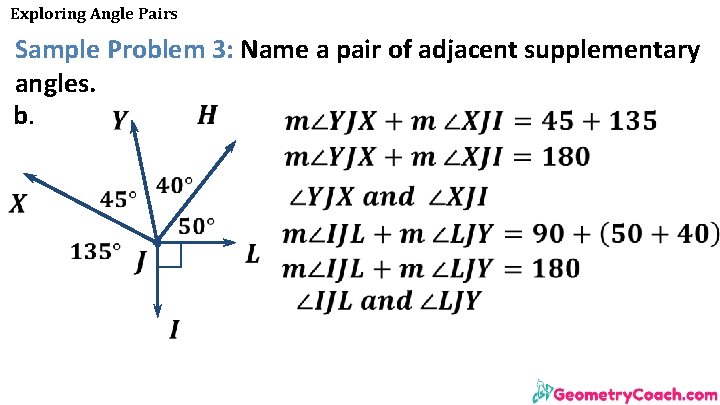
Exploring Angle Pairs Sample Problem 3: Name a pair of adjacent supplementary angles. b.
Exploring Angle Pairs Sample Problem 3: Name a pair of adjacent supplementary angles. b.
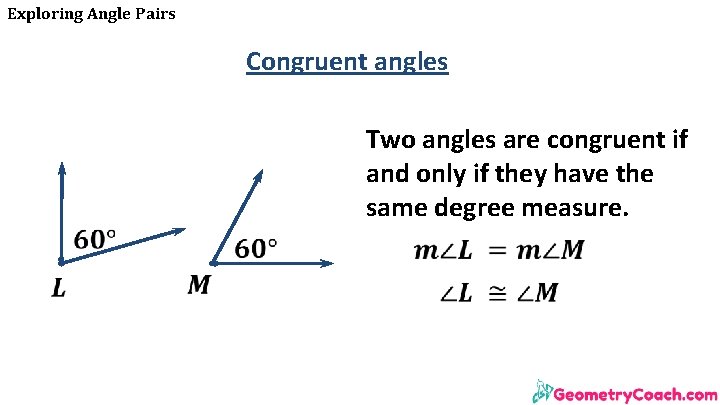
Exploring Angle Pairs Congruent angles Two angles are congruent if and only if they have the same degree measure.
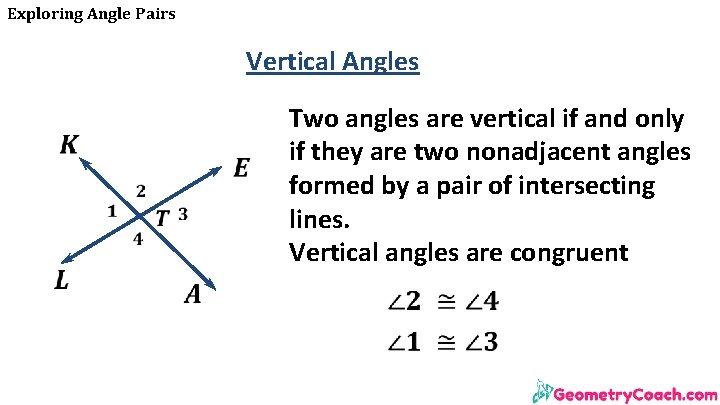
Exploring Angle Pairs Vertical Angles Two angles are vertical if and only if they are two nonadjacent angles formed by a pair of intersecting lines. Vertical angles are congruent
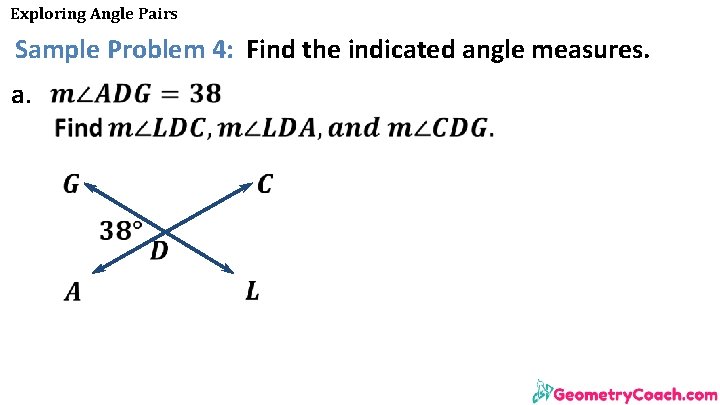
Exploring Angle Pairs Sample Problem 4: Find the indicated angle measures. a.
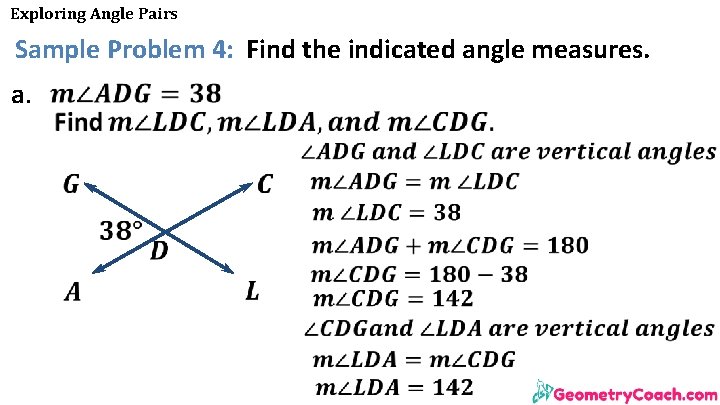
Exploring Angle Pairs Sample Problem 4: Find the indicated angle measures. a.
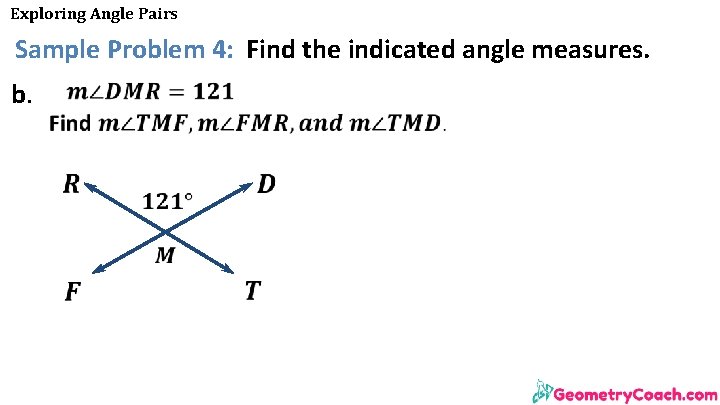
Exploring Angle Pairs Sample Problem 4: Find the indicated angle measures. b.
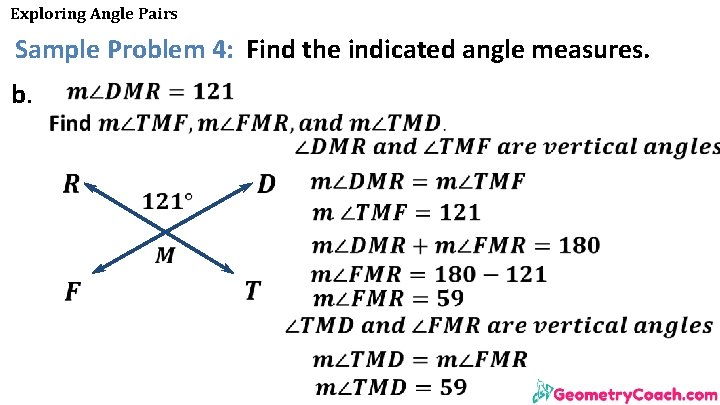
Exploring Angle Pairs Sample Problem 4: Find the indicated angle measures. b.