
Shapes of Molecules David Read Key Aims Revise
- Slides: 56
Shapes of Molecules David Read
Key Aims • Revise A-level VSEPR theory. • Prepare for Phil Gale’s lectures on symmetry, isomers, NMR etc.
Warm-up: How many different molecular shapes can you think of? Give an example for each shape and sketch the structure.
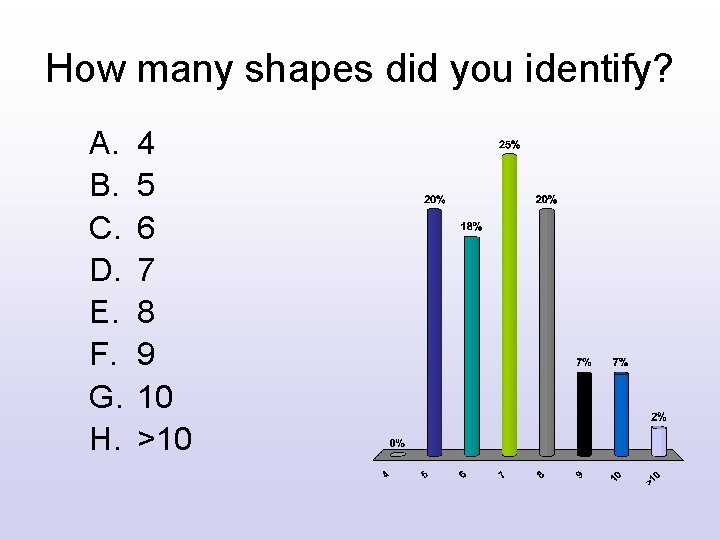
How many shapes did you identify? A. B. C. D. E. F. G. H. 4 5 6 7 8 9 10 >10
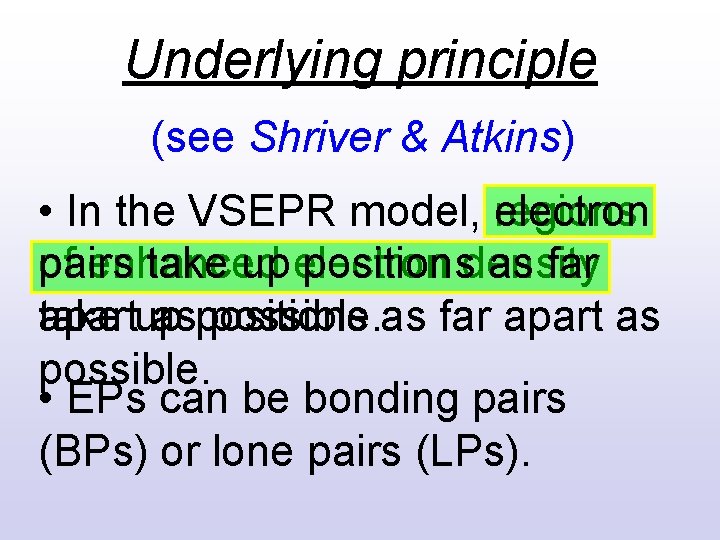
Underlying principle (see Shriver & Atkins) • In the VSEPR model, electron regions of enhanced pairs take up electron positionsdensity as far take up apart aspositions possible. as far apart as possible. • EPs can be bonding pairs (BPs) or lone pairs (LPs).
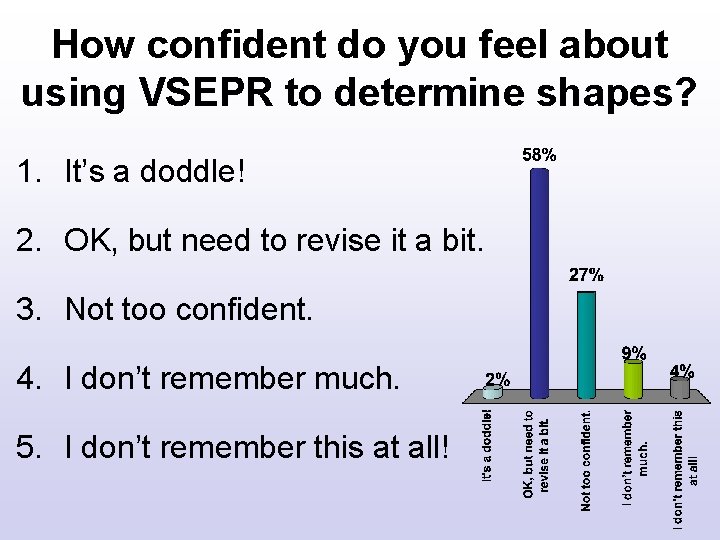
How confident do you feel about using VSEPR to determine shapes? 1. It’s a doddle! 2. OK, but need to revise it a bit. 3. Not too confident. 4. I don’t remember much. 5. I don’t remember this at all!
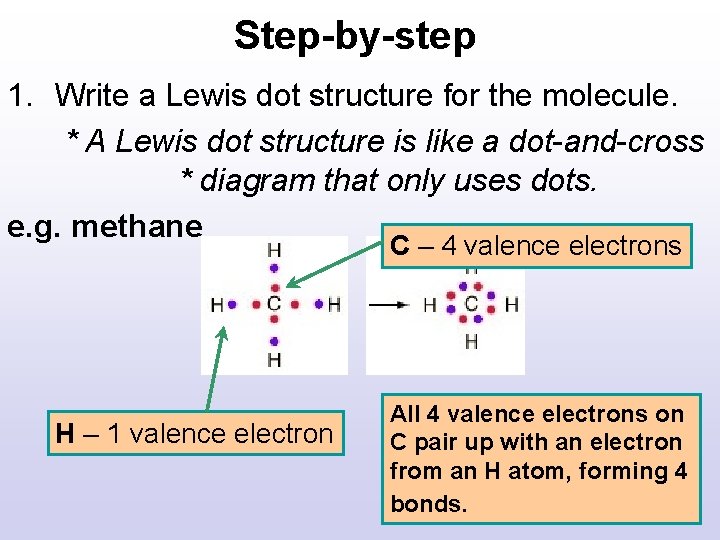
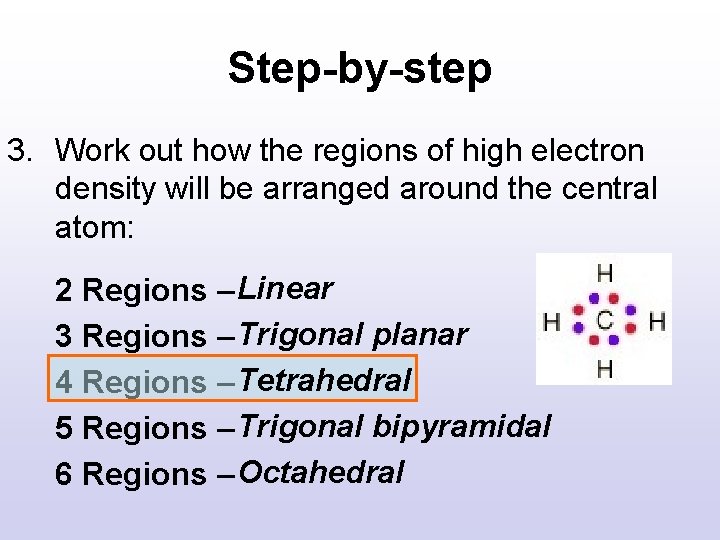
Step-by-step 1. Write a Lewis dot structure for the molecule. * A Lewis dot structure is like a dot-and-cross * diagram that only uses dots. e. g. methane C – 4 valence electrons H – 1 valence electron All 4 valence electrons on C pair up with an electron from an H atom, forming 4 bonds.
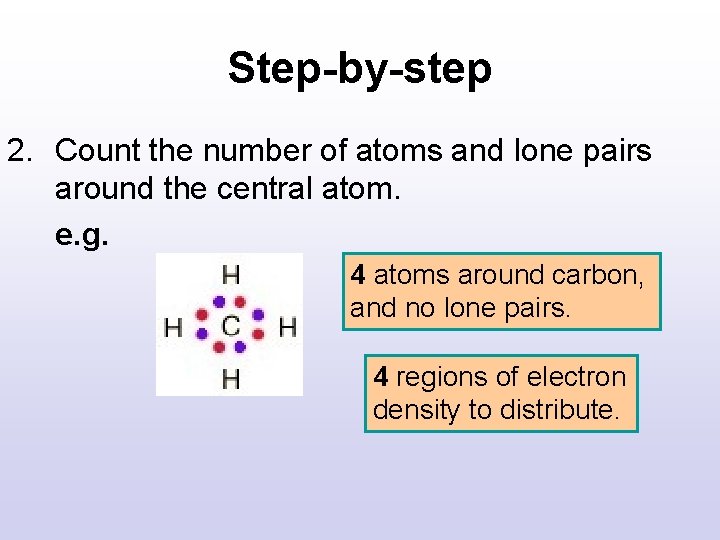
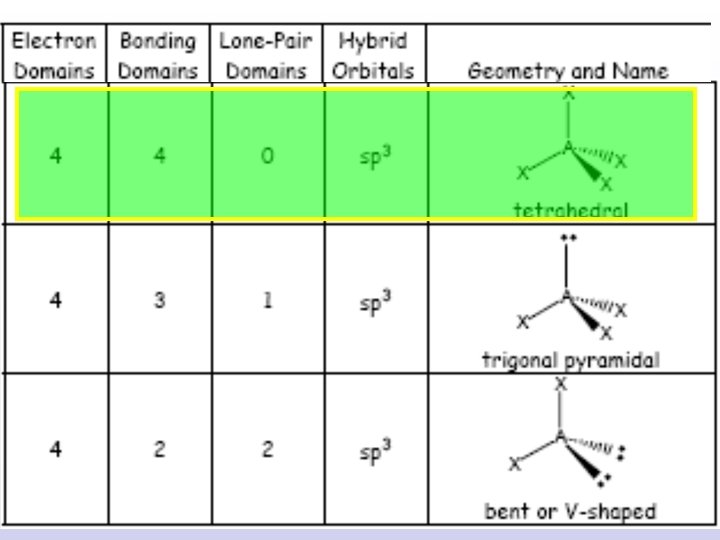
Step-by-step 2. Count the number of atoms and lone pairs around the central atom. e. g. 4 atoms around carbon, and no lone pairs. 4 regions of electron density to distribute.
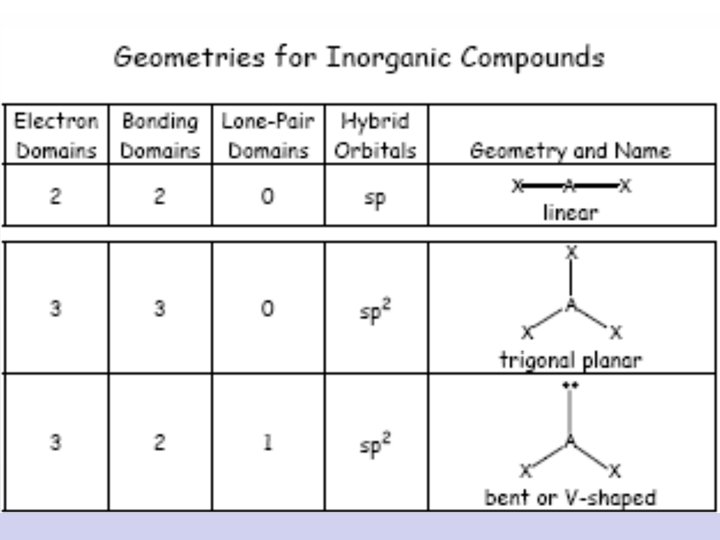
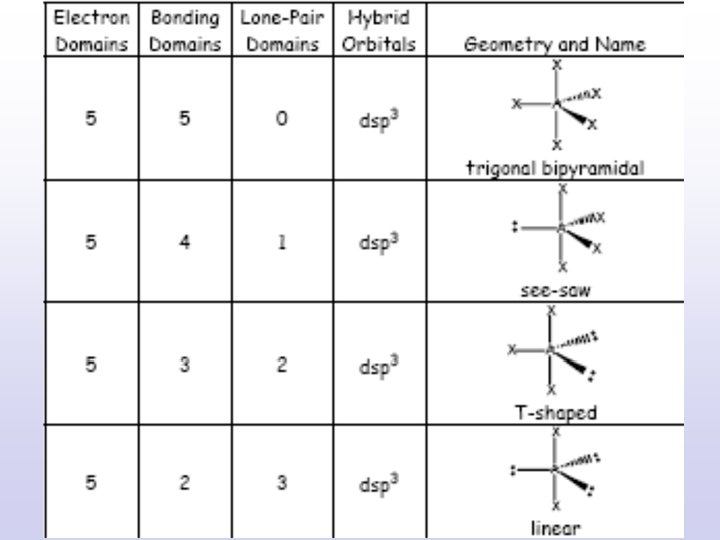
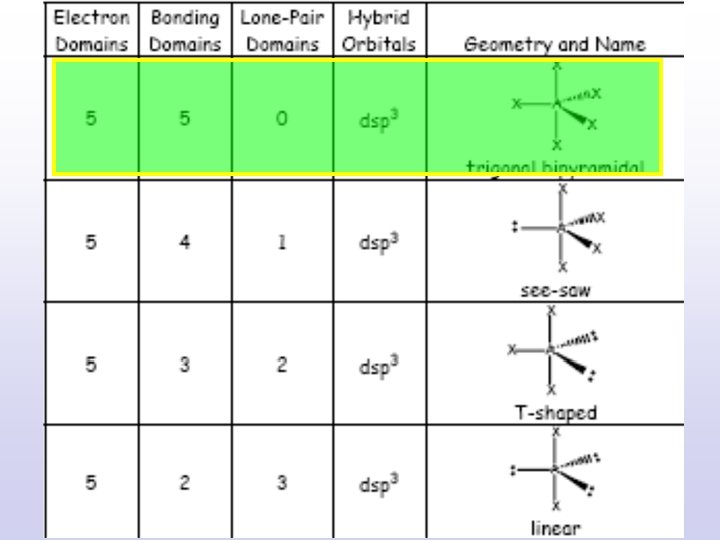
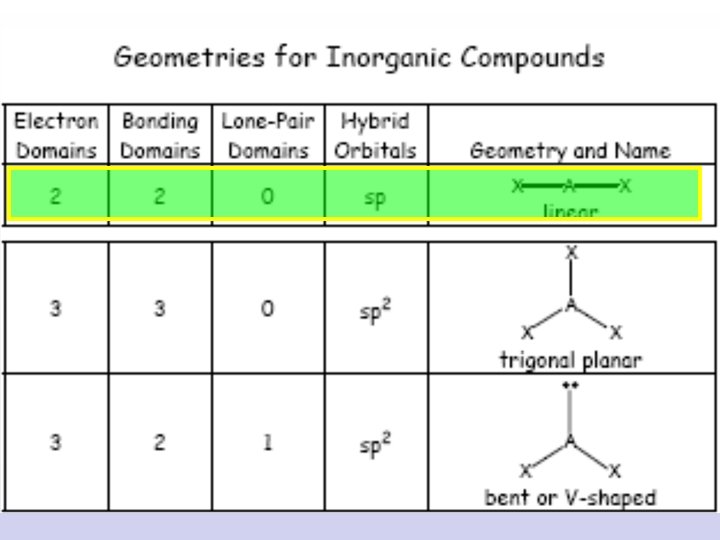
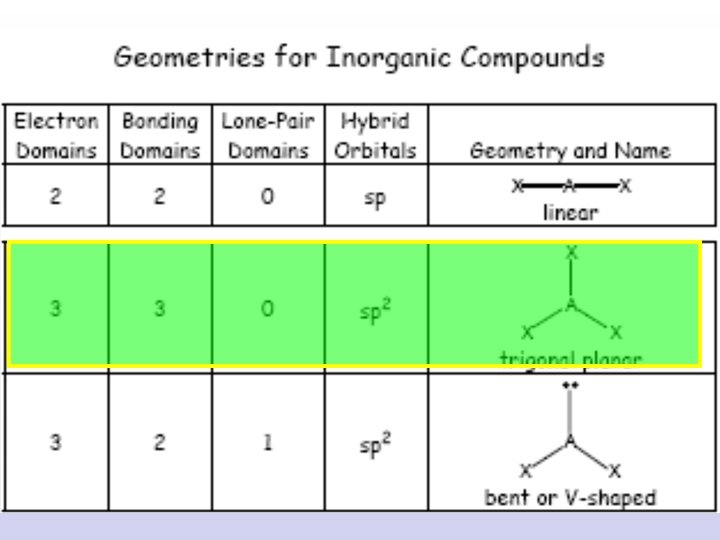
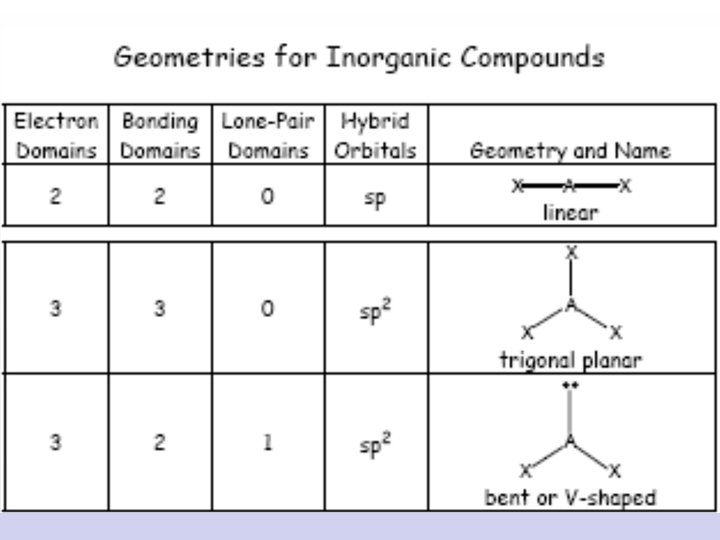
Step-by-step 3. Work out how the regions of high electron density will be arranged around the central atom: 2 Regions – Linear 3 Regions – Trigonal planar 4 Regions – Tetrahedral 5 Regions – Trigonal bipyramidal 6 Regions – Octahedral
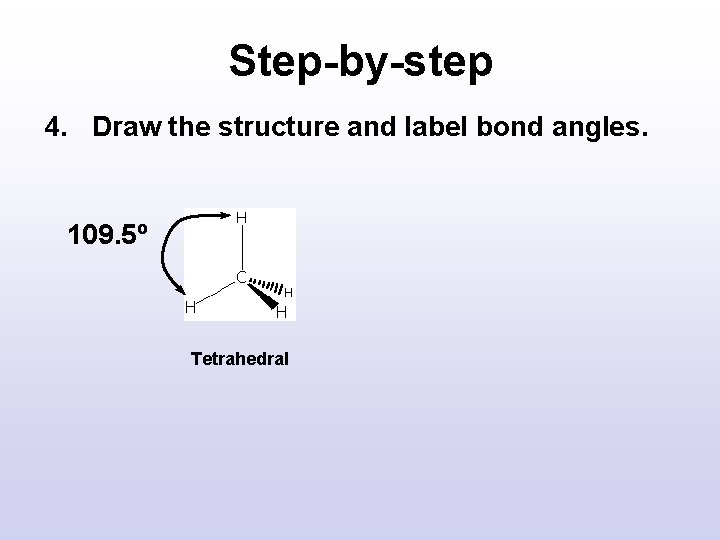
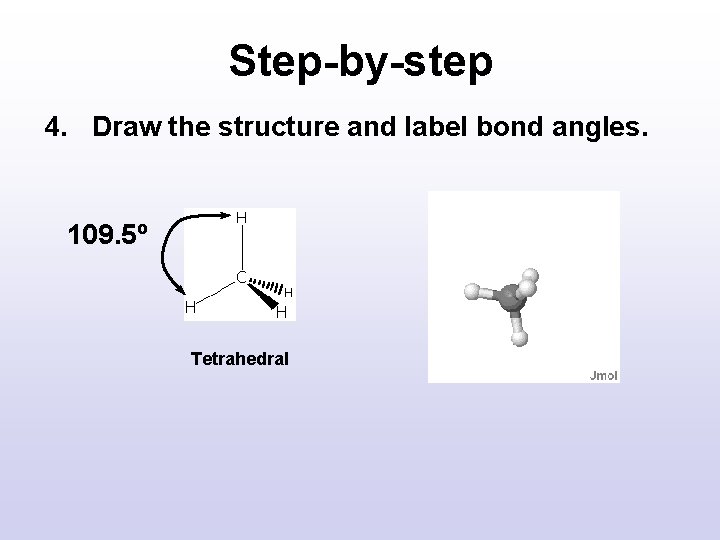
Step-by-step 4. Draw the structure and label bond angles. 109. 5º Tetrahedral
Step-by-step 4. Draw the structure and label bond angles. 109. 5º Tetrahedral
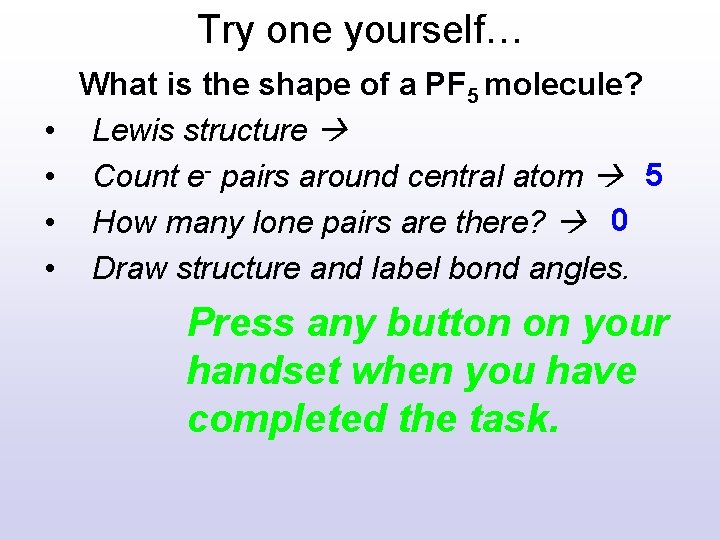
Try one yourself… • • What is the shape of a PF 5 molecule? Lewis structure Count e- pairs around central atom 5 How many lone pairs are there? 0 Draw structure and label bond angles. Press any button on your handset when you have completed the task.
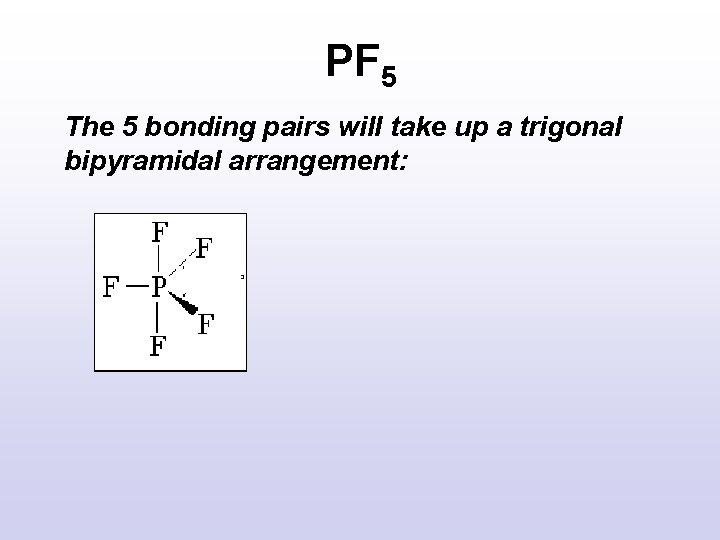
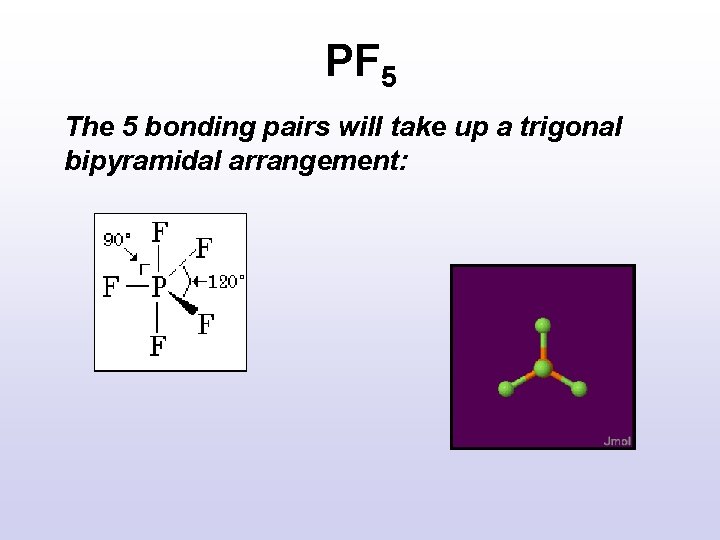
PF 5 The 5 bonding pairs will take up a trigonal bipyramidal arrangement:
PF 5 The 5 bonding pairs will take up a trigonal bipyramidal arrangement:
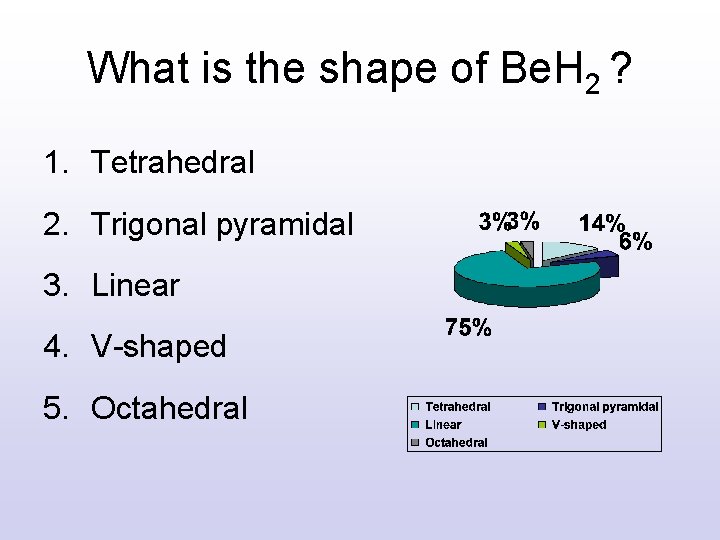
What is the shape of Be. H 2 ? 1. Tetrahedral 2. Trigonal pyramidal 3. Linear 4. V-shaped 5. Octahedral
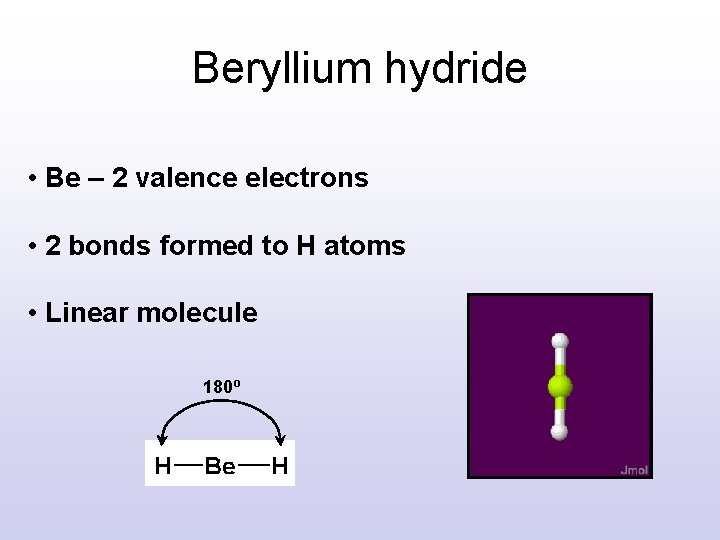
Beryllium hydride • Be – 2 valence electrons • 2 bonds formed to H atoms • Linear molecule 180º
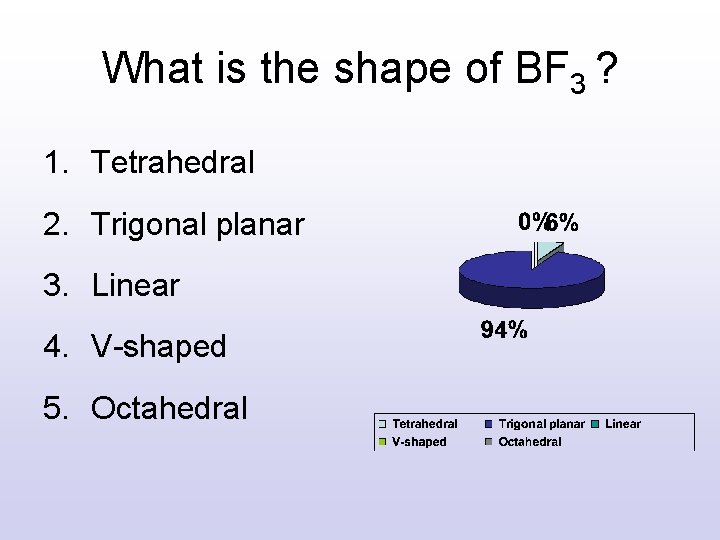
What is the shape of BF 3 ? 1. Tetrahedral 2. Trigonal planar 3. Linear 4. V-shaped 5. Octahedral
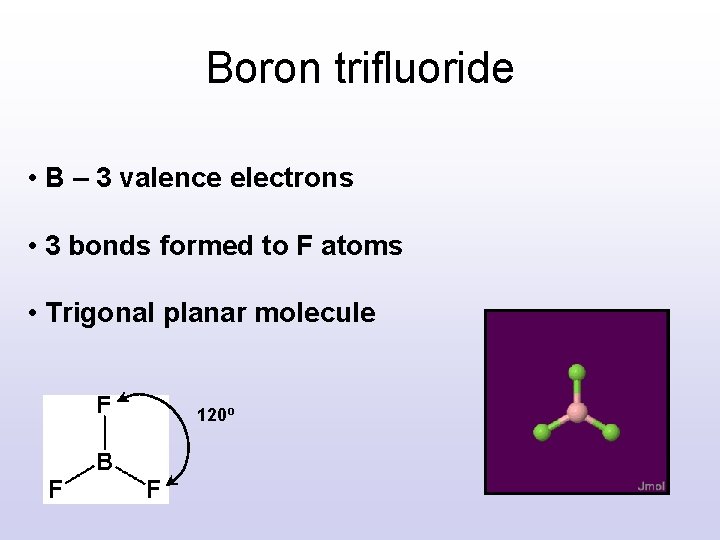
Boron trifluoride • B – 3 valence electrons • 3 bonds formed to F atoms • Trigonal planar molecule 120º
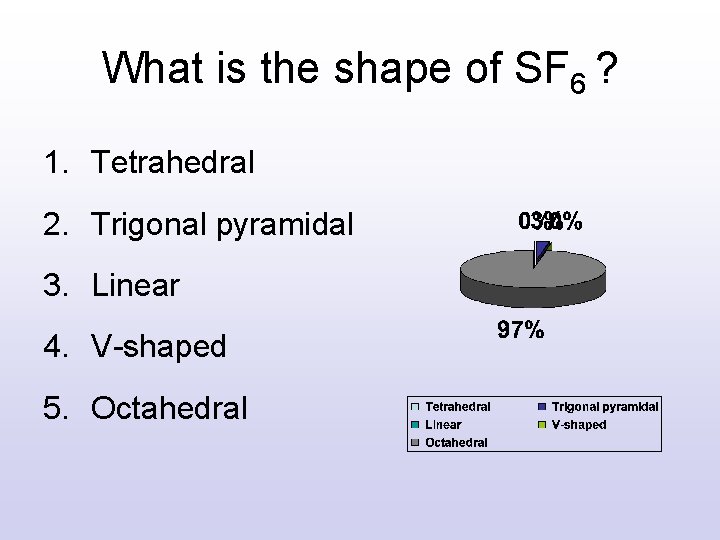
What is the shape of SF 6 ? 1. Tetrahedral 2. Trigonal pyramidal 3. Linear 4. V-shaped 5. Octahedral
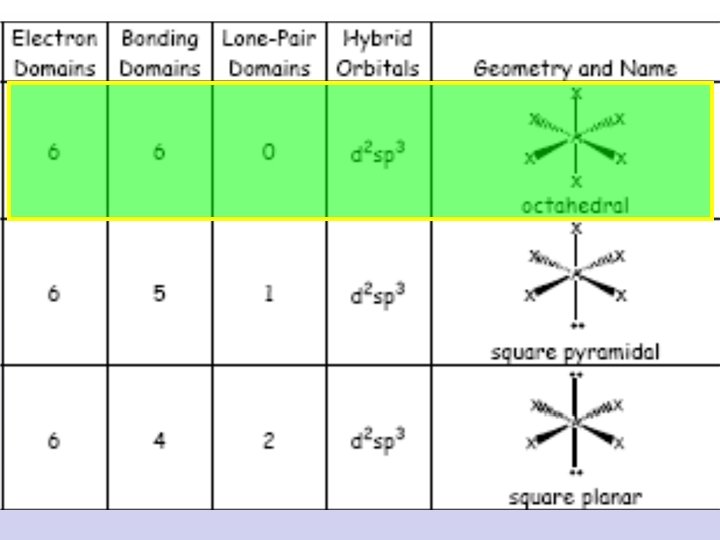
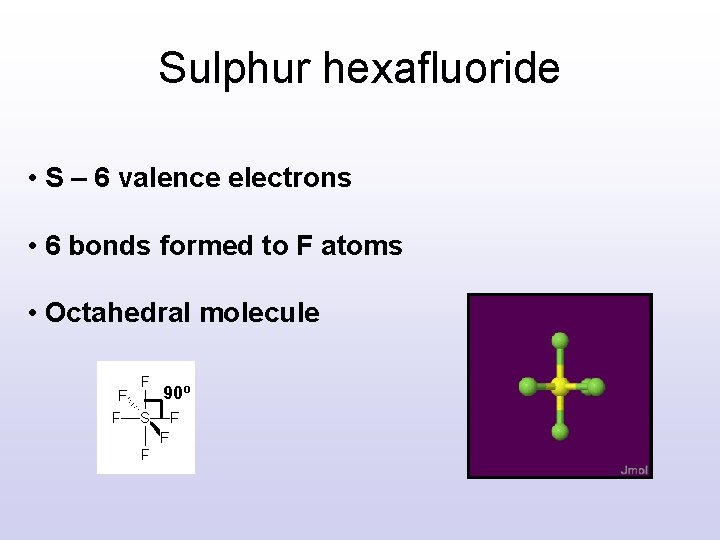
Sulphur hexafluoride • S – 6 valence electrons • 6 bonds formed to F atoms • Octahedral molecule 90º
What about lone pairs?
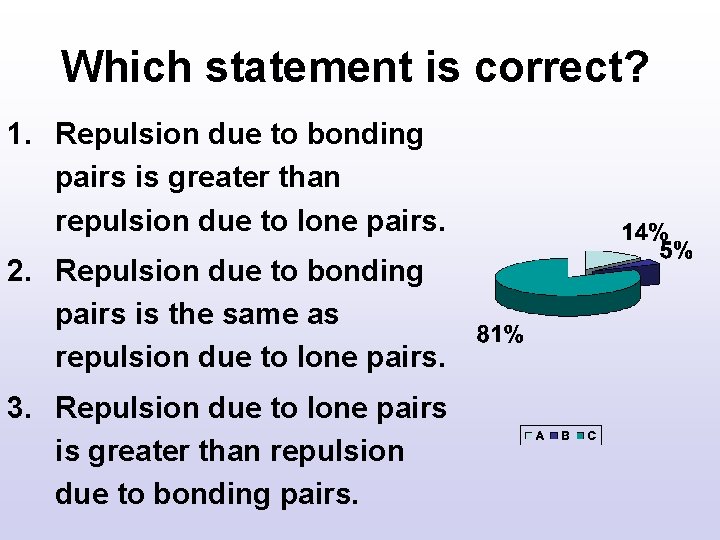
Which statement is correct? 1. Repulsion due to bonding pairs is greater than repulsion due to lone pairs. 2. Repulsion due to bonding pairs is the same as repulsion due to lone pairs. 3. Repulsion due to lone pairs is greater than repulsion due to bonding pairs.
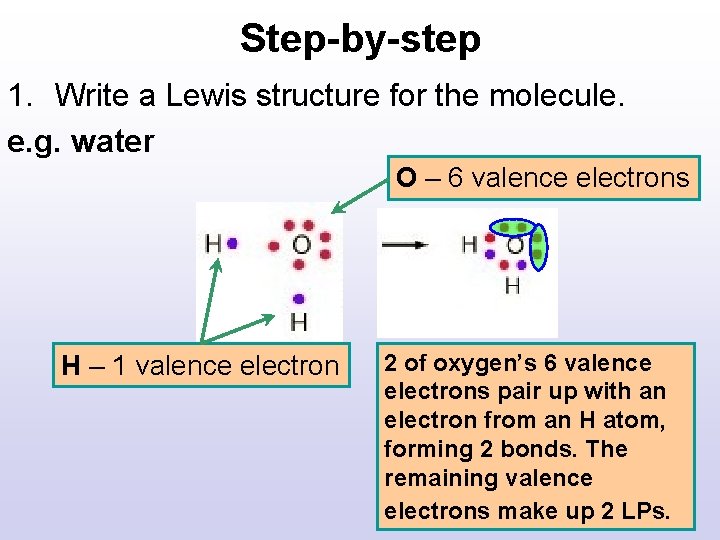
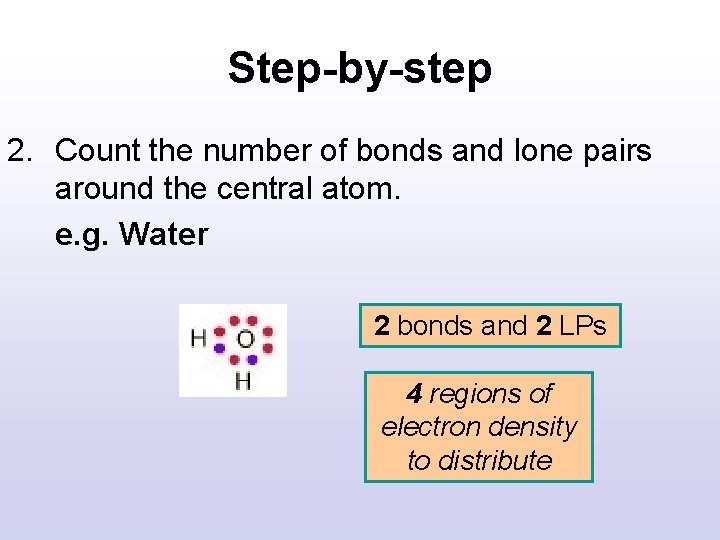
Step-by-step 1. Write a Lewis structure for the molecule. e. g. water O – 6 valence electrons H – 1 valence electron 2 of oxygen’s 6 valence electrons pair up with an electron from an H atom, forming 2 bonds. The remaining valence electrons make up 2 LPs.
Step-by-step 2. Count the number of bonds and lone pairs around the central atom. e. g. Water 2 bonds and 2 LPs 4 regions of electron density to distribute
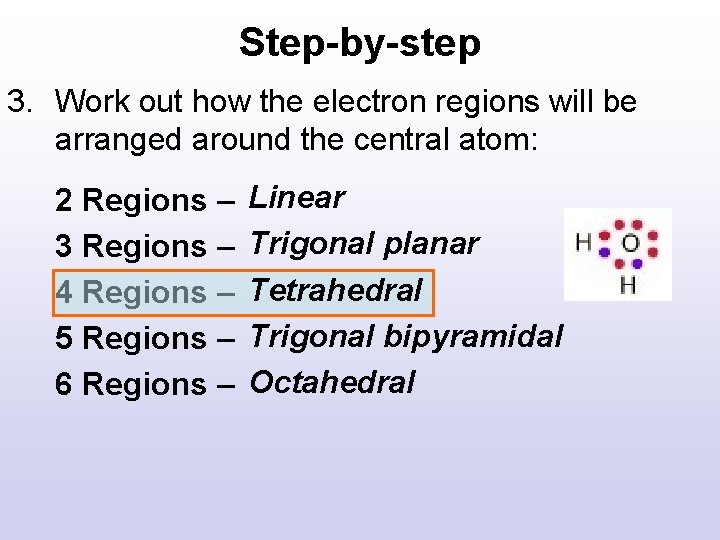
Step-by-step 3. Work out how the electron regions will be arranged around the central atom: 2 Regions – 3 Regions – 4 Regions – 5 Regions – 6 Regions – Linear Trigonal planar Tetrahedral Trigonal bipyramidal Octahedral
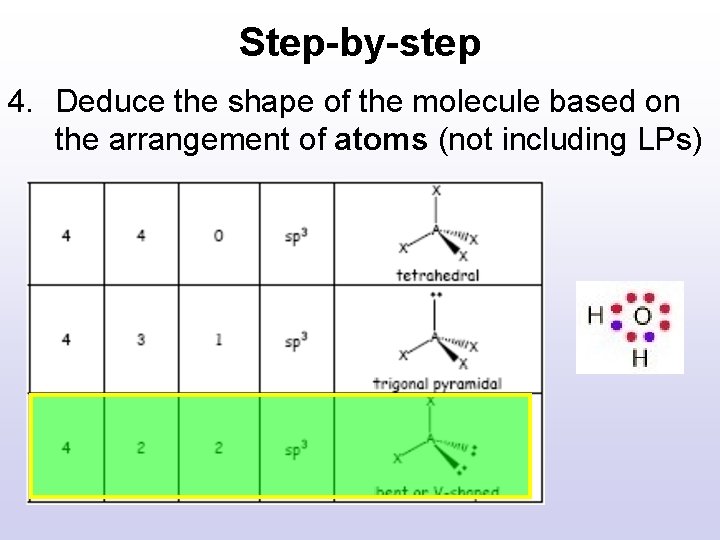
Step-by-step 4. Deduce the shape of the molecule based on the arrangement of atoms (not including LPs)
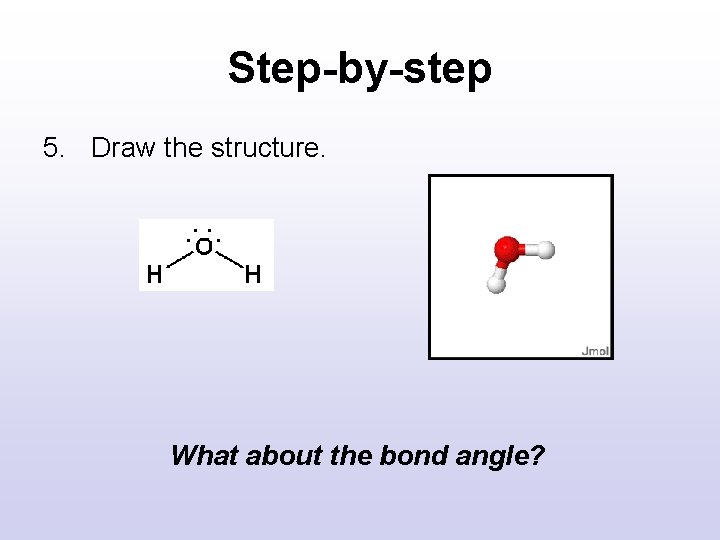
Step-by-step 5. Draw the structure. What about the bond angle?
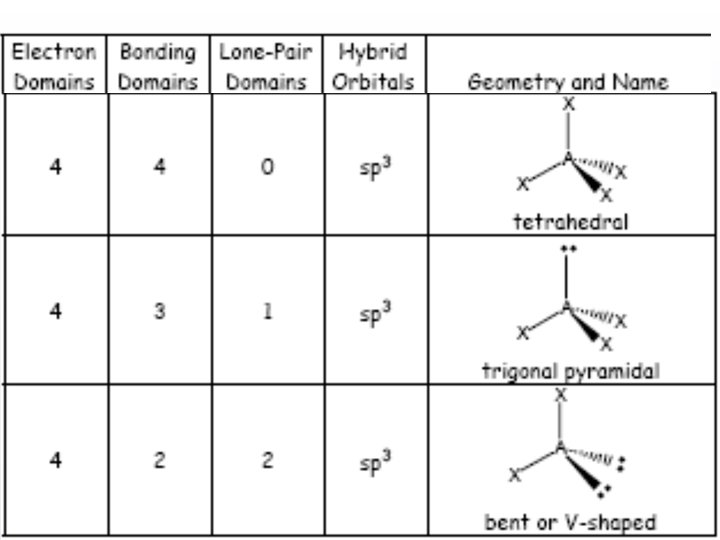
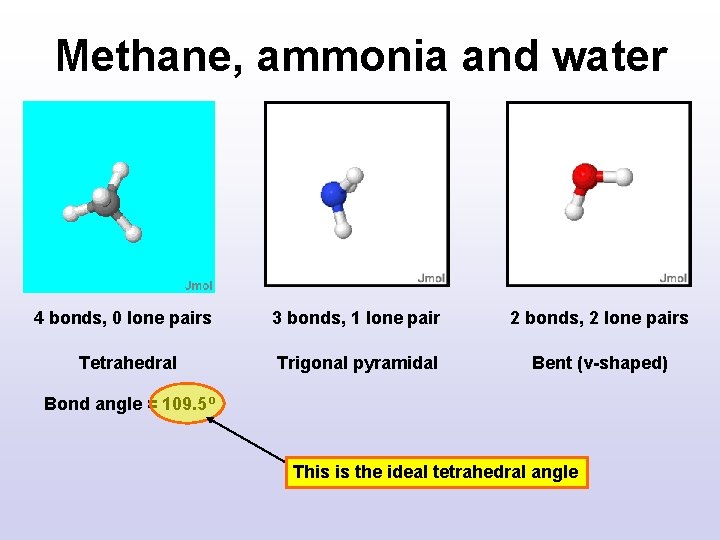
Methane, ammonia and water 4 bonds, 0 lone pairs 3 bonds, 1 lone pair 2 bonds, 2 lone pairs Tetrahedral Trigonal pyramidal Bent (v-shaped) Bond angle = 109. 5º This is the ideal tetrahedral angle
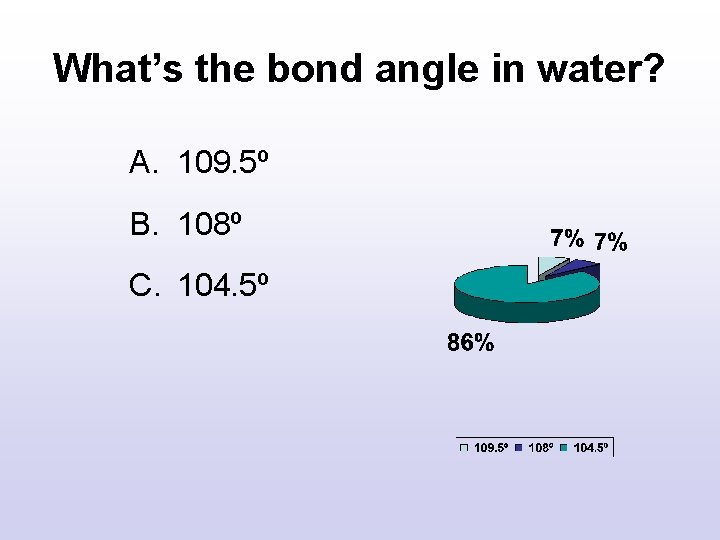
What’s the bond angle in water? A. 109. 5º B. 108º C. 104. 5º
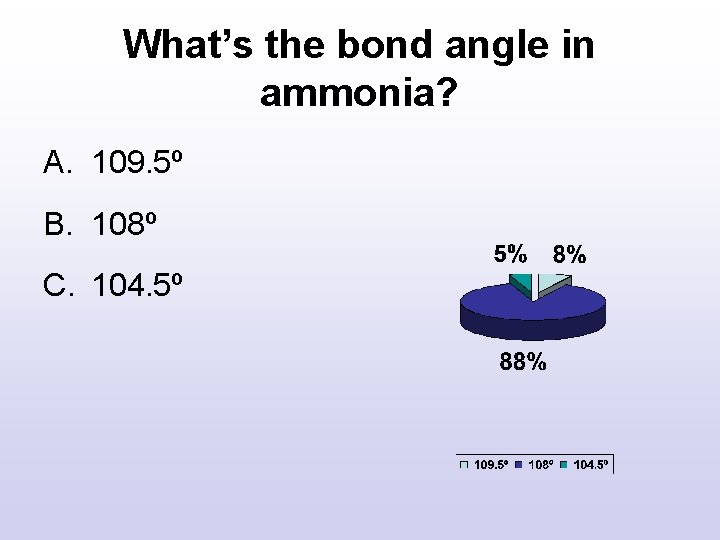
What’s the bond angle in ammonia? A. 109. 5º B. 108º C. 104. 5º
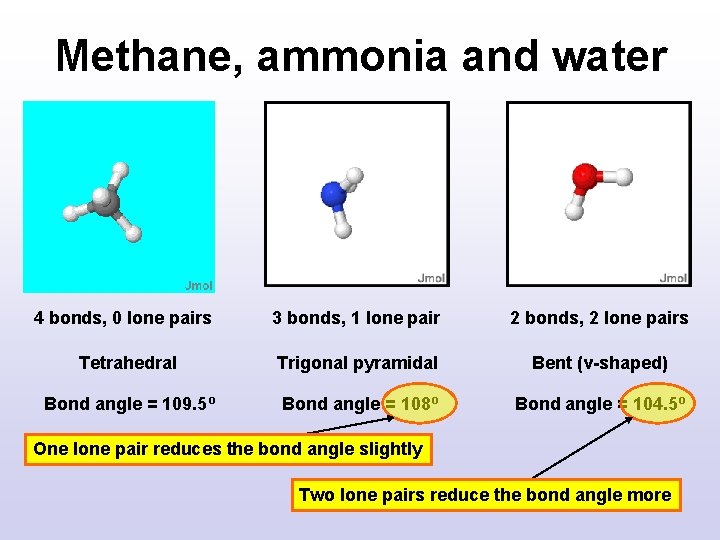
Methane, ammonia and water 4 bonds, 0 lone pairs 3 bonds, 1 lone pair 2 bonds, 2 lone pairs Tetrahedral Trigonal pyramidal Bent (v-shaped) Bond angle = 109. 5º Bond angle = 108º Bond angle = 104. 5º One lone pair reduces the bond angle slightly Two lone pairs reduce the bond angle more
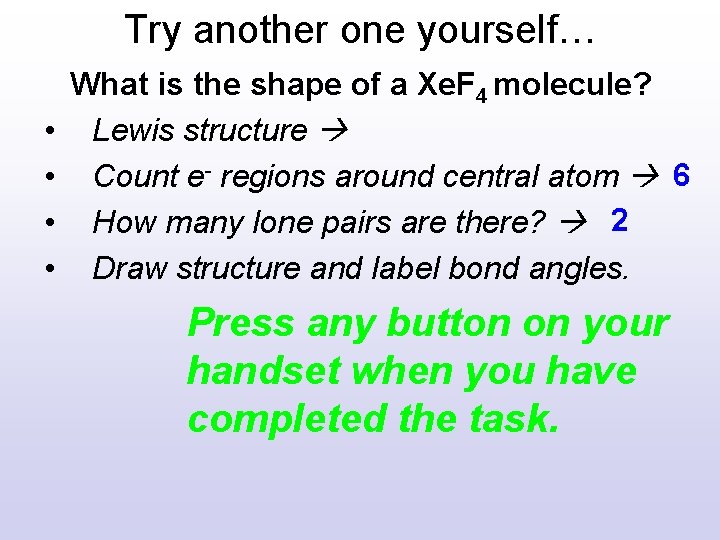
Try another one yourself… • • What is the shape of a Xe. F 4 molecule? Lewis structure Count e- regions around central atom 6 How many lone pairs are there? 2 Draw structure and label bond angles. Press any button on your handset when you have completed the task.
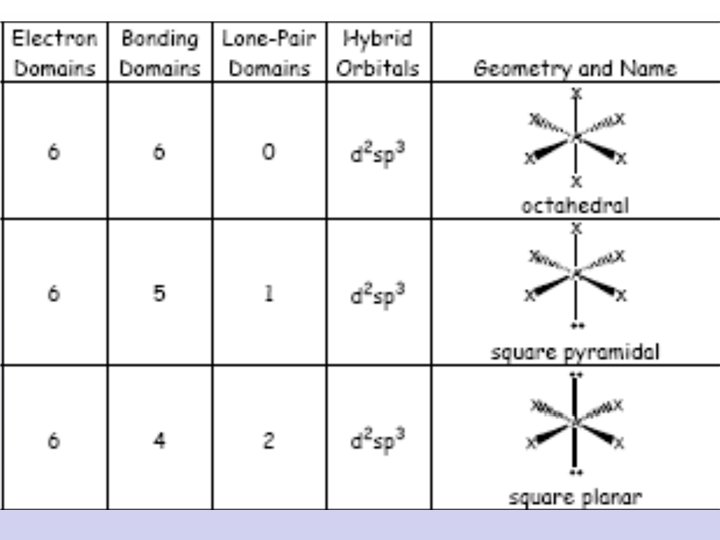
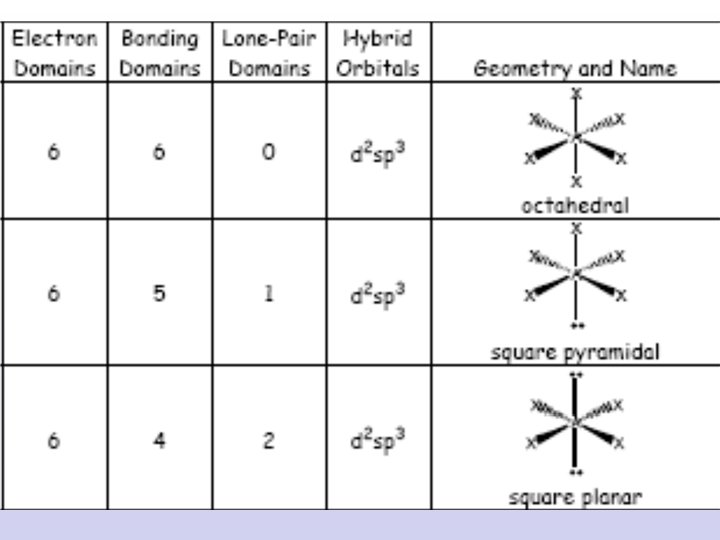
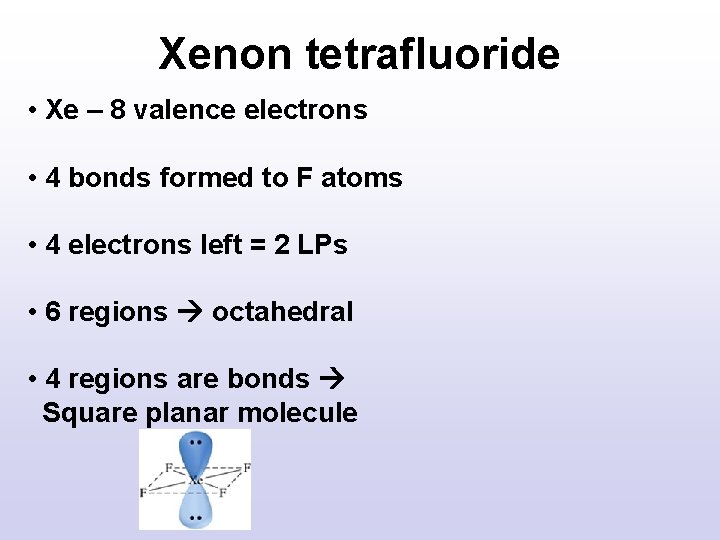
Xenon tetrafluoride • Xe – 8 valence electrons • 4 bonds formed to F atoms • 4 electrons left = 2 LPs • 6 regions octahedral • 4 regions are bonds Square planar molecule
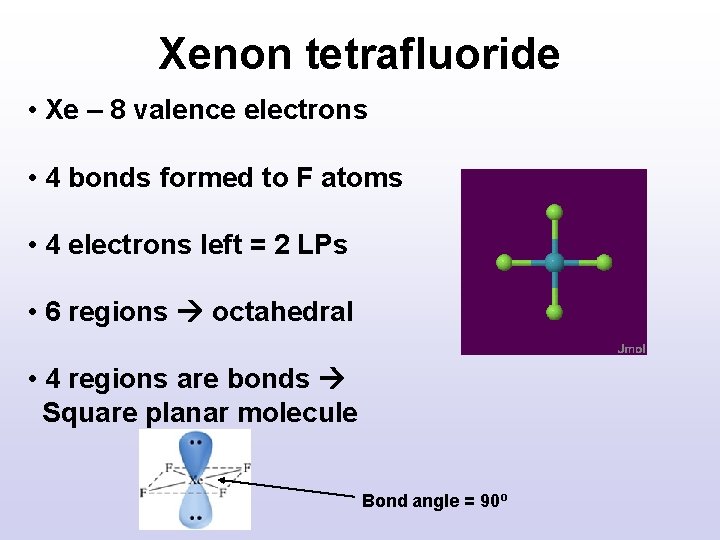
Xenon tetrafluoride • Xe – 8 valence electrons • 4 bonds formed to F atoms • 4 electrons left = 2 LPs • 6 regions octahedral • 4 regions are bonds Square planar molecule Bond angle = 90º
What about double bonds?
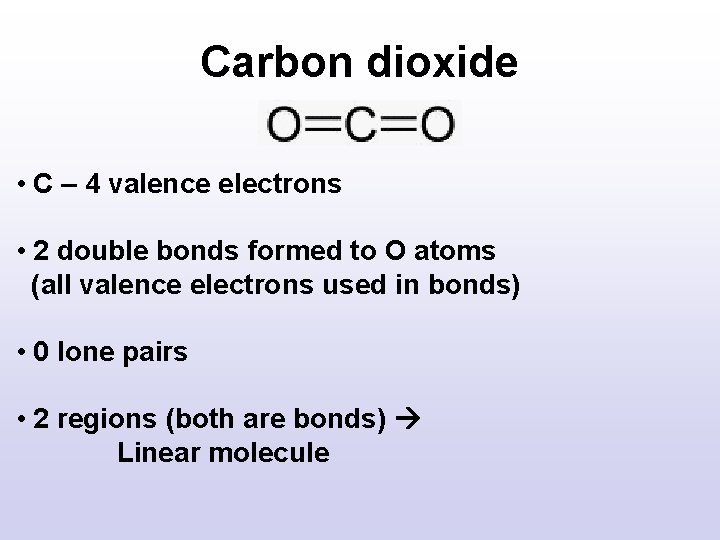
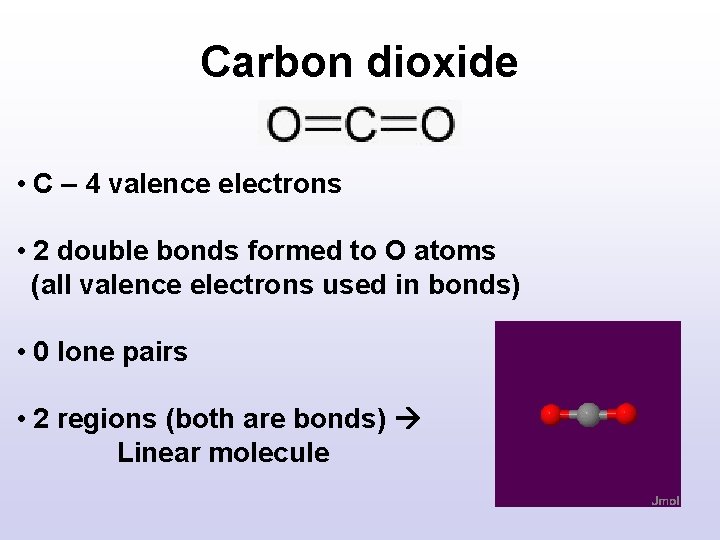
Carbon dioxide • C – 4 valence electrons • 2 double bonds formed to O atoms (all valence electrons used in bonds) • 0 lone pairs • 2 regions (both are bonds) Linear molecule
Carbon dioxide • C – 4 valence electrons • 2 double bonds formed to O atoms (all valence electrons used in bonds) • 0 lone pairs • 2 regions (both are bonds) Linear molecule
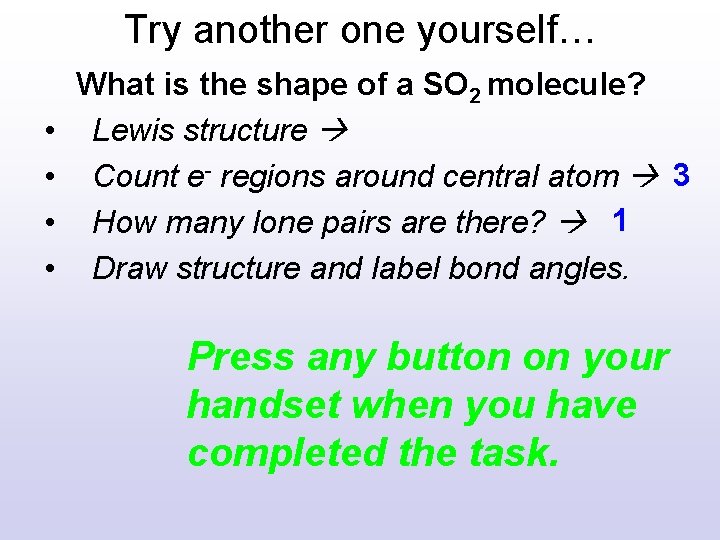
Try another one yourself… • • What is the shape of a SO 2 molecule? Lewis structure Count e- regions around central atom 3 How many lone pairs are there? 1 Draw structure and label bond angles. Press any button on your handset when you have completed the task.
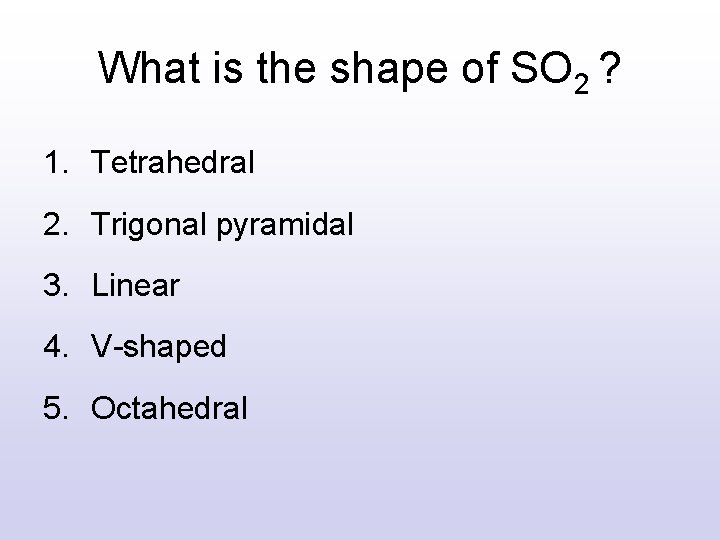
What is the shape of SO 2 ? 1. Tetrahedral 2. Trigonal pyramidal 3. Linear 4. V-shaped 5. Octahedral
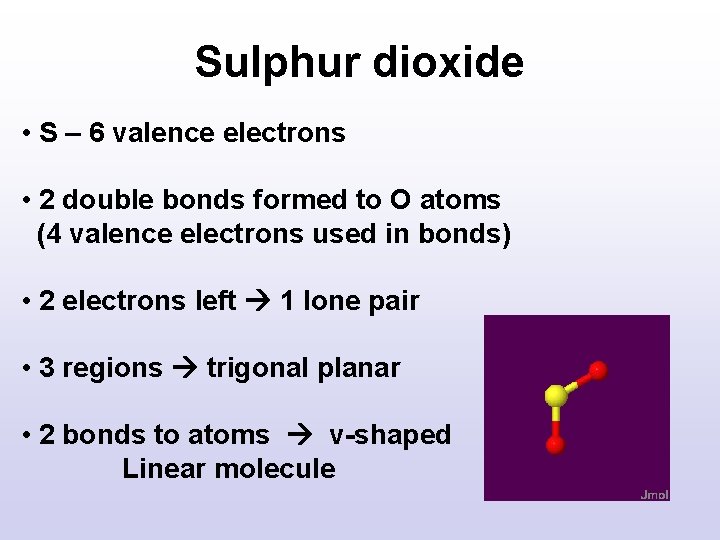
Sulphur dioxide • S – 6 valence electrons • 2 double bonds formed to O atoms (4 valence electrons used in bonds) • 2 electrons left 1 lone pair • 3 regions trigonal planar • 2 bonds to atoms v-shaped Linear molecule
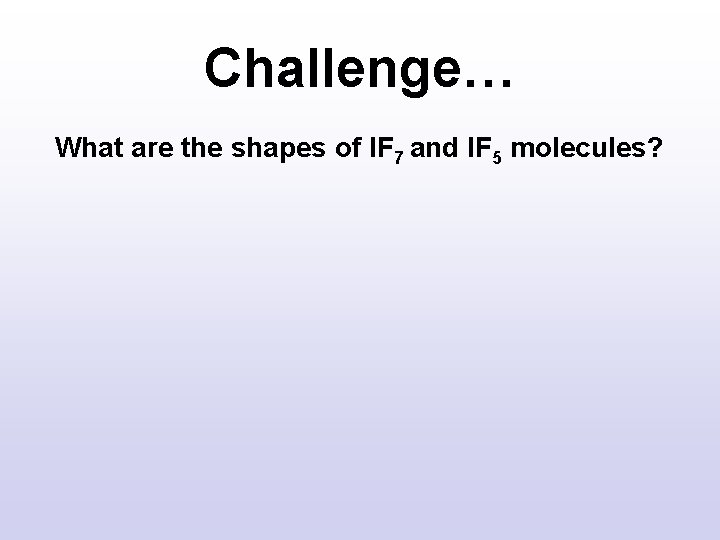
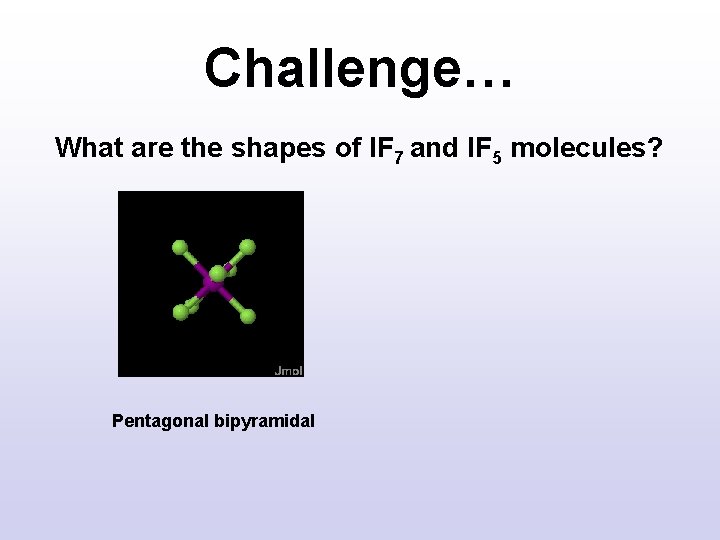
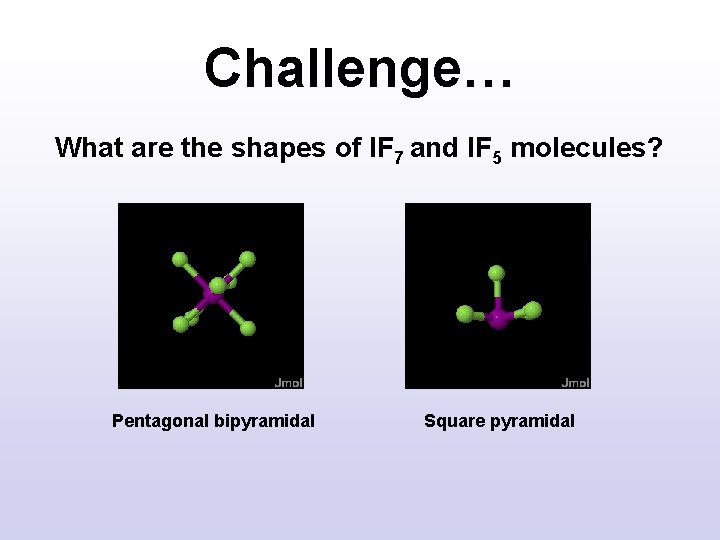
Challenge… What are the shapes of IF 7 and IF 5 molecules?
Challenge… What are the shapes of IF 7 and IF 5 molecules? Pentagonal bipyramidal
Challenge… What are the shapes of IF 7 and IF 5 molecules? Pentagonal bipyramidal Square pyramidal
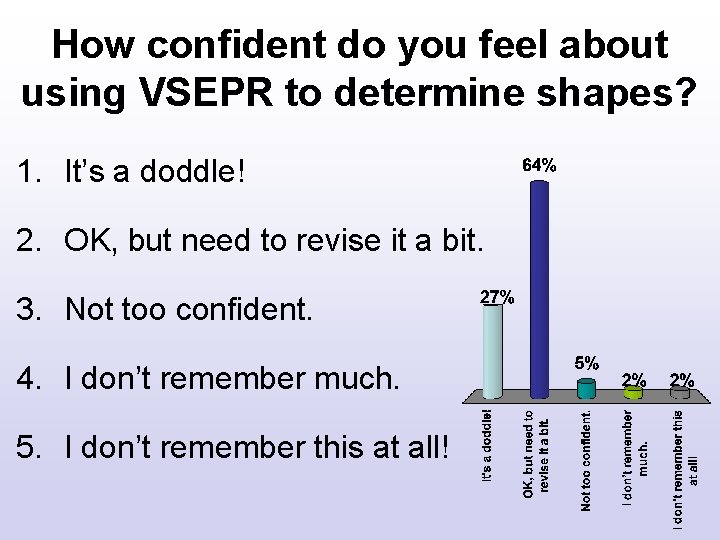
How confident do you feel about using VSEPR to determine shapes? 1. It’s a doddle! 2. OK, but need to revise it a bit. 3. Not too confident. 4. I don’t remember much. 5. I don’t remember this at all!
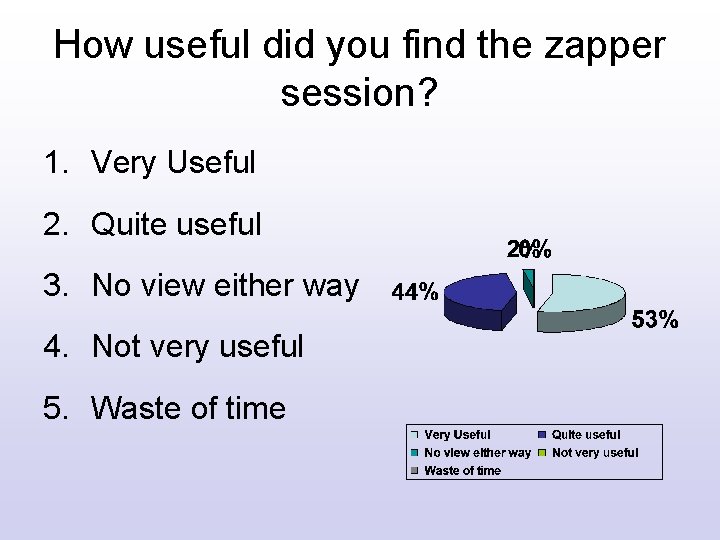
How useful did you find the zapper session? 1. Very Useful 2. Quite useful 3. No view either way 4. Not very useful 5. Waste of time