EU US ATLANTIS PROGRAMME ShortCycle Higher Education in

- Slides: 27
EU – US ATLANTIS PROGRAMME Short-Cycle Higher Education in Europe and the United States: Addressing Social and Economic Needs Snejana Slantcheva-Durst University of Toledo 3 rd International Conference: SHCE in the U. S. and Europe: The Power of Life-long Learning Amsterdam, The Netherlands June 16 -19, 2010
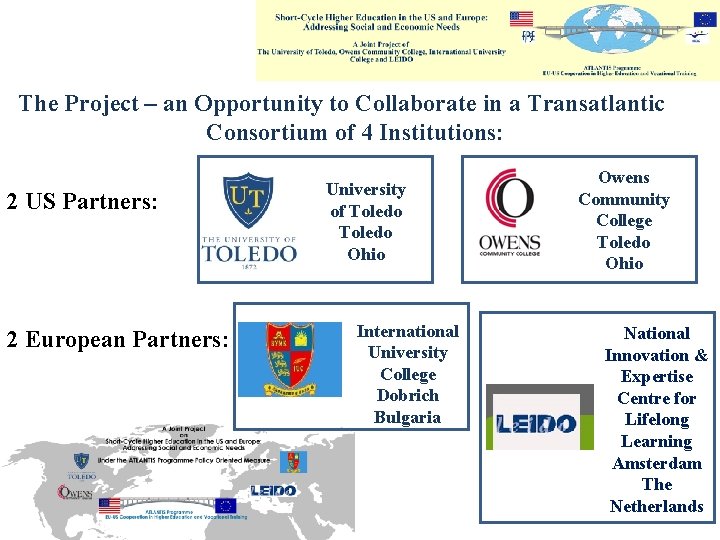
The Project – an Opportunity to Collaborate in a Transatlantic Consortium of 4 Institutions: 2 US Partners: 2 European Partners: University of Toledo Ohio International University College Dobrich Bulgaria Owens Community College Toledo Ohio National Innovation & Expertise Centre for Lifelong Learning Amsterdam The Netherlands
SUPPORTED BY: ATLANTIS Programme EU-US Cooperation in Higher Education and Vocational Training Result of an agreement on higher education and vocational training between the European Union and the United States of America signed in June 2006 for the period 2006 -2013. The program is designed and funded jointly by the European Commission and by the US Department of Education. It aims at promoting understanding between the peoples of the European Union and the United States of America and improving the quality of their human resource development.
ATLANTIS Programme: Main Actions • Transatlantic Degree action, supports partnerships towards setting up joint study programs - including joint/double degrees; • Excellence Mobility Projects, supports student mobility within successful consortia; • Policy-oriented measures, addresses comparative higher education and vocational training issues, and promotes dialogue on recognition of qualifications and accreditations; collaboration, dissemination of information, and exchange of best practices.
Short-Cycle Higher Education Programs and Qualifications Programs of 2 years or less, classified as ISCED 5 B programs that provide both direct labor market entry and access to 1 st cycle degree programs, principally (but not exclusively) those that are occupationally-oriented.
Main Functions of Short-Cycle Higher Education 1. To respond to increasing demand for higher education; 2. To contribute toward greater equality of educational opportunity; 3. To respond to the growing need for a diversified range of qualified manpower; 4. To generate and facilitate innovational practices not often accepted by universities; 5. To decentralize and regionalize higher education. (Kintzer, 1980)
In Europe: Ø The importance of SCHE - recognized in the Bologna Process Ø Under “pure” Bologna interpretation, set in the QFEHEA and its Dublin Descriptors, what we call SCHE degrees in 2010 are part of the 1 st cycle, and not something detached from it Ø These credentials are not trade certificates or other diplomas classified as “postsecondary-but-not-tertiary” (ISCED 4) Ø Bologna has sharpened the differences, so that some countries offer both SCHE and trade diplomas, and some do not offer SCHE at all but have both trade diplomas and full 1 st cycle degrees in their credential portfolios
In the United States: The importance of 2 -year institutions, mostly community colleges, has grown tremendously in the last several years, receiving unprecedented interest at the national level, in light of: Ø Economic crisis and the need for skilled professionals in a knowledge-based economy; Ø Need to raise educational attainment nation-wide in order to remain globally competitive; Ø Needs for regional initiatives and community invigoration. • The number of awarded Associate Degrees grew by 30% in the last 10 years
In the United States: Ø 1, 045 public, 107 private non-profit, and 533 private for-profit SCHE (two-year) institutions offer the 2 -year Associate’s degrees – the first post-secondary degree: AA – Associate of Arts AS – Associate of Sciences AAS – Associate of Applied Sciences Ø 37% of all students in the US are educated in these institutions Ø Four-year institutions also offer Associate’s degrees.
Each of the project partners identified a critical policy area related to SCHE to focus on: Bulgarian partner: recognition and quality assurance of SCHE programs and qualifications. US partners: partnerships between SCHE, HE institutions and industry; Dutch partner: the contribution of SCHE to life-long and life -wide learning systems.
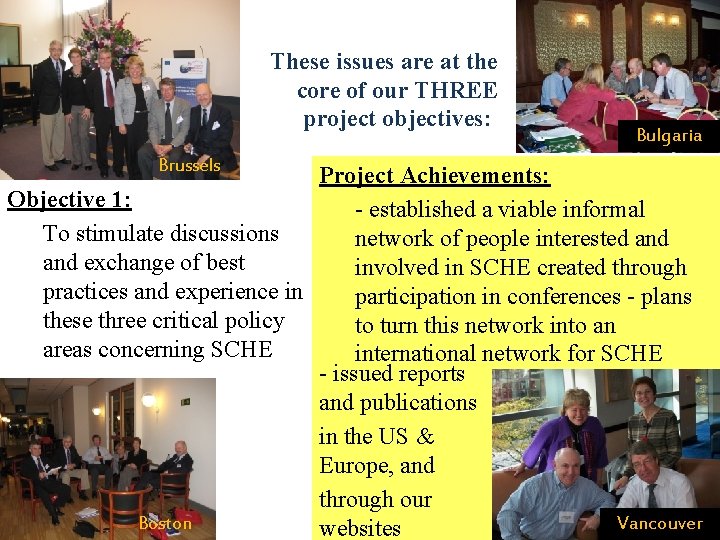
These issues are at the core of our THREE project objectives: Brussels Bulgaria Project Achievements: Objective 1: - established a viable informal To stimulate discussions network of people interested and exchange of best involved in SCHE created through practices and experience in participation in conferences - plans these three critical policy to turn this network into an areas concerning SCHE international network for SCHE - issued reports and publications in the US & Europe, and through our Boston Vancouver websites
Objective 2: To provide a forum for international exchange of ideas and best practices through the organization of three international conferences in those critical policy areas:
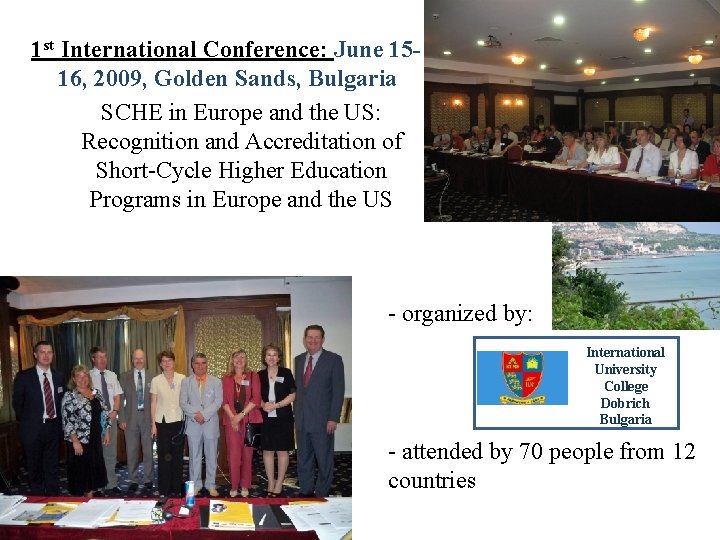
1 st International Conference: June 1516, 2009, Golden Sands, Bulgaria SCHE in Europe and the US: Recognition and Accreditation of Short-Cycle Higher Education Programs in Europe and the US - organized by: International University College Dobrich Bulgaria - attended by 70 people from 12 countries
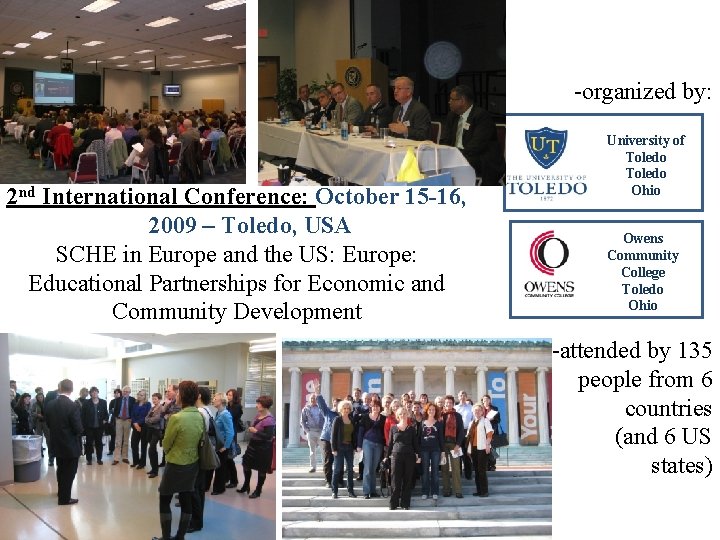
-organized by: 2 nd International Conference: October 15 -16, 2009 – Toledo, USA SCHE in Europe and the US: Europe: Educational Partnerships for Economic and Community Development University of Toledo Ohio Owens Community College Toledo Ohio -attended by 135 people from 6 countries (and 6 US states)
3 rd International Conference: June 16 -19, 2010, Amsterdam, the Netherlands SCHE in Europe and the US: The Contribution of SCHE to Life-Long and Life-Wide Learning Systems -organized by: National Innovation & Expertise Centre for Lifelong Learning, Amsterdam, The Netherlands -attended by 102 participants from 11 countries
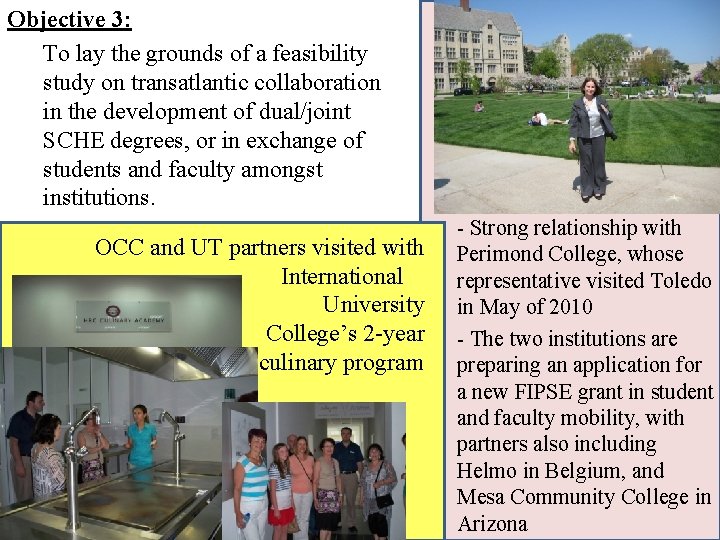
Objective 3: To lay the grounds of a feasibility study on transatlantic collaboration in the development of dual/joint SCHE degrees, or in exchange of students and faculty amongst institutions. OCC and UT partners visited with International University College’s 2 -year culinary program - Strong relationship with Perimond College, whose representative visited Toledo in May of 2010 - The two institutions are preparing an application for a new FIPSE grant in student and faculty mobility, with partners also including Helmo in Belgium, and Mesa Community College in Arizona
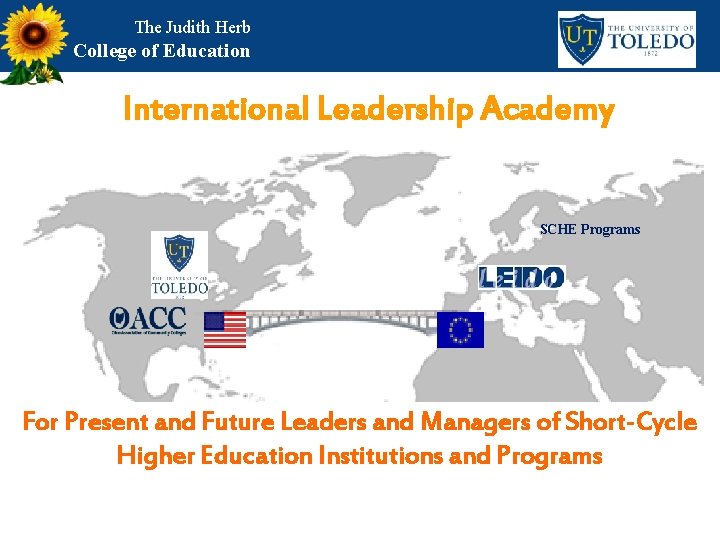
The Judith Herb College of Education International Leadership Academy SCHE Programs For Present and Future Leaders and Managers of Short-Cycle Higher Education Institutions and Programs
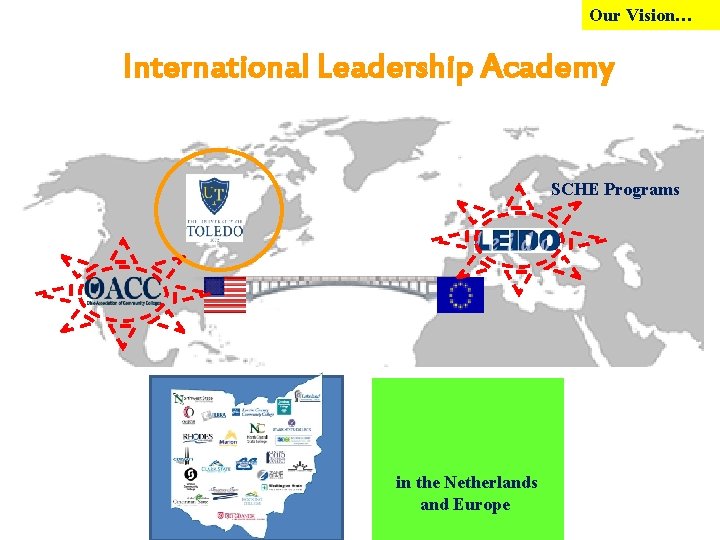
Our Vision… International Leadership Academy SCHE Programs in the Netherlands and Europe
Our Plan… Higher Education Program, College of Education Ø Faculty with experience and know-how: • in preparing college and university administrators • in collaborating with community colleges and other higher education institutions and organizations world-wide Ø Offering two kinds of degrees: - Master’s Degree in Higher Education - Ph. D. Degree in Higher Education Policy and Administration
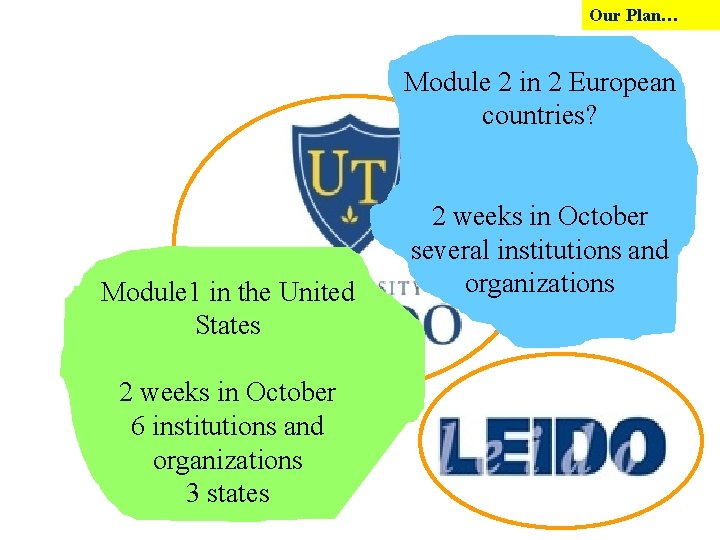
Our Plan… Module 2 in 2 European countries? Module 1 in the United States 2 weeks in October 6 institutions and organizations 3 states 2 weeks in October several institutions and organizations
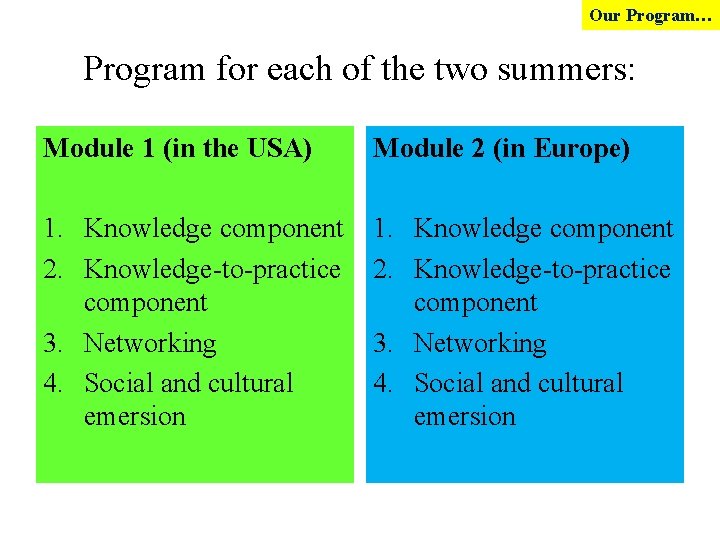
Our Program… Program for each of the two summers: Module 1 (in the USA) Module 2 (in Europe) 1. Knowledge component 2. Knowledge-to-practice component 3. Networking 4. Social and cultural emersion
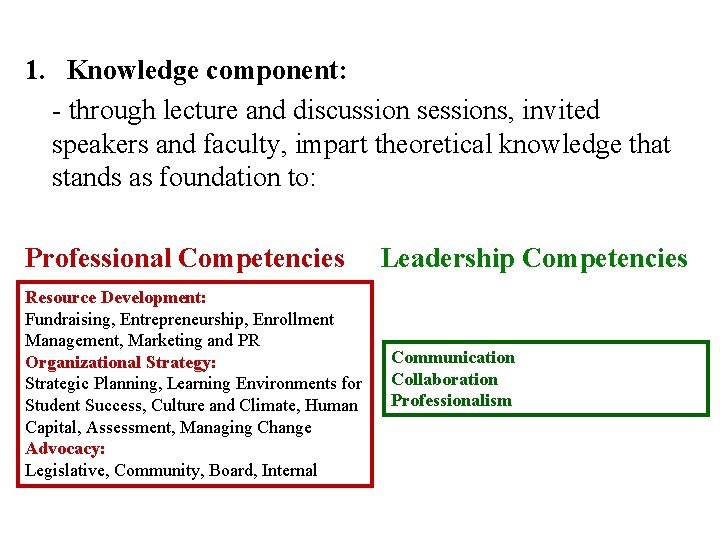
1. Knowledge component: - through lecture and discussion sessions, invited speakers and faculty, impart theoretical knowledge that stands as foundation to: Professional Competencies Resource Development: Fundraising, Entrepreneurship, Enrollment Management, Marketing and PR Organizational Strategy: Strategic Planning, Learning Environments for Student Success, Culture and Climate, Human Capital, Assessment, Managing Change Advocacy: Legislative, Community, Board, Internal Leadership Competencies Communication Collaboration Professionalism
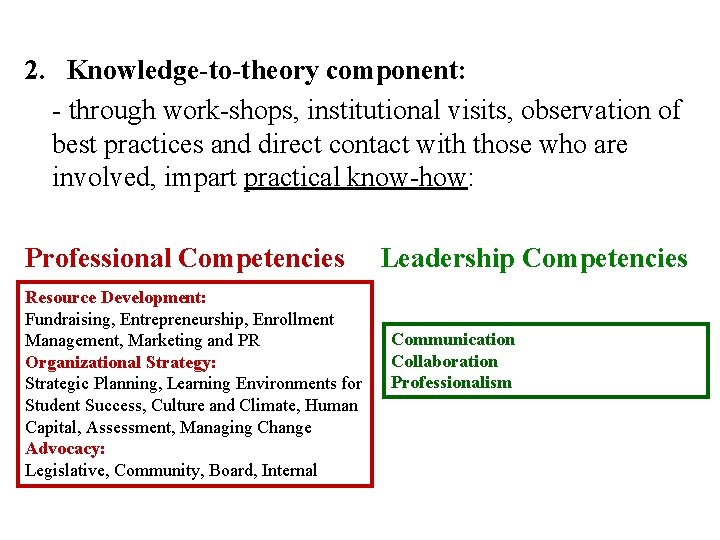
2. Knowledge-to-theory component: - through work-shops, institutional visits, observation of best practices and direct contact with those who are involved, impart practical know-how: Professional Competencies Resource Development: Fundraising, Entrepreneurship, Enrollment Management, Marketing and PR Organizational Strategy: Strategic Planning, Learning Environments for Student Success, Culture and Climate, Human Capital, Assessment, Managing Change Advocacy: Legislative, Community, Board, Internal Leadership Competencies Communication Collaboration Professionalism
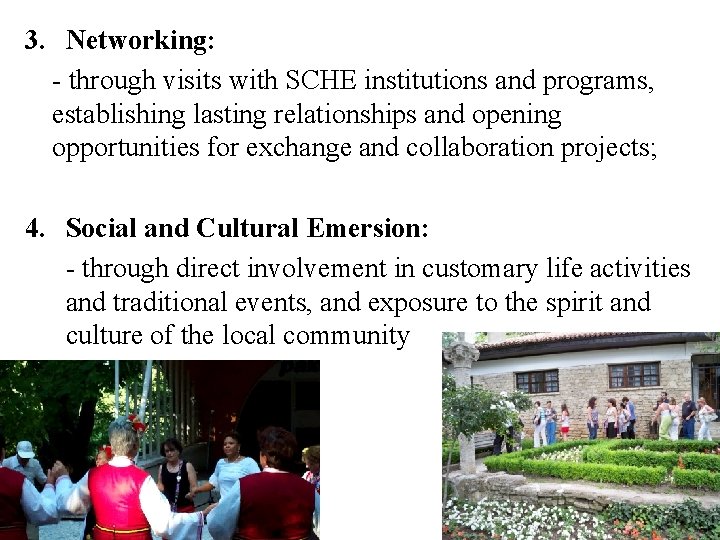
3. Networking: - through visits with SCHE institutions and programs, establishing lasting relationships and opening opportunities for exchange and collaboration projects; 4. Social and Cultural Emersion: - through direct involvement in customary life activities and traditional events, and exposure to the spirit and culture of the local community
Our Promise… International Leadership 2 cademy End-of-Academy Achievement
Thank you! Snejana Slantcheva-Durst, Asst. Prof. Judith Herb College of Education University of Toledo, Ohio, 43606 USA snejana. slantchevadurst@utoledo. edu