Ethics the patient voice Dr Nikola Stepanov Ph
- Slides: 23
Ethics & the patient voice Dr Nikola Stepanov Ph. D (Melb. ) • • • Academic, Discipline of Medical Ethics, Law & Professional Practice Director, Centre for Health Ethics, Law & Education in the Tropics (CHELE) Chair, THHS Human Research Ethics Committee Chair, THHS Ethics Committee Mediator (NMAS); FDRP
Overview • What do patients want and why does it matter? • Significant innovations • Balancing act
What do patients want and why does it matter?
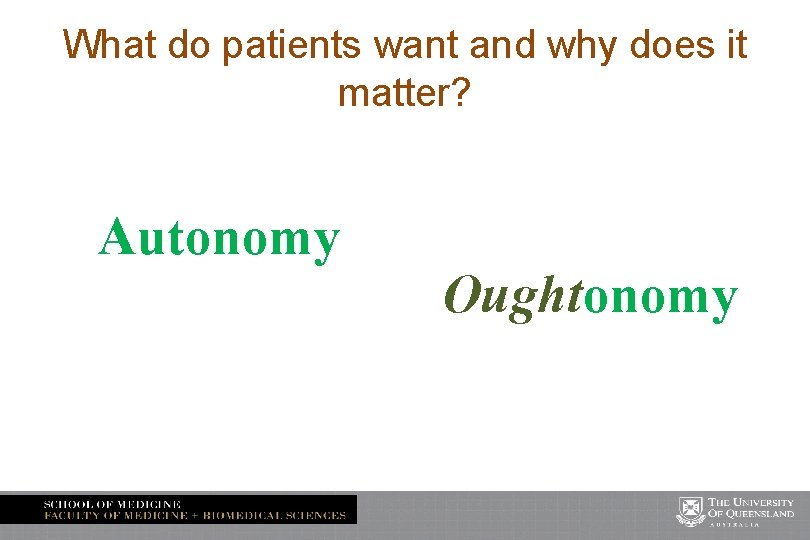
What do patients want and why does it matter? Autonomy Oughtonomy
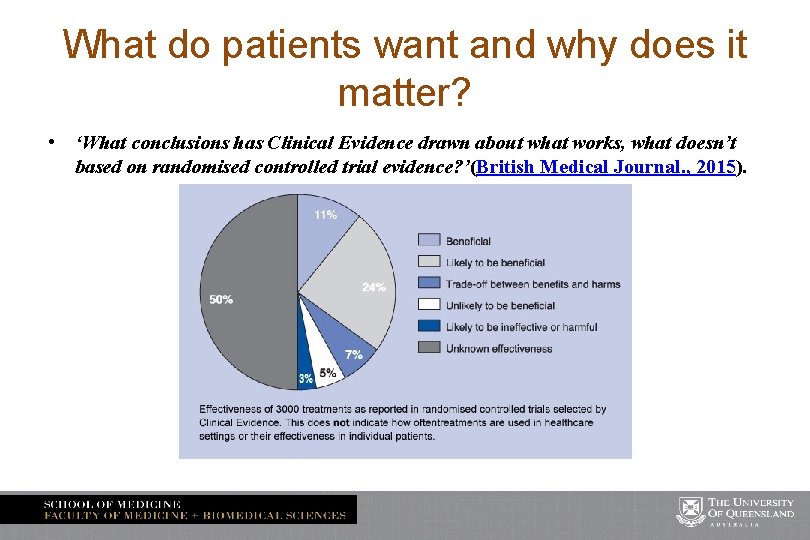
What do patients want and why does it matter? • ‘What conclusions has Clinical Evidence drawn about what works, what doesn’t based on randomised controlled trial evidence? ’(British Medical Journal. , 2015).
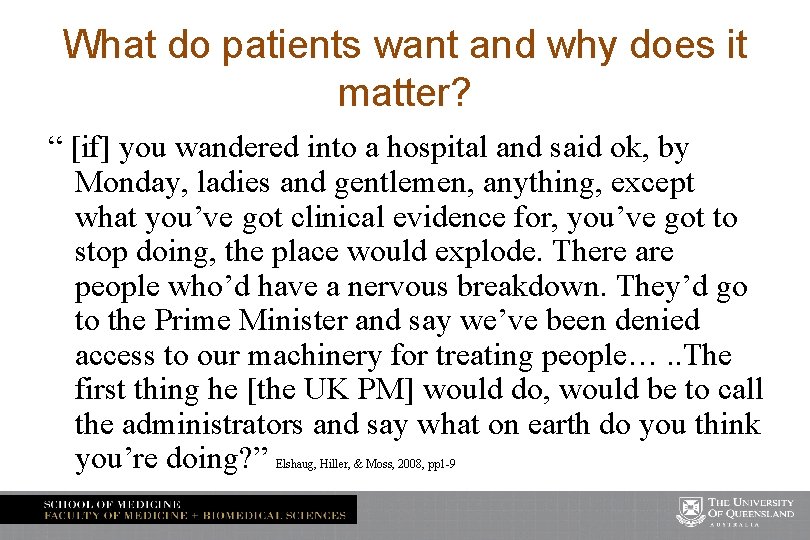
What do patients want and why does it matter? “ [if] you wandered into a hospital and said ok, by Monday, ladies and gentlemen, anything, except what you’ve got clinical evidence for, you’ve got to stop doing, the place would explode. There are people who’d have a nervous breakdown. They’d go to the Prime Minister and say we’ve been denied access to our machinery for treating people…. . The first thing he [the UK PM] would do, would be to call the administrators and say what on earth do you think you’re doing? ” Elshaug, Hiller, & Moss, 2008, pp 1 -9
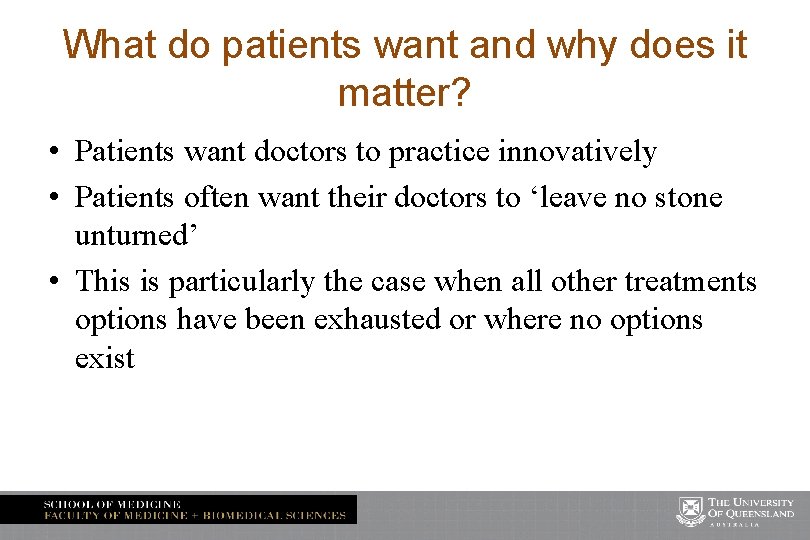
What do patients want and why does it matter? • Patients want doctors to practice innovatively • Patients often want their doctors to ‘leave no stone unturned’ • This is particularly the case when all other treatments options have been exhausted or where no options exist
Significant innovations
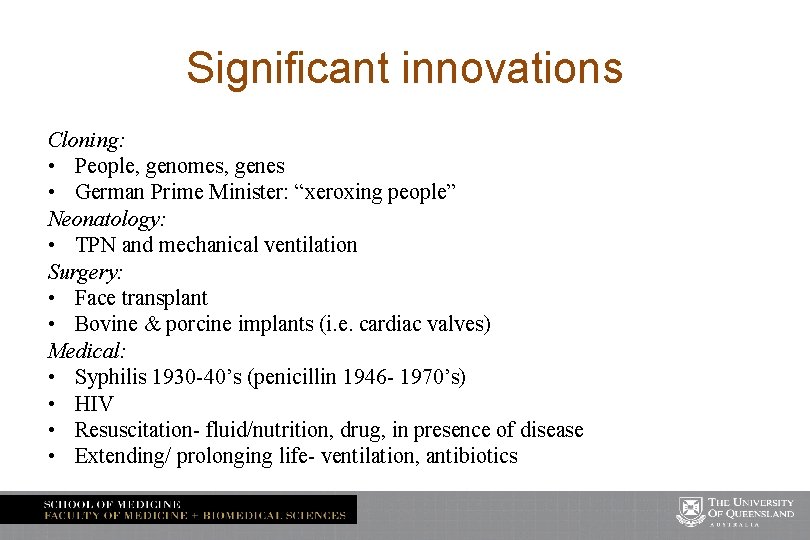
Significant innovations Cloning: • People, genomes, genes • German Prime Minister: “xeroxing people” Neonatology: • TPN and mechanical ventilation Surgery: • Face transplant • Bovine & porcine implants (i. e. cardiac valves) Medical: • Syphilis 1930 -40’s (penicillin 1946 - 1970’s) • HIV • Resuscitation- fluid/nutrition, drug, in presence of disease • Extending/ prolonging life- ventilation, antibiotics
Significant innovations • Many are not only directly focussed on physical condition of patient • May involve improvements to staff/ patient safety • May involve improvements to performance (i. e. quality assurance activities in hospitals) • May involve addressing other deficiencies including managing data
Balancing act
Balancing act Response to earlier neonatology ‘clinical’ innovations: ‘One cultural-psychological response to the conflict between the desire for progress & the abhorrence of experimentation in medicine is to imagine that what is going on is not, in fact, experimenting at all’ (Lantos & Meadow, 2006, p 26)
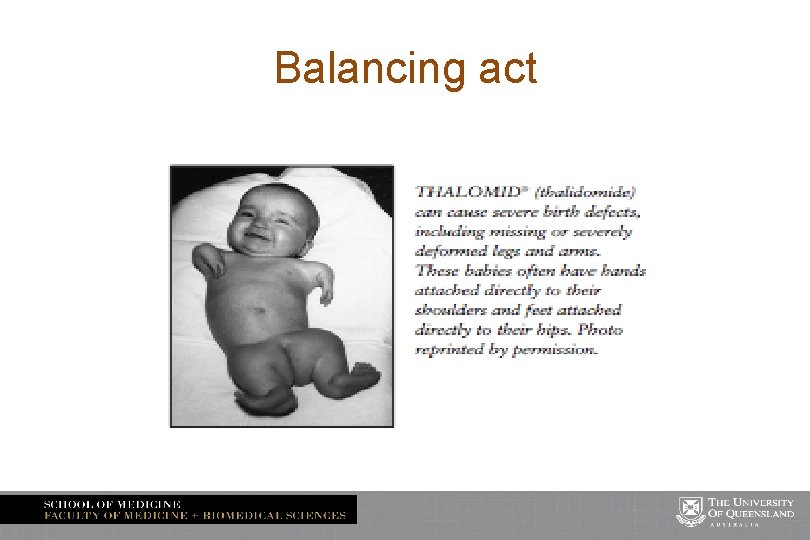
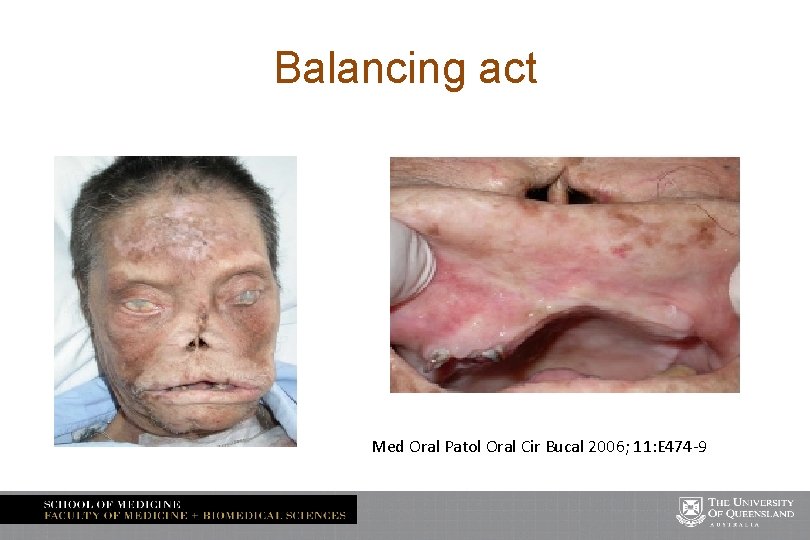
Balancing act One example of the difficulty in balancing the benefits and risk of innovations is the ‘monster drug’ thalidomide -A curse and a blessing -Side-effects: anti-angiogenic; anti-inflammatory
Balancing act
Balancing act Med Oral Patol Oral Cir Bucal 2006; 11: E 474 -9
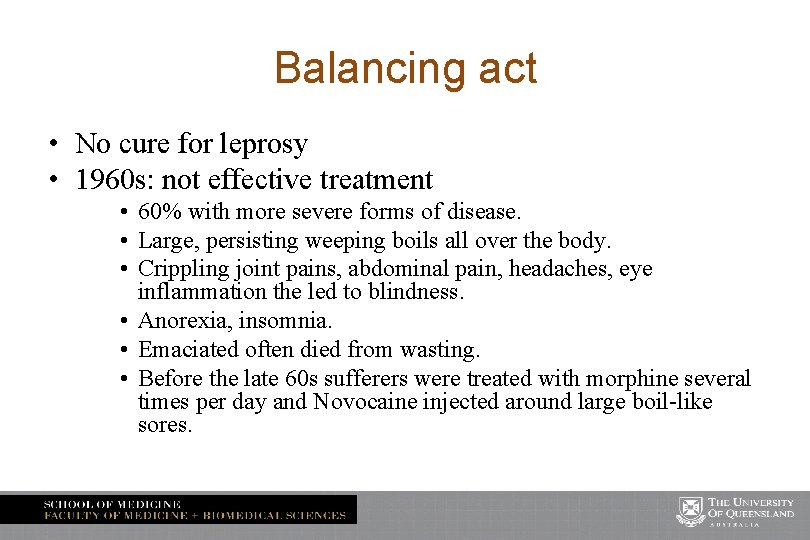
Balancing act • No cure for leprosy • 1960 s: not effective treatment • 60% with more severe forms of disease. • Large, persisting weeping boils all over the body. • Crippling joint pains, abdominal pain, headaches, eye inflammation the led to blindness. • Anorexia, insomnia. • Emaciated often died from wasting. • Before the late 60 s sufferers were treated with morphine several times per day and Novocaine injected around large boil-like sores.
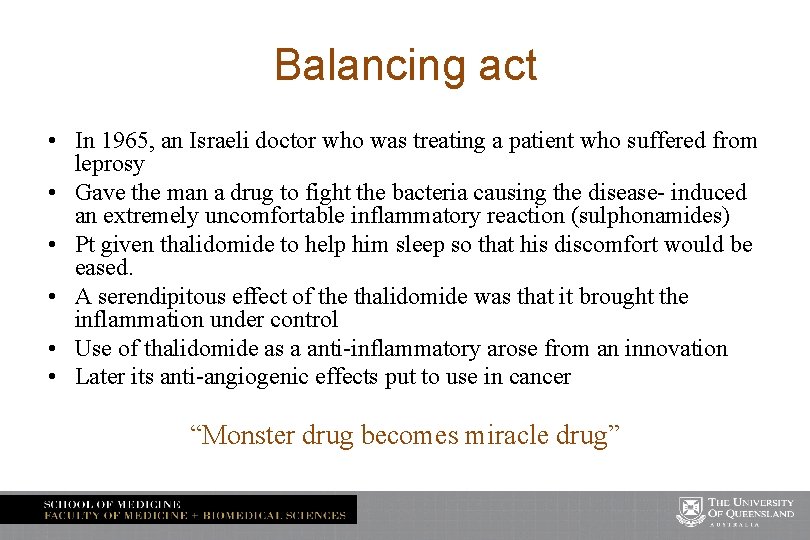
Balancing act • In 1965, an Israeli doctor who was treating a patient who suffered from leprosy • Gave the man a drug to fight the bacteria causing the disease- induced an extremely uncomfortable inflammatory reaction (sulphonamides) • Pt given thalidomide to help him sleep so that his discomfort would be eased. • A serendipitous effect of the thalidomide was that it brought the inflammation under control • Use of thalidomide as a anti-inflammatory arose from an innovation • Later its anti-angiogenic effects put to use in cancer “Monster drug becomes miracle drug”
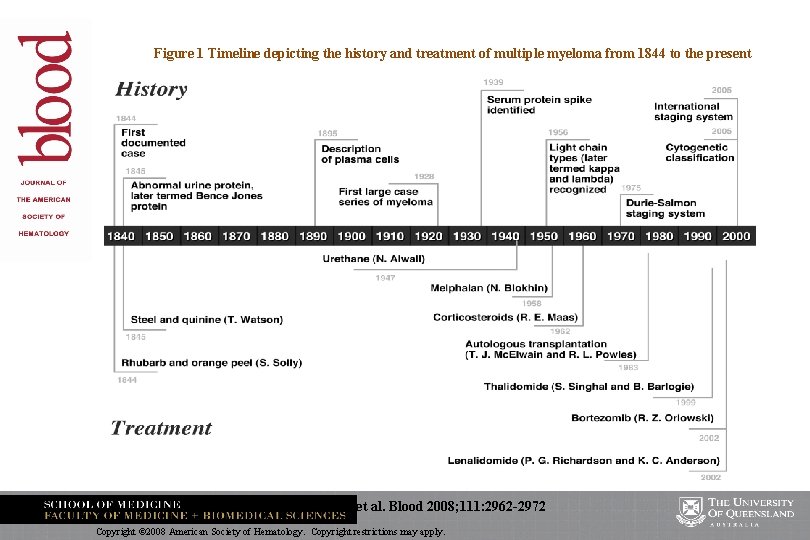
Figure 1 Timeline depicting the history and treatment of multiple myeloma from 1844 to the present Kyle, R. A. et al. Blood 2008; 111: 2962 -2972 Copyright © 2008 American Society of Hematology. Copyright restrictions may apply.
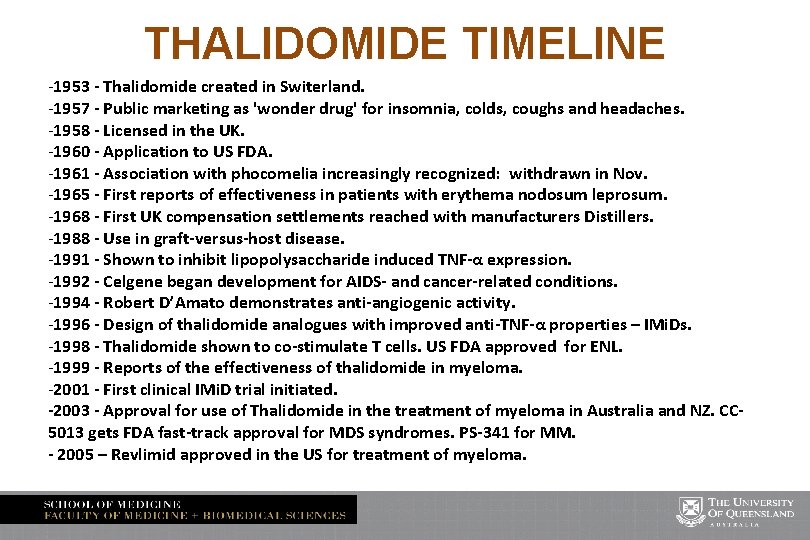
THALIDOMIDE TIMELINE -1953 - Thalidomide created in Switerland. -1957 - Public marketing as 'wonder drug' for insomnia, colds, coughs and headaches. -1958 - Licensed in the UK. -1960 - Application to US FDA. -1961 - Association with phocomelia increasingly recognized: withdrawn in Nov. -1965 - First reports of effectiveness in patients with erythema nodosum leprosum. -1968 - First UK compensation settlements reached with manufacturers Distillers. -1988 - Use in graft-versus-host disease. -1991 - Shown to inhibit lipopolysaccharide induced TNF-α expression. -1992 - Celgene began development for AIDS- and cancer-related conditions. -1994 - Robert D’Amato demonstrates anti-angiogenic activity. -1996 - Design of thalidomide analogues with improved anti-TNF-α properties – IMi. Ds. -1998 - Thalidomide shown to co-stimulate T cells. US FDA approved for ENL. -1999 - Reports of the effectiveness of thalidomide in myeloma. -2001 - First clinical IMi. D trial initiated. -2003 - Approval for use of Thalidomide in the treatment of myeloma in Australia and NZ. CC 5013 gets FDA fast-track approval for MDS syndromes. PS-341 for MM. - 2005 – Revlimid approved in the US for treatment of myeloma.
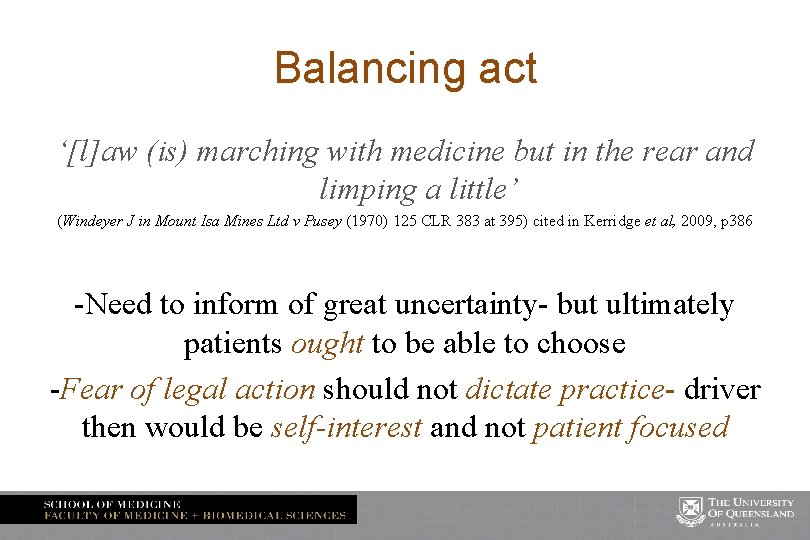
Balancing act ‘[l]aw (is) marching with medicine but in the rear and limping a little’ (Windeyer J in Mount Isa Mines Ltd v Pusey (1970) 125 CLR 383 at 395) cited in Kerridge et al, 2009, p 386 -Need to inform of great uncertainty- but ultimately patients ought to be able to choose -Fear of legal action should not dictate practice- driver then would be self-interest and not patient focused
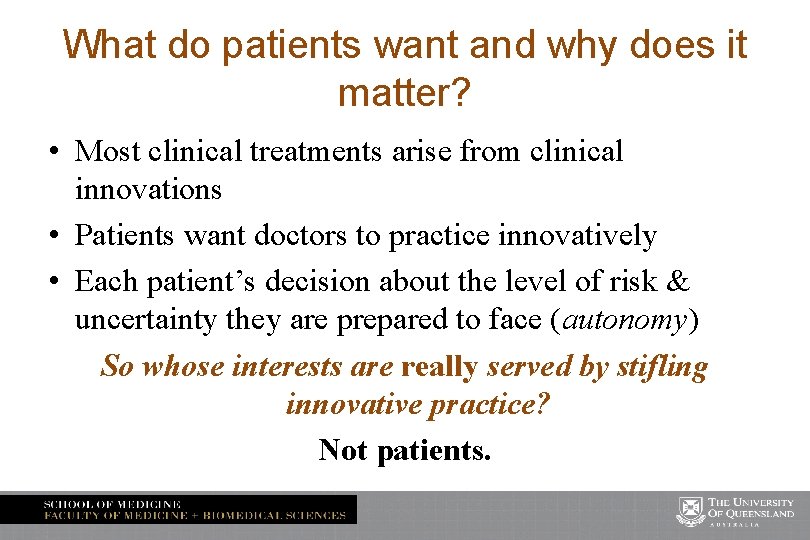
What do patients want and why does it matter? • Most clinical treatments arise from clinical innovations • Patients want doctors to practice innovatively • Each patient’s decision about the level of risk & uncertainty they are prepared to face (autonomy) So whose interests are really served by stifling innovative practice? Not patients.
Questions?
References Beauchamp, T. (2003). The Nature of Applied Ethics in Blackwells Companion to Philosophy: A Companion to Applied Ethics. C. W. R. Frey, & C. Wellman Oxford, Blackwell Publishing: 1 -16. Beauchamp, T. and J. Childress (2001). Principles of Biomedical Ethics. New York, Oxford University Press. Kerridge, I. , M. Lowe, et al. Ed 4. (2013). Ethics and law for the health professions. Leichhardt, The Federation Press. Lantos, J. and Meadow, W. (2006). Neonatal Bioethics: The Moral Challenges of Medical Innovation. John Hopkins University Press, Baltimore. Peake, R (1823) The Fate of Frankenstein. Available at http//: www. rc. umd. edu/editions/peake/toc. html (last visited Feb. 2, 2013) Rothenberg, K. and Bush, L. (2012). Manipulating Fate: Medical Innovations, Ethical Implications, Theatrical Illuminations. Houston Journal of Health Law and Policy Skene, L. (2008). Law and Medical Practice: Rights, Duties, Claims and Defences. Melbourne, Lexis. Nexis Butterworths. Stepanov, N. (2013 -). Understanding the existence of therapeutic misconceptions in first-in-human and early phase research; and the implications for consent: A metaphysical and legal analysis. Stepanov, N. (2010) Giving voice to participants of research: rethinking the pedagogy of applied ethics. Bundoora, La Trobe University Library Stewart, C. (2011). Foundations of Medical Law. Master of Law: Health and Medical. University of Melbourne CRICOS Provider No 00025 B