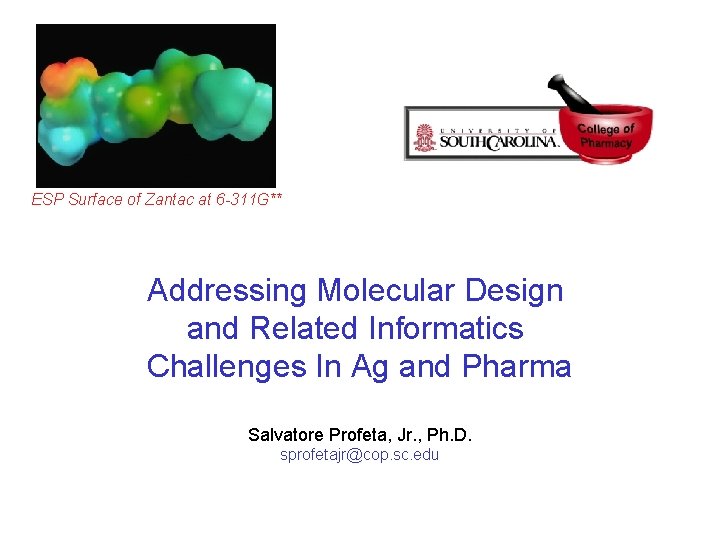
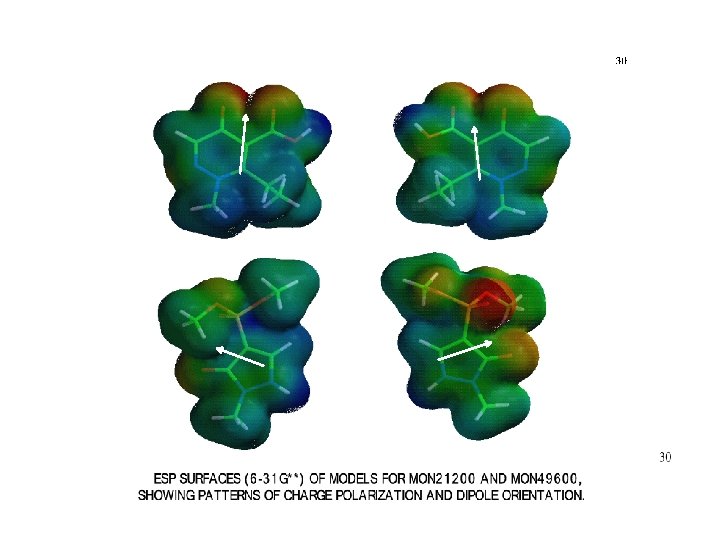
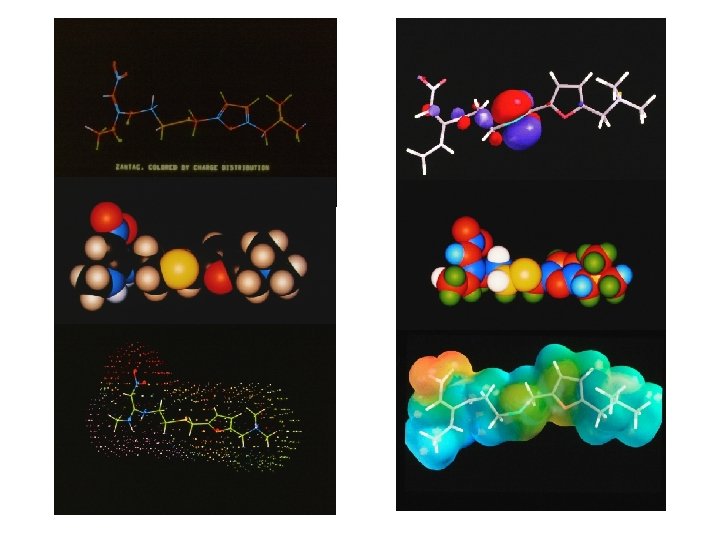
ESP Surface of Zantac at 6 311 G
- Slides: 40
ESP Surface of Zantac at 6 -311 G** Addressing Molecular Design and Related Informatics Challenges In Ag and Pharma Salvatore Profeta, Jr. , Ph. D. sprofetajr@cop. sc. edu
Part I: Integrating Combinatorial, Statistical, Analytical and Informatics Technologies Integral to Ag Chemical Discovery
Acknowledgements Chemistry Management Dr. Eugene Logusch Computational Team: Mr. Philip Mosier Mr. Jude Overo Ms. Khalilah Beal Mr. Steven Schmitz Dr. Elizabeth Collantes Dr. Shashi Rao Mr. Mark Grieshaber Dr. Bill Welsh - UMSL Dr. U. Chandra Singh VLS/Automation Team: Mr. Michael Boerner Dr. Bruce Hamper HT Screening Team: Mr. Dan Krupa Hybridization Team: Dr. Paula Miller
Monsanto Ag Chemical Discovery Strategy: To Maximize Productivity Balance Internal/external Resources External: lead identification and “diversity” searches • Combinatorial Library Vendors • Compound purchases/swaps Internal: targeted synthesis and lead follow-up • • Rigorous biochemical/genomic target validation Design targeted libraries (smaller/smarter/faster) Computational/SAR approaches driven by data Build Informatics Infrastructure to facilitate processes
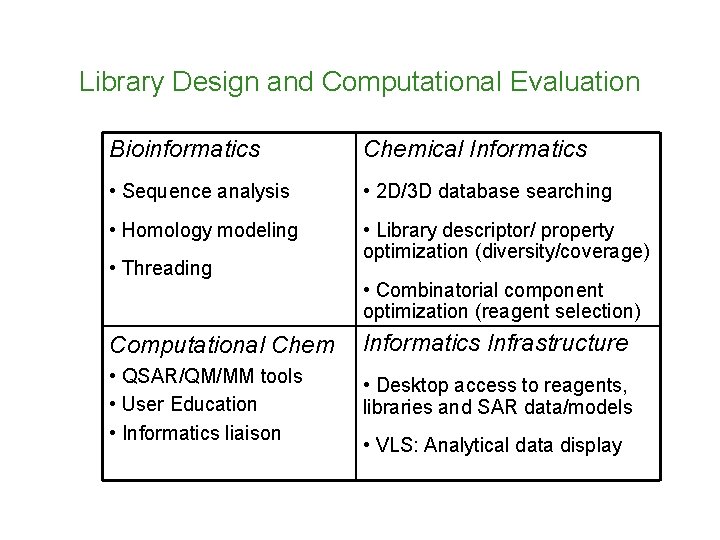
Library Design and Computational Evaluation Bioinformatics Chemical Informatics • Sequence analysis • 2 D/3 D database searching • Homology modeling • Library descriptor/ property optimization (diversity/coverage) • Threading • Combinatorial component optimization (reagent selection) Computational Chem Informatics Infrastructure • QSAR/QM/MM tools • User Education • Informatics liaison • Desktop access to reagents, libraries and SAR data/models • VLS: Analytical data display
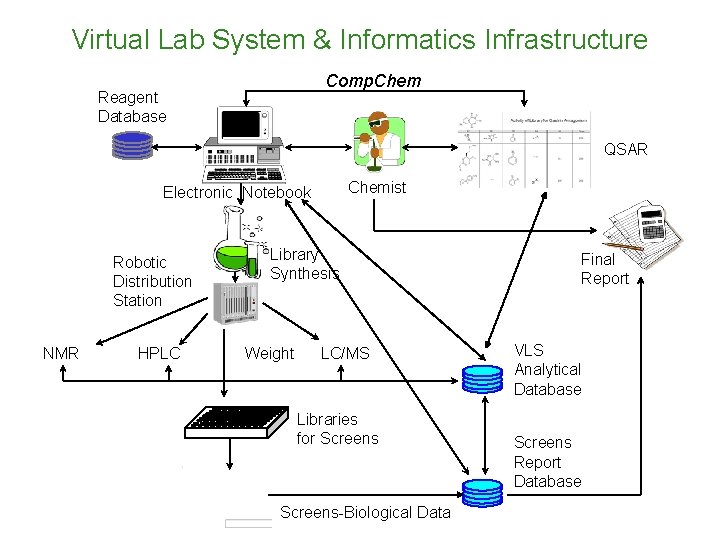
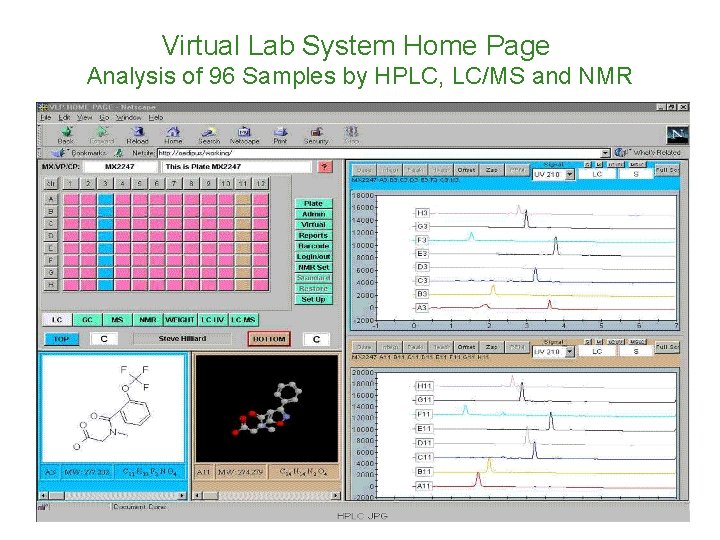
Virtual Lab System & Informatics Infrastructure Comp. Chem Reagent Database QSAR Chemist Electronic Notebook Robotic Distribution Station NMR HPLC Library Synthesis Weight LC/MS Libraries for Screens-Biological Data Final Report VLS Analytical Database Screens Report Database
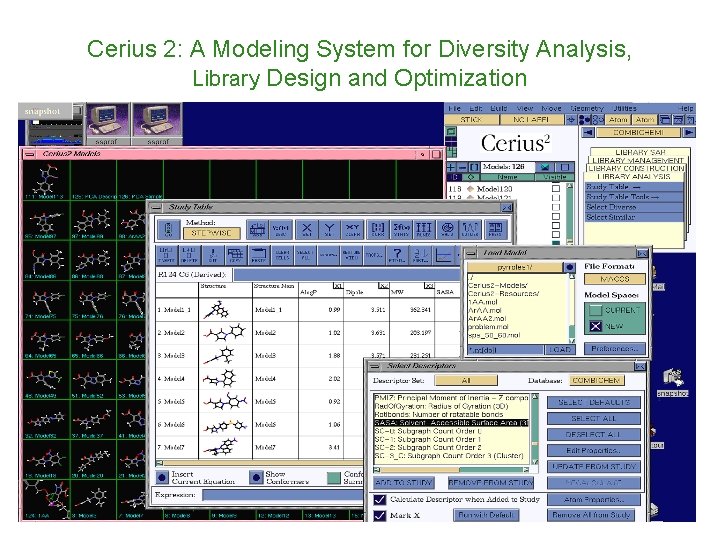
Cerius 2: A Modeling System for Diversity Analysis, Library Design and Optimization
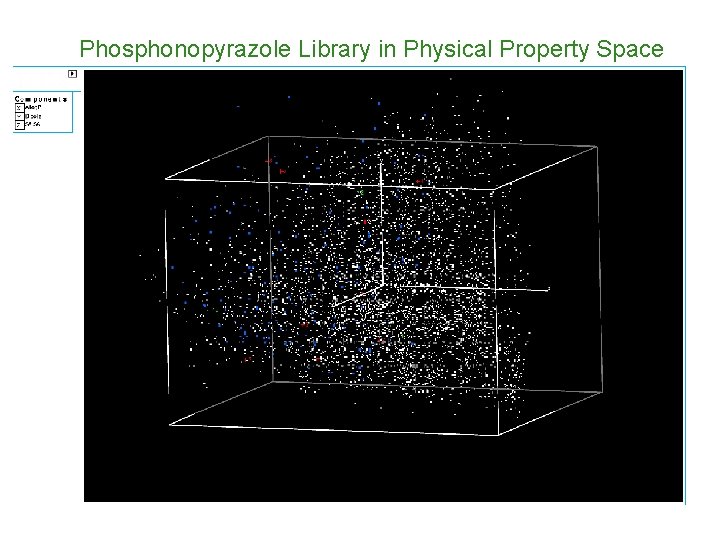
Phosphonopyrazole Library in Physical Property Space
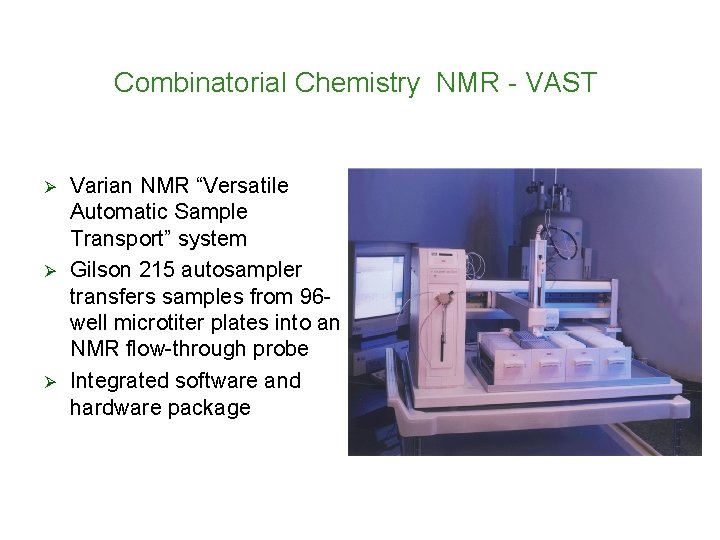
Combinatorial Chemistry NMR - VAST Ø Ø Ø Varian NMR “Versatile Automatic Sample Transport” system Gilson 215 autosampler transfers samples from 96 well microtiter plates into an NMR flow-through probe Integrated software and hardware package
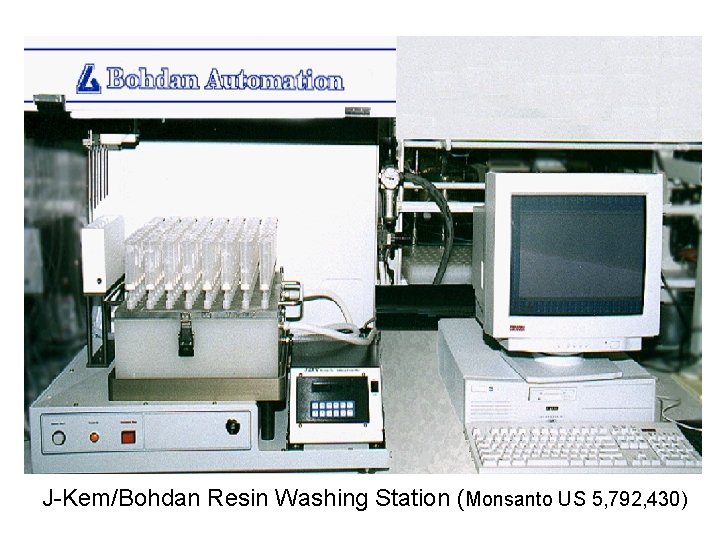
J-Kem/Bohdan Resin Washing Station (Monsanto US 5, 792, 430)
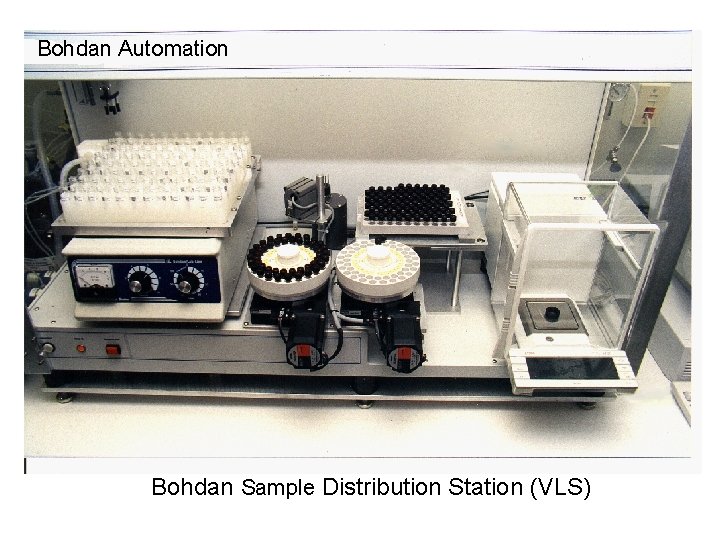
Bohdan Automation Bohdan Sample Distribution Station (VLS)
Virtual Lab System Home Page Analysis of 96 Samples by HPLC, LC/MS and NMR
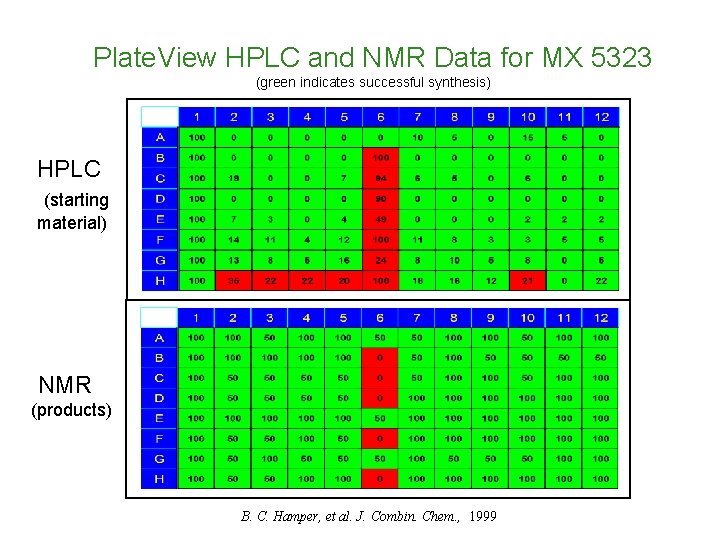
Plate. View HPLC and NMR Data for MX 5323 (green indicates successful synthesis) HPLC (starting material) NMR (products) B. C. Hamper, et al. J. Combin. Chem. , 1999
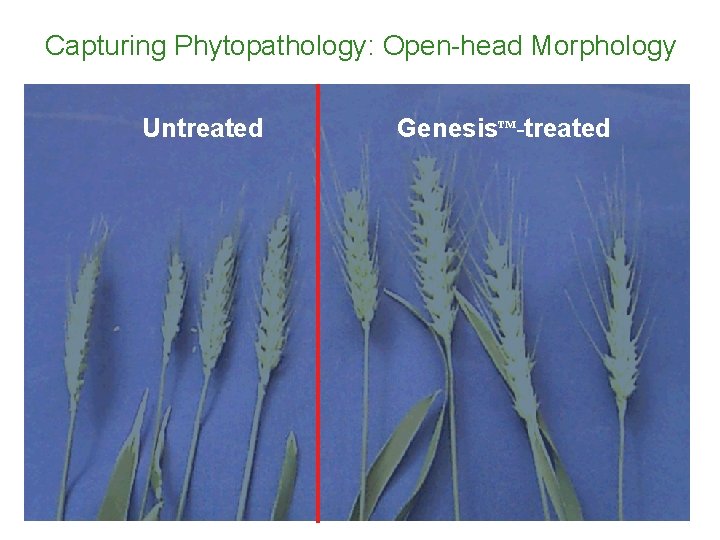
Capturing Phytopathology: Open-head Morphology Untreated ™-treated Genesis ∆ Genesis -treated
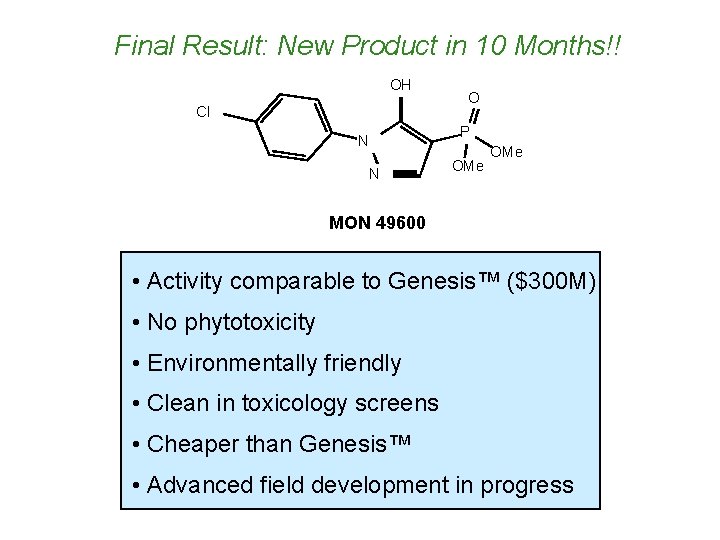
Final Result: New Product in 10 Months!! OH Cl O P N N OMe MON 49600 • Activity comparable to Genesis™ ($300 M) • No phytotoxicity • Environmentally friendly • Clean in toxicology screens • Cheaper than Genesis™ • Advanced field development in progress
Part II Computational Infrastructure Support for Drug Discovery
Acknowledgements Computational & Structural Teams Dr. Lee Herman Dr. Ian Parsons Dr. Jeff Moore Chemiinformatics Team Mr. Michael Loran Dr. Rich Ferrante Dr. Vlado Dancik Dr. Alex Sukharevesky Mr. David Clemens Dr. Nick Camp Medicinal Chemistry Team Dr. Dan Flynn Dr. Gerry Harriman Dr. Alfredo Castro Dr. Raman Prakash HTS Team Dr. Dejan Bojanic Dr. Emir Duzic
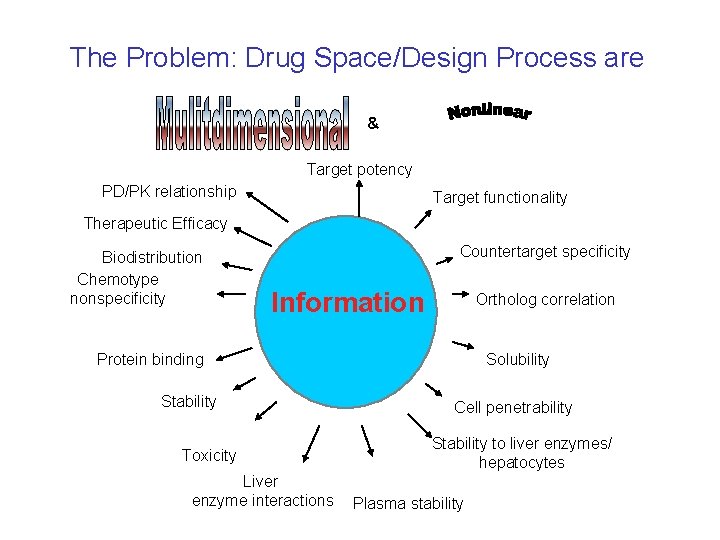
The Problem: Drug Space/Design Process are & Target potency PD/PK relationship Target functionality Therapeutic Efficacy Biodistribution Chemotype nonspecificity Countertarget specificity Information Ortholog correlation Protein binding Stability Toxicity Liver enzyme interactions Solubility Cell penetrability Stability to liver enzymes/ hepatocytes Plasma stability
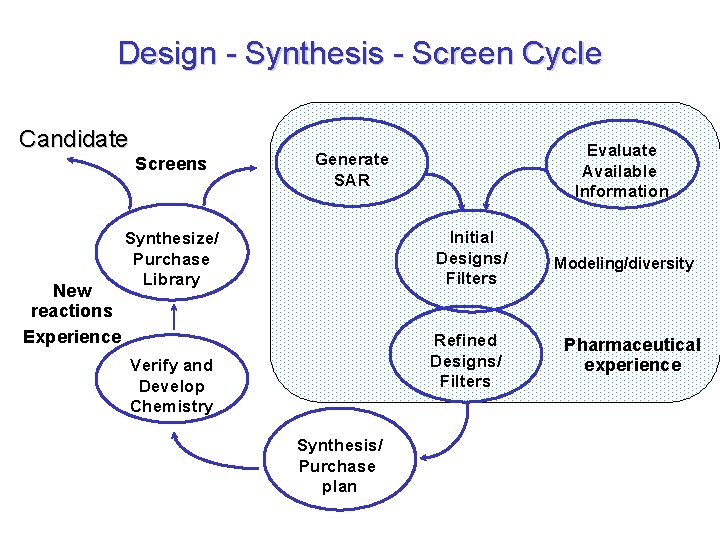
Design - Synthesis - Screen Cycle Candidate Screens New reactions Experience Evaluate Available Information Generate SAR Initial Designs/ Filters Synthesize/ Purchase Library Refined Designs/ Filters Verify and Develop Chemistry Synthesis/ Purchase plan Modeling/diversity Pharmaceutical experience
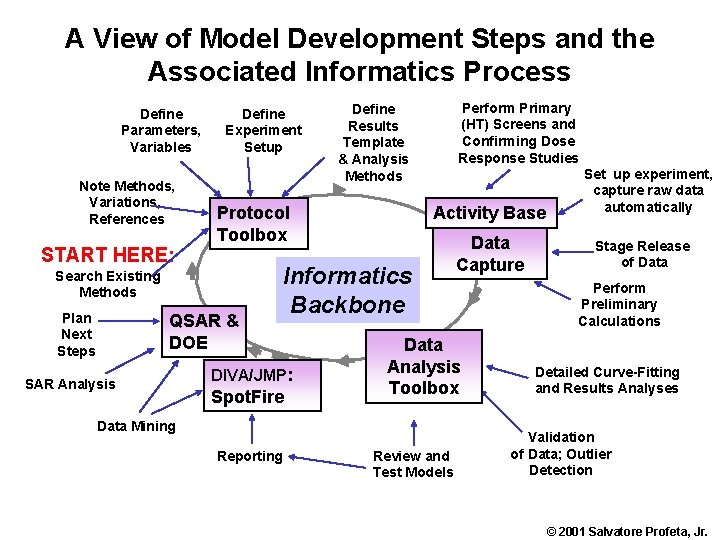
A View of Model Development Steps and the Associated Informatics Process Define Parameters, Variables Note Methods, Variations, References START HERE: Define Experiment Setup Plan Next Steps QSAR & DOE SAR Analysis Activity Base Protocol Toolbox Search Existing Methods Perform Primary (HT) Screens and Confirming Dose Response Studies Define Results Template & Analysis Methods Informatics Backbone DIVA/JMP: Spot. Fire Data Analysis Toolbox Data Mining Reporting Data Capture Review and Test Models Set up experiment, capture raw data automatically Stage Release of Data Perform Preliminary Calculations Detailed Curve-Fitting and Results Analyses Validation of Data; Outlier Detection © 2001 Salvatore Profeta, Jr.
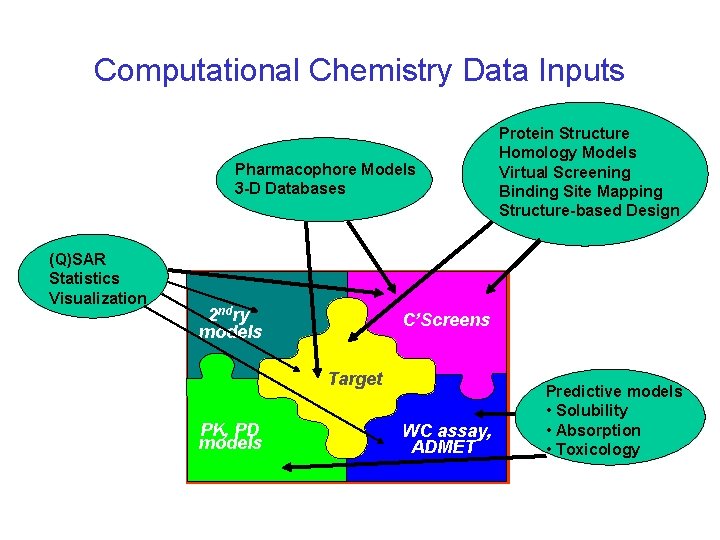
Computational Chemistry Data Inputs Pharmacophore Models 3 -D Databases (Q)SAR Statistics Visualization 2 ndry models C’Screens Target PK, PD models Protein Structure Homology Models Virtual Screening Binding Site Mapping Structure-based Design WC assay, ADMET Predictive models • Solubility • Absorption • Toxicology
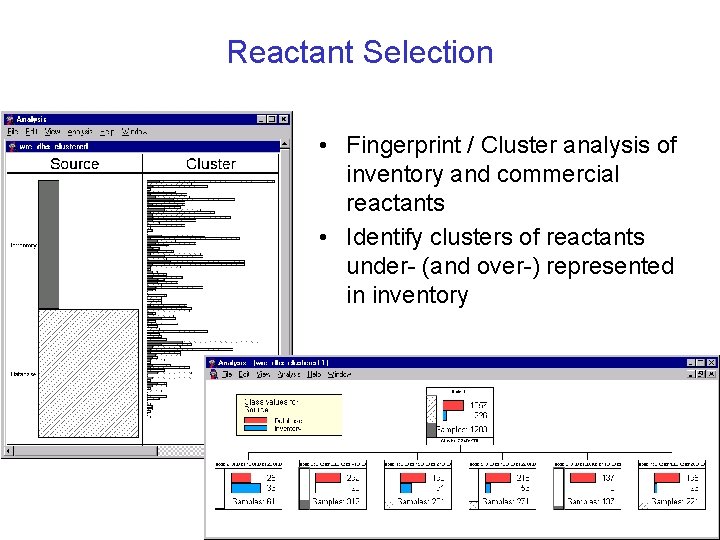
Reactant Selection • Fingerprint / Cluster analysis of inventory and commercial reactants • Identify clusters of reactants under- (and over-) represented in inventory
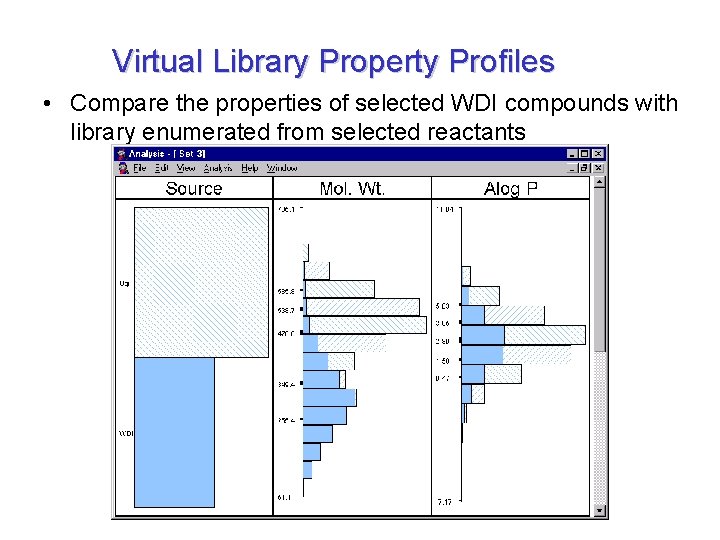
Virtual Library Property Profiles • Compare the properties of selected WDI compounds with library enumerated from selected reactants
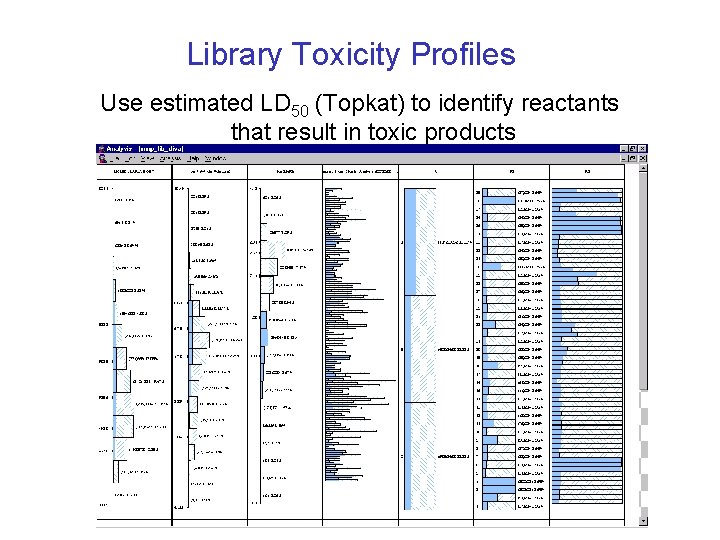
Library Toxicity Profiles Use estimated LD 50 (Topkat) to identify reactants that result in toxic products
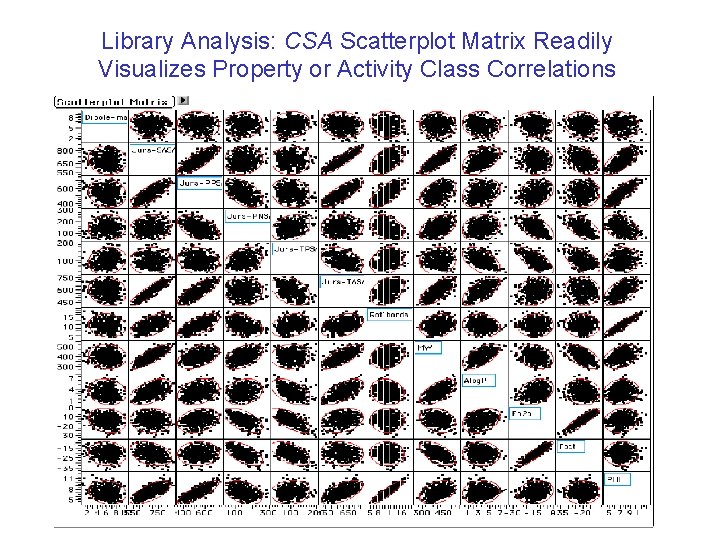
Library Analysis: CSA Scatterplot Matrix Readily Visualizes Property or Activity Class Correlations
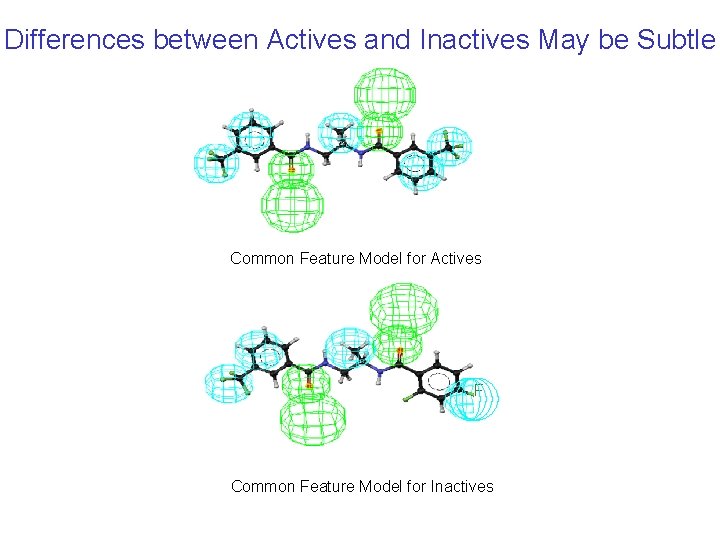
Differences between Actives and Inactives May be Subtle Common Feature Model for Actives F Common Feature Model for Inactives
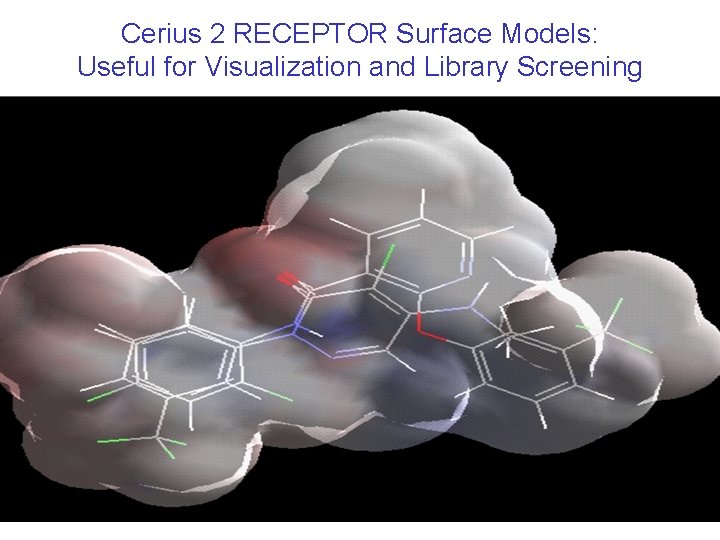
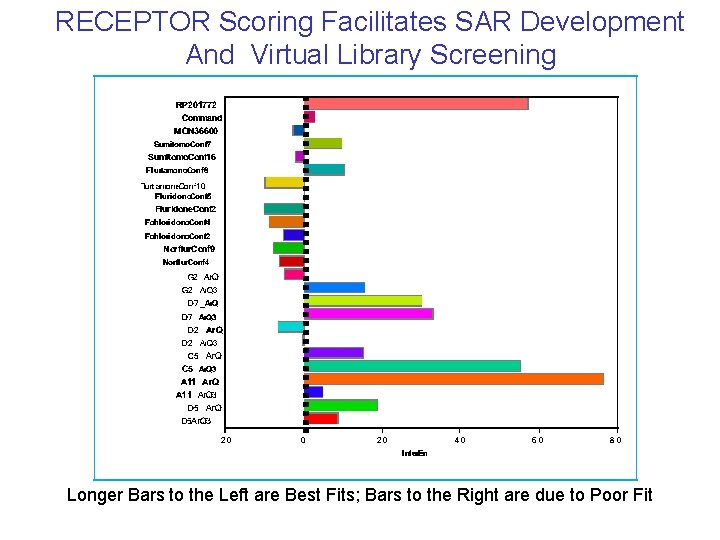
Cerius 2 RECEPTOR Surface Models: Useful for Visualization and Library Screening
RECEPTOR Scoring Facilitates SAR Development And Virtual Library Screening Longer Bars to the Left are Best Fits; Bars to the Right are due to Poor Fit
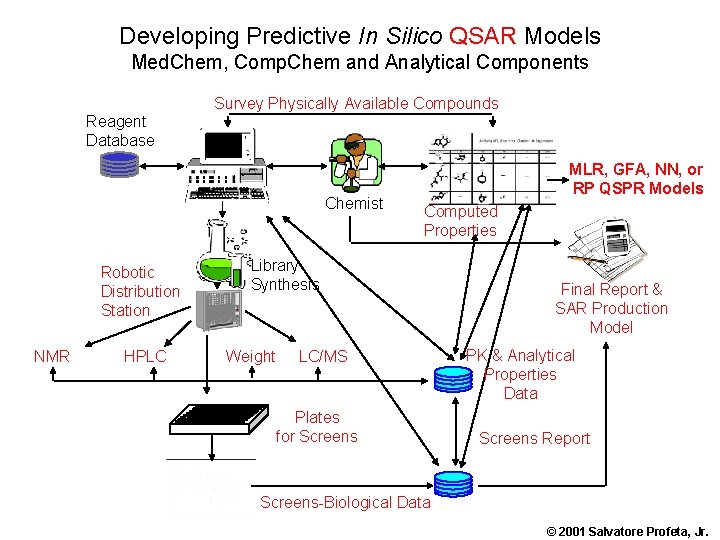
Developing Predictive In Silico QSAR Models Med. Chem, Comp. Chem and Analytical Components Survey Physically Available Compounds Reagent Database Chemist Robotic Distribution Station NMR HPLC MLR, GFA, NN, or RP QSPR Models Computed Properties Library Synthesis Weight LC/MS Plates for Screens Final Report & SAR Production Model PK & Analytical Properties Data Screens Report Screens-Biological Data © 2001 Salvatore Profeta, Jr.
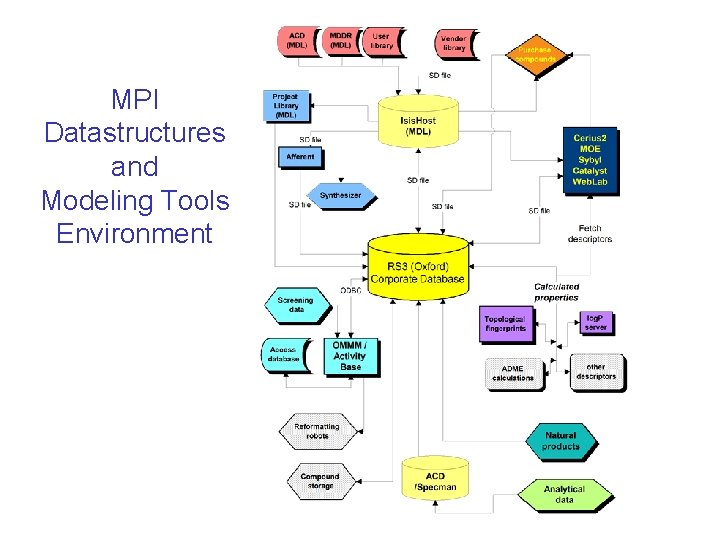
MPI Datastructures and Modeling Tools Environment
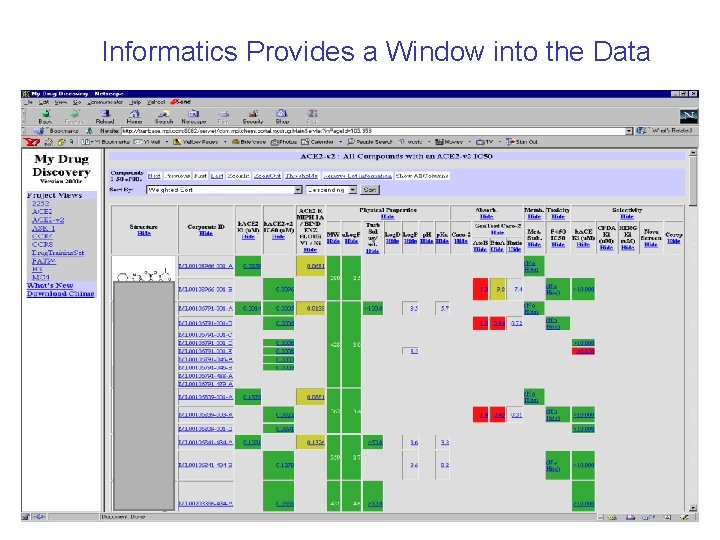
Informatics Provides a Window into the Data
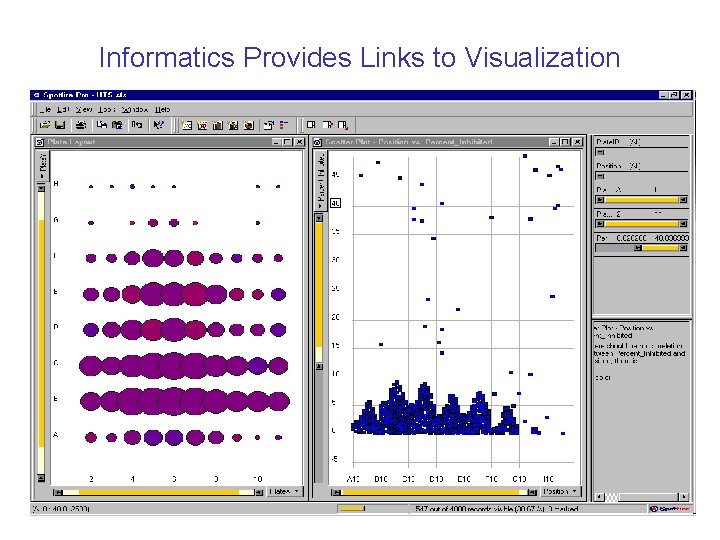
Informatics Provides Links to Visualization
Challenges For the Future • Hardware • Software • User Education • Networking/Collaboratories
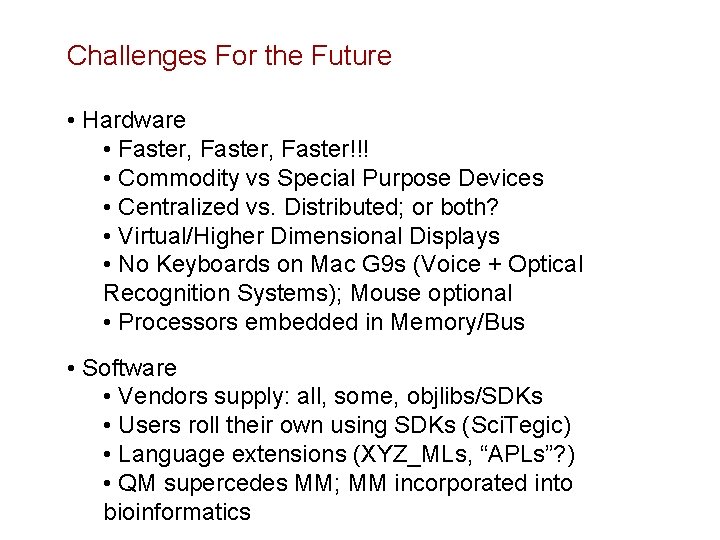
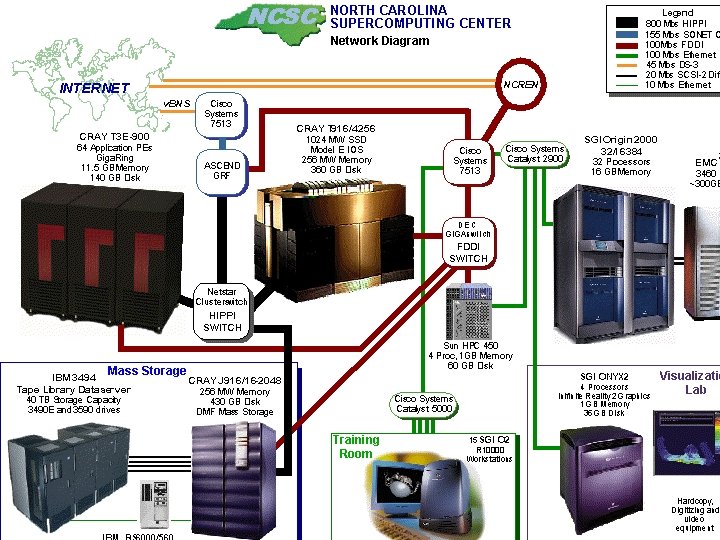
Challenges For the Future • Hardware • Faster, Faster!!! • Commodity vs Special Purpose Devices • Centralized vs. Distributed; or both? • Virtual/Higher Dimensional Displays • No Keyboards on Mac G 9 s (Voice + Optical Recognition Systems); Mouse optional • Processors embedded in Memory/Bus • Software • Vendors supply: all, some, objlibs/SDKs • Users roll their own using SDKs (Sci. Tegic) • Language extensions (XYZ_MLs, “APLs”? ) • QM supercedes MM; MM incorporated into bioinformatics
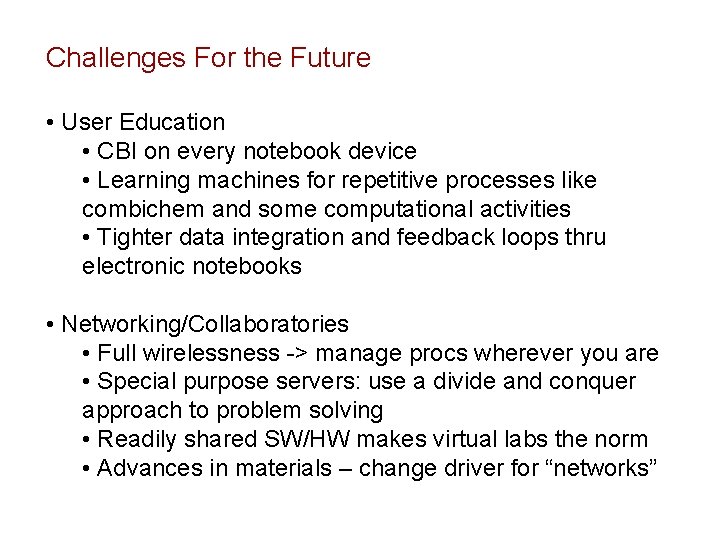
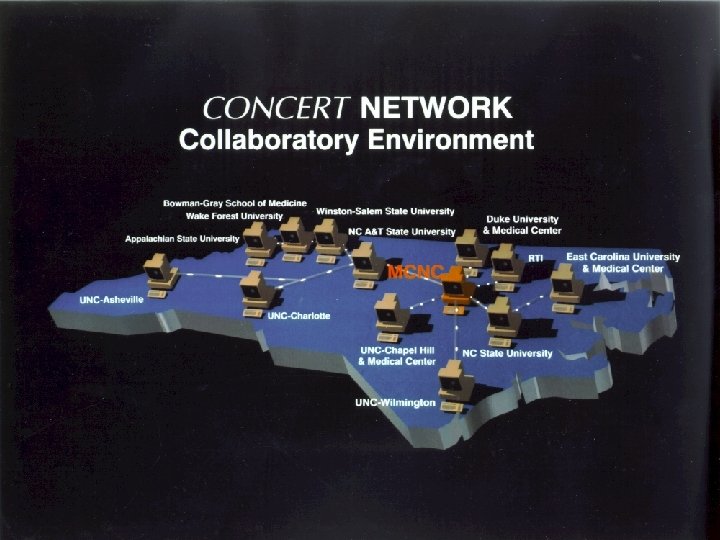
Challenges For the Future • User Education • CBI on every notebook device • Learning machines for repetitive processes like combichem and some computational activities • Tighter data integration and feedback loops thru electronic notebooks • Networking/Collaboratories • Full wirelessness -> manage procs wherever you are • Special purpose servers: use a divide and conquer approach to problem solving • Readily shared SW/HW makes virtual labs the norm • Advances in materials – change driver for “networks”