Equal Employment Opportunity Principles of Discrimination Law Summary









- Slides: 26
Equal Employment Opportunity Principles of Discrimination Law
Summary: Discrimination Law • • • What is “discrimination” and who is protected? Equal Achievement vs Equal Opportunity Why do these laws exist? Are they still needed? How does a plaintiff build a prima facie case? How does an employer defend itself?
Two Doctrines of Fairness • Equal Achievement • • • Equal Opportunity • • “Even a true generalization about a class cannot justify class-based treatment” (Supreme Court’s Norris decision, 1983)
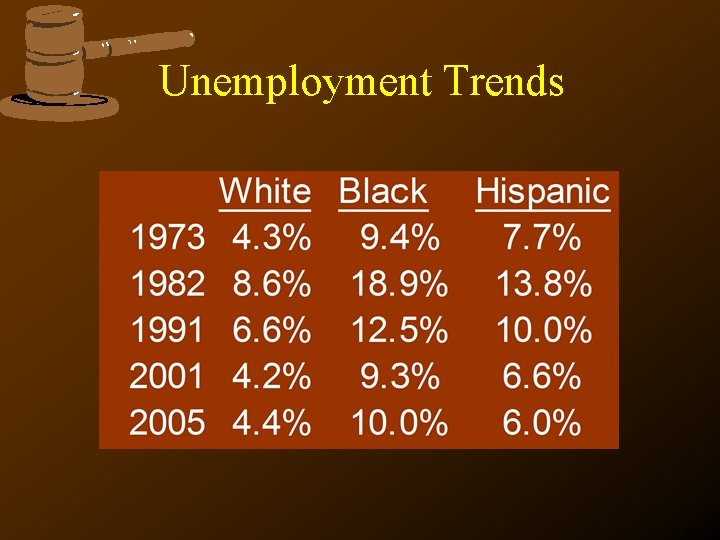
Unemployment Trends
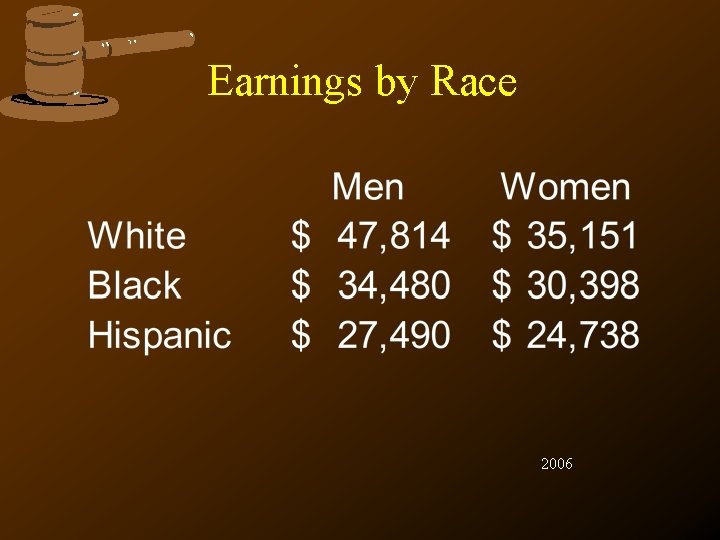
Earnings by Race 2006
Building a Prima Facie Case • Disparate treatment • Mc. Donnell Douglas v. Green • • • Disparate (Adverse) Impact • Griggs v. Duke Power • •
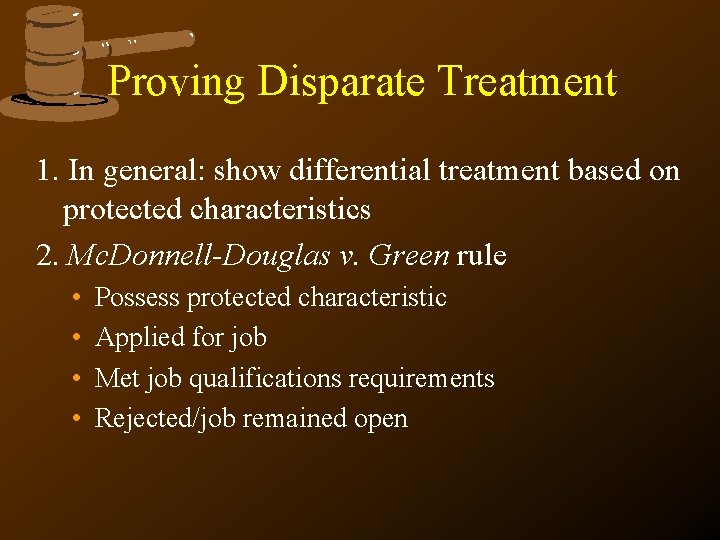
Proving Disparate Treatment 1. In general: show differential treatment based on protected characteristics 2. Mc. Donnell-Douglas v. Green rule • • Possess protected characteristic Applied for job Met job qualifications requirements Rejected/job remained open
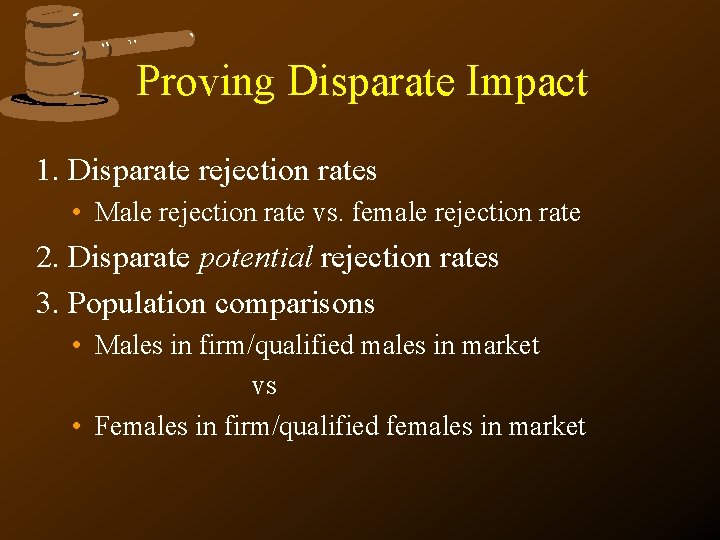
Proving Disparate Impact 1. Disparate rejection rates • Male rejection rate vs. female rejection rate 2. Disparate potential rejection rates 3. Population comparisons • Males in firm/qualified males in market vs • Females in firm/qualified females in market
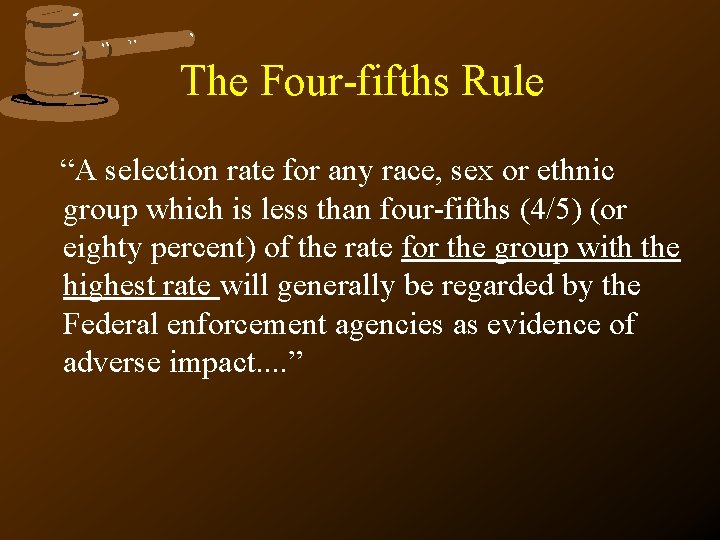
The Four-fifths Rule “A selection rate for any race, sex or ethnic group which is less than four-fifths (4/5) (or eighty percent) of the rate for the group with the highest rate will generally be regarded by the Federal enforcement agencies as evidence of adverse impact. . ”
Defenses to Disparate Treatment • •
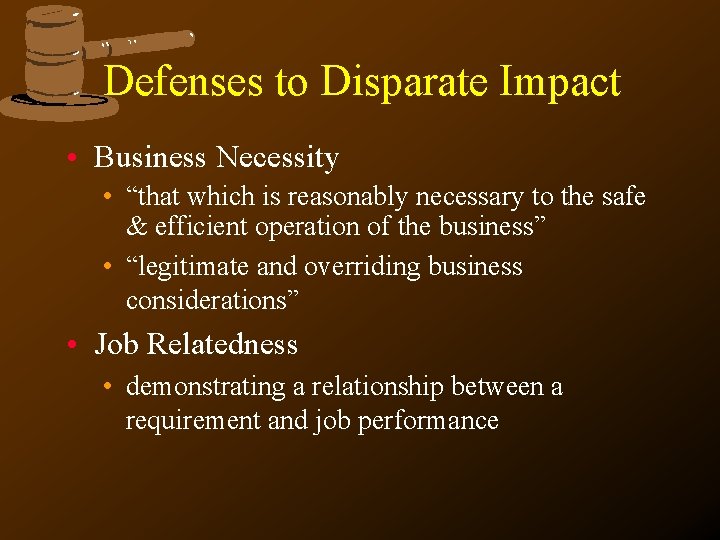
Defenses to Disparate Impact • Business Necessity • “that which is reasonably necessary to the safe & efficient operation of the business” • “legitimate and overriding business considerations” • Job Relatedness • demonstrating a relationship between a requirement and job performance
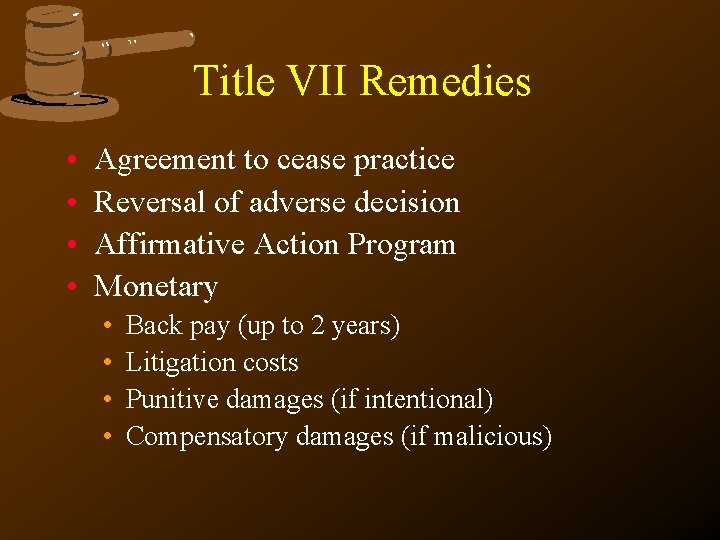
Title VII Remedies • • Agreement to cease practice Reversal of adverse decision Affirmative Action Program Monetary • • Back pay (up to 2 years) Litigation costs Punitive damages (if intentional) Compensatory damages (if malicious)
Summary: Discrimination Law • • Why these laws exist Equal Achievement vs Equal Opportunity What is “discrimination” and who is protected? Evidence and Proof • Disparate Impact vs. Disparate Treatment • Plaintiff’s burden: prima facie evidence • Employer’s defense
Equal Employment Opportunity Primary Anti-Discrimination Laws
EEO Legal Constraints • U. S. Constitution • 5 th & 14 th Amendments particularly • Statutory (Legislative) Law • Federal, State, Municipal • Case (Common) Law • Executive Orders • <Regulatory agency guidelines>
Primary Federal EEO Laws • • Equal Pay Act (1963) Title VII, CRA (1964/72/91) Vocational Rehabilitation Act (1967) Age Discrimination in Empl. Act (1967/86) Pregnancy Discrimination Act (1978) Immigration Reform/Control Act (1986) Americans with Disabilities Act (1990)
Title VII • Part of Civil Rights Act (1964/72/91) • Established protected characteristics • Created Equal Employment Opportunity Comm • Create guidelines (e. g. Uniform Guidelines on Selection) • Enforce Title VII • Collect compliance data (Form EEO-1) • Basis for other EEO laws • Pregnancy Discrimination Act (1978) • Age Discrimination in Employment Act (1967, 1986)
Americans with Disabilities Act • Prohibits discrimination against “qualified individuals with a disability” • Who are “qualified individuals”? • A person with a disability who, with or without reasonable accommodation, can perform the essential functions of the job”
Some ADA Statistics • 43 million Americans may be covered • 90, 000 lawsuits filed (as of 11/98) • Plaintiffs have lost 90% of cases that have gone to court • Costs $100 K to defend
What is a “Disability”? • “A physical or mental impairment which substantially limits one or more of life’s major activities” • “communication, ambulation, self-care, socialization, education, vocational training, employment, transportation. . . with primary attention given to those life activities that affect employability” • “A record of such impairment” • “Being regarded as having such an impairment”
Reasonable Accommodation • Employers must change job conditions, tasks, or requirements in order to allow otherwise qualified employees to do the job • This also includes the application process • But accommodation should not represent an “undue hardship”
“Undue Hardship”? • “any accommodation that would be unduly costly, extensive, substantial, or disruptive or that would fundamentally alter the nature of the operation of the firm” • based on resources of individual site • decided on case-by-case basis
What are Essential Functions? • “Primary job duties that are intrinsic to the employment position” • time spent doing • criticality • ability of others to cover • Should be determined before hiring decision • Be sure to include “obvious” KSAs
Hiring Implications of ADA • Determine essential functions • Remove recruitment barriers • Applicants may need to be accommodated • Treat applicants equally • Pre-employment medical exams only after job offer • Allow applicant to identify self as disabled • Accommodation of job requirements
Review: Primary Federal EEO Laws • • Equal Pay Act (1963) Title VII, CRA (1964/72/91) Vocational Rehabilitation Act (1967) Age Discrimination in Empl. Act (1967/86) Pregnancy Discrimination Act (1978) Immigration Reform/Control Act (1986) Americans with Disabilities Act (1990)
EEO Law & Multinationals • American employees of US corporations can sue under Title VII, ADEA or ADA even if working overseas • But this applies only to US citizens, not foreign citizens working for US companies • Does not apply to Fair Labor Standards Act • “Foreign Laws Defense” • Exemption allowed if complying with US laws would cause violation of local laws • Does NOT include customs or preferences