ENERGY EFFICIENCY IN THERMAL UTILITIES AND SYSTEM Energy

- Slides: 15
ENERGY EFFICIENCY IN THERMAL UTILITIES AND SYSTEM
Energy Efficiency • It can be termed as the ratio of useful energy output to the total energy input. • It’s denoted by Ƞ. • Equipments are said to be efficient if they are utiliting maximum amount of input energy.
Boiler • It’s defined as “a closed vessel in which or other liquid is heated, superheated steam under high pressure is generated for the purpose of generation of power from superheated steam”. • They are classified water/fire tube boiler, operating pressure of boiler, operating position of boiler etc.
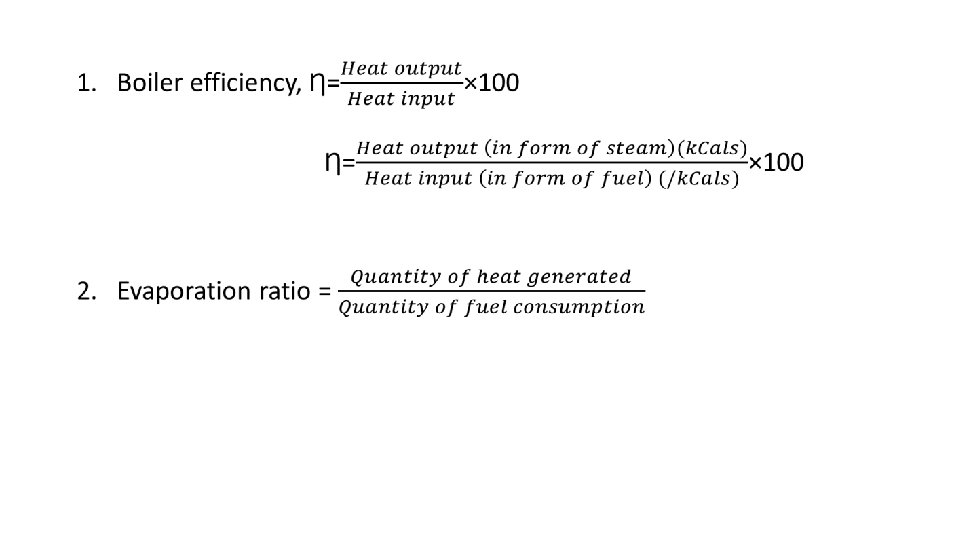
Energy Performance Assessment of Boiler Purpose of performance test • To find out efficiency of boiler • To find out evaporation ratio The purpose of performance test is to determine actual performance and efficiency of boiler and compare it with design values and norms.
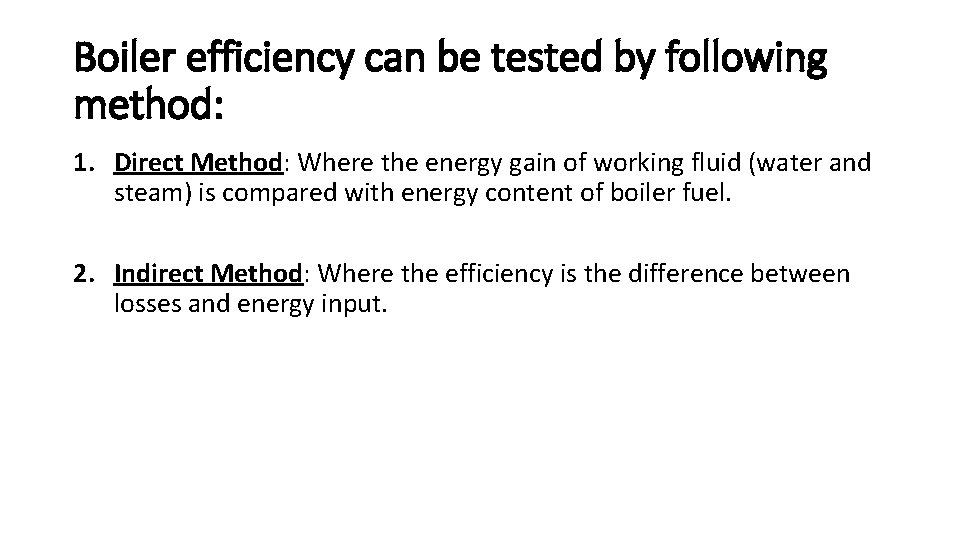
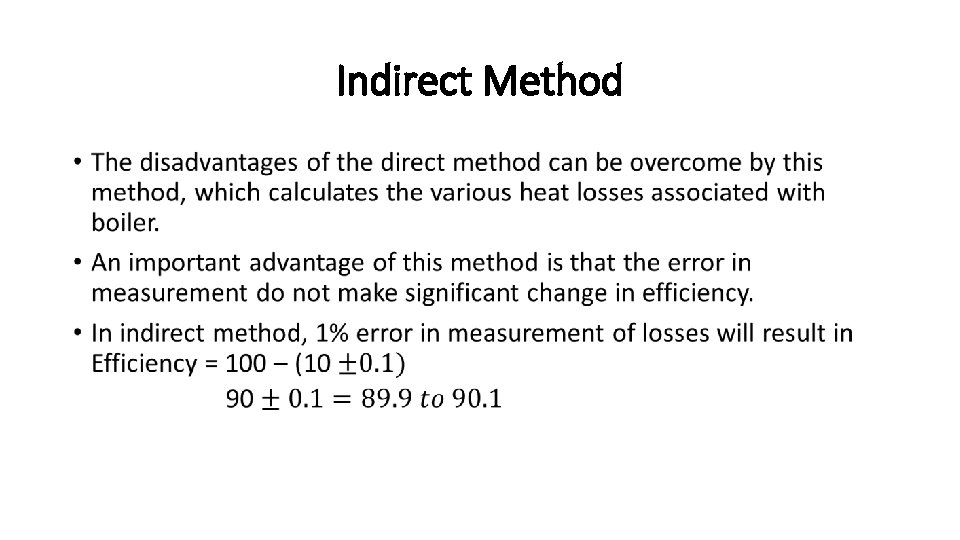
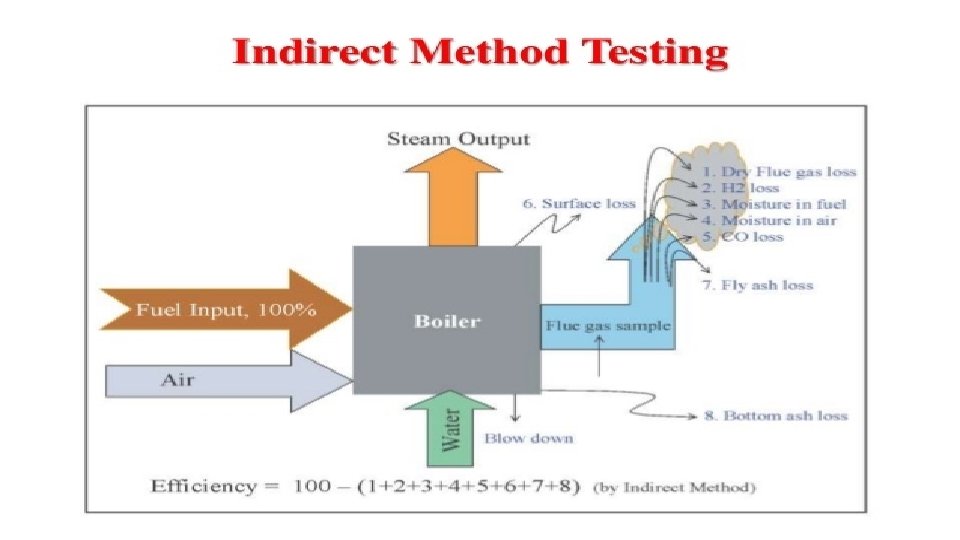
Boiler efficiency can be tested by following method: 1. Direct Method: Where the energy gain of working fluid (water and steam) is compared with energy content of boiler fuel. 2. Indirect Method: Where the efficiency is the difference between losses and energy input.
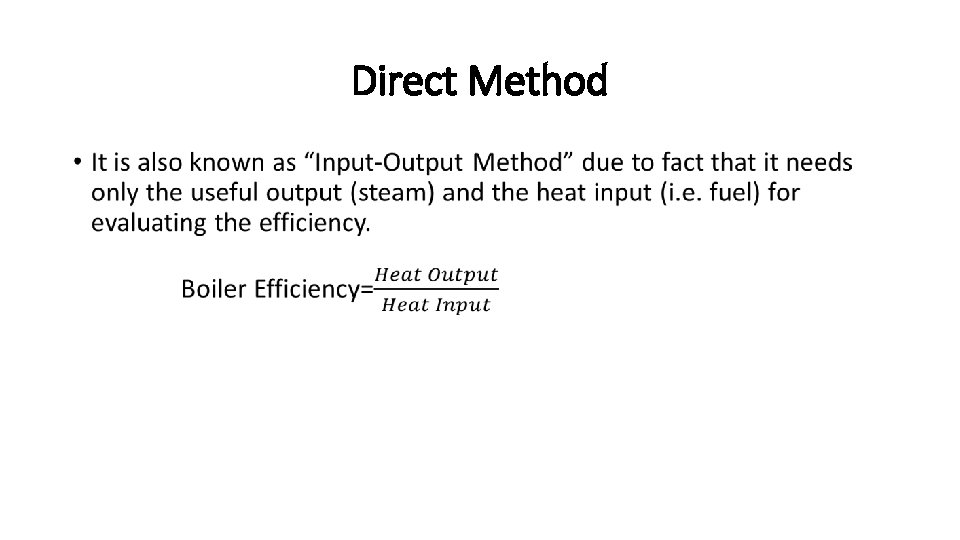
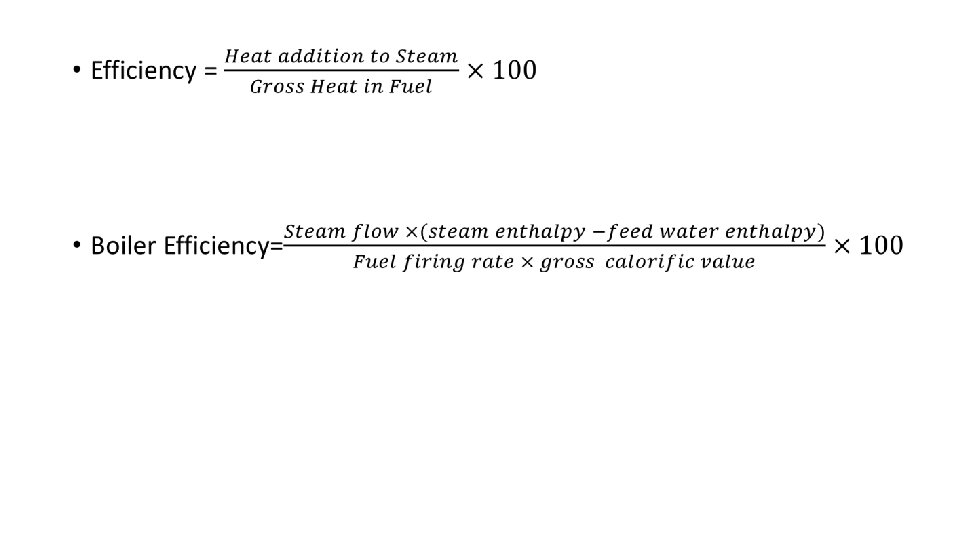
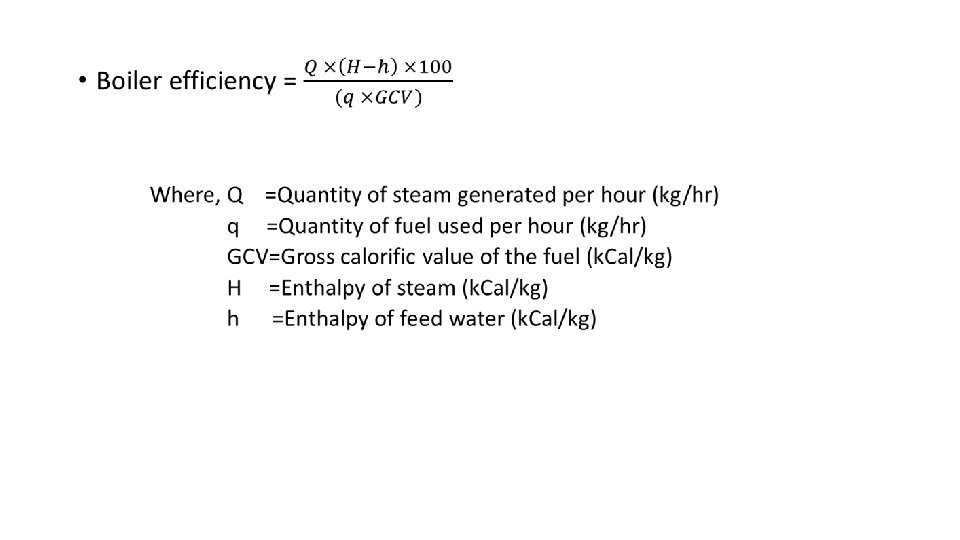
Direct Method •
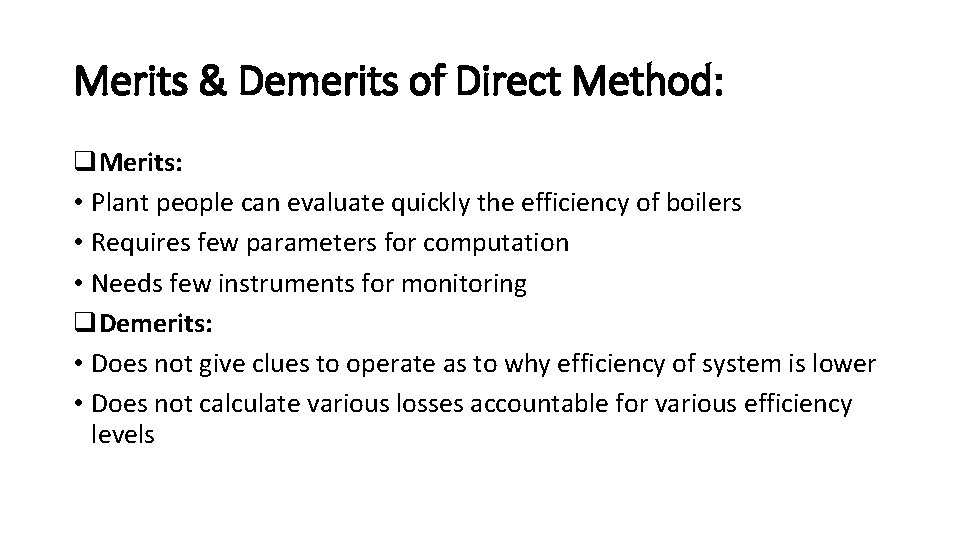
Merits & Demerits of Direct Method: q. Merits: • Plant people can evaluate quickly the efficiency of boilers • Requires few parameters for computation • Needs few instruments for monitoring q. Demerits: • Does not give clues to operate as to why efficiency of system is lower • Does not calculate various losses accountable for various efficiency levels
Indirect Method •
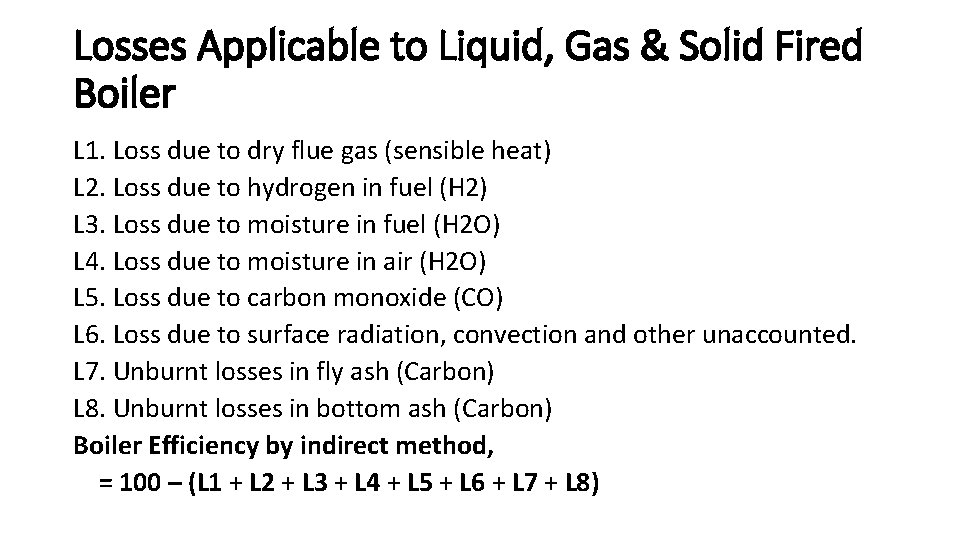
Losses Applicable to Liquid, Gas & Solid Fired Boiler L 1. Loss due to dry flue gas (sensible heat) L 2. Loss due to hydrogen in fuel (H 2) L 3. Loss due to moisture in fuel (H 2 O) L 4. Loss due to moisture in air (H 2 O) L 5. Loss due to carbon monoxide (CO) L 6. Loss due to surface radiation, convection and other unaccounted. L 7. Unburnt losses in fly ash (Carbon) L 8. Unburnt losses in bottom ash (Carbon) Boiler Efficiency by indirect method, = 100 – (L 1 + L 2 + L 3 + L 4 + L 5 + L 6 + L 7 + L 8)
Factors Affecting Boiler Performance • Periodic cleaning of boilers • Periodic soot blowing • Proper water treatment programme and blow down control • Draft control • Excess air control • Percentage loading of boiler • Steam Generation pressure and temperature • Boiler insulation • Quality of fuel
THANK YOU