
Salahaddin University College of Education Department of Physics

- Slides: 34
Salahaddin University College of Education Department of Physics Erbil Polytechnic University Mechanical and Energy Engineering Department Modified Thermal Gradient Energy Systems (Solution for Electricity Shortage in Hot and Cold Seasons) March. 2018 Prepared by: Dr. Hewa Ahmed Mustafa M. B. Ch. B. Practioner Hematopathologist – Ministry of Health – KRG www. babanyblog. wordpress. com
Contents q Abstract q. Electricity Consumption vs. Production q. Renewable Energy q. Thermal Gradient Energy Systems 1 - Thermoelectric Generator 2 - Ocean Thermal Energy Conversion (OTEC) 3 -Geothermal Energy Geothermal Power and Geothermal heat pump 4 -Other experimental methods q Some Suggestions q. References
Abstract Power Generation and Energy Conservation from thermal gradient energy is not a new subject, currently there are several methods including: v. Using the Seebeck effect in thermoelectric generators. v. Using Heat Engines with specialized Phase-change cycles like Organic Rankine Cycle, Kalina Cycle etc. v. Geothermal Energy from Geothermal Gradient. v. Experimental methods like Thermoelectrochemical Systems. We suggest modifications in the above mentioned methods such as: ØNew Configurations for Ground Heat Exchangers ØNew cycles for heat engines by using one or more of these methods in the regions with hot summers and cold winters (like our city Erbil) substantial energy saving can be achieved that contribute in improvement of national
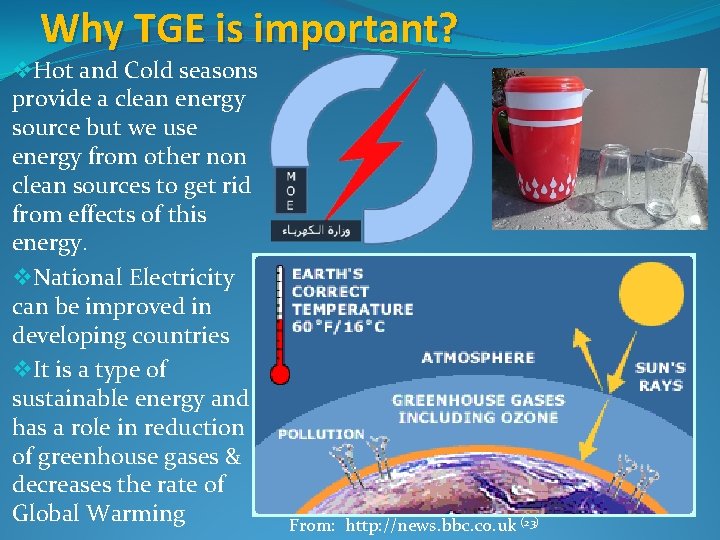
Why TGE is important? v. Hot and Cold seasons provide a clean energy source but we use energy from other non clean sources to get rid from effects of this energy. v. National Electricity can be improved in developing countries v. It is a type of sustainable energy and has a role in reduction of greenhouse gases & decreases the rate of Global Warming From: http: //news. bbc. co. uk (23)
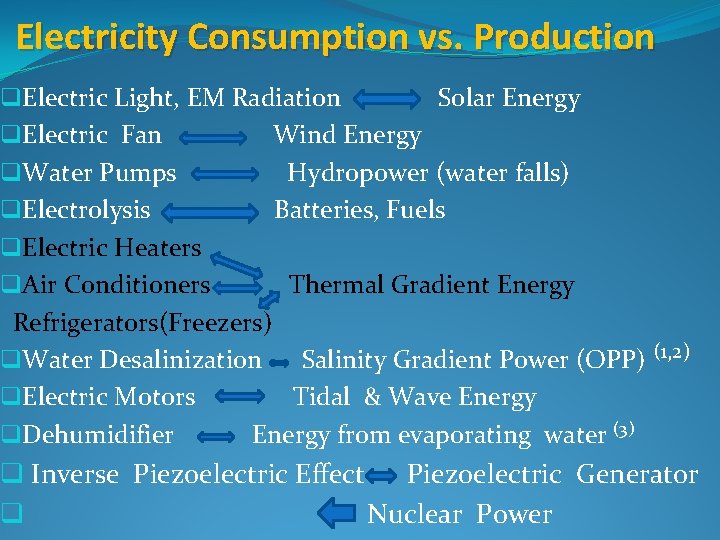
Electricity Consumption vs. Production q. Electric Light, EM Radiation Solar Energy q. Electric Fan Wind Energy q. Water Pumps Hydropower (water falls) q. Electrolysis Batteries, Fuels q. Electric Heaters q. Air Conditioners Thermal Gradient Energy Refrigerators(Freezers) q. Water Desalinization Salinity Gradient Power (OPP) (1, 2) q. Electric Motors Tidal & Wave Energy q. Dehumidifier Energy from evaporating water (3) q Inverse Piezoelectric Effect Piezoelectric Generator q Nuclear Power
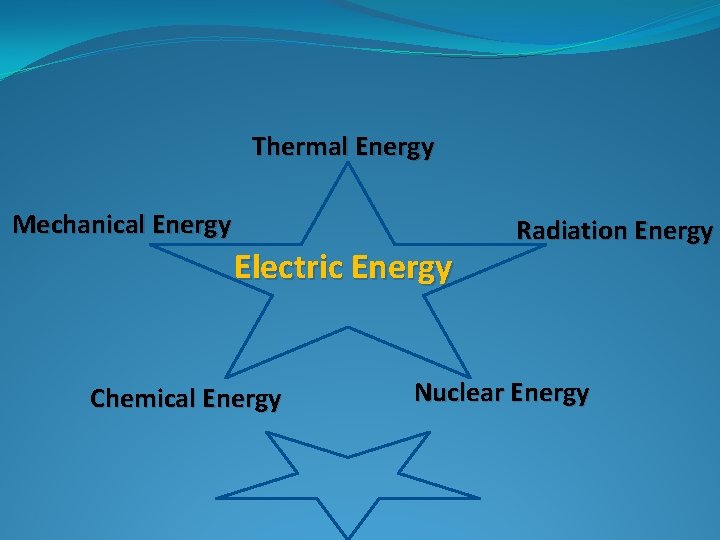
Thermal Energy Mechanical Energy Electric Energy Chemical Energy Radiation Energy Nuclear Energy
Renewable Energy Renewable energy is energy that is collected from renewable resources, which are naturally replenished on a human time scale, such as sunlight, wind, rain, tides, waves, and geothermal heat. Renewable energy often provides energy in four important areas: v. Electricity generation v. Air and water heating/cooling v. Transportation v. Rural energy services (4)
Thermal Gradient Energy Systems Temperature Gradient : rate of change of temperature with distance in a given direction. (5) Thermal Gradient Energy Systems any system which uses temperature difference as energy source. Examples: 1 - Thermoelectric Generator 2 - Ocean Thermal Energy Conversion (OTEC) 3 -Geothermal Energy 4 -Other experimental methods like Thermogalvanic Cells
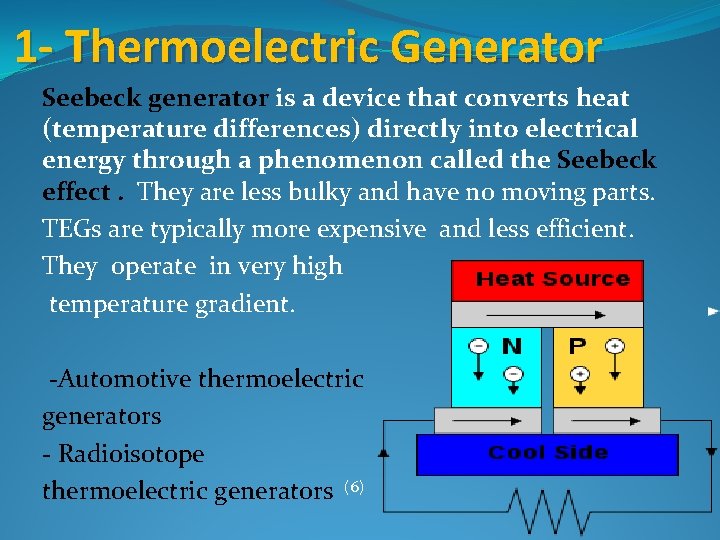
1 - Thermoelectric Generator Seebeck generator is a device that converts heat (temperature differences) directly into electrical energy through a phenomenon called the Seebeck effect. They are less bulky and have no moving parts. TEGs are typically more expensive and less efficient. They operate in very high temperature gradient. -Automotive thermoelectric generators - Radioisotope thermoelectric generators (6)
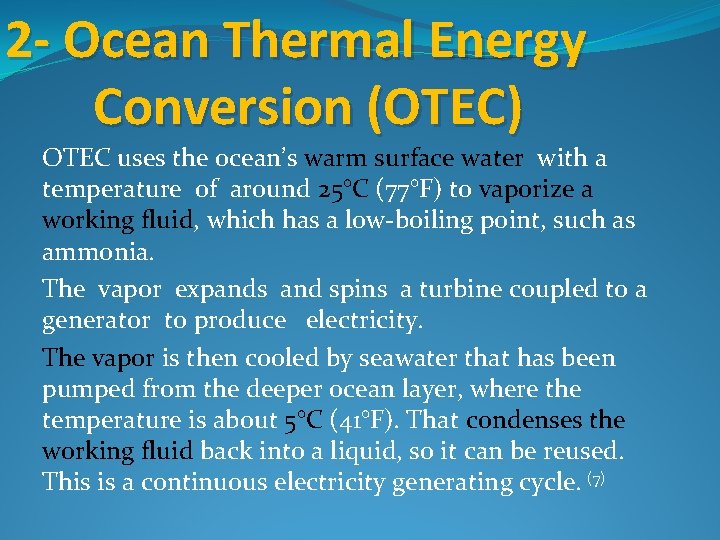
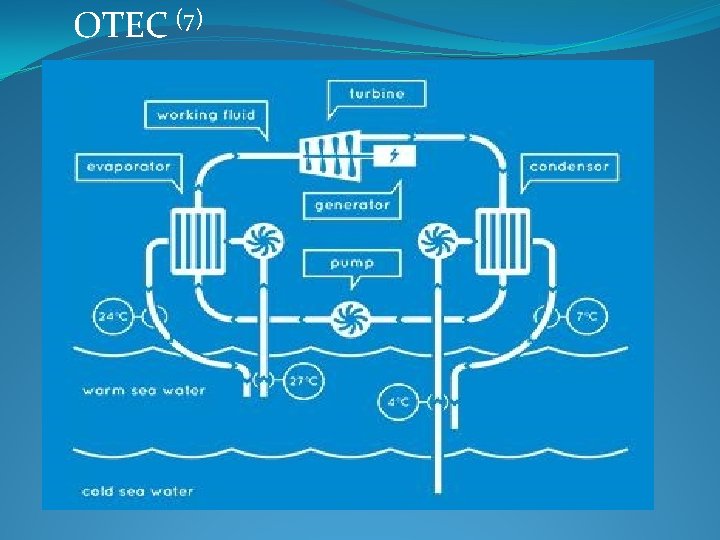
2 - Ocean Thermal Energy Conversion (OTEC) OTEC uses the ocean’s warm surface water with a temperature of around 25°C (77°F) to vaporize a working fluid, which has a low-boiling point, such as ammonia. The vapor expands and spins a turbine coupled to a generator to produce electricity. The vapor is then cooled by seawater that has been pumped from the deeper ocean layer, where the temperature is about 5°C (41°F). That condenses the working fluid back into a liquid, so it can be reused. This is a continuous electricity generating cycle. (7)
OTEC (7)
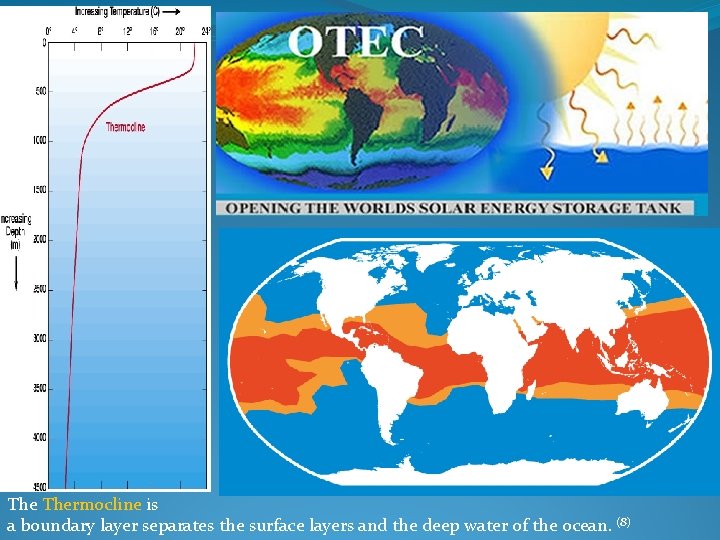
The Thermocline is a boundary layer separates the surface layers and the deep water of the ocean. (8)
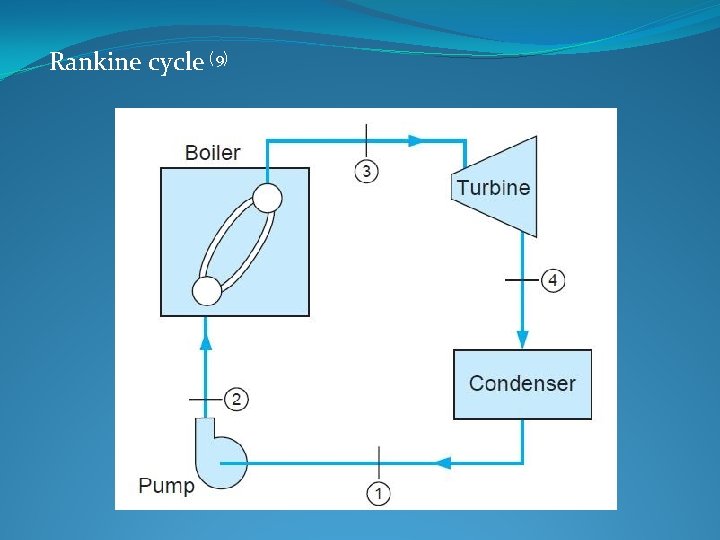
Rankine cycle (9)
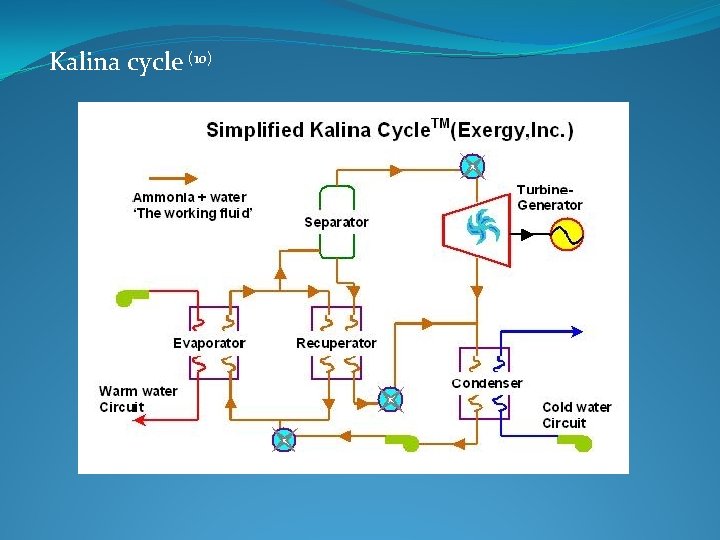
Kalina cycle (10)
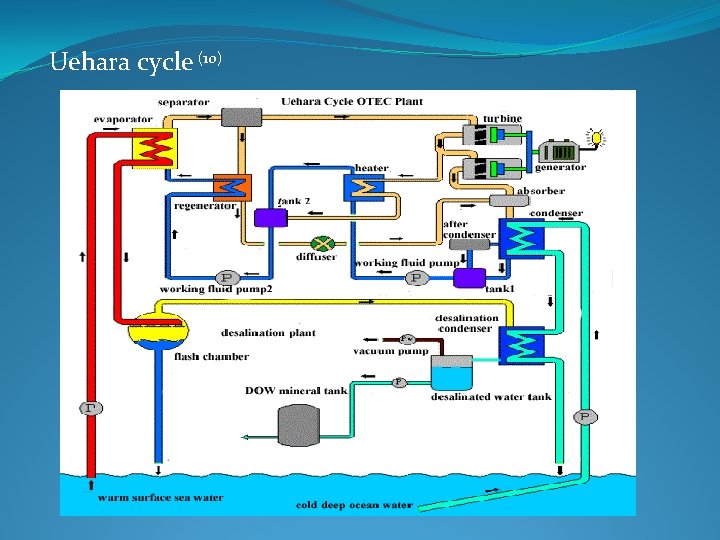
Uehara cycle (10)
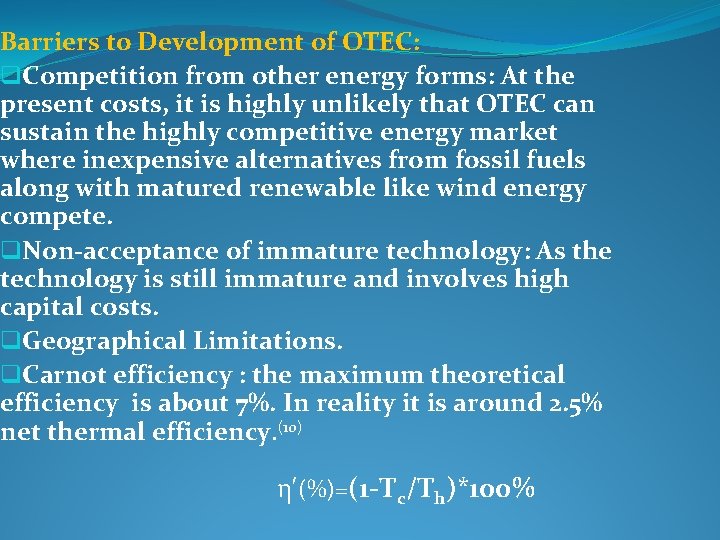
Barriers to Development of OTEC: q. Competition from other energy forms: At the present costs, it is highly unlikely that OTEC can sustain the highly competitive energy market where inexpensive alternatives from fossil fuels along with matured renewable like wind energy compete. q. Non-acceptance of immature technology: As the technology is still immature and involves high capital costs. q. Geographical Limitations. q. Carnot efficiency : the maximum theoretical efficiency is about 7%. In reality it is around 2. 5% net thermal efficiency. (10) η′(%)=(1 -Tc/Th)*100%
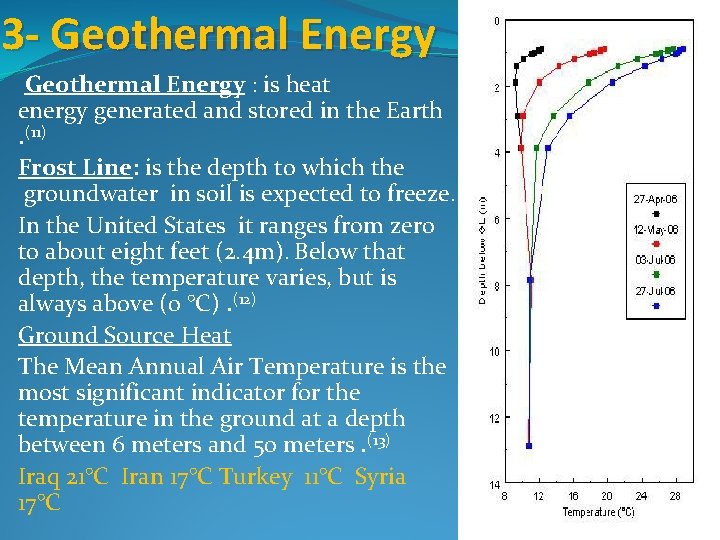
3 - Geothermal Energy : is heat energy generated and stored in the Earth . (11) Frost Line: is the depth to which the groundwater in soil is expected to freeze. In the United States it ranges from zero to about eight feet (2. 4 m). Below that depth, the temperature varies, but is always above (0 °C). (12) Ground Source Heat The Mean Annual Air Temperature is the most significant indicator for the temperature in the ground at a depth between 6 meters and 50 meters. (13) Iraq 21°C Iran 17°C Turkey 11°C Syria 17°C
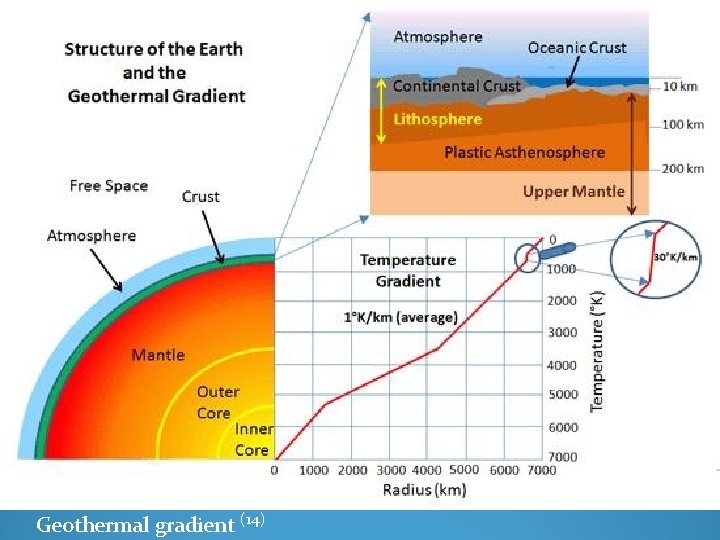
Geothermal gradient (14)
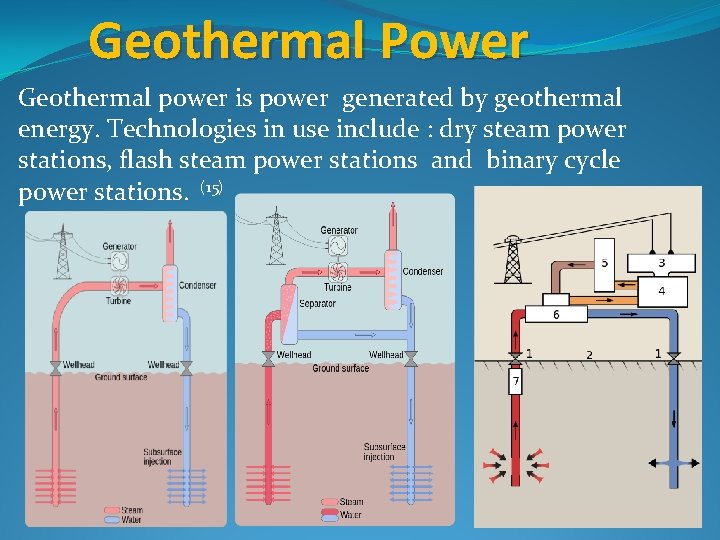
Geothermal Power Geothermal power is power generated by geothermal energy. Technologies in use include : dry steam power stations, flash steam power stations and binary cycle power stations. (15)
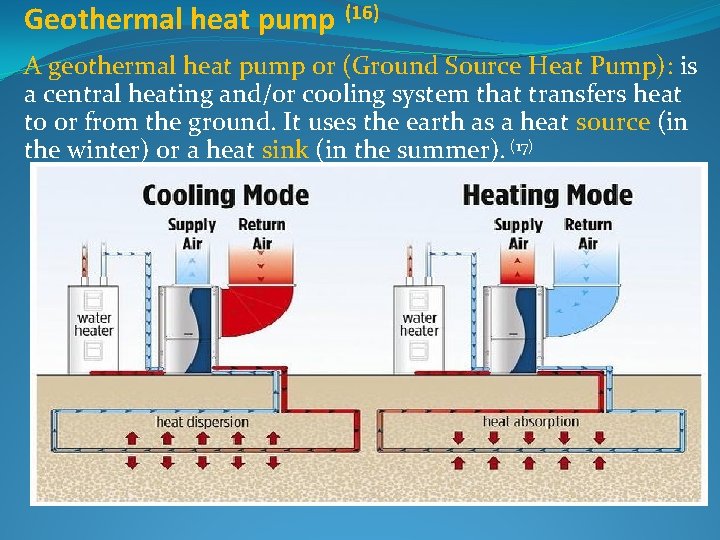
Geothermal heat pump (16) A geothermal heat pump or (Ground Source Heat Pump): is a central heating and/or cooling system that transfers heat to or from the ground. It uses the earth as a heat source (in the winter) or a heat sink (in the summer). (17)
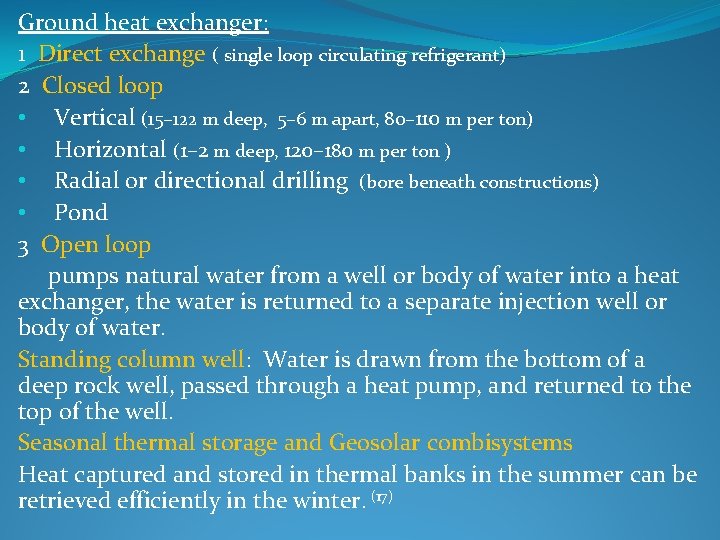
Ground heat exchanger: 1 Direct exchange ( single loop circulating refrigerant) 2 Closed loop • Vertical (15– 122 m deep, 5– 6 m apart, 80– 110 m per ton) • Horizontal (1– 2 m deep, 120– 180 m per ton ) • Radial or directional drilling (bore beneath constructions) • Pond 3 Open loop pumps natural water from a well or body of water into a heat exchanger, the water is returned to a separate injection well or body of water. Standing column well: Water is drawn from the bottom of a deep rock well, passed through a heat pump, and returned to the top of the well. Seasonal thermal storage and Geosolar combisystems Heat captured and stored in thermal banks in the summer can be retrieved efficiently in the winter. (17)
Environmental Impact The US Environmental Protection Agency (EPA) has called ground source heat pumps the most energy-efficient, environmentally clean, and cost-effective space conditioning systems available. (17) They use 25% to 50% less electricity to run compared to conventional heating and cooling systems. CO 2 emissions from these systems can be up to 40% less than other heating or cooling systems. Even better, if the electricity was generated by a renewable energy source. (16) Zero Energy Buildings (ZEB) Net ZEB : is a building with zero net energy consumption, meaning the total amount of energy used by the building on an annual basis is roughly equal to the amount of renewable energy created on the site, or elsewhere. (20)
Ground-coupled heat exchanger (earth tubes or earth-air heat exchangers): is an underground heat exchanger that can capture heat from and/or dissipate heat to the ground. There are no compressors, chemicals or burners and only blowers are required to move the air. Tubes are (100 - 600 mm) diameter, (30 - 150 m) long, buried 1. 5 - 3 m underground ( 10 - 23 °C ). There are three configurations: • Closed loop system • Open system • Combination system Thermal Labyrinths they are usually formed from a larger volume rectilinear space, which are in turn divided by numerous internal walls to form a labyrinthine air path. cast concrete and concrete block are used (18)
Other Experimental Methods 1 - Pyroelectricity: is the property of certain crystals which are naturally electrically polarized and as a result contain large electric fields. The most important example is the gallium nitride semiconductor. Alternatively, pyroelectricity is interpreted as the ability of certain materials to generate a temporary voltage when they are heated or cooled. A pyroelectric can be repeatedly heated and cooled to generate usable electrical power. Possible advantages of pyroelectric generators include: • potentially lower operating temperatures • less bulky equipment • fewer moving parts. (19)
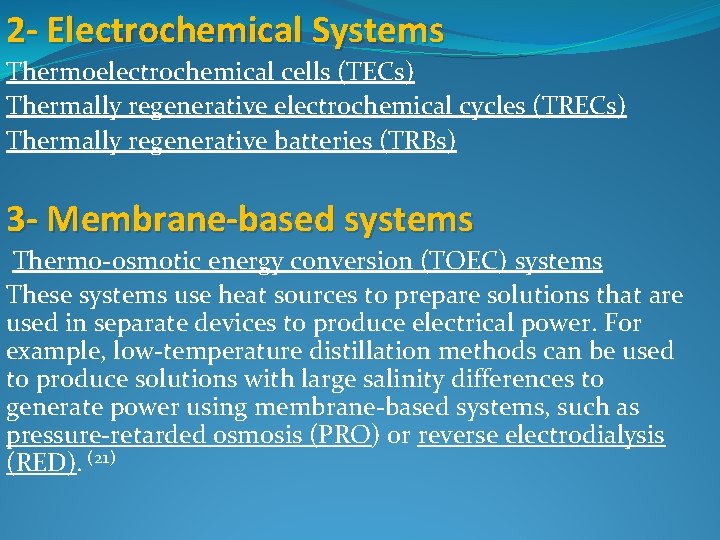
2 - Electrochemical Systems Thermoelectrochemical cells (TECs) Thermally regenerative electrochemical cycles (TRECs) Thermally regenerative batteries (TRBs) 3 - Membrane-based systems Thermo-osmotic energy conversion (TOEC) systems These systems use heat sources to prepare solutions that are used in separate devices to produce electrical power. For example, low-temperature distillation methods can be used to produce solutions with large salinity differences to generate power using membrane-based systems, such as pressure-retarded osmosis (PRO) or reverse electrodialysis (RED). (21)
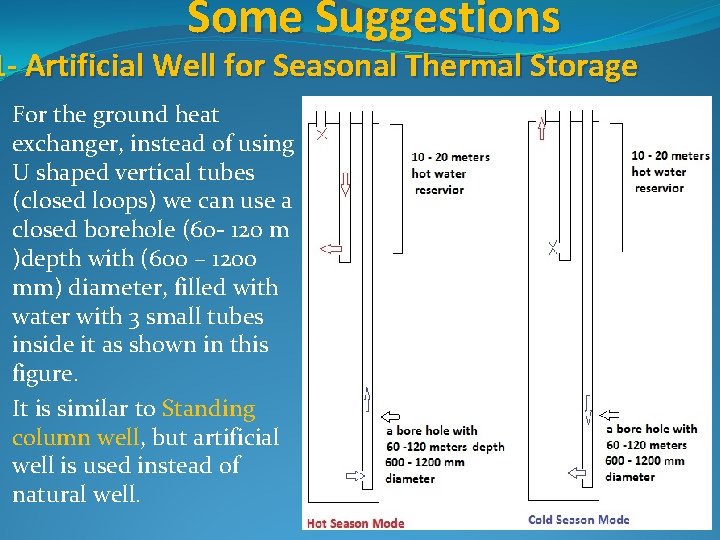
Some Suggestions 1 - Artificial Well for Seasonal Thermal Storage For the ground heat exchanger, instead of using U shaped vertical tubes (closed loops) we can use a closed borehole (60 - 120 m )depth with (600 – 1200 mm) diameter, filled with water with 3 small tubes inside it as shown in this figure. It is similar to Standing column well, but artificial well is used instead of natural well.
The upper 10 – 20 meters (or upper half) of the borehole will act as hot water reservoir because the density of water is inversely proportional to its temperature. While the lower part of the borehole will act as cold water reservoir. The seasonal thermal storage can be achieved by these two reservoirs. The thermal storage can be enhanced by: Ø increasing the number of boreholes which may be enough to make a net zero energy city in some countries Ø Combine it with solar thermal panels in cold countries Ø Combine it with water evaporative coolers in hot countries
2 - Energy Generation from Ground Heat Exchanger & Seasonal Thermal storages by using OTEC methods or other experimental methods we can generate power from Ground Heat Exchangers and seasonal thermal storages in addition of their direct use for air conditioning. This will provide some advantages over solar power like: • It will work in both day and night (more efficient) • It is efficiency can be increased by water evaporative cooling • Power Storage (batteries) can be minimized • Instead of Net Zero Energy Building (NZEB) there will be Total Zero Energy Building (TZEB) If Solar power = Daytime energy Then TGE generators = Daytime energy + Night Energy + Water Energy
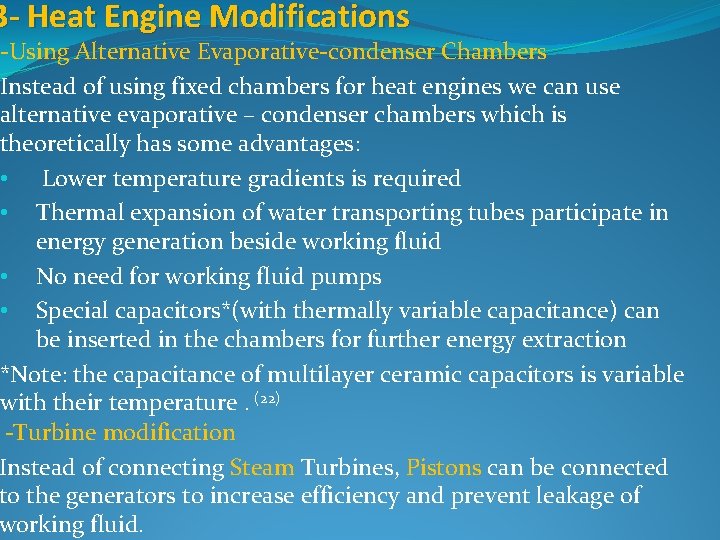
3 - Heat Engine Modifications -Using Alternative Evaporative-condenser Chambers Instead of using fixed chambers for heat engines we can use alternative evaporative – condenser chambers which is theoretically has some advantages: • Lower temperature gradients is required • Thermal expansion of water transporting tubes participate in energy generation beside working fluid • No need for working fluid pumps • Special capacitors*(with thermally variable capacitance) can be inserted in the chambers for further energy extraction *Note: the capacitance of multilayer ceramic capacitors is variable with their temperature. (22) -Turbine modification Instead of connecting Steam Turbines, Pistons can be connected to the generators to increase efficiency and prevent leakage of working fluid.
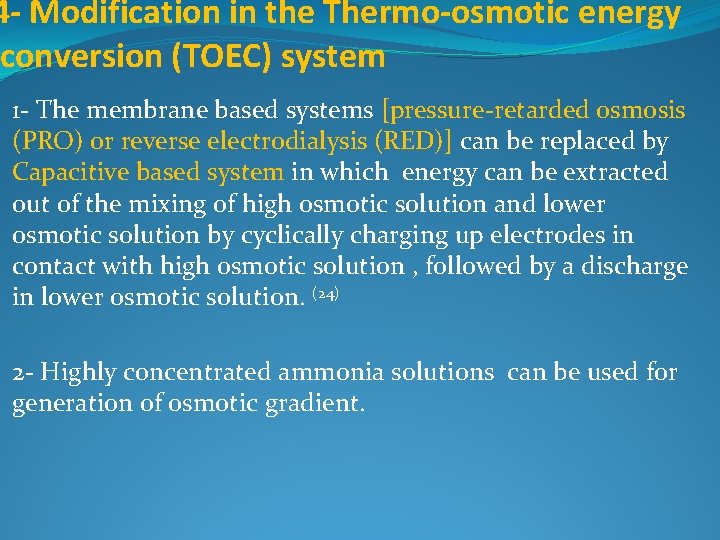
4 - Modification in the Thermo-osmotic energy conversion (TOEC) system 1 - The membrane based systems [pressure-retarded osmosis (PRO) or reverse electrodialysis (RED)] can be replaced by Capacitive based system in which energy can be extracted out of the mixing of high osmotic solution and lower osmotic solution by cyclically charging up electrodes in contact with high osmotic solution , followed by a discharge in lower osmotic solution. (24) 2 - Highly concentrated ammonia solutions can be used for generation of osmotic gradient.
1. 2. 3. 4. 5. 6. 7. 8. 1 References www. power-technology. com/projects/statkraftosmotic/ www. reuk. co. uk/wordpress/general/osmotic-powerplant-opened/ https: //www. newscientist. com/article/2148623 -energyfrom-evaporating-water-could-rival-wind-and-solar/ https: //en. wikipedia. org/wiki/Renewable_energy www. dictionary. com/browse/temperature-gradient https: //en. wikipedia. org/wiki/Thermoelectric_generat or http: //www. otecnews. org/what-is-otec/ http: //www. windows 2 universe. org/earth/Water/temp. html
2 References 9. https: //me-mechanicalengineering. com/rankinecycle/ 10. www. esru. strath. ac. uk/Eand. E/Web_sites/0203/ocean_thermal_energy/group%20 project/expor ts/otecex. html 11. https: //en. wikipedia. org/wiki/Geothermal_energy 12. https: //en. wikipedia. org/wiki/Frost_line 13. http: //www. icax. co. uk/Mean_Annual_Air_Temper ature. html 14. https: //sosteneslekule. blogspot. hk/2015/09/geothe rmal-energy. html 15. https: //en. wikipedia. org/wiki/Geothermal_power
References 3 16. http: //energyeducation. ca/encyclopedia/Ground_source _heat_pump 17. https: //en. wikipedia. org/wiki/Geothermal_heat_pump 18. https: //en. wikipedia. org/wiki/Groundcoupled_heat_exchanger 19. https: //en. wikipedia. org/wiki/Pyroelectricity 20. https: //en. wikipedia. org/wiki/Zero-energy_building 21. http: //pubs. rsc. org/en/content/articlelanding/2017/sc/c 7 ee 03026 f#!div. Abstract 22. http: //www. murata. com/products/emiconfun/capacitor /2012/10/15/en-20121015 -p 1 23. http: //news. bbc. co. uk/cbbcnews/hi/find_out/guides/wo rld/global_warming/newsid_1575000/1575461. stm 24. http: //old. scienzaegoverno. org/n/067/01_%20 ARTICOL O%20 PHISICAL%20 REVIEW. pdf
Thanks for attendance You can find updates about this project and other projects in my personal website: www. babanyblog. wordpress. com