Emerging Therapies and Testing for METex 14 in

- Slides: 46
Emerging Therapies and Testing for METex 14 in Advanced NSCLC This educational activity is supported by an independent grant from the Healthcare business of Merck KGa. A, Darmstadt, Germany.
About These Slides § Please feel free to use, update, and share some or all of these slides in your noncommercial presentations to colleagues or patients § When using our slides, please retain the source attribution: Slide credit: clinicaloptions. com § These slides may not be published, posted online, or used in commercial presentations without permission. Please contact permissions@clinicaloptions. com for details
Faculty Luis Paz-Ares, MD, Ph. D Chair Medical Oncology Department University Hospital 12 Octubre Madrid, Spain D. Ross Camidge, MD, Ph. D Professor of Medicine/Oncology University of Colorado Cancer Center Aurora, Colorado Karen L. Reckamp, MD, MS Professor of Medicine Director, Division of Medical Oncology Department of Medicine Cedars Sinai Los Angeles, California
Faculty Disclosures The faculty reported the following financial relationships or relationships to products or devices they or their spouse/life partner have with commercial interests related to the content of this CME/CE activity: D. Ross Camidge, MD, Ph. D, has disclosed that he has received consulting fees from 14 ner, Abb. Vie, Achilles, Apollomics, Archer, Beyond. Spring, Biothera, Blueprint, Bristol-Myers Squibb, CBT Pharmaceuticals, Daiichi Sankyo, EMD Serono, G 1 Therapeutics, Helssin, Lilly, Medtronic, Ribon, and Takeda and funds for research support paid to his institution from Abb. Vie, Astra. Zeneca, Bristol-Myers Squibb, Hansoh, Lycera, Med. Immune, Merck, Pfizer, Phosplatin, Roche/Genentech, Seattle Genetics, Symphogen, and Takeda. Luis Paz-Ares, MD, Ph. D, has disclosed that he has received honoraria from Astra. Zeneca, Bristol-Myers Squibb, EMD Serrono, Lilly, MSD, Novartis, Pfizer, Roche, and Takeda and funds for research support from Astra. Zeneca, Bristol-Myers Squibb, and Pfizer. Karen L. Reckamp, MD, MS, has disclosed that she has received consulting fees from Astra. Zeneca, Boehringer Ingelheim, Calithera, Genentech, Guardant, Precision Health, and Tesaro and funds for research support paid to her prior institution from Abb. Vie, Acea, Adaptimmune, Boehringer Ingelheim, Bristol-Myers Squibb, Genentech, Glaxo. Smith. Kline, Guardant, Janssen, Loxo Oncology, Molecular Partners, Seattle Genetics, Spectrum, Takeda, Xcovery, and Zeno.
MET Alterations: Mastering the Features of and Testing for a New Target in NSCLC
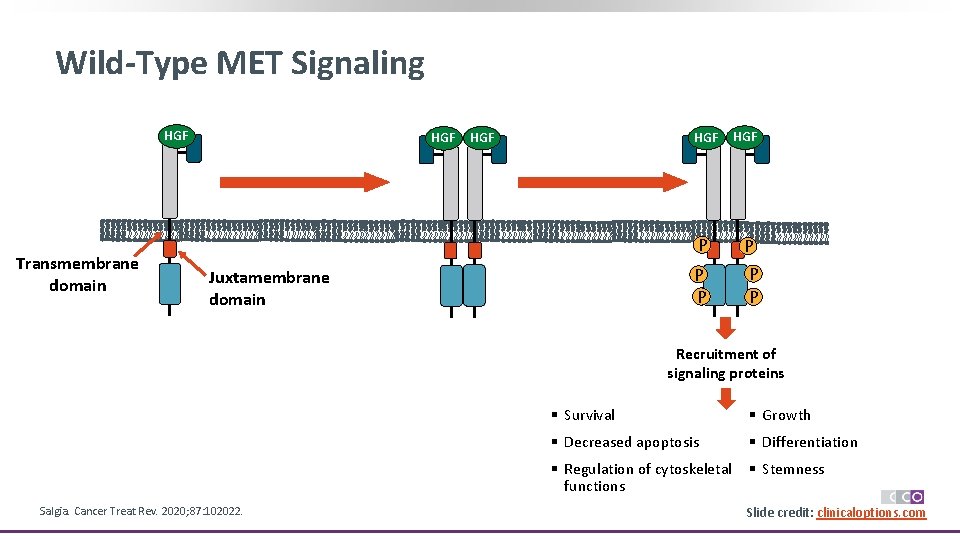
Wild-Type MET Signaling HGF Transmembrane domain HGF HGF P P P Juxtamembrane domain HGF P P P Recruitment of signaling proteins Salgia. Cancer Treat Rev. 2020; 87: 102022. § Survival § Growth § Decreased apoptosis § Differentiation § Regulation of cytoskeletal functions § Stemness Slide credit: clinicaloptions. com
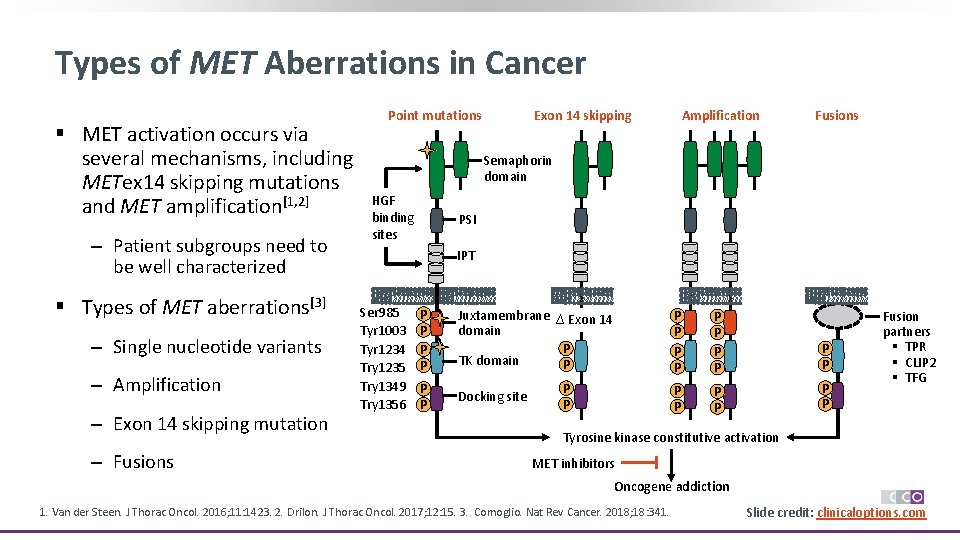
Types of MET Aberrations in Cancer § MET activation occurs via several mechanisms, including METex 14 skipping mutations and MET amplification[1, 2] ‒ Patient subgroups need to be well characterized § Types of MET aberrations[3] ‒ Single nucleotide variants ‒ Amplification ‒ Exon 14 skipping mutation ‒ Fusions Point mutations Exon 14 skipping Amplification Fusions Semaphorin domain HGF binding sites PSI IPT Ser 985 Tyr 1003 Tyr 1234 Try 1235 Try 1349 Try 1356 P P Juxtamembrane ∆ Exon 14 domain P TK domain P P P Docking site P P P P P Fusion partners § TPR § CLIP 2 § TFG Tyrosine kinase constitutive activation MET inhibitors Oncogene addiction 1. Van der Steen. J Thorac Oncol. 2016; 11: 1423. 2. Drilon. J Thorac Oncol. 2017; 12: 15. 3. Comoglio. Nat Rev Cancer. 2018; 18: 341. Slide credit: clinicaloptions. com
MET Exon 14–Splicing Mutations Juxta-membrane domain drives negative regulation of MET HGF Exon 14 splicing error HGF P Loss of juxta-membrane domain HGF Increased stability and kinase activity HGF HGF CBL Exon 14 Ubiquitination P P P Loss of ubiquitination Degradation Salgia. Cancer Treat Rev. 2020; 87: 102022. Slide credit: clinicaloptions. com
METex 14: Testing for a New Target in NSCLC
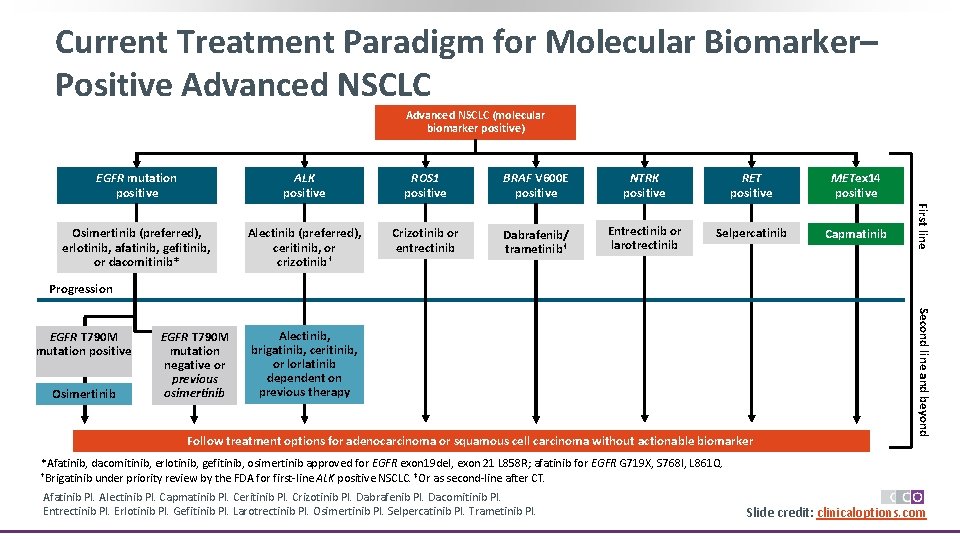
Current Treatment Paradigm for Molecular Biomarker– Positive Advanced NSCLC (molecular biomarker positive) ALK positive ROS 1 positive BRAF V 600 E positive NTRK positive RET positive METex 14 positive Osimertinib (preferred), erlotinib, afatinib, gefitinib, or dacomitinib* Alectinib (preferred), ceritinib, or crizotinib† Crizotinib or entrectinib Dabrafenib/ trametinib‡ Entrectinib or larotrectinib Selpercatinib Capmatinib First line EGFR mutation positive Progression Osimertinib EGFR T 790 M mutation negative or previous osimertinib Alectinib, brigatinib, ceritinib, or lorlatinib dependent on previous therapy Follow treatment options for adenocarcinoma or squamous cell carcinoma without actionable biomarker Second line and beyond EGFR T 790 M mutation positive *Afatinib, dacomitinib, erlotinib, gefitinib, osimertinib approved for EGFR exon 19 del, exon 21 L 858 R; afatinib for EGFR G 719 X, S 768 I, L 861 Q. †Brigatinib under priority review by the FDA for first-line ALK positive NSCLC. ‡Or as second-line after CT. Afatinib PI. Alectinib PI. Capmatinib PI. Ceritinib PI. Crizotinib PI. Dabrafenib PI. Dacomitinib PI. Entrectinib PI. Erlotinib PI. Gefitinib PI. Larotrectinib PI. Osimertinib PI. Selpercatinib PI. Trametinib PI. Slide credit: clinicaloptions. com
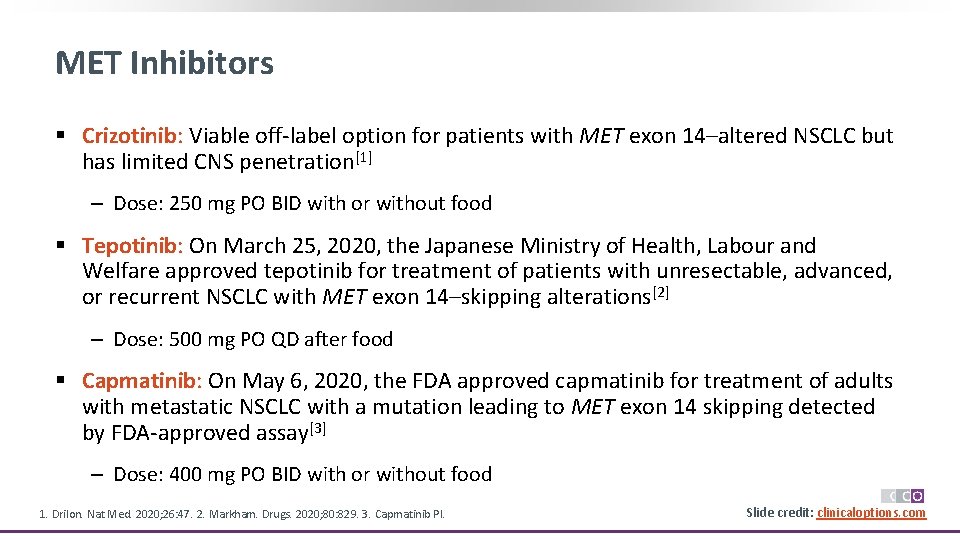
MET Inhibitors § Crizotinib: Viable off-label option for patients with MET exon 14–altered NSCLC but has limited CNS penetration[1] ‒ Dose: 250 mg PO BID with or without food § Tepotinib: On March 25, 2020, the Japanese Ministry of Health, Labour and Welfare approved tepotinib for treatment of patients with unresectable, advanced, or recurrent NSCLC with MET exon 14–skipping alterations[2] ‒ Dose: 500 mg PO QD after food § Capmatinib: On May 6, 2020, the FDA approved capmatinib for treatment of adults with metastatic NSCLC with a mutation leading to MET exon 14 skipping detected by FDA-approved assay[3] ‒ Dose: 400 mg PO BID with or without food 1. Drilon. Nat Med. 2020; 26: 47. 2. Markham. Drugs. 2020; 80: 829. 3. Capmatinib PI. Slide credit: clinicaloptions. com
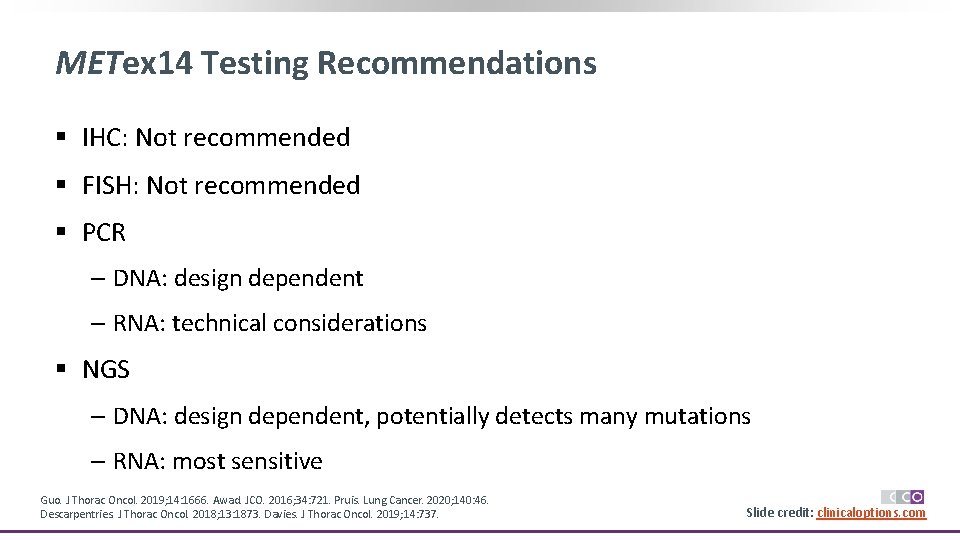
METex 14 Testing Recommendations § IHC: Not recommended § FISH: Not recommended § PCR ‒ DNA: design dependent ‒ RNA: technical considerations § NGS ‒ DNA: design dependent, potentially detects many mutations ‒ RNA: most sensitive Guo. J Thorac Oncol. 2019; 14: 1666. Awad. JCO. 2016; 34: 721. Pruis. Lung Cancer. 2020; 140: 46. Descarpentries. J Thorac Oncol. 2018; 13: 1873. Davies. J Thorac Oncol. 2019; 14: 737. Slide credit: clinicaloptions. com
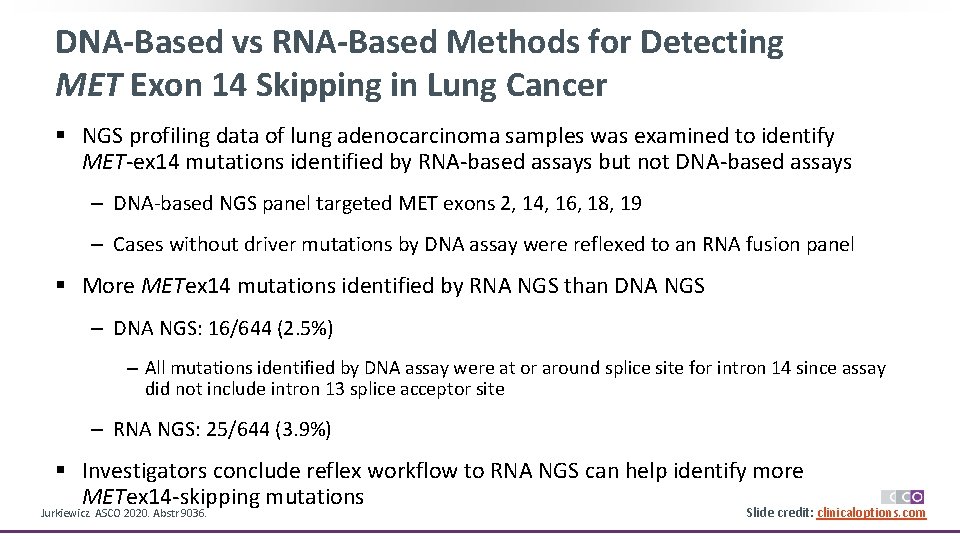
DNA-Based vs RNA-Based Methods for Detecting MET Exon 14 Skipping in Lung Cancer § NGS profiling data of lung adenocarcinoma samples was examined to identify MET-ex 14 mutations identified by RNA-based assays but not DNA-based assays ‒ DNA-based NGS panel targeted MET exons 2, 14, 16, 18, 19 ‒ Cases without driver mutations by DNA assay were reflexed to an RNA fusion panel § More METex 14 mutations identified by RNA NGS than DNA NGS ‒ DNA NGS: 16/644 (2. 5%) ‒ All mutations identified by DNA assay were at or around splice site for intron 14 since assay did not include intron 13 splice acceptor site ‒ RNA NGS: 25/644 (3. 9%) § Investigators conclude reflex workflow to RNA NGS can help identify more METex 14 -skipping mutations Jurkiewicz. ASCO 2020. Abstr 9036. Slide credit: clinicaloptions. com
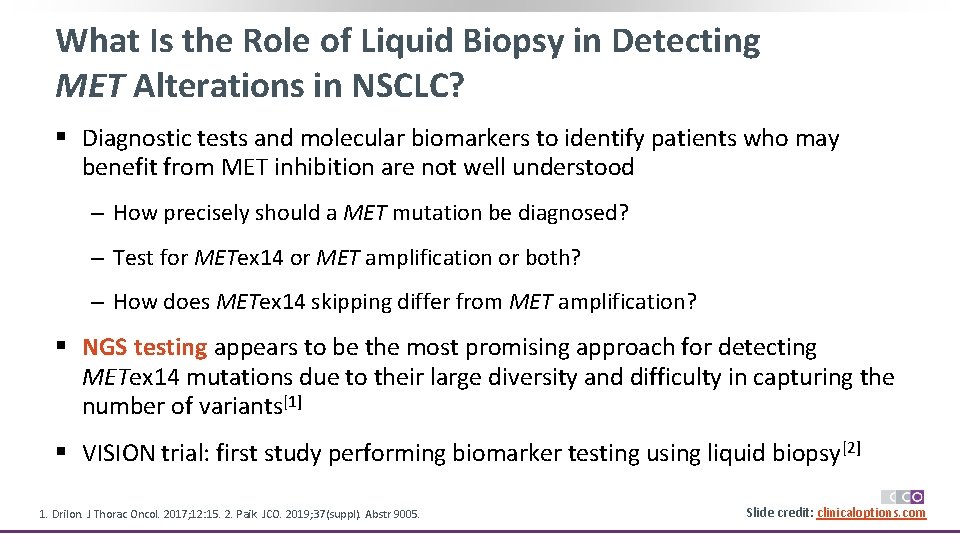
What Is the Role of Liquid Biopsy in Detecting MET Alterations in NSCLC? § Diagnostic tests and molecular biomarkers to identify patients who may benefit from MET inhibition are not well understood ‒ How precisely should a MET mutation be diagnosed? ‒ Test for METex 14 or MET amplification or both? ‒ How does METex 14 skipping differ from MET amplification? § NGS testing appears to be the most promising approach for detecting METex 14 mutations due to their large diversity and difficulty in capturing the number of variants[1] § VISION trial: first study performing biomarker testing using liquid biopsy [2] 1. Drilon. J Thorac Oncol. 2017; 12: 15. 2. Paik. JCO. 2019; 37(suppl). Abstr 9005. Slide credit: clinicaloptions. com
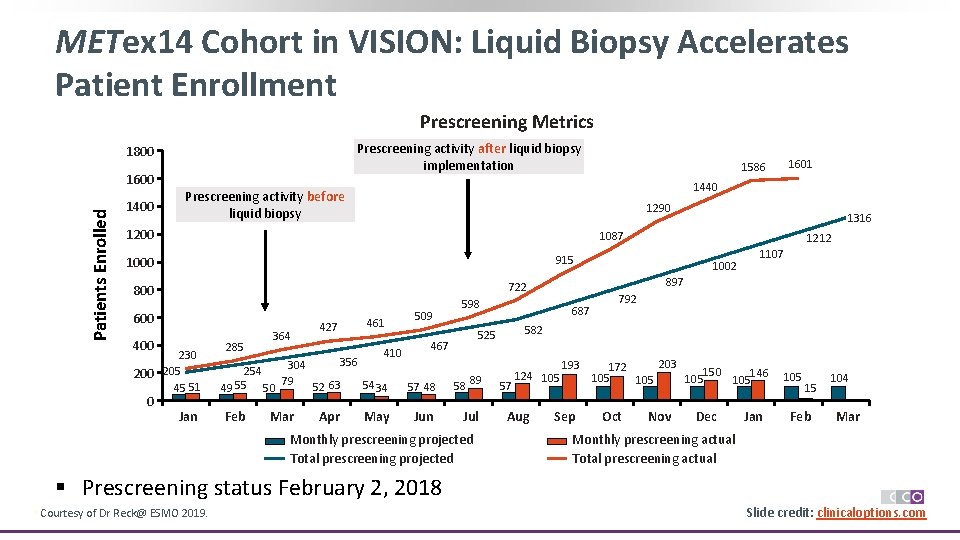
METex 14 Cohort in VISION: Liquid Biopsy Accelerates Patient Enrollment Prescreening Metrics Prescreening activity after liquid biopsy implementation 1800 Patients Enrolled 1600 1440 Prescreening activity before liquid biopsy 1290 1200 1316 1087 1212 915 1000 600 400 230 205 45 51 Jan 285 364 427 461 410 356 304 254 79 54 34 52 63 49 55 50 Feb Mar Apr May 509 598 57 48 Jun 687 58 89 Jul Monthly prescreening projected Total prescreening projected 1107 792 582 525 467 1002 897 722 800 0 1601 1586 57 124 105 Aug 193 Sep 203 172 150 146 105 105 Oct Nov Dec Jan 105 15 Feb 104 Mar Monthly prescreening actual Total prescreening actual § Prescreening status February 2, 2018 §Courtesy of Dr Reck@ ESMO 2019. Slide credit: clinicaloptions. com
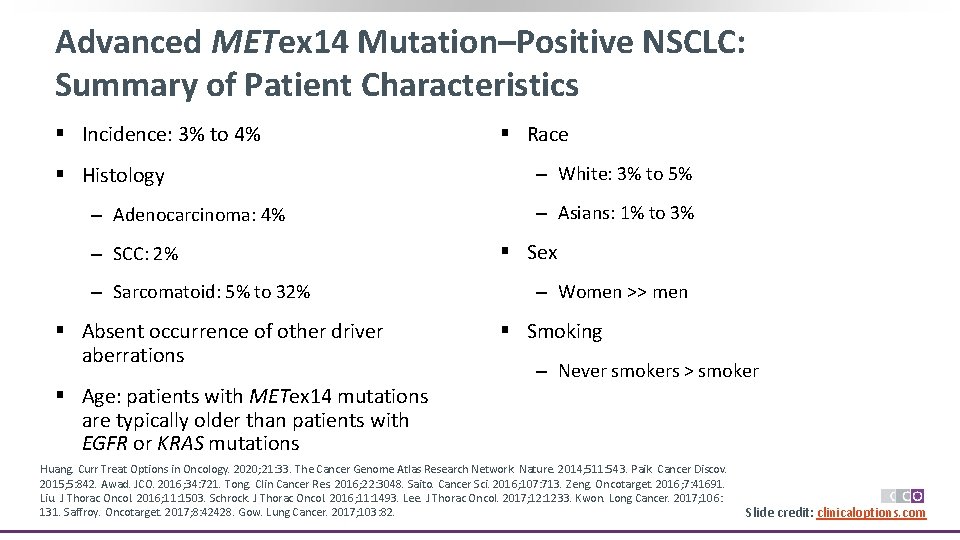
Advanced METex 14 Mutation–Positive NSCLC: Summary of Patient Characteristics § Incidence: 3% to 4% § Histology ‒ Adenocarcinoma: 4% ‒ SCC: 2% ‒ Sarcomatoid: 5% to 32% § Absent occurrence of other driver aberrations § Age: patients with METex 14 mutations are typically older than patients with EGFR or KRAS mutations § Race ‒ White: 3% to 5% ‒ Asians: 1% to 3% § Sex ‒ Women >> men § Smoking ‒ Never smokers > smoker Huang. Curr Treat Options in Oncology. 2020; 21: 33. The Cancer Genome Atlas Research Network. Nature. 2014; 511: 543. Paik. Cancer Discov. 2015; 5: 842. Awad. JCO. 2016; 34: 721. Tong. Clin Cancer Res. 2016; 22: 3048. Saito. Cancer Sci. 2016; 107: 713. Zeng. Oncotarget. 2016; 7: 41691. Liu. J Thorac Oncol. 2016; 11: 1503. Schrock. J Thorac Oncol. 2016; 11: 1493. Lee. J Thorac Oncol. 2017; 12: 1233. Kwon. Long Cancer. 2017; 106: 131. Saffroy. Oncotarget. 2017; 8: 42428. Gow. Lung Cancer. 2017; 103: 82. Slide credit: clinicaloptions. com
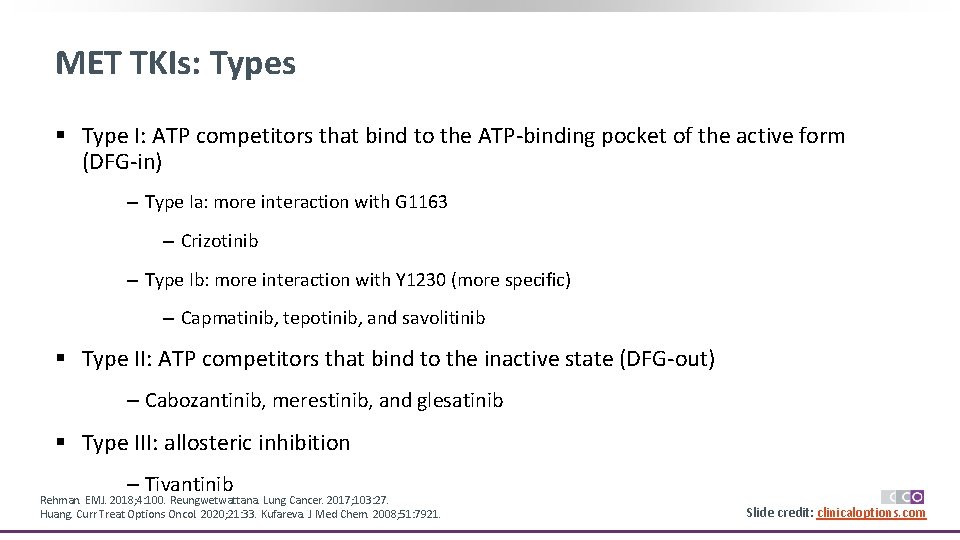
MET TKIs: Types § Type I: ATP competitors that bind to the ATP-binding pocket of the active form (DFG-in) ‒ Type Ia: more interaction with G 1163 ‒ Crizotinib ‒ Type Ib: more interaction with Y 1230 (more specific) ‒ Capmatinib, tepotinib, and savolitinib § Type II: ATP competitors that bind to the inactive state (DFG-out) ‒ Cabozantinib, merestinib, and glesatinib § Type III: allosteric inhibition ‒ Tivantinib Rehman. EMJ. 2018; 4: 100. Reungwetwattana. Lung Cancer. 2017; 103: 27. Huang. Curr Treat Options Oncol. 2020; 21: 33. Kufareva. J Med Chem. 2008; 51: 7921. Slide credit: clinicaloptions. com
Therapeutic Options for Targeting METex 14: Evidence on MET TKIs
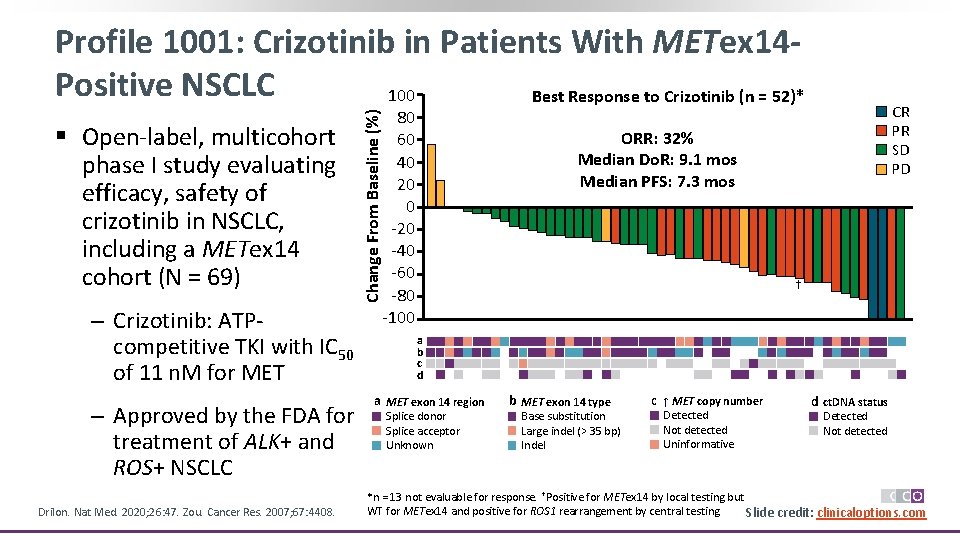
Profile 1001: Crizotinib in Patients With METex 14 Positive NSCLC 100 Best Response to Crizotinib (n = 52)* ‒ Crizotinib: ATPcompetitive TKI with IC 50 of 11 n. M for MET ‒ Approved by the FDA for treatment of ALK+ and ROS+ NSCLC Drilon. Nat Med. 2020; 26: 47. Zou. Cancer Res. 2007; 67: 4408. Change From Baseline (%) § Open-label, multicohort phase I study evaluating efficacy, safety of crizotinib in NSCLC, including a METex 14 cohort (N = 69) 80 60 40 20 0 -20 -40 -60 -80 -100 CR PR SD PD ORR: 32% Median Do. R: 9. 1 mos Median PFS: 7. 3 mos † a b c d a MET exon 14 region Splice donor Splice acceptor Unknown b MET exon 14 type Base substitution Large indel (> 35 bp) Indel c ↑ MET copy number Detected Not detected Uninformative d ct. DNA status Detected Not detected *n = 13 not evaluable for response. †Positive for METex 14 by local testing but WT for METex 14 and positive for ROS 1 rearrangement by central testing. Slide credit: clinicaloptions. com
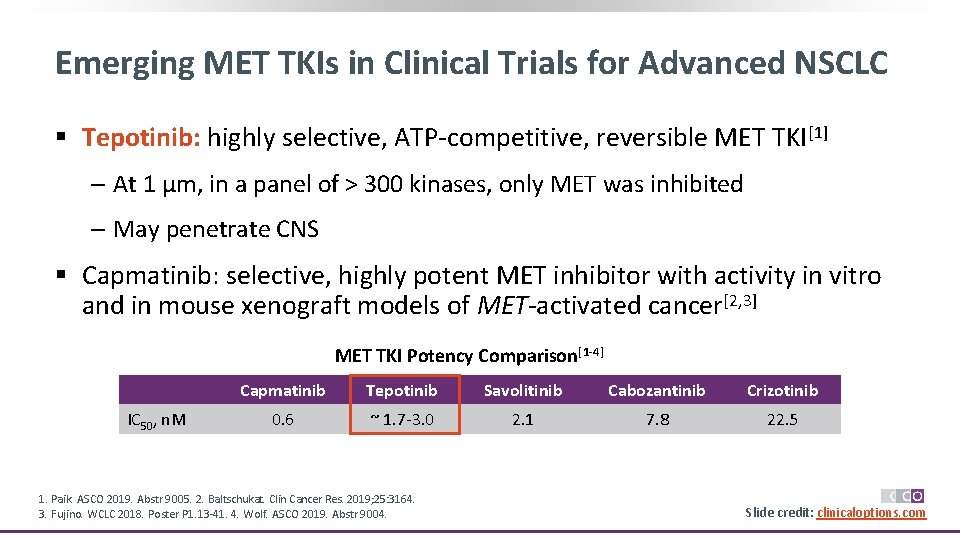
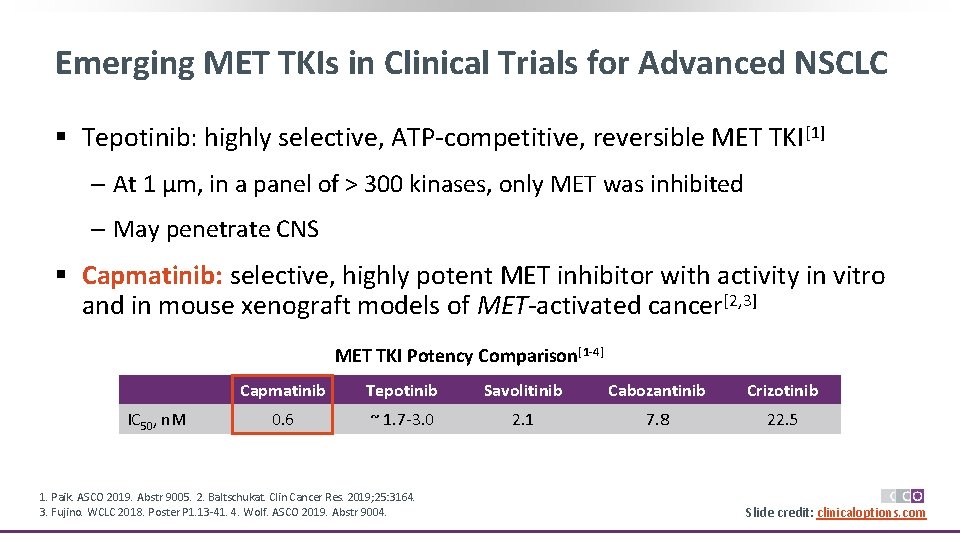
Emerging MET TKIs in Clinical Trials for Advanced NSCLC § Tepotinib: highly selective, ATP-competitive, reversible MET TKI[1] ‒ At 1 μm, in a panel of > 300 kinases, only MET was inhibited ‒ May penetrate CNS § Capmatinib: selective, highly potent MET inhibitor with activity in vitro and in mouse xenograft models of MET-activated cancer[2, 3] MET TKI Potency Comparison[1 -4] IC 50, n. M Capmatinib Tepotinib Savolitinib Cabozantinib Crizotinib 0. 6 ~ 1. 7 -3. 0 2. 1 7. 8 22. 5 1. Paik. ASCO 2019. Abstr 9005. 2. Baltschukat. Clin Cancer Res. 2019; 25: 3164. 3. Fujino. WCLC 2018. Poster P 1. 13 -41. 4. Wolf. ASCO 2019. Abstr 9004. Slide credit: clinicaloptions. com
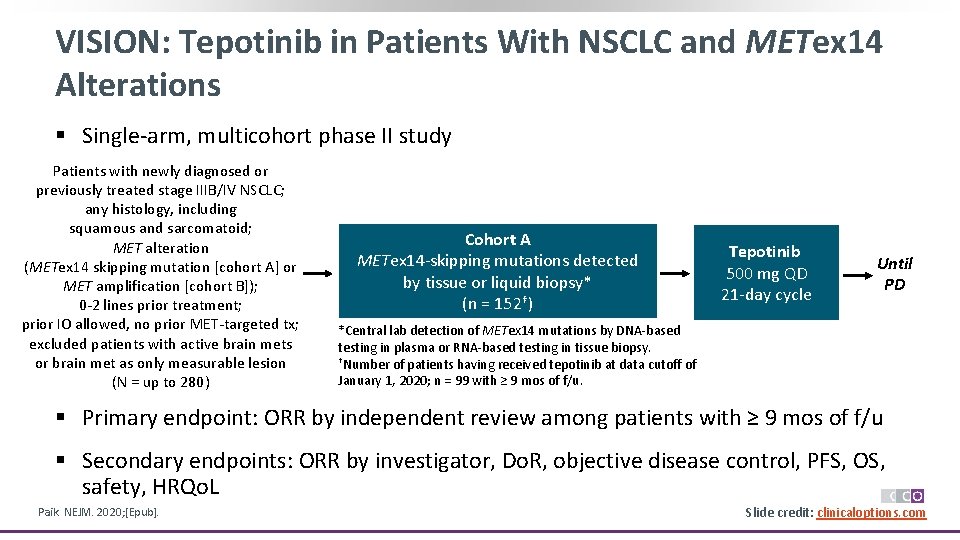
VISION: Tepotinib in Patients With NSCLC and METex 14 Alterations § Single-arm, multicohort phase II study Patients with newly diagnosed or previously treated stage IIIB/IV NSCLC; any histology, including squamous and sarcomatoid; MET alteration (METex 14 skipping mutation [cohort A] or MET amplification [cohort B]); 0 -2 lines prior treatment; prior IO allowed, no prior MET-targeted tx; excluded patients with active brain mets or brain met as only measurable lesion (N = up to 280) Cohort A METex 14 -skipping mutations detected by tissue or liquid biopsy* (n = 152†) Tepotinib 500 mg QD 21 -day cycle Until PD *Central lab detection of METex 14 mutations by DNA-based testing in plasma or RNA-based testing in tissue biopsy. †Number of patients having received tepotinib at data cutoff of January 1, 2020; n = 99 with ≥ 9 mos of f/u. § Primary endpoint: ORR by independent review among patients with ≥ 9 mos of f/u § Secondary endpoints: ORR by investigator, Do. R, objective disease control, PFS, OS, safety, HRQo. L Paik. NEJM. 2020; [Epub]. Slide credit: clinicaloptions. com
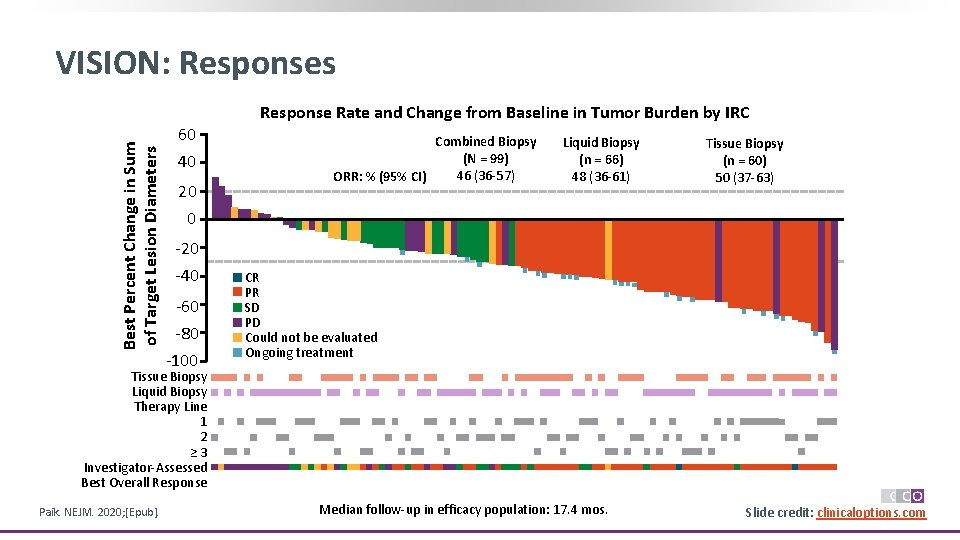
Best Percent Change in Sum of Target Lesion Diameters VISION: Responses 60 40 20 Response Rate and Change from Baseline in Tumor Burden by IRC Combined Biopsy (N = 99) 46 (36 -57) ORR: % (95% CI) Liquid Biopsy (n = 66) 48 (36 -61) Tissue Biopsy (n = 60) 50 (37 -63) 0 -20 -40 -60 -80 -100 CR PR SD PD Could not be evaluated Ongoing treatment Tissue Biopsy Liquid Biopsy Therapy Line 1 2 ≥ 3 Investigator-Assessed Best Overall Response Paik. NEJM. 2020; [Epub]. Median follow-up in efficacy population: 17. 4 mos. Slide credit: clinicaloptions. com
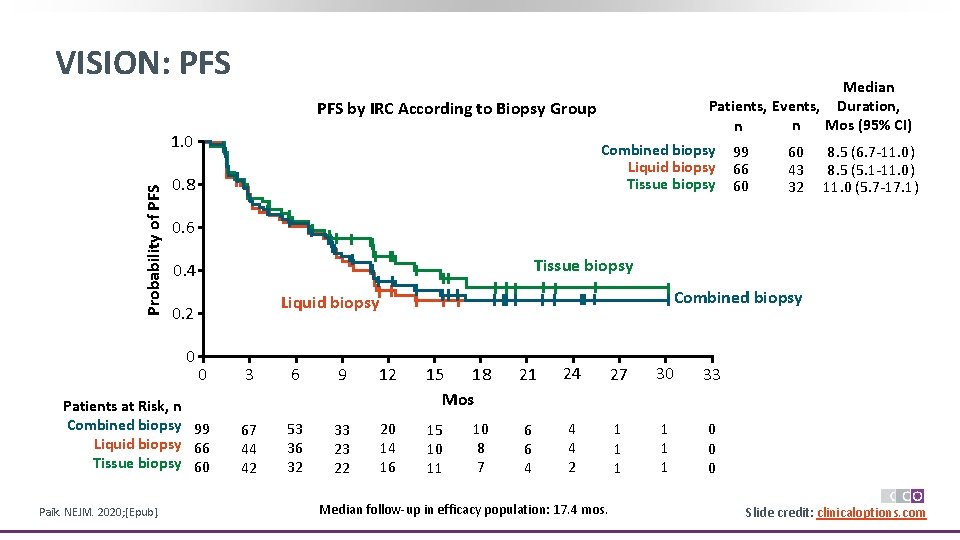
VISION: PFS Median Patients, Events, Duration, Mos (95% CI) n n PFS by IRC According to Biopsy Group Probability of PFS 1. 0 Combined biopsy Liquid biopsy Tissue biopsy 0. 8 60 43 32 8. 5 (6. 7 -11. 0) 8. 5 (5. 1 -11. 0) 11. 0 (5. 7 -17. 1) 0. 6 Tissue biopsy 0. 4 Combined biopsy Liquid biopsy 0. 2 0 0 3 6 9 12 Patients at Risk, n Combined biopsy 99 Liquid biopsy 66 Tissue biopsy 60 18 15 Mos 67 44 42 53 36 32 33 23 22 20 14 16 15 10 11 Paik. NEJM. 2020; [Epub]. 99 66 60 10 8 7 21 24 27 30 33 6 6 4 4 4 2 1 1 1 0 0 0 Median follow-up in efficacy population: 17. 4 mos. Slide credit: clinicaloptions. com
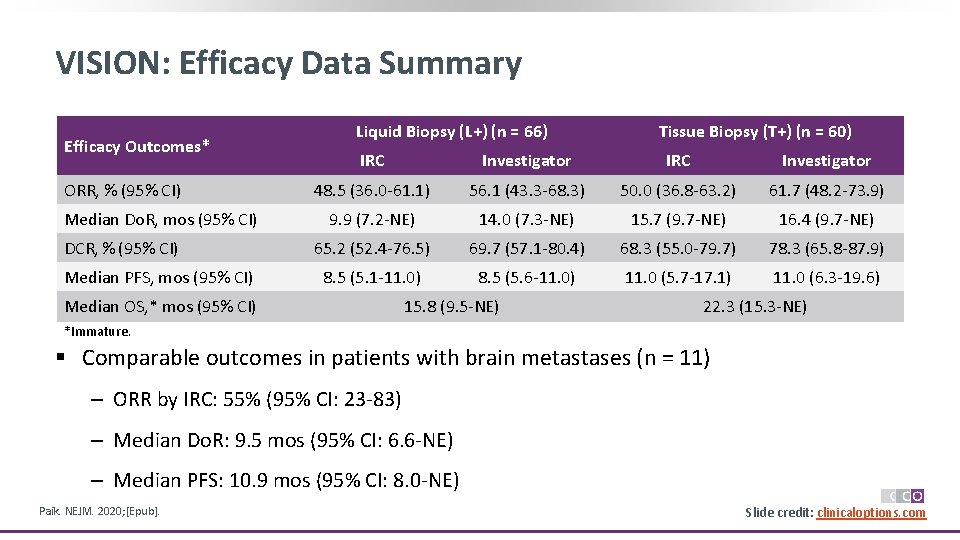
VISION: Efficacy Data Summary Efficacy Outcomes* ORR, % (95% CI) Median Do. R, mos (95% CI) DCR, % (95% CI) Median PFS, mos (95% CI) Liquid Biopsy (L+) (n = 66) Tissue Biopsy (T+) (n = 60) IRC Investigator 48. 5 (36. 0 -61. 1) 56. 1 (43. 3 -68. 3) 50. 0 (36. 8 -63. 2) 61. 7 (48. 2 -73. 9) 9. 9 (7. 2 -NE) 14. 0 (7. 3 -NE) 15. 7 (9. 7 -NE) 16. 4 (9. 7 -NE) 65. 2 (52. 4 -76. 5) 69. 7 (57. 1 -80. 4) 68. 3 (55. 0 -79. 7) 78. 3 (65. 8 -87. 9) 8. 5 (5. 1 -11. 0) 8. 5 (5. 6 -11. 0) 11. 0 (5. 7 -17. 1) 11. 0 (6. 3 -19. 6) Median OS, * mos (95% CI) 15. 8 (9. 5 -NE) 22. 3 (15. 3 -NE) *Immature. § Comparable outcomes in patients with brain metastases (n = 11) ‒ ORR by IRC: 55% (95% CI: 23 -83) ‒ Median Do. R: 9. 5 mos (95% CI: 6. 6 -NE) ‒ Median PFS: 10. 9 mos (95% CI: 8. 0 -NE) Paik. NEJM. 2020; [Epub]. Slide credit: clinicaloptions. com
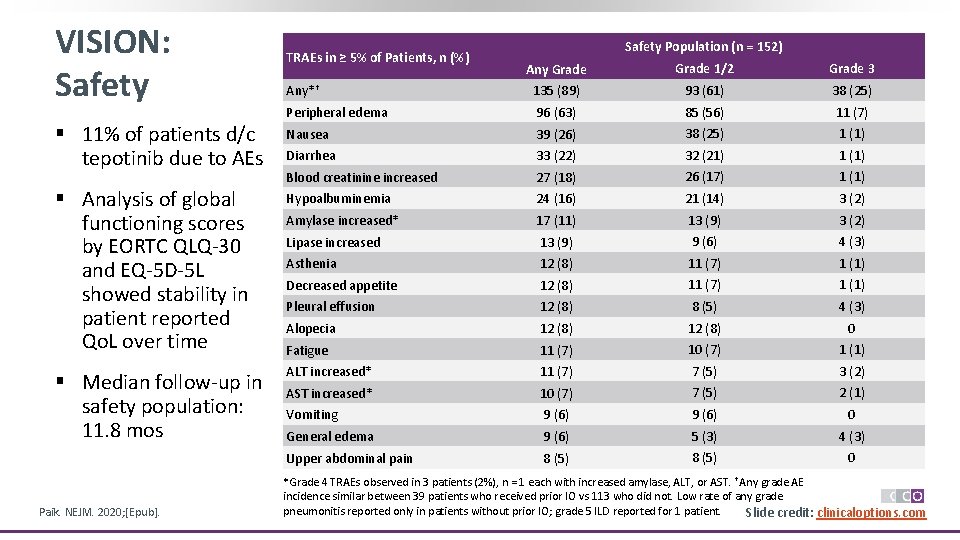
VISION: Safety § 11% of patients d/c tepotinib due to AEs § Analysis of global functioning scores by EORTC QLQ-30 and EQ-5 D-5 L showed stability in patient reported Qo. L over time § Median follow-up in safety population: 11. 8 mos Paik. NEJM. 2020; [Epub]. TRAEs in ≥ 5% of Patients, n (%) Safety Population (n = 152) Any Grade 1/2 Grade 3 Any*† 135 (89) 93 (61) 38 (25) Peripheral edema 96 (63) 85 (56) 11 (7) Nausea 39 (26) 38 (25) 1 (1) Diarrhea 33 (22) 32 (21) 1 (1) Blood creatinine increased 27 (18) 26 (17) 1 (1) Hypoalbuminemia 24 (16) 21 (14) 3 (2) Amylase increased* 17 (11) 13 (9) 3 (2) Lipase increased 13 (9) 9 (6) 4 (3) Asthenia 12 (8) 11 (7) 1 (1) Decreased appetite 12 (8) 11 (7) 1 (1) Pleural effusion 12 (8) 8 (5) 4 (3) Alopecia 12 (8) 0 Fatigue 11 (7) 10 (7) 1 (1) ALT increased* 11 (7) 7 (5) 3 (2) AST increased* 10 (7) 7 (5) 2 (1) Vomiting 9 (6) 0 General edema 9 (6) 5 (3) 4 (3) Upper abdominal pain 8 (5) 0 *Grade 4 TRAEs observed in 3 patients (2%), n = 1 each with increased amylase, ALT, or AST. †Any grade AE incidence similar between 39 patients who received prior IO vs 113 who did not. Low rate of any grade pneumonitis reported only in patients without prior IO; grade 5 ILD reported for 1 patient. Slide credit: clinicaloptions. com
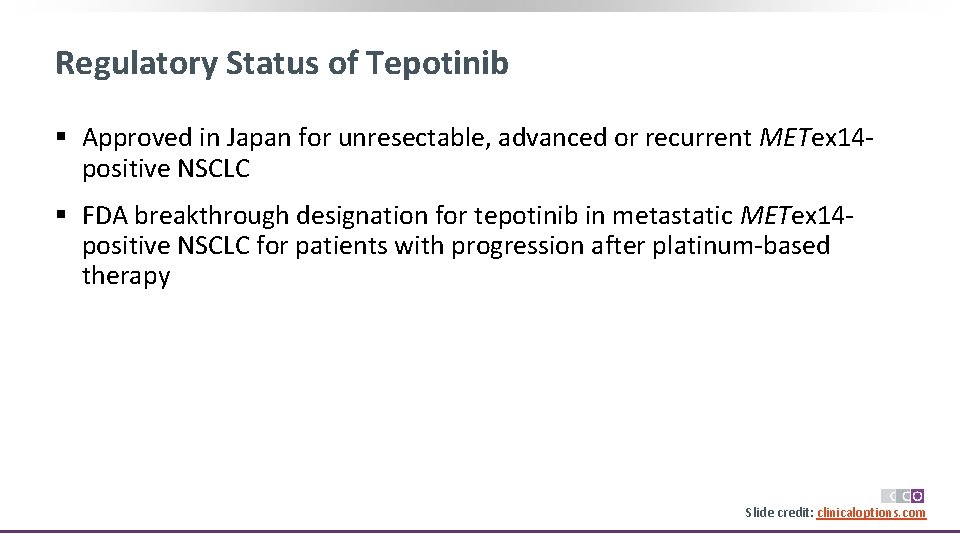
Regulatory Status of Tepotinib § Approved in Japan for unresectable, advanced or recurrent METex 14 positive NSCLC § FDA breakthrough designation for tepotinib in metastatic METex 14 positive NSCLC for patients with progression after platinum-based therapy Slide credit: clinicaloptions. com
Emerging MET TKIs in Clinical Trials for Advanced NSCLC § Tepotinib: highly selective, ATP-competitive, reversible MET TKI [1] ‒ At 1 μm, in a panel of > 300 kinases, only MET was inhibited ‒ May penetrate CNS § Capmatinib: selective, highly potent MET inhibitor with activity in vitro and in mouse xenograft models of MET-activated cancer[2, 3] MET TKI Potency Comparison[1 -4] IC 50, n. M Capmatinib Tepotinib Savolitinib Cabozantinib Crizotinib 0. 6 ~ 1. 7 -3. 0 2. 1 7. 8 22. 5 1. Paik. ASCO 2019. Abstr 9005. 2. Baltschukat. Clin Cancer Res. 2019; 25: 3164. 3. Fujino. WCLC 2018. Poster P 1. 13 -41. 4. Wolf. ASCO 2019. Abstr 9004. Slide credit: clinicaloptions. com
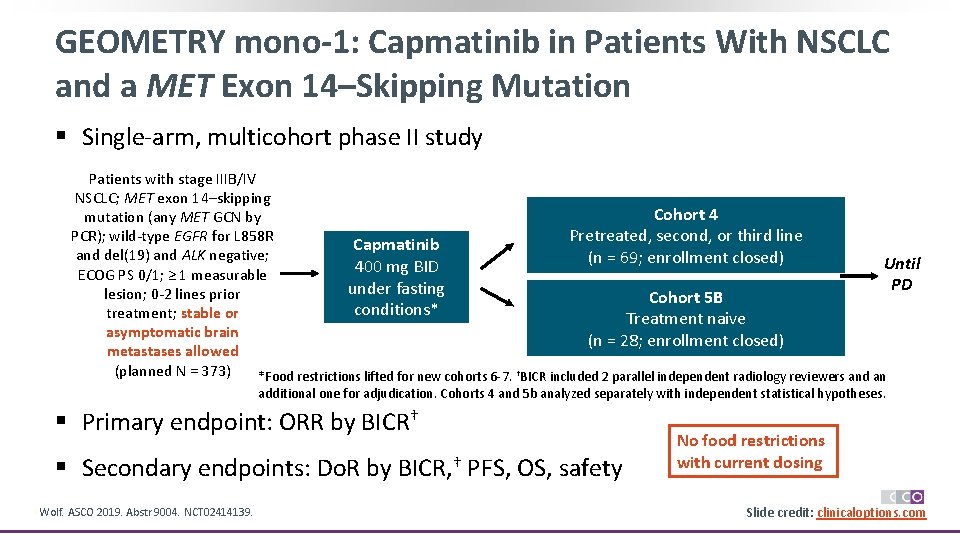
GEOMETRY mono-1: Capmatinib in Patients With NSCLC and a MET Exon 14–Skipping Mutation § Single-arm, multicohort phase II study Patients with stage IIIB/IV NSCLC; MET exon 14–skipping Cohort 4 mutation (any MET GCN by Pretreated, second, or third line PCR); wild-type EGFR for L 858 R Capmatinib and del(19) and ALK negative; (n = 69; enrollment closed) Until 400 mg BID ECOG PS 0/1; ≥ 1 measurable PD under fasting lesion; 0 -2 lines prior Cohort 5 B conditions* treatment; stable or Treatment naive asymptomatic brain (n = 28; enrollment closed) metastases allowed (planned N = 373) *Food restrictions lifted for new cohorts 6 -7. †BICR included 2 parallel independent radiology reviewers and an additional one for adjudication. Cohorts 4 and 5 b analyzed separately with independent statistical hypotheses. § Primary endpoint: ORR by BICR† § Secondary endpoints: Do. R by BICR, † PFS, OS, safety §Wolf. ASCO 2019. Abstr 9004. NCT 02414139. No food restrictions with current dosing Slide credit: clinicaloptions. com
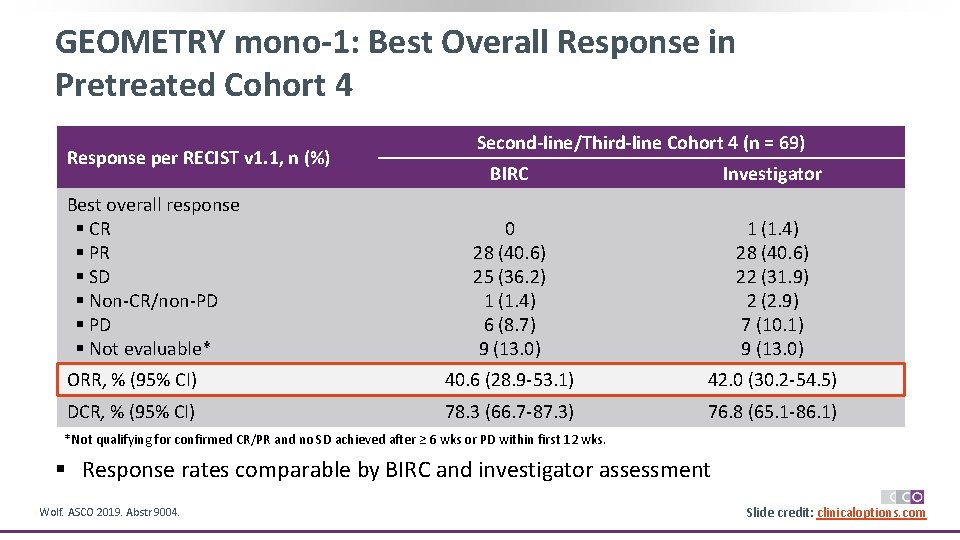
GEOMETRY mono-1: Best Overall Response in Pretreated Cohort 4 Response per RECIST v 1. 1, n (%) Second-line/Third-line Cohort 4 (n = 69) BIRC Investigator 0 28 (40. 6) 25 (36. 2) 1 (1. 4) 6 (8. 7) 9 (13. 0) 1 (1. 4) 28 (40. 6) 22 (31. 9) 2 (2. 9) 7 (10. 1) 9 (13. 0) ORR, % (95% CI) 40. 6 (28. 9 -53. 1) 42. 0 (30. 2 -54. 5) DCR, % (95% CI) 78. 3 (66. 7 -87. 3) 76. 8 (65. 1 -86. 1) Best overall response § CR § PR § SD § Non-CR/non-PD § Not evaluable* *Not qualifying for confirmed CR/PR and no SD achieved after ≥ 6 wks or PD within first 12 wks. § Response rates comparable by BIRC and investigator assessment §Wolf. ASCO 2019. Abstr 9004. Slide credit: clinicaloptions. com
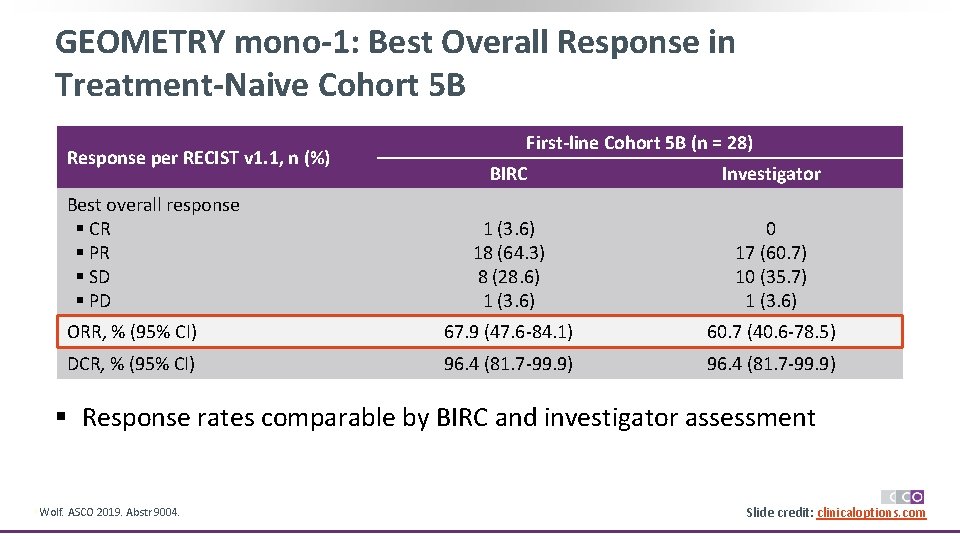
GEOMETRY mono-1: Best Overall Response in Treatment-Naive Cohort 5 B Response per RECIST v 1. 1, n (%) First-line Cohort 5 B (n = 28) BIRC Investigator 1 (3. 6) 18 (64. 3) 8 (28. 6) 1 (3. 6) 0 17 (60. 7) 10 (35. 7) 1 (3. 6) ORR, % (95% CI) 67. 9 (47. 6 -84. 1) 60. 7 (40. 6 -78. 5) DCR, % (95% CI) 96. 4 (81. 7 -99. 9) Best overall response § CR § PR § SD § PD § Response rates comparable by BIRC and investigator assessment §Wolf. ASCO 2019. Abstr 9004. Slide credit: clinicaloptions. com
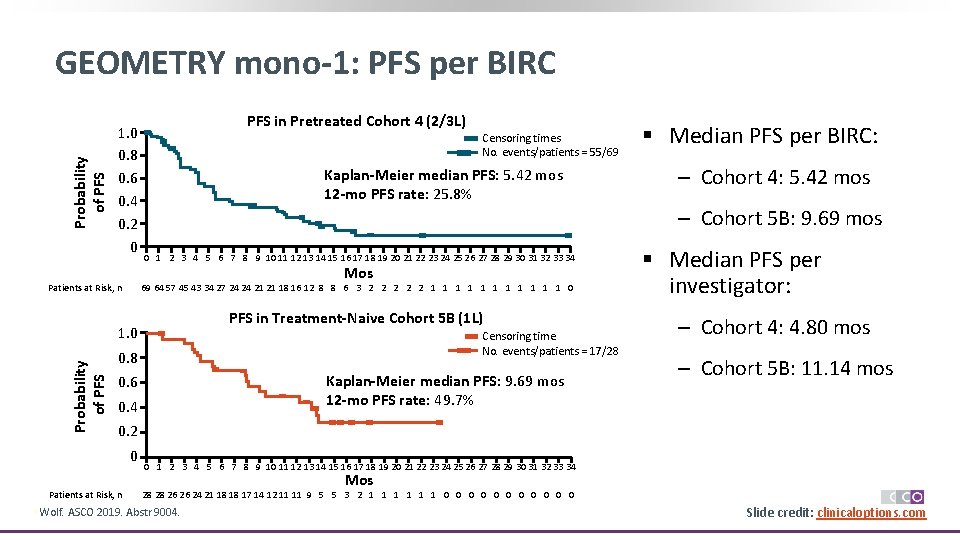
Probability of PFS GEOMETRY mono-1: PFS per BIRC 1. 0 0. 8 0. 6 0. 4 0. 2 0 PFS in Pretreated Cohort 4 (2/3 L) Censoring times No. events/patients = 55/69 Kaplan-Meier median PFS: 5. 42 mos 12 -mo PFS rate: 25. 8% 0 1 2 3 4 5 6 7 8 9 10 11 12 13 14 15 16 17 18 19 20 21 22 23 24 25 26 27 28 29 30 31 32 33 34 69 64 57 45 43 34 27 24 24 21 21 18 16 12 8 8 6 3 2 2 2 1 1 1 0 PFS in Treatment-Naive Cohort 5 B (1 L) 1. 0 Probability of PFS ‒ Cohort 4: 5. 42 mos ‒ Cohort 5 B: 9. 69 mos Mos Patients at Risk, n § Median PFS per BIRC: Censoring time No. events/patients = 17/28 0. 8 Kaplan-Meier median PFS: 9. 69 mos 12 -mo PFS rate: 49. 7% 0. 6 0. 4 § Median PFS per investigator: ‒ Cohort 4: 4. 80 mos ‒ Cohort 5 B: 11. 14 mos 0. 2 0 Patients at Risk, n 0 1 2 3 4 5 6 7 8 9 10 11 12 13 14 15 16 17 18 19 20 21 22 23 24 25 26 27 28 29 30 31 32 33 34 Mos 28 28 26 26 24 21 18 18 17 14 12 11 11 9 5 5 3 2 1 1 1 0 0 0 §Wolf. ASCO 2019. Abstr 9004. Slide credit: clinicaloptions. com
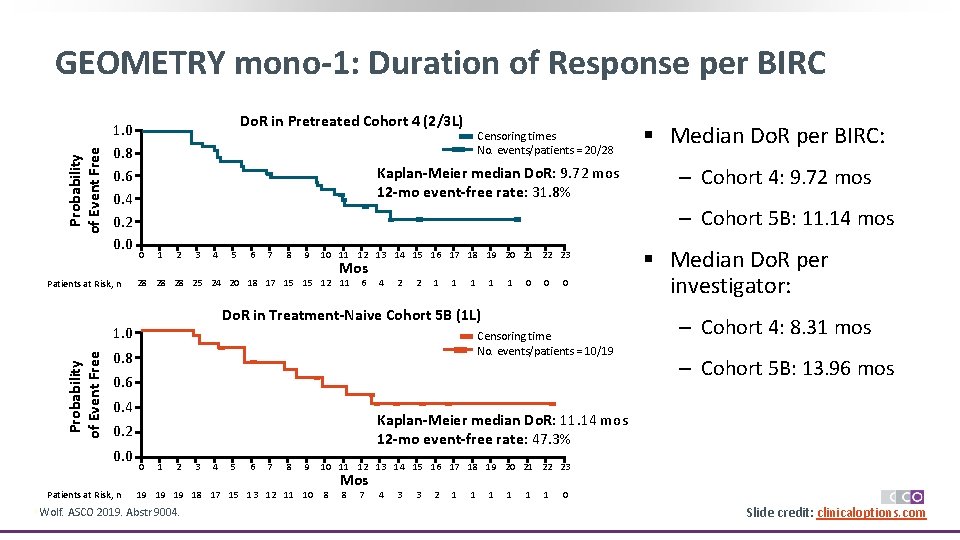
Probability of Event Free GEOMETRY mono-1: Duration of Response per BIRC 1. 0 0. 8 0. 6 0. 4 0. 2 0. 0 Patients at Risk, n Do. R in Pretreated Cohort 4 (2/3 L) Kaplan-Meier median Do. R: 9. 72 mos 12 -mo event-free rate: 31. 8% 0 1 2 3 4 5 6 7 8 9 10 11 12 13 14 15 16 17 18 19 20 21 22 23 Mos 28 28 28 25 24 20 18 17 15 15 12 11 6 4 2 2 1 1 1 0 0 0 Do. R in Treatment-Naive Cohort 5 B (1 L) Censoring time No. events/patients = 10/19 0. 8 0. 6 0. 4 Patients at Risk, n ‒ Cohort 4: 9. 72 mos § Median Do. R per investigator: ‒ Cohort 4: 8. 31 mos ‒ Cohort 5 B: 13. 96 mos Kaplan-Meier median Do. R: 11. 14 mos 12 -mo event-free rate: 47. 3% 0. 2 0. 0 § Median Do. R per BIRC: ‒ Cohort 5 B: 11. 14 mos 1. 0 Probability of Event Free Censoring times No. events/patients = 20/28 0 1 2 3 4 5 6 7 8 9 19 18 17 15 13 12 11 10 §Wolf. ASCO 2019. Abstr 9004. 10 11 12 13 14 15 16 17 18 19 20 21 22 23 8 Mos 8 7 4 3 3 2 1 1 1 0 Slide credit: clinicaloptions. com
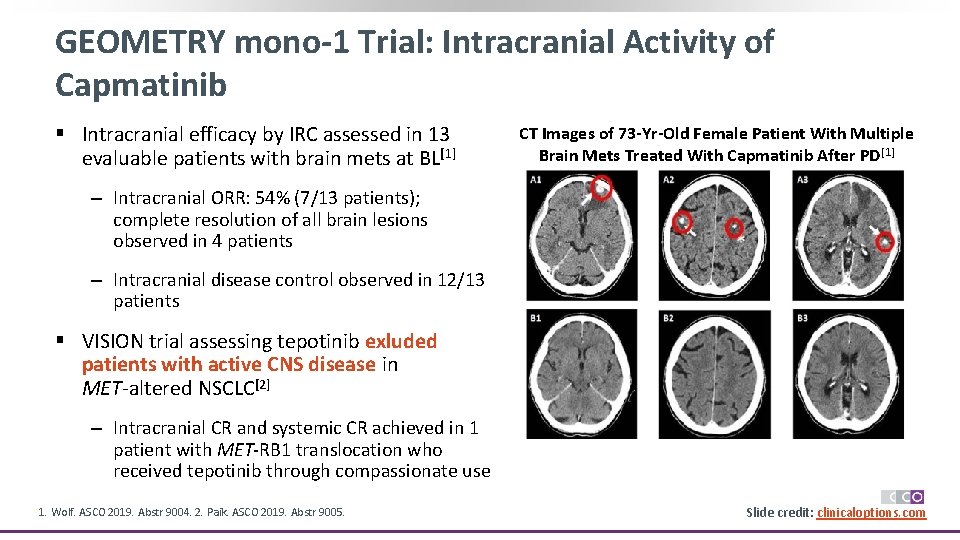
GEOMETRY mono-1 Trial: Intracranial Activity of Capmatinib § Intracranial efficacy by IRC assessed in 13 evaluable patients with brain mets at BL[1] CT Images of 73 -Yr-Old Female Patient With Multiple Brain Mets Treated With Capmatinib After PD[1] ‒ Intracranial ORR: 54% (7/13 patients); complete resolution of all brain lesions observed in 4 patients ‒ Intracranial disease control observed in 12/13 patients § VISION trial assessing tepotinib exluded patients with active CNS disease in MET-altered NSCLC[2] ‒ Intracranial CR and systemic CR achieved in 1 patient with MET-RB 1 translocation who received tepotinib through compassionate use § 1. Wolf. ASCO 2019. Abstr 9004. 2. Paik. ASCO 2019. Abstr 9005. Slide credit: clinicaloptions. com
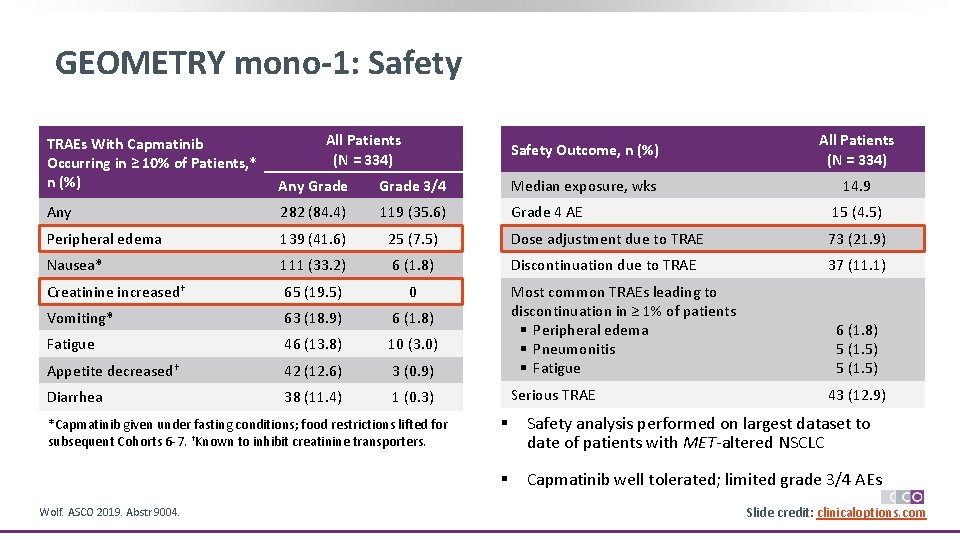
GEOMETRY mono-1: Safety All Patients (N = 334) Safety Outcome, n (%) All Patients (N = 334) Grade 3/4 Median exposure, wks 14. 9 282 (84. 4) 119 (35. 6) Grade 4 AE 15 (4. 5) Peripheral edema 139 (41. 6) 25 (7. 5) Dose adjustment due to TRAE 73 (21. 9) Nausea* 111 (33. 2) 6 (1. 8) Discontinuation due to TRAE 37 (11. 1) Creatinine increased† 65 (19. 5) 0 Vomiting* 63 (18. 9) 6 (1. 8) Fatigue 46 (13. 8) 10 (3. 0) Appetite decreased† 42 (12. 6) 3 (0. 9) Most common TRAEs leading to discontinuation in ≥ 1% of patients § Peripheral edema § Pneumonitis § Fatigue Diarrhea 38 (11. 4) 1 (0. 3) Serious TRAEs With Capmatinib Occurring in ≥ 10% of Patients, * n (%) Any Grade Any *Capmatinib given under fasting conditions; food restrictions lifted for subsequent Cohorts 6 -7. †Known to inhibit creatinine transporters. §Wolf. ASCO 2019. Abstr 9004. 6 (1. 8) 5 (1. 5) 43 (12. 9) § Safety analysis performed on largest dataset to date of patients with MET-altered NSCLC § Capmatinib well tolerated; limited grade 3/4 AEs Slide credit: clinicaloptions. com
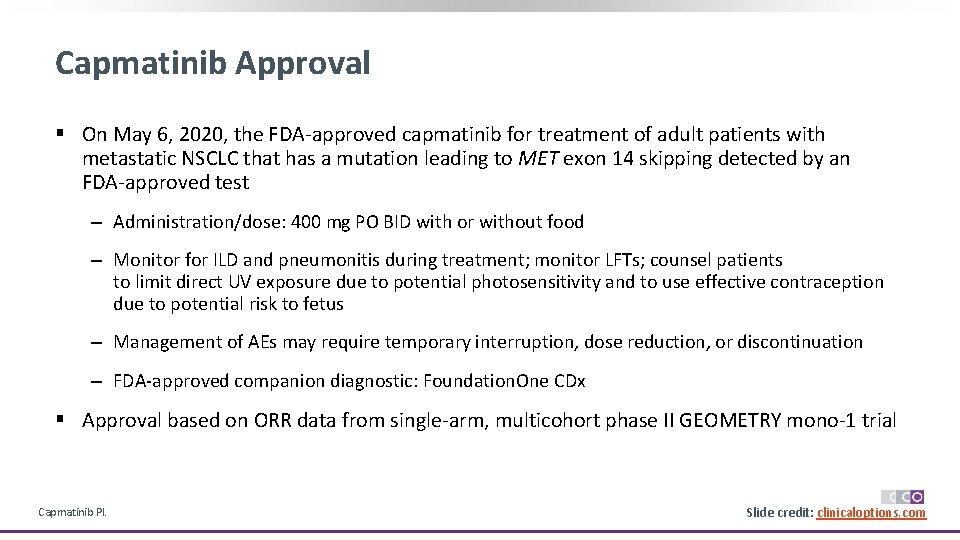
Capmatinib Approval § On May 6, 2020, the FDA-approved capmatinib for treatment of adult patients with metastatic NSCLC that has a mutation leading to MET exon 14 skipping detected by an FDA-approved test ‒ Administration/dose: 400 mg PO BID with or without food ‒ Monitor for ILD and pneumonitis during treatment; monitor LFTs; counsel patients to limit direct UV exposure due to potential photosensitivity and to use effective contraception due to potential risk to fetus ‒ Management of AEs may require temporary interruption, dose reduction, or discontinuation ‒ FDA-approved companion diagnostic: Foundation. One CDx § Approval based on ORR data from single-arm, multicohort phase II GEOMETRY mono-1 trial Capmatinib PI. Slide credit: clinicaloptions. com
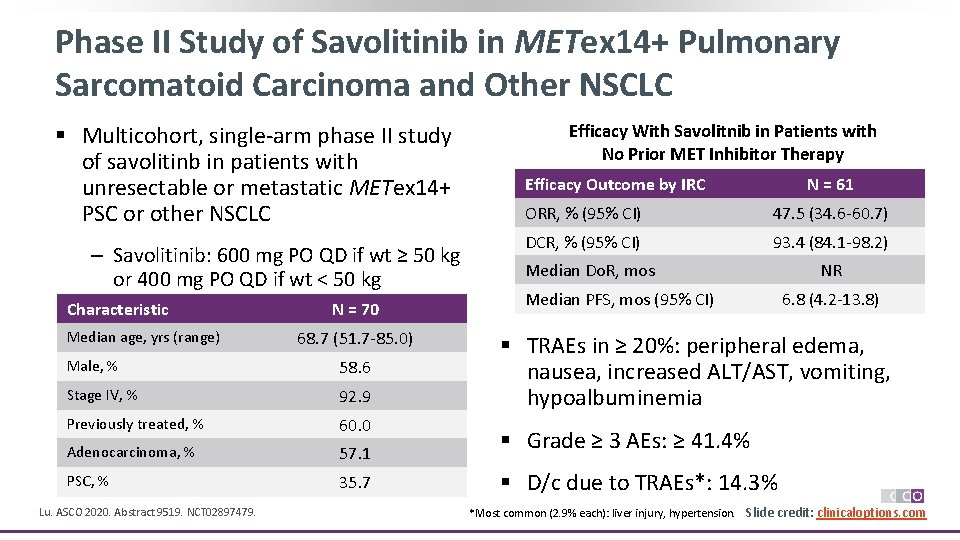
Phase II Study of Savolitinib in METex 14+ Pulmonary Sarcomatoid Carcinoma and Other NSCLC § Multicohort, single-arm phase II study of savolitinb in patients with unresectable or metastatic METex 14+ PSC or other NSCLC ‒ Savolitinib: 600 mg PO QD if wt ≥ 50 kg or 400 mg PO QD if wt < 50 kg Characteristic Median age, yrs (range) N = 70 68. 7 (51. 7 -85. 0) Male, % 58. 6 Stage IV, % 92. 9 Previously treated, % 60. 0 Adenocarcinoma, % 57. 1 PSC, % 35. 7 §Lu. ASCO 2020. Abstract 9519. NCT 02897479. Efficacy With Savolitnib in Patients with No Prior MET Inhibitor Therapy Efficacy Outcome by IRC N = 61 ORR, % (95% CI) 47. 5 (34. 6 -60. 7) DCR, % (95% CI) 93. 4 (84. 1 -98. 2) Median Do. R, mos Median PFS, mos (95% CI) NR 6. 8 (4. 2 -13. 8) § TRAEs in ≥ 20%: peripheral edema, nausea, increased ALT/AST, vomiting, hypoalbuminemia § Grade ≥ 3 AEs: ≥ 41. 4% § D/c due to TRAEs*: 14. 3% *Most common (2. 9% each): liver injury, hypertension. Slide credit: clinicaloptions. com
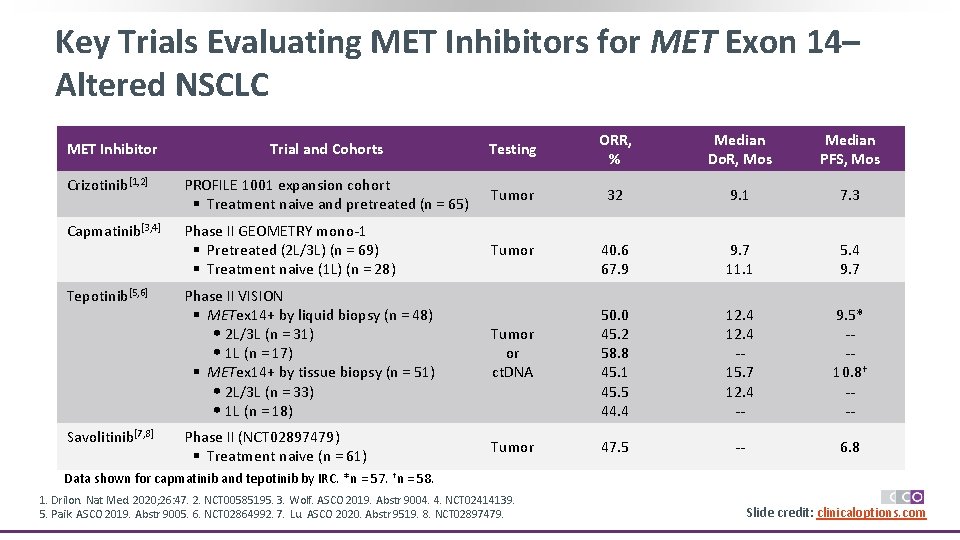
Key Trials Evaluating MET Inhibitors for MET Exon 14– Altered NSCLC MET Inhibitor Trial and Cohorts Testing ORR, % Median Do. R, Mos Median PFS, Mos Crizotinib[1, 2] PROFILE 1001 expansion cohort § Treatment naive and pretreated (n = 65) Tumor 32 9. 1 7. 3 Capmatinib[3, 4] Phase II GEOMETRY mono-1 § Pretreated (2 L/3 L) (n = 69) § Treatment naive (1 L) (n = 28) Tumor 40. 6 67. 9 9. 7 11. 1 5. 4 9. 7 Tepotinib[5, 6] Phase II VISION § METex 14+ by liquid biopsy (n = 48) • 2 L/3 L (n = 31) • 1 L (n = 17) § METex 14+ by tissue biopsy (n = 51) • 2 L/3 L (n = 33) • 1 L (n = 18) Tumor or ct. DNA 50. 0 45. 2 58. 8 45. 1 45. 5 44. 4 12. 4 -15. 7 12. 4 -- 9. 5* --10. 8† --- Phase II (NCT 02897479) § Treatment naive (n = 61) Tumor 47. 5 -- 6. 8 Savolitinib[7, 8] Data shown for capmatinib and tepotinib by IRC. *n = 57. †n = 58. 1. Drilon. Nat Med. 2020; 26: 47. 2. NCT 00585195. 3. Wolf. ASCO 2019. Abstr 9004. 4. NCT 02414139. 5. Paik. ASCO 2019. Abstr 9005. 6. NCT 02864992. 7. Lu. ASCO 2020. Abstr 9519. 8. NCT 02897479. Slide credit: clinicaloptions. com
“Acquired” Resistance to MET TKIs and Next-Line Choices
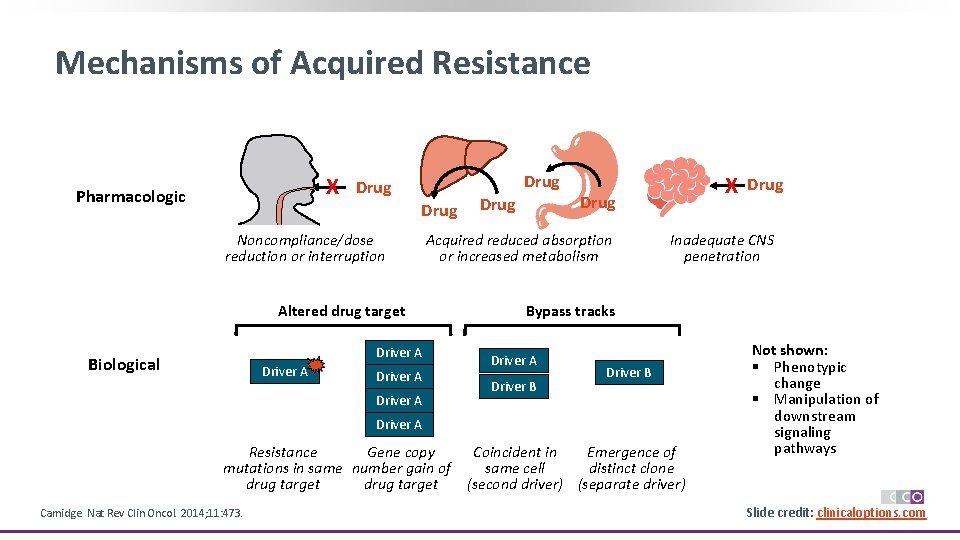
Mechanisms of Acquired Resistance X Pharmacologic Drug Noncompliance/dose reduction or interruption Driver A Drug Acquired reduced absorption or increased metabolism Altered drug target Biological Drug Driver A X Inadequate CNS penetration Bypass tracks Driver A Driver B Driver A Resistance Gene copy mutations in same number gain of drug target Camidge. Nat Rev Clin Oncol. 2014; 11: 473. Drug Coincident in Emergence of same cell distinct clone (second driver) (separate driver) Not shown: § Phenotypic change § Manipulation of downstream signaling pathways Slide credit: clinicaloptions. com
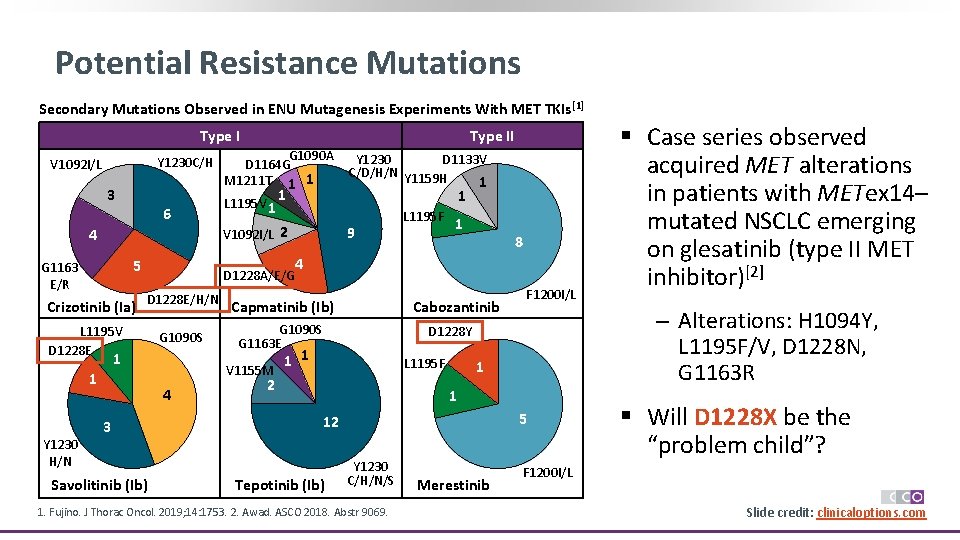
Potential Resistance Mutations Secondary Mutations Observed in ENU Mutagenesis Experiments With MET TKIs [1] Type I Y 1230 C/H V 1092 I/L 3 6 4 5 G 1163 E/R Type II G 1090 A D 1164 G M 1211 T 1 1 L 1195 V 1 1 V 1092 I/L 2 D 1228 A/E/G Y 1230 D 1133 V C/D/H/N Y 1159 H 1 1 9 G 1090 S 1 1 Y 1230 H/N 4 3 Savolitinib (Ib) 8 Cabozantinib G 1090 S G 1163 E V 1155 M 1 4 Crizotinib (Ia) D 1228 E/H/N Capmatinib (Ib) L 1195 V D 1228 E L 1195 F F 1200 I/L ‒ Alterations: H 1094 Y, L 1195 F/V, D 1228 N, G 1163 R D 1228 Y 1 1 L 1195 F 2 1 1 5 12 Tepotinib (Ib) Y 1230 C/H/N/S 1. Fujino. J Thorac Oncol. 2019; 14: 1753. 2. Awad. ASCO 2018. Abstr 9069. Merestinib § Case series observed acquired MET alterations in patients with METex 14– mutated NSCLC emerging on glesatinib (type II MET inhibitor)[2] § Will D 1228 X be the “problem child”? F 1200 I/L Slide credit: clinicaloptions. com
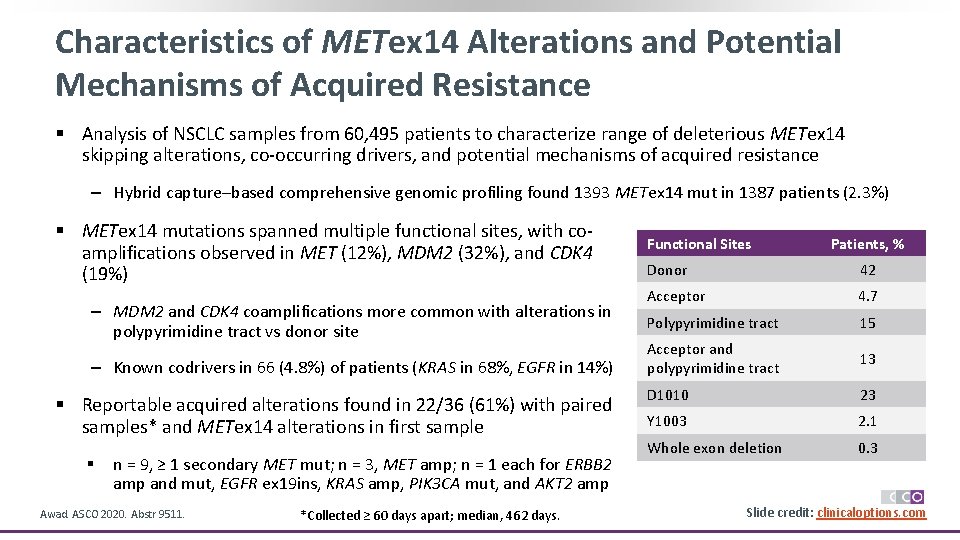
Characteristics of METex 14 Alterations and Potential Mechanisms of Acquired Resistance § Analysis of NSCLC samples from 60, 495 patients to characterize range of deleterious METex 14 skipping alterations, co-occurring drivers, and potential mechanisms of acquired resistance ‒ Hybrid capture–based comprehensive genomic profiling found 1393 METex 14 mut in 1387 patients (2. 3%) § METex 14 mutations spanned multiple functional sites, with coamplifications observed in MET (12%), MDM 2 (32%), and CDK 4 (19%) ‒ MDM 2 and CDK 4 coamplifications more common with alterations in polypyrimidine tract vs donor site ‒ Known codrivers in 66 (4. 8%) of patients (KRAS in 68%, EGFR in 14%) § Reportable acquired alterations found in 22/36 (61%) with paired samples* and METex 14 alterations in first sample § n = 9, ≥ 1 secondary MET mut; n = 3, MET amp; n = 1 each for ERBB 2 amp and mut, EGFR ex 19 ins, KRAS amp, PIK 3 CA mut, and AKT 2 amp Awad. ASCO 2020. Abstr 9511. *Collected ≥ 60 days apart; median, 462 days. Functional Sites Patients, % Donor 42 Acceptor 4. 7 Polypyrimidine tract 15 Acceptor and polypyrimidine tract 13 D 1010 23 Y 1003 2. 1 Whole exon deletion 0. 3 Slide credit: clinicaloptions. com
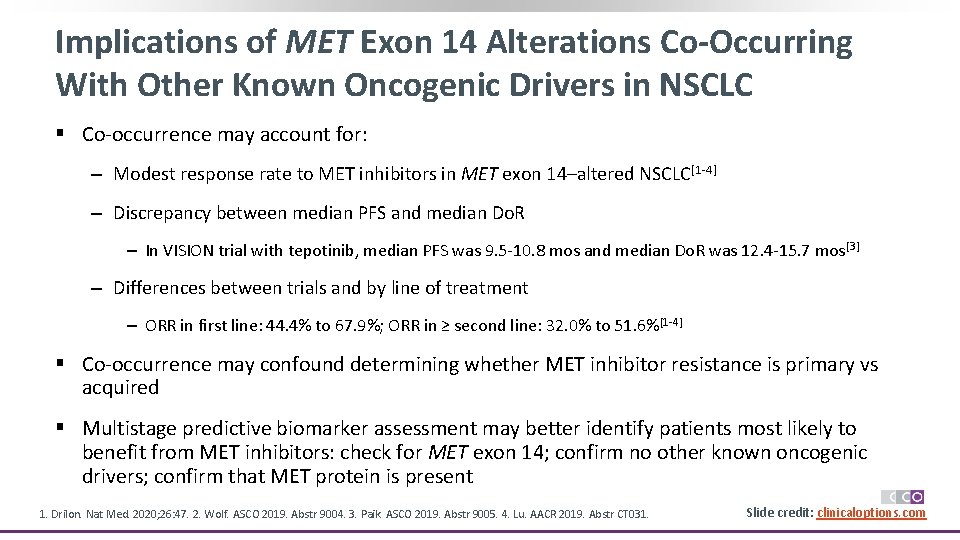
Implications of MET Exon 14 Alterations Co-Occurring With Other Known Oncogenic Drivers in NSCLC § Co-occurrence may account for: ‒ Modest response rate to MET inhibitors in MET exon 14–altered NSCLC[1 -4] ‒ Discrepancy between median PFS and median Do. R ‒ In VISION trial with tepotinib, median PFS was 9. 5 -10. 8 mos and median Do. R was 12. 4 -15. 7 mos [3] ‒ Differences between trials and by line of treatment ‒ ORR in first line: 44. 4% to 67. 9%; ORR in ≥ second line: 32. 0% to 51. 6% [1 -4] § Co-occurrence may confound determining whether MET inhibitor resistance is primary vs acquired § Multistage predictive biomarker assessment may better identify patients most likely to benefit from MET inhibitors: check for MET exon 14; confirm no other known oncogenic drivers; confirm that MET protein is present 1. Drilon. Nat Med. 2020; 26: 47. 2. Wolf. ASCO 2019. Abstr 9004. 3. Paik. ASCO 2019. Abstr 9005. 4. Lu. AACR 2019. Abstr CT 031. Slide credit: clinicaloptions. com
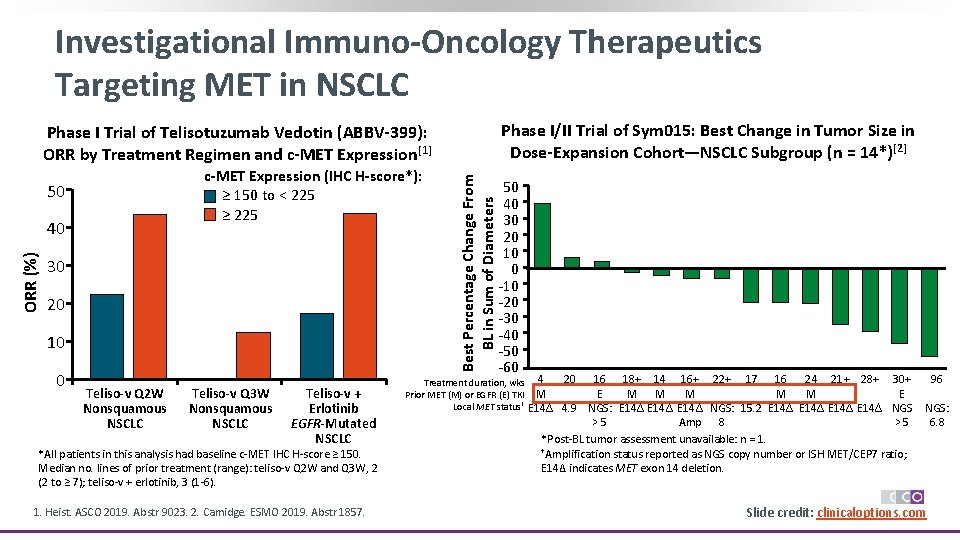
Investigational Immuno-Oncology Therapeutics Targeting MET in NSCLC Phase I/II Trial of Sym 015: Best Change in Tumor Size in Dose-Expansion Cohort—NSCLC Subgroup (n = 14*)[2] c-MET Expression (IHC H-score*): ≥ 150 to < 225 ≥ 225 50 ORR (%) 40 30 20 10 0 Teliso-v Q 2 W Nonsquamous NSCLC Teliso-v Q 3 W Nonsquamous NSCLC Teliso-v + Erlotinib EGFR-Mutated NSCLC *All patients in this analysis had baseline c-MET IHC H-score ≥ 150. Median no. lines of prior treatment (range): teliso-v Q 2 W and Q 3 W, 2 (2 to ≥ 7); teliso-v + erlotinib, 3 (1 -6). 1. Heist. ASCO 2019. Abstr 9023. 2. Camidge. ESMO 2019. Abstr 1857. Best Percentage Change From BL in Sum of Diameters Phase I Trial of Telisotuzumab Vedotin (ABBV-399): ORR by Treatment Regimen and c-MET Expression[1] 50 40 30 20 10 0 -10 -20 -30 -40 -50 -60 Treatment duration, wks Prior MET (M) or EGFR (E) TKI Local MET status† 4 20 16 18+ 14 16+ 22+ 17 16 24 21+ 28+ 30+ M E M M M E E 14∆ 4. 9 NGS: E 14∆ NGS: 15. 2 E 14∆ NGS >5 Amp 8 >5 *Post-BL tumor assessment unavailable: n = 1. †Amplification status reported as NGS copy number or ISH MET/CEP 7 ratio; E 14Δ indicates MET exon 14 deletion. 96 NGS: 6. 8 Slide credit: clinicaloptions. com
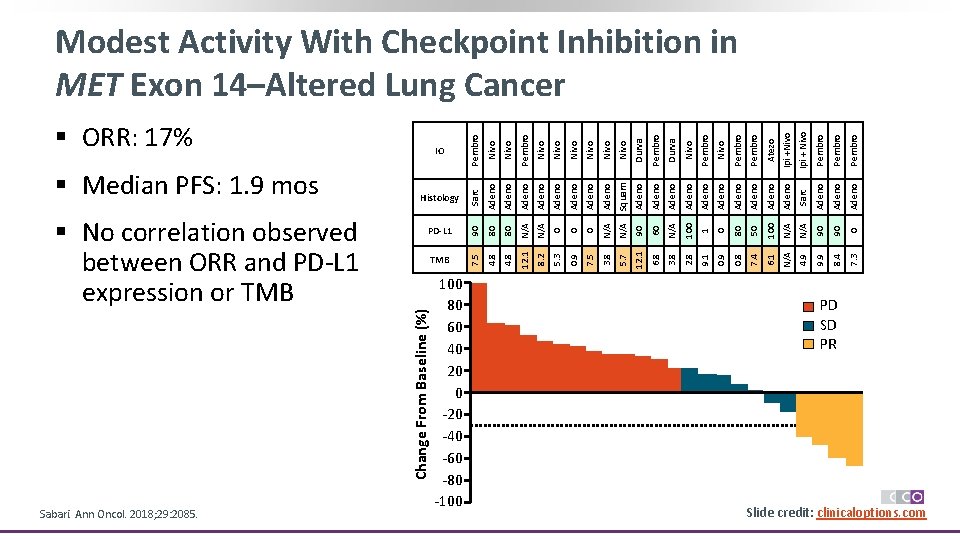
Sabari. Ann Oncol. 2018; 29: 2085. PD-L 1 90 80 80 N/A 0 0 0 N/A 90 60 N/A 100 1 0 80 50 100 N/A 90 90 0 TMB 4. 8 12. 1 8. 2 5. 3 0. 9 7. 5 3. 8 5. 7 12. 1 6. 8 3. 8 2. 8 9. 1 0. 9 0. 8 7. 4 6. 1 N/A 4. 9 9. 9 8. 4 7. 3 § No correlation observed between ORR and PD-L 1 expression or TMB 7. 5 Histology 100 80 60 40 20 0 -20 -40 -60 -80 -100 Adeno Sarc Adeno Adeno Adeno Squam Adeno Adeno Atezo Pembro Nivo Durva Pembro Durva Nivo Nivo Pembro IO Sarc § ORR: 17% Pembro Ipi + Nivo Ipi +Nivo § Median PFS: 1. 9 mos Change From Baseline (%) Modest Activity With Checkpoint Inhibition in MET Exon 14–Altered Lung Cancer PD SD PR Slide credit: clinicaloptions. com
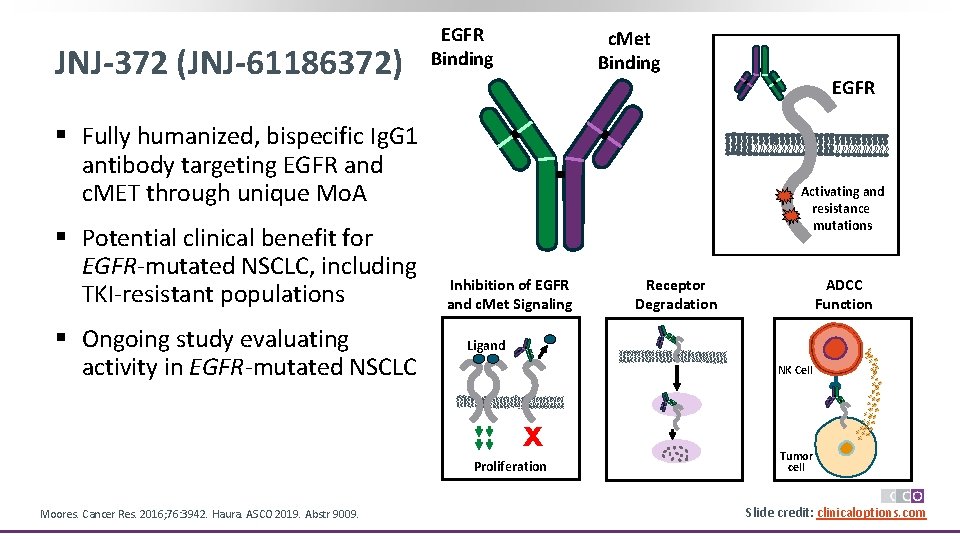
JNJ-372 (JNJ-61186372) EGFR Binding c. Met Binding EGFR § Fully humanized, bispecific Ig. G 1 antibody targeting EGFR and c. MET through unique Mo. A § Potential clinical benefit for EGFR-mutated NSCLC, including TKI-resistant populations § Ongoing study evaluating activity in EGFR-mutated NSCLC Activating and resistance mutations Inhibition of EGFR and c. Met Signaling ADCC Function Ligand NK Cell X Proliferation Moores. Cancer Res. 2016; 76: 3942. Haura. ASCO 2019. Abstr 9009. Receptor Degradation Tumor cell Slide credit: clinicaloptions. com
Go Online for More CCO Coverage of NSCLC! On-demand Webcast of a live ASCO Webinar covering METex 14 NSCLC Capsule Summaries of key clinical data from ASCO 2020 NSCLC Interactive Decision Support Tool featuring the latest management recommendations from 5 NSCLC experts (update coming soon!) clinicaloptions. com/oncology clinicaloptions. com/Lung. Tool