El Futuro The future tense indicates that something
- Slides: 9
El Futuro
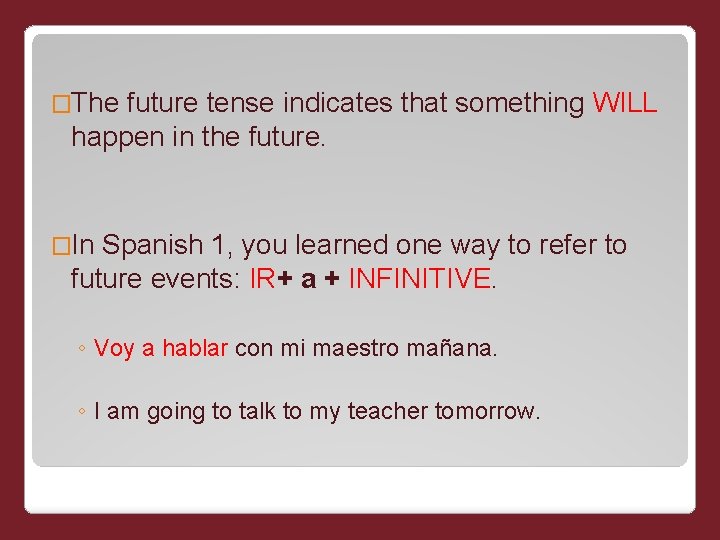
�The future tense indicates that something WILL happen in the future. �In Spanish 1, you learned one way to refer to future events: IR+ a + INFINITIVE. ◦ Voy a hablar con mi maestro mañana. ◦ I am going to talk to my teacher tomorrow.
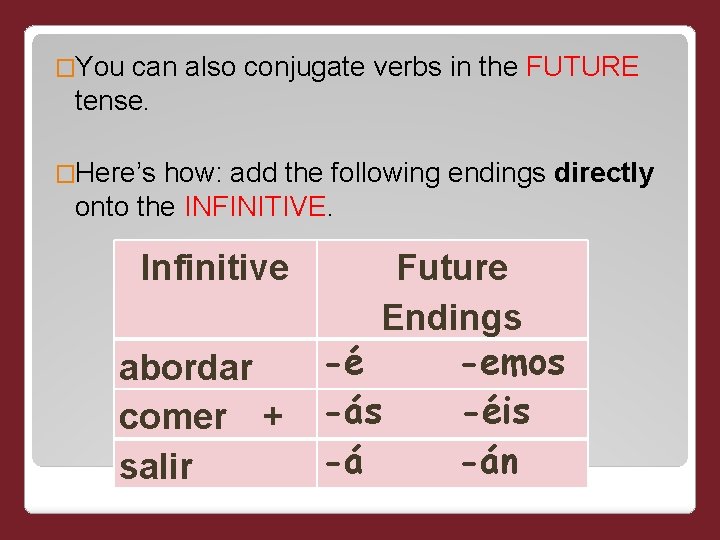
�You can also conjugate verbs in the FUTURE tense. �Here’s how: add the following endings directly onto the INFINITIVE. Infinitive abordar comer + salir Future Endings -é -emos -ás -éis -á -án
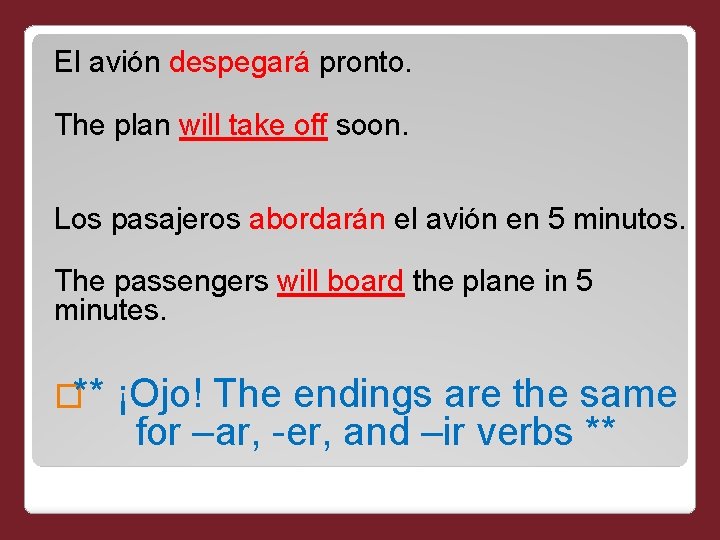
El avión despegará pronto. The plan will take off soon. Los pasajeros abordarán el avión en 5 minutos. The passengers will board the plane in 5 minutes. �** ¡Ojo! The endings are the same for –ar, -er, and –ir verbs **
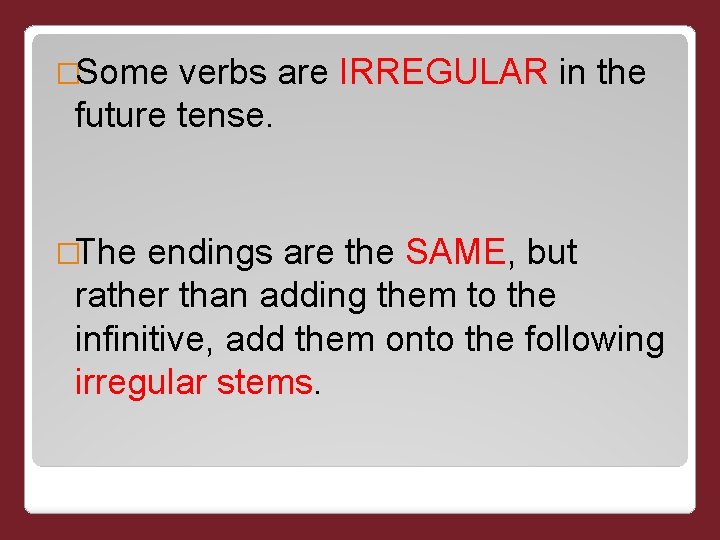
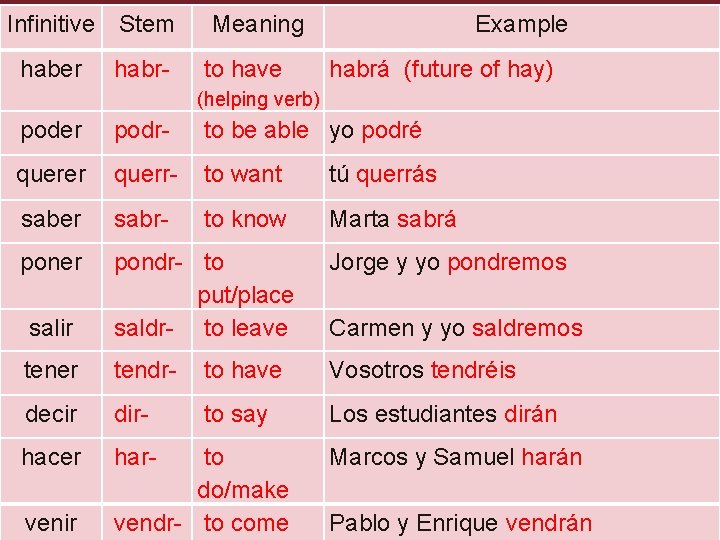
�Some verbs are IRREGULAR in the future tense. �The endings are the SAME, but rather than adding them to the infinitive, add them onto the following irregular stems.
Infinitive haber Stem habr- Meaning to have Example habrá (future of hay) (helping verb) poder podr- to be able yo podré querer querr- to want tú querrás saber sabr- Marta sabrá poner Jorge y yo pondremos salir pondr- to put/place saldr- to leave tener tendr- to have Vosotros tendréis decir dir- Los estudiantes dirán hacer har- venir to know to say to do/make vendr- to come Carmen y yo saldremos Marcos y Samuel harán Pablo y Enrique vendrán
�Special use#1 : You can also use the future tense to GUESS or SPECULATE about something in the PRESENT. I wonder what Carlos is doing today. ¿Qué hará Carlos hoy? He’s probably playing tennis with Emiliano. Jugará al tenis con Emiliano
Special use #2 : �To describe reported events in relation to a point of reference in the present. �(using verbs like decir, anunciar, responder , etc. )
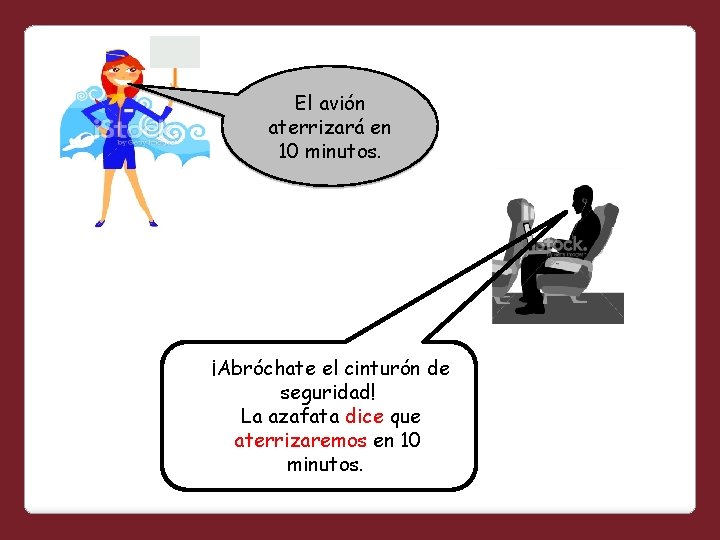
El avión aterrizará en 10 minutos. ¡Abróchate el cinturón de seguridad! La azafata dice que aterrizaremos en 10 minutos.