Effect of Piston Dwell on Engine Performance P

- Slides: 20
Effect of Piston Dwell on Engine Performance P M V Subbarao Professor Mechanical Engineering Department Sufficiency of time to Execute a Process…. .
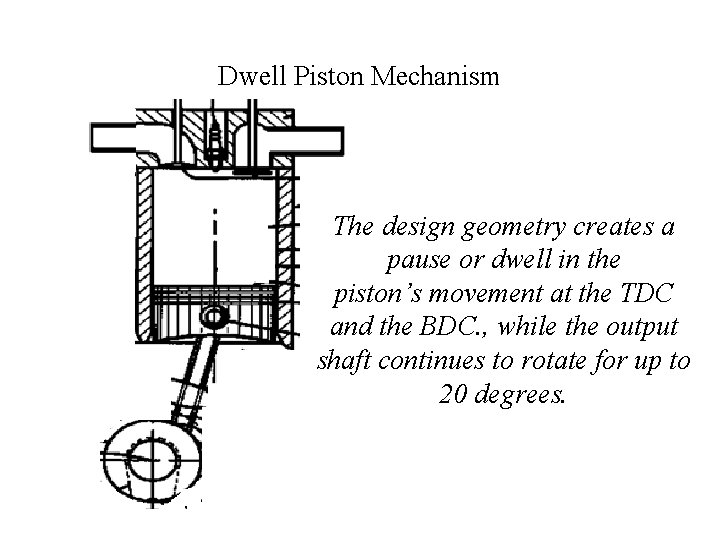
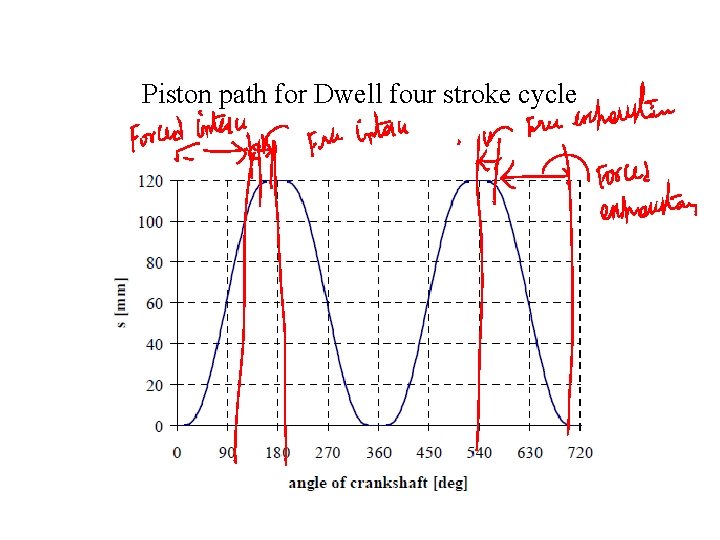
Dwell Piston Mechanism The design geometry creates a pause or dwell in the piston’s movement at the TDC and the BDC. , while the output shaft continues to rotate for up to 20 degrees.
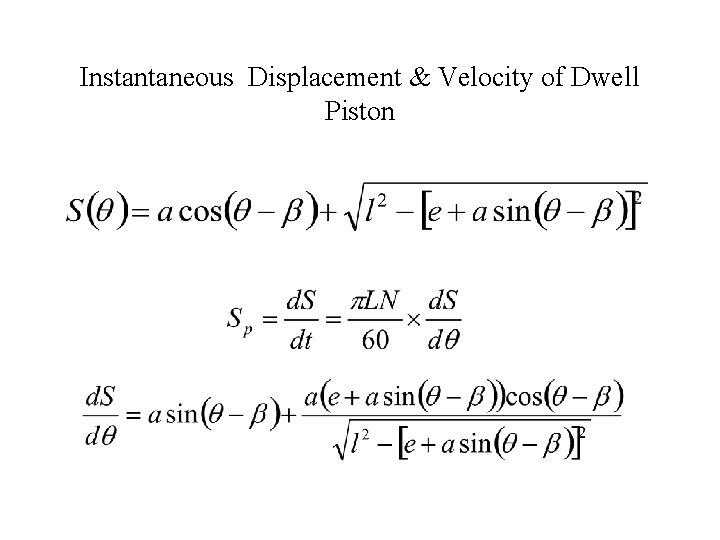
Instantaneous Displacement & Velocity of Dwell Piston
Piston path for Dwell four stroke cycle
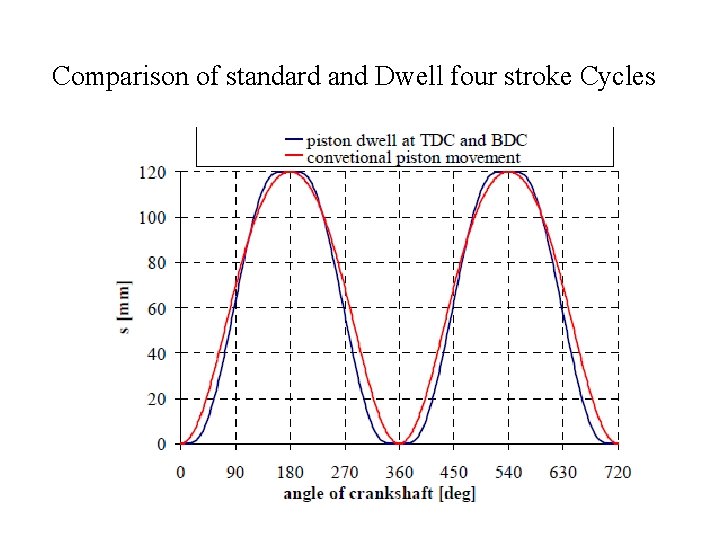
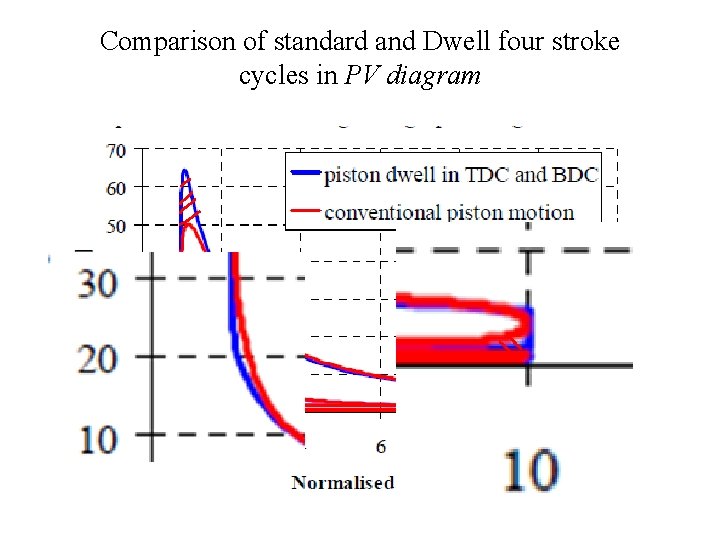
Comparison of standard and Dwell four stroke Cycles
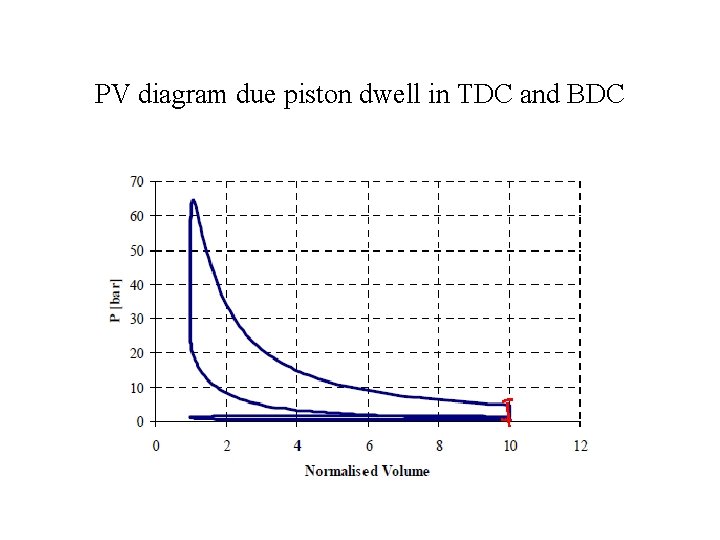
PV diagram due piston dwell in TDC and BDC
Comparison of standard and Dwell four stroke cycles in PV diagram
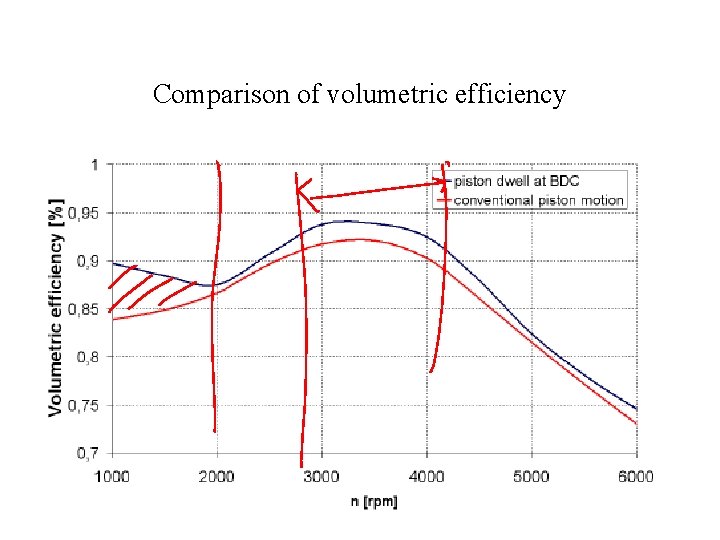
Comparison of volumetric efficiency
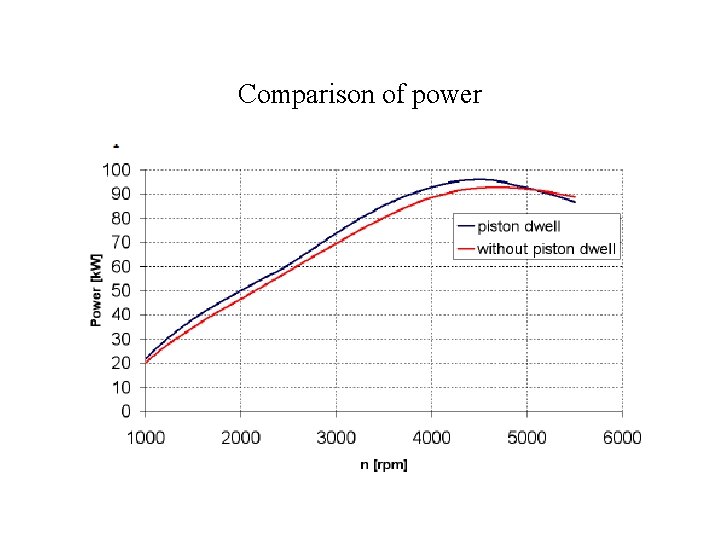
Comparison of power
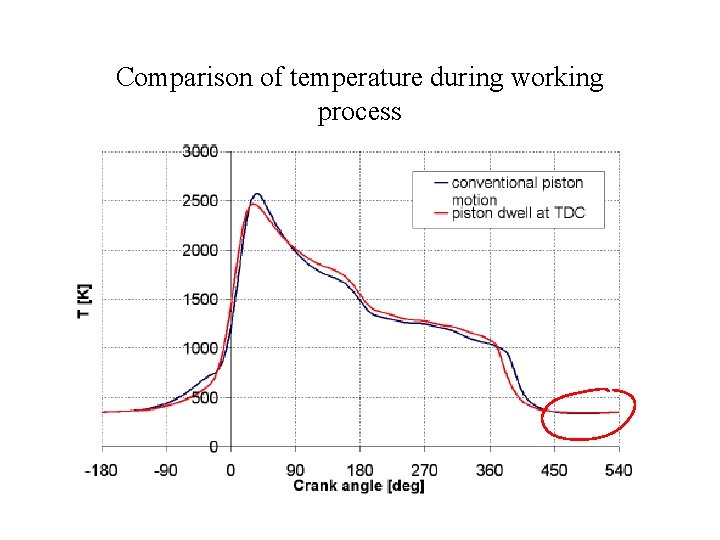
Comparison of temperature during working process
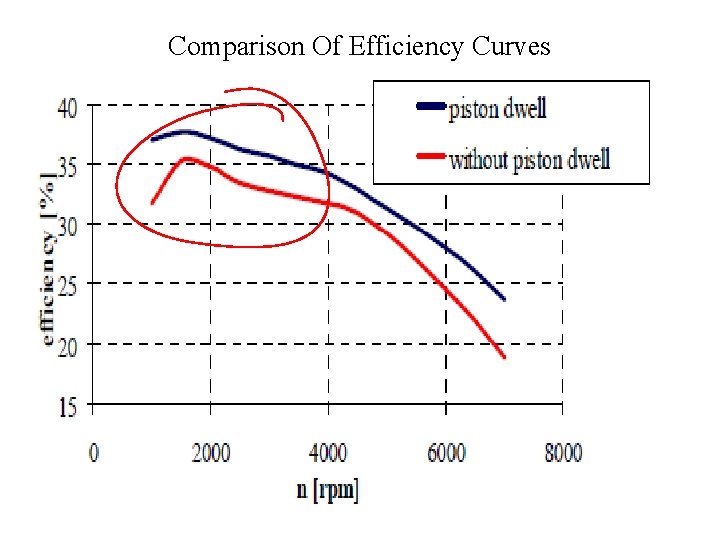
Comparison Of Efficiency Curves
Closing Remarks • The automobile industry is under large pressure to keep developing automobiles with IC engines, to reduce fuel consumption and exhaust gas emissions, as well as to seek better alternatives for vehicle drive. • A thorough understanding of engine geometry will create new avenues. • A global optimization of eccentricity and rod ratio will create a best kinematics for a given fuel. • A thorough thermodynamic design and analysis is first step to generate optimal design parameters.
Thermodynamic Design : A tradition of Post Carnot Research • Major portion of motive power generation occurs in any Reciprocating IC engine during closed cycle (control mass/closed system). • The thermal operation of any IC engine is a transient cyclic process. • Even at constant load and speed, the value of thermodynamic parameters at any location vary with time. • Each event may get repeated again and again. • So, an IC engine operation is a transient process which gets completed in a known or required Cycle time. • Higher the speed of the engine, lower will be the Cycle time. • Needs many models for each process/events.
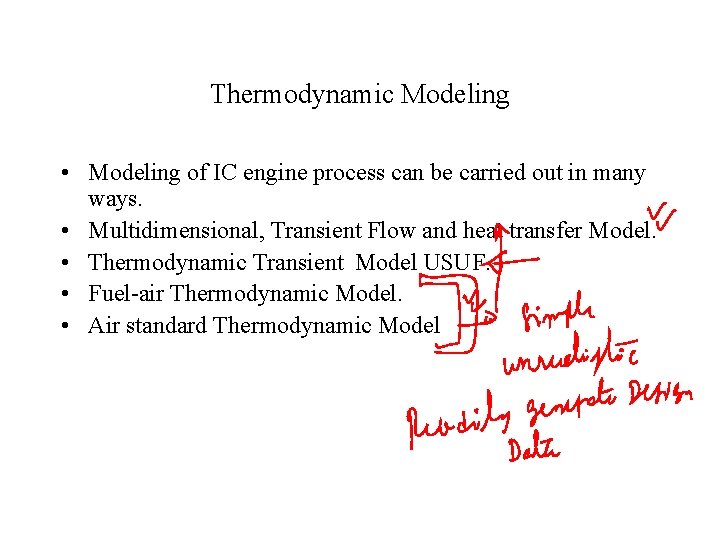
Thermodynamic Modeling • Modeling of IC engine process can be carried out in many ways. • Multidimensional, Transient Flow and heat transfer Model. • Thermodynamic Transient Model USUF. • Fuel-air Thermodynamic Model. • Air standard Thermodynamic Model
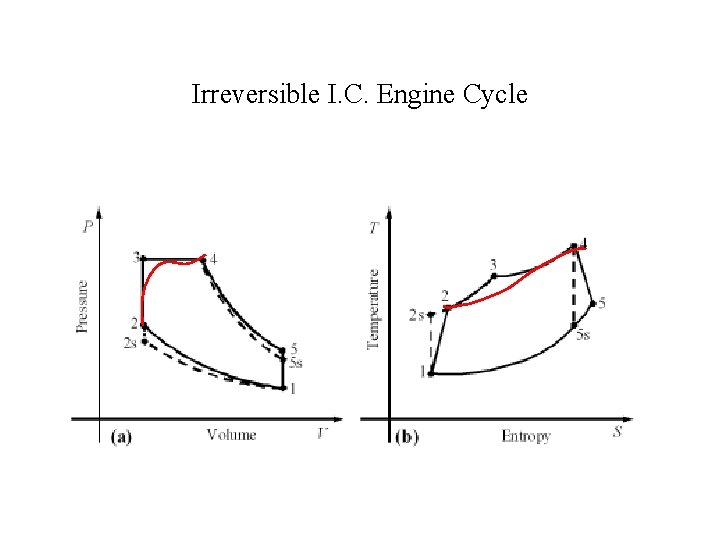
Irreversible I. C. Engine Cycle
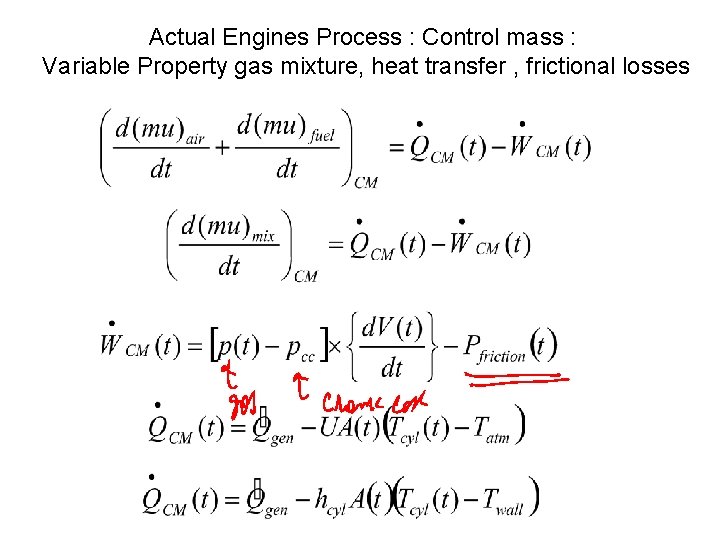
Actual Engines Process : Control mass : Variable Property gas mixture, heat transfer , frictional losses
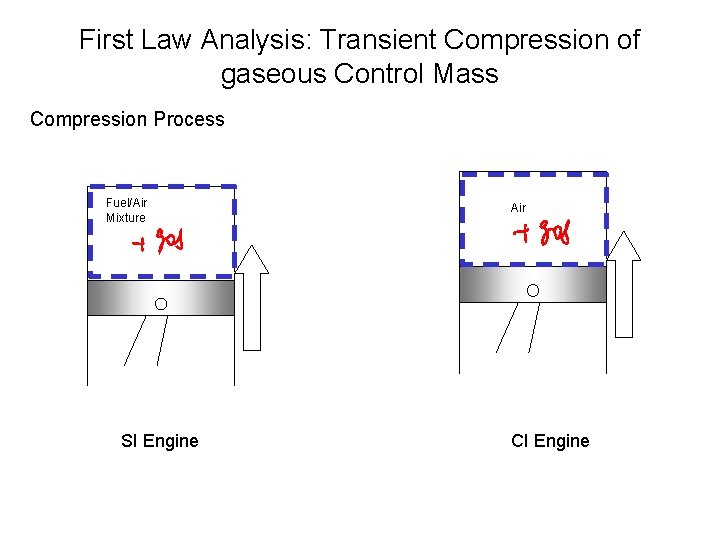
First Law Analysis: Transient Compression of gaseous Control Mass Compression Process Fuel/Air Mixture SI Engine Air CI Engine
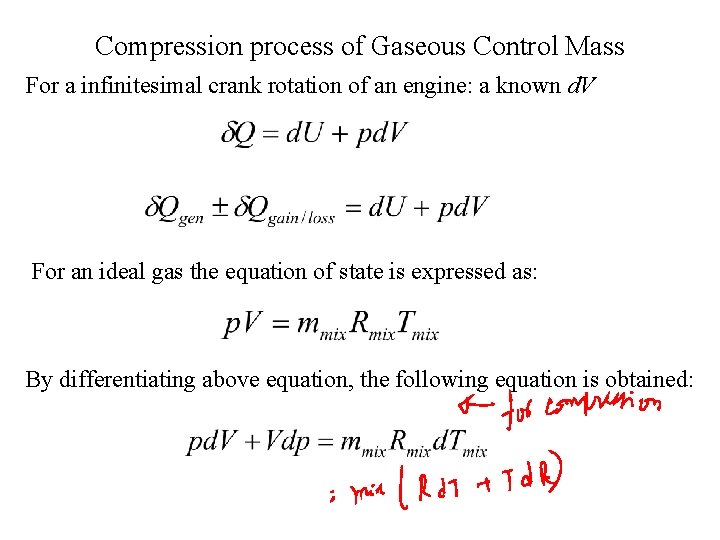
Compression process of Gaseous Control Mass For a infinitesimal crank rotation of an engine: a known d. V For an ideal gas the equation of state is expressed as: By differentiating above equation, the following equation is obtained:
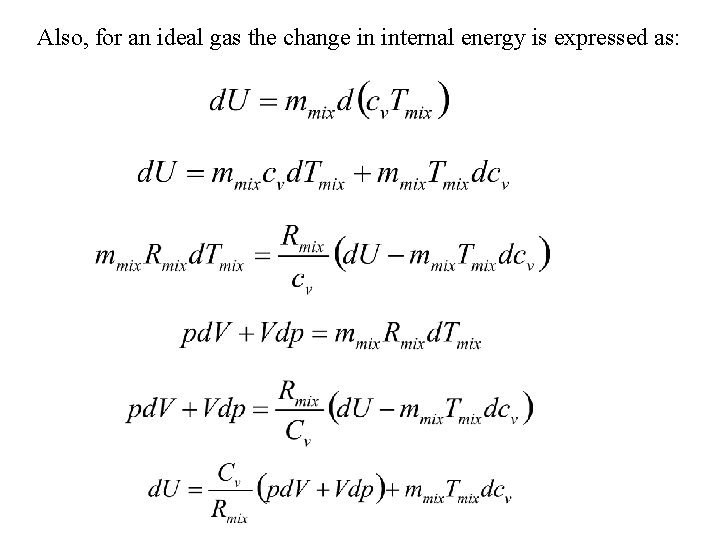
Also, for an ideal gas the change in internal energy is expressed as:
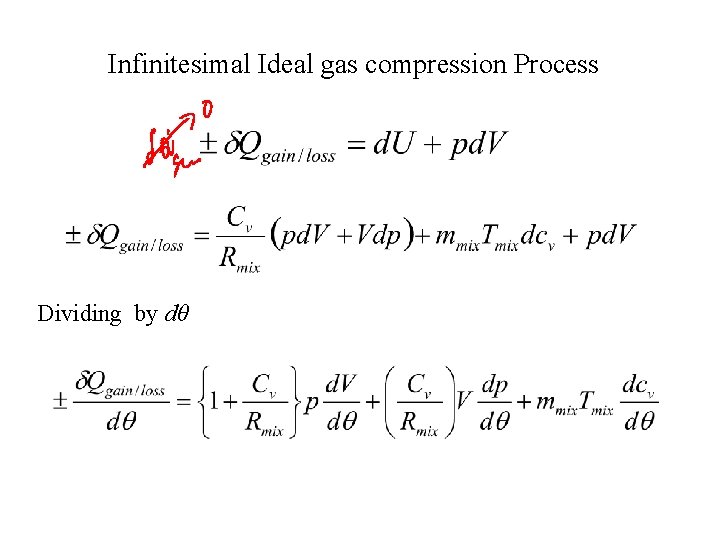
Infinitesimal Ideal gas compression Process Dividing by dθ