EE 201 Chapter 9 1 Chapter 9 Network




- Slides: 31
EE 201 Chapter 9 1
Chapter 9 Network Theorems Superposition Thévenin’s Theorem Norton’s Theorem Maximum Power Transfer Theorem 2
Superpostion - Introduction What’s the current on R 4? 3
Superpostion - Introduction What’s the current on R 4? 4
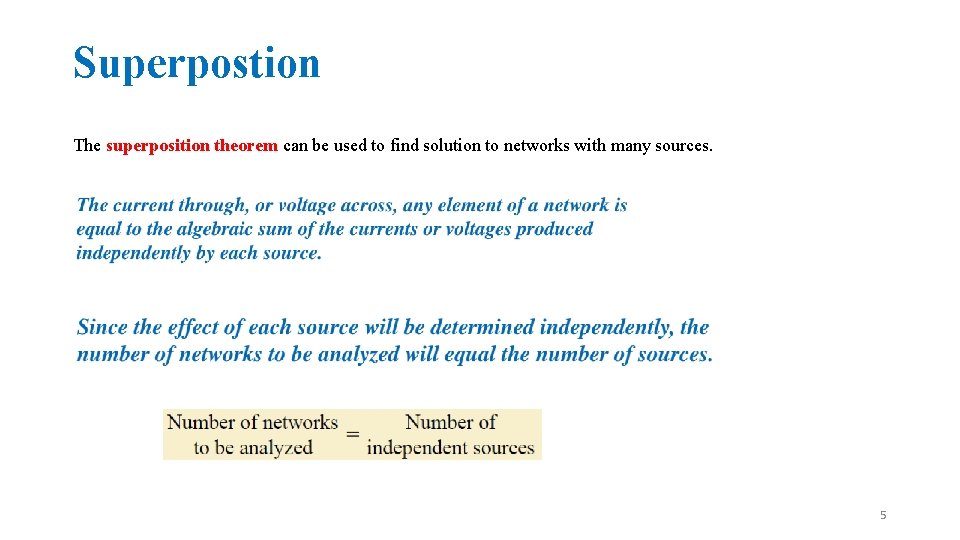
Superpostion The superposition theorem can be used to find solution to networks with many sources. 5
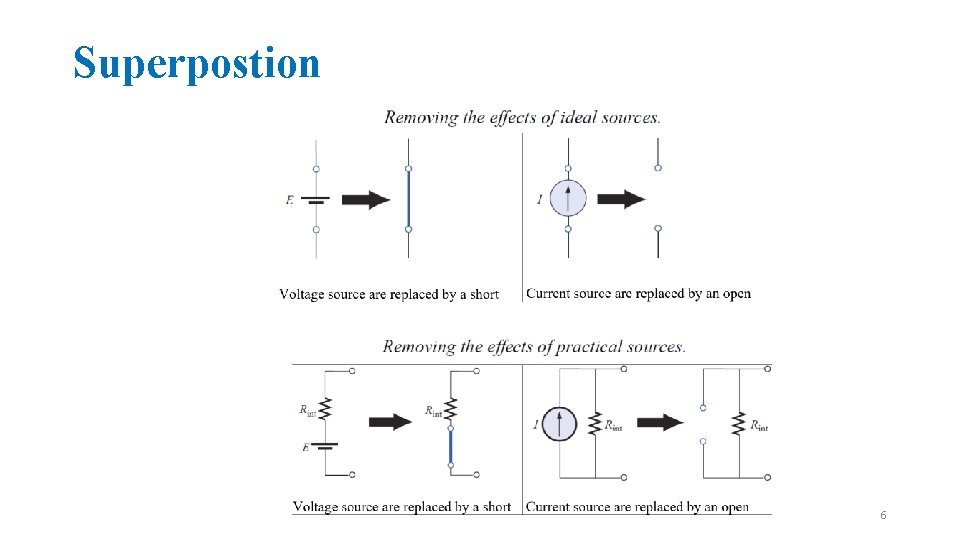
Superpostion 6
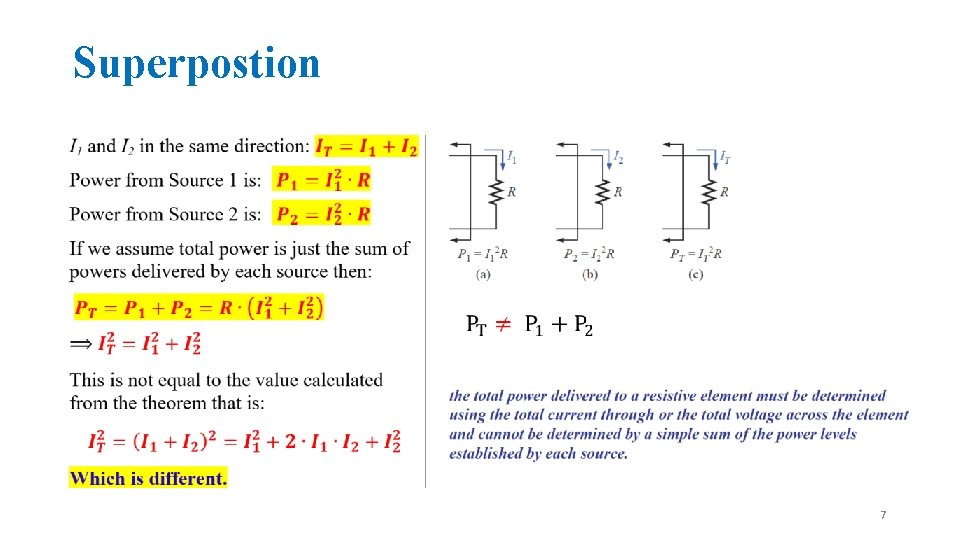
Superpostion 7
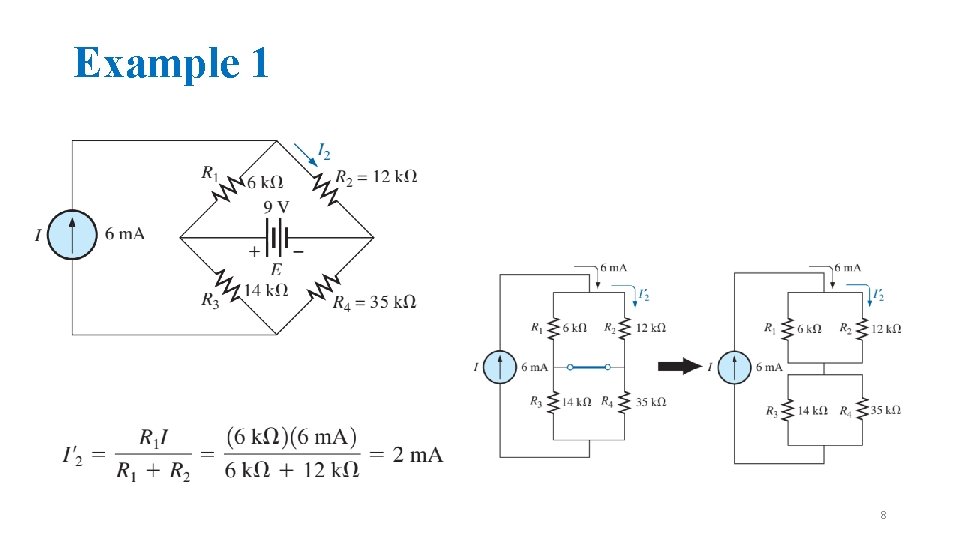
Example 1 8
Example 1 - continued 9
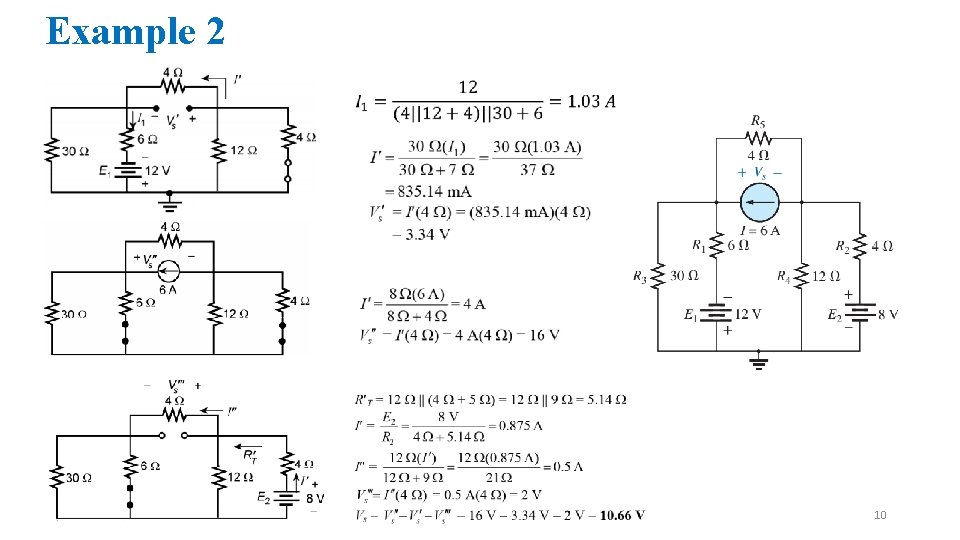
Example 2 10
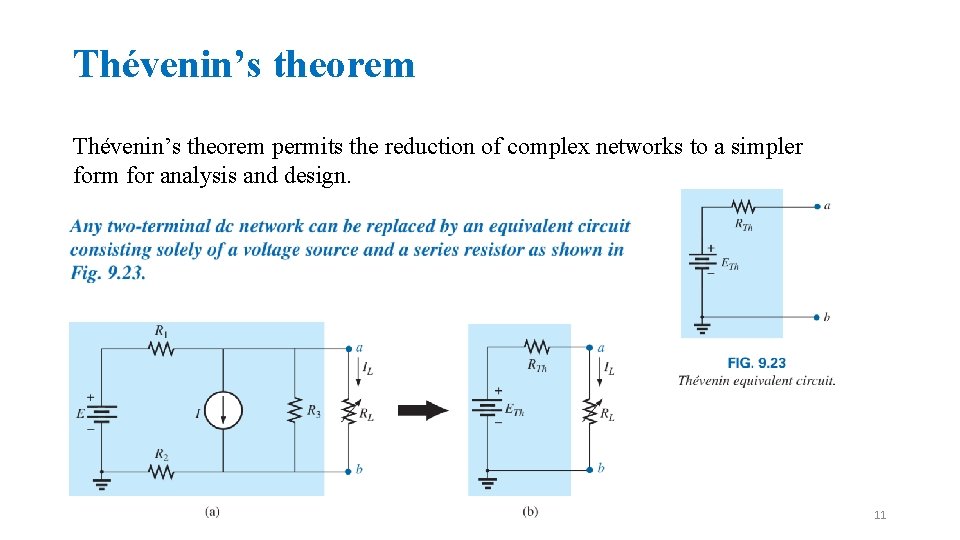
Thévenin’s theorem permits the reduction of complex networks to a simpler form for analysis and design. 11
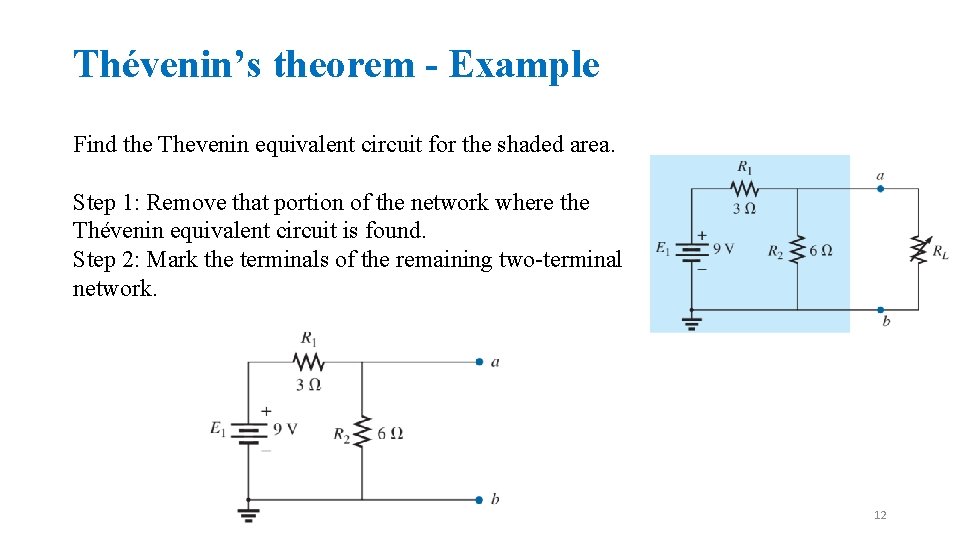
Thévenin’s theorem - Example Find the Thevenin equivalent circuit for the shaded area. Step 1: Remove that portion of the network where the Thévenin equivalent circuit is found. Step 2: Mark the terminals of the remaining two-terminal network. 12
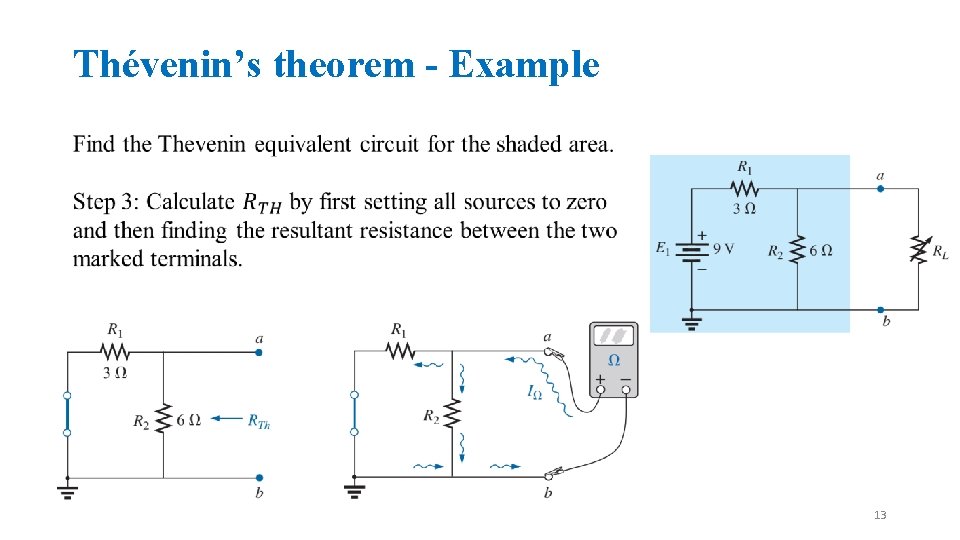
Thévenin’s theorem - Example 13
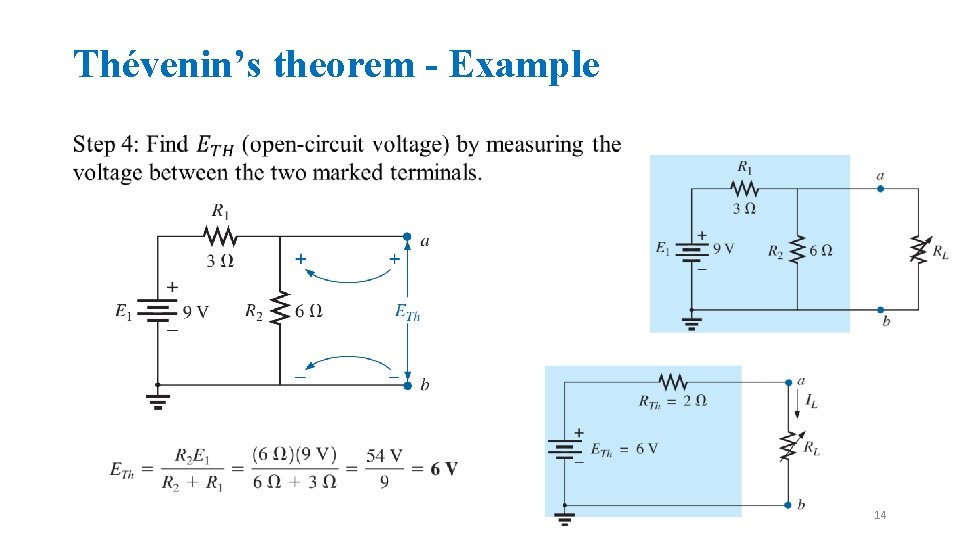
Thévenin’s theorem - Example 14
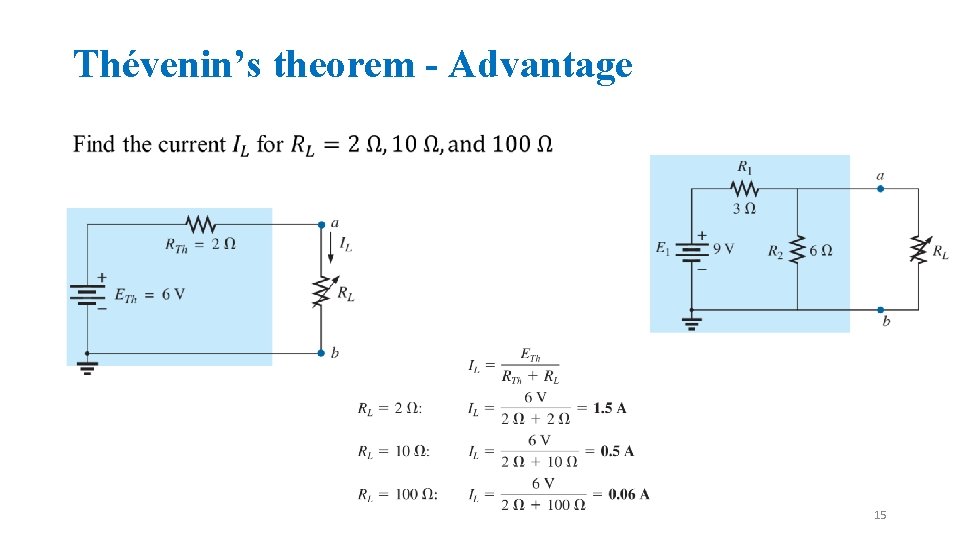
Thévenin’s theorem - Advantage 15
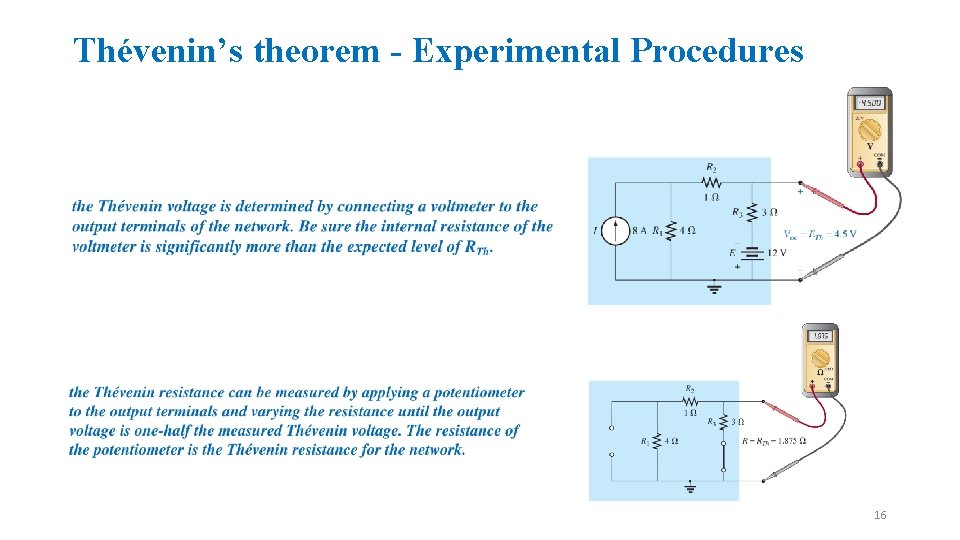
Thévenin’s theorem - Experimental Procedures 16
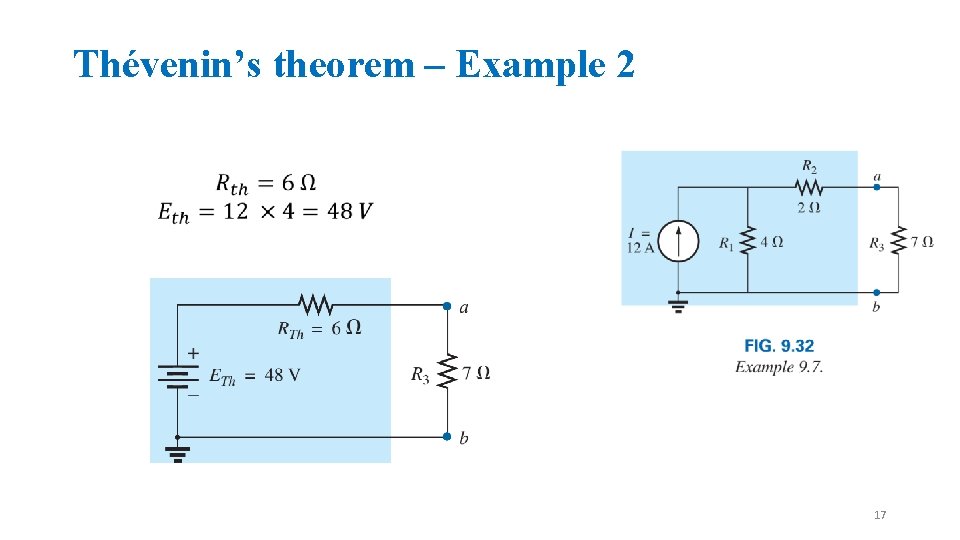
Thévenin’s theorem – Example 2 17
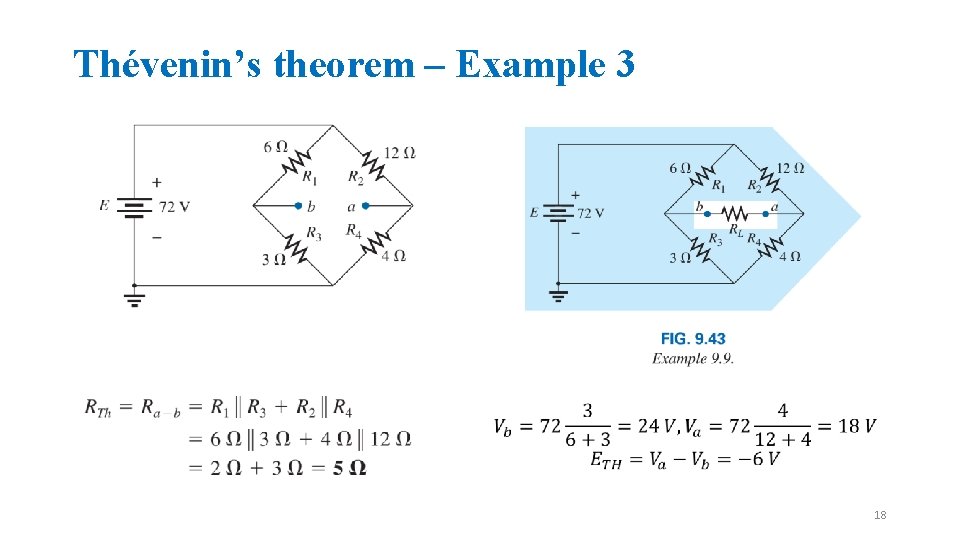
Thévenin’s theorem – Example 3 18
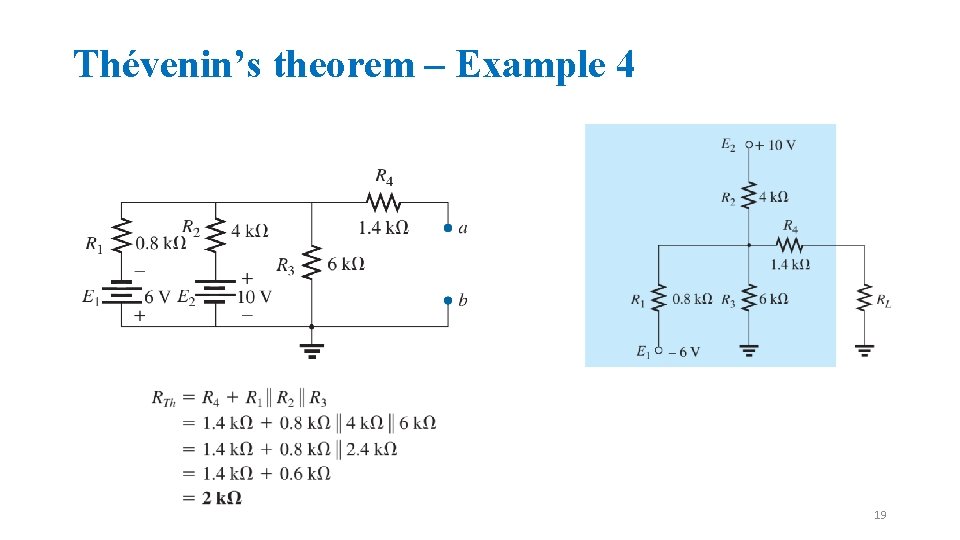
Thévenin’s theorem – Example 4 19
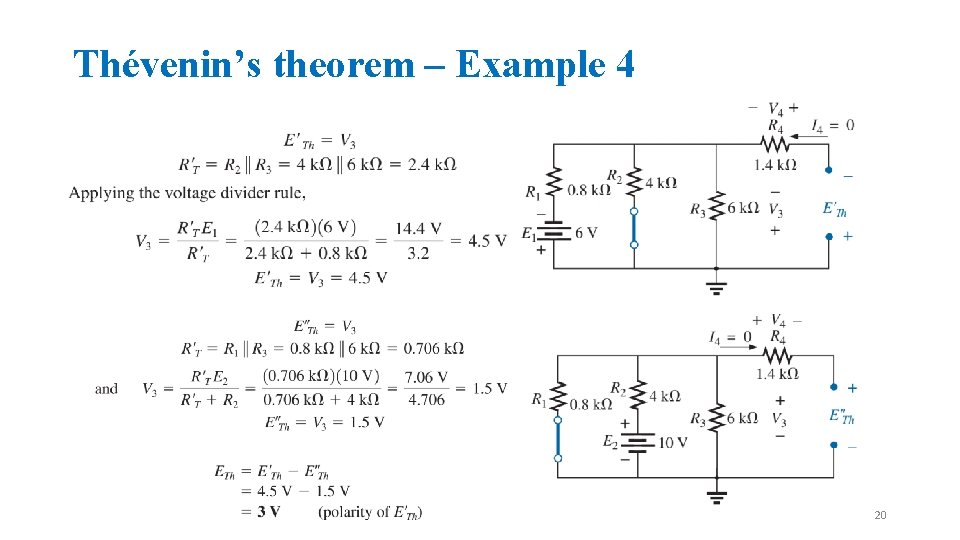
Thévenin’s theorem – Example 4 20
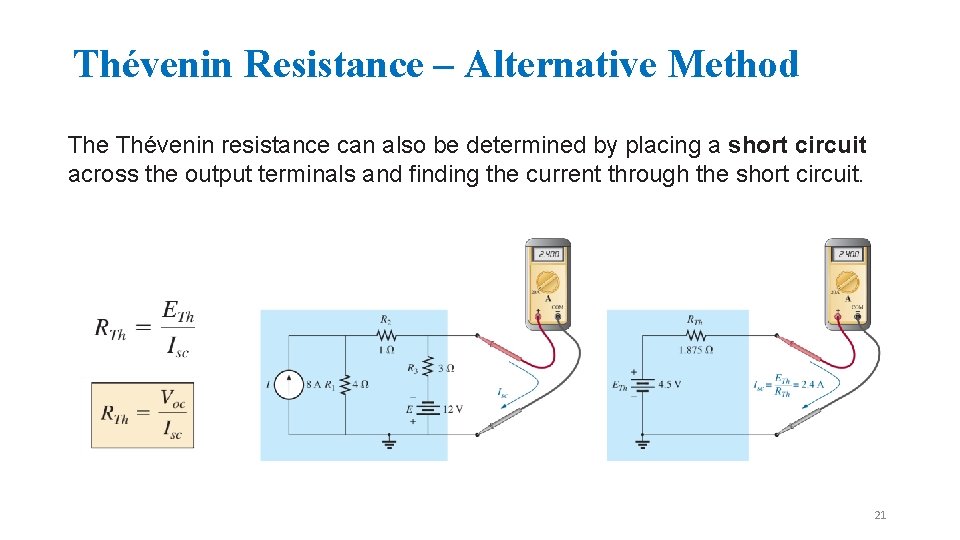
Thévenin Resistance – Alternative Method The Thévenin resistance can also be determined by placing a short circuit across the output terminals and finding the current through the short circuit. 21
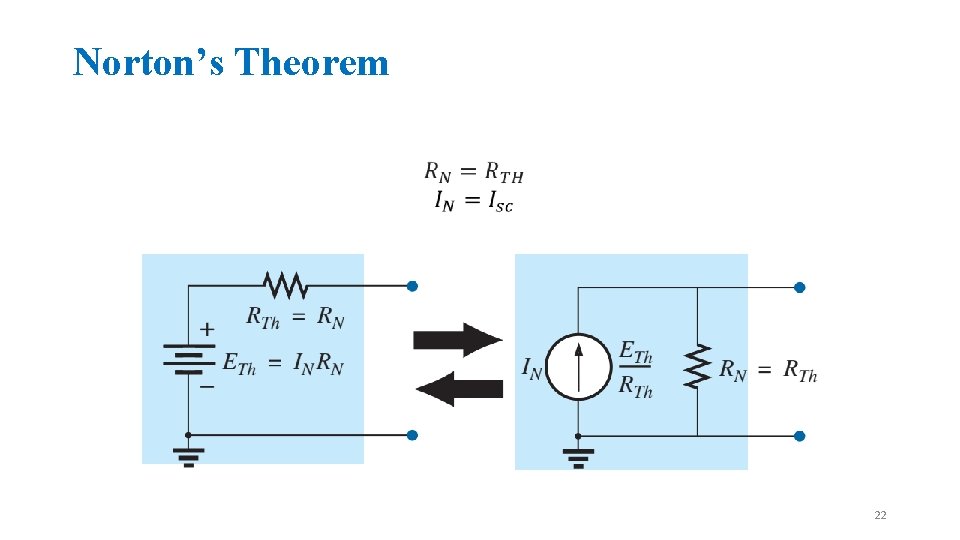
Norton’s Theorem 22
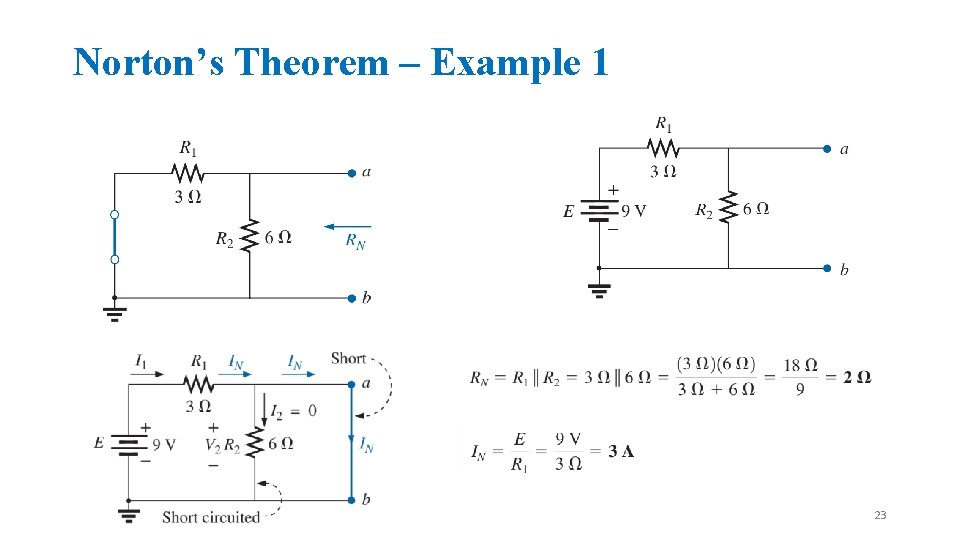
Norton’s Theorem – Example 1 23
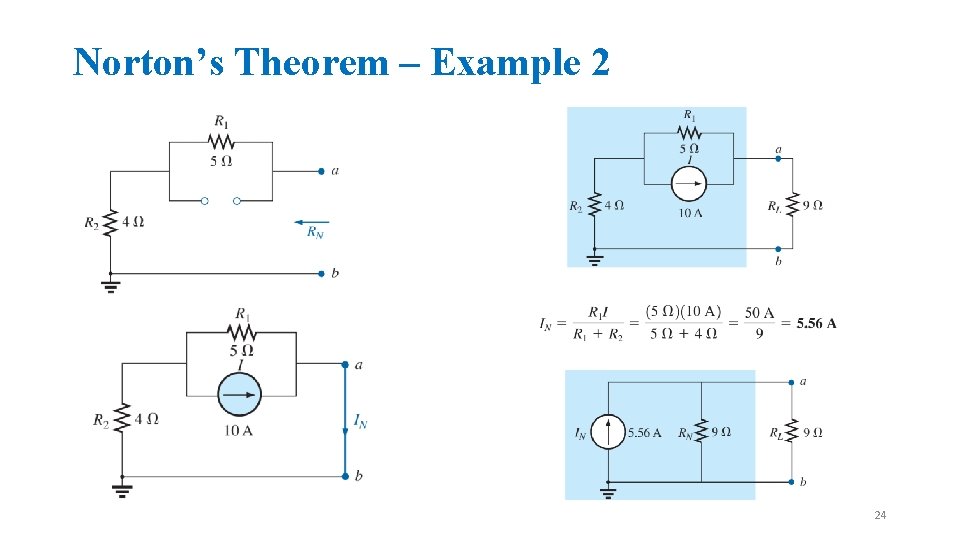
Norton’s Theorem – Example 2 24
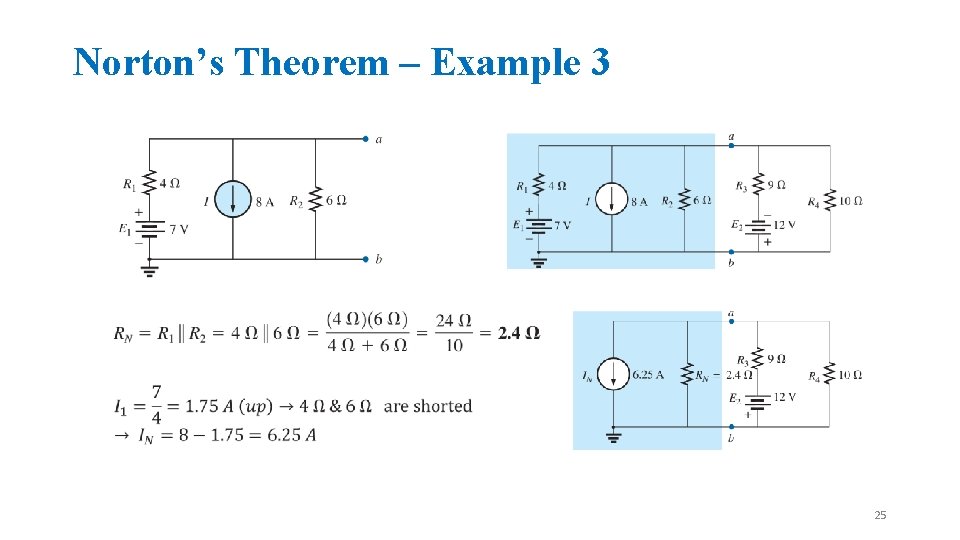
Norton’s Theorem – Example 3 25
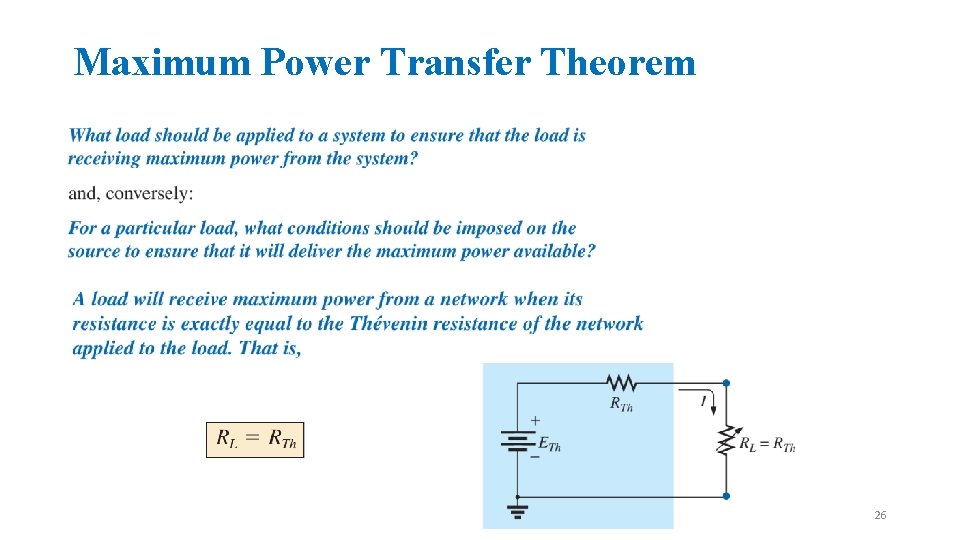
Maximum Power Transfer Theorem 26
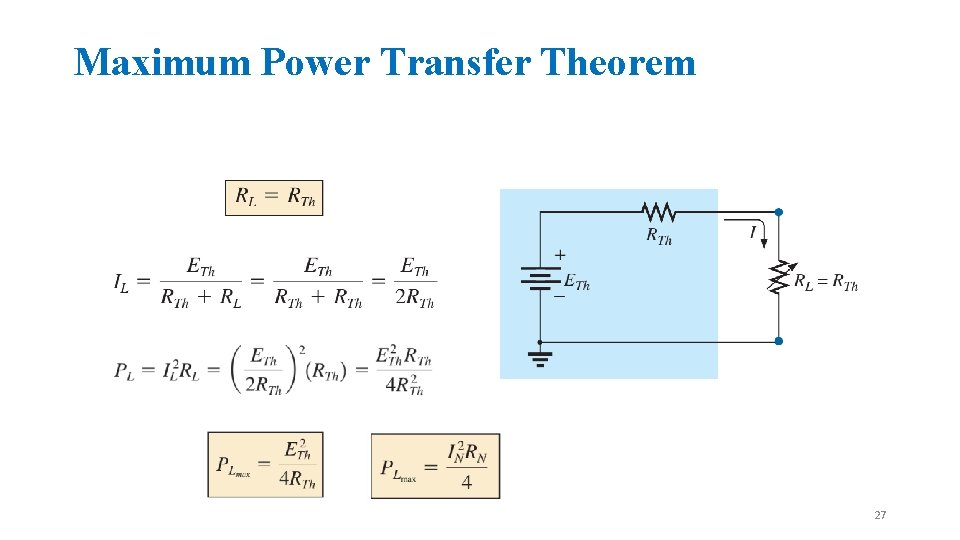
Maximum Power Transfer Theorem 27
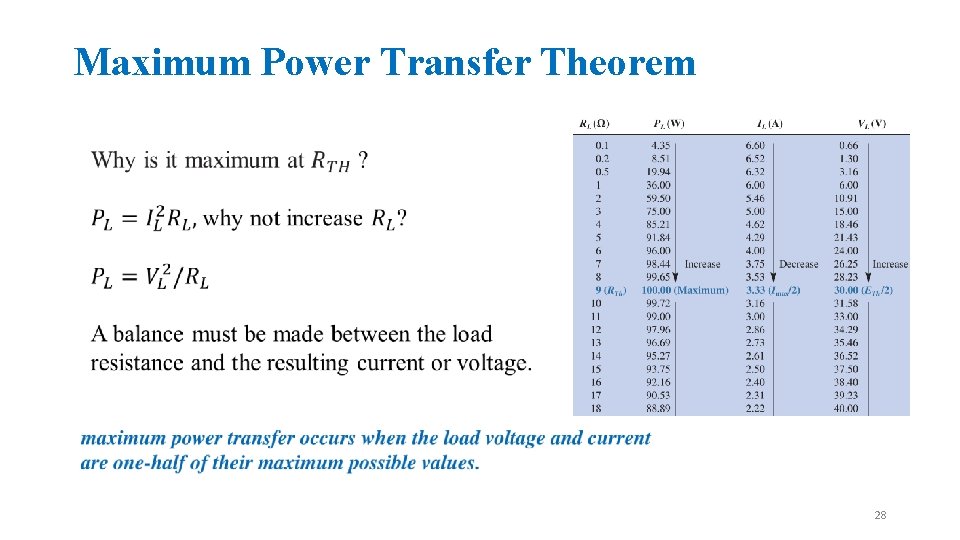
Maximum Power Transfer Theorem 28
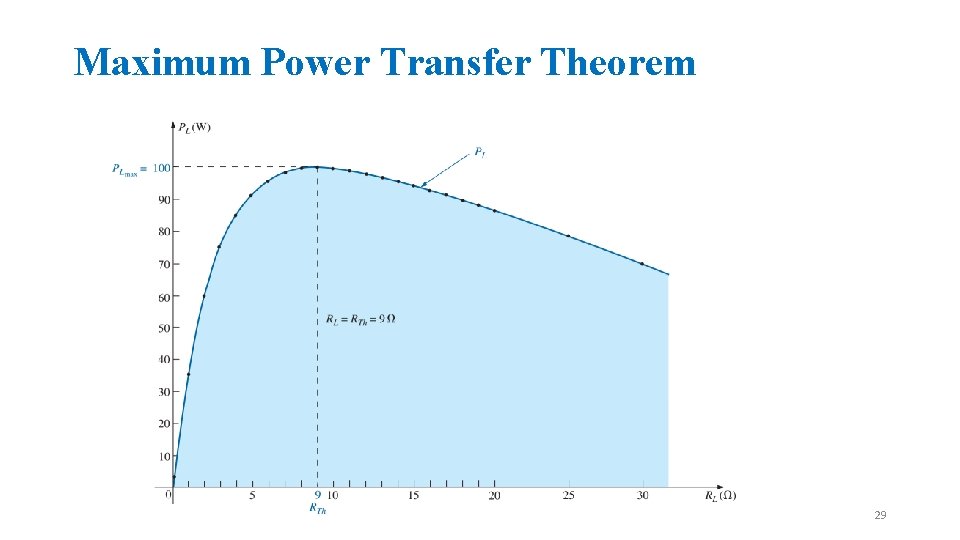
Maximum Power Transfer Theorem 29
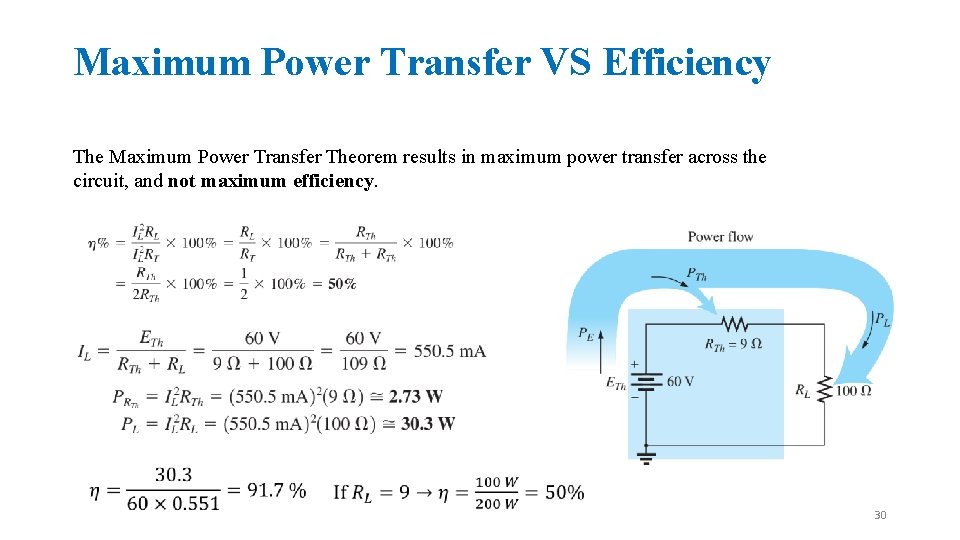
Maximum Power Transfer VS Efficiency The Maximum Power Transfer Theorem results in maximum power transfer across the circuit, and not maximum efficiency. 30
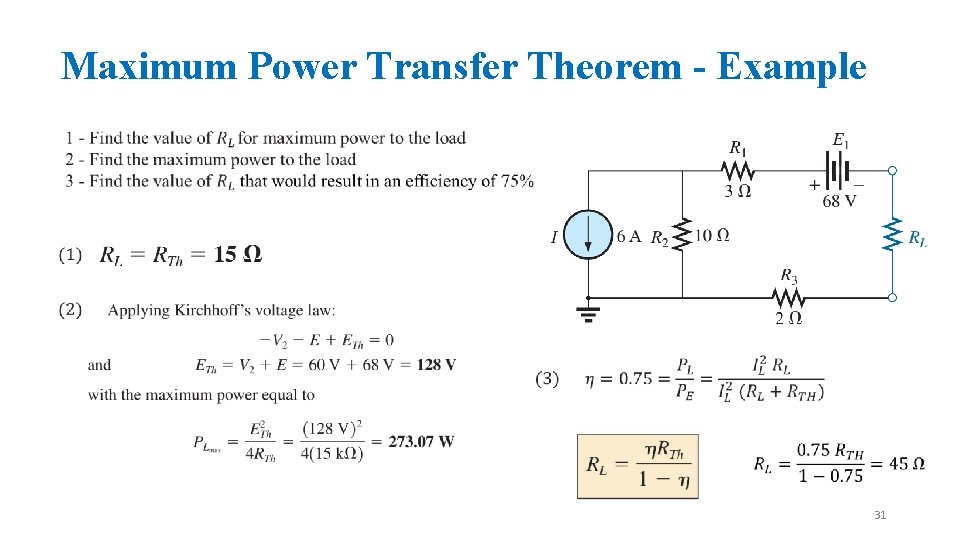
Maximum Power Transfer Theorem - Example 31