ECommerce Management 45 869 Fall 2003 Tridas Mukhopadhyay
- Slides: 35
E-Commerce Management 45 -869 Fall 2003 Tridas Mukhopadhyay tridas@cmu. edu
Introduction • Course Introduction • What is E-Commerce? • Why E-Commerce? • E-Commerce Framework
Course Goals Primary Goal: • Develop a managerial foundation for Electronic Commerce • Secondary Goals: • Study E-Commerce Applications • Impact of the Internet on Management
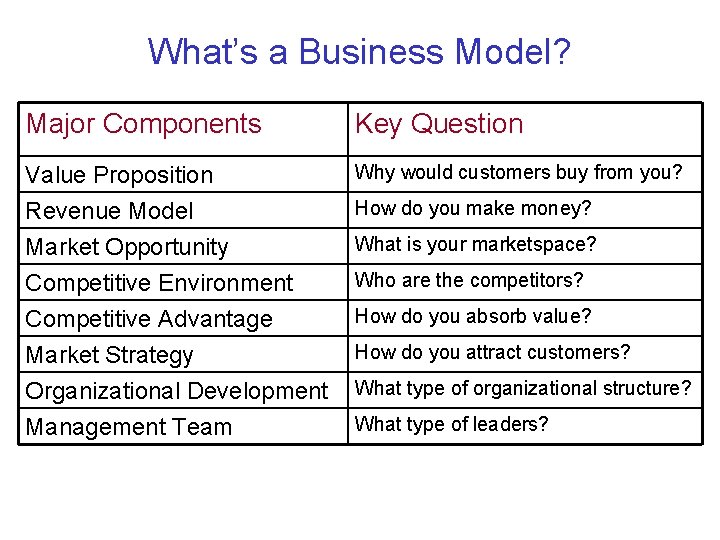
What’s a Business Model? Major Components Key Question Value Proposition Revenue Model Why would customers buy from you? Market Opportunity Competitive Environment Competitive Advantage Market Strategy Organizational Development Management Team What is your marketspace? How do you make money? Who are the competitors? How do you absorb value? How do you attract customers? What type of organizational structure? What type of leaders?
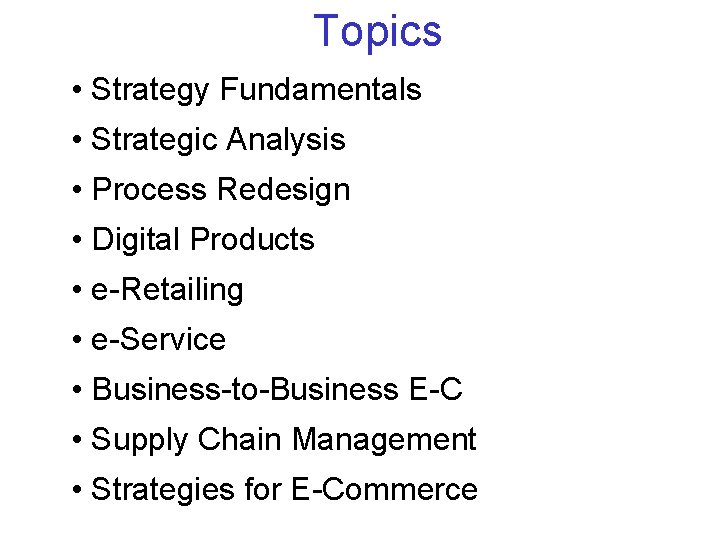
Topics • Strategy Fundamentals • Strategic Analysis • Process Redesign • Digital Products • e-Retailing • e-Service • Business-to-Business E-C • Supply Chain Management • Strategies for E-Commerce
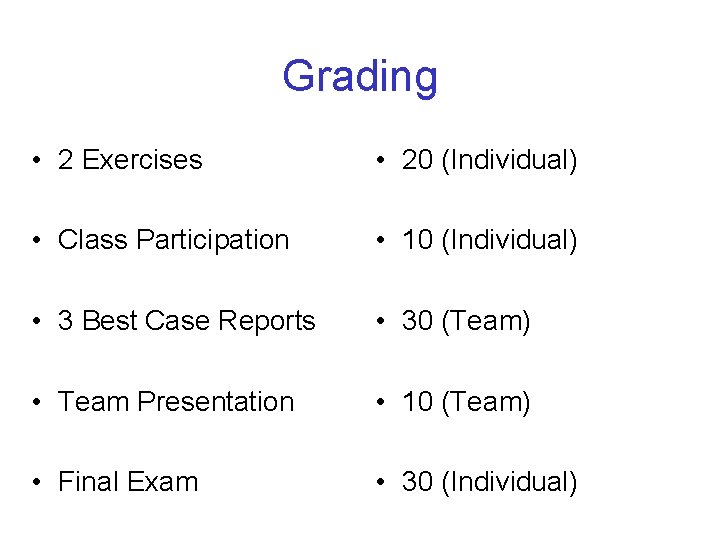
Grading • 2 Exercises • 20 (Individual) • Class Participation • 10 (Individual) • 3 Best Case Reports • 30 (Team) • Team Presentation • 10 (Team) • Final Exam • 30 (Individual)
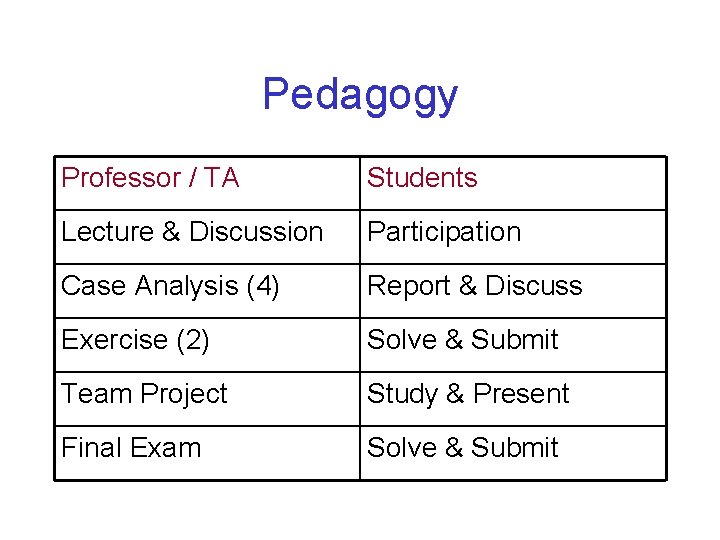
Pedagogy Professor / TA Students Lecture & Discussion Participation Case Analysis (4) Report & Discuss Exercise (2) Solve & Submit Team Project Study & Present Final Exam Solve & Submit
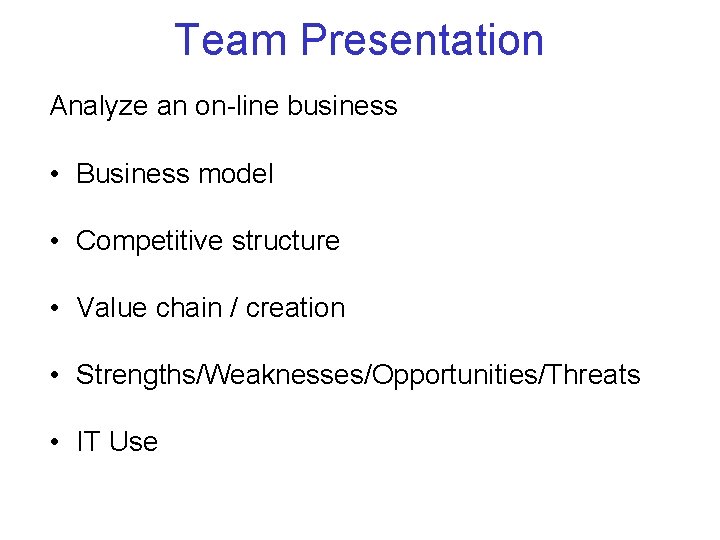
Team Presentation Analyze an on-line business • Business model • Competitive structure • Value chain / creation • Strengths/Weaknesses/Opportunities/Threats • IT Use
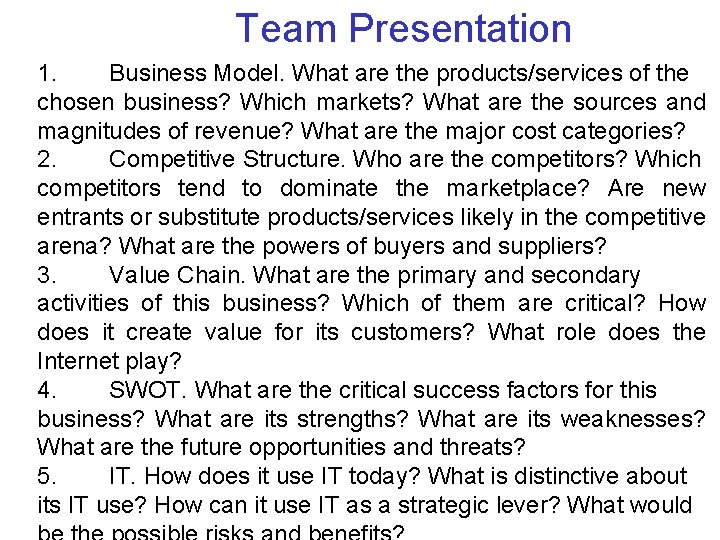
Team Presentation 1. Business Model. What are the products/services of the chosen business? Which markets? What are the sources and magnitudes of revenue? What are the major cost categories? 2. Competitive Structure. Who are the competitors? Which competitors tend to dominate the marketplace? Are new entrants or substitute products/services likely in the competitive arena? What are the powers of buyers and suppliers? 3. Value Chain. What are the primary and secondary activities of this business? Which of them are critical? How does it create value for its customers? What role does the Internet play? 4. SWOT. What are the critical success factors for this business? What are its strengths? What are its weaknesses? What are the future opportunities and threats? 5. IT. How does it use IT today? What is distinctive about its IT use? How can it use IT as a strategic lever? What would
Introduction • Course Introduction • What is E-Commerce? • Why E-Commerce? • E-Commerce Framework
What is Electronic Commerce? Use the Internet, Web or any electronic means to do the following • • •
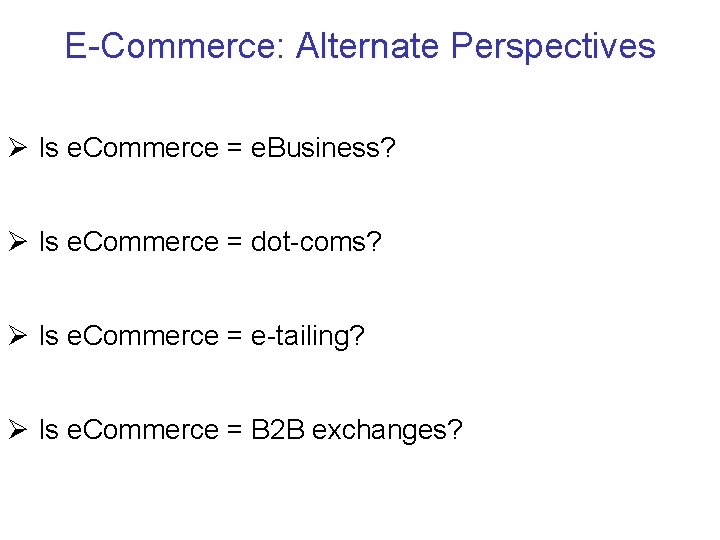
E-Commerce: Alternate Perspectives Ø Is e. Commerce = e. Business? Ø Is e. Commerce = dot-coms? Ø Is e. Commerce = e-tailing? Ø Is e. Commerce = B 2 B exchanges?
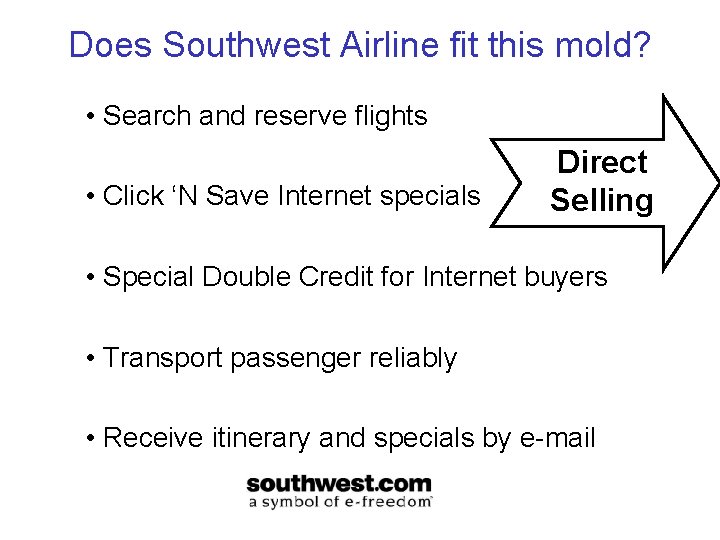
Does Southwest Airline fit this mold? • Search and reserve flights • Click ‘N Save Internet specials Direct Selling • Special Double Credit for Internet buyers • Transport passenger reliably • Receive itinerary and specials by e-mail
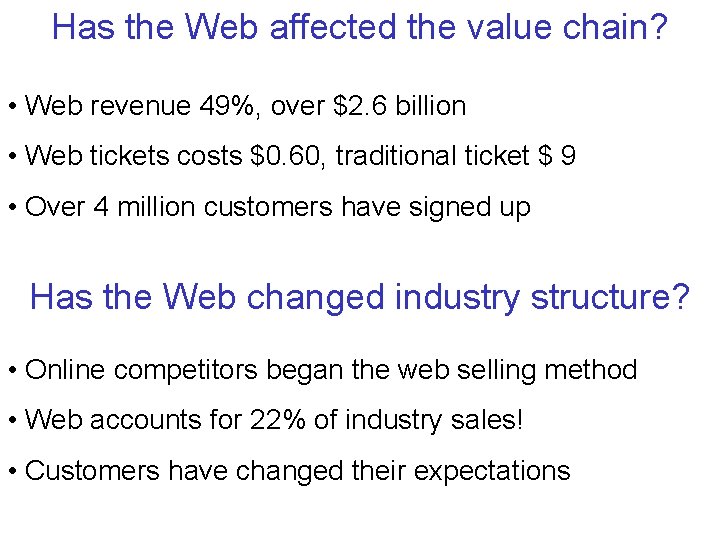
Has the Web affected the value chain? • Web revenue 49%, over $2. 6 billion • Web tickets costs $0. 60, traditional ticket $ 9 • Over 4 million customers have signed up Has the Web changed industry structure? • Online competitors began the web selling method • Web accounts for 22% of industry sales! • Customers have changed their expectations
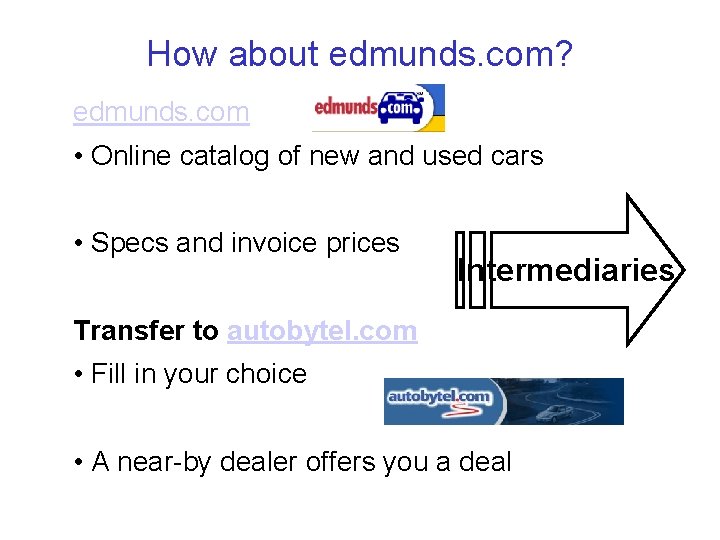
How about edmunds. com? edmunds. com • Online catalog of new and used cars • Specs and invoice prices Intermediaries Transfer to autobytel. com • Fill in your choice • A near-by dealer offers you a deal
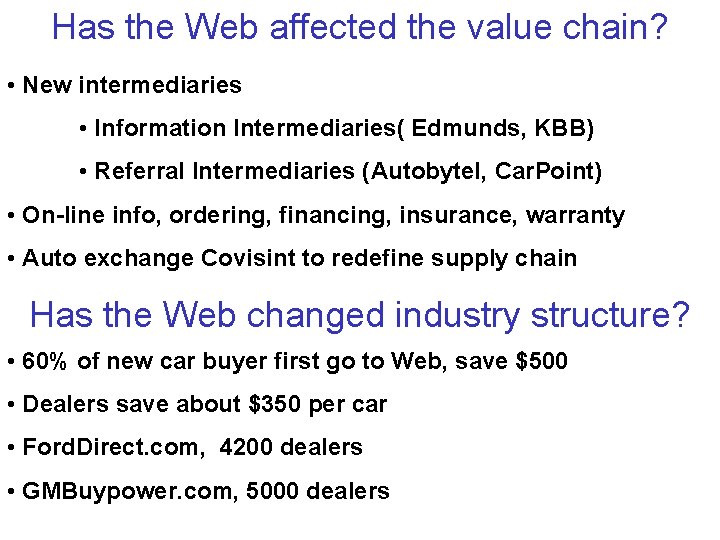
Has the Web affected the value chain? • New intermediaries • Information Intermediaries( Edmunds, KBB) • Referral Intermediaries (Autobytel, Car. Point) • On-line info, ordering, financing, insurance, warranty • Auto exchange Covisint to redefine supply chain Has the Web changed industry structure? • 60% of new car buyer first go to Web, save $500 • Dealers save about $350 per car • Ford. Direct. com, 4200 dealers • GMBuypower. com, 5000 dealers
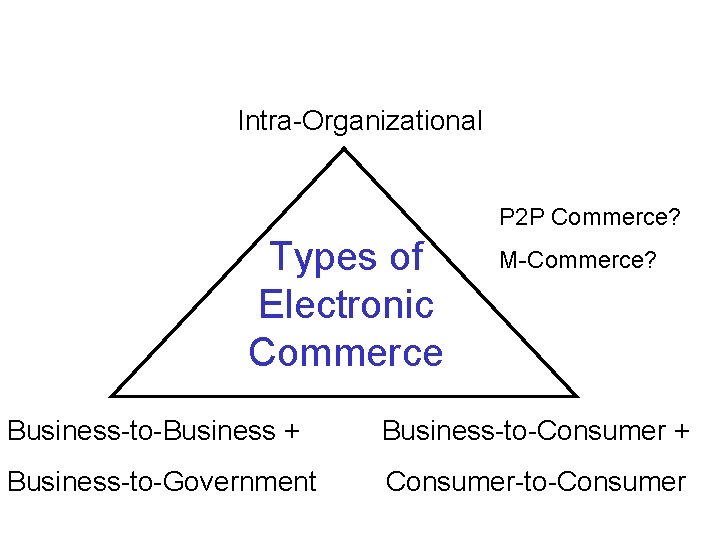
Intra-Organizational P 2 P Commerce? Types of Electronic Commerce M-Commerce? Business-to-Business + Business-to-Consumer + Business-to-Government Consumer-to-Consumer
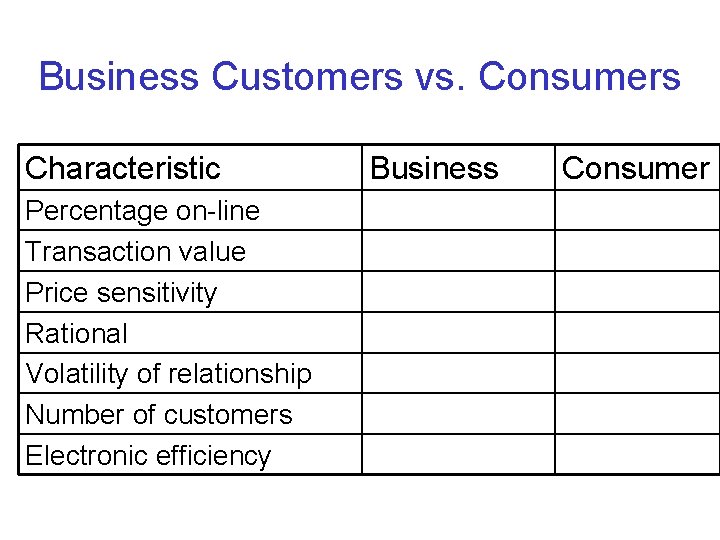
Business Customers vs. Consumers Characteristic Percentage on-line Transaction value Price sensitivity Rational Volatility of relationship Number of customers Electronic efficiency Business Consumer
Introduction • Course Introduction • What is E-Commerce? • Why E-Commerce? • E-Commerce Framework
Why Electronic Commerce? • World Wide Web (Ease, ubiquity, platform independence) • Internet Explosion (Commercial and residential) • Huge Market (Retail, commercial, providers) • Competitive Pressure (Lower entry barrier)
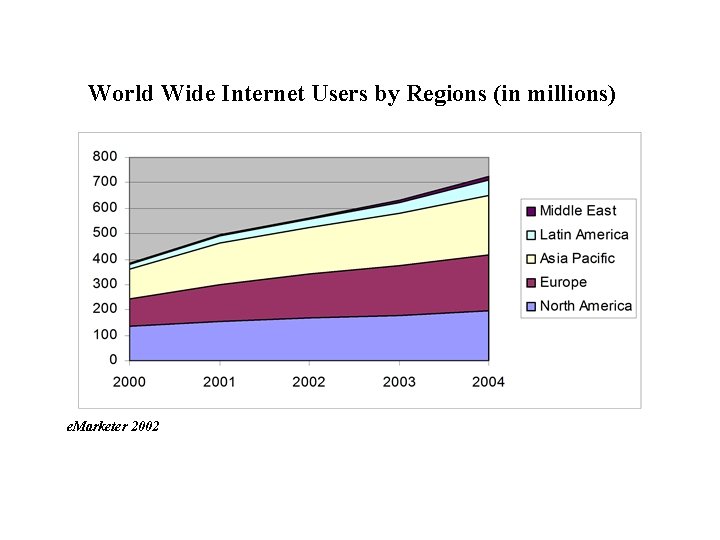
World Wide Internet Users by Regions (in millions) e. Marketer 2002
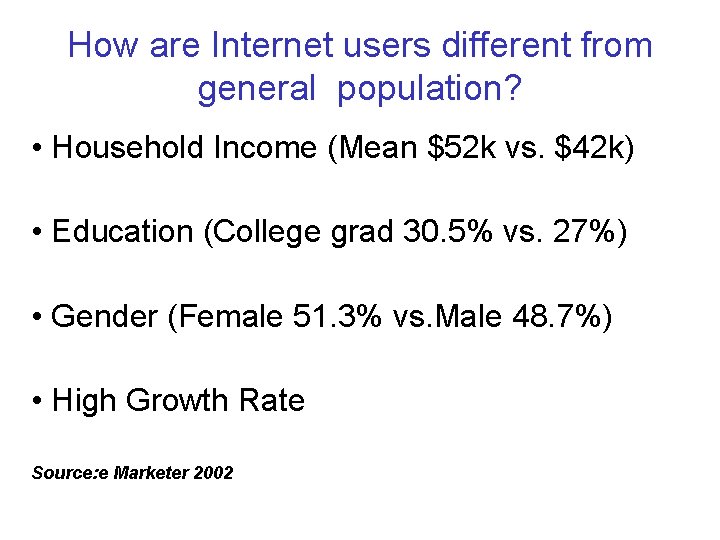
How are Internet users different from general population? • Household Income (Mean $52 k vs. $42 k) • Education (College grad 30. 5% vs. 27%) • Gender (Female 51. 3% vs. Male 48. 7%) • High Growth Rate Source: e Marketer 2002
Possible Benefits of E-Commerce Customers Suppliers • • •
So, Why Did the Dot-Coms Crash? • •
Introduction • Course Introduction • What is E-Commerce? • Why E-Commerce? • E-Commerce Framework
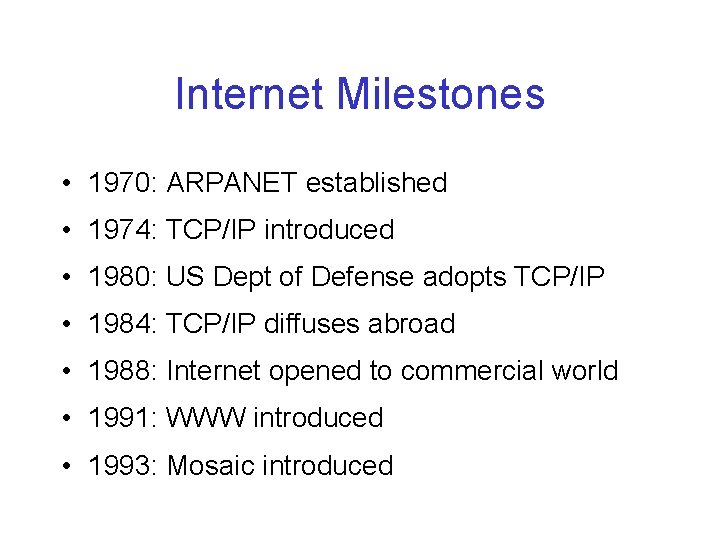
Internet Milestones • 1970: ARPANET established • 1974: TCP/IP introduced • 1980: US Dept of Defense adopts TCP/IP • 1984: TCP/IP diffuses abroad • 1988: Internet opened to commercial world • 1991: WWW introduced • 1993: Mosaic introduced
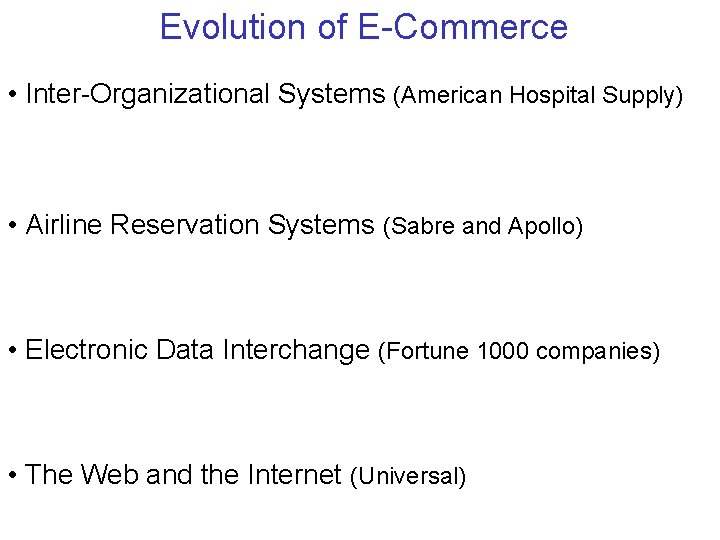
Evolution of E-Commerce • Inter-Organizational Systems (American Hospital Supply) • Airline Reservation Systems (Sabre and Apollo) • Electronic Data Interchange (Fortune 1000 companies) • The Web and the Internet (Universal)
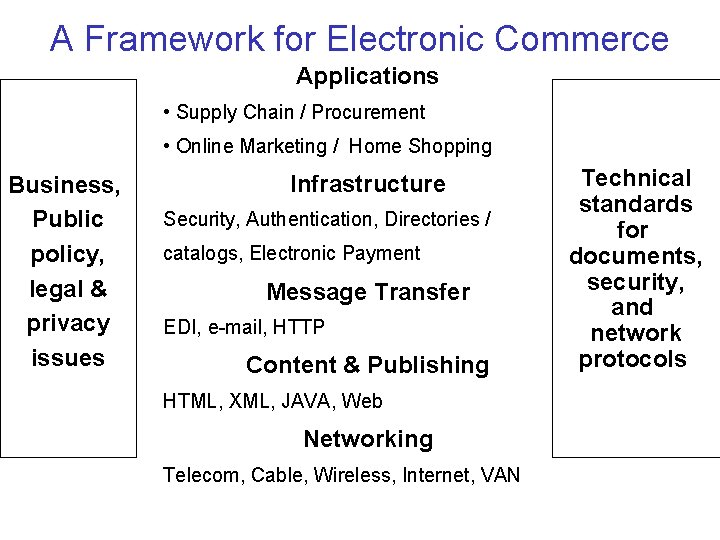
A Framework for Electronic Commerce Applications • Supply Chain / Procurement • Online Marketing / Home Shopping Business, Public policy, legal & privacy issues Infrastructure Security, Authentication, Directories / catalogs, Electronic Payment Message Transfer EDI, e-mail, HTTP Content & Publishing HTML, XML, JAVA, Web Networking Telecom, Cable, Wireless, Internet, VAN Technical standards for documents, security, and network protocols
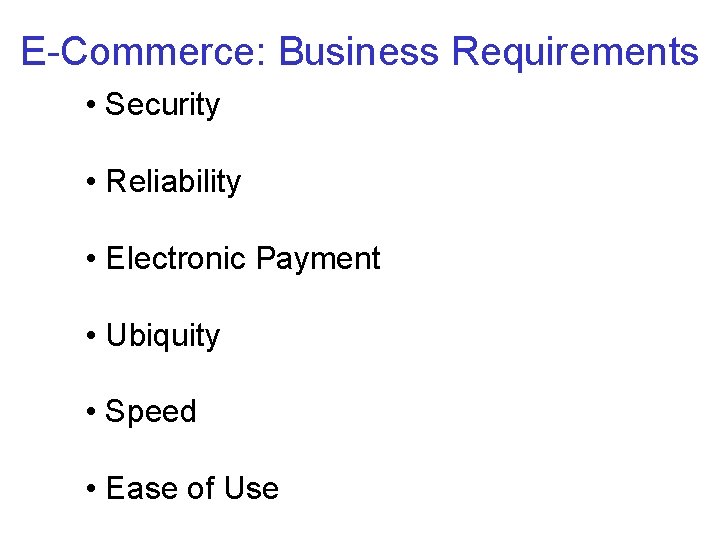
E-Commerce: Business Requirements • Security • Reliability • Electronic Payment • Ubiquity • Speed • Ease of Use
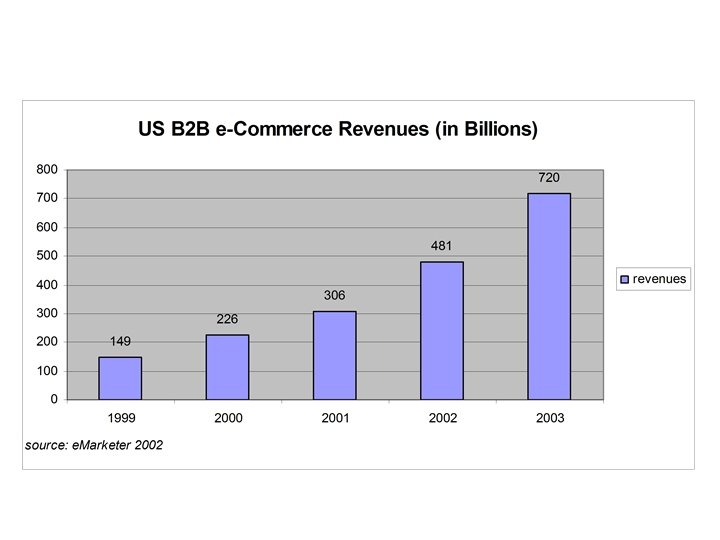
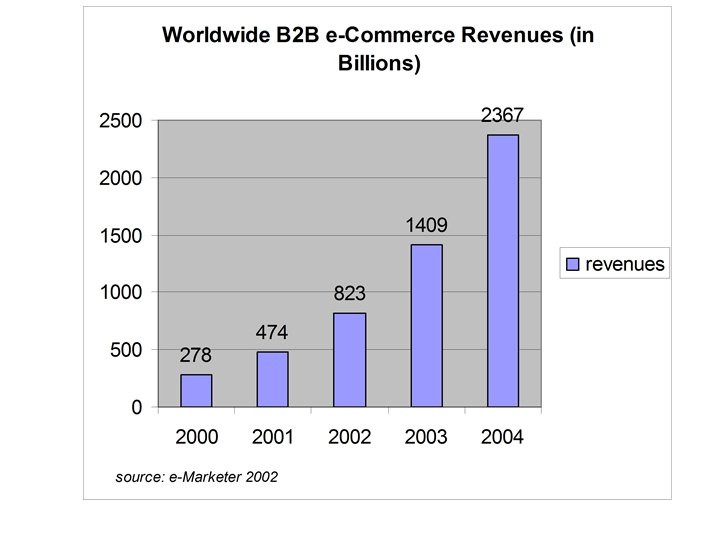
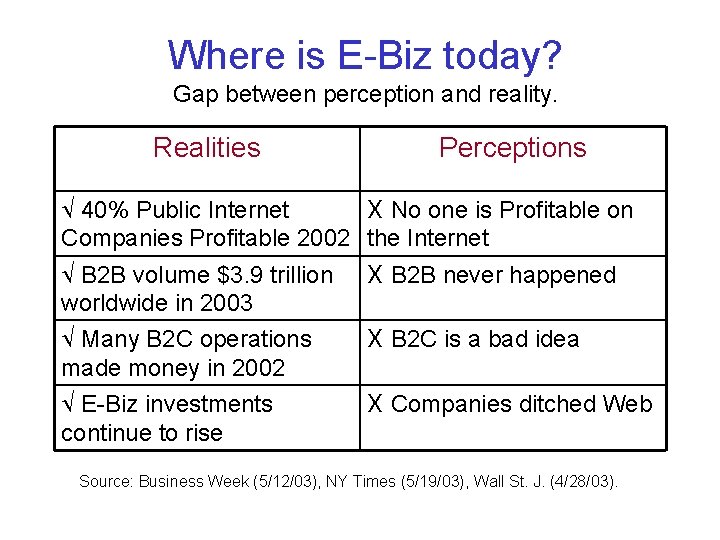
Where is E-Biz today? Gap between perception and reality. Realities Perceptions 40% Public Internet X No one is Profitable on Companies Profitable 2002 the Internet B 2 B volume $3. 9 trillion worldwide in 2003 X B 2 B never happened Many B 2 C operations made money in 2002 X B 2 C is a bad idea E-Biz investments continue to rise X Companies ditched Web Source: Business Week (5/12/03), NY Times (5/19/03), Wall St. J. (4/28/03).
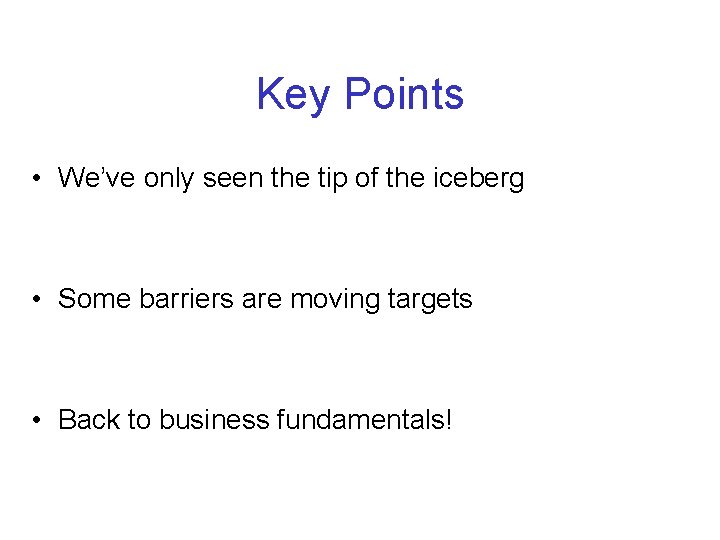
Key Points • We’ve only seen the tip of the iceberg • Some barriers are moving targets • Back to business fundamentals!