
IT 361 ECommerce Systems Chapter 2 Ecommerce Business
IT 361: E-Commerce Systems Chapter 2 E-commerce Business Models and Concepts Readings: Chapter 2 - E-commerce Business Models and Concepts Slide 2 -1
Tweet: Twitter’s Business Model Class Discussion • What characteristics or benchmarks can be used to assess the business value of a company such as Twitter? • Have you used Twitter to communicate with friends or family? What are your thoughts on this service? • What are Twitter’s most important assets? • Which of the various methods described for monetizing Twitter’s assets do you feel might be most successful? Slide 2 -2
E-commerce Business Models—Definitions • Business model: set of planned activities designed to result in a profit in a marketplace • Business plan: document that describes a firm’s business model • E-commerce business model: aims to use and leverage the unique qualities of Internet and Web Slide 2 -3
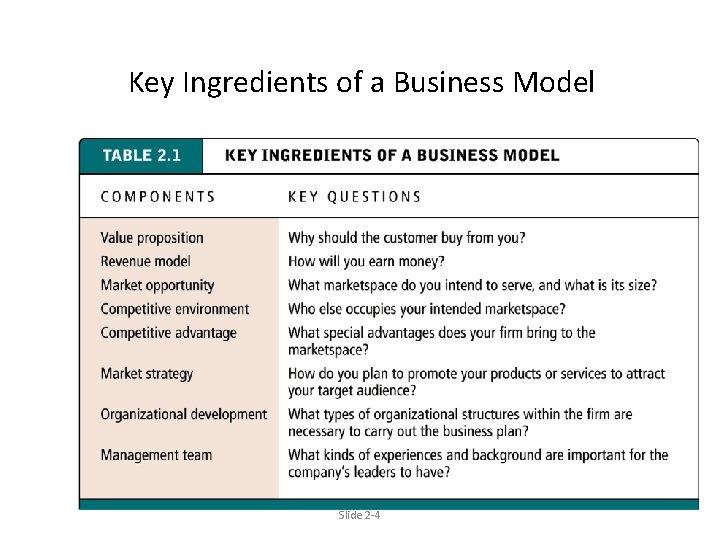
Key Ingredients of a Business Model Slide 2 -4
Value Proposition • Defines how a company’s product or service fulfills the needs of customers “Buy this product, and you will get this specific benefit” • Questions to ask: § Why will customers choose to do business with your firm instead of another? § What will your firm provide that others do not or cannot? • Examples of successful value propositions: § Personalization/customization § Reduction of product search costs § Reduction of price discover costs § Facilitation of transactions by managing product delivery Slide 2 -5
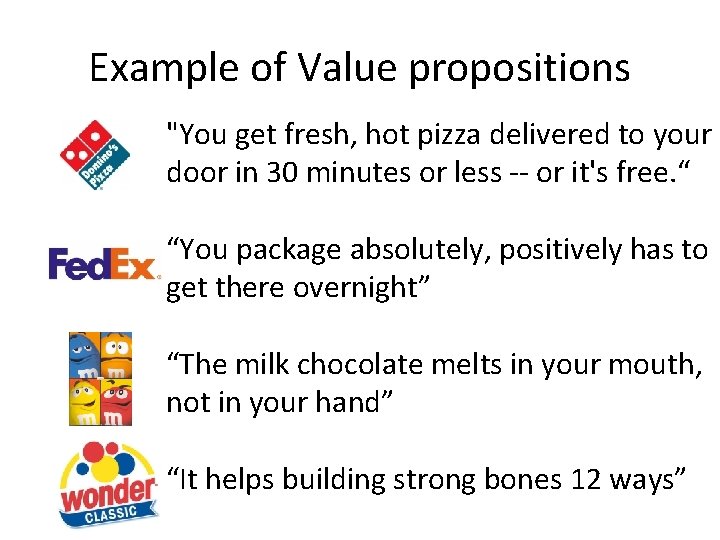
Example of Value propositions "You get fresh, hot pizza delivered to your door in 30 minutes or less -- or it's free. “ “You package absolutely, positively has to get there overnight” “The milk chocolate melts in your mouth, not in your hand” “It helps building strong bones 12 ways”
Approach to creating a compelling customer value proposition • Know your targeted customers and both their obvious and less apparent needs and desires. • Talk to current customers and understand the product's value from their perspective. • Know the competition. What product performance does our offering provide that competition does not. Review existing competitive value propositions to develop an understanding of their relative strengths. Do they send a stronger message to potential customers than the proposition you are considering? • Research classic customer value propositions to learn from the success and failure of other marketplace offerings. • Brainstorm with both others in the company and potential customers to develop a value proposition that states your product benefits clearly and accurately and brings sustaining brand recognition to your product. Reference: Manzi, A. M. (2010). How to Write a Strong Value Proposition. Retrieved 4 22, 2010, from Helium: http: //www. helium. com/items/1161368 -increase-sales-how-to -increase-brand-recognition-writing-a-strong-value-proposition
Revenue Model • Describes how the firm will earn revenue, generate profits, and produce a superior return on invested capital • Major types: § § § Advertising revenue model Subscription revenue model Transaction fee revenue model Sales revenue model Affiliate revenue model Slide 2 -8
Market Opportunity • Refers to a company’s intended marketspace and the overall potential financial opportunities available to the firm in that marketspace • Marketspace: the area of actual or potential commercial value in which a company intends to operate • Realistic market opportunity is defined by revenue potential in each of market niches in which company hopes to compete Slide 2 -9
Competitive Environment • Refers to the other companies selling similar products and operating in the same marketspace • In addition; presence of substitute, potential of new entrants, power of customer, power of supplier (Firm’s environment). • Influenced by: § how many competitors are active § how large their operations are § what is the market share for each competitor § how profitable these firms are § how they price their products • Includes both direct competitors and indirect Slide 2 -10 competitors
Competitive Advantage • Achieved when a firm can produce a superior product and/or bring product to market at a lower price than most, or all, of competitors • Firms achieve competitive advantage when they are able to obtain differential access to the factors of production that are denied to competitors (ex. Terms from suppliers, more experience & knowledge, loyal employee, patent, network, . . ) • Types of competitive advantage include: § First mover advantage—results from a firm being first into a marketplace § Unfair competitive advantage—occurs when one firm develops an advantage based on a factor that Slide 2 -11 other firms cannot purchase
Competitive Advantage • Perfect market: A market in which there are no competitive advantage o asymmetries because all firms have equal access to all factors of production • Leverage a competitive advantage: is when a company uses its competitive advantage to achieve more advantage in surrounding market. (brand leverage). Slide 2 -12
Methods for creating a sustainable competitive advantage 1. Cost leadership - Cost advantage occurs when a firm delivers the same services as its competitors but at a lower cost; 2. Differentiation - Differentiation advantage occurs when a firm delivers greater services for the same price of its competitors. 3. Focus (economics) - A focused approach requires the firm to concentrate on a narrow market niche, hoping to achieve a local rather than industry wide competitive advantage.
Market Strategy • A plan that details how a company intends to enter a new market and attract customers • Best business concepts will fail if not properly marketed to potential customers Slide 2 -14
Organizational Development • Describes how the company will organize the work that needs to be accomplished (implement the business plan) • Work is typically divided into functional departments • Move from generalists to specialists as the company grows • e. g. ebay Slide 2 -15
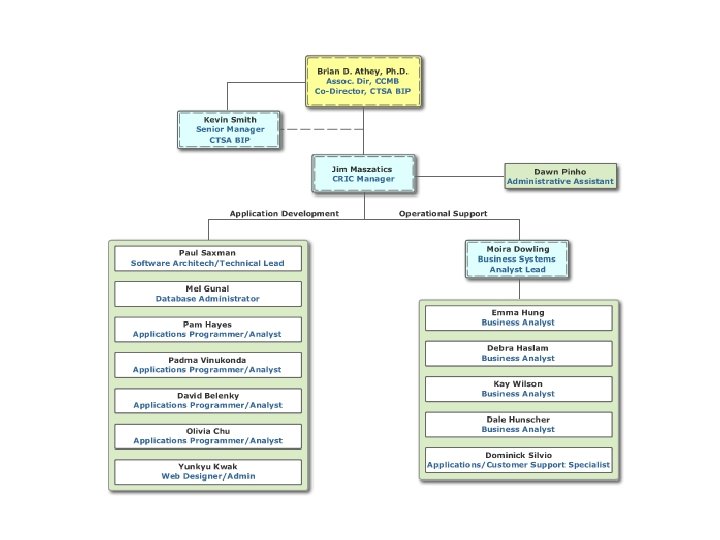
Management Team • Employees of the company responsible for making the business model work • Strong management team gives instant credibility to outside investors, market-specific knowledge, and experience in implementation. • A strong management team may not be able to salvage a weak business model, but should be able to change the model and redefine the business as it becomes necessary Slide 2 -17
How to Identify Management Team? • What kind of experience do you need to manage your startup business? • What technical background is desired? • What kind of supervisory experience? • How many years of experience? • What job functions to be fulfilled? • Any contacts and experience in raising finance? Slide 2 -18
Raising Capital • • • Seed Fund Incubator Angel investors Capital investors Venture Capital Crowdfunding Slide 2 -19
Insight on Business: Crowdfunding Takes Off Class Discussion • What types of projects and companies might be able to most successfully use crowdfunding? • Are there any negative aspects to crowdfunding? • What obstacles are presented in the use of crowdfunding as a method to fund start-ups? Slide 2 -20
Categorizing E-commerce Business Models: Some Difficulties • No one correct way • We categorize business models according to ecommerce sector (B 2 C, B 2 B, C 2 C) • Type of e-commerce technology used can also affect classification of a business model • Some companies use multiple business models Slide 2 -21
• B 2 C Business Models • B 2 B Business Models – Portal – E-tailer – Content Provider – Transaction Broker – Market Creator – Service Provider – Community Provider – E-distributor – E-procurement – Exchanges – Industry Consortia – Private Industrial Networks Slide 2 -22
B 2 C Business Models: Portal • Offers powerful search tools plus an integrated package of content and services • Typically utilizes a combines subscription/advertising revenues/transaction fee model • May be general or specialized (vortal) Slide 2 -23
B 2 C Business Models: E-tailer • Online version of traditional retailer • Types include: § Virtual merchants § Bricks-and-cricks § Catalog merchants § Manufacturer-direct Slide 2 -24
B 2 C Business Models: Content Provider • Information and entertainment companies that provide digital content over the Web • Typically utilizes a subscription, pay for download, or advertising revenue model • Syndication a variation of standard content provider model Slide 2 -25
B 2 C Business Models: Transaction Broker • Processes online transactions for consumers • Primary value proposition—saving of time and money • Typical revenue model—transaction fee • Industries using this model include: § Financial services § Travel services § Job placement services Slide 2 -26
B 2 C Business Models: Market Creator • Uses Internet technology to create markets that bring buyers and sellers together • Examples: § Priceline. com § e. Bay. com • Typically uses a transaction fee revenue model Slide 2 -27
B 2 C Business Models: Service Provider • Offers services online • Value proposition: valuable, convenient, timesaving, low-cost alternatives to traditional service providers • Revenue models: subscription fees or onetime payment Slide 2 -28
B 2 C Business Models: Community Provider • Sites that create a digital online environment where people with similar interests can transact, communicate, and receive interestrelated information. • Typically rely on a hybrid revenue model • Examples: § i. Village. com § Friendster. com § About. com Slide 2 -29

Insight on Technology: Battle of the Titans: Music in the Cloud Class Discussion • Have you purchased music online or subscribed to a music service? What was your experience? • What revenue models do cloud music services use? • Do cloud music services provide a clear advantage over download and subscription services? • Of the cloud services from Google, Amazon, and Apple, which would you prefer to use, and why? Slide 2 -31
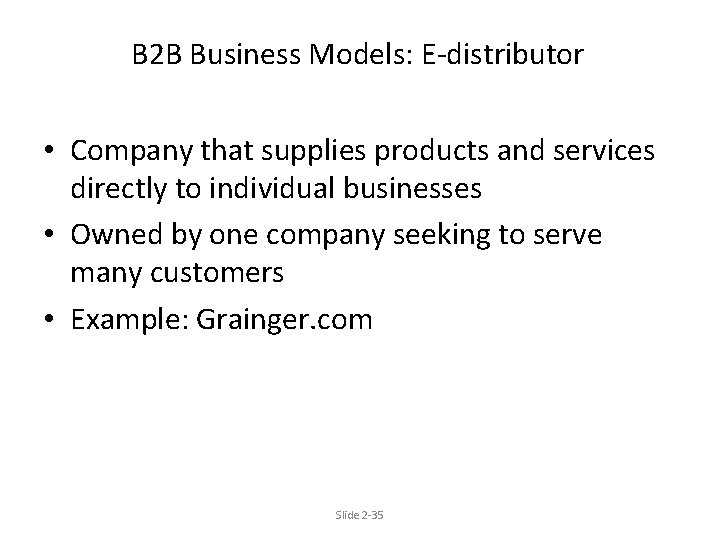
B 2 B Business Models: E-distributor • Company that supplies products and services directly to individual businesses • Owned by one company seeking to serve many customers • Example: Grainger. com Slide 2 -35
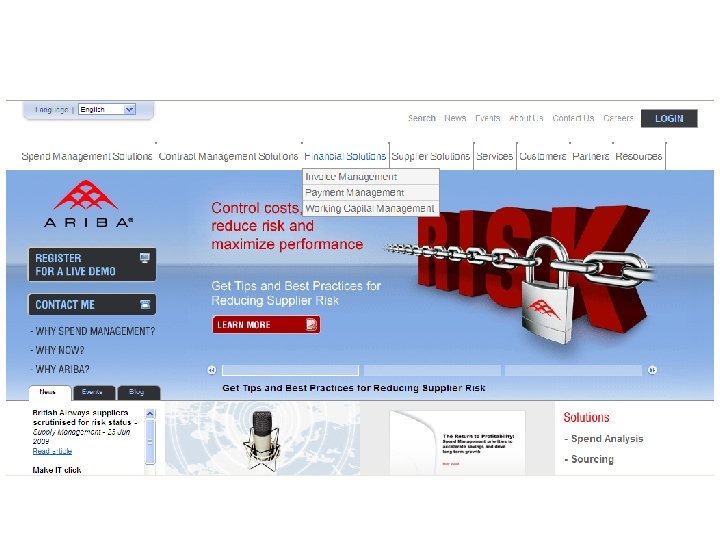
B 2 B Business Models: E-procurement Companies • Create and sell access to digital electronic markets • B 2 B service provider is one type: offer purchasing firms sophisticated set of sourcing and supply chain management tools • Application service providers: a subset of B 2 B service providers • Example: § Ariba Slide 2 -37
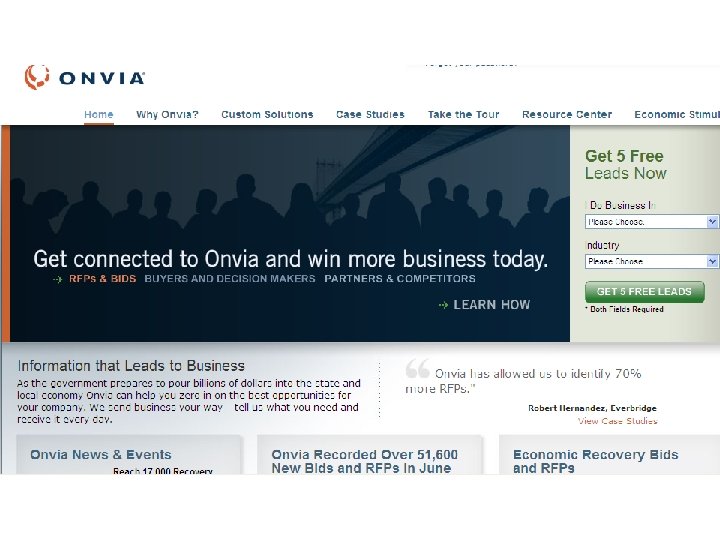
B 2 B Business Models: Exchanges • An electronic digital marketplace where suppliers and commercial purchasers can conduct transactions • Usually owned by independent firms whose business is making a market • Generate revenue by charging transaction fees • Usually serve a single vertical industry • Number of exchanges has fallen to around 200 in 2005 Slide 2 -39
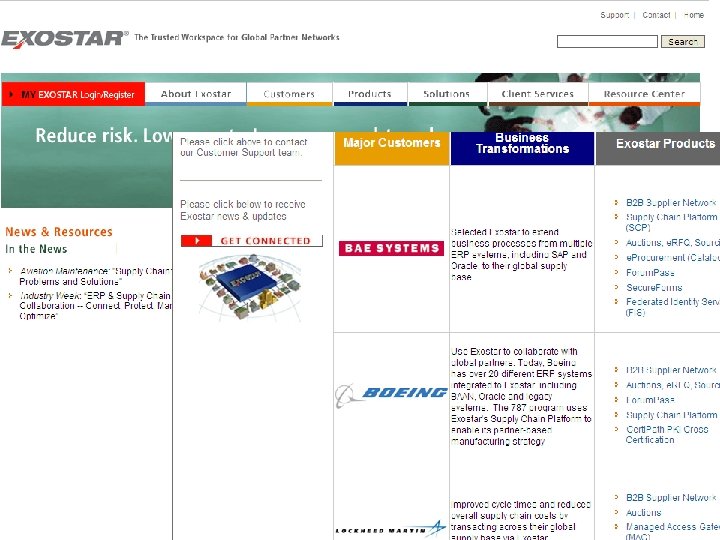
B 2 B Business Models: Industry Consortia • Industry-owned vertical marketplaces that serve specific industries • Horizontal marketplaces, in contrast, sell specific products and services to a wide range of industries • Example: Exostar Slide 2 -41
B 2 B Business Models: Private Industrial Networks • Digital networks (usually, but not always Internet-based) designed to coordinate the flow of communications among firms engaged in business together • Single firm network: the most common form (Example: Walmart) • Industry-wide networks: often evolve out of industry associations (Example: Agentrics) Slide 2 -43
Business Models in Emerging E-commerce Areas • Consumer to Consumer (C 2 C): Provides a way for consumers to sell to each other, with the help of an online marketmaker such as e. Bay. com • Peer-to-Peer (P 2 P): Links users, enabling them to share files and common resources without a common server • M-commerce: Takes traditional e-commerce business models and leverages emerging new wireless technologies • To date, a disappointment in the United States; however, technology platform continues to evolve Slide 2 -44
E-commerce Enablers: The Gold Rush Model • Internet infrastructure companies: Companies whose business model is focused on providing infrastructure necessary for e-commerce companies to exist, grow, and prosper • Provide hardware, software, networking, security, e-commerce software systems, payment systems, databases, hosting services, etc. Slide 2 -45
How the Internet and the Web Change Business: Strategy, Structure, and Process • Important to understand how Internet and Web have changed business environment, including industry structures, business strategies, and industry and firm operations Slide 2 -46
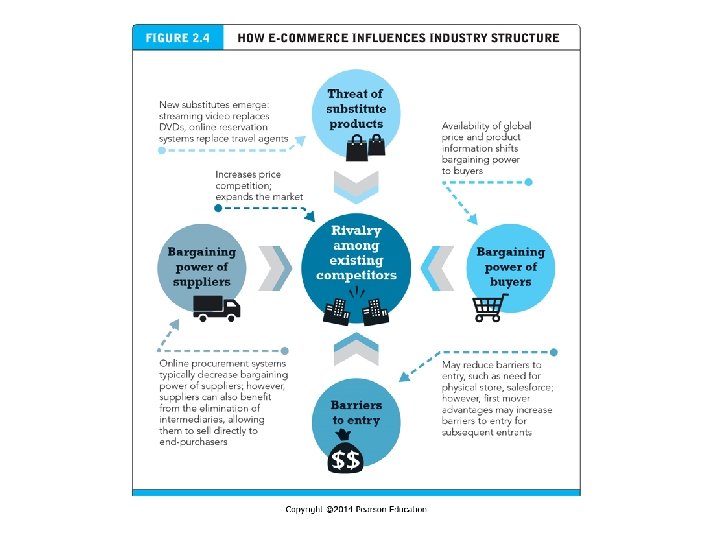
Industry Structure • E-commerce changes the nature of players in an industry and their relative bargaining power by changing: § the basis of competition among rivals § the barriers to entry § the threat of new substitute products § the strength of suppliers § the bargaining power of buyers Slide 2 -47
Slide 2 -48
Industry Structure • Industry Structural Analysis is performed to check a business model and its potential longterm profitability. • E-commerce can affect the structure of an industry +ve (automobile) and -ve (music, travel) – Increased price competition – Created new strategies for differentiation of products and services Slide 2 -49
Industry Value Chains • A set of activities performed in an industry by suppliers, manufacturers, transporters, distributors, and retailers that transform raw inputs into final products and services • Internet may change business operation at the industry level • Reduces the cost of information and other transactional costs Slide 2 -50
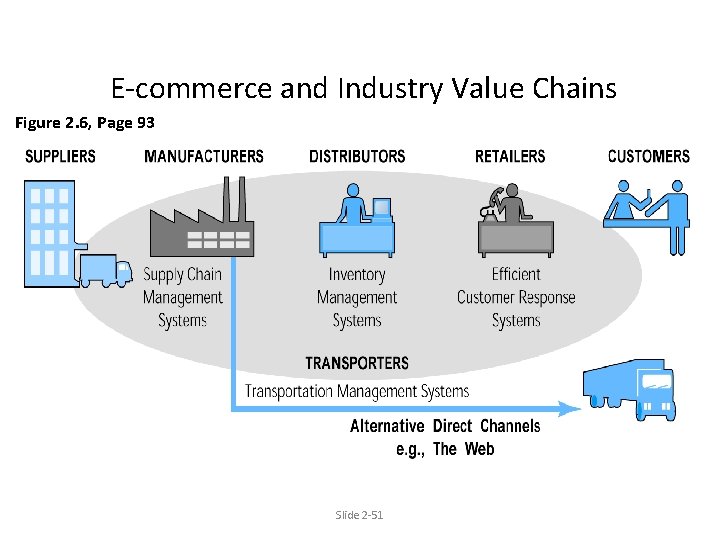
E-commerce and Industry Value Chains Figure 2. 6, Page 93 Slide 2 -51
Firm Value Chains • Analysis of the efficiency of a single firm’s operation • A set of activities that a firm engages in to create final products from raw inputs • Internet helped firms increases operational efficiency – Outsource activities via the internet – Precisely coordinate steps in the value chain and reduce cost – Differentiate product and services Slide 2 -52
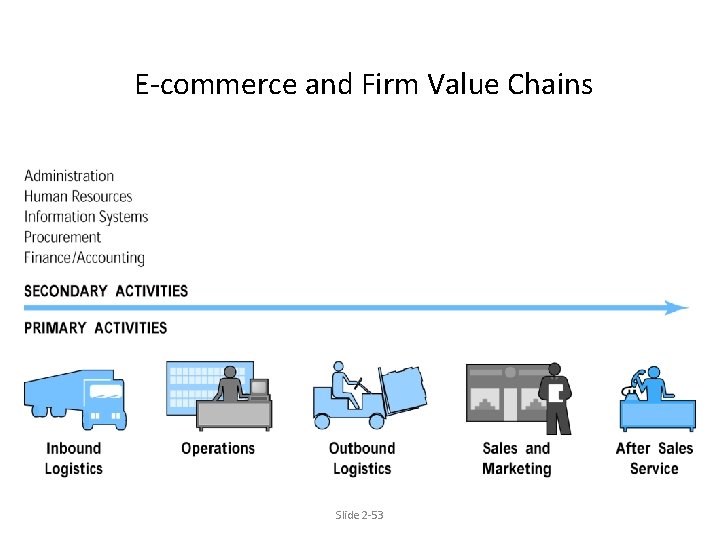
E-commerce and Firm Value Chains Slide 2 -53
Firm Value Webs • A networked business ecosystem that uses Internet technology to coordinate the value chains of business partners within an industry, or within a group of firms • Coordinates a firm’s suppliers with its own production needs using an Internet-based supply chain management system Slide 2 -54
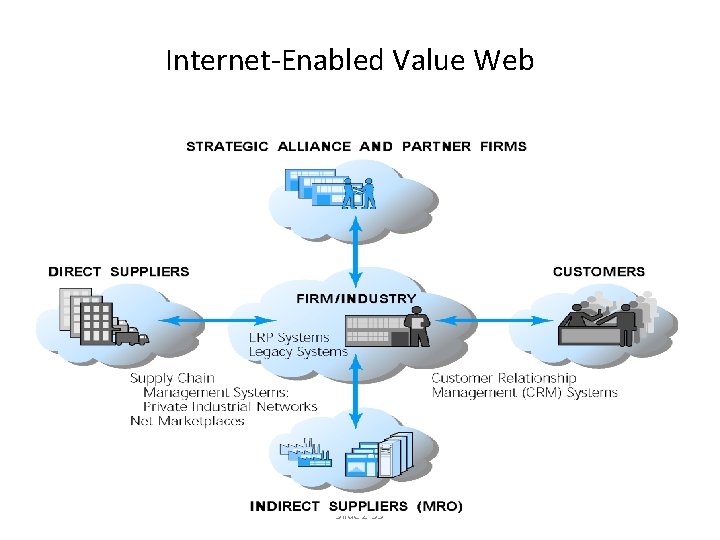
Internet-Enabled Value Web Slide 2 -55
Business Strategy • A set of plans for achieving superior long-term returns on the capital invested in a business firm (i. e. , a plan for making a profit in a competitive environment) • Why would anyone pay for a product than it costs to produce? • Four generic strategies § § Differentiation (vs. commoditization) Cost Scope Focus Slide 2 -56
Teaching Objectives • Identify the key components of e-commerce business models. • Describe the major B 2 C business models. • Describe the major B 2 B business models. • Recognize business models in other emerging areas of e-commerce. • Understand key business concepts and strategies applicable to e-commerce
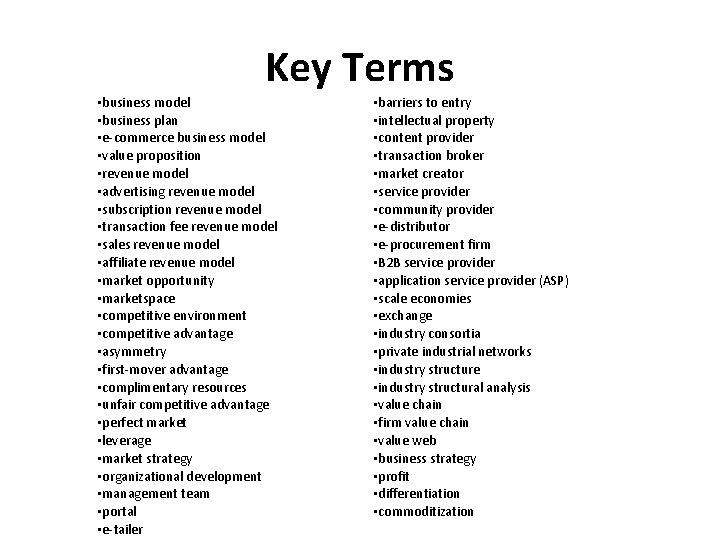
Key Terms • business model • business plan • e-commerce business model • value proposition • revenue model • advertising revenue model • subscription revenue model • transaction fee revenue model • sales revenue model • affiliate revenue model • market opportunity • marketspace • competitive environment • competitive advantage • asymmetry • first-mover advantage • complimentary resources • unfair competitive advantage • perfect market • leverage • market strategy • organizational development • management team • portal • e-tailer • barriers to entry • intellectual property • content provider • transaction broker • market creator • service provider • community provider • e-distributor • e-procurement firm • B 2 B service provider • application service provider (ASP) • scale economies • exchange • industry consortia • private industrial networks • industry structure • industry structural analysis • value chain • firm value chain • value web • business strategy • profit • differentiation • commoditization
- Slides: 58