Donald Coxeter The Man Who Saved Geometry Nathan

- Slides: 23
Donald Coxeter “The Man Who Saved Geometry” Nathan Cormier April 10, 2007
Who is Donald Coxeter? • Donald Coxeter was a classical geometer • As a classical geometer his goals were not just about proving theorems but they were more aimed at finding “gemlike” geometric objects • He explored and enumerated many different geometric configurations and showed how they related to each other through their symmetrical properties
Symmetry • According to Coxeter Symmetry is “the unifying thread that runs through all his work” – “sym” – means together – “metry” – means measure • There are 4 basic types of Symmetry 1. 2. 3. 4. Bilateral Symmetry Rotational Symmetry Translational Symmetry Many different combinations of the above
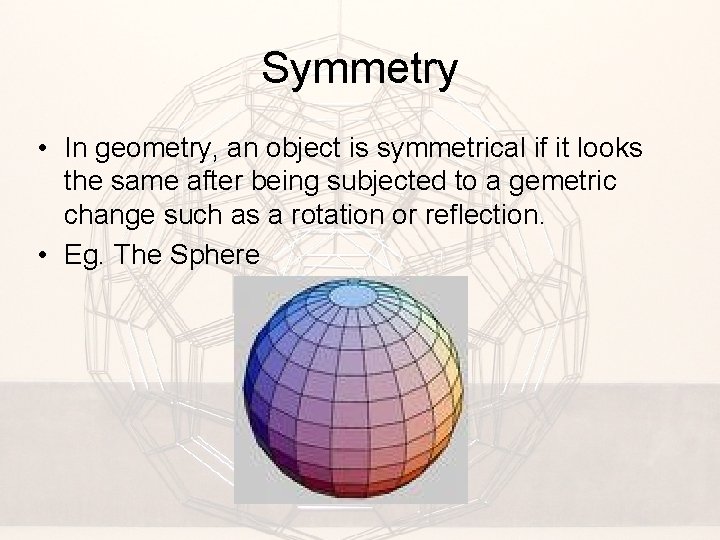
Symmetry • In geometry, an object is symmetrical if it looks the same after being subjected to a gemetric change such as a rotation or reflection. • Eg. The Sphere
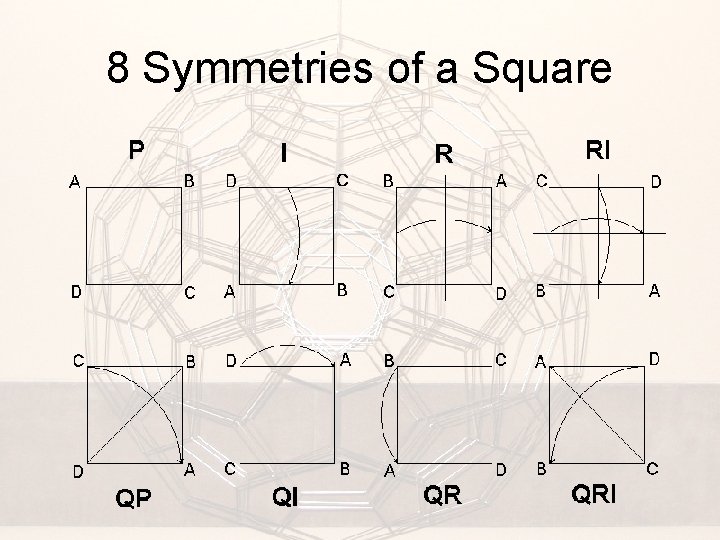
Symmetry • This means the sphere is invariant or unchanging under an infinite number of symmetry operations • Coxeter did not find these shapes interesting and preferred to work with shapes that had discrete symmetries • A basic example of this is a square which has only 8 symmetries. – There are only 8 ways that its position can be changed but will leave the square looking exactly the same.
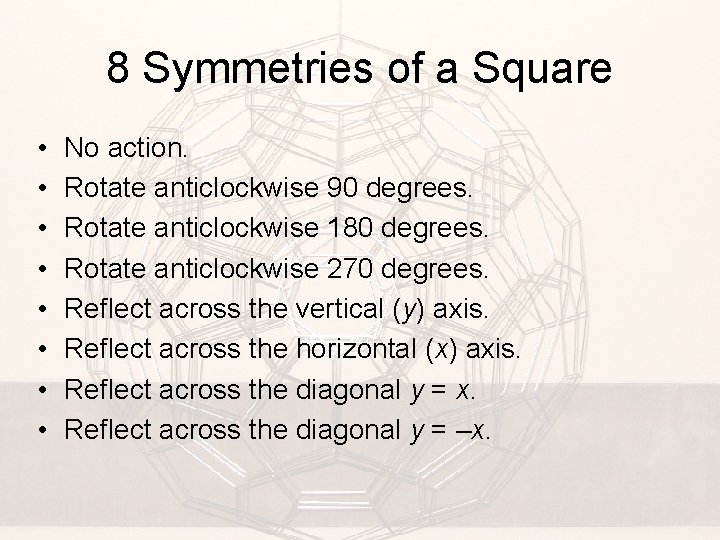
8 Symmetries of a Square • • No action. Rotate anticlockwise 90 degrees. Rotate anticlockwise 180 degrees. Rotate anticlockwise 270 degrees. Reflect across the vertical (y) axis. Reflect across the horizontal (x) axis. Reflect across the diagonal y = x. Reflect across the diagonal y = –x.
8 Symmetries of a Square
Group Theory • A group in math is a set of actions that preserve an objects appearance • For the square the group would be the set of 8 actions that preserve the square’s appearance • These consist of the symmetry operations from the previous slide
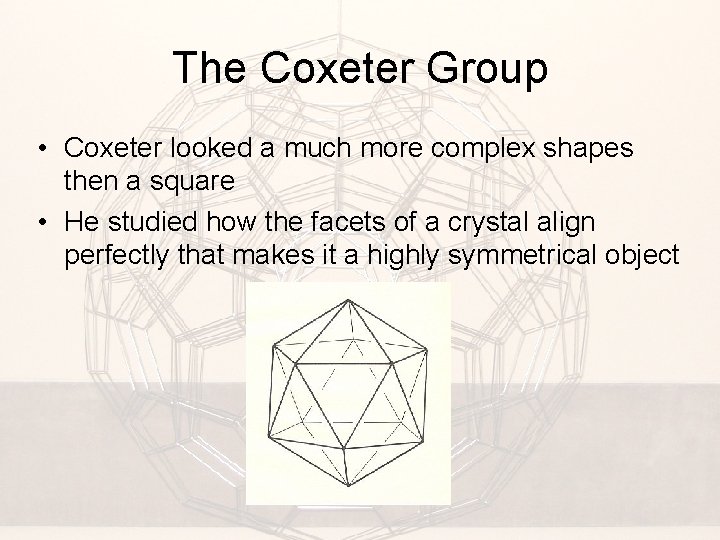
The Coxeter Group • Coxeter looked a much more complex shapes then a square • He studied how the facets of a crystal align perfectly that makes it a highly symmetrical object
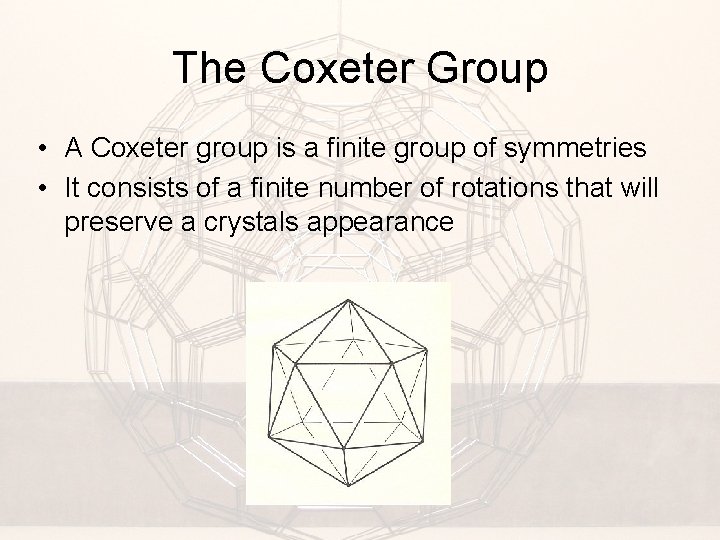
The Coxeter Group • A Coxeter group is a finite group of symmetries • It consists of a finite number of rotations that will preserve a crystals appearance
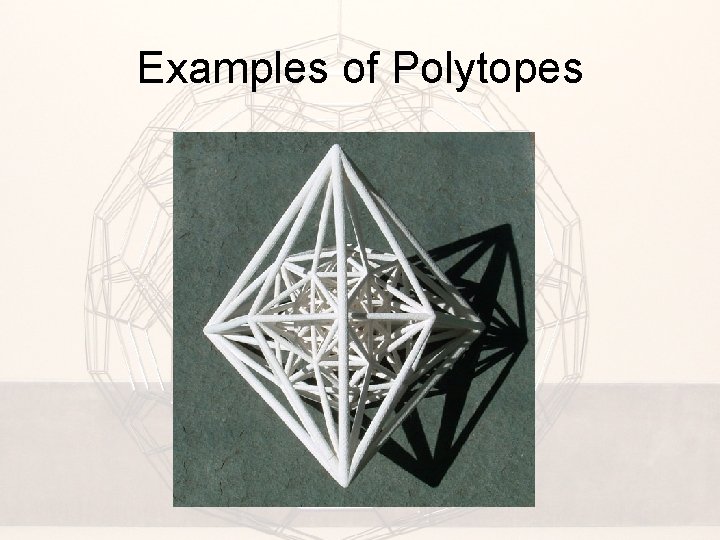
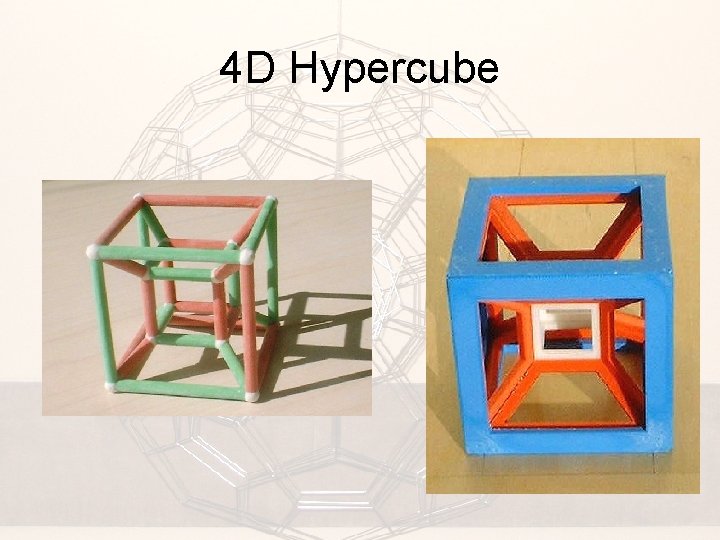
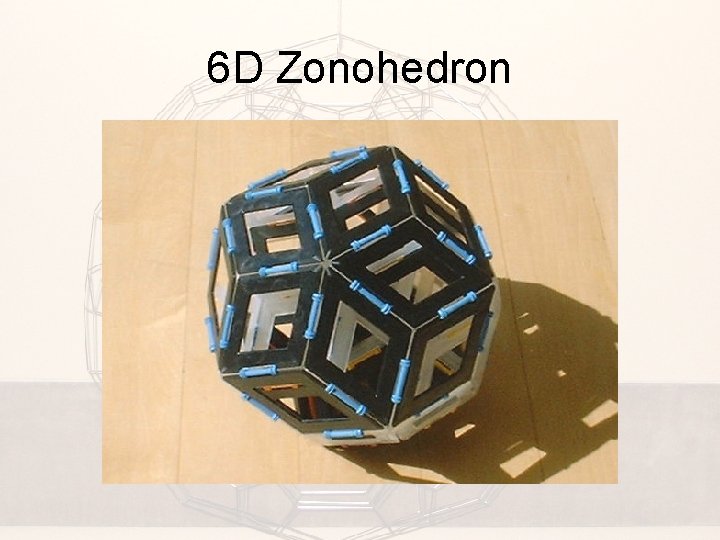
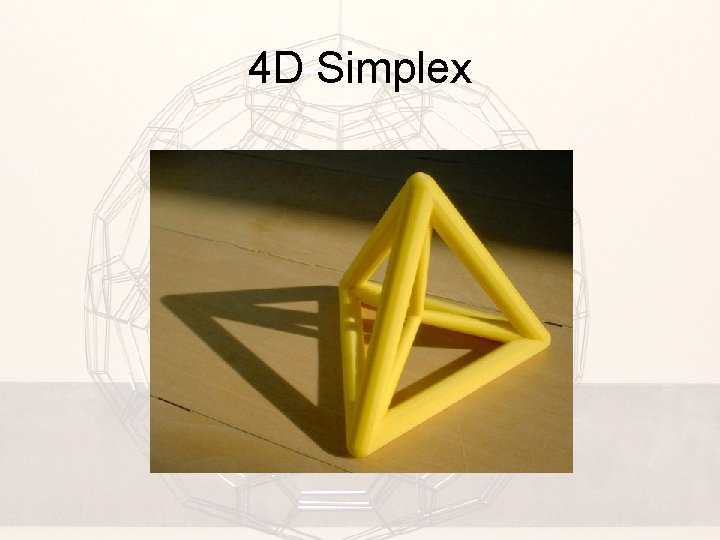
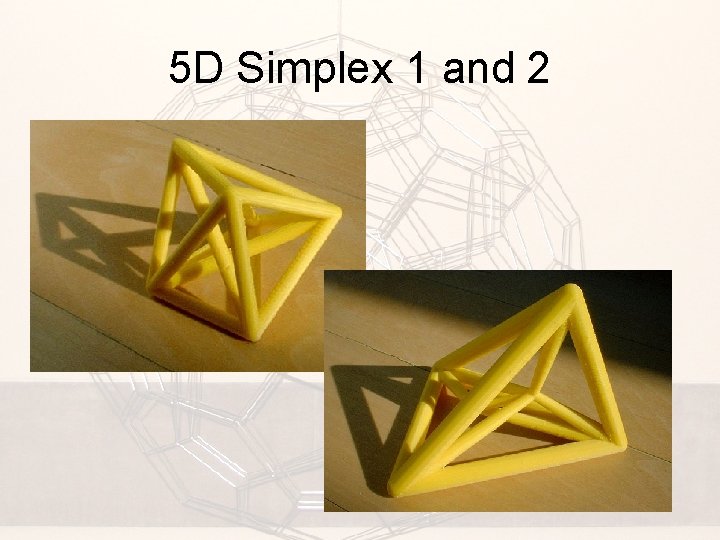
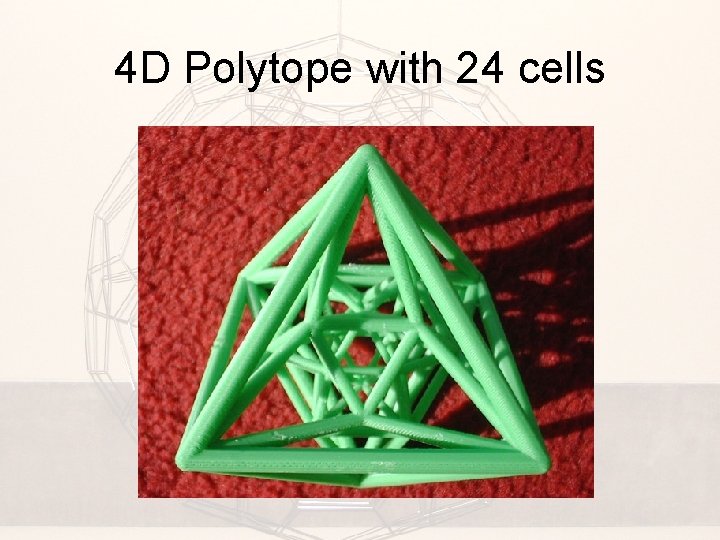
Polytopes • Coxeter extended his work with symmetries into multiple dimensions • In Hyperspace the shapes rotate and reflect upon themselves • These shapes are called Polytopes meaning “many shapes” • Coxeter was nicknamed “Mr. Polytope because he enjoyed working with them so much
Examples of Polytopes
4 D Hypercube
6 D Zonohedron
4 D Simplex
5 D Simplex 1 and 2
4 D Polytope with 24 cells
Coxeter’s Polytopes • Coxeter wrote a book on Polytopes titled “ Regular Polygons” which became a best seller • Coxeter is often compared to Charles Darwin – Coxeter did for Polytopes what Darwin did for organic beings – He classified and quantified their very existence
The Savior of Geometry • While Coxeter was in the prime of his career geometry was slowly being taken over • Algebra and Analysis were slowly becoming the popular mathematics • According to E. T. Bell math was “all equations and no shapes, like prose without poetry”
The Savior of Geometry • Walter Whiteley may have given Coxeter the ultimate compliment about his work when he said “should classical geometry become extinct there would be a geometry gap that would haunt us forever … Donald Coxeter did much to save us from such a loss”
The Savior of Geometry • Coxeter became geometries “apostle” by the end of his career • He ignored the “fad” fashions in math and continued to work with the shapes he loved to work with and preserved the classical traditions of geometry
The Savior of Geometry • Because of his love for his work Coxeter preserved Geometry through its “lean” years and would not let it go extinct. • Coxeter is a hero for many mathematicians around the world who may not have been able to study what they do if Donald Coxeter had not saved geometry.
Questions? ? ?