Developing Effective Research Proposals Mark Elliot Tarani Chandola

- Slides: 41
Developing Effective Research Proposals Mark Elliot, Tarani Chandola, David Martin National Centre for Research Methods 1
Who we are NCRM Co-directors ● Mark Elliot, Data Science Methodologist, 37 successful funding bids across 13 funders with a total value of £ 27. 4 m. ● Tarani Chandola, Medical Sociologist, 22 successful funding bids across 10 funders with a total value of £ 25. 1 m. 2
Overview ● ● ● Sources of funding How to convert a research idea into a grant application with a good chance of success Who and what you need to know How costings work How the application process works Dos and don’ts of grant applications: useful tips – Small print: this guidance based on past experience offered in good faith and without guarantees! 3
Out of scope ● What makes a good research idea ● Why seek research funding ● How to manage a grant once you’ve got it 4
Funding opportunities ● Postdoctoral Fellowships ● Response mode grants ● Grant calls 5
Post-doctoral fellowships: ● Time to gear up for a successful academic career objectives ● To produce publications to help secure a track record & to improve opportunities for long-term employment in the HEI sector ● To disseminate your research findings to both academic and non-academic audiences ● To improve research and related skills through specialised training ● To carry out further research linked to your Ph. D and through developing proposals for further funding 6
Leverhulme Trust: Early Career Fellowships ● To provide career development opportunities for people at an early stage of career (5 years from doctorate) but with a proven research record ● not in an established post ● 100 fellowships in 2018 ● 2 -3 years funding: 50% salary costs, 50% from institution, plus £ 6 K expenses per annum ● Next round: January 2019 7
ESRC: Postdoctoral Fellowships ● To provide a career development opportunity for those in the immediately postdoctoral stage of their career, to provide the opportunity to consolidate their Ph. D through developing publications, their networks, and their research and professional skills. ● Attached to a DTP or CDT ● 16 fellowships in 2018 ● 1 years funding: salary costs, plus £ 10 K expenses ● Next round: March 2019 8
UKRI Future Leader Fellowships ● To provide career development opportunities for people at an early stage of career (5 years from doctorate) but with a proven research record ● 150 fellowships in 2018 ● 4 years funding: complex mixed funding model ● Can be at non-academic organisations ● Up to £ 1. 5 M ● Next round: September 2018 (two per year) 9
Grants: objectives • To carry out a specific defined piece or programme of research
ESRC response mode grants ● Standard grants Single projects from £ 350 K to £ 1 M, up to five years funding ● SDAI. ECRs strongly encouraged up to £ 300 K – 2 years ● New investigator grants 100 K-300 K, must be no more than 4 years after submission of Ph. D ● Basic criteria are always: quality, timeliness, track record and value for money 11
Nuffield Foundation: research and innovation projects ● 7 areas – most within social science ● Up to £ 350 K ● 100% FEC ● Two step process: Outline followed by full ● Next Deadline (outline): 10 October 2016 12
Leverhulme: project grants ● Up to £ 500 K ● Direct costs only ● Two step process: Outline followed by full ● Next Deadline (full): 1 December 2016 ● Emphasis on innovation / blue skies / interdisciplinarity 13
Turning a research idea into a grant proposal ● We assume you already have a great idea… ● Be clear about what will make your application unique ● Ensure promised outputs are in proportion to the inputs ● Get all the details of the proposal spot-on – A research grant proposal has to combine a small business plan with an academic research paper 14
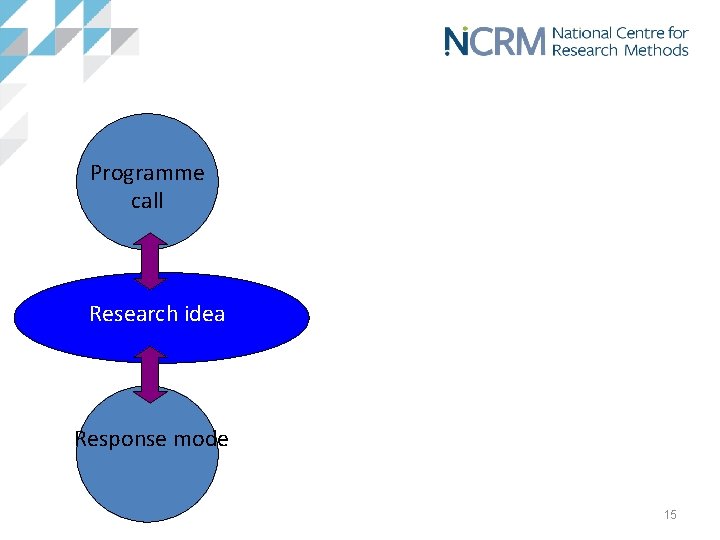
Programme call Research idea Response mode 15
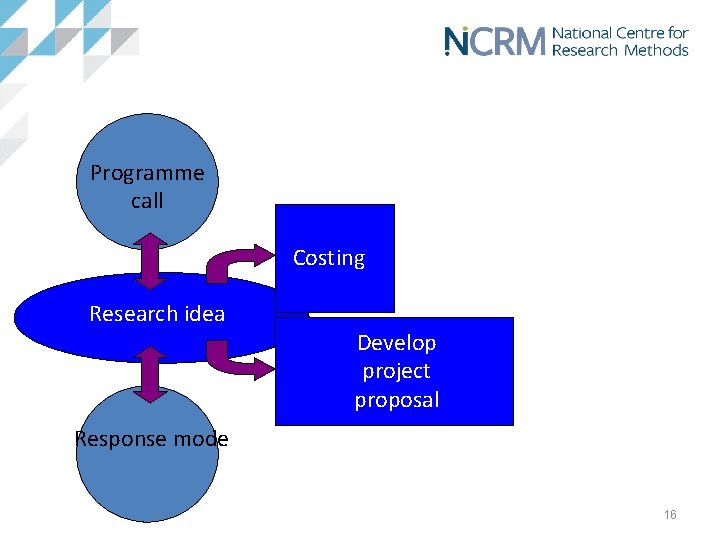
Programme call Costing Research idea Develop project proposal Response mode 16
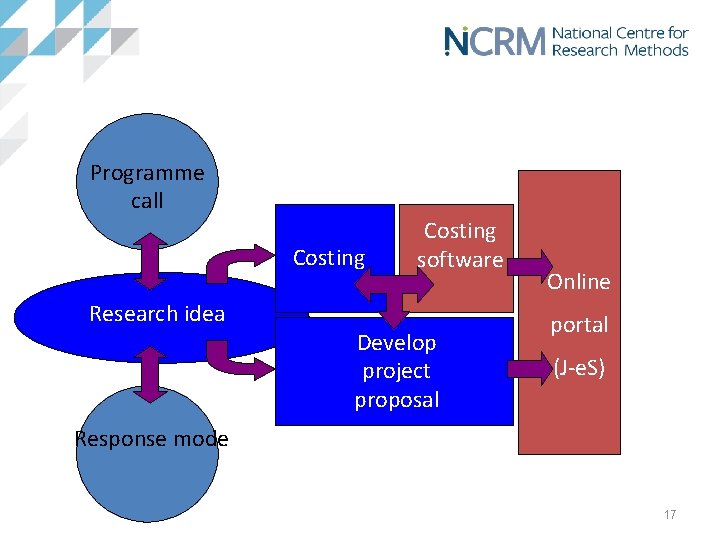
Programme call Costing Research idea Costing software Develop project proposal Online portal (J-e. S) Response mode 17
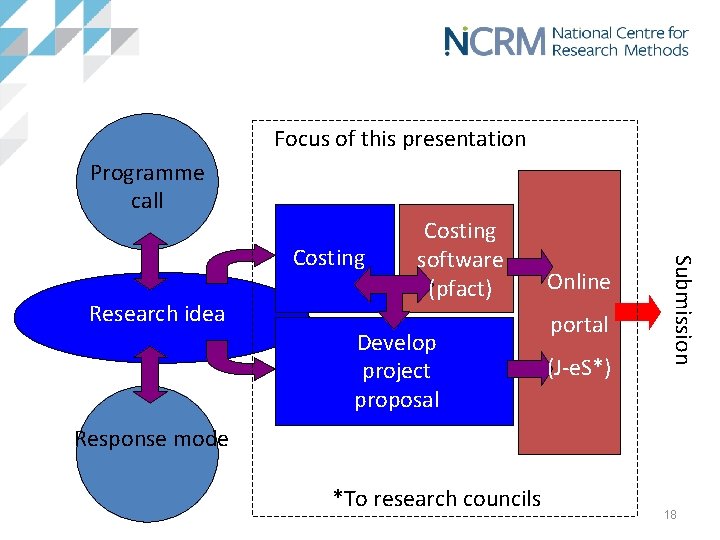
Focus of this presentation Programme call Research idea Develop project proposal Online portal (J-e. S*) Submission Costing software (pfact) Response mode *To research councils 18
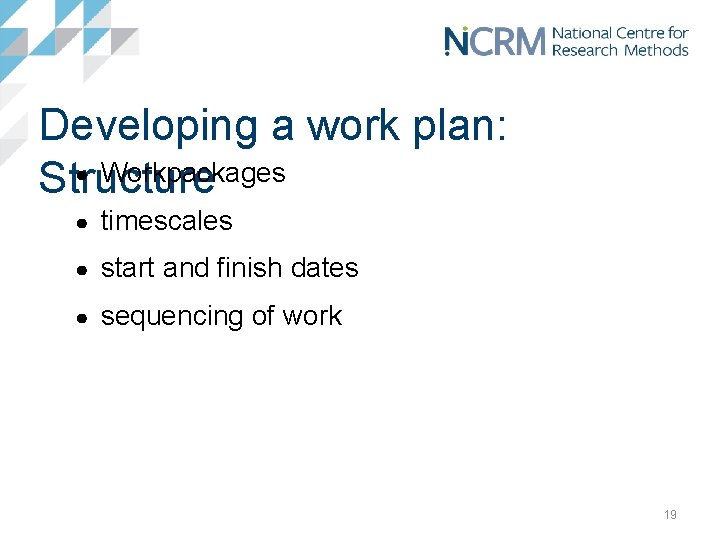
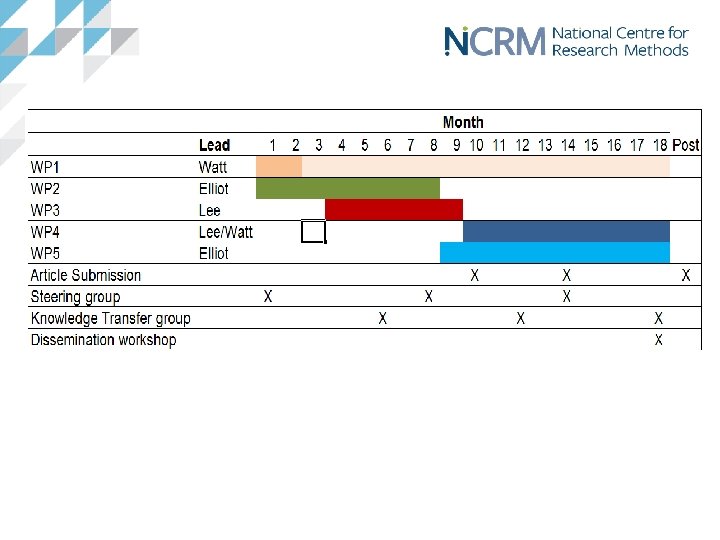
Developing a work plan: ● Workpackages Structure ● timescales ● start and finish dates ● sequencing of work 19
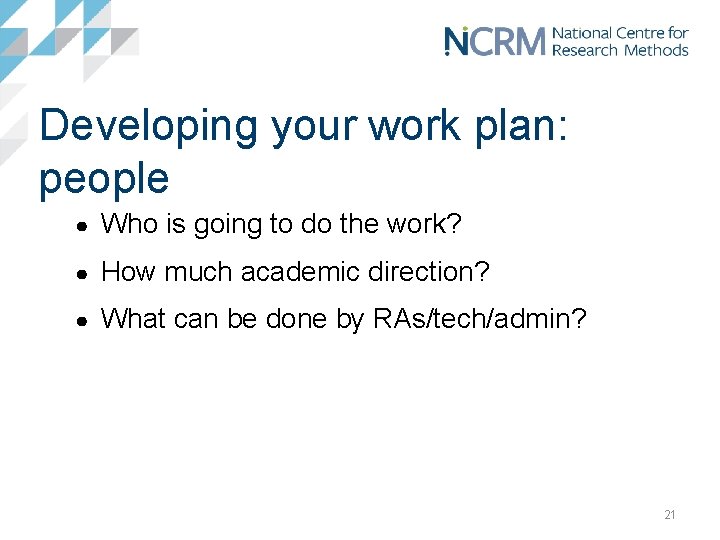
Developing your work plan: people ● Who is going to do the work? ● How much academic direction? ● What can be done by RAs/tech/admin? 21
Developing your work plan: interactions ● What are the interdependencies? ● What are the risks to the project – how will you mitigate/manage those risks? ● Inter-institutional: will take (much) longer! ● Interdisciplinarity: ditto… 22
Other considerations ● understand Your own University’s processes – ● ● Ethics approval and internal peer review People to warm up at an early stage: – Collaborators and/or letters of support? – Nominated reviewers? – Implications for own workload? If so, discuss early with line manager. ALWAYS follow any funder- and programmespecific rules! 23
Costings: the FEC wonderland ● FEC = “Full economic costing” ● Main driver is academic/research staff time ● Investigators’ own time must be costed ● ● FEC based on financial analysis of costs to institution staff time + estates +overheads Research councils only currently pay 80% of FEC 24
80% FEC – how it works ● University calculates FEC appropriate to funder ● FEC goes into application ● Funder pays <100% costs (RCs = 80%) ● University income is reallocated to make up ● Research funding (QR) to university notionally covers the shortfall (the “dual support system”) – Don’t worry about the macroeconomics while writing a proposal… stick to the proposal
Costings: homework ● Make a complete list of what you need – Staff, travel, equipment, services, etc. – Use own University rates – that is how you’ll claim ● Collate staffing details: start and end dates, % time worked, salary points for new staff ● NB technical/admin = no institutional drivers ● Get exemplar costs for all travel, equipment etc. and be prepared to justify – No general “office expenses” etc. 26
J-e. S ● ● Have to be registered first – and use annually! Online grant application website for all UK research councils ● Most elements completed by applicants ● Approved costings information to be uploaded – Need to organize and chase everyone involved: CVs of collaborators and named staff; approvers to be ready on the day, etc. 27
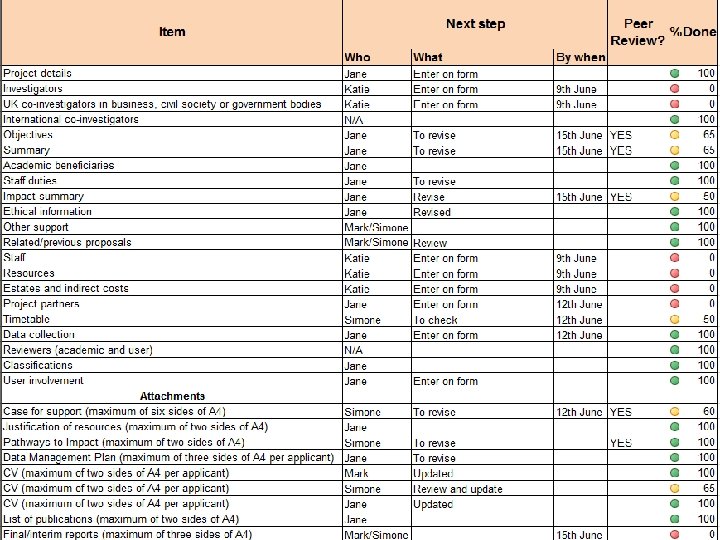
Structure of a J-e. S bid ● Simple questions – PI, Co-Is, previous apps, etc. ● Short text answers (summary, objectives, ethics, impact summary, beneficiaries) – NB character counts not the same as Word! ● Attachments: typically Case for support, applicant CVs, Justification of resources, Bibliography, Letters of support, pathways to impact, etc. ● All completed in shared online workspace ● Submission and approval sequence leading to submission to research council 28
Submisson of a J-e. S bid ● All documentation completed ● Submitted by PI to School/dept. approvers ● Submitted by School/dept. approver to University approver (usually finance dept. ) ● Submitted by university approver to research council – All electronic, but requires chain of people who are expecting it in advance and already know it’s OK 29
How the application will be judged Receipt acknowledged by research council registry ● Checked by office against funding rules and specifics of call ● Despatched to reviewers and assessors ● – (Sometimes) PI given opportunity to respond Grades considered by commissioning panel, decisions made and ratified ● Contract negotiated with university ● The real work begins… ● 30
What the reviewers will be looking for: three blunt questions. ● Does the applicant know what s/he is talking about? – Is there a good narrative between Lit-RQs-methods. – Is there any key previous research that has not been referred to?
What the reviewers will be looking for: three blunt questions. ● Is it clear what the research will be doing? ● Is the project feasible – Are there any methodological issues? – Is the timescale achievable? – Is the project plan coherent?
What the reviewers will be looking for ● If the project was successful would I care? – First paragraph is important – Don’t undersell
The Impact agenda ● RCUK increasingly concerned with societal impacts of research – – ● Impact potential should be demonstrated in proposals, – ● a contested issue, but reflects harsh realities by “pathways to impact” or impact plans Move from knowledge transfer to “co-production” – identify the non-academic users of your research and involve them right from the proposal stage. 34
To Summarise…
Do… ● Familiarise yourself with the funding body’s strategy and ethos ● Familiarise yourself with the specific requirements of a funding body and/or specific call ● Make sure that you are eligible for the scheme for which you’re applying (and check with them if you’re unsure) 36
Do… ● Start the application process in good time. ● Plan: writing a proposal is a project – it will need a project plan. ● Draw on other people’s expertise – Research offices – Critical friends 37
Do… ● Make the case for your project directly and strongly – why should your project be prioritised (given that it will be in competition with others)? ● Set out your research questions and objectives clearly (a research proposal is not a literature review; get right the balance of background and proposal). 39
Do… ● Set out your methodology clearly, and flag up where it is cutting edge and interdisciplinary ● Ensure that methods address the research questions set out ● Acknowledge awareness of potential problems and possible criticisms of approach chosen ● Include a timetable for your activities 40
Do… ● Use the bibliography to show up-to-date knowledge of the field ● Choose an appropriate and reliable nominated reviewer ● Engage with potential research users ● Address the issue of impact 41