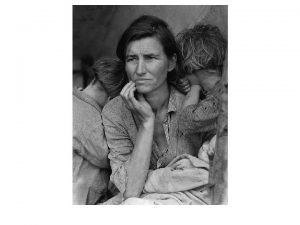
Destitute pea pickers in California Mother of seven
- Slides: 23
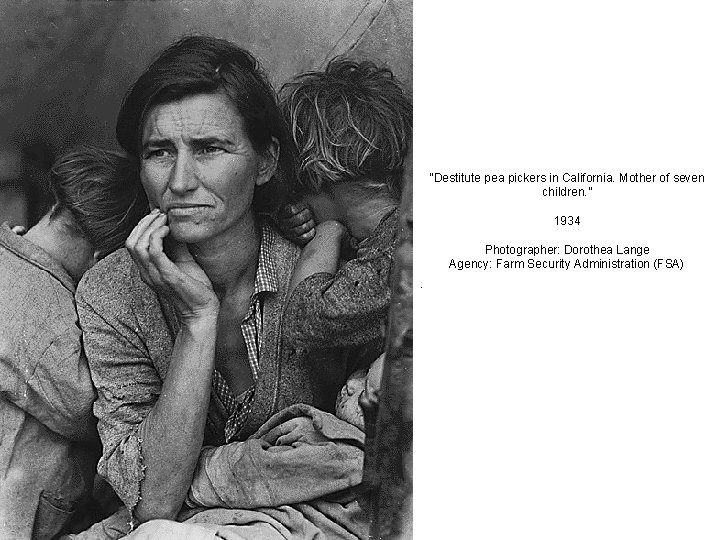
“Destitute pea pickers in California. Mother of seven children. ” 1934 Photographer: Dorothea Lange Agency: Farm Security Administration (FSA) Ph
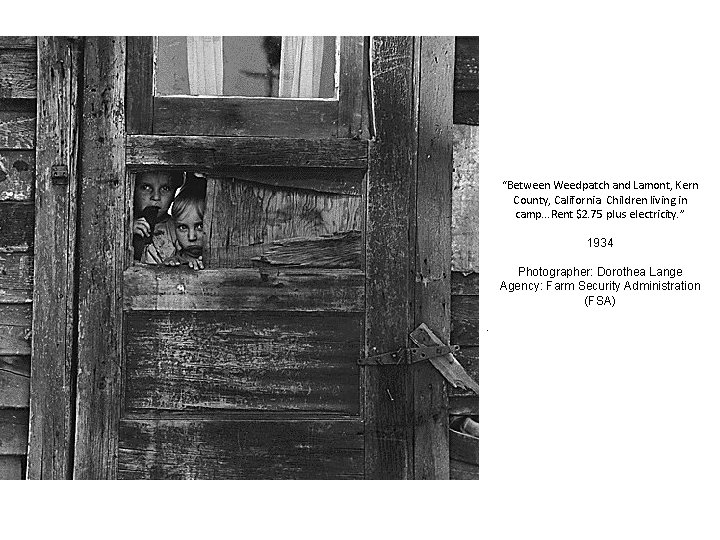
“Between Weedpatch and Lamont, Kern County, California. Children living in camp. . . Rent $2. 75 plus electricity. ” 1934 Photographer: Dorothea Lange Agency: Farm Security Administration (FSA) Ph
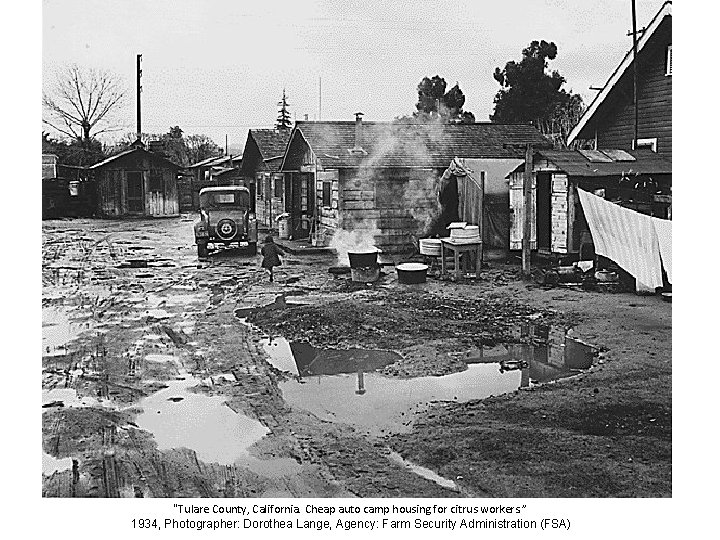
“Tulare County, California. Cheap auto camp housing for citrus workers. ” 1934, Photographer: Dorothea Lange, Agency: Farm Security Administration (FSA)
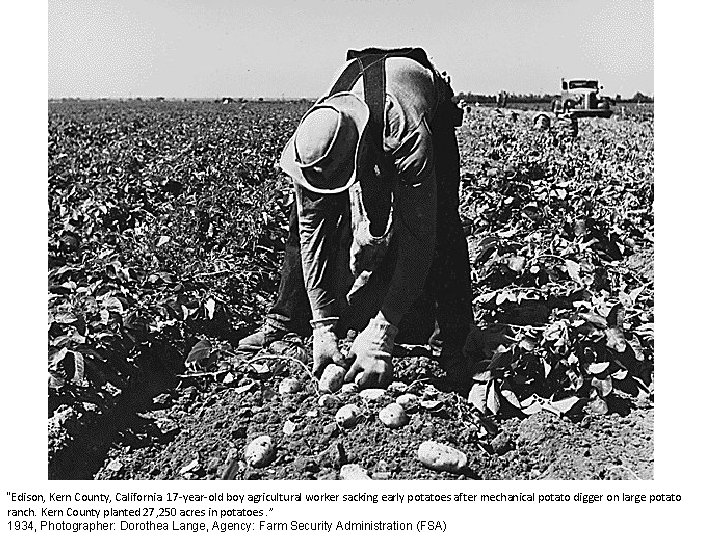
“Edison, Kern County, California. 17 -year-old boy agricultural worker sacking early potatoes after mechanical potato digger on large potato ranch. Kern County planted 27, 250 acres in potatoes. ” 1934, Photographer: Dorothea Lange, Agency: Farm Security Administration (FSA)
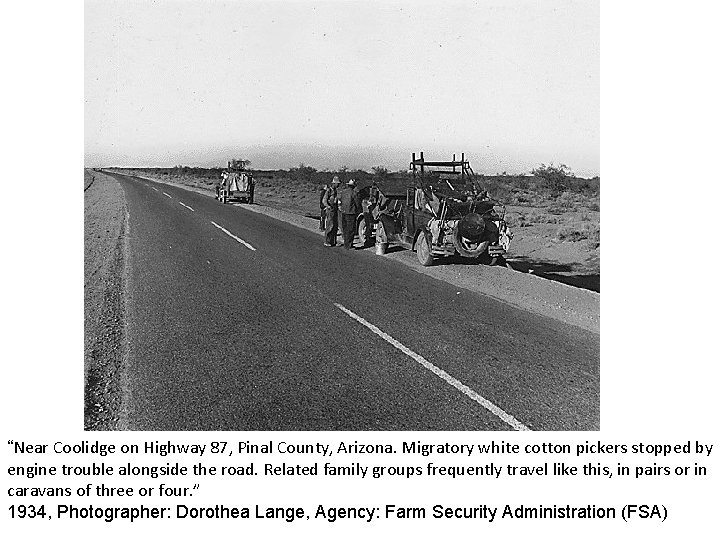
“Near Coolidge on Highway 87, Pinal County, Arizona. Migratory white cotton pickers stopped by engine trouble alongside the road. Related family groups frequently travel like this, in pairs or in caravans of three or four. ” 1934, Photographer: Dorothea Lange, Agency: Farm Security Administration (FSA)
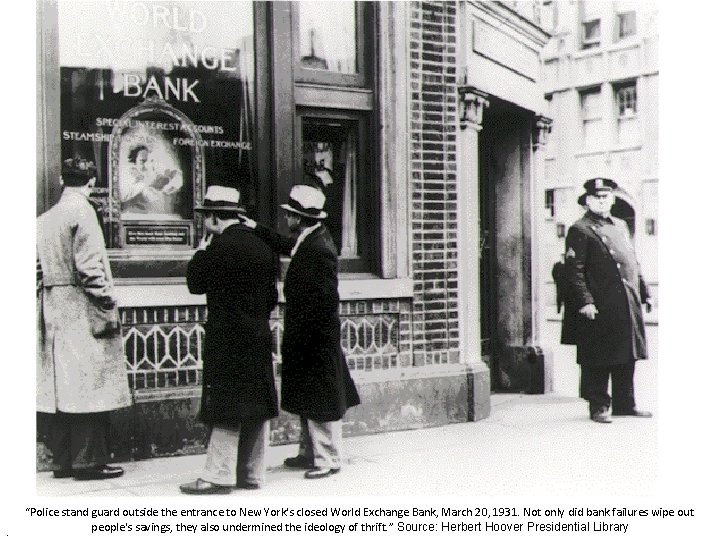
“Police stand guard outside the entrance to New York's closed World Exchange Bank, March 20, 1931. Not only did bank failures wipe out people's savings, they also undermined the ideology of thrift. ” Source: Herbert Hoover Presidential Library Ph
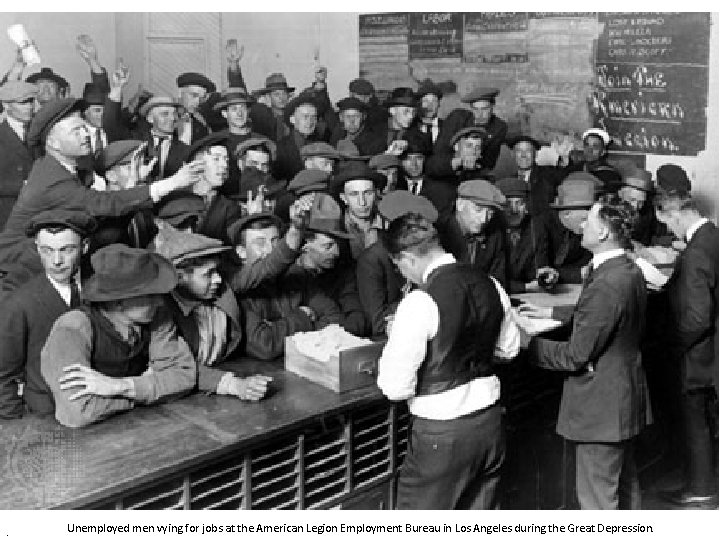
Unemployed men vying for jobs at the American Legion Employment Bureau in Los Angeles during the Great Depression. Ph
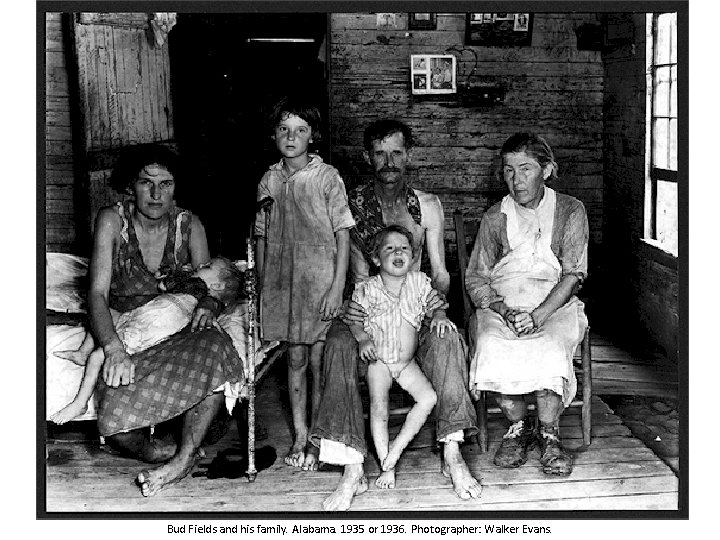
Bud Fields and his family. Alabama. 1935 or 1936. Photographer: Walker Evans.
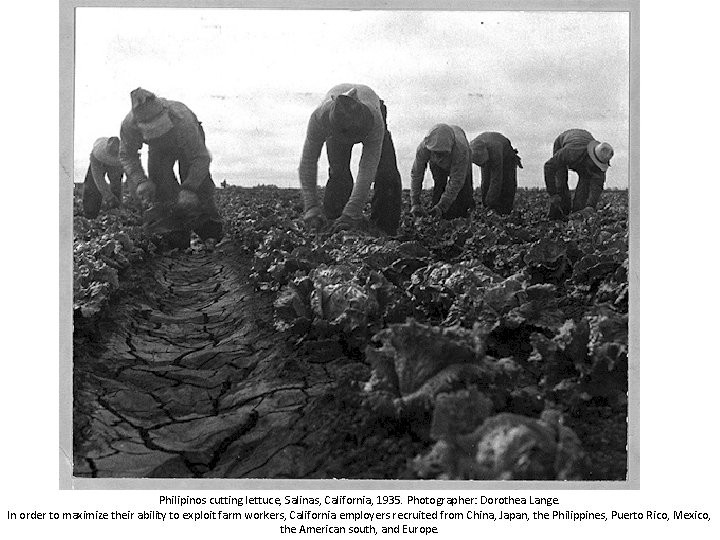
Philipinos cutting lettuce, Salinas, California, 1935. Photographer: Dorothea Lange. In order to maximize their ability to exploit farm workers, California employers recruited from China, Japan, the Philippines, Puerto Rico, Mexico, the American south, and Europe.
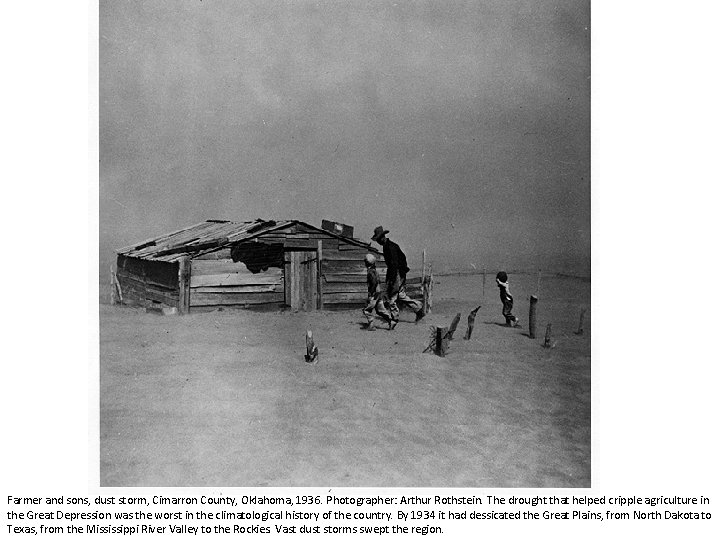
Farmer and sons, dust storm, Cimarron County, Oklahoma, 1936. Photographer: Arthur Rothstein. The drought that helped cripple agriculture in the Great Depression was the worst in the climatological history of the country. By 1934 it had dessicated the Great Plains, from North Dakota to Texas, from the Mississippi River Valley to the Rockies. Vast dust storms swept the region.
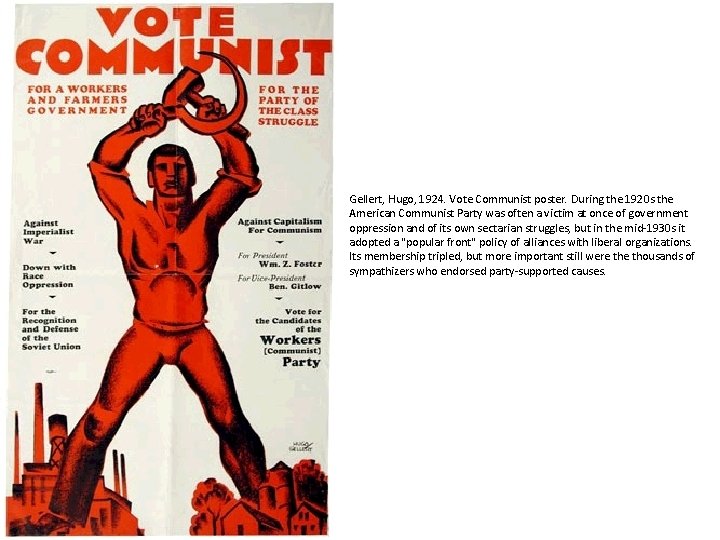
Gellert, Hugo, 1924. Vote Communist poster. During the 1920 s the American Communist Party was often a victim at once of government oppression and of its own sectarian struggles, but in the mid-1930 s it adopted a "popular front" policy of alliances with liberal organizations. Its membership tripled, but more important still were thousands of sympathizers who endorsed party-supported causes.
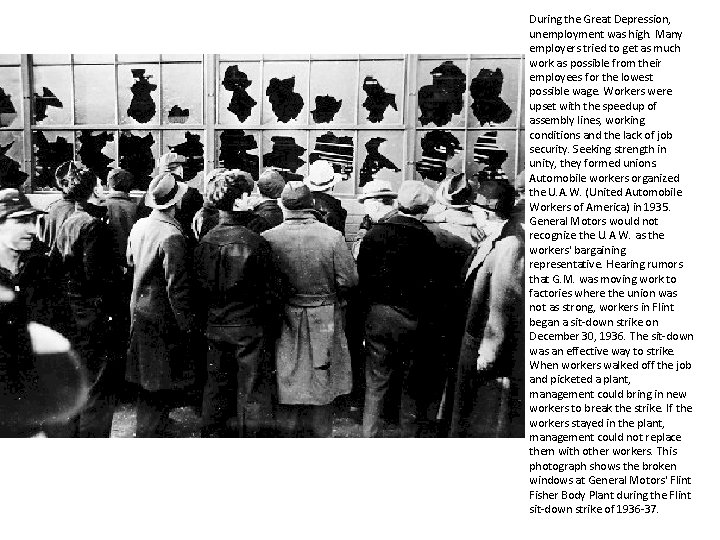
During the Great Depression, unemployment was high. Many employers tried to get as much work as possible from their employees for the lowest possible wage. Workers were upset with the speedup of assembly lines, working conditions and the lack of job security. Seeking strength in unity, they formed unions. Automobile workers organized the U. A. W. (United Automobile Workers of America) in 1935. General Motors would not recognize the U. A. W. as the workers' bargaining representative. Hearing rumors that G. M. was moving work to factories where the union was not as strong, workers in Flint began a sit-down strike on December 30, 1936. The sit-down was an effective way to strike. When workers walked off the job and picketed a plant, management could bring in new workers to break the strike. If the workers stayed in the plant, management could not replace them with other workers. This photograph shows the broken windows at General Motors' Flint Fisher Body Plant during the Flint sit-down strike of 1936 -37.
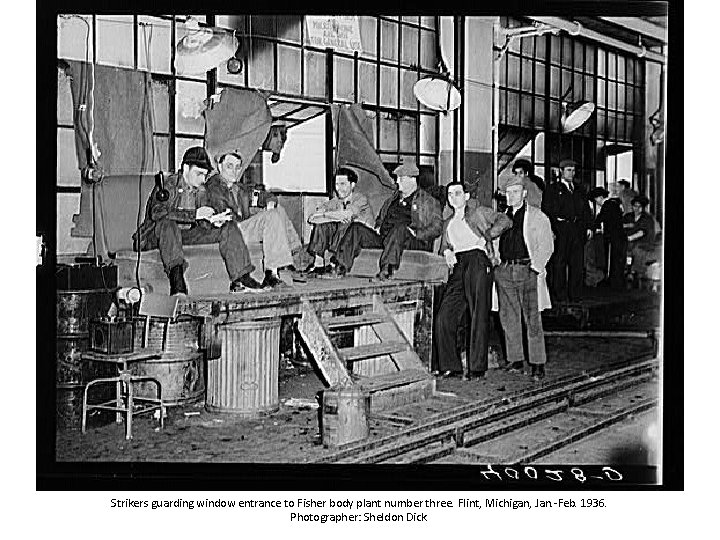
Strikers guarding window entrance to Fisher body plant number three. Flint, Michigan, Jan. -Feb. 1936. Photographer: Sheldon Dick.
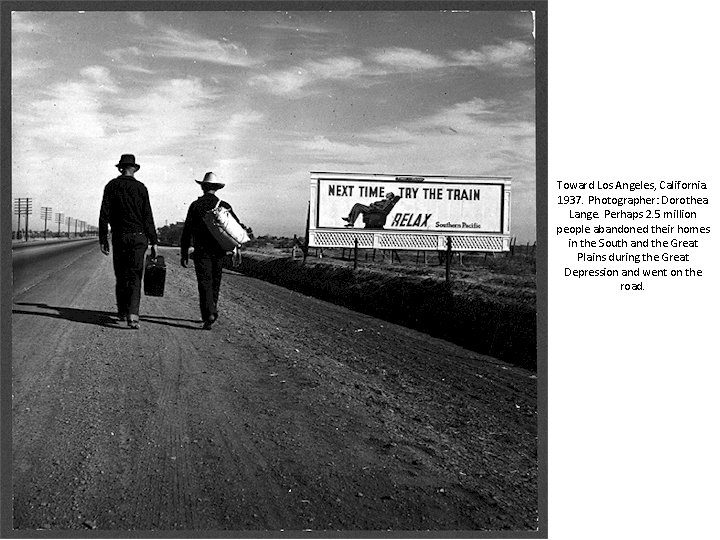
Toward Los Angeles, California. 1937. Photographer: Dorothea Lange. Perhaps 2. 5 million people abandoned their homes in the South and the Great Plains during the Great Depression and went on the road.
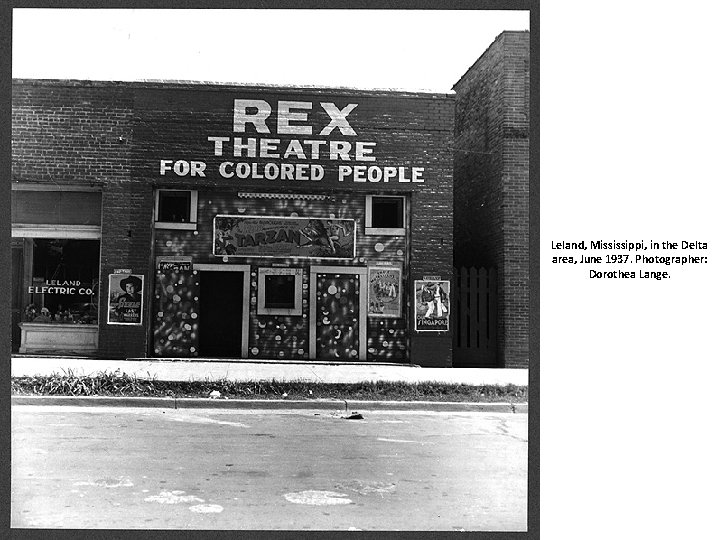
Leland, Mississippi, in the Delta area, June 1937. Photographer: Dorothea Lange.
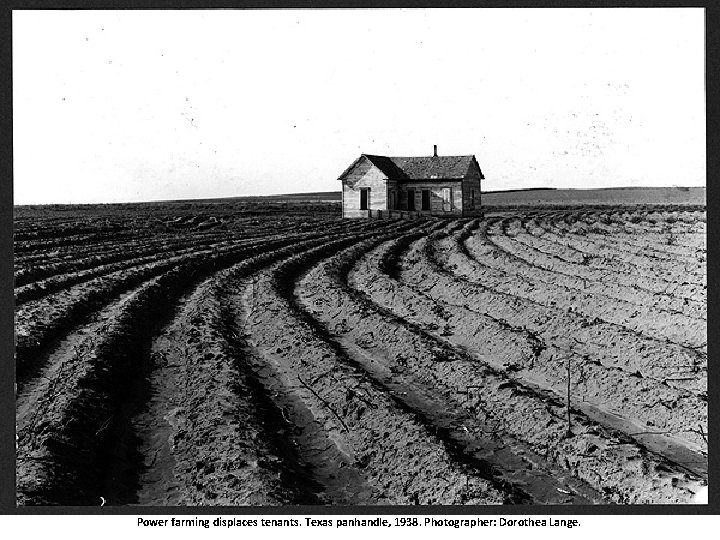
Power farming displaces tenants. Texas panhandle, 1938. Photographer: Dorothea Lange.
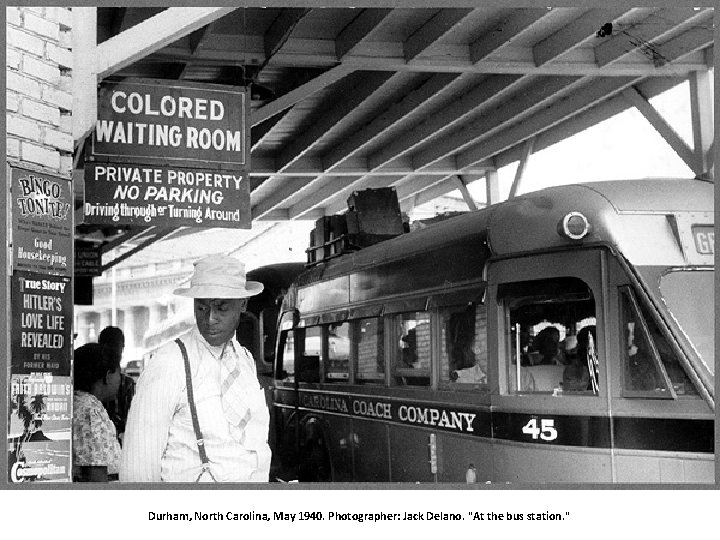
Durham, North Carolina, May 1940. Photographer: Jack Delano. "At the bus station. "
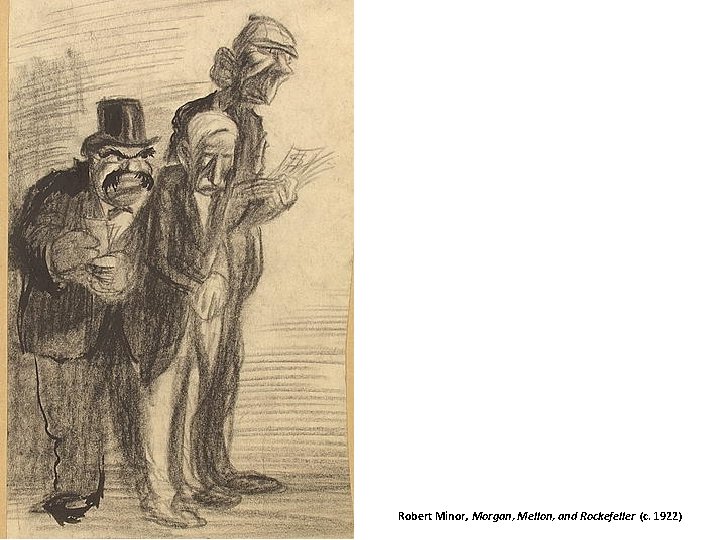
Robert Minor, Morgan, Mellon, and Rockefeller (c. 1922)
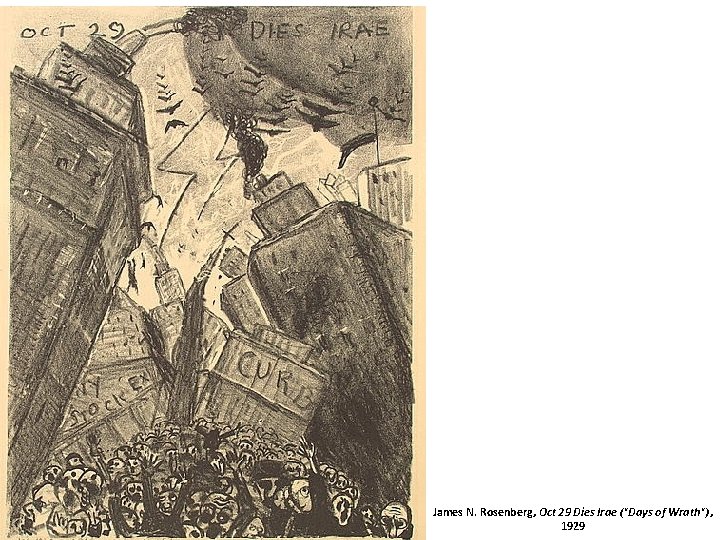
James N. Rosenberg, Oct 29 Dies Irae ("Days of Wrath"), 1929
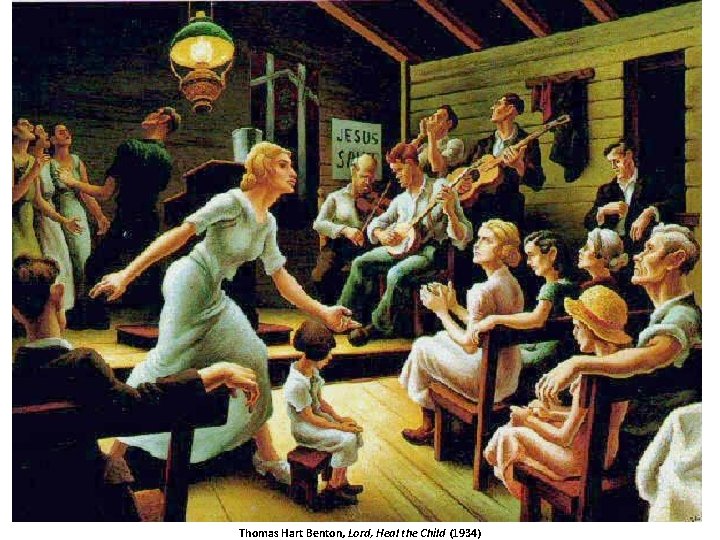
Thomas Hart Benton, Lord, Heal the Child (1934)
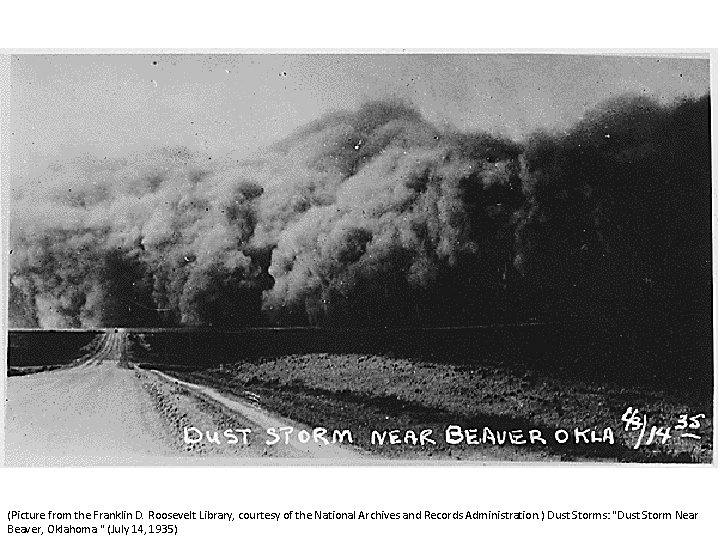
(Picture from the Franklin D. Roosevelt Library, courtesy of the National Archives and Records Administration. ) Dust Storms: "Dust Storm Near Beaver, Oklahoma. " (July 14, 1935)
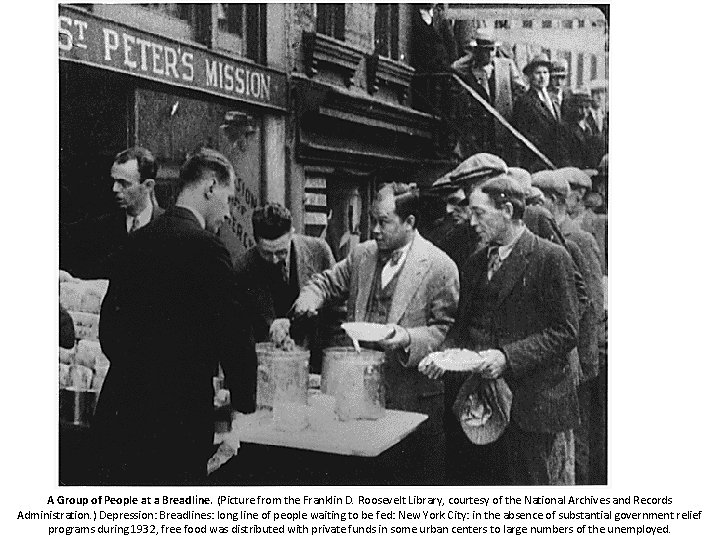
A Group of People at a Breadline. (Picture from the Franklin D. Roosevelt Library, courtesy of the National Archives and Records Administration. ) Depression: Breadlines: long line of people waiting to be fed: New York City: in the absence of substantial government relief programs during 1932, free food was distributed with private funds in some urban centers to large numbers of the unemployed.
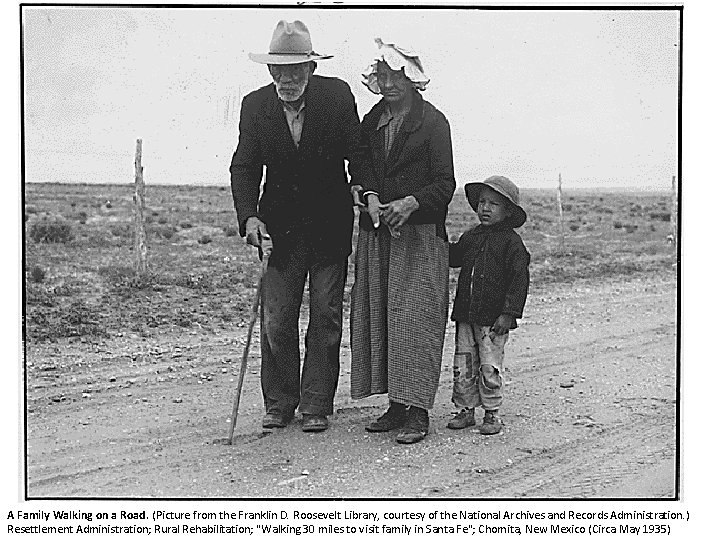
A Family Walking on a Road. (Picture from the Franklin D. Roosevelt Library, courtesy of the National Archives and Records Administration. ) Resettlement Administration; Rural Rehabilitation; "Walking 30 miles to visit family in Santa Fe"; Chomita, New Mexico (Circa May 1935)