
Crime UpperIntermediate Lesson 17 Today we are going


![conspiracy noun [C or U] UK /kənˈspɪr. ə. si/ US /kənˈspɪr. ə. si/ the](https://slidetodoc.com/presentation_image_h/150e062233e22e500857f54bf552a232/image-5.jpg "conspiracy noun [C or U] UK /kənˈspɪr. ə. si/ US /kənˈspɪr. ə. si/ the")

- Slides: 20
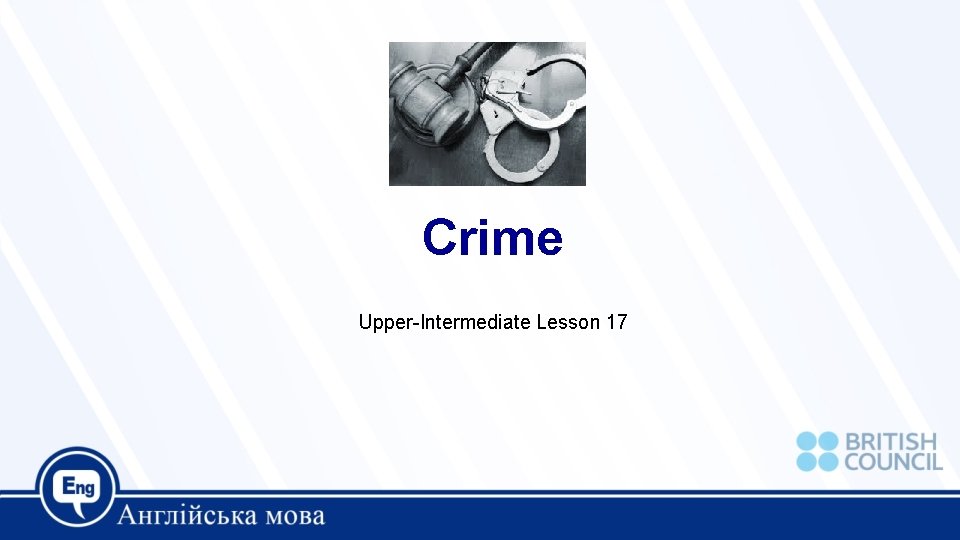
Crime Upper-Intermediate Lesson 17
Today we are going to learn: • How to talk about crime • Vocabulary of crime and punishment • History of crime and punishment in Great Britain
Exceptional London cop Nicholas Angel is involuntarily transferred to a quaint English village and paired with a witless new partner. While on the beat, Nicholas suspects a sinister conspiracy is afoot with the residents. - Written by mystic 80
conspiracy noun [C or U] UK /kənˈspɪr. ə. si/ US /kənˈspɪr. ə. si/ the activity of secretly planning with other people to do something bad or illegal: The three men are accused of conspiracy. [+ to infinitive] She has been charged with conspiracy to murder.
Crime • An offence against the law • Breach of law • Violation of law • Infringement of law • Felony • Misdemeanor • Misconduct
Crimes against human life • (Attempted) Murder • Manslaughter • Assassination • Suicide • Terrorism
Crimes against a person • Assault • Blackmail • Rape • Kidnapping • Child abuse • Domestic violence • Negligence
Crimes against property • Theft • Shoplifting • Burglary • Identity theft • Hijacking • Arson • Mugging • Trespassing • Robbery • Vandalism • Pickpocketing
White collar crime • Bribery • Nepotism • Fraud • Embezzlement • Tax fraud/evasion
Crime Verbs • Vincenzo and Irma committed a crime. • They stole a Constable painting from the Gallery of London. • The police investigated the crime. • Vincenzo and Irma were caught at the border. • They were arrested and taken to a police station. • The police interrogated them day and night. • Finally they were charged with theft.
Court • Later Vincenzo and Irma appeared in court. • Witnesses told the court what they have seen or knew. • The judge examined all the evidence. • After three days she found Vincenzo guilty. • His fingerprints were found on the frame of the picture. • The judge sentenced him to 15 years in prison. • Irma was found not guilty. There was no proof that she committed the crime. • She was acquitted and allowed to go free.
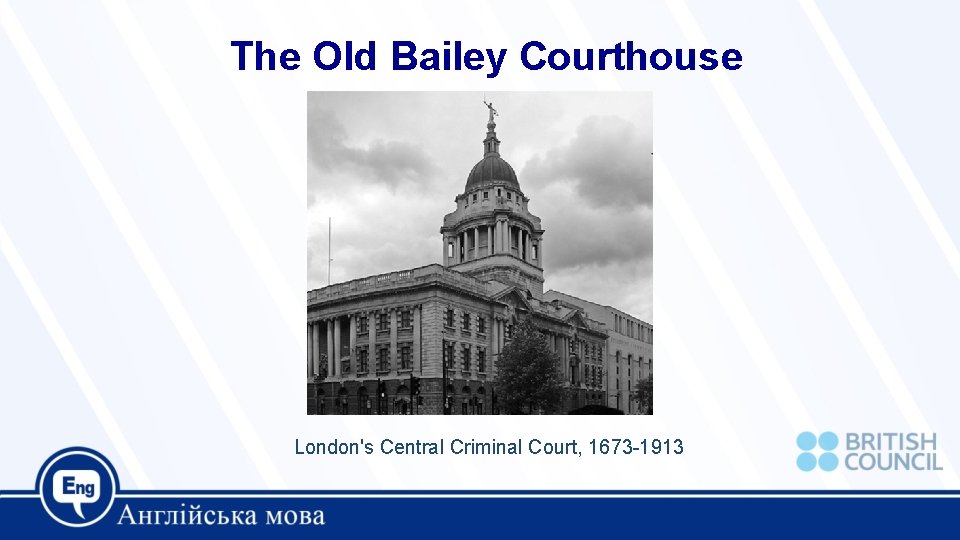
The Old Bailey Courthouse London's Central Criminal Court, 1673 -1913
Bloody Code • System of crimes and punishments in England in the 19 th century; • End of 18 th century – 220 crimes punishable by death; • Capital punishment for - treason, murder, espionage; • Theft of goods worth more than 12 pence – about 5% of weekly wages of a skilled worker; • "Being in the company of Gypsies for one month"; • "Strong evidence of malice in a child aged 7– 14 years of age".
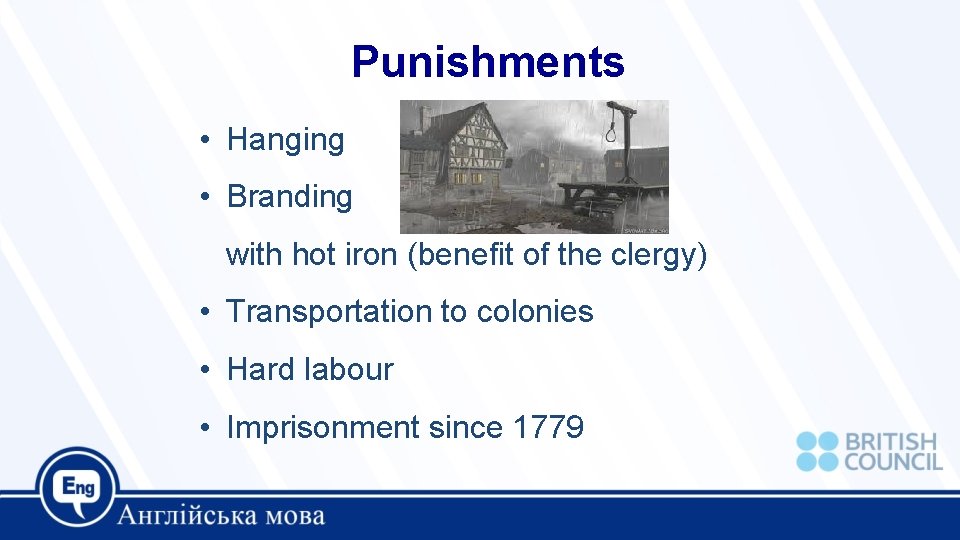
Punishments • Hanging • Branding with hot iron (benefit of the clergy) • Transportation to colonies • Hard labour • Imprisonment since 1779
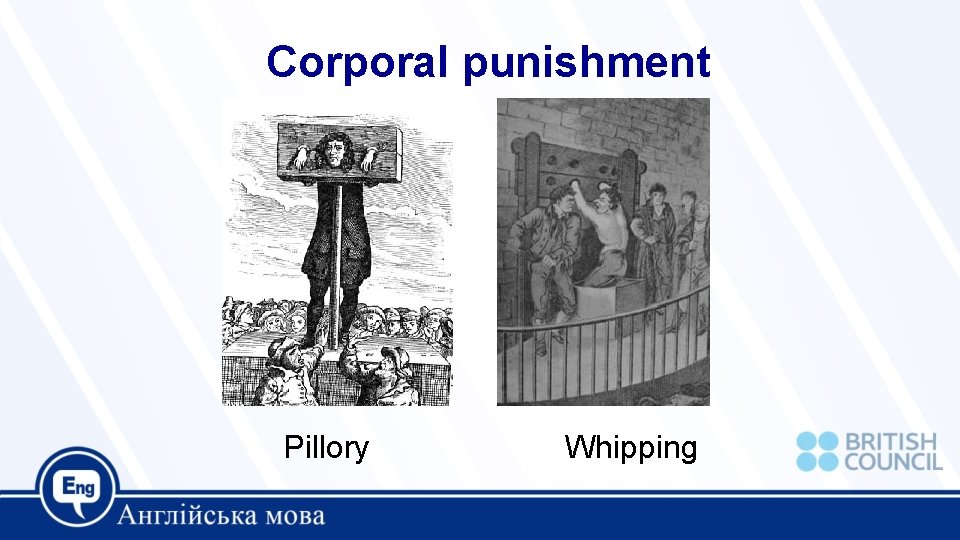
Corporal punishment Pillory Whipping
Modern punishments • Community service (doing some work to help society) • A fine (£ 200) • A prison term (e. g. two years in prison) • A life sentence • Capital punishment (abolished in 1965)
You be the judge • Drinking and driving • Selling drugs (heroin) • Possession of a gun without a license • Stealing 5, 000 from a bank by fraud • Stealing 5, 000 in a bank robbery (gun) • Stealing 5, 000 from someone’s house
Today we have learned: • How to talk about crime • Vocabulary of crime and punishment • History of crime and punishment in Great Britain