Credit Default Swaps India FIMMDA PDAI 13 th

- Slides: 48
Credit Default Swaps – India FIMMDA – PDAI 13 th Annual Conference 2012 DATE: 27 th January 2012 Ben Davies Head of Credit Trading, DBS Singapore
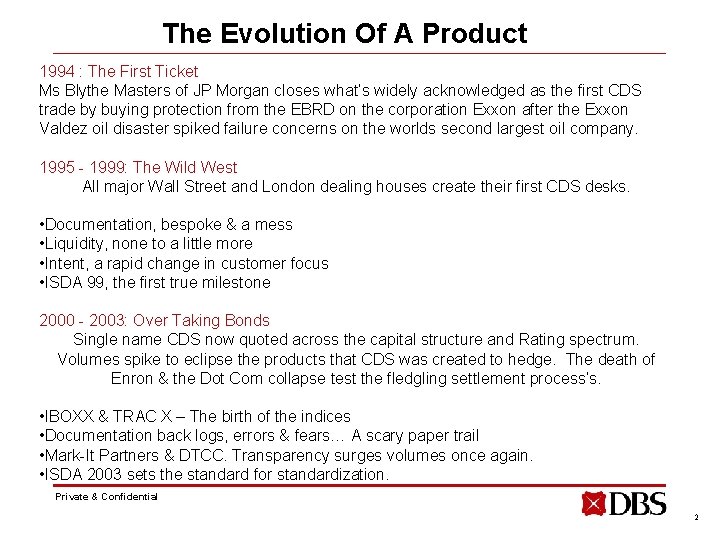
The Evolution Of A Product 1994 : The First Ticket Ms Blythe Masters of JP Morgan closes what’s widely acknowledged as the first CDS trade by buying protection from the EBRD on the corporation Exxon after the Exxon Valdez oil disaster spiked failure concerns on the worlds second largest oil company. 1995 - 1999: The Wild West All major Wall Street and London dealing houses create their first CDS desks. • Documentation, bespoke & a mess • Liquidity, none to a little more • Intent, a rapid change in customer focus • ISDA 99, the first true milestone 2000 - 2003: Over Taking Bonds Single name CDS now quoted across the capital structure and Rating spectrum. Volumes spike to eclipse the products that CDS was created to hedge. The death of Enron & the Dot Com collapse test the fledgling settlement process’s. • IBOXX & TRAC X – The birth of the indices • Documentation back logs, errors & fears… A scary paper trail • Mark-It Partners & DTCC. Transparency surges volumes once again. • ISDA 2003 sets the standard for standardization. Private & Confidential 2
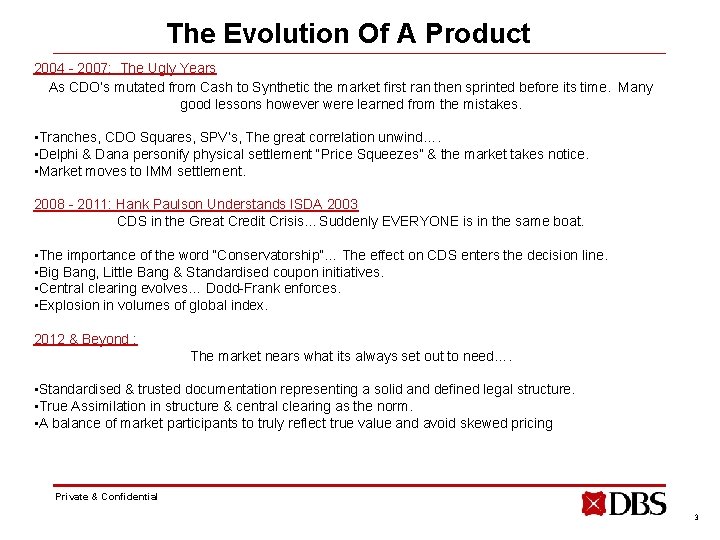
The Evolution Of A Product 2004 - 2007: The Ugly Years As CDO’s mutated from Cash to Synthetic the market first ran then sprinted before its time. Many good lessons however were learned from the mistakes. • Tranches, CDO Squares, SPV’s, The great correlation unwind…. • Delphi & Dana personify physical settlement “Price Squeezes” & the market takes notice. • Market moves to IMM settlement. 2008 - 2011: Hank Paulson Understands ISDA 2003 CDS in the Great Credit Crisis. . . Suddenly EVERYONE is in the same boat. • The importance of the word “Conservatorship”… The effect on CDS enters the decision line. • Big Bang, Little Bang & Standardised coupon initiatives. • Central clearing evolves… Dodd-Frank enforces. • Explosion in volumes of global index. 2012 & Beyond : The market nears what its always set out to need…. • Standardised & trusted documentation representing a solid and defined legal structure. • True Assimilation in structure & central clearing as the norm. • A balance of market participants to truly reflect true value and avoid skewed pricing Private & Confidential 3
Credit Default Swaps – India FIMMDA – PDAI 13 th Annual Conference 2012 DATE: 27 th January 2012 Gigi P. Tan Global Content Specialist – Credit
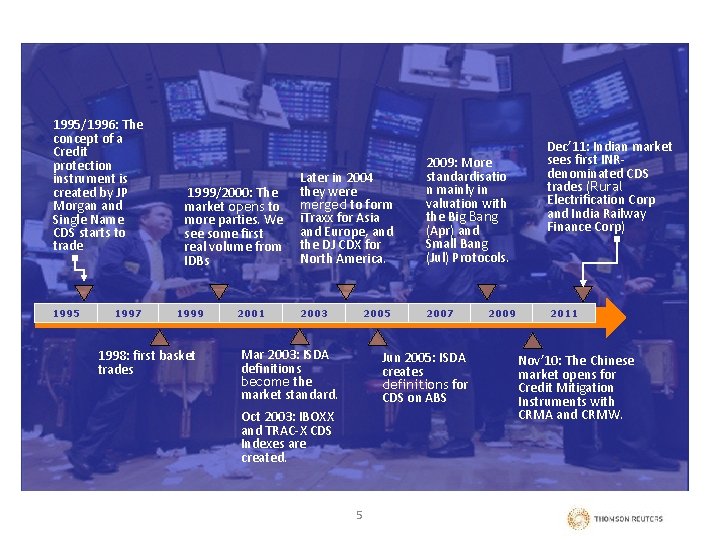
1995/1996: The concept of a Credit protection instrument is created by JP Morgan and Single Name CDS starts to trade 1995 1997 Later in 2004 1999/2000: The they were market opens to merged to form more parties. We i. Traxx for Asia and Europe, and see some first real volume from the DJ CDX for North America. IDBs 1999 1998: first basket trades 2001 2003 2005 Mar 2003: ISDA definitions become the market standard. 2009: More standardisatio n mainly in valuation with the Big Bang (Apr) and Small Bang (Jul) Protocols. 2007 Jun 2005: ISDA creates definitions for CDS on ABS Oct 2003: IBOXX and TRAC-X CDS Indexes are created. 5 2009 Dec’ 11: Indian market sees first INRdenominated CDS trades (Rural Electrification Corp and India Railway Finance Corp) 2011 Nov’ 10: The Chinese market opens for Credit Mitigation Instruments with CRMA and CRMW.
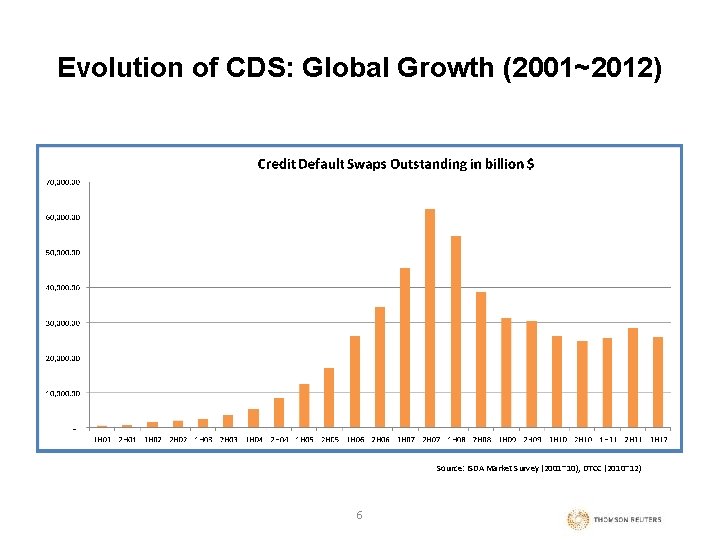
Evolution of CDS: Global Growth (2001~2012) Source: ISDA Market Survey (2001~10), DTCC (2010~12) 6
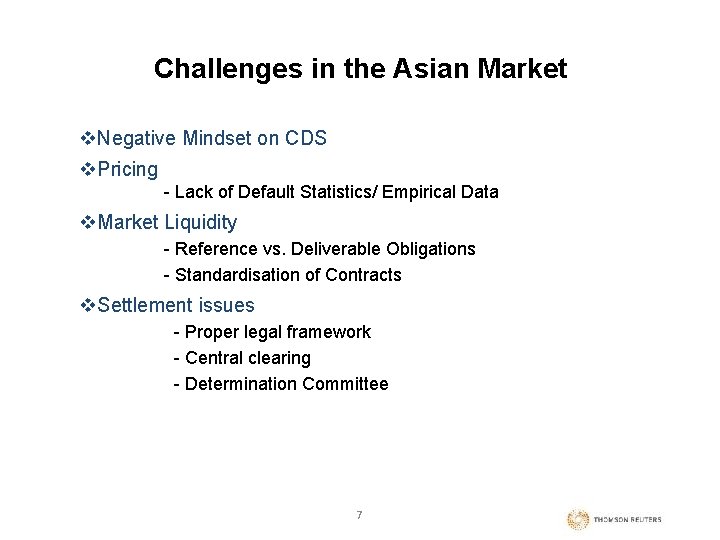
Challenges in the Asian Market v. Negative Mindset on CDS v. Pricing - Lack of Default Statistics/ Empirical Data v. Market Liquidity - Reference vs. Deliverable Obligations - Standardisation of Contracts v. Settlement issues - Proper legal framework - Central clearing - Determination Committee 7
Challenges in the Asian Market • A Negative Mindset – CDS at market inception = Hedging Tool – implies exposure to highly risky credits – As market evolves CDS becomes THE primary tool to take a position on a Credit – a very active market in CDSs written on credits in which neither the buyer nor the seller of protection believes there is the remotest possibility of default • China: Credit Risk Mitigation Instruments – Hesitation to use the term “Default” – Hesitation to expose volume information (NAFMII) 8
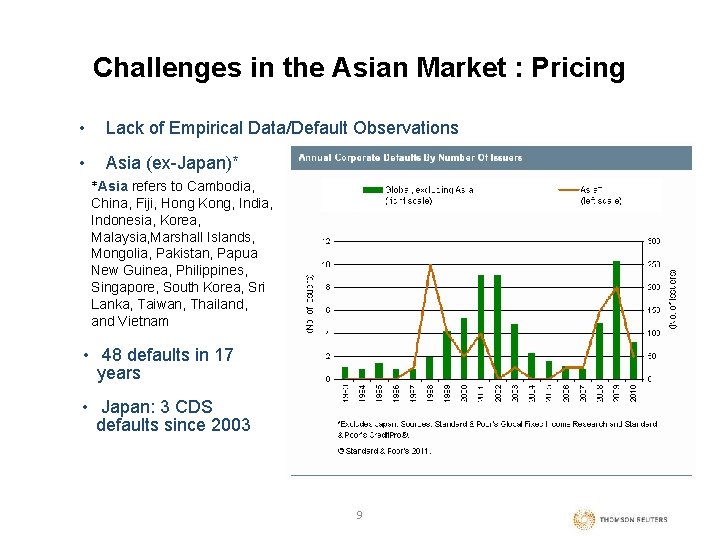
Challenges in the Asian Market : Pricing • Lack of Empirical Data/Default Observations • Asia (ex-Japan)* *Asia refers to Cambodia, China, Fiji, Hong Kong, India, Indonesia, Korea, Malaysia, Marshall Islands, Mongolia, Pakistan, Papua New Guinea, Philippines, Singapore, South Korea, Sri Lanka, Taiwan, Thailand, and Vietnam • 48 defaults in 17 years • Japan: 3 CDS defaults since 2003 9
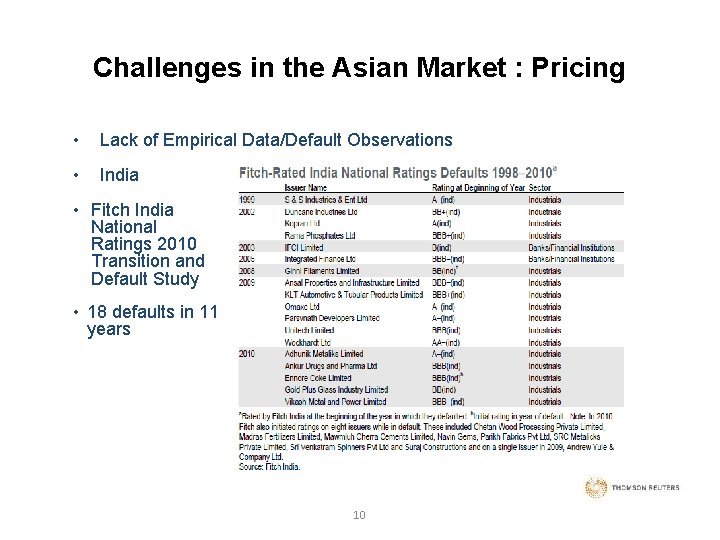
Challenges in the Asian Market : Pricing • Lack of Empirical Data/Default Observations • India • Fitch India National Ratings 2010 Transition and Default Study • 18 defaults in 11 years 10
Challenges in the Asian Market : Liquidity Opaque Market • Banks Price approximately 2, 500 Single Names • The liquid part of the Market is no more than 1, 000. • Many do not price daily, most do not have pricing in the full term structure. • 5 Y Contracts are by far the most liquid. Reference vs. Deliverable Obligations (CRMs) • CRMs specify a deliverable obligation • No naked positions • Standardisation of Contracts 11
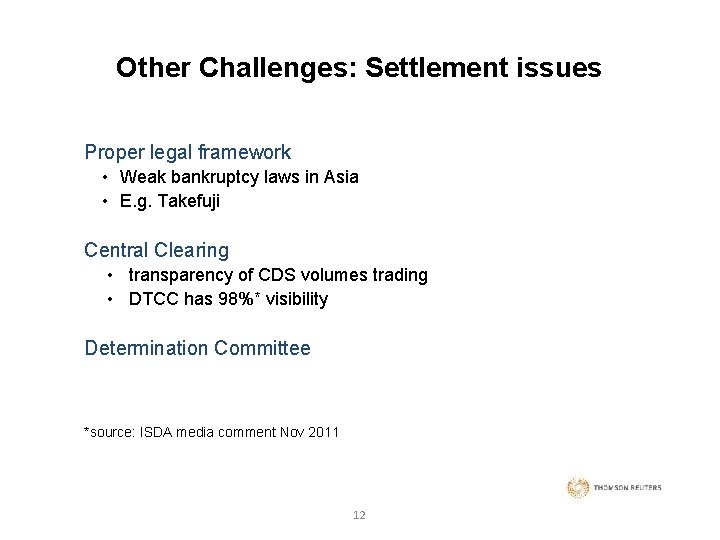
Other Challenges: Settlement issues Proper legal framework • Weak bankruptcy laws in Asia • E. g. Takefuji Central Clearing • transparency of CDS volumes trading • DTCC has 98%* visibility Determination Committee *source: ISDA media comment Nov 2011 12
Credit Default Swaps – India FIMMDA – PDAI 13 th Annual Conference 2012 DATE: 27 th January 2012 H. Jayesh Founder Partner, Juris Corp
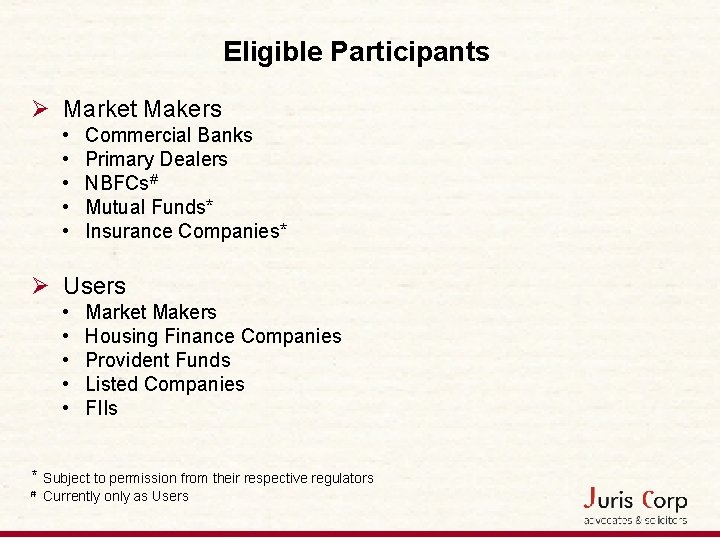
Eligible Participants Ø Market Makers • • • Commercial Banks Primary Dealers NBFCs# Mutual Funds* Insurance Companies* Ø Users • • • Market Makers Housing Finance Companies Provident Funds Listed Companies FIIs * Subject to permission from their respective regulators # Currently only as Users
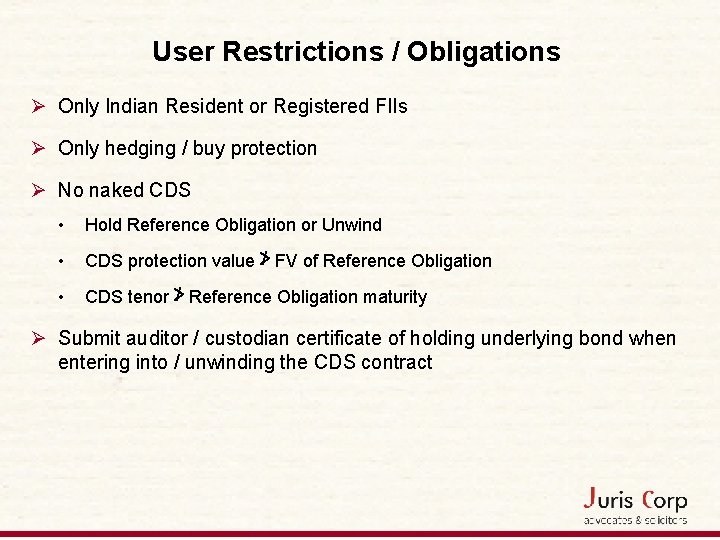
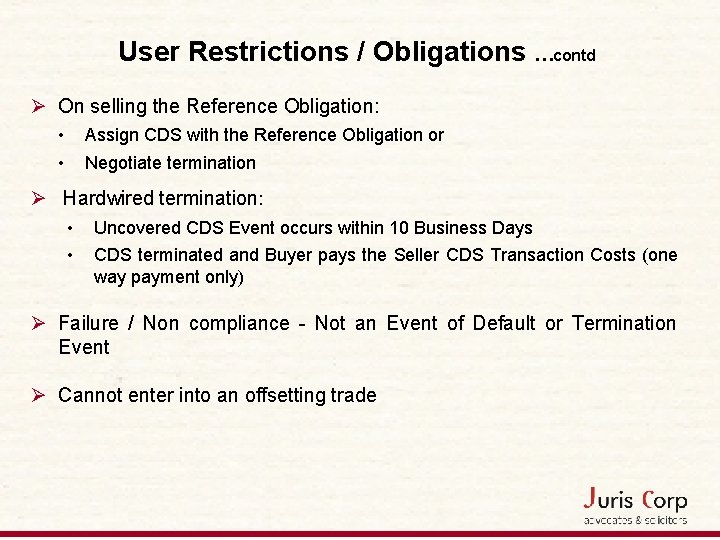
User Restrictions / Obligations Ø Only Indian Resident or Registered FIIs Ø Only hedging / buy protection Ø No naked CDS • Hold Reference Obligation or Unwind • CDS protection value ≯ FV of Reference Obligation • CDS tenor ≯ Reference Obligation maturity Ø Submit auditor / custodian certificate of holding underlying bond when entering into / unwinding the CDS contract
User Restrictions / Obligations …contd Ø On selling the Reference Obligation: • • Assign CDS with the Reference Obligation or Negotiate termination Ø Hardwired termination: • • Uncovered CDS Event occurs within 10 Business Days CDS terminated and Buyer pays the Seller CDS Transaction Costs (one way payment only) Ø Failure / Non compliance - Not an Event of Default or Termination Event Ø Cannot enter into an offsetting trade
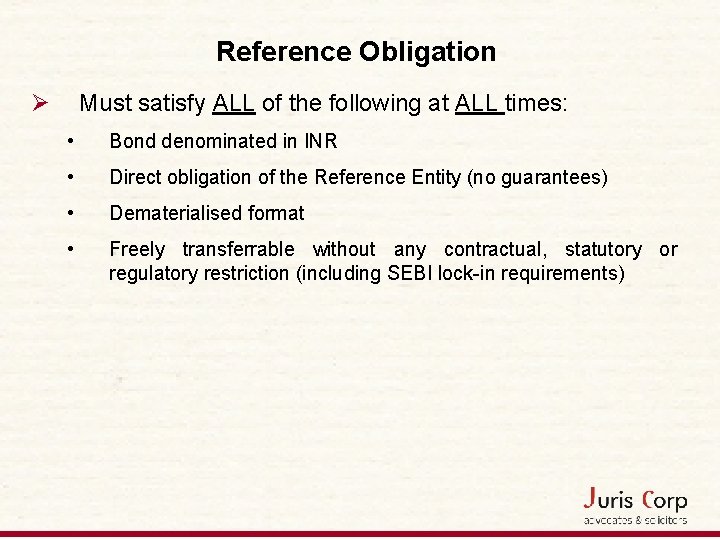
Reference Obligation Ø Must satisfy ALL of the following at ALL times: • Bond denominated in INR • Direct obligation of the Reference Entity (no guarantees) • Dematerialised format • Freely transferrable without any contractual, statutory or regulatory restriction (including SEBI lock-in requirements)
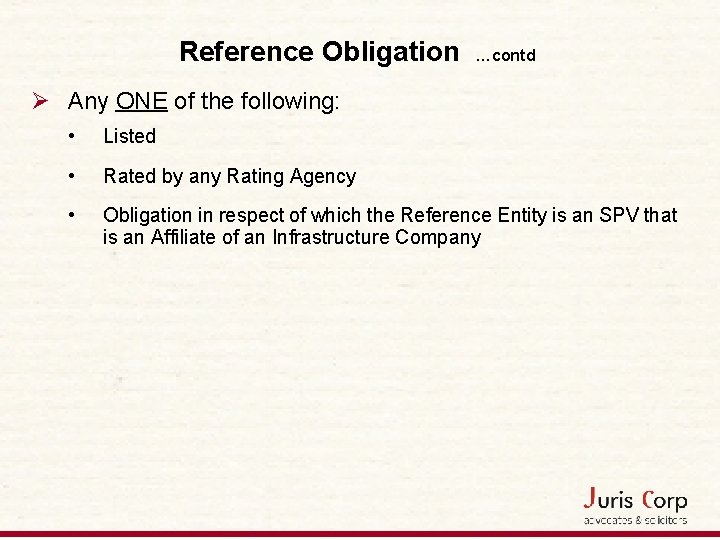
Reference Obligation …contd Ø Any ONE of the following: • Listed • Rated by any Rating Agency • Obligation in respect of which the Reference Entity is an SPV that is an Affiliate of an Infrastructure Company
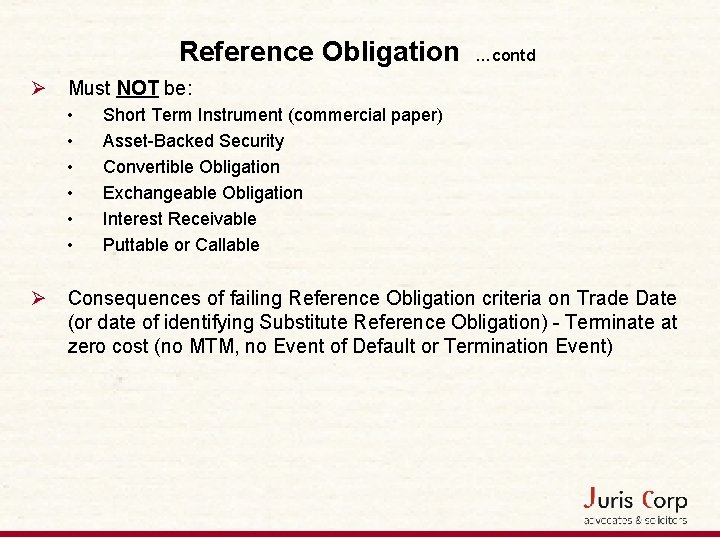
Reference Obligation …contd Ø Must NOT be: • • • Short Term Instrument (commercial paper) Asset-Backed Security Convertible Obligation Exchangeable Obligation Interest Receivable Puttable or Callable Ø Consequences of failing Reference Obligation criteria on Trade Date (or date of identifying Substitute Reference Obligation) - Terminate at zero cost (no MTM, no Event of Default or Termination Event)
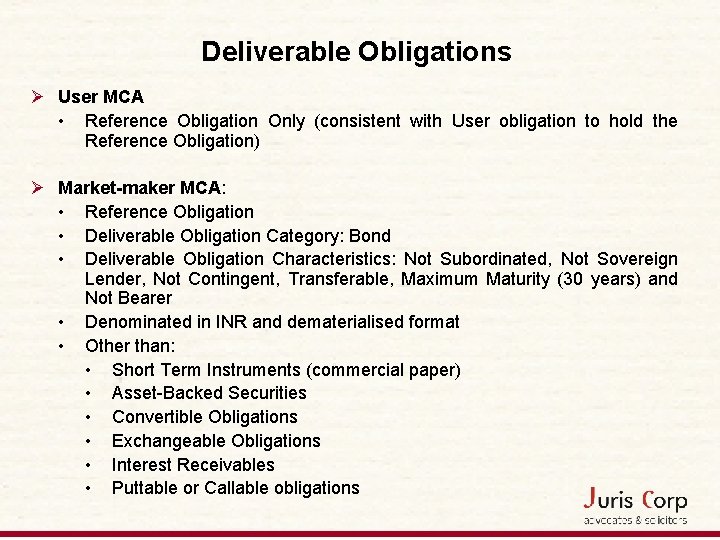
Deliverable Obligations Ø User MCA • Reference Obligation Only (consistent with User obligation to hold the Reference Obligation) Ø Market-maker MCA: • Reference Obligation • Deliverable Obligation Category: Bond • Deliverable Obligation Characteristics: Not Subordinated, Not Sovereign Lender, Not Contingent, Transferable, Maximum Maturity (30 years) and Not Bearer • Denominated in INR and dematerialised format • Other than: • Short Term Instruments (commercial paper) • Asset-Backed Securities • Convertible Obligations • Exchangeable Obligations • Interest Receivables • Puttable or Callable obligations
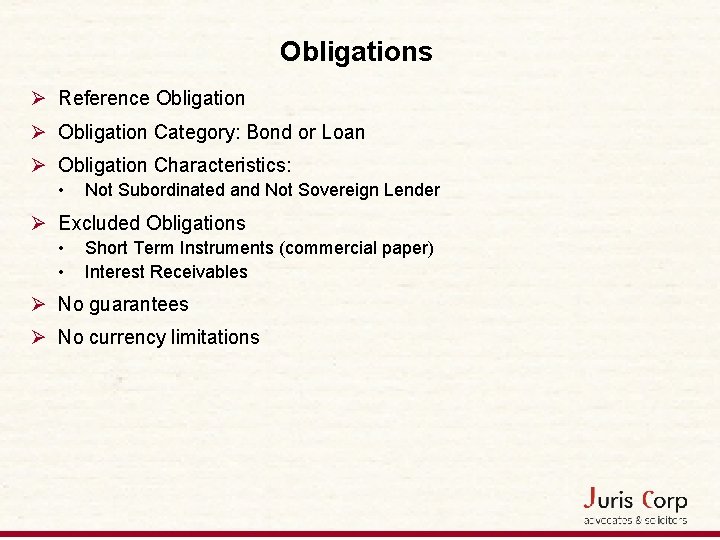
Obligations Ø Reference Obligation Ø Obligation Category: Bond or Loan Ø Obligation Characteristics: • Not Subordinated and Not Sovereign Lender Ø Excluded Obligations • • Short Term Instruments (commercial paper) Interest Receivables Ø No guarantees Ø No currency limitations
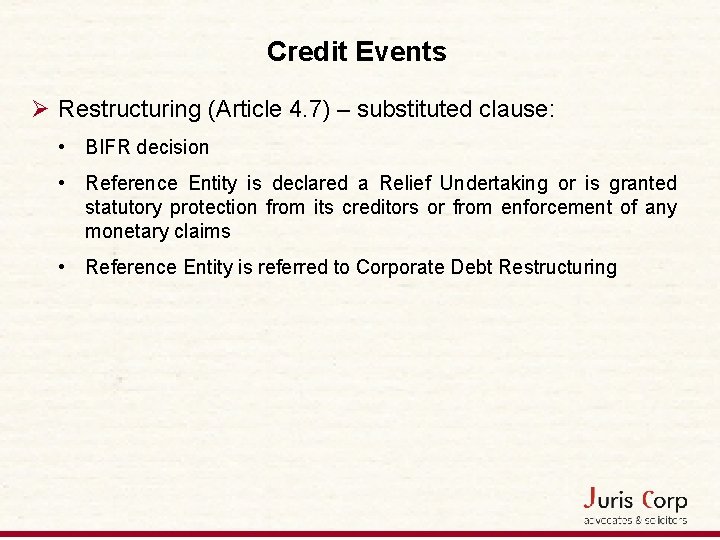
Credit Events Ø Restructuring (Article 4. 7) – substituted clause: • BIFR decision • Reference Entity is declared a Relief Undertaking or is granted statutory protection from its creditors or from enforcement of any monetary claims • Reference Entity is referred to Corporate Debt Restructuring
Credit Default Swaps – India FIMMDA – PDAI 13 th Annual Conference 2012 DATE: 27 th January 2012 Jacqueline ML Low Senior Counsel, Asia - ISDA
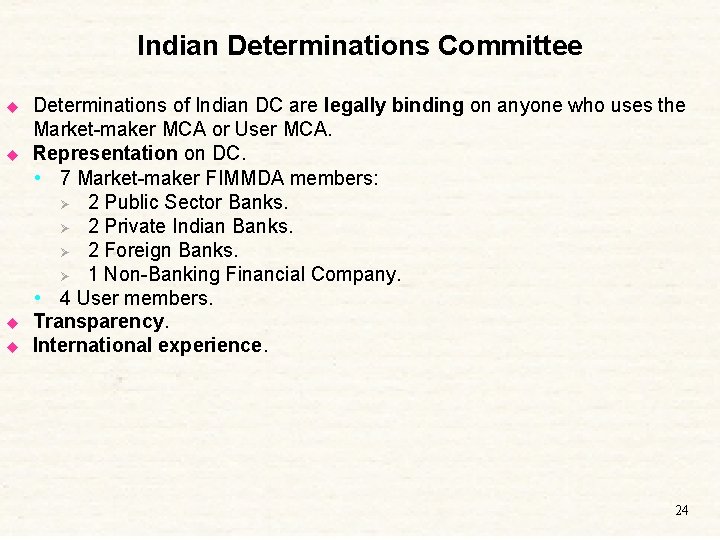
Indian Determinations Committee u u Determinations of Indian DC are legally binding on anyone who uses the Market-maker MCA or User MCA. Representation on DC. • 7 Market-maker FIMMDA members: Ø 2 Public Sector Banks. Ø 2 Private Indian Banks. Ø 2 Foreign Banks. Ø 1 Non-Banking Financial Company. • 4 User members. Transparency. International experience. 24
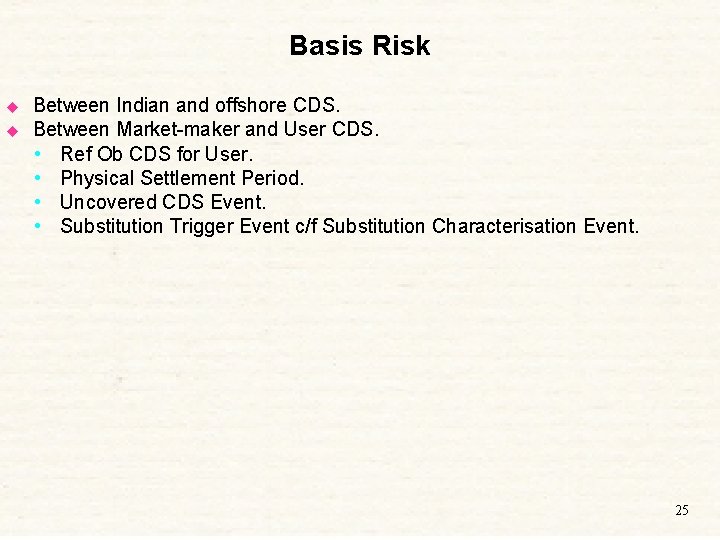
Basis Risk u u Between Indian and offshore CDS. Between Market-maker and User CDS. • Ref Ob CDS for User. • Physical Settlement Period. • Uncovered CDS Event. • Substitution Trigger Event c/f Substitution Characterisation Event. 25
Credit Default Swaps – India FIMMDA – PDAI 13 th Annual Conference 2012 DATE: 27 th January 2012 Mr. Vaidya Nathan Director, Quantum Phinance
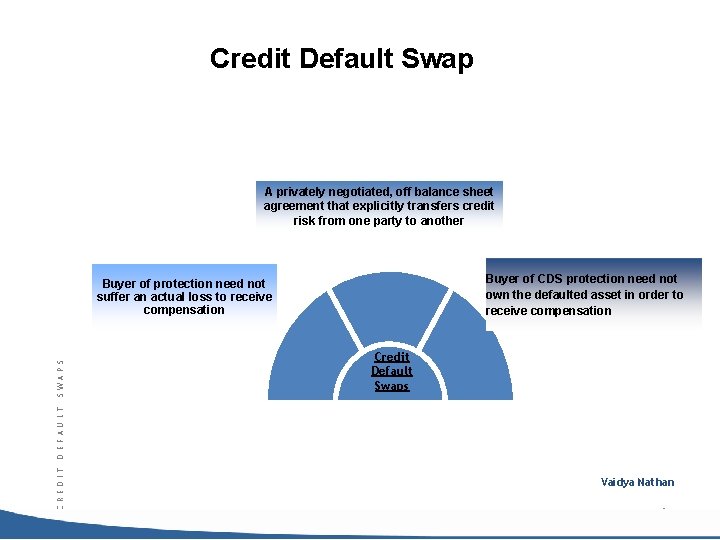
Credit Default Swap A privately negotiated, off balance sheet agreement that explicitly transfers credit risk from one party to another Buyer of CDS protection need not own the defaulted asset in order to receive compensation C R E D I T D E F A U L T S W A P S Buyer of protection need not suffer an actual loss to receive compensation Credit Default Swaps Vaidya Nathan 1
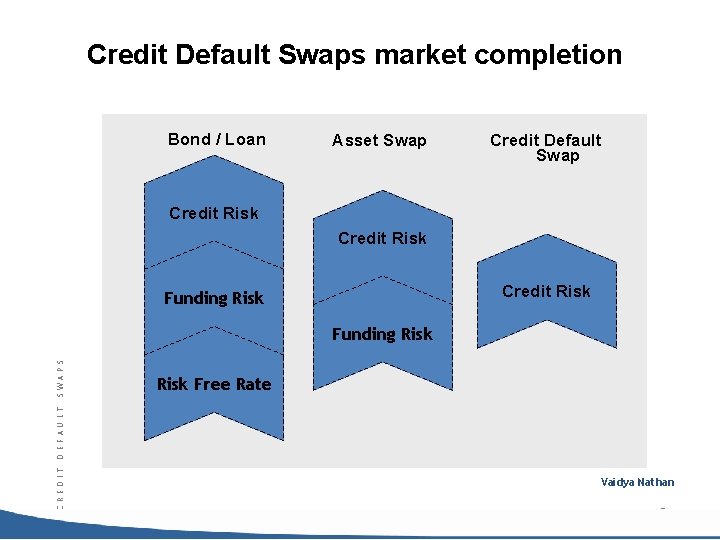
Credit Default Swaps market completion Bond / Loan Asset Swap Credit Default Swap Credit Risk Funding Risk C R E D I T D E F A U L T S W A P S Funding Risk Free Rate Vaidya Nathan 2
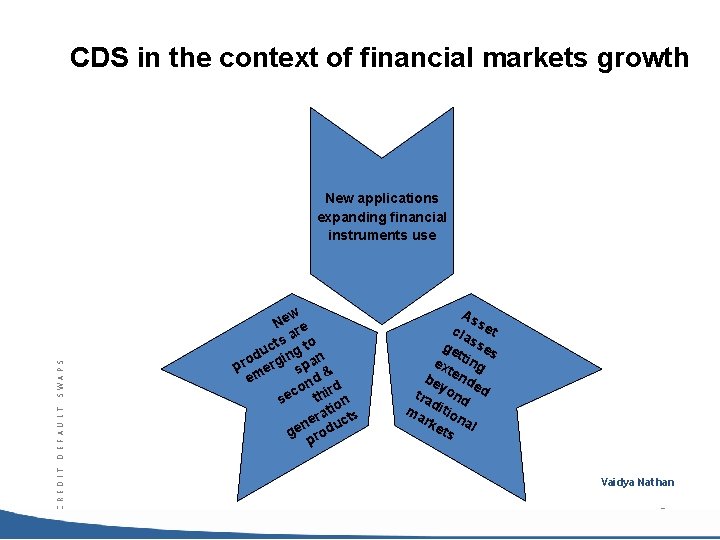
CDS in the context of financial markets growth C R E D I T D E F A U L T S W A P S New applications expanding financial instruments use w Ne re a ts to c du ing n pro erg spa & em d on ird c th n se tio s a r t ne duc e g ro p As s cla et ge sses t ex ting t be ende y tra ond d d ma itio rke nal ts Vaidya Nathan 3
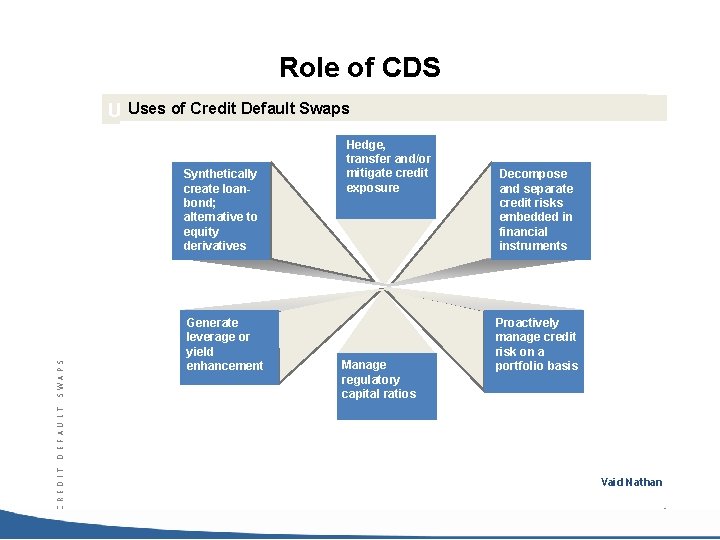
Role of CDS Uses Credit Default Swaps Uses ofof. Credit Default Swaps C R E D I T D E F A U L T S W A P S Synthetically create loanbond; alternative to equity derivatives Generate leverage or yield enhancement Hedge, transfer and/or mitigate credit exposure Manage regulatory capital ratios Decompose and separate credit risks embedded in financial instruments Proactively manage credit risk on a portfolio basis Vaid Nathan 4
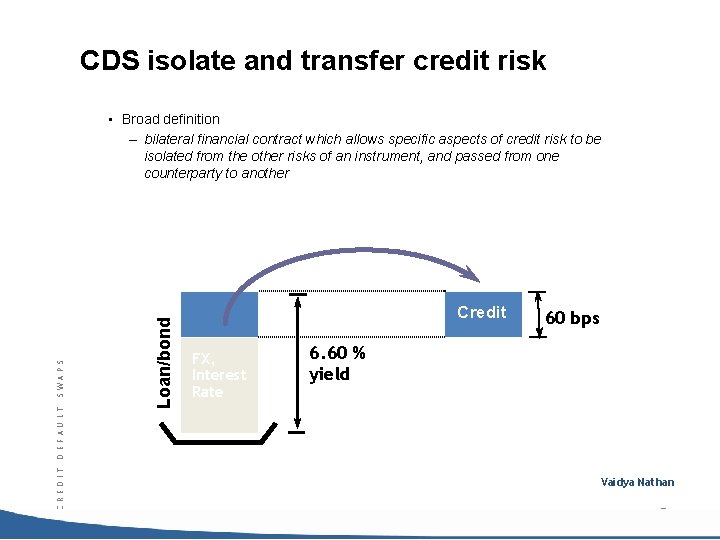
CDS isolate and transfer credit risk Loan/bond C R E D I T D E F A U L T S W A P S • Broad definition – bilateral financial contract which allows specific aspects of credit risk to be isolated from the other risks of an instrument, and passed from one counterparty to another Credit FX, Interest Rate On-balance sheet 60 bps 6. 60 % yield Off-balance sheet Vaidya Nathan 5
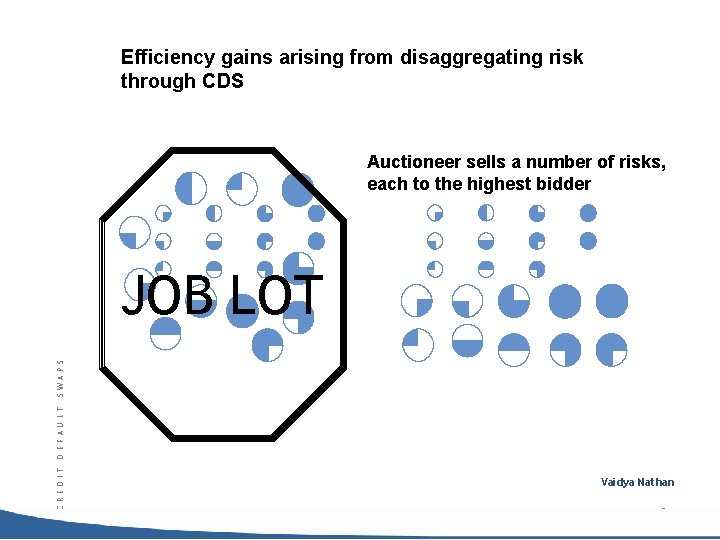
Efficiency gains arising from disaggregating risk through CDS Auctioneer sells a number of risks, each to the highest bidder C R E D I T D E F A U L T S W A P S JOB LOT Vaidya Nathan 6
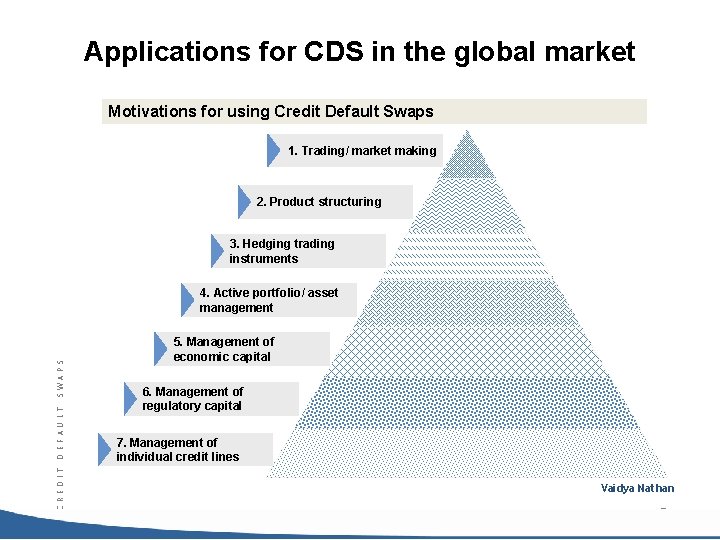
Applications for CDS in the global market Motivations for using Credit Default Swaps 1. Trading/ market making 2. Product structuring 3. Hedging trading instruments C R E D I T D E F A U L T S W A P S 4. Active portfolio/ asset management 5. Management of economic capital 6. Management of regulatory capital 7. Management of individual credit lines Vaidya Nathan 7
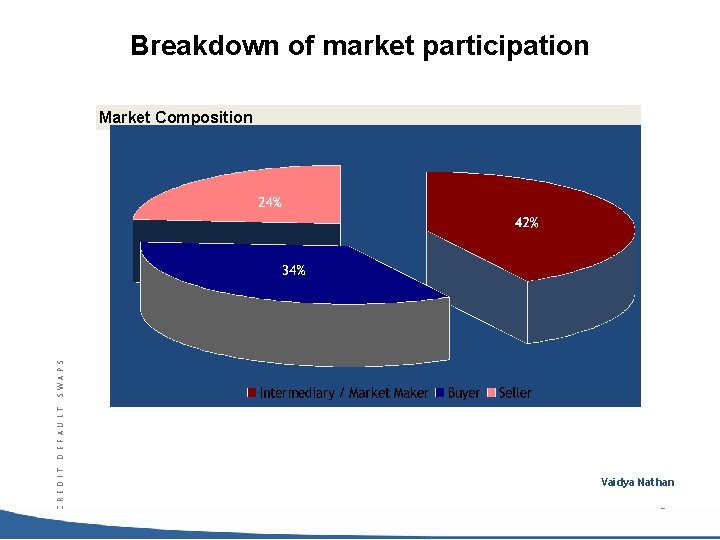
Breakdown of market participation C R E D I T D E F A U L T S W A P S Market Composition Vaidya Nathan 8
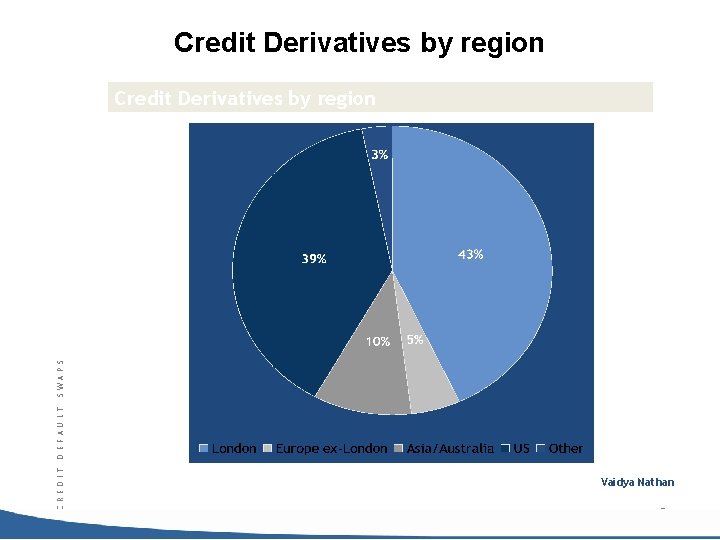
Credit Derivatives by region C R E D I T D E F A U L T S W A P S Credit Derivatives by region Vaidya Nathan 9
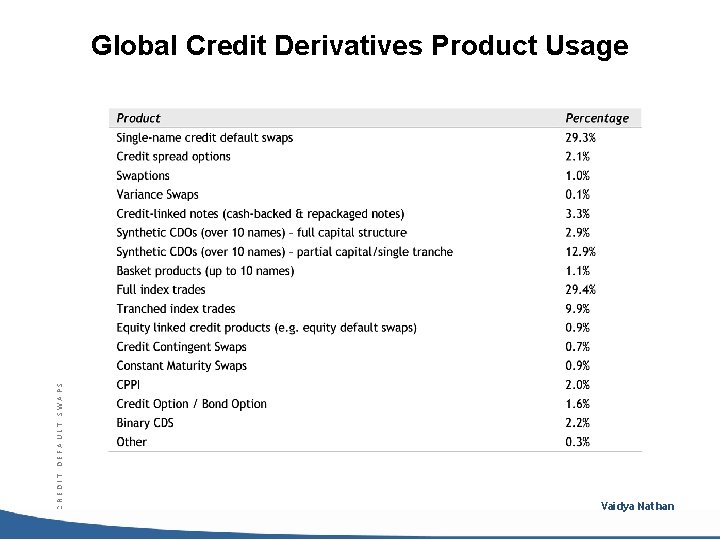
C R E D I T D E F A U L T S W A P S Global Credit Derivatives Product Usage Vaidya Nathan 10
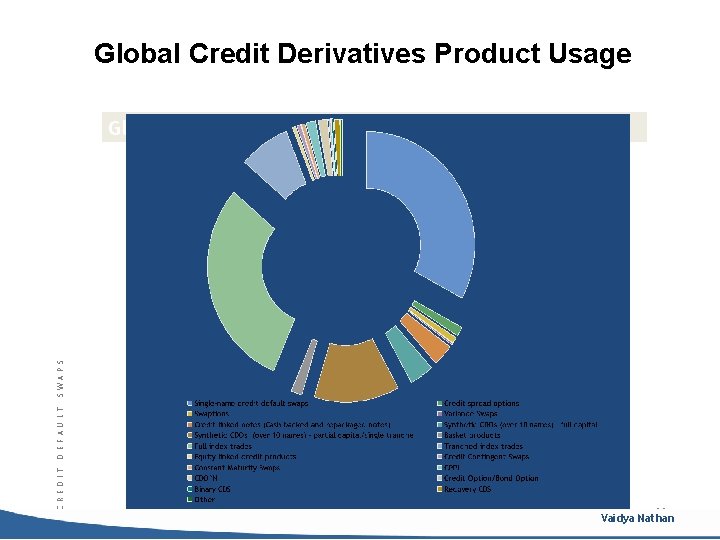
Global Credit Derivatives Product Usage C R E D I T D E F A U L T S W A P S Global Credit Derivatives Product Usage 11 Vaidya Nathan
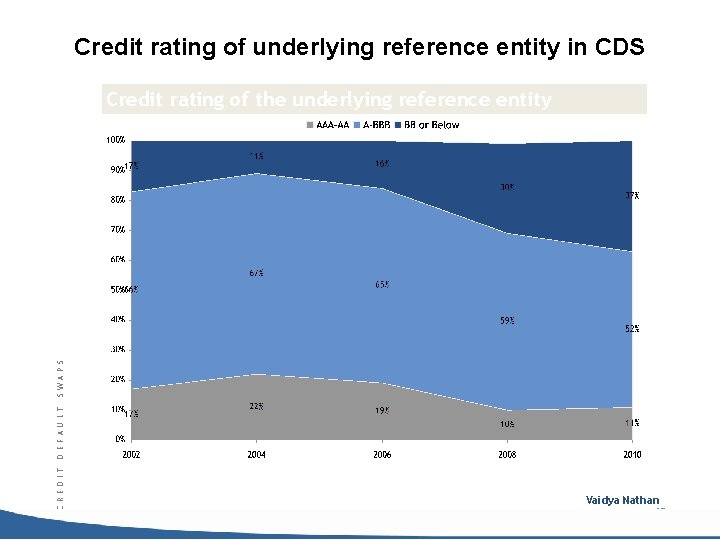
Credit rating of underlying reference entity in CDS C R E D I T D E F A U L T S W A P S Credit rating of the underlying reference entity Vaidya Nathan 12
Tenor distribution of CDS C R E D I T D E F A U L T S W A P S Maturity Vaidya Nathan 13
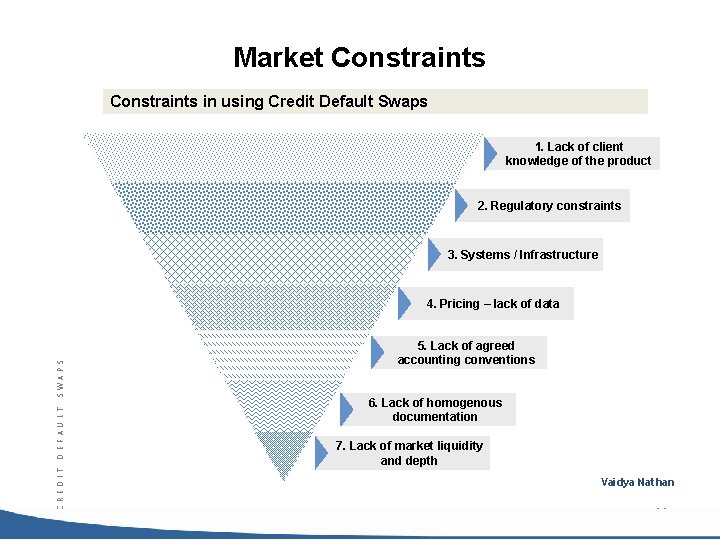
Market Constraints in using Credit Default Swaps 1. Lack of client knowledge of the product 2. Regulatory constraints 3. Systems / Infrastructure C R E D I T D E F A U L T S W A P S 4. Pricing – lack of data 5. Lack of agreed accounting conventions 6. Lack of homogenous documentation 7. Lack of market liquidity and depth Vaidya Nathan 14
Credit Default Swaps – India FIMMDA – PDAI 13 th Annual Conference 2012 DATE: 27 th January 2012 Mr. Gaurav Pradhan MD & Head, Global Credit Trading, Deutsche Bank, Mumbai
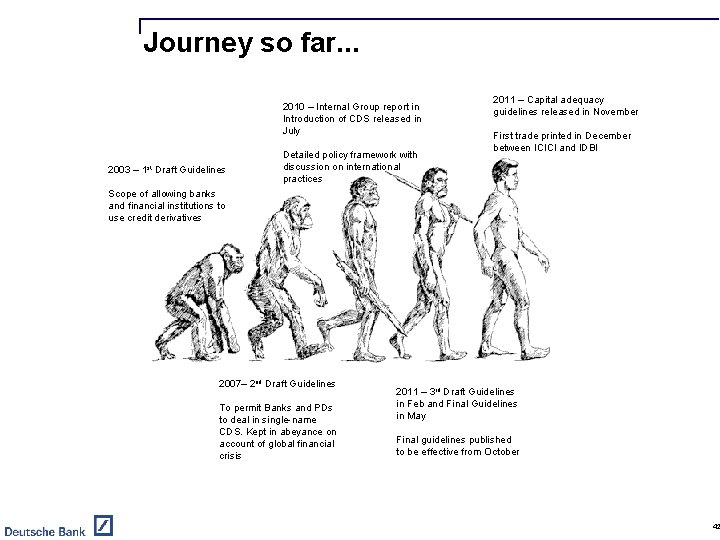
Journey so far. . . 2010 – Internal Group report in Introduction of CDS released in July 2003 – 1 st Draft Guidelines Detailed policy framework with discussion on international practices 2011 – Capital adequacy guidelines released in November First trade printed in December between ICICI and IDBI Scope of allowing banks and financial institutions to use credit derivatives 2007– 2 nd Draft Guidelines To permit Banks and PDs to deal in single-name CDS. Kept in abeyance on account of global financial crisis 2011 – 3 rd Draft Guidelines in Feb and Final Guidelines in May Final guidelines published to be effective from October 42
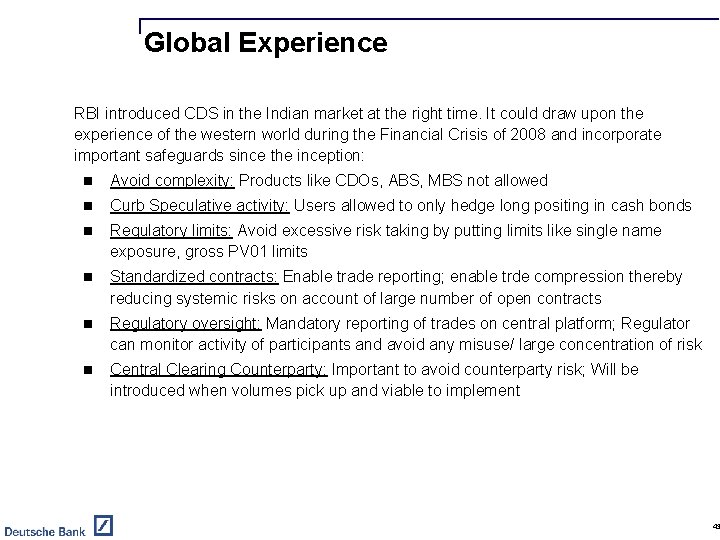
Global Experience RBI introduced CDS in the Indian market at the right time. It could draw upon the experience of the western world during the Financial Crisis of 2008 and incorporate important safeguards since the inception: n Avoid complexity: Products like CDOs, ABS, MBS not allowed n Curb Speculative activity: Users allowed to only hedge long positing in cash bonds n Regulatory limits: Avoid excessive risk taking by putting limits like single name exposure, gross PV 01 limits n Standardized contracts: Enable trade reporting; enable trde compression thereby reducing systemic risks on account of large number of open contracts n Regulatory oversight: Mandatory reporting of trades on central platform; Regulator can monitor activity of participants and avoid any misuse/ large concentration of risk n Central Clearing Counterparty: Important to avoid counterparty risk; Will be introduced when volumes pick up and viable to implement 43
Role of FIMMDA – So far FIMMDA played a key role in developing the market infrastructure: n Documentation: FIMMDA in liaison with ISDA and market participants helped in developing market standard documentation (MCAs) n Determinations Committee: Scope and role of DC was defined; Initial list of DC members finalized n Market-Makers Market maker volunteers were identified n Valuation Methodolgy Methodology for daily valuation of CDS positions was developed. External vendor was identified and mandated with the task of polling/ publishing curves 44
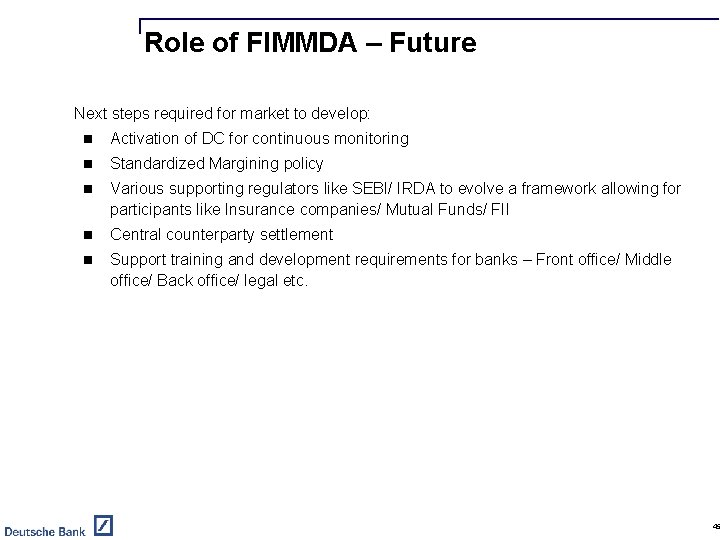
Role of FIMMDA – Future Next steps required for market to develop: n Activation of DC for continuous monitoring n Standardized Margining policy n Various supporting regulators like SEBI/ IRDA to evolve a framework allowing for participants like Insurance companies/ Mutual Funds/ FII n Central counterparty settlement n Support training and development requirements for banks – Front office/ Middle office/ Back office/ legal etc. 45
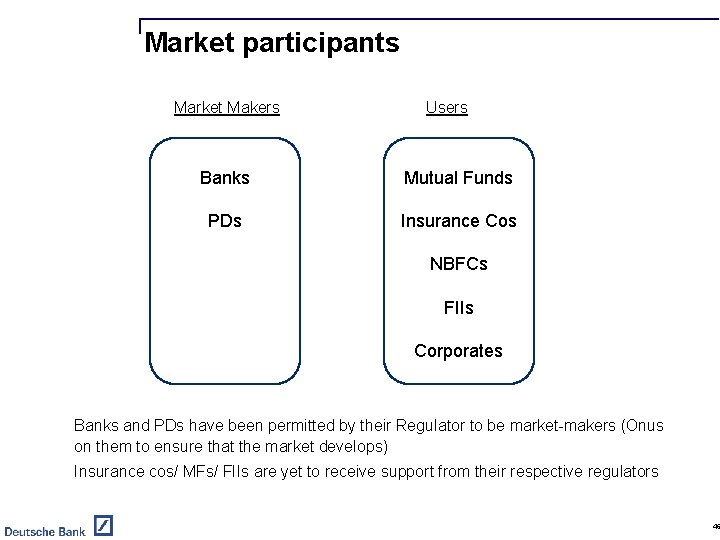
Market participants Market Makers Users Banks Mutual Funds PDs Insurance Cos NBFCs FIIs Corporates Banks and PDs have been permitted by their Regulator to be market-makers (Onus on them to ensure that the market develops) Insurance cos/ MFs/ FIIs are yet to receive support from their respective regulators 46
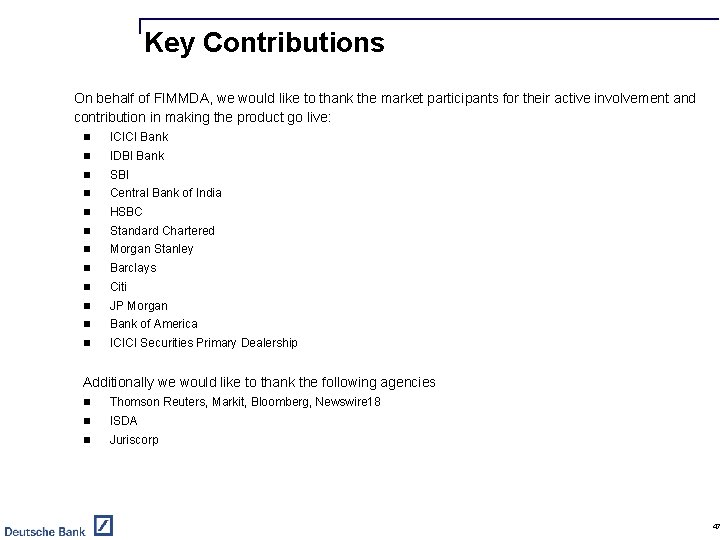
Key Contributions On behalf of FIMMDA, we would like to thank the market participants for their active involvement and contribution in making the product go live: n ICICI Bank n IDBI Bank n SBI n Central Bank of India n HSBC n Standard Chartered n Morgan Stanley n Barclays n Citi n JP Morgan n Bank of America n ICICI Securities Primary Dealership Additionally we would like to thank the following agencies n Thomson Reuters, Markit, Bloomberg, Newswire 18 n ISDA n Juriscorp 47
Thank you! Questions? 48