Corporations A Contemporary Approach Chapter 16 Slide 1
- Slides: 78
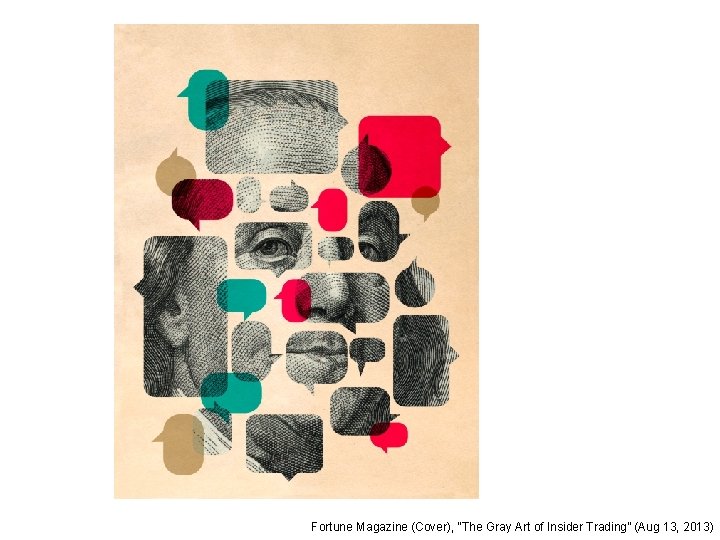
Corporations: A Contemporary Approach Chapter 16 Slide 1 Public Shareholder Activism of 65 Fortune Magazine (Cover), “The Gray Art of Insider Trading” (Aug 13, 2013)
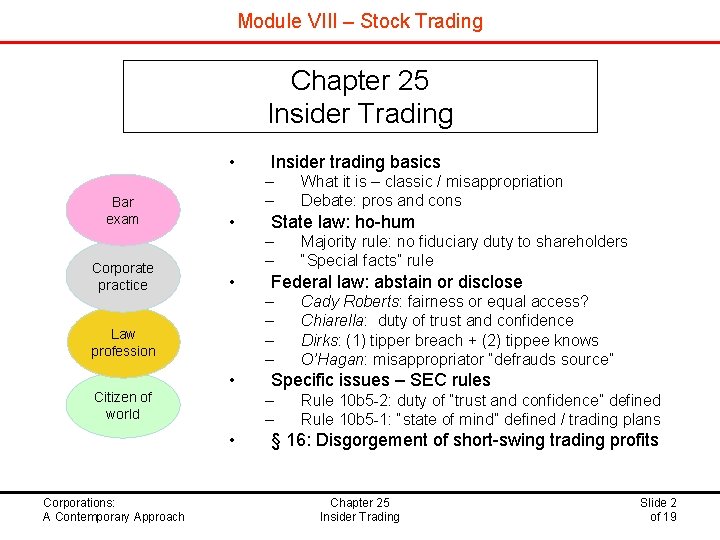
Module VIII – Stock Trading Chapter 25 Insider Trading • Bar exam Corporate practice – – • • Corporations: A Contemporary Approach Cady Roberts: fairness or equal access? Chiarella: duty of trust and confidence Dirks: (1) tipper breach + (2) tippee knows O’Hagan: misappropriator “defrauds source” Specific issues – SEC rules – – • Majority rule: no fiduciary duty to shareholders “Special facts” rule Federal law: abstain or disclose – – • What it is – classic / misappropriation Debate: pros and cons State law: ho-hum – – Law profession Citizen of world Insider trading basics Rule 10 b 5 -2: duty of “trust and confidence” defined Rule 10 b 5 -1: “state of mind” defined / trading plans § 16: Disgorgement of short-swing trading profits Chapter 25 Insider Trading Slide 2 of 19
Insider trading primer (in 30 minutes) Corporations: A Contemporary Approach Chapter 25 Insider Trading Slide 3 of 19
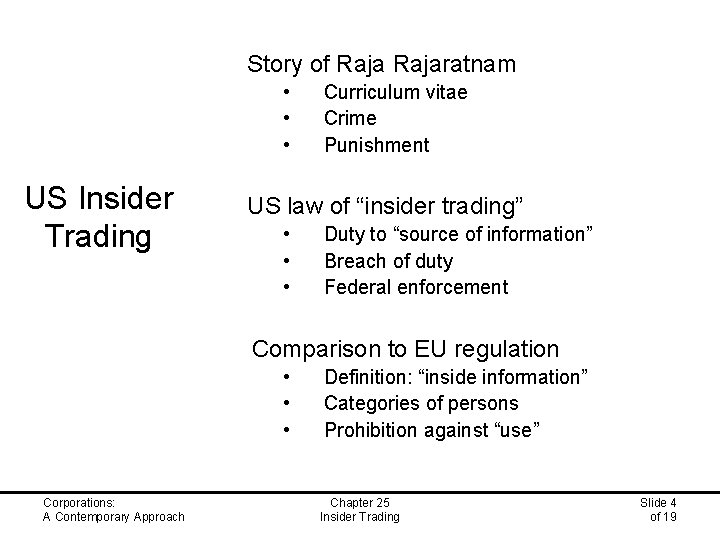
Story of Rajaratnam • • • US Insider Trading Curriculum vitae Crime Punishment US law of “insider trading” • • • Duty to “source of information” Breach of duty Federal enforcement Comparison to EU regulation • • • Corporations: A Contemporary Approach Definition: “inside information” Categories of persons Prohibition against “use” Chapter 25 Insider Trading Slide 4 of 19
Story of Rajaratnam Corporations: A Contemporary Approach Chapter 25 Insider Trading Slide 5 of 19
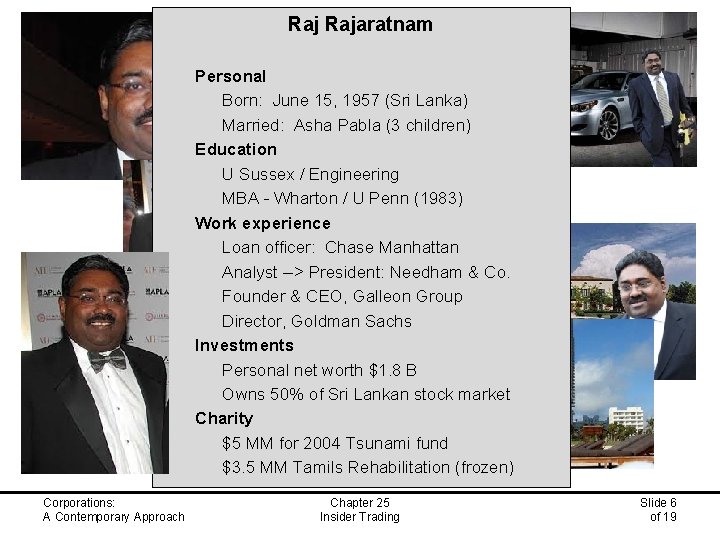
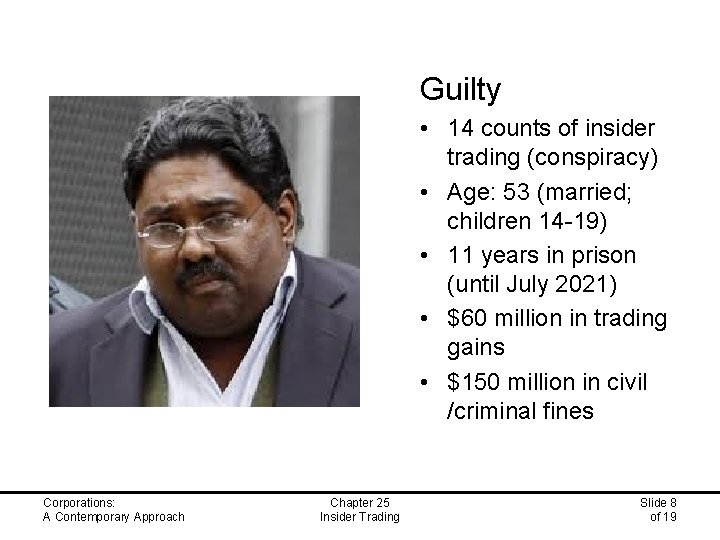
Raj Rajaratnam Personal Born: June 15, 1957 (Sri Lanka) Married: Asha Pabla (3 children) Education U Sussex / Engineering MBA - Wharton / U Penn (1983) Work experience Loan officer: Chase Manhattan Analyst --> President: Needham & Co. Founder & CEO, Galleon Group Director, Goldman Sachs Investments Personal net worth $1. 8 B Owns 50% of Sri Lankan stock market Charity $5 MM for 2004 Tsunami fund $3. 5 MM Tamils Rehabilitation (frozen) Corporations: A Contemporary Approach Chapter 25 Insider Trading Slide 6 of 19
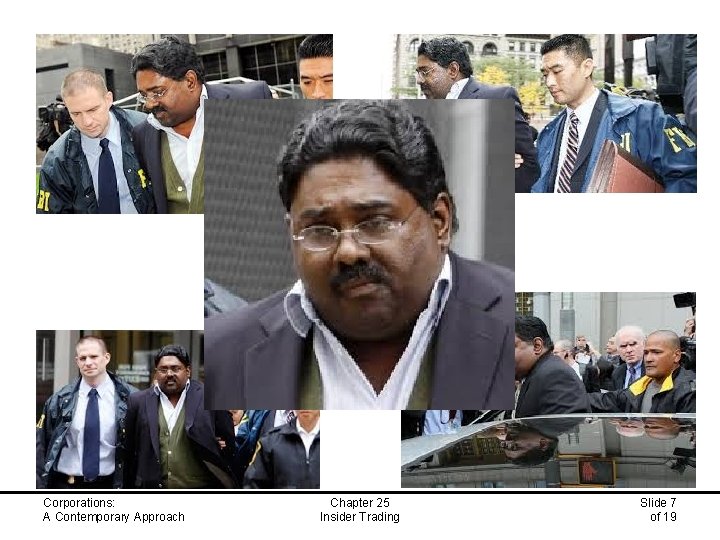
Corporations: A Contemporary Approach Chapter 25 Insider Trading Slide 7 of 19
Guilty • 14 counts of insider trading (conspiracy) • Age: 53 (married; children 14 -19) • 11 years in prison (until July 2021) • $60 million in trading gains • $150 million in civil /criminal fines Corporations: A Contemporary Approach Chapter 25 Insider Trading Slide 8 of 19
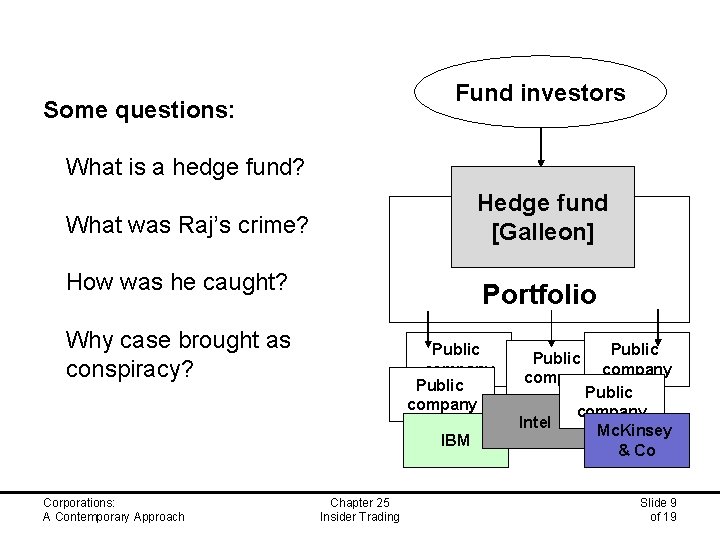
Fund investors Some questions: What is a hedge fund? Hedge fund [Galleon] What was Raj’s crime? How was he caught? Portfolio Why case brought as conspiracy? Public company IBM Corporations: A Contemporary Approach Chapter 25 Insider Trading Public company Intel Mc. Kinsey & Co Slide 9 of 19
US insider trading law “Trading on basis of material, non-public information” Corporations: A Contemporary Approach Chapter 25 Insider Trading Slide 10 of 19
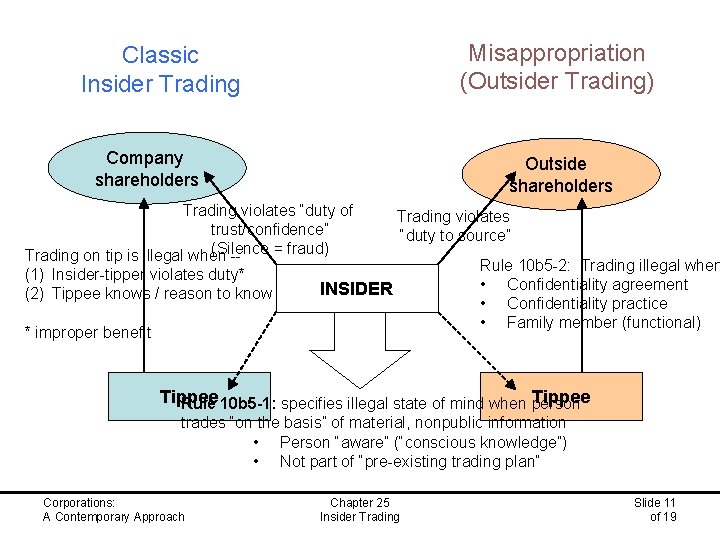
Misappropriation (Outsider Trading) Classic Insider Trading Company shareholders Outside shareholders Trading violates “duty of trust/confidence” (Silence = fraud) Trading on tip is illegal when -- (1) Insider-tipper violates duty* (2) Tippee knows / reason to know Trading violates “duty to source” INSIDER * improper benefit Rule 10 b 5 -2: Trading illegal when • Confidentiality agreement • Confidentiality practice • Family member (functional) Tippee Rule 10 b 5 -1: specifies illegal state of mind when person trades “on the basis” of material, nonpublic information • Person “aware” (“conscious knowledge”) • Not part of “pre-existing trading plan” Corporations: A Contemporary Approach Chapter 25 Insider Trading Slide 11 of 19
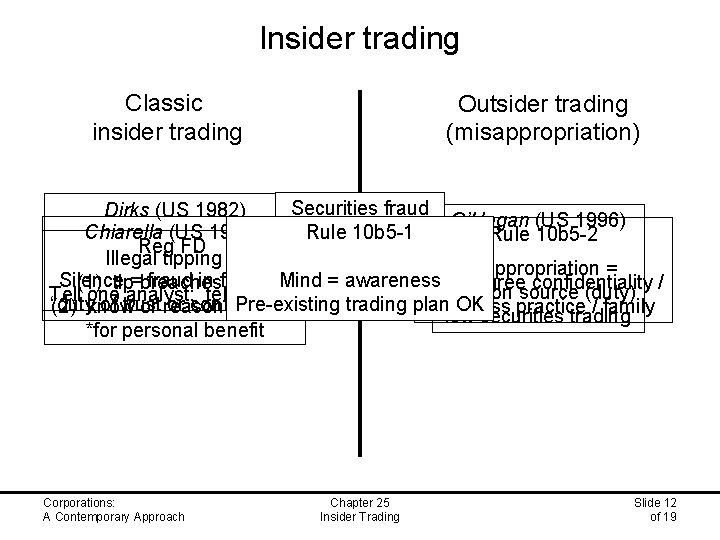
Insider trading Classic insider trading Outsider trading (misappropriation) Securities fraud Dirks (US 1982) O’Hagan (US 1996) Chiarella (US 1980) Rule 10 b 5 -1 Rule 10 b-5: Rule 10 b 5 -2 Reg FD Illegal tipping = Misappropriation = Silence = fraud in face of Mind = awareness Misstatements of (1) tip breaches duty* Duty: agree confidentiality / fraud on source (duty) Tell one analyst: tell public! “duty of trust or confidence” Pre-existing trading plan OK material fact (2) know or reason to know business practice / family icw securities trading *for personal benefit Corporations: A Contemporary Approach Chapter 25 Insider Trading Slide 12 of 19
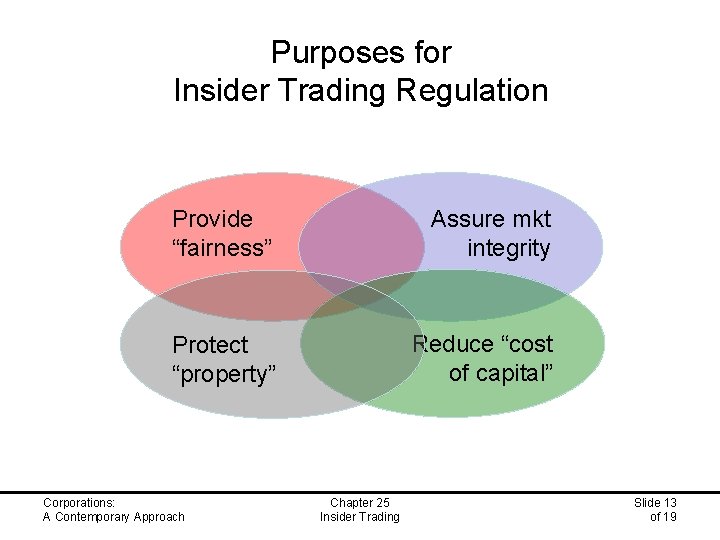
Purposes for Insider Trading Regulation Provide “fairness” Assure mkt integrity Protect “property” Reduce “cost of capital” Corporations: A Contemporary Approach Chapter 25 Insider Trading Slide 13 of 19
“Insider trading corrodes investor confidence. It undermines the integrity of the markets by tilting, unacceptably, the playing field in favor of those whose greed drives them to betray the duties and confidences they owe others. ” Robert Khuzami SEC enforcement director Corporations: A Contemporary Approach Chapter 25 Insider Trading Slide 14 of 19
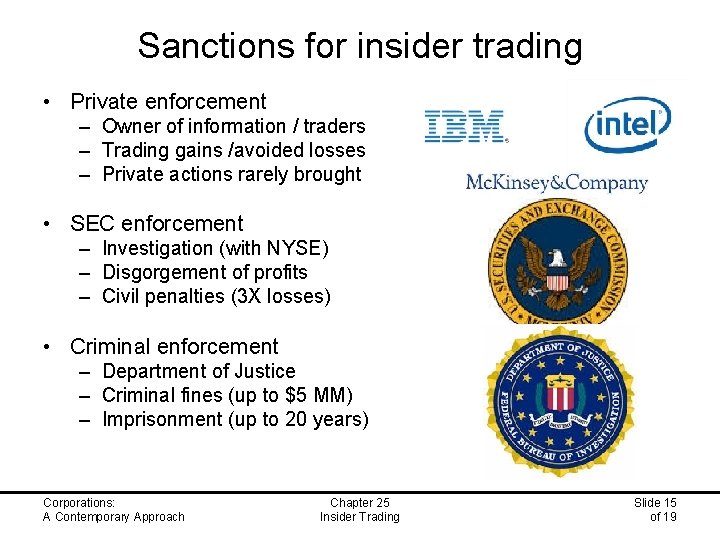
Sanctions for insider trading • Private enforcement – Owner of information / traders – Trading gains /avoided losses – Private actions rarely brought • SEC enforcement – Investigation (with NYSE) – Disgorgement of profits – Civil penalties (3 X losses) • Criminal enforcement – Department of Justice – Criminal fines (up to $5 MM) – Imprisonment (up to 20 years) Corporations: A Contemporary Approach Chapter 25 Insider Trading Slide 15 of 19
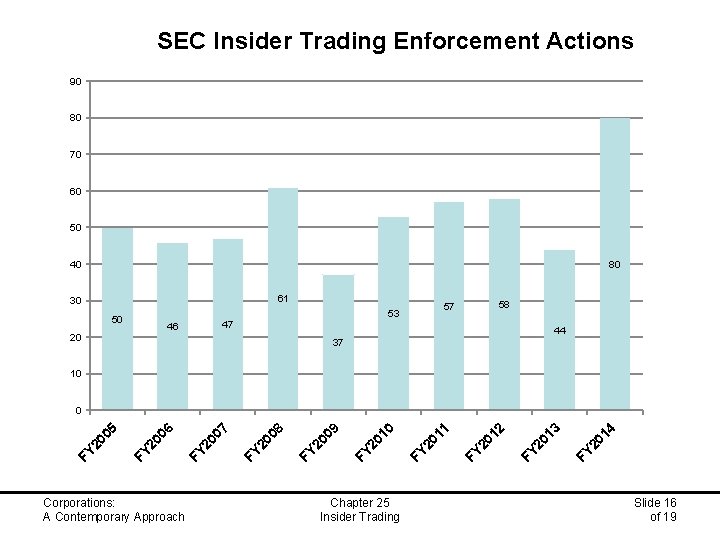
SEC Insider Trading Enforcement Actions 90 80 70 60 50 40 80 61 30 50 47 46 20 58 57 53 44 37 10 Corporations: A Contemporary Approach Chapter 25 Insider Trading 20 14 FY 20 13 FY 20 12 FY 20 11 FY 20 10 FY 20 09 FY 20 08 FY 20 07 FY 20 06 FY FY 20 05 0 Slide 16 of 19
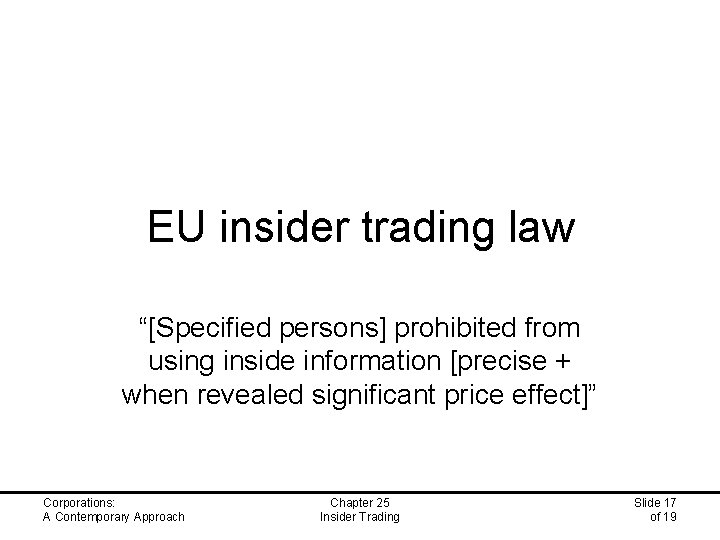
EU insider trading law “[Specified persons] prohibited from using inside information [precise + when revealed significant price effect]” Corporations: A Contemporary Approach Chapter 25 Insider Trading Slide 17 of 19
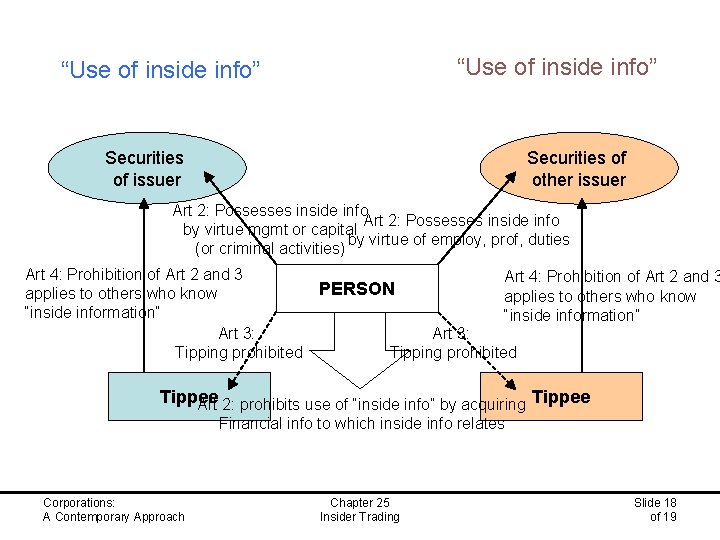
“Use of inside info” Securities of issuer Securities of other issuer Art 2: Possesses inside info by virtue mgmt or capital by virtue of employ, prof, duties (or criminal activities) Art 4: Prohibition of Art 2 and 3 applies to others who know “inside information” Art 3: Tipping prohibited PERSON Art 4: Prohibition of Art 2 and 3 applies to others who know “inside information” Art 3: Tipping prohibited Tippee Art 2: prohibits use of “inside info” by acquiring Tippee Financial info to which inside info relates Corporations: A Contemporary Approach Chapter 25 Insider Trading Slide 18 of 19
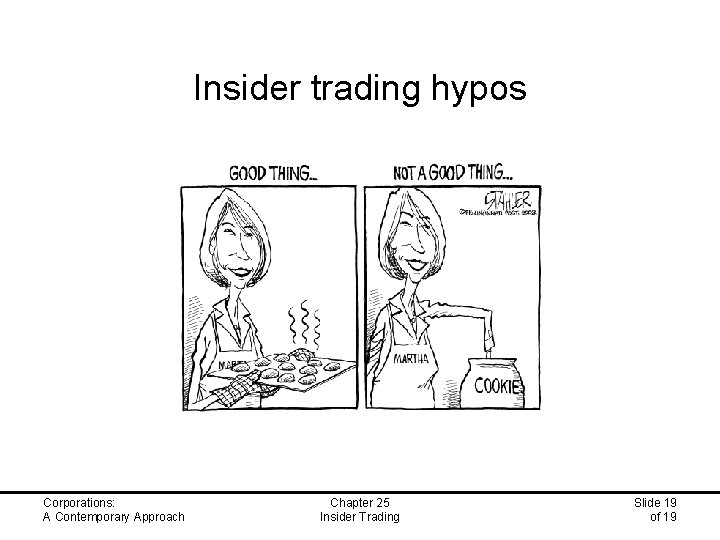
Insider trading hypos Corporations: A Contemporary Approach Chapter 25 Insider Trading Slide 19 of 19
End Insider trading primer Corporations: A Contemporary Approach Chapter 25 Insider Trading Slide 20 of 19
What is insider trading? Good news, bad news Outsider trading Corporations: A Contemporary Approach Chapter 25 Insider Trading Slide 21 of 19
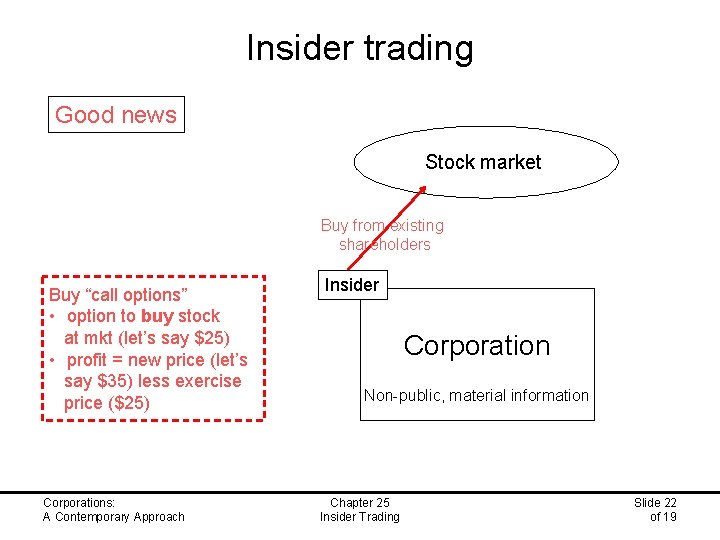
Insider trading Good news Stock market Buy from existing shareholders Buy “call options” • option to buy stock at mkt (let’s say $25) • profit = new price (let’s say $35) less exercise price ($25) Corporations: A Contemporary Approach Insider Corporation Non-public, material information Chapter 25 Insider Trading Slide 22 of 19
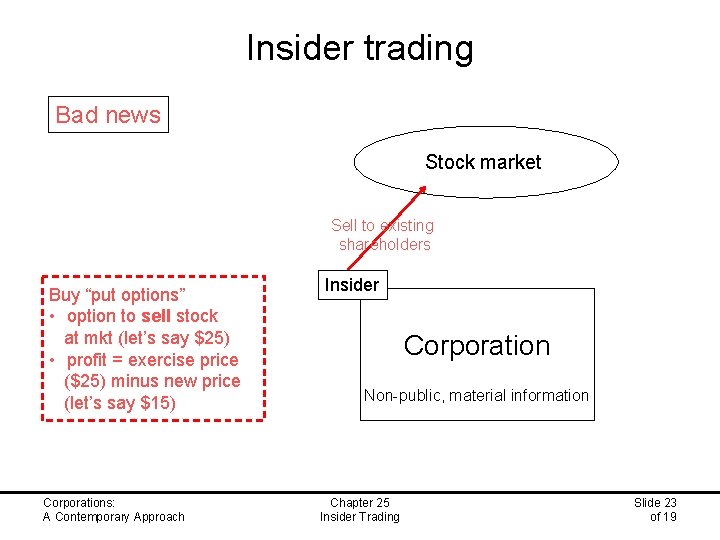
Insider trading Bad news Stock market Sell to existing shareholders Buy “put options” • option to sell stock at mkt (let’s say $25) • profit = exercise price ($25) minus new price (let’s say $15) Corporations: A Contemporary Approach Insider Corporation Non-public, material information Chapter 25 Insider Trading Slide 23 of 19
What is outsider trading … Corporations: A Contemporary Approach Chapter 25 Insider Trading Slide 24 of 19
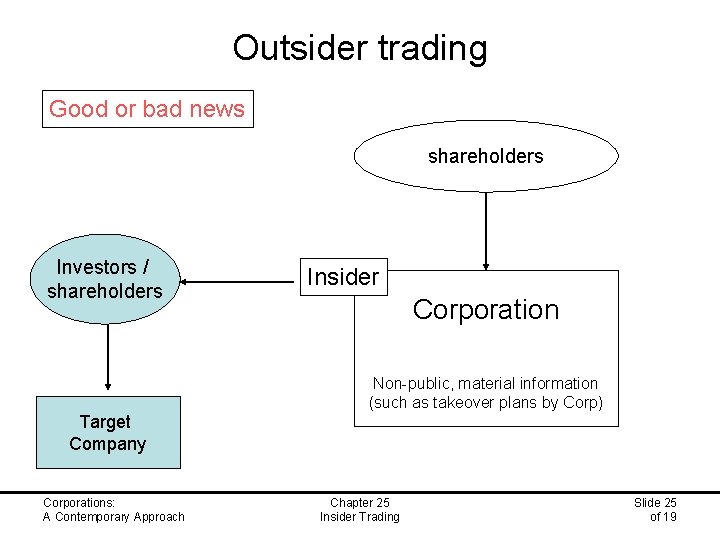
Outsider trading Good or bad news shareholders Investors / shareholders Insider Corporation Non-public, material information (such as takeover plans by Corp) Target Company Corporations: A Contemporary Approach Chapter 25 Insider Trading Slide 25 of 19
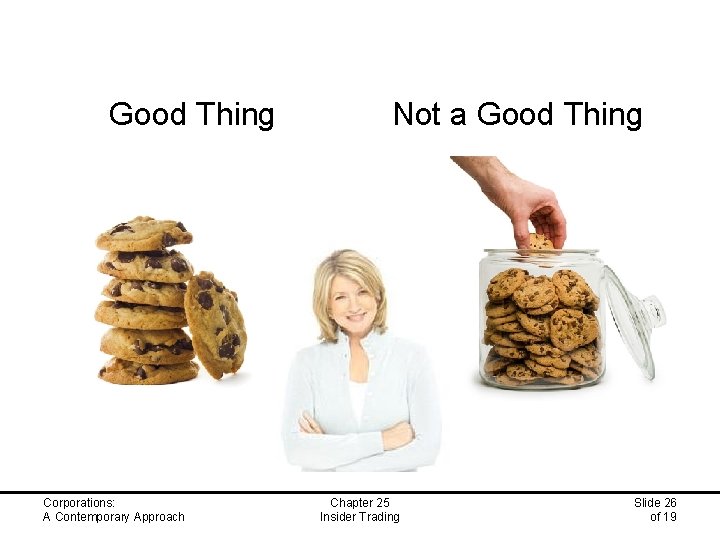
Good Thing Not a Good Thing Corporations: A Contemporary Approach Chapter 25 Insider Trading Slide 26 of 19
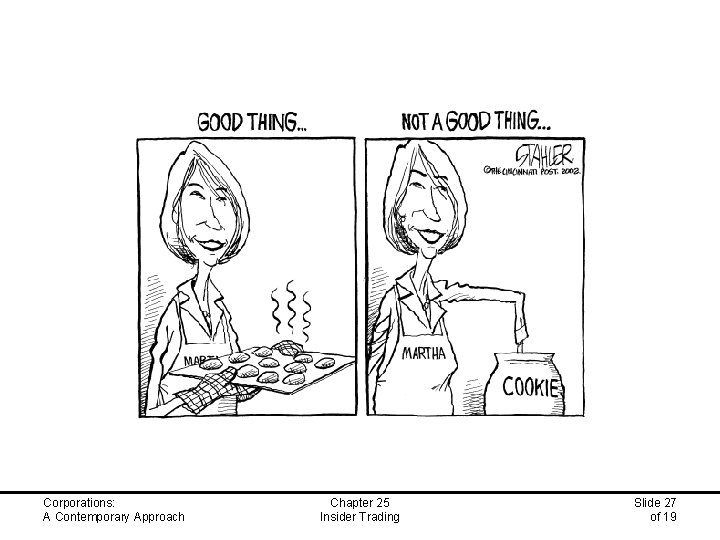
Corporations: A Contemporary Approach Chapter 25 Insider Trading Slide 27 of 19
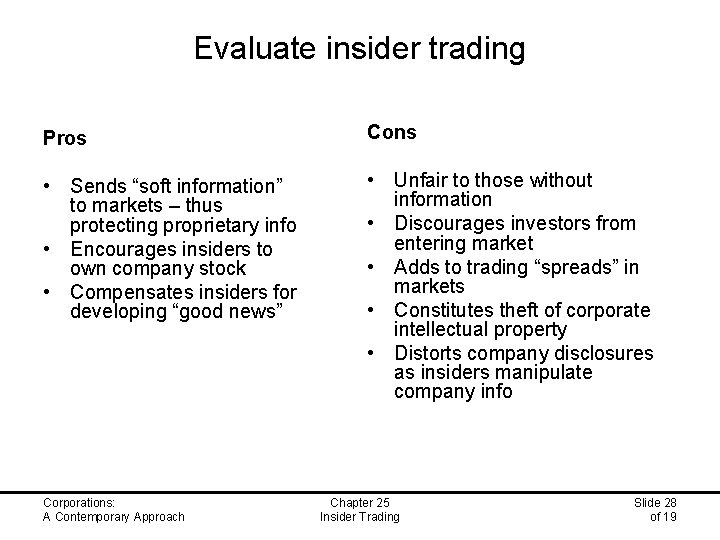
Evaluate insider trading Pros Cons • Sends “soft information” to markets – thus protecting proprietary info • Encourages insiders to own company stock • Compensates insiders for developing “good news” • Unfair to those without information • Discourages investors from entering market • Adds to trading “spreads” in markets • Constitutes theft of corporate intellectual property • Distorts company disclosures as insiders manipulate company info Corporations: A Contemporary Approach Chapter 25 Insider Trading Slide 28 of 19
State law … Corporations: A Contemporary Approach Chapter 25 Insider Trading Slide 29 of 19
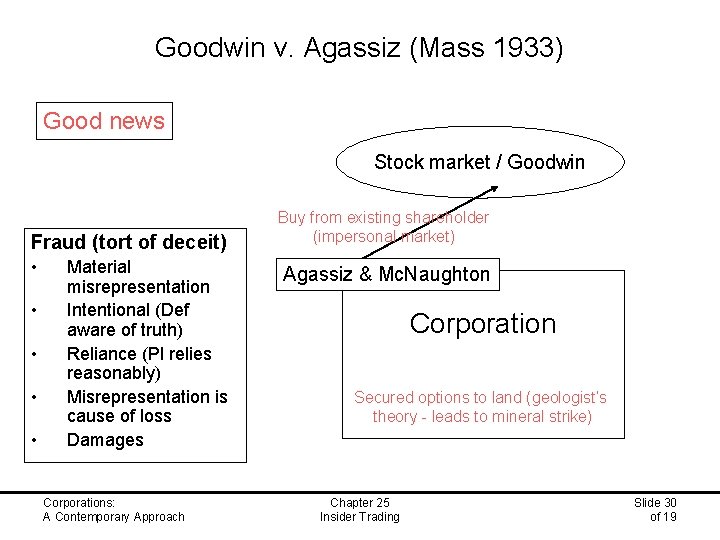
Goodwin v. Agassiz (Mass 1933) Good news Stock market / Goodwin Fraud (tort of deceit) • • • Material misrepresentation Intentional (Def aware of truth) Reliance (Pl relies reasonably) Misrepresentation is cause of loss Damages Corporations: A Contemporary Approach Buy from existing shareholder (impersonal market) Agassiz & Mc. Naughton Corporation Secured options to land (geologist’s theory - leads to mineral strike) Chapter 25 Insider Trading Slide 30 of 19
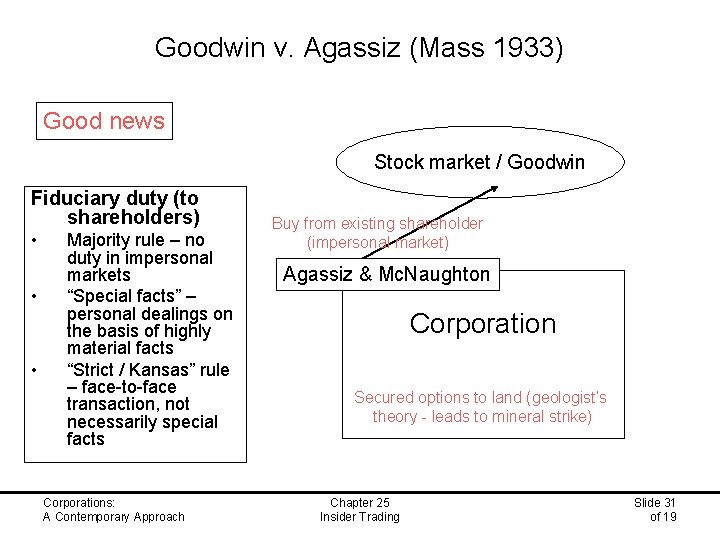
Goodwin v. Agassiz (Mass 1933) Good news Stock market / Goodwin Fiduciary duty (to shareholders) • • • Majority rule – no duty in impersonal markets “Special facts” – personal dealings on the basis of highly material facts “Strict / Kansas” rule – face-to-face transaction, not necessarily special facts Corporations: A Contemporary Approach Buy from existing shareholder (impersonal market) Agassiz & Mc. Naughton Corporation Secured options to land (geologist’s theory - leads to mineral strike) Chapter 25 Insider Trading Slide 31 of 19
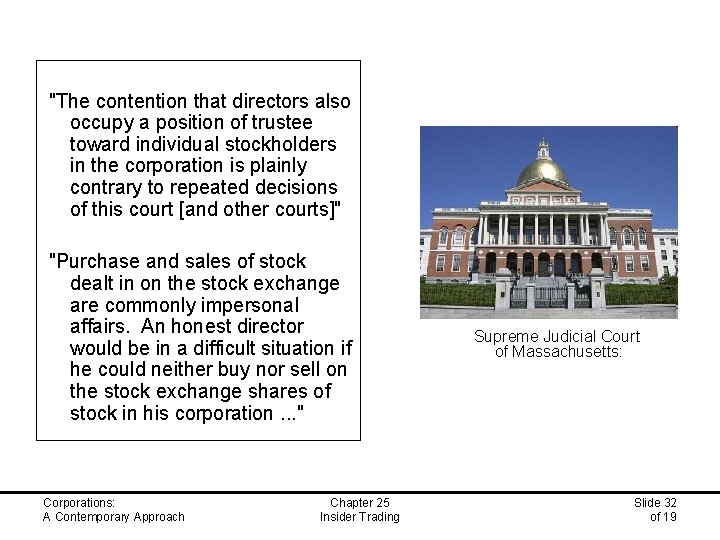
"The contention that directors also occupy a position of trustee toward individual stockholders in the corporation is plainly contrary to repeated decisions of this court [and other courts]" "Purchase and sales of stock dealt in on the stock exchange are commonly impersonal affairs. An honest director would be in a difficult situation if he could neither buy nor sell on the stock exchange shares of stock in his corporation. . . " Corporations: A Contemporary Approach Chapter 25 Insider Trading Supreme Judicial Court of Massachusetts: Slide 32 of 19
Corporate recovery … Corporations: A Contemporary Approach Chapter 25 Insider Trading Slide 33 of 19
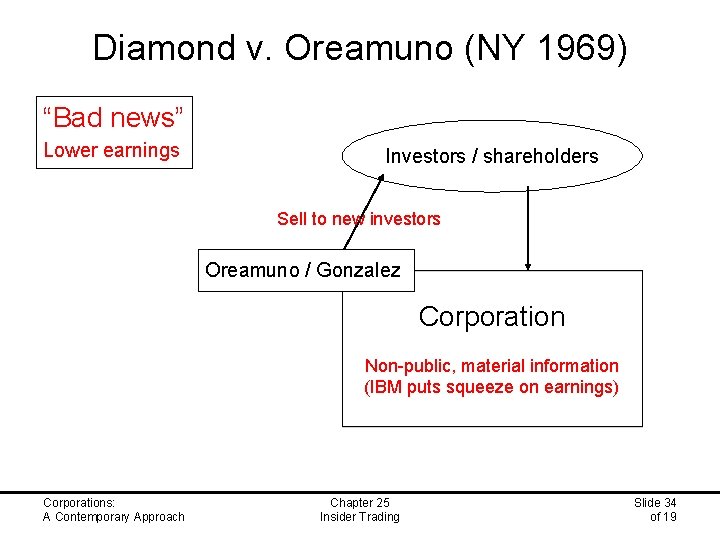
Diamond v. Oreamuno (NY 1969) “Bad news” Lower earnings Investors / shareholders Sell to new investors Oreamuno / Gonzalez Corporation Non-public, material information (IBM puts squeeze on earnings) Corporations: A Contemporary Approach Chapter 25 Insider Trading Slide 34 of 19
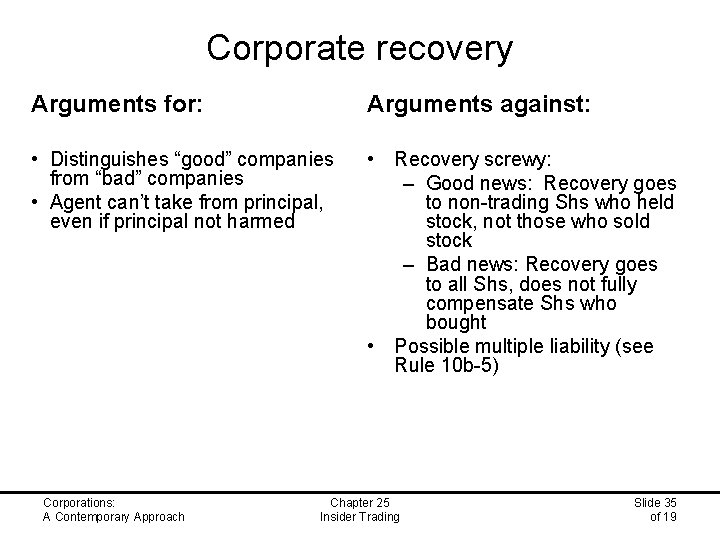
Corporate recovery Arguments for: Arguments against: • Distinguishes “good” companies from “bad” companies • Agent can’t take from principal, even if principal not harmed • Recovery screwy: – Good news: Recovery goes to non-trading Shs who held stock, not those who sold stock – Bad news: Recovery goes to all Shs, does not fully compensate Shs who bought • Possible multiple liability (see Rule 10 b-5) Corporations: A Contemporary Approach Chapter 25 Insider Trading Slide 35 of 19
Federal law of insider trading (duty to abstain or disclose) Theory under Rule 10 b-5 Chiarella: duty of trust and confidence Dirks: tipper-tippee liability O’Hagan: misappropriation liability Corporations: A Contemporary Approach Chapter 25 Insider Trading Slide 36 of 19
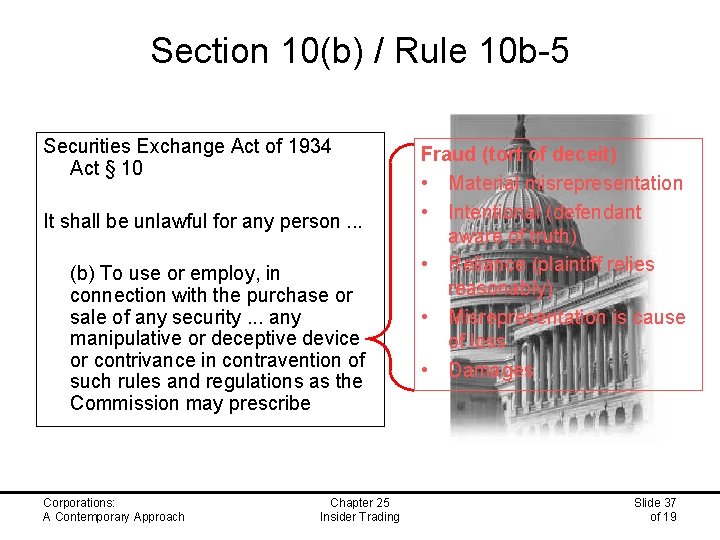
Section 10(b) / Rule 10 b-5 Securities Exchange Act of 1934 Act § 10 It shall be unlawful for any person. . . (b) To use or employ, in connection with the purchase or sale of any security. . . any manipulative or deceptive device or contrivance in contravention of such rules and regulations as the Commission may prescribe Corporations: A Contemporary Approach Chapter 25 Insider Trading Fraud (tort of deceit) • Material misrepresentation • Intentional (defendant aware of truth) • Reliance (plaintiff relies reasonably) • Misrepresentation is cause of loss • Damages Slide 37 of 19
Is silence fraudulent? Conventional wisdom: • Must disclose latent, not patent, defects. • Fiduciaries (confidential relationship) must give full disclosure But: • Unequal access to information not significant factor • Courts over time less likely to require disclosure!! Krawiec (UNC-CH) & Zeiler (Georgetown) – 2004 (466 contract cases / 200 years) Corporations: A Contemporary Approach Chapter 25 Insider Trading Slide 38 of 19
Enter SEC … Corporations: A Contemporary Approach Chapter 25 Insider Trading Slide 39 of 19
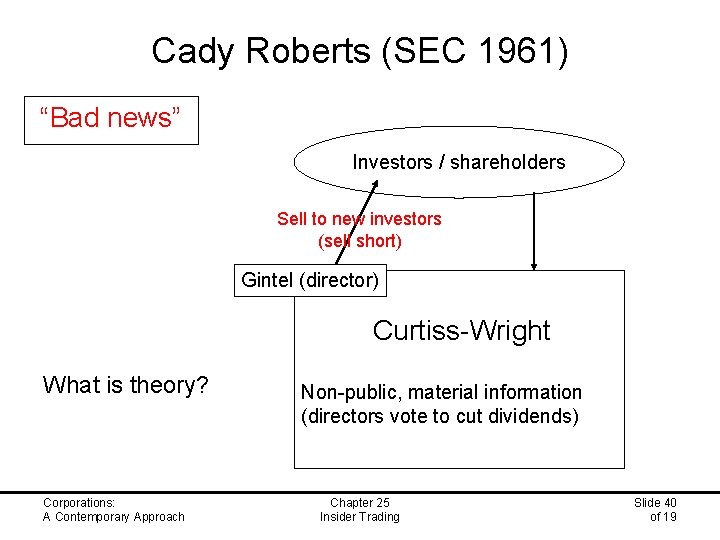
Cady Roberts (SEC 1961) “Bad news” Investors / shareholders Sell to new investors (sell short) Gintel (director) Curtiss-Wright What is theory? Corporations: A Contemporary Approach Non-public, material information (directors vote to cut dividends) Chapter 25 Insider Trading Slide 40 of 19
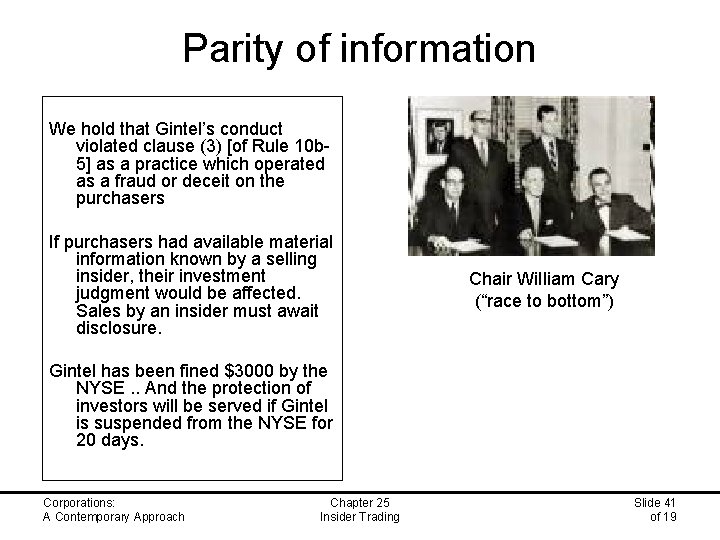
Parity of information We hold that Gintel’s conduct violated clause (3) [of Rule 10 b 5] as a practice which operated as a fraud or deceit on the purchasers If purchasers had available material information known by a selling insider, their investment judgment would be affected. Sales by an insider must await disclosure. Chair Wi. Iliam Cary (“race to bottom”) Gintel has been fined $3000 by the NYSE. . And the protection of investors will be served if Gintel is suspended from the NYSE for 20 days. Corporations: A Contemporary Approach Chapter 25 Insider Trading Slide 41 of 19
Enter Supreme Court … Corporations: A Contemporary Approach Chapter 25 Insider Trading Slide 42 of 19
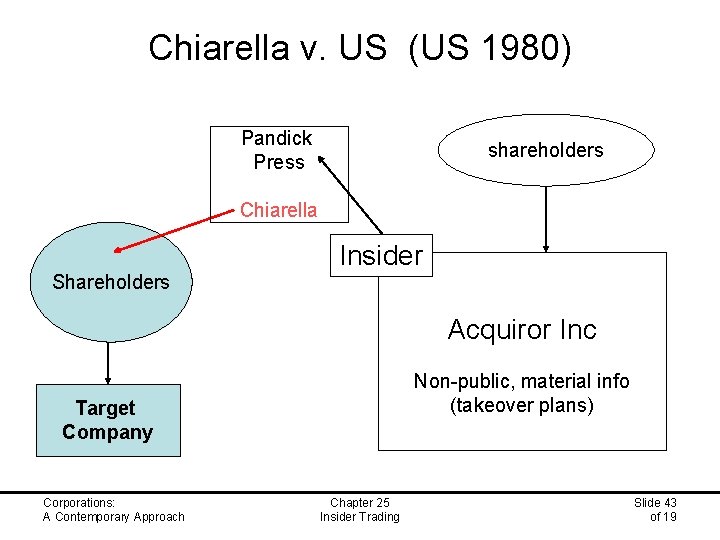
Chiarella v. US (US 1980) Pandick Press shareholders Chiarella Insider Shareholders Acquiror Inc Non-public, material info (takeover plans) Target Company Corporations: A Contemporary Approach Chapter 25 Insider Trading Slide 43 of 19
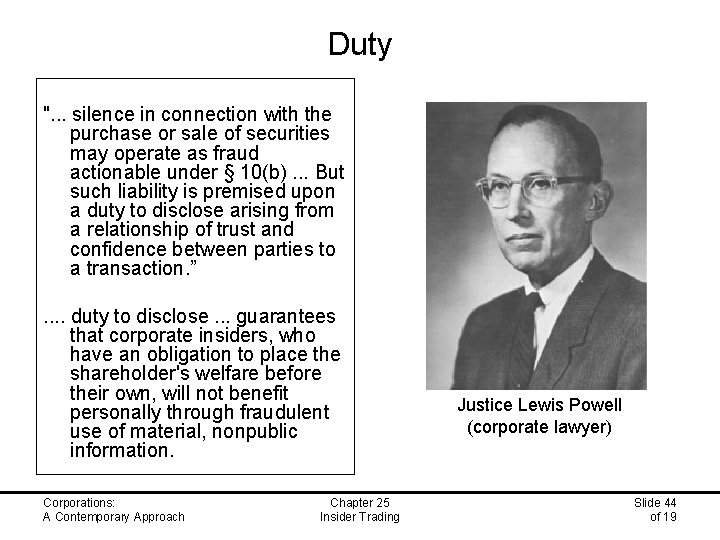
Duty ". . . silence in connection with the purchase or sale of securities may operate as fraud actionable under § 10(b). . . But such liability is premised upon a duty to disclose arising from a relationship of trust and confidence between parties to a transaction. ”. . duty to disclose. . . guarantees that corporate insiders, who have an obligation to place the shareholder's welfare before their own, will not benefit personally through fraudulent use of material, nonpublic information. Corporations: A Contemporary Approach Chapter 25 Insider Trading Justice Lewis Powell (corporate lawyer) Slide 44 of 19
Tipping … Corporations: A Contemporary Approach Chapter 25 Insider Trading Slide 45 of 19
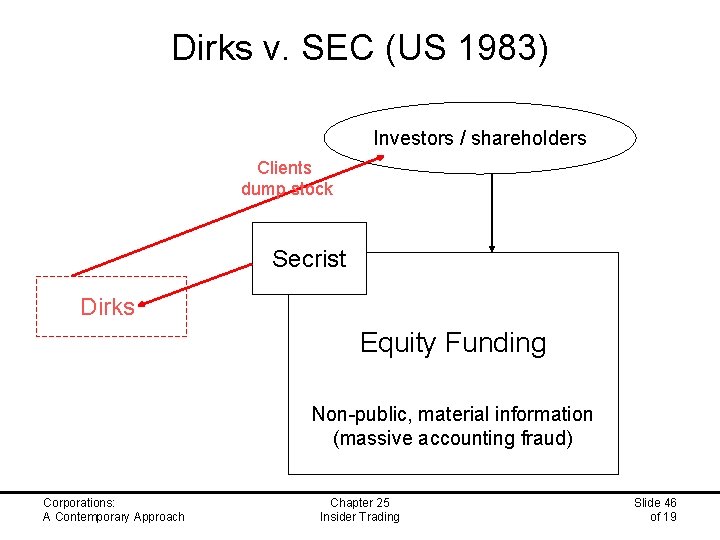
Dirks v. SEC (US 1983) Investors / shareholders Clients dump stock Secrist Dirks Equity Funding Non-public, material information (massive accounting fraud) Corporations: A Contemporary Approach Chapter 25 Insider Trading Slide 46 of 19
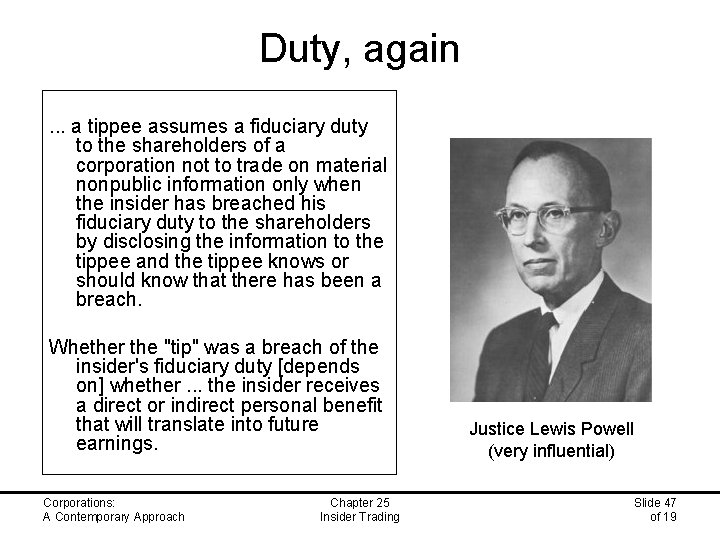
Duty, again. . . a tippee assumes a fiduciary duty to the shareholders of a corporation not to trade on material nonpublic information only when the insider has breached his fiduciary duty to the shareholders by disclosing the information to the tippee and the tippee knows or should know that there has been a breach. Whether the "tip" was a breach of the insider's fiduciary duty [depends on] whether. . . the insider receives a direct or indirect personal benefit that will translate into future earnings. Corporations: A Contemporary Approach Chapter 25 Insider Trading Justice Lewis Powell (very influential) Slide 47 of 19
Some hypos … Corporations: A Contemporary Approach Chapter 25 Insider Trading Slide 48 of 19
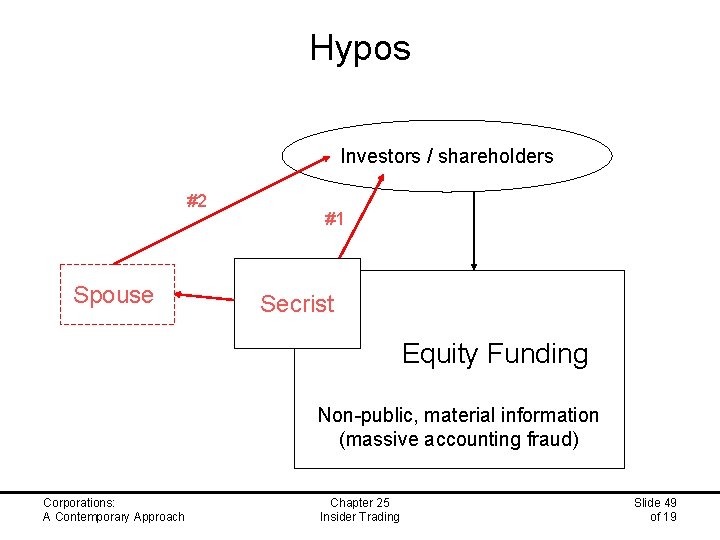
Hypos Investors / shareholders #2 Spouse #1 Secrist Equity Funding Non-public, material information (massive accounting fraud) Corporations: A Contemporary Approach Chapter 25 Insider Trading Slide 49 of 19
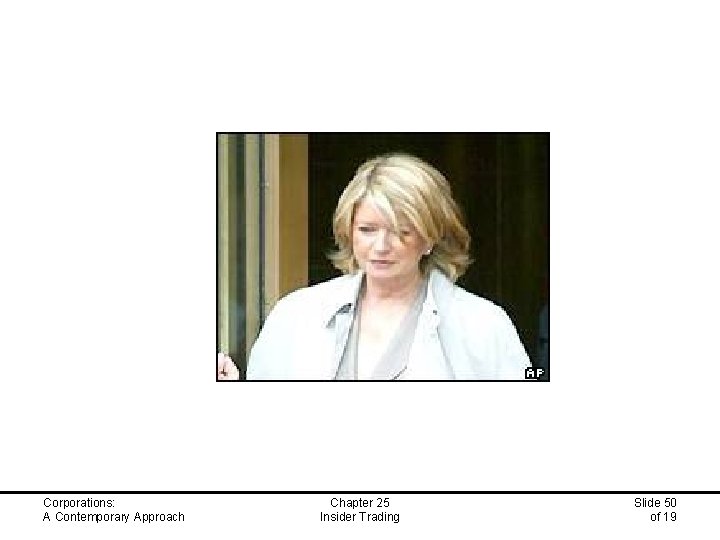
Corporations: A Contemporary Approach Chapter 25 Insider Trading Slide 50 of 19
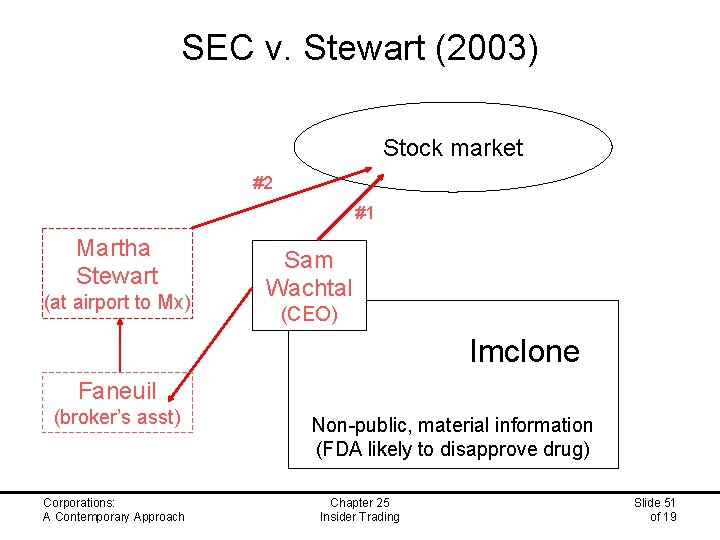
SEC v. Stewart (2003) Stock market #2 #1 Martha Stewart (at airport to Mx) Sam Wachtal (CEO) Imclone Faneuil (broker’s asst) Corporations: A Contemporary Approach Non-public, material information (FDA likely to disapprove drug) Chapter 25 Insider Trading Slide 51 of 19
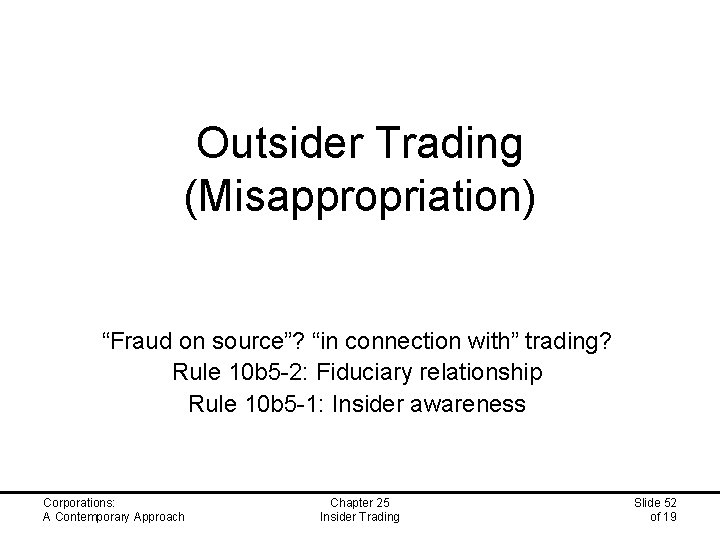
Outsider Trading (Misappropriation) “Fraud on source”? “in connection with” trading? Rule 10 b 5 -2: Fiduciary relationship Rule 10 b 5 -1: Insider awareness Corporations: A Contemporary Approach Chapter 25 Insider Trading Slide 52 of 19
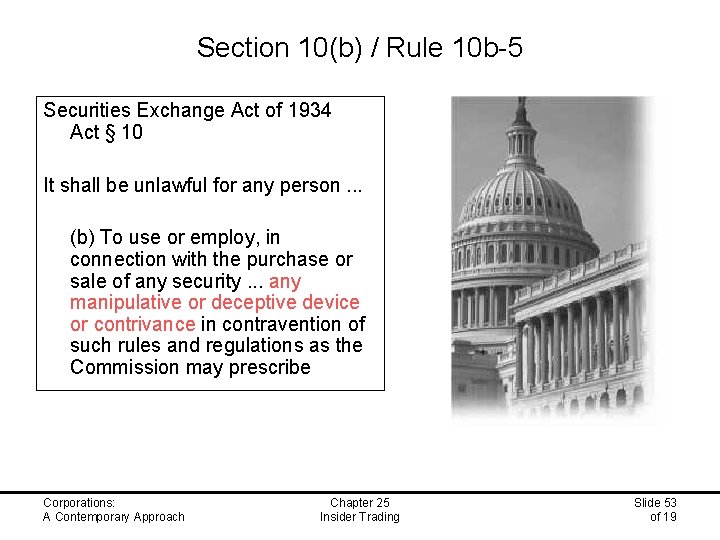
Section 10(b) / Rule 10 b-5 Securities Exchange Act of 1934 Act § 10 It shall be unlawful for any person. . . (b) To use or employ, in connection with the purchase or sale of any security. . . any manipulative or deceptive device or contrivance in contravention of such rules and regulations as the Commission may prescribe Corporations: A Contemporary Approach Chapter 25 Insider Trading Slide 53 of 19
Attorney O’Hagan’s indiscretions … Corporations: A Contemporary Approach Chapter 25 Insider Trading Slide 54 of 19
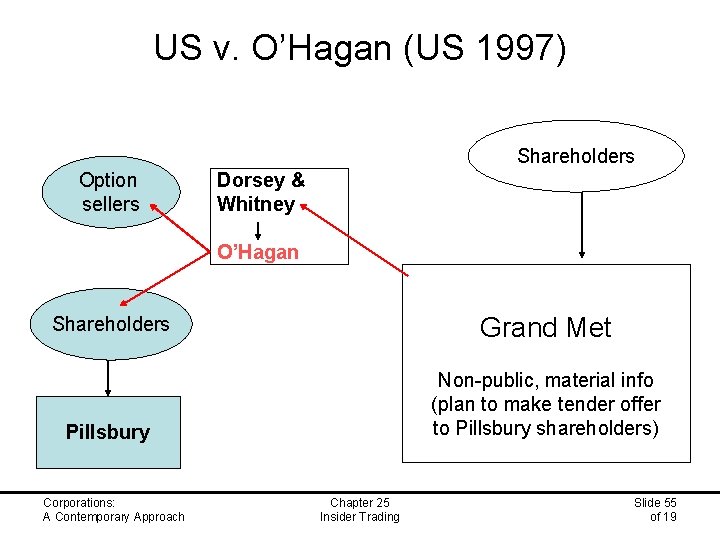
US v. O’Hagan (US 1997) Shareholders Option sellers Dorsey & Whitney O’Hagan Shareholders Grand Met Pillsbury Non-public, material info (plan to make tender offer to Pillsbury shareholders) Corporations: A Contemporary Approach Chapter 25 Insider Trading Slide 55 of 19
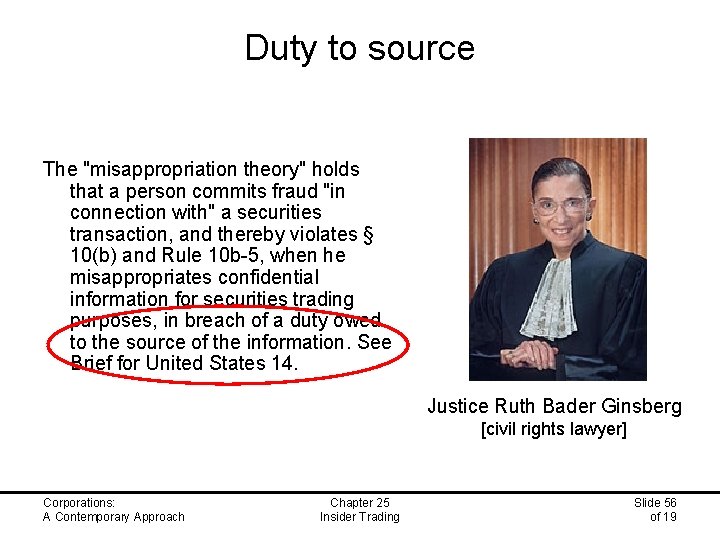
Duty to source The "misappropriation theory" holds that a person commits fraud "in connection with" a securities transaction, and thereby violates § 10(b) and Rule 10 b-5, when he misappropriates confidential information for securities trading purposes, in breach of a duty owed to the source of the information. See Brief for United States 14. Justice Ruth Bader Ginsberg [civil rights lawyer] Corporations: A Contemporary Approach Chapter 25 Insider Trading Slide 56 of 19
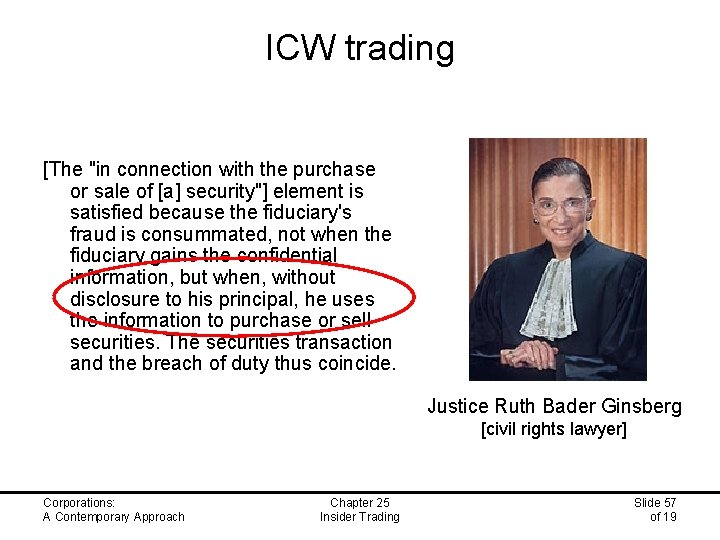
ICW trading [The "in connection with the purchase or sale of [a] security"] element is satisfied because the fiduciary's fraud is consummated, not when the fiduciary gains the confidential information, but when, without disclosure to his principal, he uses the information to purchase or sell securities. The securities transaction and the breach of duty thus coincide. Justice Ruth Bader Ginsberg [civil rights lawyer] Corporations: A Contemporary Approach Chapter 25 Insider Trading Slide 57 of 19
What is insider trading? Corporations: A Contemporary Approach Chapter 25 Insider Trading Slide 58 of 19
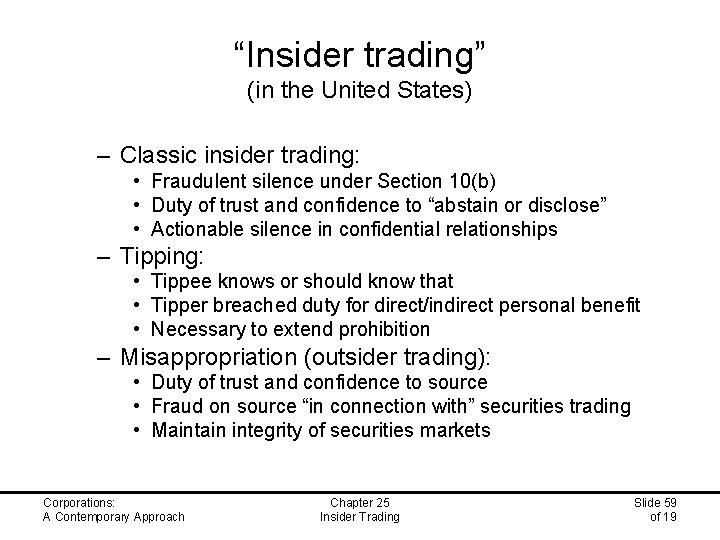
“Insider trading” (in the United States) – Classic insider trading: • Fraudulent silence under Section 10(b) • Duty of trust and confidence to “abstain or disclose” • Actionable silence in confidential relationships – Tipping: • Tippee knows or should know that • Tipper breached duty for direct/indirect personal benefit • Necessary to extend prohibition – Misappropriation (outsider trading): • Duty of trust and confidence to source • Fraud on source “in connection with” securities trading • Maintain integrity of securities markets Corporations: A Contemporary Approach Chapter 25 Insider Trading Slide 59 of 19
SEC rules • Rule 10 b 5 -1: state of mind when trading “on the basis” of material, nonpublic information – “aware” (“conscious knowledge”) – Pre-existing trading plans OK • Rule 10 b 5 -2: duty to source in business/personal relations – Agree to maintain confidentiality – Practice of sharing known confidences – Spouse, parent, child, sibling – unless dysfunctional family • Regulation FD: no special access for stock analysts Corporations: A Contemporary Approach Chapter 25 Insider Trading Slide 60 of 19
Q&A: The In's and Out's of Insider Trading The Wall Street Journal October 4, 2002 Corporations: A Contemporary Approach Chapter 25 Insider Trading Slide 61 of 19
Insider trading quiz 1. You work as CFO in Up-NRising, a bakery franchiser, that is opening high-end bakery shops throughout the country. The numbers have been good, until this month when you notice an internal report showing a 25% fall in royalties from pastry sales. Question: You sell some of your stock. Insider trading? Corporations: A Contemporary Approach Chapter 25 Insider Trading 1. Yes. This is classic insider trading. • • Only question is whether drop in pastry sales is “material” State of mind – use versus knowledge – resolved by Rule 10 b 5 -1 (“aware”) Slide 62 of 19
Insider trading quiz 2. You are outside counsel to Up-N-Rising. The CFO at Up-NRising calls you and tells you about this quarter’s 25% fall in pastry sales - resulting in a 15% drop in earnings. She asks whether the company should disclose this in a press release. Question: You sell Up-NRising short. Insider trading? Corporations: A Contemporary Approach 2. Yes. You are temporary insider (see fn 14 - Dirks case) and owe a duty under 10 b 5 -2. • Drop in royalties is “material” Duty to source in business/ personal relation (Rule 10 b 5 -2) – Agree to maintain confidentiality – Practice of sharing known confidences • Chapter 25 Insider Trading Slide 63 of 19
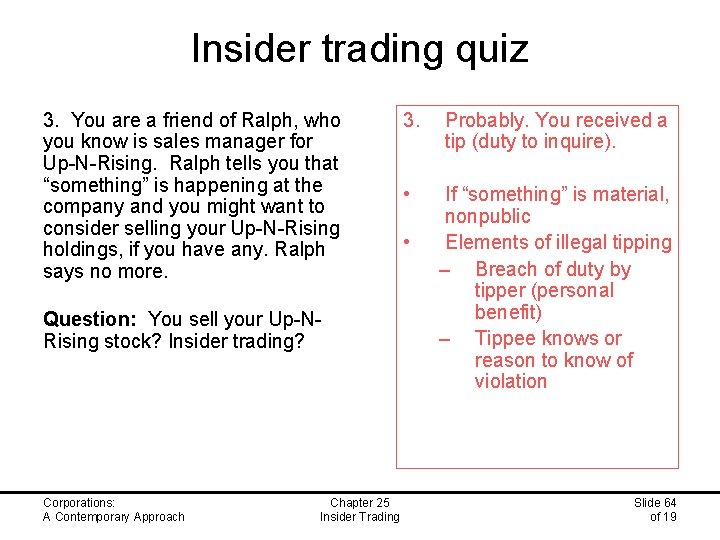
Insider trading quiz 3. You are a friend of Ralph, who you know is sales manager for Up-N-Rising. Ralph tells you that “something” is happening at the company and you might want to consider selling your Up-N-Rising holdings, if you have any. Ralph says no more. Question: You sell your Up-NRising stock? Insider trading? Corporations: A Contemporary Approach Chapter 25 Insider Trading 3. Probably. You received a tip (duty to inquire). • If “something” is material, nonpublic Elements of illegal tipping – Breach of duty by tipper (personal benefit) – Tippee knows or reason to know of violation • Slide 64 of 19
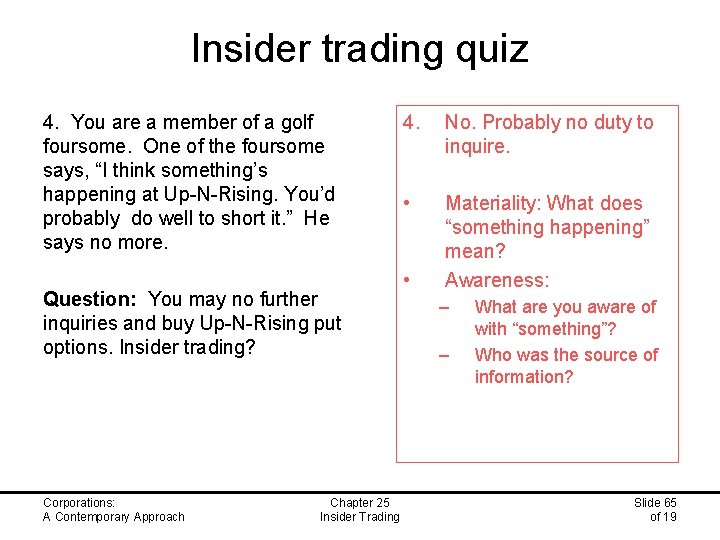
Insider trading quiz 4. You are a member of a golf foursome. One of the foursome says, “I think something’s happening at Up-N-Rising. You’d probably do well to short it. ” He says no more. Question: You may no further inquiries and buy Up-N-Rising put options. Insider trading? Corporations: A Contemporary Approach Chapter 25 Insider Trading 4. No. Probably no duty to inquire. • Materiality: What does “something happening” mean? Awareness: • – – What are you aware of with “something”? Who was the source of information? Slide 65 of 19
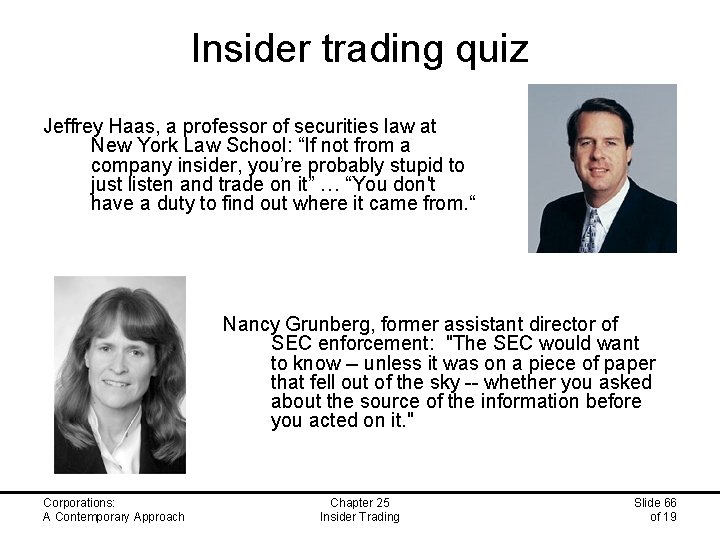
Insider trading quiz Jeffrey Haas, a professor of securities law at New York Law School: “If not from a company insider, you’re probably stupid to just listen and trade on it” … “You don't have a duty to find out where it came from. “ Nancy Grunberg, former assistant director of SEC enforcement: "The SEC would want to know -- unless it was on a piece of paper that fell out of the sky -- whether you asked about the source of the information before you acted on it. " Corporations: A Contemporary Approach Chapter 25 Insider Trading Slide 66 of 19
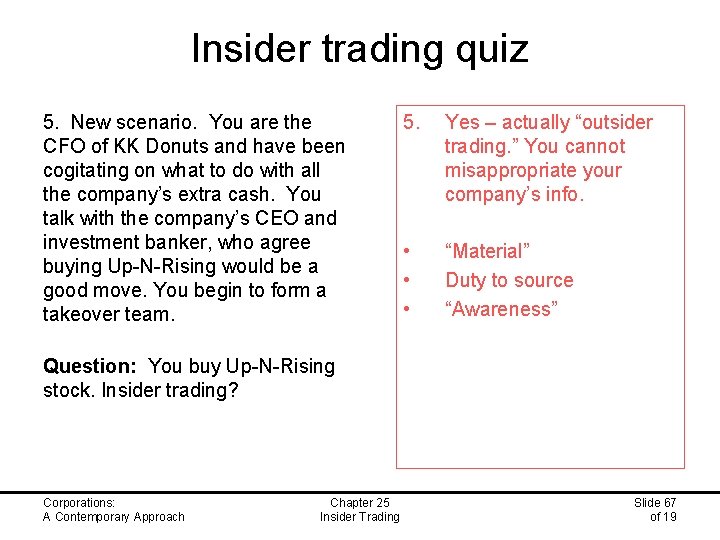
Insider trading quiz 5. New scenario. You are the CFO of KK Donuts and have been cogitating on what to do with all the company’s extra cash. You talk with the company’s CEO and investment banker, who agree buying Up-N-Rising would be a good move. You begin to form a takeover team. 5. Yes – actually “outsider trading. ” You cannot misappropriate your company’s info. • • • “Material” Duty to source “Awareness” Question: You buy Up-N-Rising stock. Insider trading? Corporations: A Contemporary Approach Chapter 25 Insider Trading Slide 67 of 19
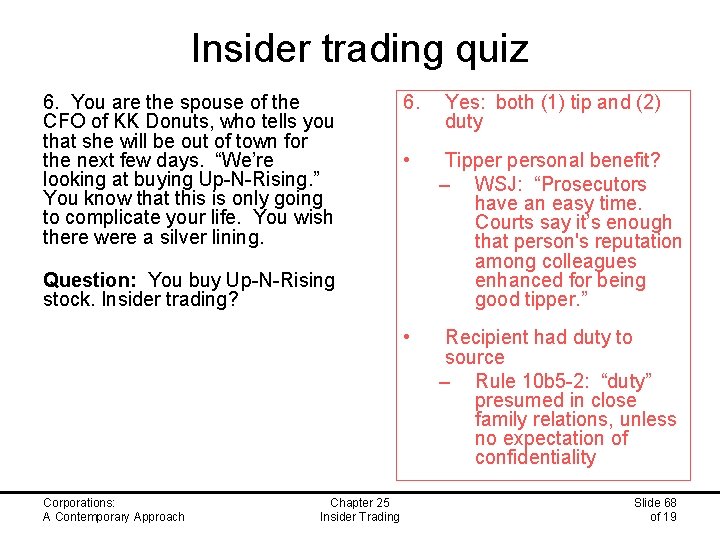
Insider trading quiz 6. You are the spouse of the CFO of KK Donuts, who tells you that she will be out of town for the next few days. “We’re looking at buying Up-N-Rising. ” You know that this is only going to complicate your life. You wish there were a silver lining. 6. Yes: both (1) tip and (2) duty • Tipper personal benefit? – WSJ: “Prosecutors have an easy time. Courts say it’s enough that person's reputation among colleagues enhanced for being good tipper. ” • Recipient had duty to source – Rule 10 b 5 -2: “duty” presumed in close family relations, unless no expectation of confidentiality Question: You buy Up-N-Rising stock. Insider trading? Corporations: A Contemporary Approach Chapter 25 Insider Trading Slide 68 of 19
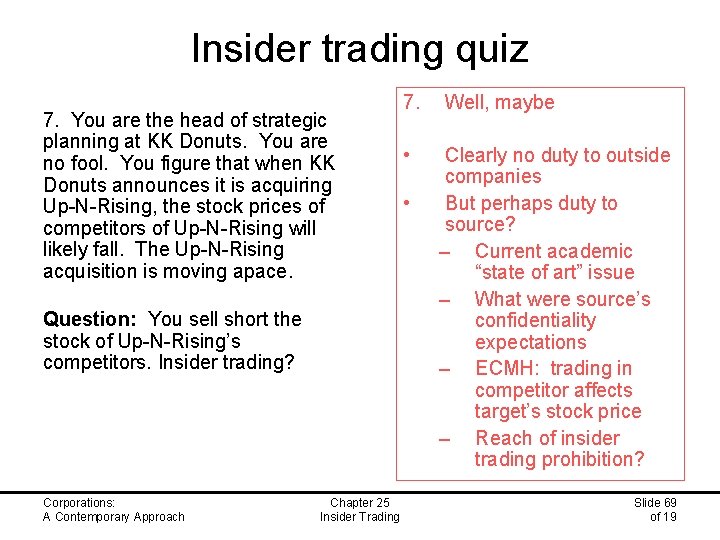
Insider trading quiz 7. You are the head of strategic planning at KK Donuts. You are no fool. You figure that when KK Donuts announces it is acquiring Up-N-Rising, the stock prices of competitors of Up-N-Rising will likely fall. The Up-N-Rising acquisition is moving apace. Question: You sell short the stock of Up-N-Rising’s competitors. Insider trading? Corporations: A Contemporary Approach Chapter 25 Insider Trading 7. Well, maybe • Clearly no duty to outside companies But perhaps duty to source? – Current academic “state of art” issue – What were source’s confidentiality expectations – ECMH: trading in competitor affects target’s stock price – Reach of insider trading prohibition? • Slide 69 of 19
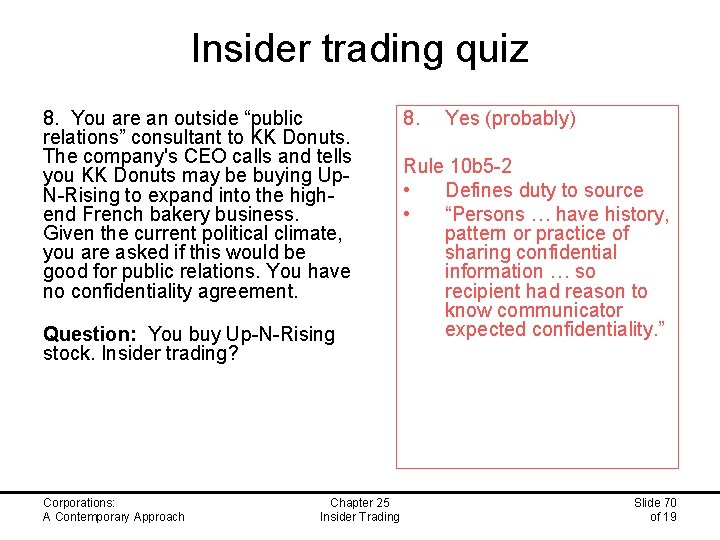
Insider trading quiz 8. You are an outside “public relations” consultant to KK Donuts. The company's CEO calls and tells you KK Donuts may be buying Up. N-Rising to expand into the highend French bakery business. Given the current political climate, you are asked if this would be good for public relations. You have no confidentiality agreement. Question: You buy Up-N-Rising stock. Insider trading? Corporations: A Contemporary Approach Chapter 25 Insider Trading 8. Yes (probably) Rule 10 b 5 -2 • Defines duty to source • “Persons … have history, pattern or practice of sharing confidential information … so recipient had reason to know communicator expected confidentiality. ” Slide 70 of 19
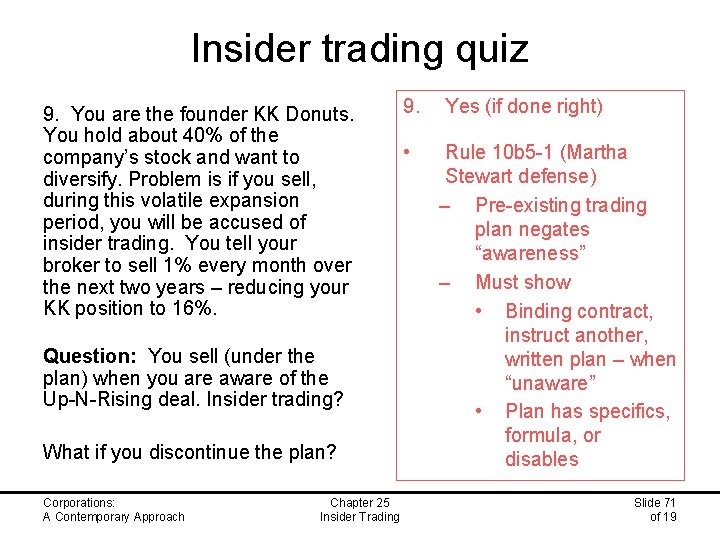
Insider trading quiz 9. You are the founder KK Donuts. You hold about 40% of the company’s stock and want to diversify. Problem is if you sell, during this volatile expansion period, you will be accused of insider trading. You tell your broker to sell 1% every month over the next two years – reducing your KK position to 16%. Question: You sell (under the plan) when you are aware of the Up-N-Rising deal. Insider trading? What if you discontinue the plan? Corporations: A Contemporary Approach Chapter 25 Insider Trading 9. Yes (if done right) • Rule 10 b 5 -1 (Martha Stewart defense) – Pre-existing trading plan negates “awareness” – Must show • Binding contract, instruct another, written plan – when “unaware” • Plan has specifics, formula, or disables Slide 71 of 19
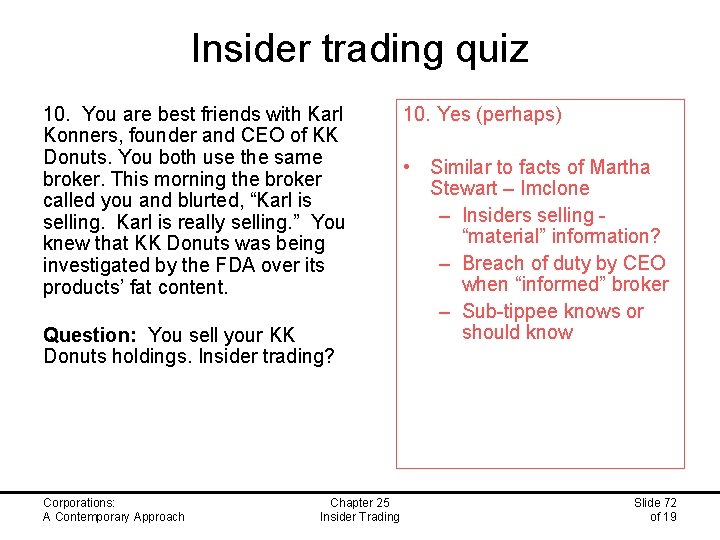
Insider trading quiz 10. You are best friends with Karl Konners, founder and CEO of KK Donuts. You both use the same broker. This morning the broker called you and blurted, “Karl is selling. Karl is really selling. ” You knew that KK Donuts was being investigated by the FDA over its products’ fat content. Question: You sell your KK Donuts holdings. Insider trading? Corporations: A Contemporary Approach Chapter 25 Insider Trading 10. Yes (perhaps) • Similar to facts of Martha Stewart – Imclone – Insiders selling - “material” information? – Breach of duty by CEO when “informed” broker – Sub-tippee knows or should know Slide 72 of 19
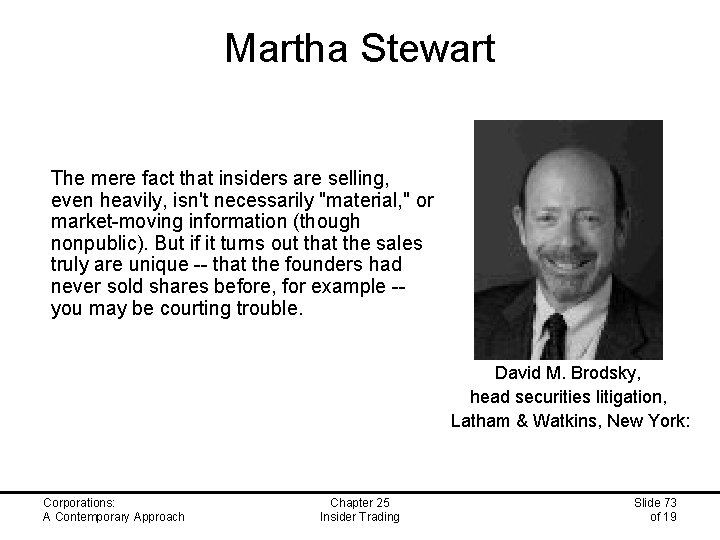
Martha Stewart The mere fact that insiders are selling, even heavily, isn't necessarily "material, " or market-moving information (though nonpublic). But if it turns out that the sales truly are unique -- that the founders had never sold shares before, for example -- you may be courting trouble. David M. Brodsky, head securities litigation, Latham & Watkins, New York: Corporations: A Contemporary Approach Chapter 25 Insider Trading Slide 73 of 19
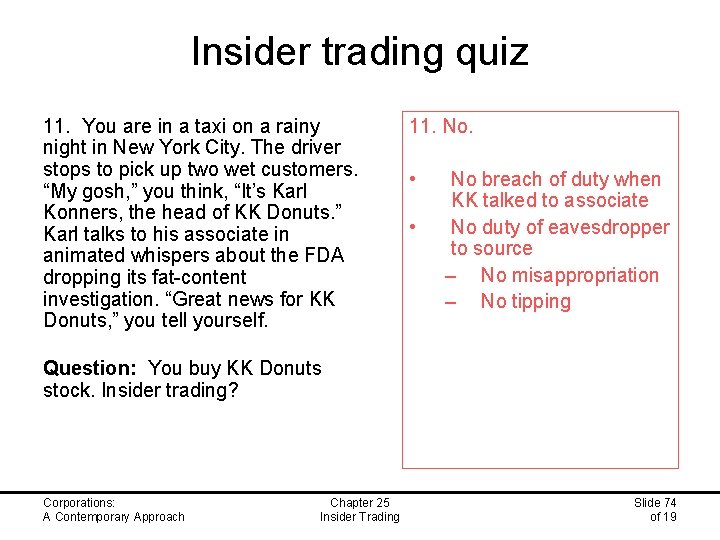
Insider trading quiz 11. You are in a taxi on a rainy night in New York City. The driver stops to pick up two wet customers. “My gosh, ” you think, “It’s Karl Konners, the head of KK Donuts. ” Karl talks to his associate in animated whispers about the FDA dropping its fat-content investigation. “Great news for KK Donuts, ” you tell yourself. 11. No. • • No breach of duty when KK talked to associate No duty of eavesdropper to source – No misappropriation – No tipping Question: You buy KK Donuts stock. Insider trading? Corporations: A Contemporary Approach Chapter 25 Insider Trading Slide 74 of 19
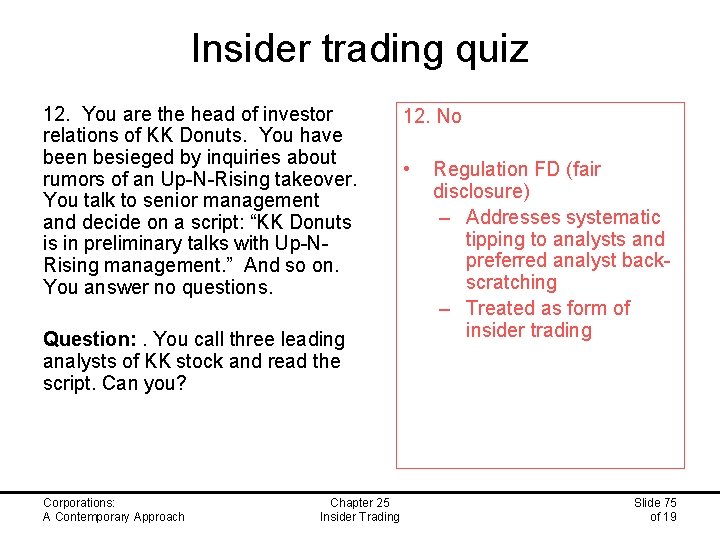
Insider trading quiz 12. You are the head of investor relations of KK Donuts. You have been besieged by inquiries about rumors of an Up-N-Rising takeover. You talk to senior management and decide on a script: “KK Donuts is in preliminary talks with Up-NRising management. ” And so on. You answer no questions. Question: . You call three leading analysts of KK stock and read the script. Can you? Corporations: A Contemporary Approach Chapter 25 Insider Trading 12. No • Regulation FD (fair disclosure) – Addresses systematic tipping to analysts and preferred analyst backscratching – Treated as form of insider trading Slide 75 of 19
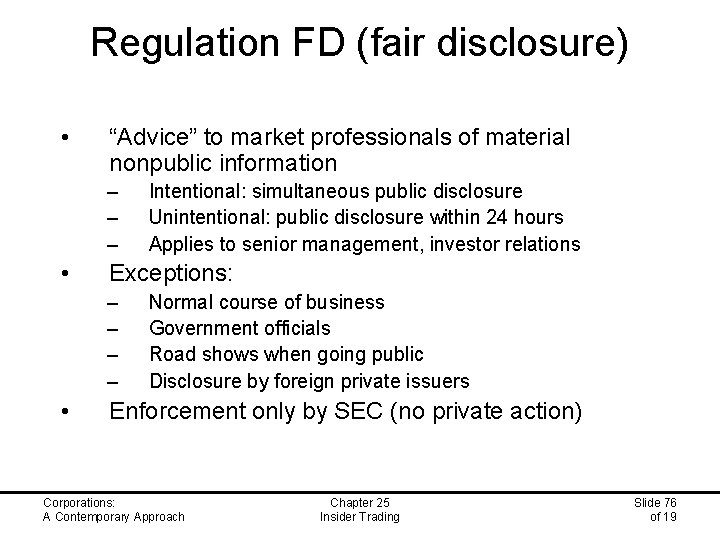
Regulation FD (fair disclosure) • “Advice” to market professionals of material nonpublic information – – – • Exceptions: – – • Intentional: simultaneous public disclosure Unintentional: public disclosure within 24 hours Applies to senior management, investor relations Normal course of business Government officials Road shows when going public Disclosure by foreign private issuers Enforcement only by SEC (no private action) Corporations: A Contemporary Approach Chapter 25 Insider Trading Slide 76 of 19
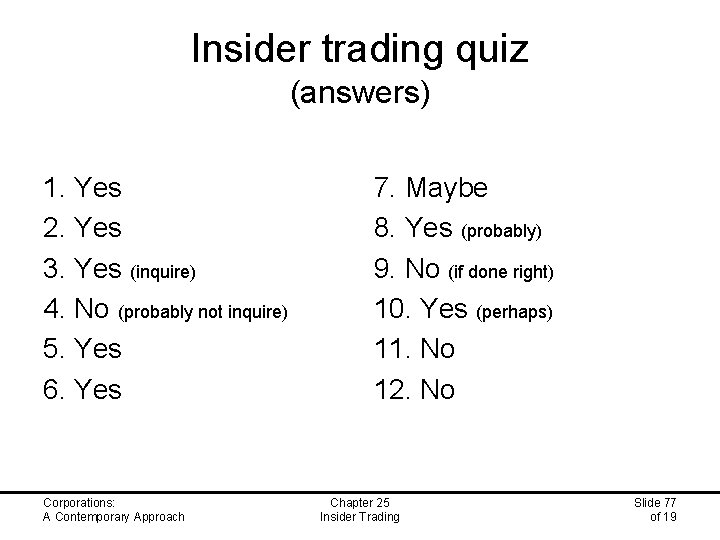
Insider trading quiz (answers) 1. Yes 2. Yes 3. Yes (inquire) 4. No (probably not inquire) 5. Yes 6. Yes Corporations: A Contemporary Approach 7. Maybe 8. Yes (probably) 9. No (if done right) 10. Yes (perhaps) 11. No 12. No Chapter 25 Insider Trading Slide 77 of 19
The end Corporations: A Contemporary Approach Chapter 25 Insider Trading Slide 78 of 19