Cool Season Strong Tornadoes in the Southeast United

- Slides: 23
Cool Season Strong Tornadoes in the Southeast United States Jared L. Guyer NOAA/NWS Storm Prediction Center E-mail: Jared. Guyer@noaa. gov March 1, 2007 – National Severe Weather Workshop
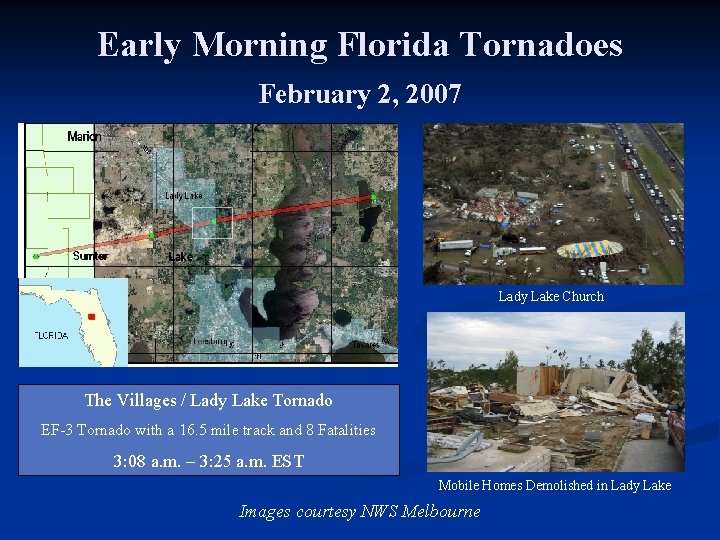
Early Morning Florida Tornadoes February 2, 2007 Lady Lake Church The Villages / Lady Lake Tornado EF-3 Tornado with a 16. 5 mile track and 8 Fatalities 3: 08 a. m. – 3: 25 a. m. EST Mobile Homes Demolished in Lady Lake Images courtesy NWS Melbourne
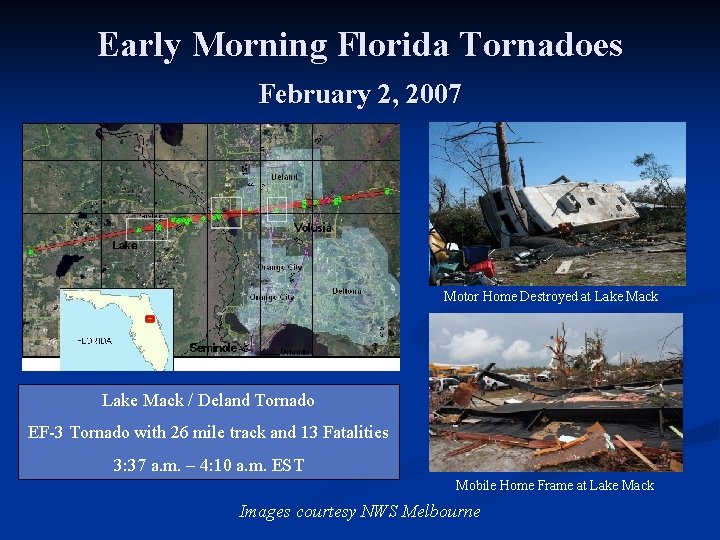
Early Morning Florida Tornadoes February 2, 2007 Motor Home Destroyed at Lake Mack / Deland Tornado EF-3 Tornado with 26 mile track and 13 Fatalities 3: 37 a. m. – 4: 10 a. m. EST Mobile Home Frame at Lake Mack Images courtesy NWS Melbourne
Introduction n An ongoing SPC study to help identify a set of patterns, parameters, and conditions that are commonly associated with the development of cool season tornadoes in the Southeast States, with a focus on strong (F 2+ greater) tornadoes. n Will also discuss some non-meteorological aspects of these tornado occurrences
Study Introduction n n 68% of all December through February tornadoes in US occur in southeast (Galway and Pearson 1981) Cool-season conditions n n n Favorable wind shear common, however… Instability usually questionable ingredient for supercell development Uncertainty regarding low-level moisture and atmospheric instability can make forecasting such events quite challenging for operational forecasters (Vescio and Thompson 1993).
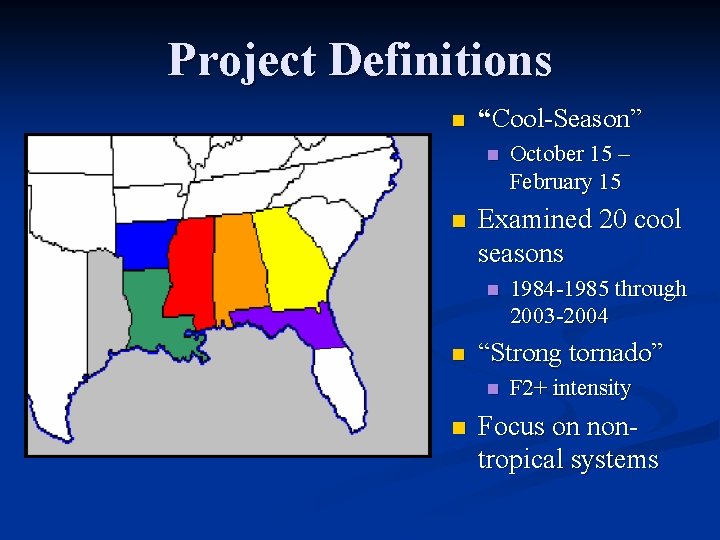
Project Definitions n “Cool-Season” n n Examined 20 cool seasons n n 1984 -1985 through 2003 -2004 “Strong tornado” n n October 15 – February 15 F 2+ intensity Focus on nontropical systems
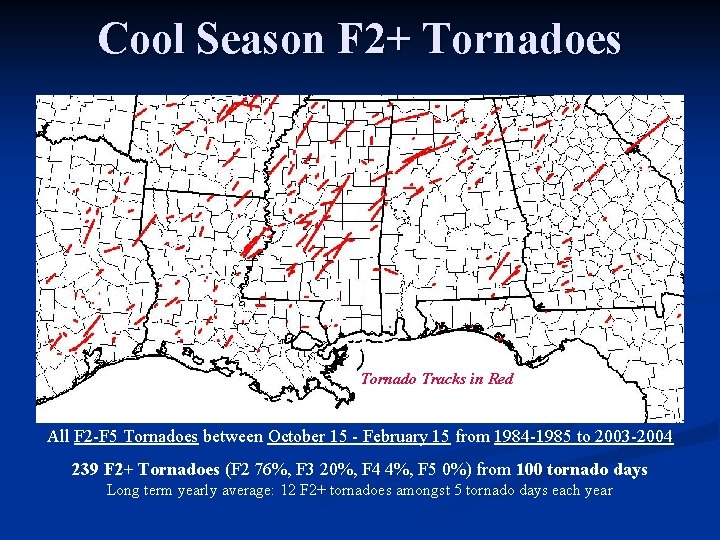
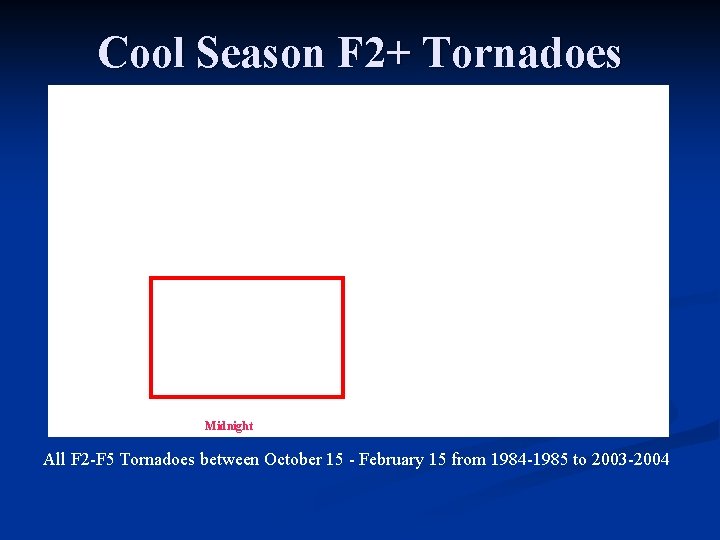
Cool Season F 2+ Tornadoes Tornado Tracks in Red All F 2 -F 5 Tornadoes between October 15 - February 15 from 1984 -1985 to 2003 -2004 239 F 2+ Tornadoes (F 2 76%, F 3 20%, F 4 4%, F 5 0%) from 100 tornado days Long term yearly average: 12 F 2+ tornadoes amongst 5 tornado days each year
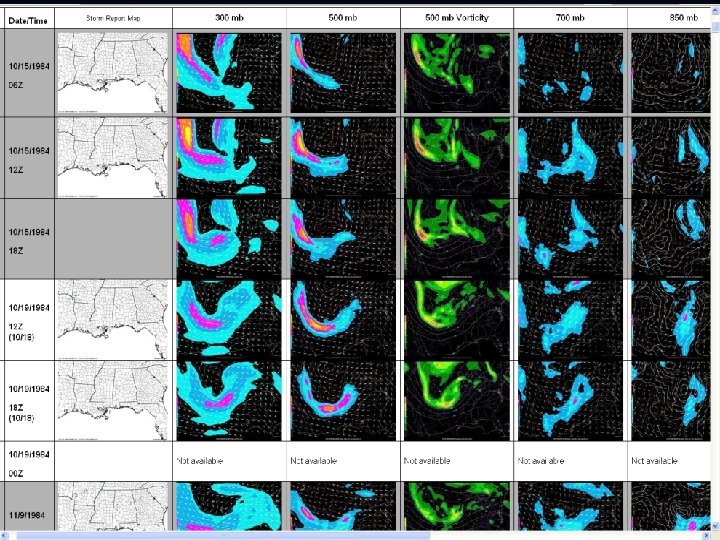
Research Methodology n Past Upper Air Data n n n North America Regional Reanalysis (NARR) data at 6 hour intervals (00 UTC, 06 UTC, 12 UTC, 18 UTC) Mandatory level winds, geopotential heights, and temperatures Precipitable water, surface temperature, surface dewpoint MSLP, 0 -3 km helicity, lowest 180 mb most unstable CAPE (MUCAPE) Proximity Upper Air Soundings n n n Constraints of 200 km and +- 3 hr 57 soundings amongst 50 tornado days Modified for nearest surface inflow observation of temperature, dewpoint, and wind speed/direction with 0 -1 hr preceding the tornado
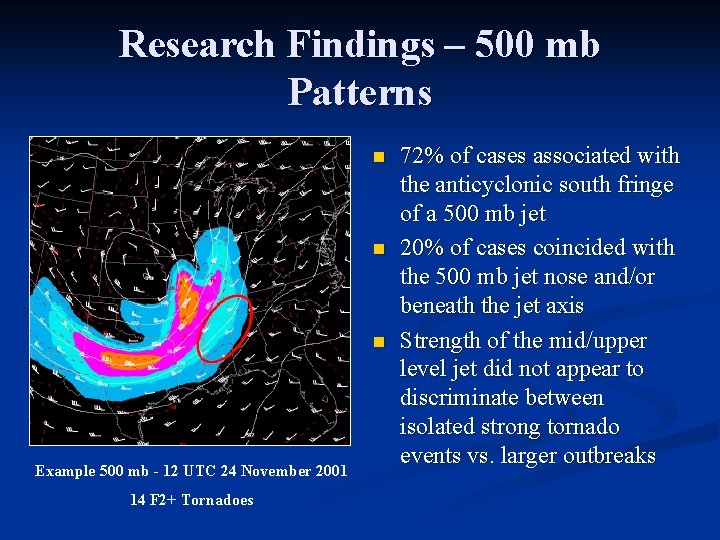
Research Findings – 500 mb Patterns n n n Example 500 mb - 12 UTC 24 November 2001 14 F 2+ Tornadoes 72% of cases associated with the anticyclonic south fringe of a 500 mb jet 20% of cases coincided with the 500 mb jet nose and/or beneath the jet axis Strength of the mid/upper level jet did not appear to discriminate between isolated strong tornado events vs. larger outbreaks
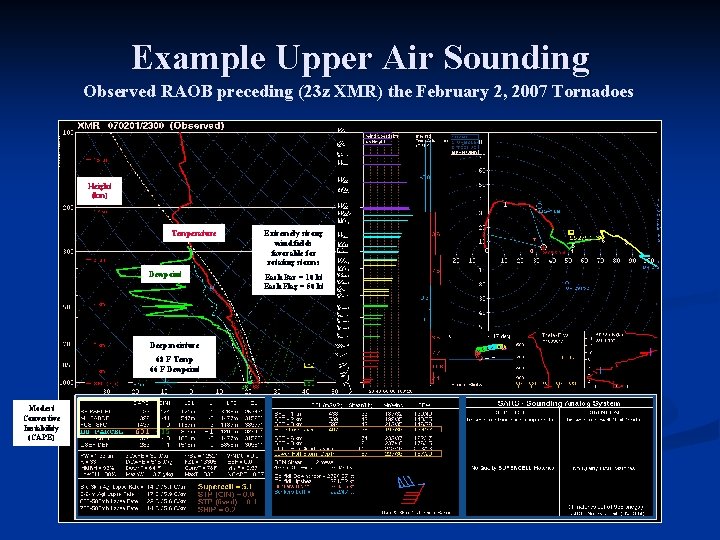
Example Upper Air Sounding Observed RAOB preceding (23 z XMR) the February 2, 2007 Tornadoes Height (km) Temperature Dewpoint Deep moisture 68 F Temp 66 F Dewpoint Modest Convective Instability (CAPE) Extremely strong wind fields favorable for rotating storms Each Bar = 10 kt Each Flag = 50 kt
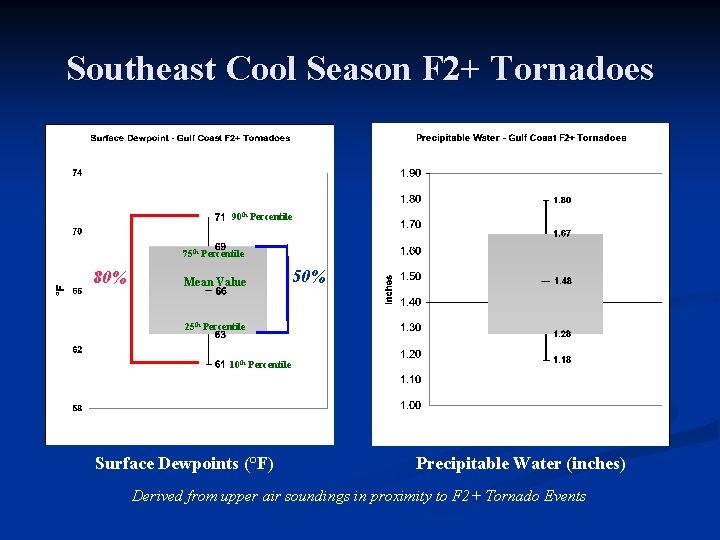
Southeast Cool Season F 2+ Tornadoes 90 th Percentile 75 th Percentile 80% Mean Value 50% 25 th Percentile 10 th Percentile Surface Dewpoints (°F) Precipitable Water (inches) Derived from upper air soundings in proximity to F 2+ Tornado Events
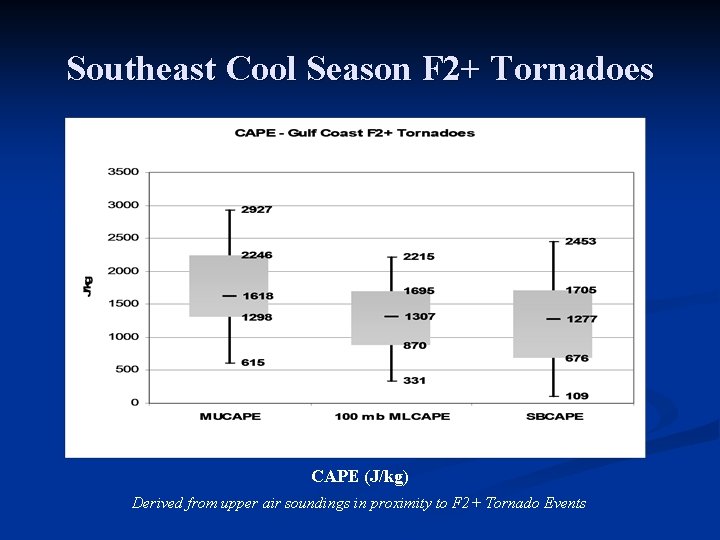
Southeast Cool Season F 2+ Tornadoes CAPE (J/kg) Derived from upper air soundings in proximity to F 2+ Tornado Events
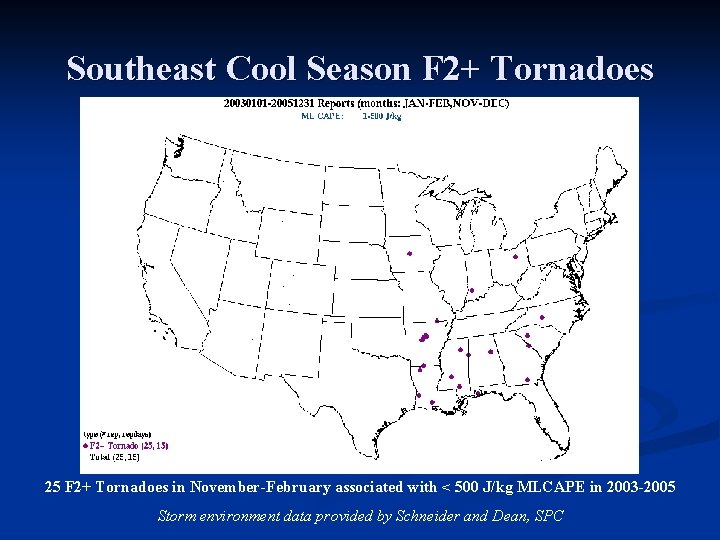
Southeast Cool Season F 2+ Tornadoes 25 F 2+ Tornadoes in November-February associated with < 500 J/kg MLCAPE in 2003 -2005 Storm environment data provided by Schneider and Dean, SPC
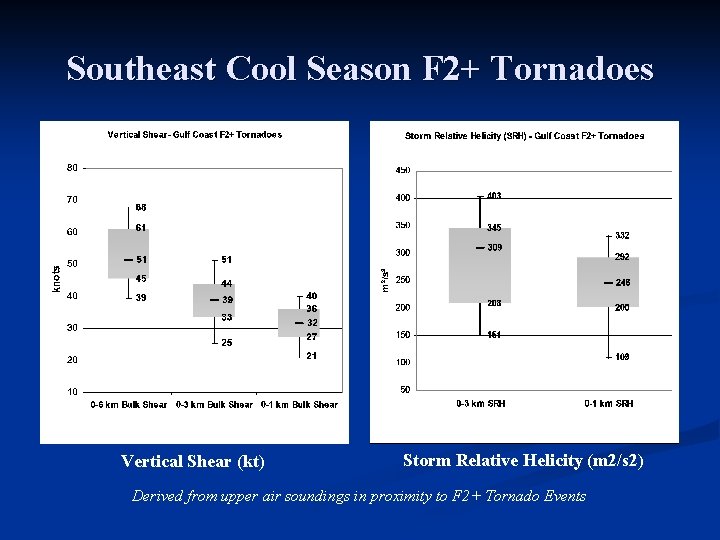
Southeast Cool Season F 2+ Tornadoes Vertical Shear (kt) Storm Relative Helicity (m 2/s 2) Derived from upper air soundings in proximity to F 2+ Tornado Events
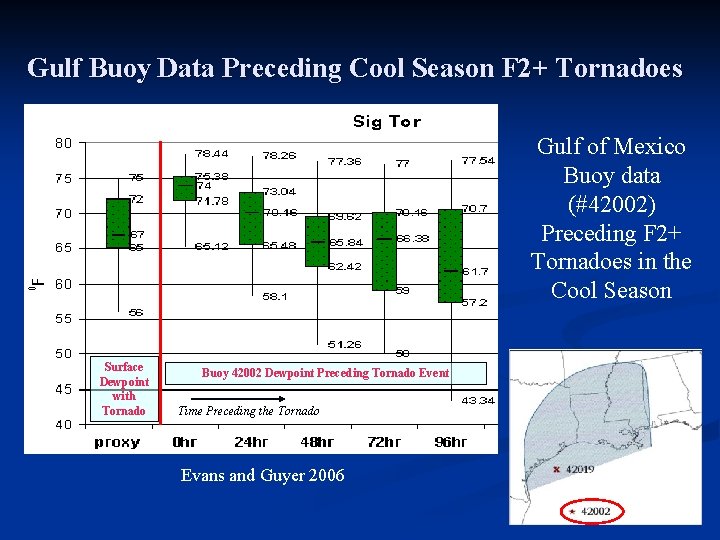
Gulf Buoy Data Preceding Cool Season F 2+ Tornadoes Gulf of Mexico Buoy data (#42002) Preceding F 2+ Tornadoes in the Cool Season Surface Dewpoint with Tornado Buoy 42002 Dewpoint Preceding Tornado Event Time Preceding the Tornado Evans and Guyer 2006
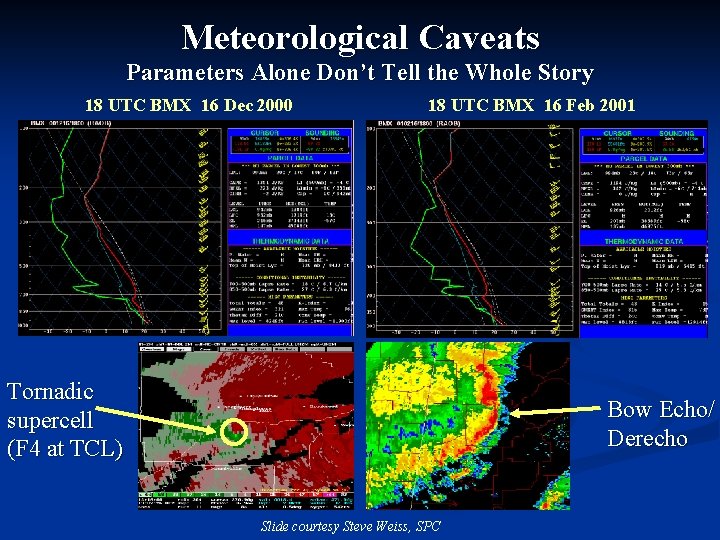
Meteorological Caveats Parameters Alone Don’t Tell the Whole Story 18 UTC BMX 16 Dec 2000 18 UTC BMX 16 Feb 2001 Tornadic supercell (F 4 at TCL) Bow Echo/ Derecho Slide courtesy Steve Weiss, SPC
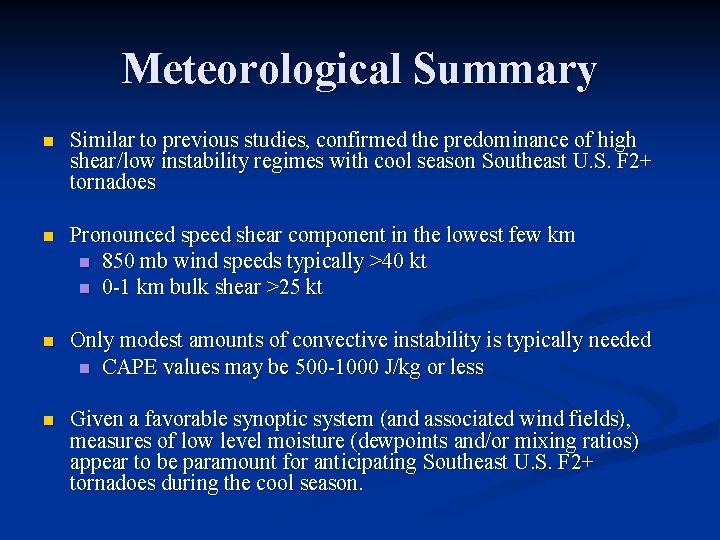
Meteorological Summary n Similar to previous studies, confirmed the predominance of high shear/low instability regimes with cool season Southeast U. S. F 2+ tornadoes n Pronounced speed shear component in the lowest few km n 850 mb wind speeds typically >40 kt n 0 -1 km bulk shear >25 kt n Only modest amounts of convective instability is typically needed n CAPE values may be 500 -1000 J/kg or less n Given a favorable synoptic system (and associated wind fields), measures of low level moisture (dewpoints and/or mixing ratios) appear to be paramount for anticipating Southeast U. S. F 2+ tornadoes during the cool season.
Cool Season F 2+ Tornadoes Midnight All F 2 -F 5 Tornadoes between October 15 - February 15 from 1984 -1985 to 2003 -2004
Overnight Cool Season Tornadoes n Since November 2006, 88% of tornado fatalities have occurred during the overnight hours n 30 nighttime fatalities (of 34 total) associated with 5 killer tornadoes n n n Lady Lake, FL and Paisley/De. Land, FL on February 2, 2007 (20 fatalities total) Gentilly, LA on February 13, 2007 (1 fatality) Riegelwood, NC on November 16, 2006 (8 fatalities) Montpelier, LA on November 15, 2006 (1 fatality) Since 1998, the biggest single killer tornado was November 6, 2005 in Evansville, IN at 2: 00 am CST (25 fatalities)
Non-Meteorological Factors n A tendency for events to occur during the late evening/overnight hours during the cool season in the southeast United States n Getting the message out before most people go to sleep – late evening news? n What late night precautions do people take? n NOAA Weather Radio n Even in more modest scenarios (i. e. not a larger outbreak), the potential may exist for strong tornadoes in a more isolated sense given the conditions (i. e. strong wind shear) n A low probability and/or coverage, but it may be a high end event n Scenario leads to an inherent tendency for occasional false alarm n Expected severe coverage may not be particularly high, but conditional potential exists for a strong tornado n Public education of the caveats associated with such cool season/nocturnal scenarios n A large part of a tornado watch may not end up experiencing widespread severe weather, but there is conditional potential for strong tornadoes where supercells occur in the watch
Summary n Future Research: n Focus on solely hail/wind, and possibly weak tornado, events to derive a separate proximity sounding dataset for comparative purposes. (Summer 2007) n Closer examination of moisture return trends via buoy data and surface data. n My coauthors on this study: n n David A. Imy, NOAA/NWS Storm Prediction Center Amanda Kis, University of Wisconsin n n 2005 NOAA Hollings Scholarship program Kar’retta Venable, Jackson State University n 2005 Research Experiences for Undergraduates (REU)
Cool Season Strong Tornadoes in the Southeast United States Jared L. Guyer NOAA/NWS Storm Prediction Center E-mail: Jared. Guyer@noaa. gov March 1, 2007 – National Severe Weather Workshop