Conditions for Cloud Formation Clouds are made of

- Slides: 25
Conditions for Cloud Formation § Clouds are made of which 2 states of Matter? – Liquid – Ice CONDENSATION NUCLEI: Surface for water vapor to condense on (dust, smoke, salt) -How does this help the formation of clouds?
Other ingredients for Cloud Formation 1. Air must be saturated 2. Cooling leads to condensation 3. LOW PRESSURE Causes air to e x p a n d…cooling air to its dewpoint Cloud Video
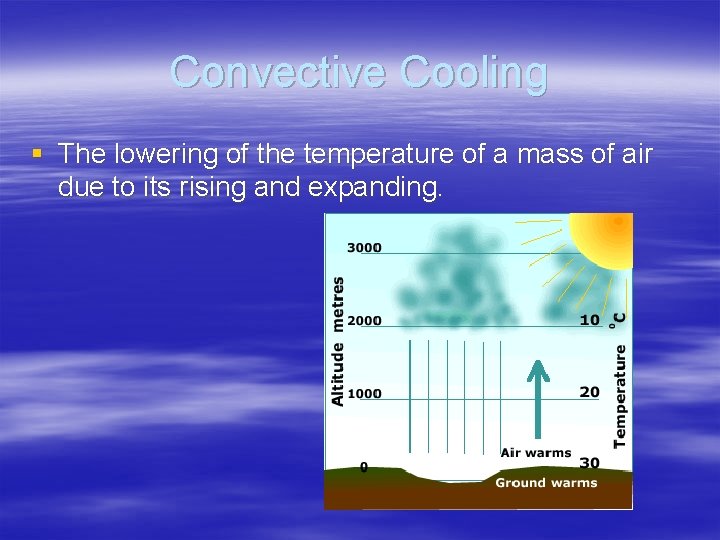
Convective Cooling § The lowering of the temperature of a mass of air due to its rising and expanding.
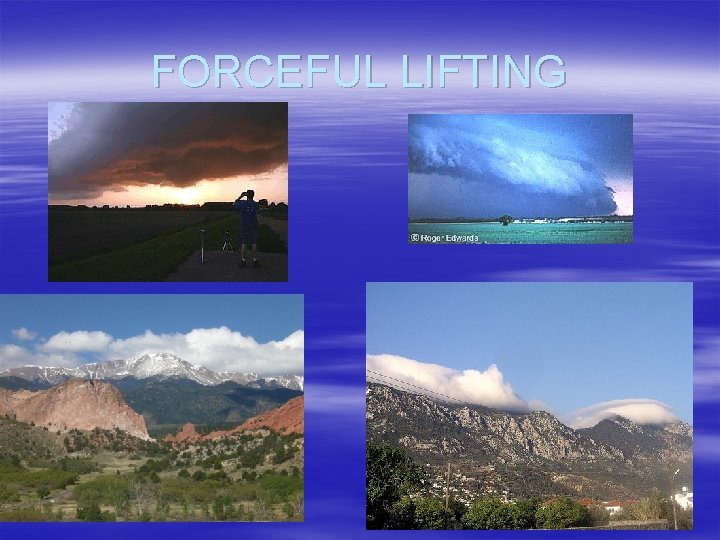
FORCEFUL LIFTING
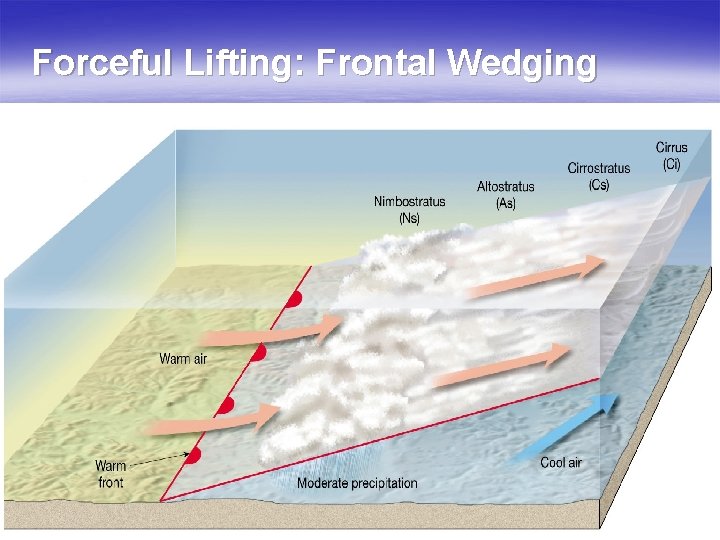
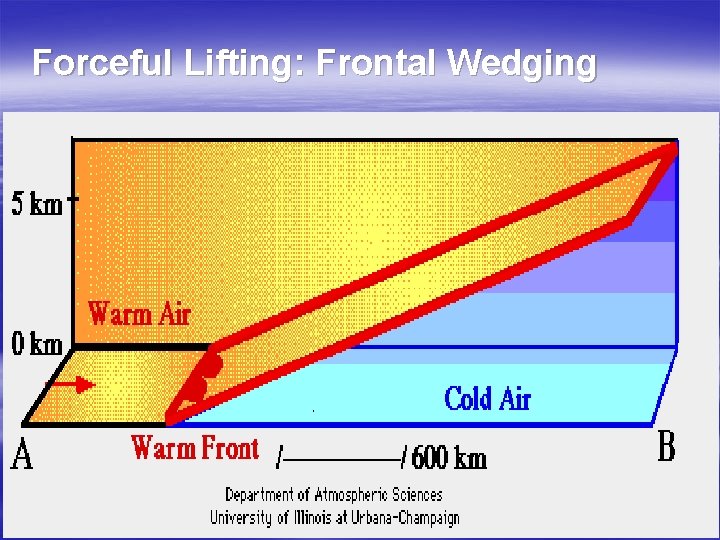
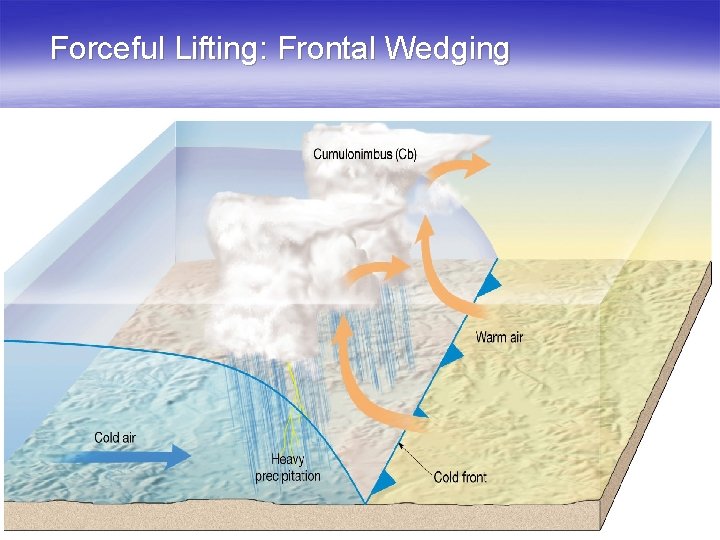
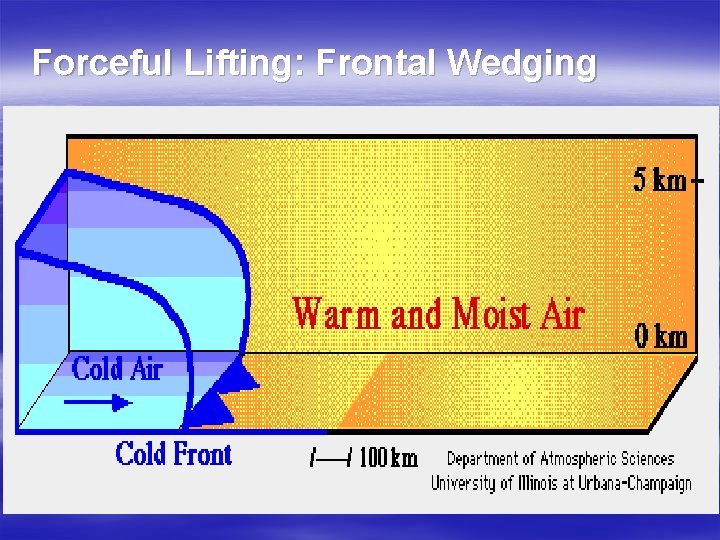
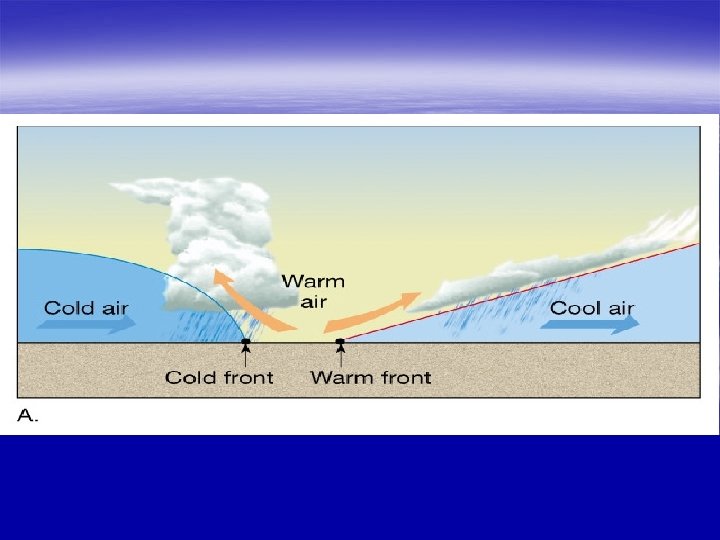
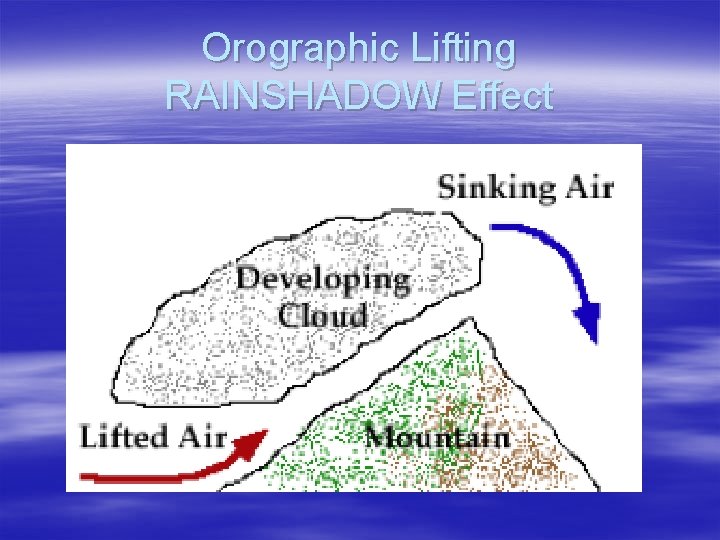
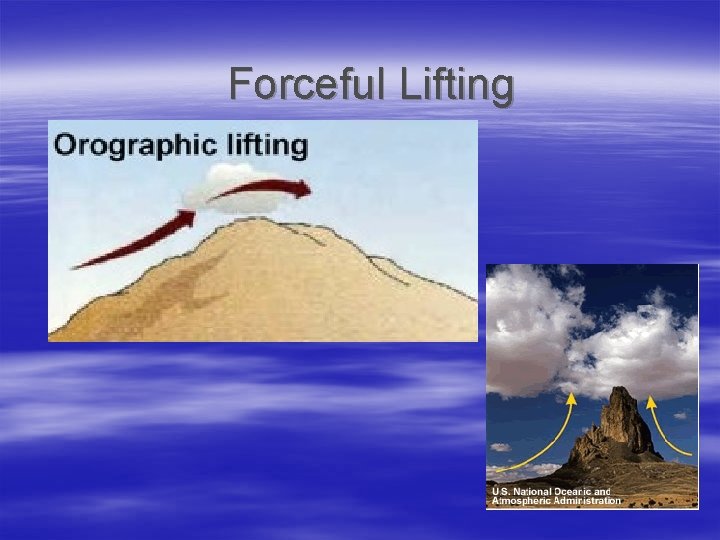
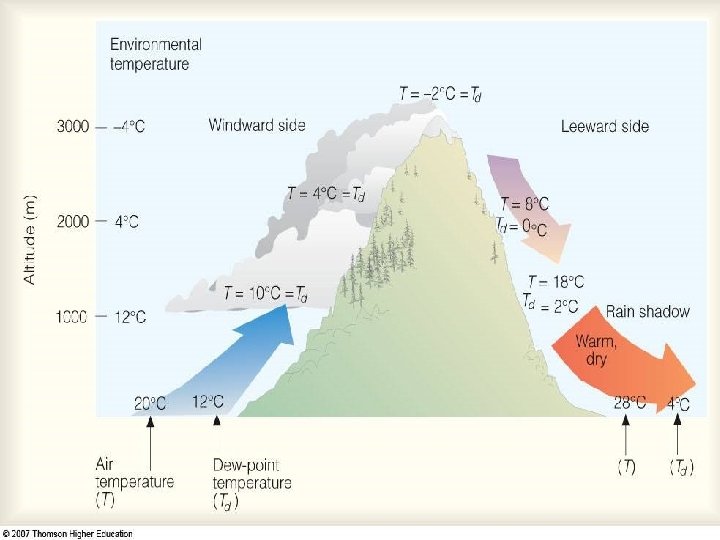
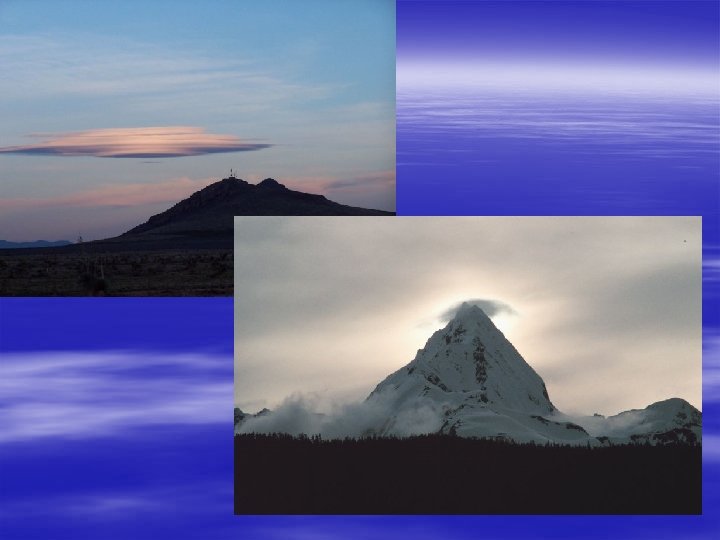
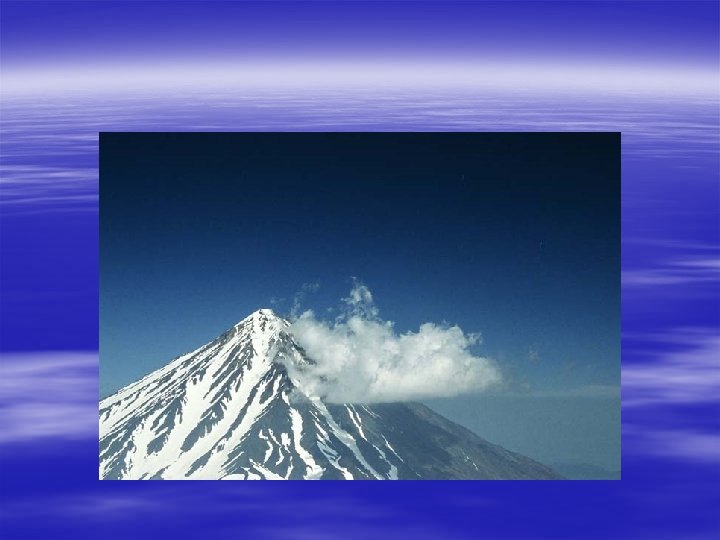
FORCEFUL LIFTING 1. Frontal Wedging - a moving mass of warm air encounters a mass of cold air in its path and rises up over it 2. Orographic Lifting - An air mass is force from a low elevation to a higher elevation as it moves over rising terrain.
Forceful Lifting: Frontal Wedging
Forceful Lifting: Frontal Wedging
Forceful Lifting: Frontal Wedging
Forceful Lifting: Frontal Wedging
Orographic Lifting RAINSHADOW Effect
Forceful Lifting
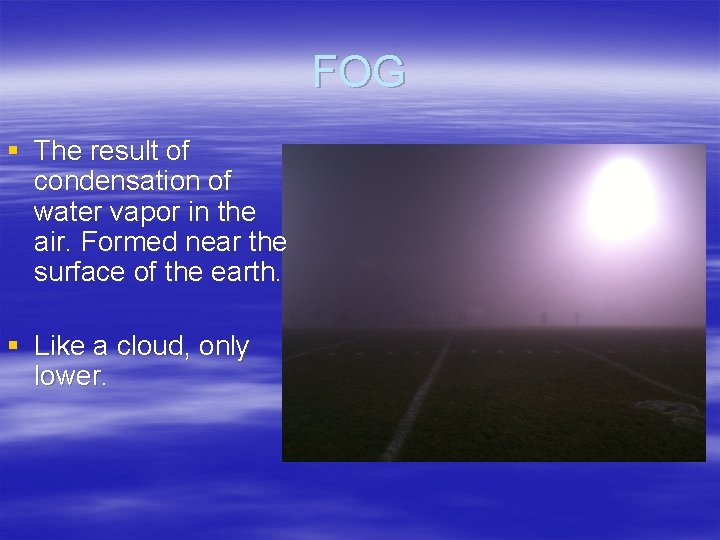
FOG § The result of condensation of water vapor in the air. Formed near the surface of the earth. § Like a cloud, only lower.
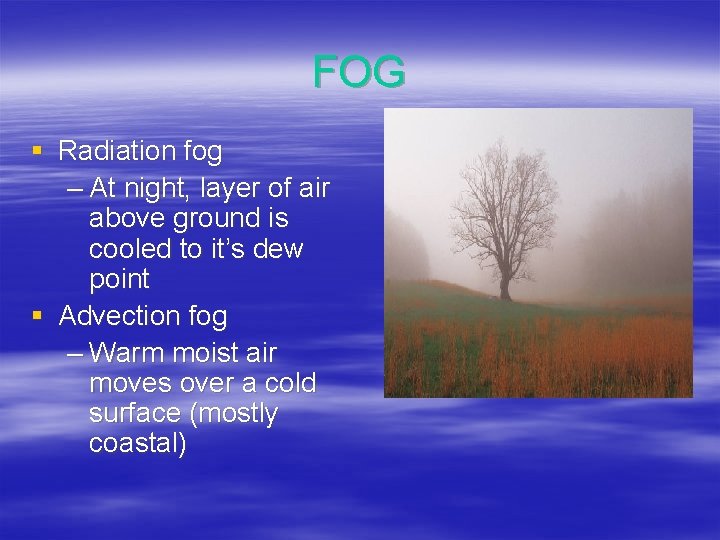
FOG § Radiation fog – At night, layer of air above ground is cooled to it’s dew point § Advection fog – Warm moist air moves over a cold surface (mostly coastal)
Precipitation § Work on 5. 04 table – Use pg. 489 -493 – Due Monday!
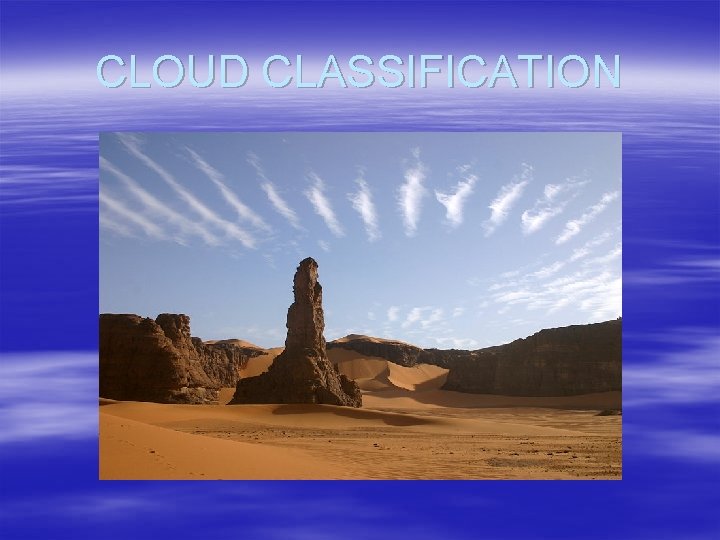
CLOUD CLASSIFICATION
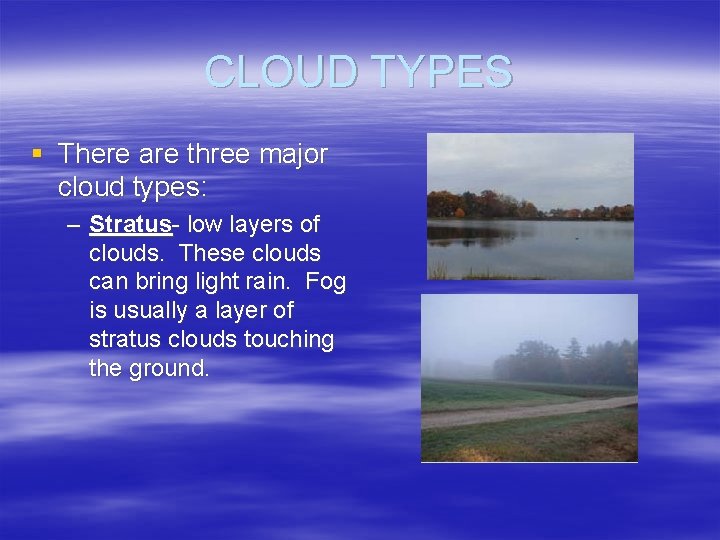
CLOUD TYPES § There are three major cloud types: – Stratus- low layers of clouds. These clouds can bring light rain. Fog is usually a layer of stratus clouds touching the ground.
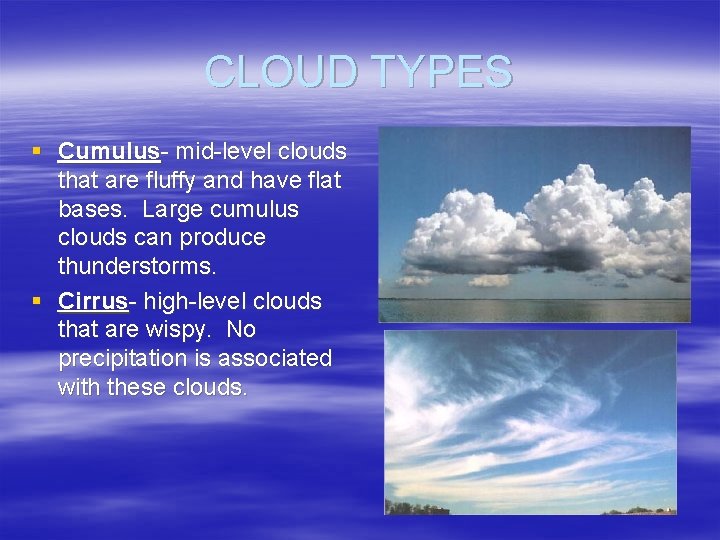
CLOUD TYPES § Cumulus- mid-level clouds that are fluffy and have flat bases. Large cumulus clouds can produce thunderstorms. § Cirrus- high-level clouds that are wispy. No precipitation is associated with these clouds.
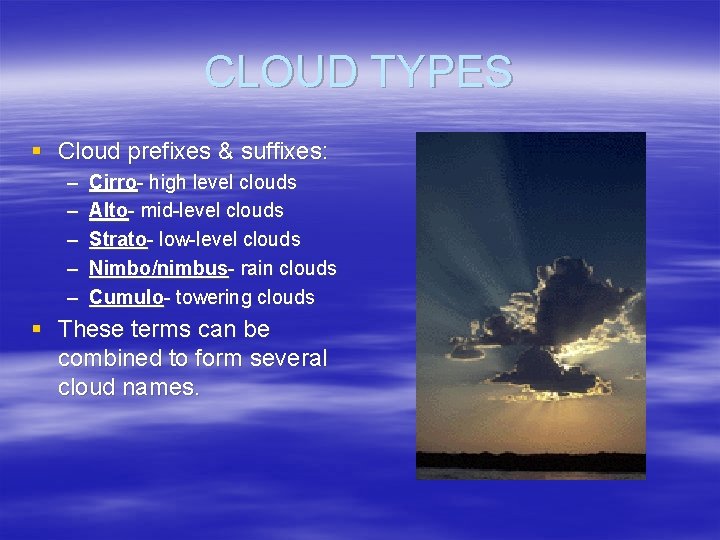
CLOUD TYPES § Cloud prefixes & suffixes: – – – Cirro- high level clouds Alto- mid-level clouds Strato- low-level clouds Nimbo/nimbus- rain clouds Cumulo- towering clouds § These terms can be combined to form several cloud names.
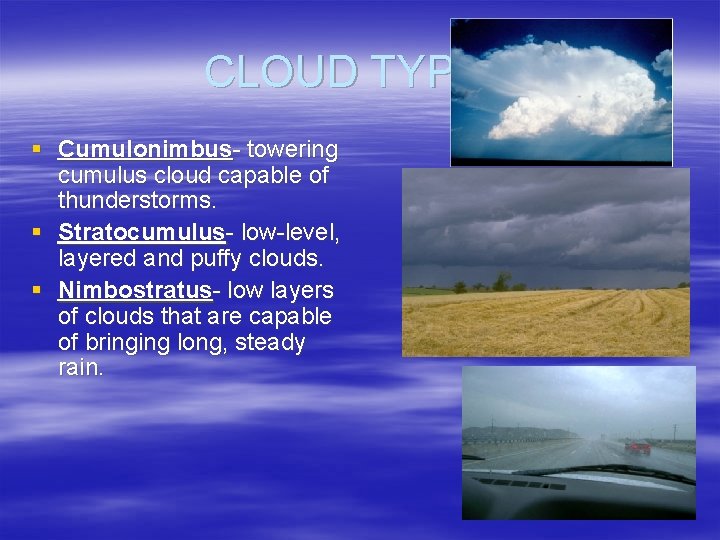
CLOUD TYPES § Cumulonimbus- towering cumulus cloud capable of thunderstorms. § Stratocumulus- low-level, layered and puffy clouds. § Nimbostratus- low layers of clouds that are capable of bringing long, steady rain.
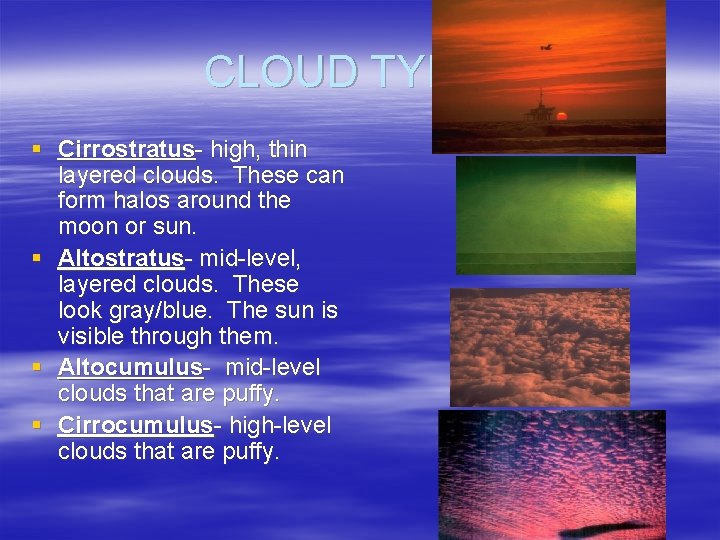
CLOUD TYPES § Cirrostratus- high, thin layered clouds. These can form halos around the moon or sun. § Altostratus- mid-level, layered clouds. These look gray/blue. The sun is visible through them. § Altocumulus- mid-level clouds that are puffy. § Cirrocumulus- high-level clouds that are puffy.