Classroom Strategies for English Medium Teaching and Learning

- Slides: 56
Classroom Strategies for English Medium Teaching and Learning Slides from Philip Hoare and Paul Stapleton
Our class’s strategy • We have teachers from: – different levels of instruction; – different levels of schools. • Not all content in this class will directly apply to you, but much can be adapted for your individual context.
Much of what I say today… • …is what you already do in class;
Starting points • The only reason for having EMI schools in Hong Kong is to give some students the chance to develop very high levels of fluency; • Technology teachers in EMI schools have to teach their subject content; • Technology teachers also have to help their students learn English, within the context of the subject. • If their English does not improve, their subject knowledge and understanding can’t improve; • “Using language is not sufficient by itself for successful [content language teaching] to occur” (Bunch, Abram, Lotan & Valdes (2001) p. 31).
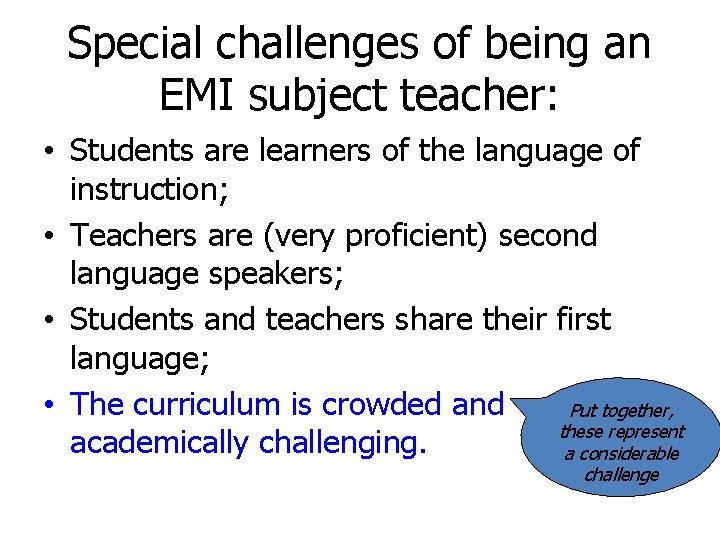
Special challenges of being an EMI subject teacher: • Students are learners of the language of instruction; • Teachers are (very proficient) second language speakers; • Students and teachers share their first language; • The curriculum is crowded and Put together, these represent academically challenging. a considerable challenge
EMI teaching is good teaching and more • Students are learners of the content AND the language so all aspects of teaching usually require more care; • Teaching ≠ learning.
Overview of EMI teaching and learning I (General points) • Teachers need to plan with regard to language as well as content; • Students need scaffolding; • Students need to talk, read and write, not just listen; • EMI teachers need to be language aware
Planning • Interviewer: But have you already determined before the lessons which technical terms you want the students to understand? • Tech teacher: Yes. • Interviewer: So this is part of your planning process? • Tech teacher: Yes. • Interviewer: How about the ways in which you use to teach the words? • Tech teacher: You mean the ways I introduce the words, whether it’s through a story, whether it’s through the demonstration, whether it’s just refer to the book, or [the] glossary in the book. Yes, I have thought about that. • Interviewer: So this is already in your head. • Tech teacher: Yes.
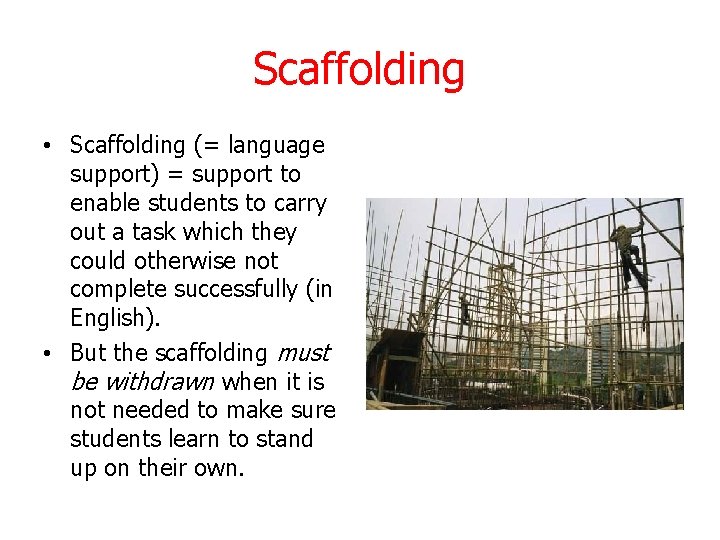
Scaffolding • Scaffolding (= language support) = support to enable students to carry out a task which they could otherwise not complete successfully (in English). • But the scaffolding must be withdrawn when it is not needed to make sure students learn to stand up on their own.
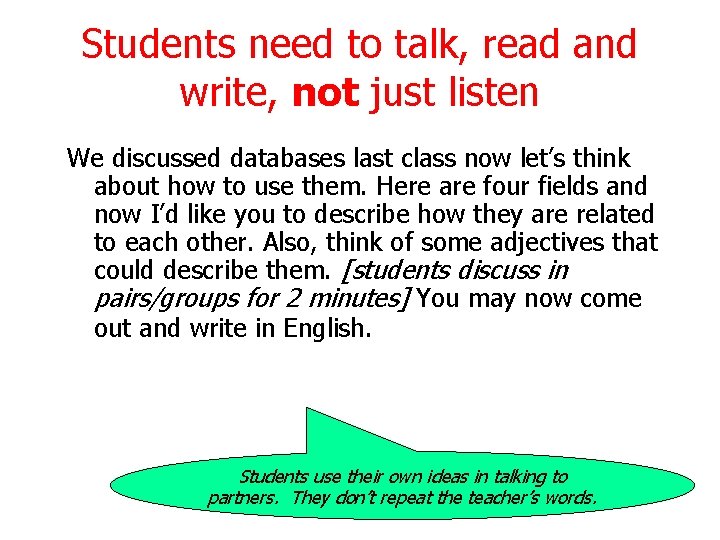
Students need to talk, read and write, not just listen We discussed databases last class now let’s think about how to use them. Here are four fields and now I’d like you to describe how they are related to each other. Also, think of some adjectives that could describe them. [students discuss in pairs/groups for 2 minutes] You may now come out and write in English. Students use their own ideas in talking to partners. They don’t repeat the teacher’s words.
EMI teachers need to be language aware • Develop an awareness that certain words, sentence structure and speed of delivery may be too difficult for students; • Develop strategies for scaffolding students’ learning.
Strategies for EMI • • Content obligatory language; Questioning techniques and feedback; Signposting Visuals; Repetition, repair and paraphrasing; Focusing language; Organizing language such as transitions and other markers.
1. Content Obligatory Vocabulary • “Content obligatory vocabulary”: words or phrases which are the content – without these terms the content cannot be expressed. • In other words, the key words of a lesson.
Teaching techniques Content obligatory vocabulary • There is no right way but there a lot of useful techniques; • Explicit introduction is essential – making students notice that the new word is important; • Students need to know these words in English – so translation is unsuitable on its own; • Rule no. 1: Use several techniques
Translation • Is there anything wrong with simply translating new and difficult words?
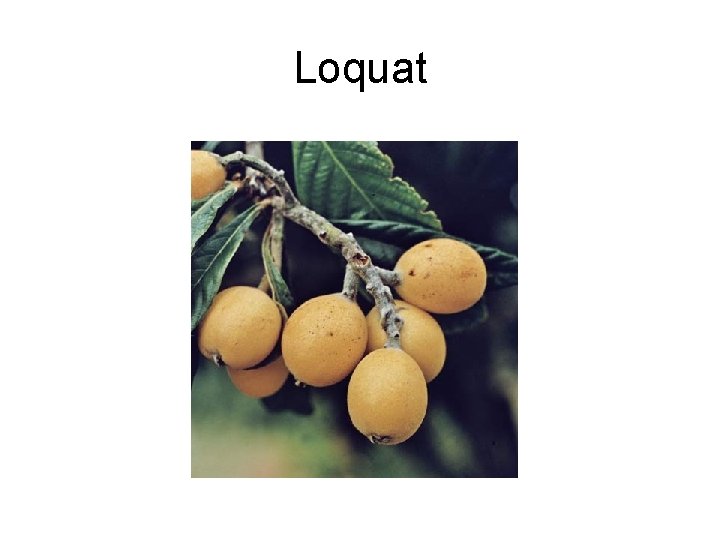
Loquat
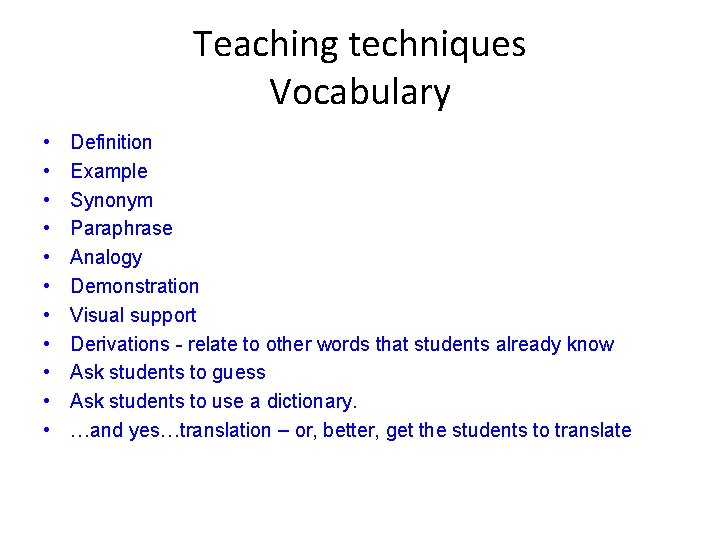
Teaching techniques Vocabulary • • • Definition Example Synonym Paraphrase Analogy Demonstration Visual support Derivations - relate to other words that students already know Ask students to guess Ask students to use a dictionary. …and yes…translation – or, better, get the students to translate
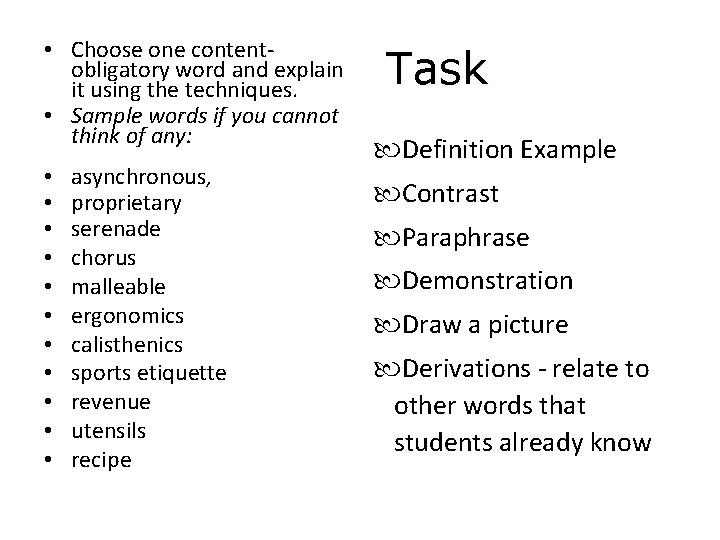
• Choose one contentobligatory word and explain it using the techniques. • Sample words if you cannot think of any: • • • asynchronous, proprietary serenade chorus malleable ergonomics calisthenics sports etiquette revenue utensils recipe Task Definition Example Contrast Paraphrase Demonstration Draw a picture Derivations - relate to other words that students already know
2. Questioning Techniques • Knowing how to ask questions is a skill. • EMI students find it especially hard to answer questions in class. • Teachers need to develop questioning skills which can encourage and scaffold answers.
Questioning techniques 1. IRF/E or triadic exchange 2. Display and higher order questions
IRF/E • Initiation, Response, and Follow-up or IRE Initiation, Response, and Evaluation
Common classroom exchange • Teacher: What is ergonomics? Mary. • Student Mary: (It is the science of) equipment design. • Teacher: Good, and why is it important? • Mary: (for keeping workers) productive and healthy. – The pattern usually follows: (1) the teacher asking something, (2) a pupil answering, and (3) the teacher acknowledging the answer and commenting on it.
IRF/E • This three-move [IRF/E] structure is the normal form inside the classroom for two reasons: • Firstly, questions asked are ones the teacher already knows the answer (the intention is to discover whether the students also know answers and produce thinking) • Second, answers are difficult for others to hear and thus the repetition, when it occurs, may be the first chance some students have to hear what another student said.
Questions • However, most of the questions used by teachers are for “display” and produce only short responses (one-word answers) from students.
The problem with IRF • Student utterances [student speaking] are often [grammatically reduced], occurring only in the response slot, sandwiched between two teacher turns, they also prevent the student from doing turn-taking, and topic development. They do not allow, negotiation of the direction of instruction (van Lier, 2001, p. 96).
Two types of questions • Display- students generally know answers; teachers use them to review and confirm. • Higher order (often open-ended)- the answers are often not known by students and require deeper thought.
Higher order questions 1. Why are HO Qs important? E. g. , questions starting with the word “why. ” 2. Why don’t students like to answer HO questions in class? 3. What can teachers do to improve the response level to HO questions?
Why are HO Qs important? • HO Qs demand that students think about the subject and then, usually, articulate their thinking into words and sentences: i. e. , they have to explore the subject and then use English (in an EMI class) to make connections between aspects of the topic. This contributes to understanding (it’s the other side of “explaining”)
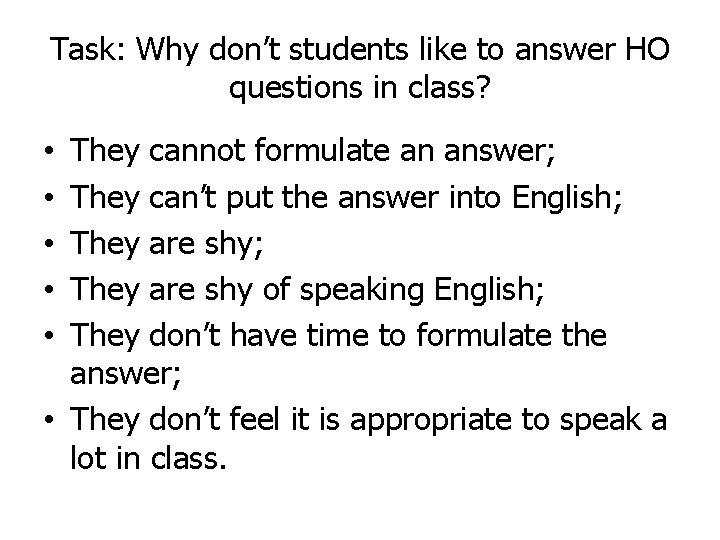
Task: Why don’t students like to answer HO questions in class? They cannot formulate an answer; They can’t put the answer into English; They are shy of speaking English; They don’t have time to formulate the answer; • They don’t feel it is appropriate to speak a lot in class. • • •
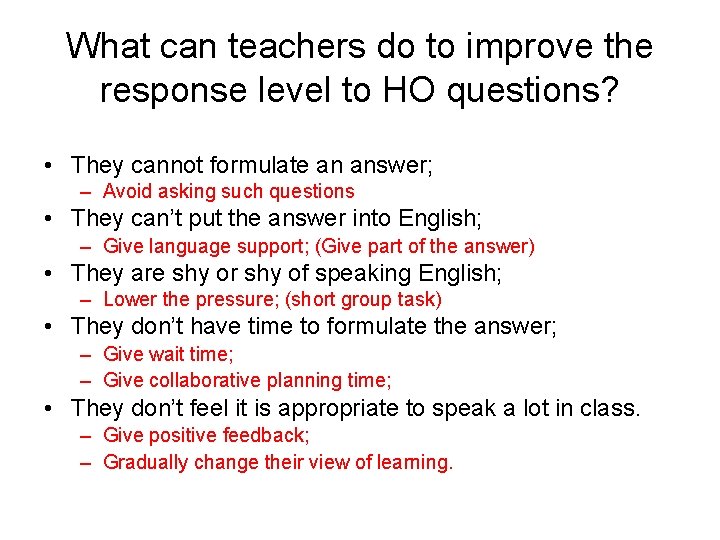
What can teachers do to improve the response level to HO questions? • They cannot formulate an answer; – Avoid asking such questions • They can’t put the answer into English; – Give language support; (Give part of the answer) • They are shy or shy of speaking English; – Lower the pressure; (short group task) • They don’t have time to formulate the answer; – Give wait time; – Give collaborative planning time; • They don’t feel it is appropriate to speak a lot in class. – Give positive feedback; – Gradually change their view of learning.
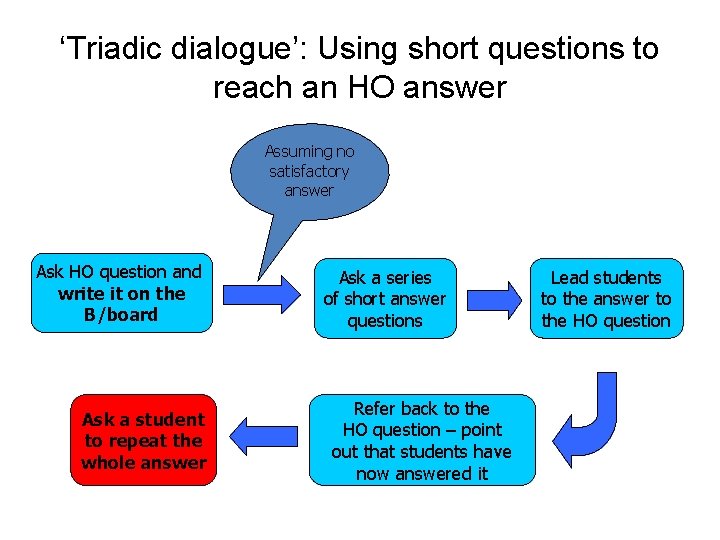
‘Triadic dialogue’: Using short questions to reach an HO answer Assuming no satisfactory answer Ask HO question and write it on the B/board Ask a student to repeat the whole answer Ask a series of short answer questions Refer back to the HO question – point out that students have now answered it Lead students to the answer to the HO question
Planning • Of course all of this takes planning before the lesson. • For important higher order concepts, planning how to introduce them through questioning is necessary.
Task Subject specific group work • Think of a higher order question. • Write a question-and-answer dialogue that could lead a student to the answer.
Repair • Another possibility in the IRF sequence is “repair” • Pronunciation • Grammar • Vocabulary • To what extent should teachers repair students’ language?
Repair • Taking this a little further, error correction may be “direct or indirect, overt or covert; … in short, teachers are open to many options – their split-second decisions in the rapid flow of a lesson may have consequences for the learning opportunities they present to their learners. ” • Van Lier (2001) concludes that repair is ‘closely related to the context of what is being done. ’
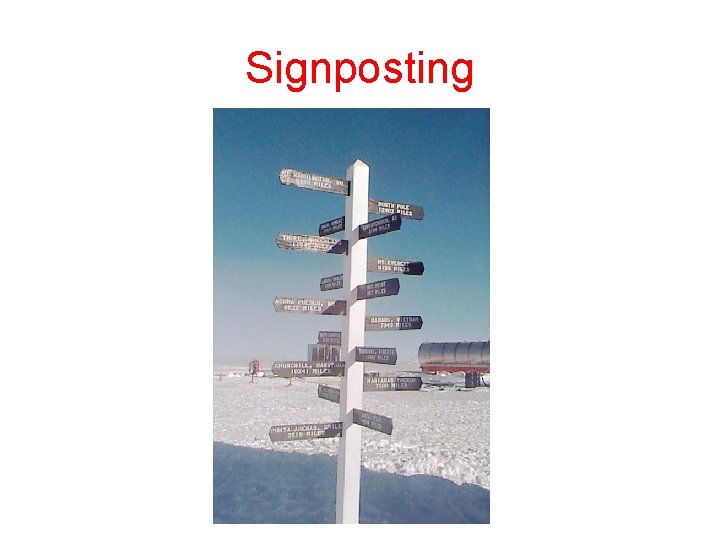
Signposting
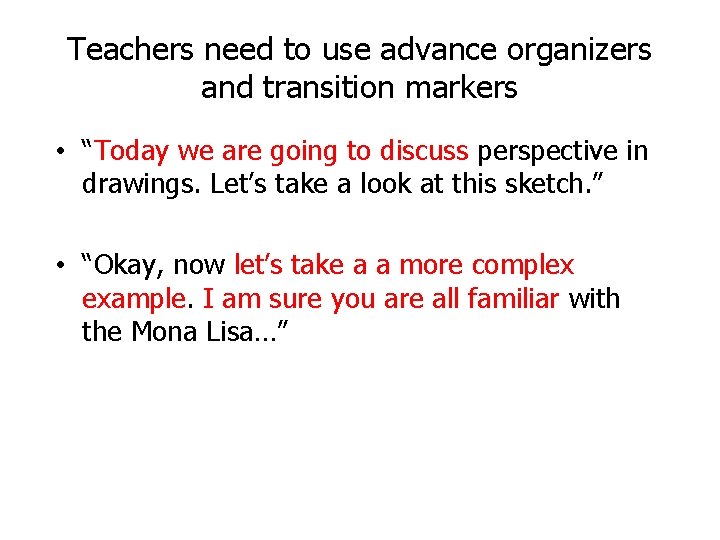
Teachers need to use advance organizers and transition markers • “Today we are going to discuss perspective in drawings. Let’s take a look at this sketch. ” • “Okay, now let’s take a a more complex example. I am sure you are all familiar with the Mona Lisa…”
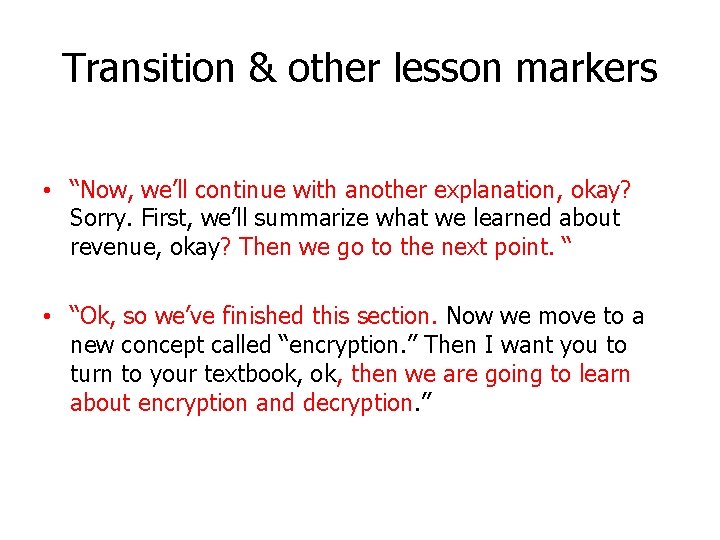
Transition & other lesson markers • “Now, we’ll continue with another explanation, okay? Sorry. First, we’ll summarize what we learned about revenue, okay? Then we go to the next point. “ • “Ok, so we’ve finished this section. Now we move to a new concept called “encryption. ” Then I want you to turn to your textbook, then we are going to learn about encryption and decryption. ”
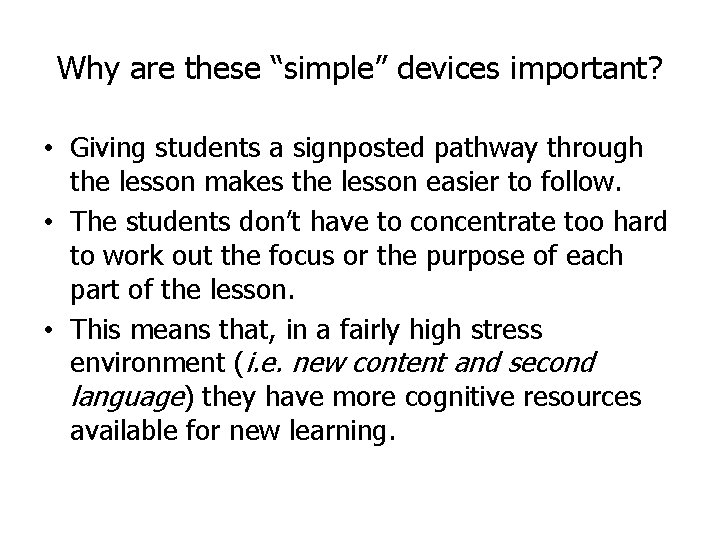
Why are these “simple” devices important? • Giving students a signposted pathway through the lesson makes the lesson easier to follow. • The students don’t have to concentrate too hard to work out the focus or the purpose of each part of the lesson. • This means that, in a fairly high stress environment (i. e. new content and second language) they have more cognitive resources available for new learning.
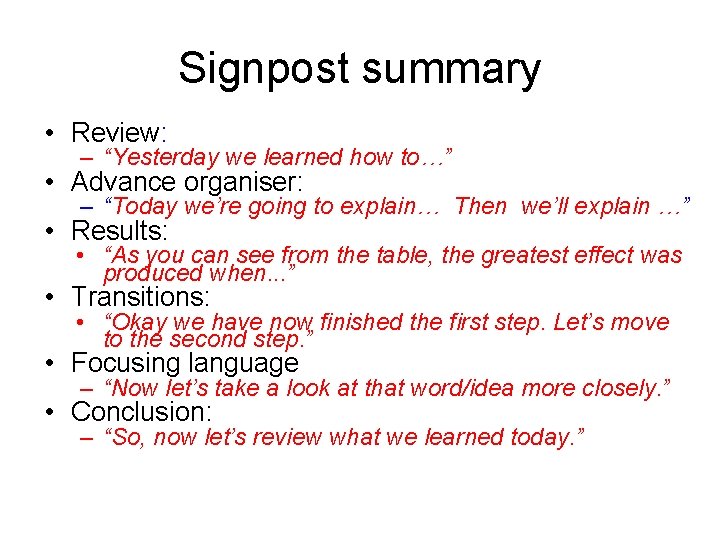
Signpost summary • Review: – “Yesterday we learned how to…” • Advance organiser: – “Today we’re going to explain… Then we’ll explain …” • Results: • “As you can see from the table, the greatest effect was produced when. . . ” • Transitions: • “Okay we have now finished the first step. Let’s move to the second step. ” • Focusing language – “Now let’s take a look at that word/idea more closely. ” • Conclusion: – “So, now let’s review what we learned today. ”
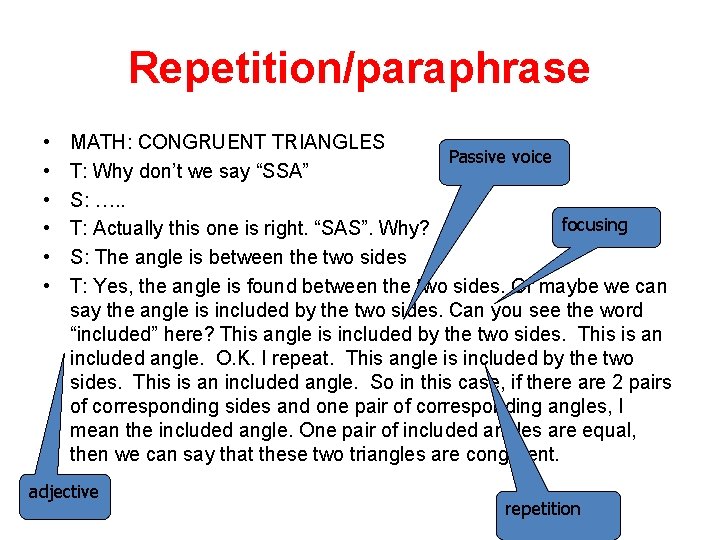
Repetition/paraphrase • • • MATH: CONGRUENT TRIANGLES Passive voice T: Why don’t we say “SSA” S: …. . focusing T: Actually this one is right. “SAS”. Why? S: The angle is between the two sides T: Yes, the angle is found between the two sides. Or maybe we can say the angle is included by the two sides. Can you see the word “included” here? This angle is included by the two sides. This is an included angle. O. K. I repeat. This angle is included by the two sides. This is an included angle. So in this case, if there are 2 pairs of corresponding sides and one pair of corresponding angles, I mean the included angle. One pair of included angles are equal, then we can say that these two triangles are congruent. adjective repetition
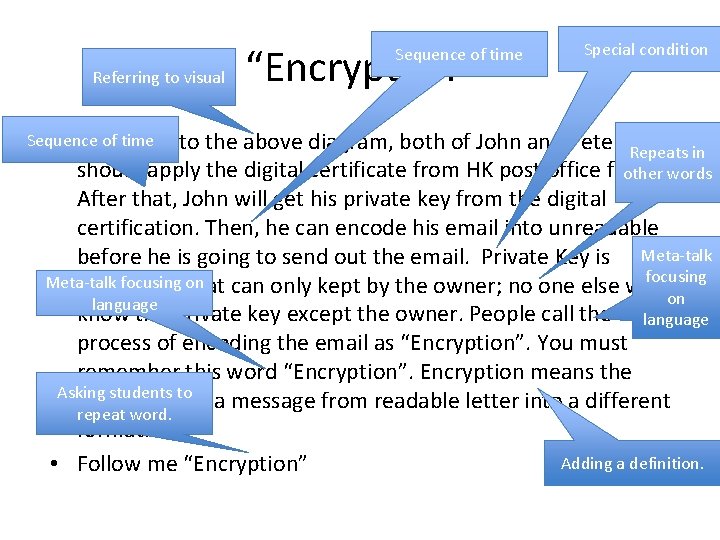
“Encryption” Sequence of time Referring to visual Sequence of time • According Special condition to the above diagram, both of John and Peter Repeats in should apply the digital certificate from HK post office first. other words After that, John will get his private key from the digital certification. Then, he can encode his email into unreadable before he is going to send out the email. Private Key is Meta-talk focusing that on can only kept by the owner; no one else will something on language know the private key except the owner. People call the language process of encoding the email as “Encryption”. You must remember this word “Encryption”. Encryption means the Asking students to conversion of a message from readable letter into a different repeat word. format. Adding a definition. • Follow me “Encryption”
Repetition/paraphrase • https: //www. khanacademy. org/science/computerscience/v/introduction-to-programs-data-types-and-variables Watch the video first then look at the transcript and look for the various strategies we have discussed.
Visuals • • • Visuals Tables Blanks Diagrams Graphic organizers
Communication… • …comes in many forms • Classroom teaching generally comes in written and spoken form from teacher to student.
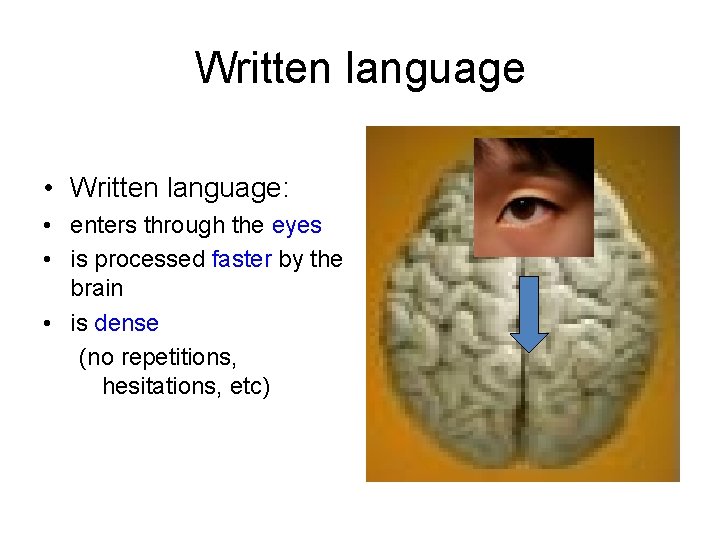
Written language • Written language: • enters through the eyes • is processed faster by the brain • is dense (no repetitions, hesitations, etc)
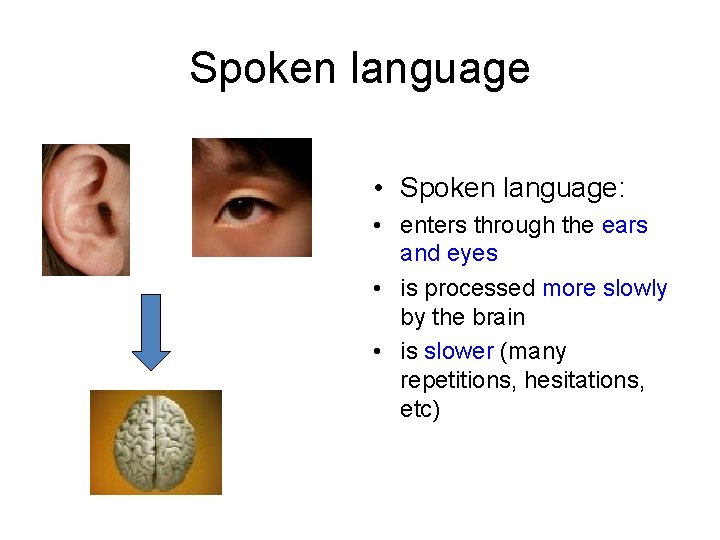
Spoken language • Spoken language: • enters through the ears and eyes • is processed more slowly by the brain • is slower (many repetitions, hesitations, etc)
Sense of vision • Explanations without visuals do not take full advantage of the human senses.
Resources • http: //www. khanacademy. org/ • https: //www. khanacademy. org/science/comp uter-science/v/introduction-to-programs-data -types-and-variables
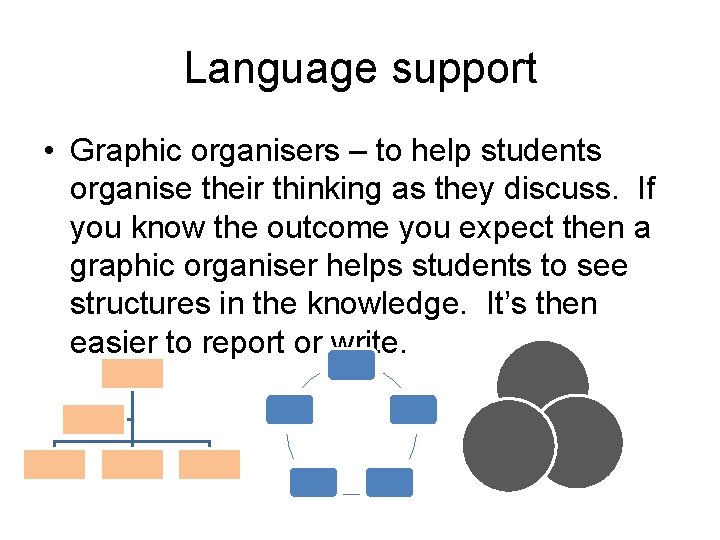
Language support • Graphic organisers – to help students organise their thinking as they discuss. If you know the outcome you expect then a graphic organiser helps students to see structures in the knowledge. It’s then easier to report or write.
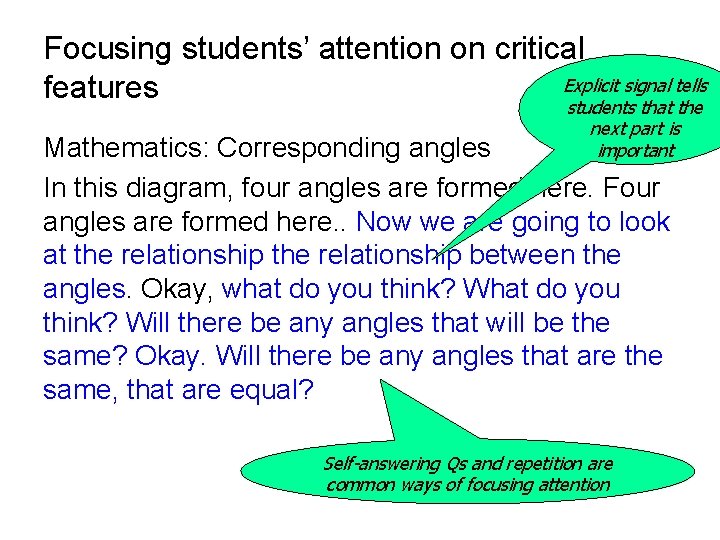
Focusing students’ attention on critical Explicit signal tells features students that the next part is important Mathematics: Corresponding angles In this diagram, four angles are formed here. Four angles are formed here. . Now we are going to look at the relationship between the angles. Okay, what do you think? Will there be any angles that will be the same? Okay. Will there be any angles that are the same, that are equal? Self-answering Qs and repetition are common ways of focusing attention
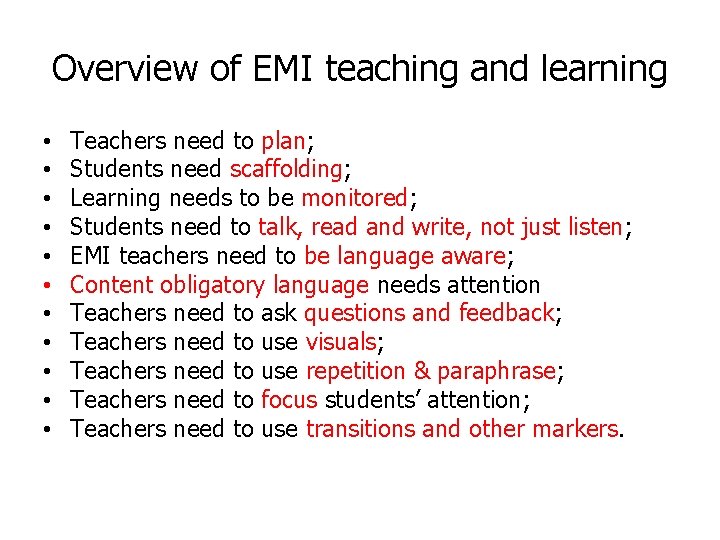
Overview of EMI teaching and learning • • • Teachers need to plan; Students need scaffolding; Learning needs to be monitored; Students need to talk, read and write, not just listen; EMI teachers need to be language aware; Content obligatory language needs attention Teachers need to ask questions and feedback; Teachers need to use visuals; Teachers need to use repetition & paraphrase; Teachers need to focus students’ attention; Teachers need to use transitions and other markers.
Sample script • Read through and identify examples of good EMI teaching. Underline and name each strategy that you identify. • Try to add your own examples to the script to improve it in terms of good EMI teaching.
Task 1 Lesson plan • Choose level • Choose topic • Fill in plan template
Task 2 Key lesson excerpt • Use key language from your plan • Identify key lesson stage • Write a short script explaining key concept while employing strategies for unpacking and other features of a good EMI lesson.
References • • Bunch, G. C. , Abram, P. L. , Lotan, R. A. & Valdes, G. (2001). Beyond Sheltered Instruction: Rethinking Conditions for Academic Language Development. TESOL Journal, v 10 n 2 -3 p 28 -33. Van Lier, L. (1988). The organization of repair in second language classrooms.