Classic Tailoring for Womens Wear Michelle Mc Carthy


- Slides: 32
Classic Tailoring for Women's Wear Michelle Mc. Carthy 6 -Credit Honors Project Undergraduate Research Conference May 2011 Faculty Sponsor: Claire Lacoste-Kapstein Ph. D In collaboration with Instructor Diane Martin
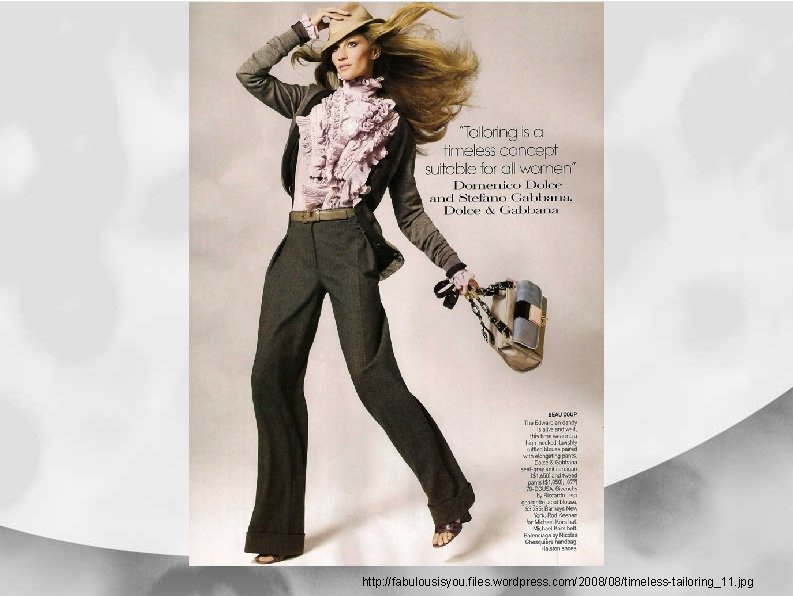
http: //fabulousisyou. files. wordpress. com/2008/08/timeless-tailoring_11. jpg
GOAL: To research and apply classic tailoring techniques to suit jackets for women. To examine the custom design process from concept to garment for clients representing four age groups within my family. To explore conventional and unconventional elements in tailored jacket design.
About Classic Tailoring Classic tailoring, also known as bespoke tailoring in the UK, refers to the methods and techniques used to build a custom made original suit for your client. A well tailored jacket is expected to fit the client well without set-wrinkles from tightness or sagging and fall smoothly over the body. Proper tailoring requires skills in pattern making, fitting, and often hand-stitching to build the jacket’s structure.
There are various methods used to shape a suit jacket in today’s society: Custom Method Machine Method Fusible Method Or a combination of the three.
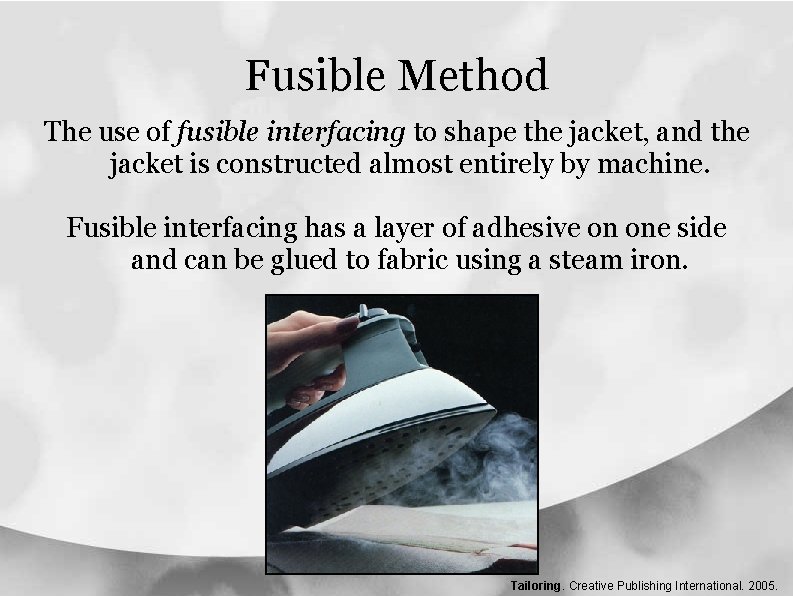
Fusible Method The use of fusible interfacing to shape the jacket, and the jacket is constructed almost entirely by machine. Fusible interfacing has a layer of adhesive on one side and can be glued to fabric using a steam iron. Tailoring. Creative Publishing International. 2005.
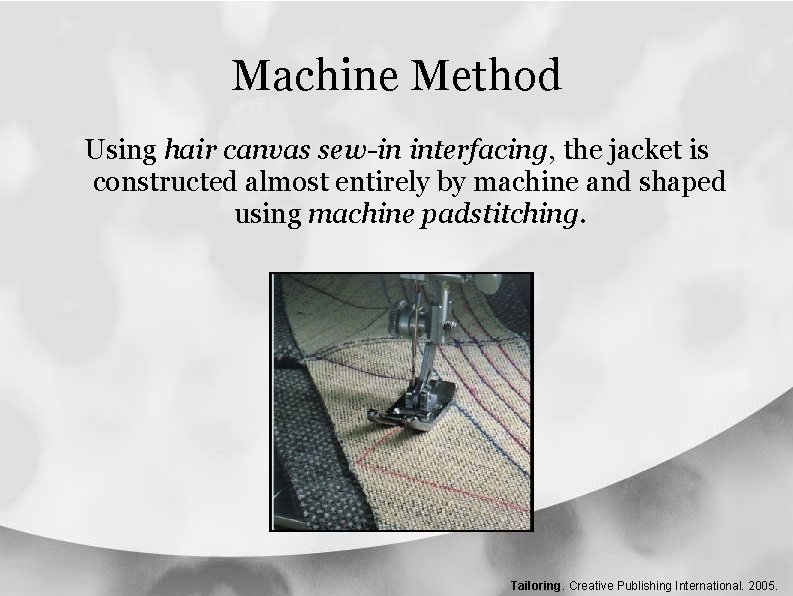
Machine Method Using hair canvas sew-in interfacing, the jacket is constructed almost entirely by machine and shaped using machine padstitching. Tailoring. Creative Publishing International. 2005.
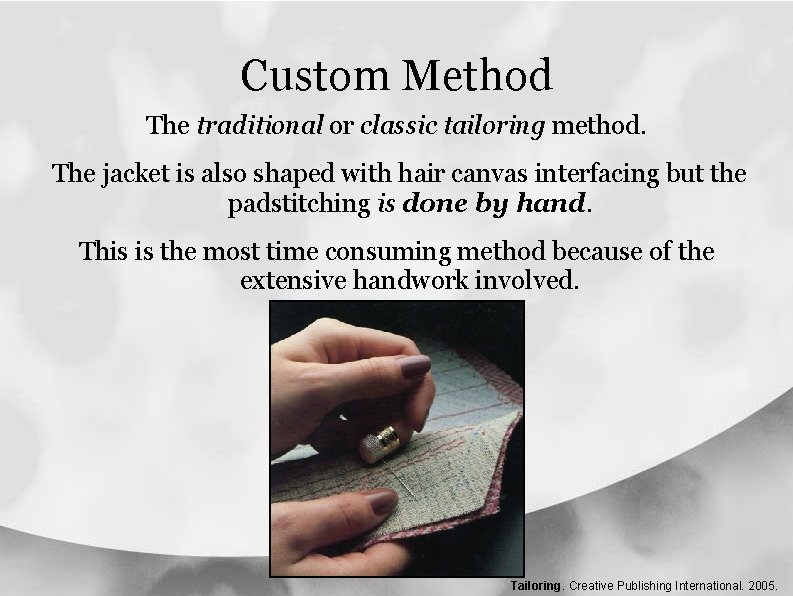
Custom Method The traditional or classic tailoring method. The jacket is also shaped with hair canvas interfacing but the padstitching is done by hand. This is the most time consuming method because of the extensive handwork involved. Tailoring. Creative Publishing International. 2005.
Combination Custom method is the only method for bespoke tailors in Savile Row, London. Combination of methods is an efficient way to produce a unique look. While primarily focusing on the custom method, I implement fusible and machine techniques on occasion to accomplish a desirable effect.
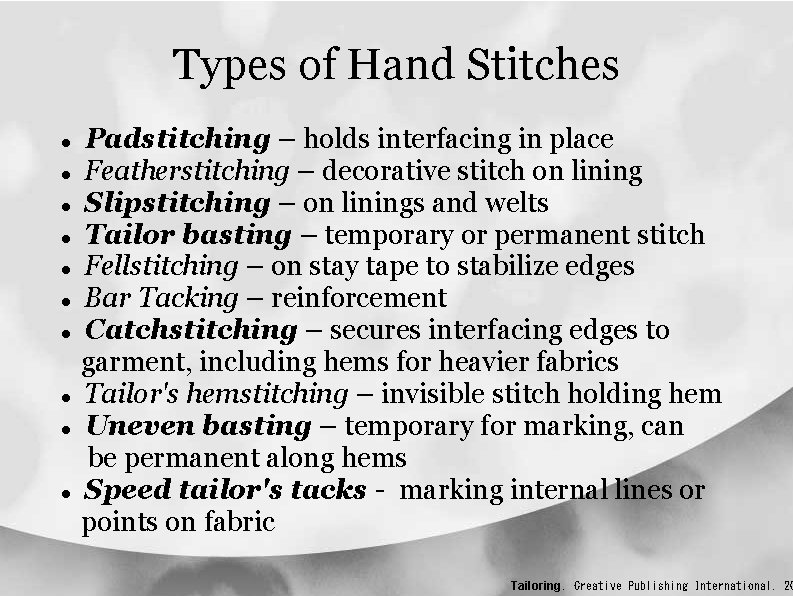
Types of Hand Stitches Padstitching – holds interfacing in place Featherstitching – decorative stitch on lining Slipstitching – on linings and welts Tailor basting – temporary or permanent stitch Fellstitching – on stay tape to stabilize edges Bar Tacking – reinforcement Catchstitching – secures interfacing edges to garment, including hems for heavier fabrics Tailor's hemstitching – invisible stitch holding hem Uneven basting – temporary for marking, can be permanent along hems Speed tailor's tacks - marking internal lines or points on fabric Tailoring. Creative Publishing International. 20
THE DESIGN PROCESS Evaluate the Needs of the Client Sketching Ideas and Sourcing Materials Draft Custom Slopers (with Fittings) Draft Design Patterns (more Fittings) Construction and Design Evolution
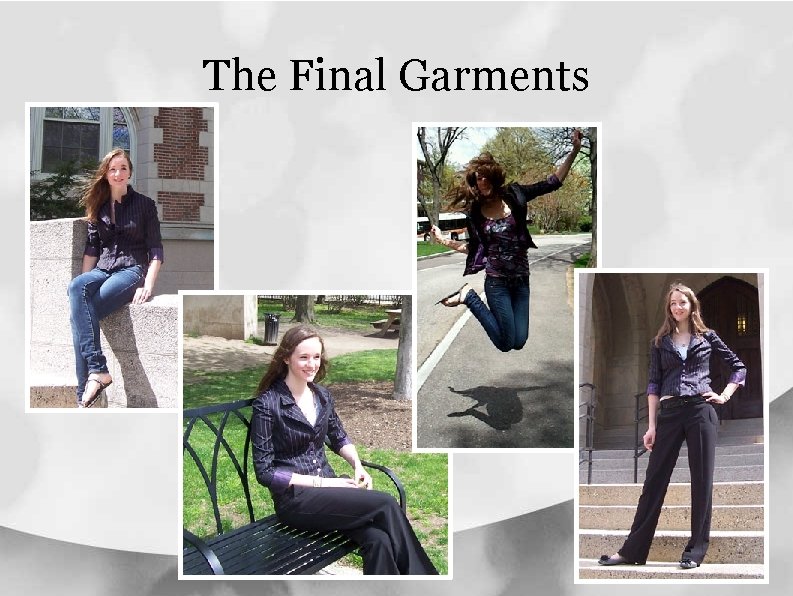
The Clients Representing four age groups within my family, I designed suits for: Julie Mc. Carthy – Cousin, Late Teens, Freshman in College Michelle Mc. Carthy – Mid 20's, Graduating Senior in College Emily Mc. Carthy – Mother, Mid 50's, Marine Scientist at NUWC Elaine Mc. Carthy – Grandmother, Early 80's, Retiree, Wheelchair bound
Client Evaluation Beyond the need for flattering clothing, each age group requires something personalized that will also flatter their lifestyle. Julie – fun and fashionable, versatile Michelle – interview appropriate, fashionable, portfolio piece Emily – professional, comfortable, and unique style Elaine – comfortable yet luxurious, easily wearable, flattering in seated position
Custom Slopers and Fittings Personal Measurements are taken and used to draft the basic sloper patterns: Front and Back Bodice Patterns Torso Foundation Patterns (modified Bodice pattern with Hip measurements) Jacket Foundation Patterns (modified Torso patterns to include enough ease for wear over other garments) These patterns are constructed in a muslin fabric (inexpensive plain cotton fabric) for fittings. If the basic sloper patterns are ill-fitting, then it will be more difficult to adjust and fit design patterns.
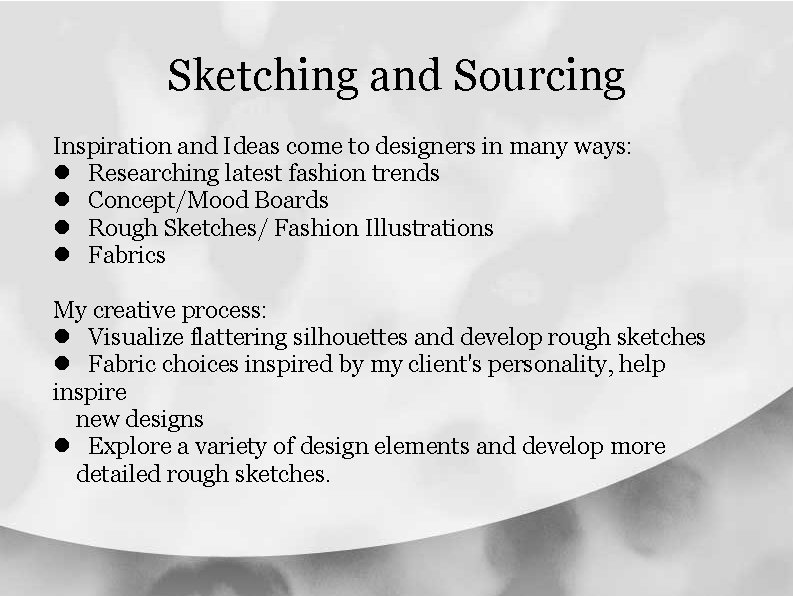
Sketching and Sourcing Inspiration and Ideas come to designers in many ways: Researching latest fashion trends Concept/Mood Boards Rough Sketches/ Fashion Illustrations Fabrics My creative process: Visualize flattering silhouettes and develop rough sketches Fabric choices inspired by my client's personality, help inspire new designs Explore a variety of design elements and develop more detailed rough sketches.
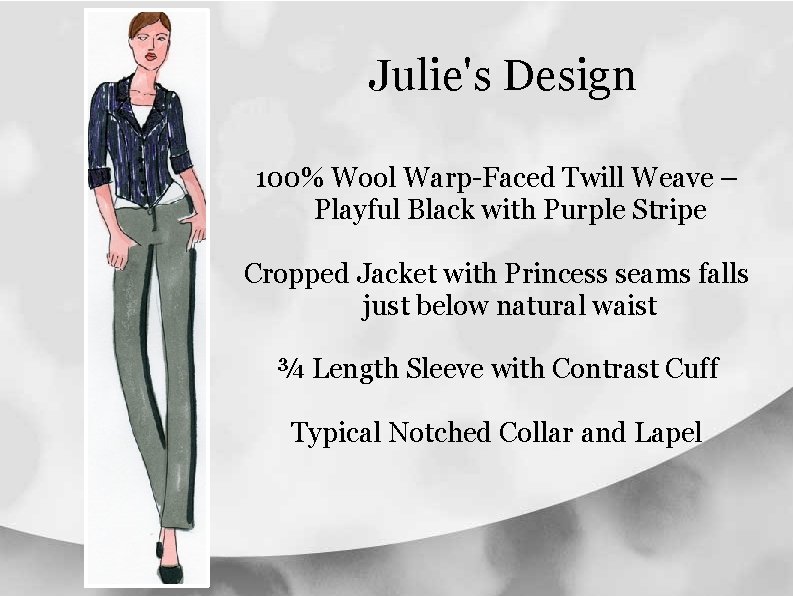
Julie's Design 100% Wool Warp-Faced Twill Weave – Playful Black with Purple Stripe Cropped Jacket with Princess seams falls just below natural waist ¾ Length Sleeve with Contrast Cuff Typical Notched Collar and Lapel
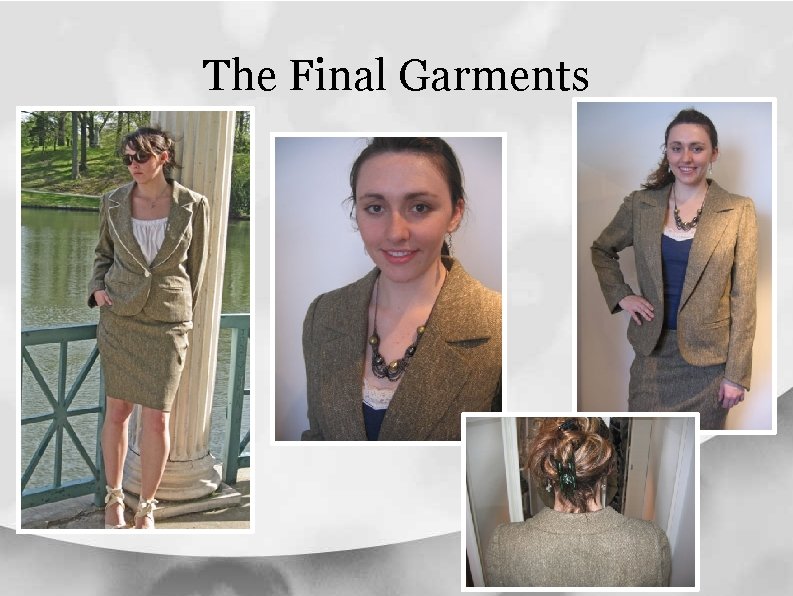
Michelle's Design 100% Wool Herringbone – Dusty Golden Green Princess Seams and Welt Pockets Portrait Neckline and Low-Notched Collar and Wide Lapel Single Bone Button
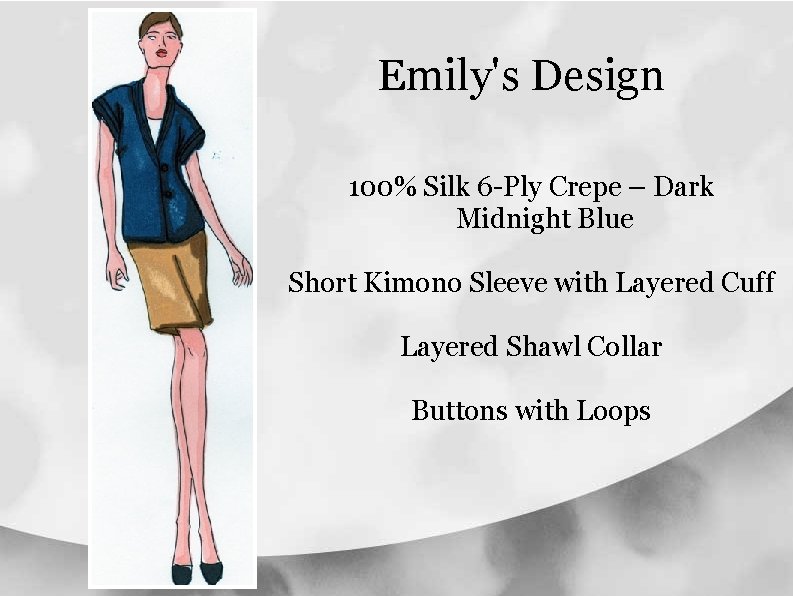
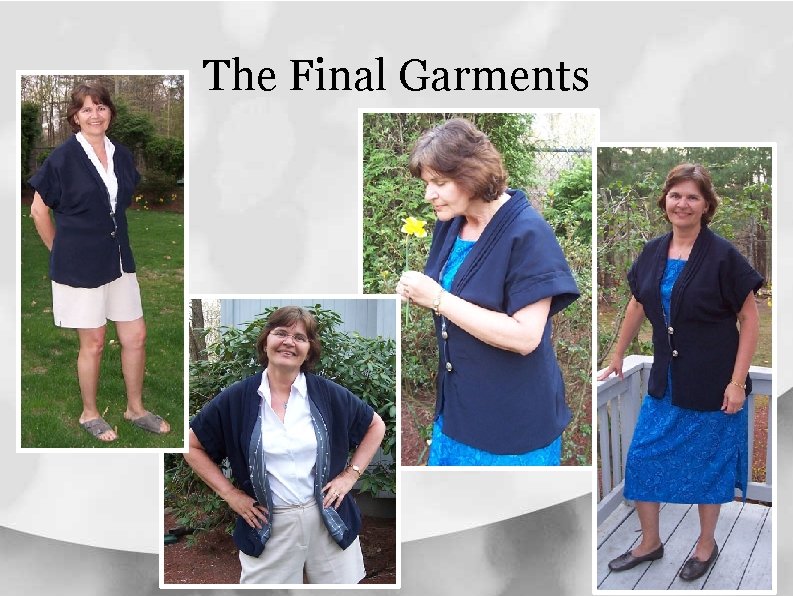
Emily's Design 100% Silk 6 -Ply Crepe – Dark Midnight Blue Short Kimono Sleeve with Layered Cuff Layered Shawl Collar Buttons with Loops
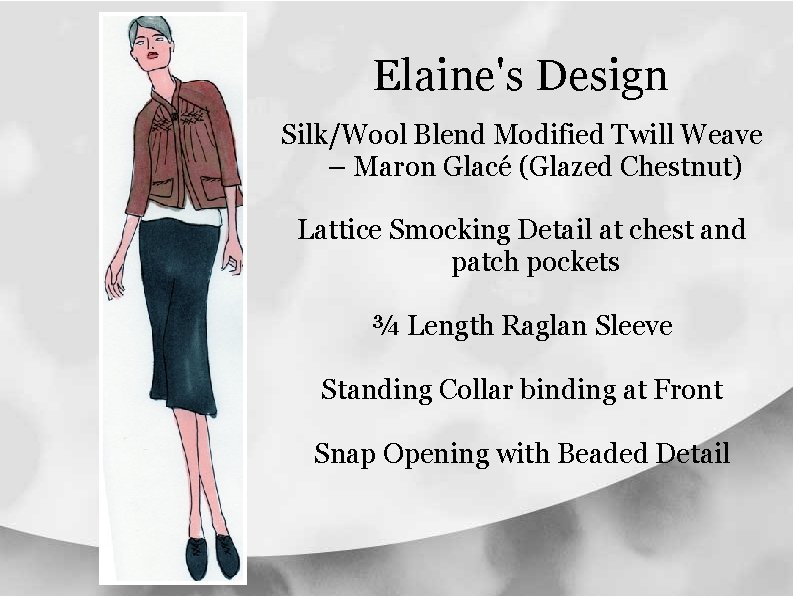
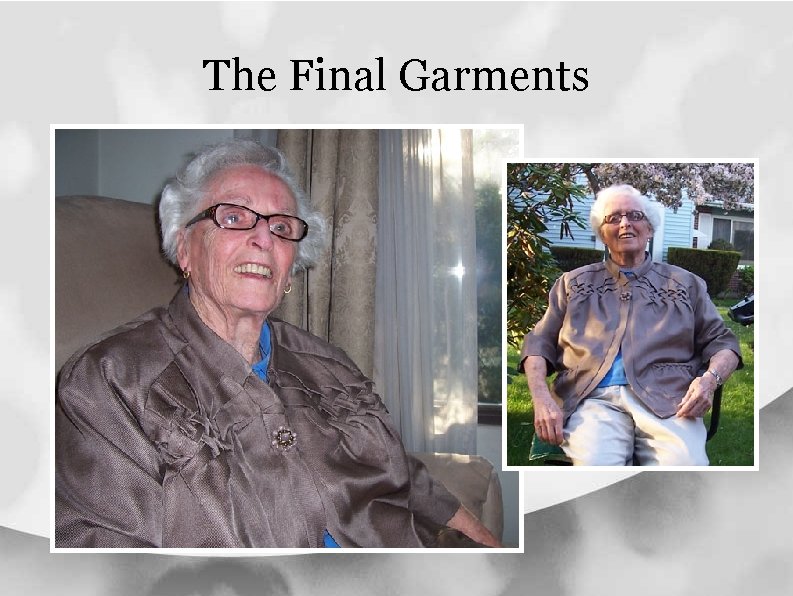
Elaine's Design Silk/Wool Blend Modified Twill Weave – Maron Glacé (Glazed Chestnut) Lattice Smocking Detail at chest and patch pockets ¾ Length Raglan Sleeve Standing Collar binding at Front Snap Opening with Beaded Detail
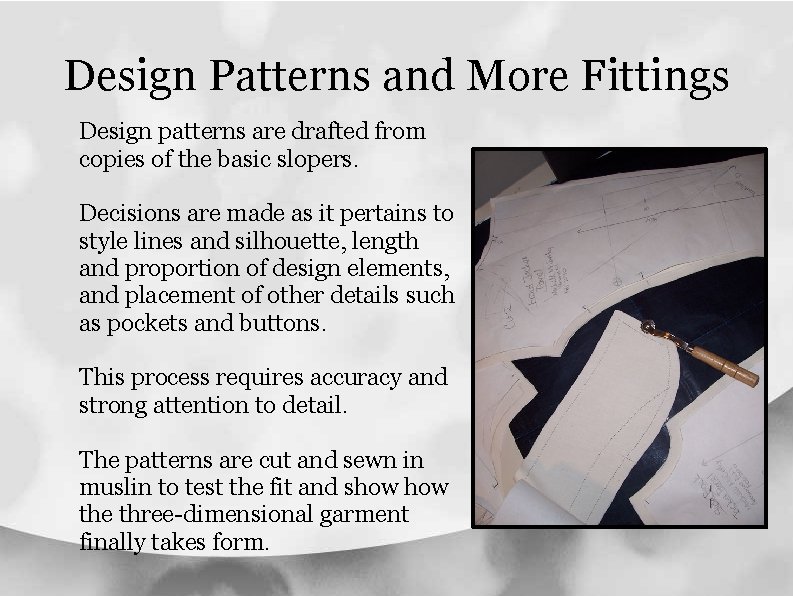
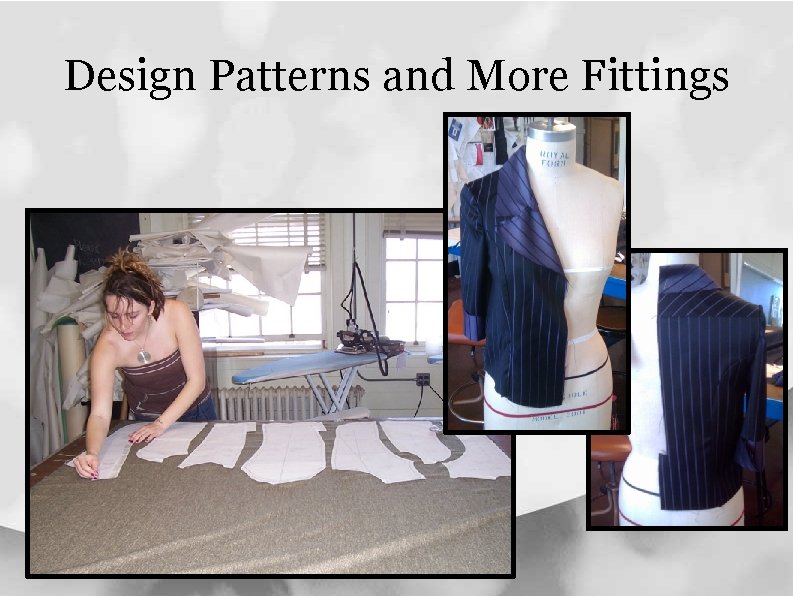
Design Patterns and More Fittings Design patterns are drafted from copies of the basic slopers. Decisions are made as it pertains to style lines and silhouette, length and proportion of design elements, and placement of other details such as pockets and buttons. This process requires accuracy and strong attention to detail. The patterns are cut and sewn in muslin to test the fit and show the three-dimensional garment finally takes form.
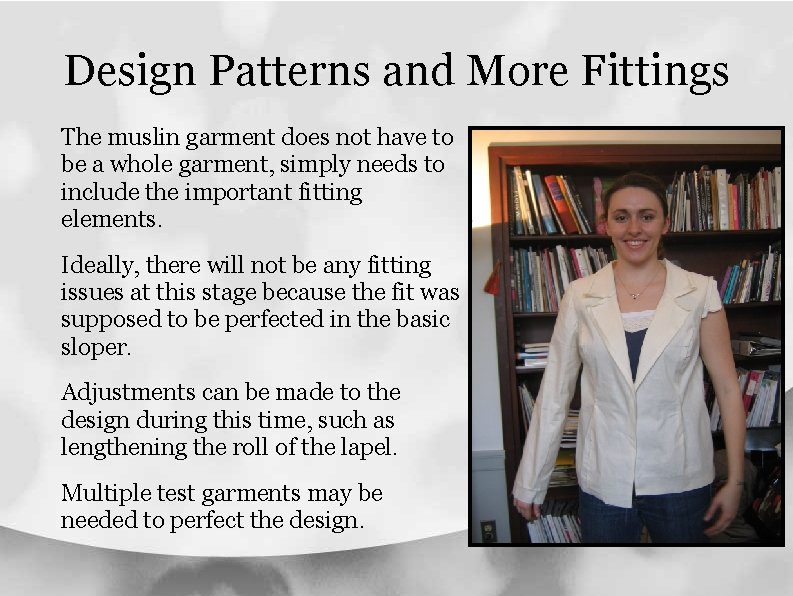
Design Patterns and More Fittings The muslin garment does not have to be a whole garment, simply needs to include the important fitting elements. Ideally, there will not be any fitting issues at this stage because the fit was supposed to be perfected in the basic sloper. Adjustments can be made to the design during this time, such as lengthening the roll of the lapel. Multiple test garments may be needed to perfect the design.
Design Patterns and More Fittings
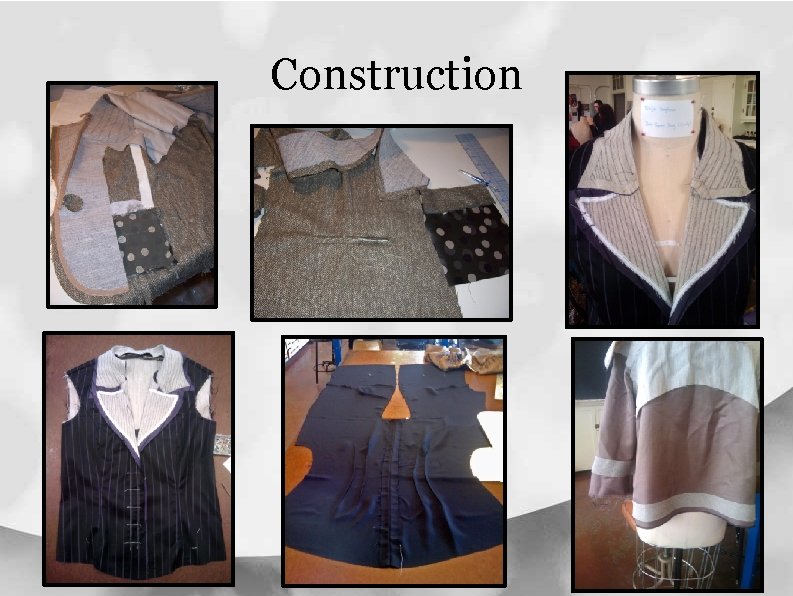
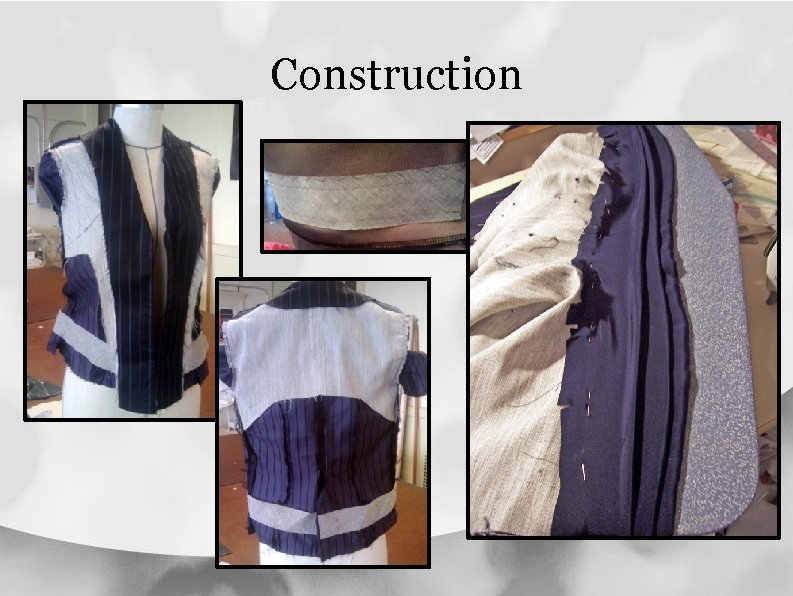
Construction The design patterns are perfected and construction can begin. A well-tailored jacket has a very specific sequence of assemblage. Missing a step can be disastrous and may require cutting new pieces.
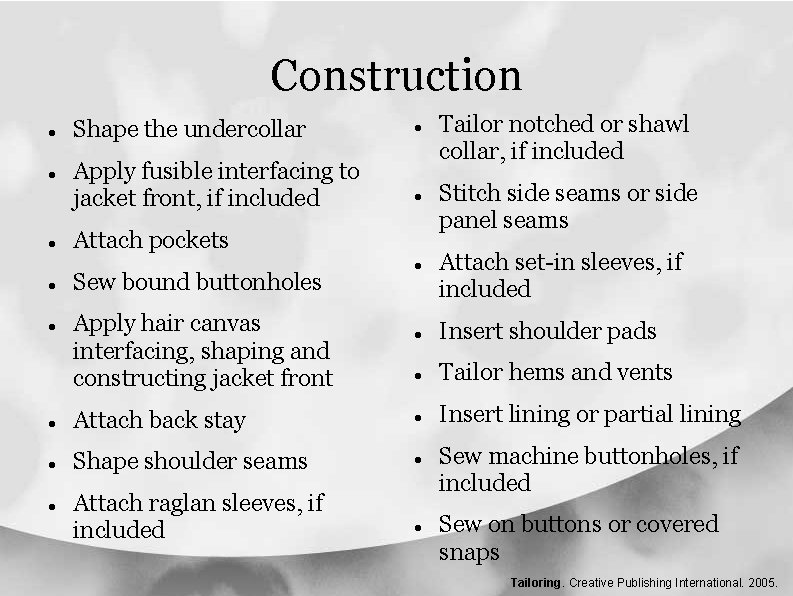
Construction Shape the undercollar Apply fusible interfacing to jacket front, if included Attach pockets Sew bound buttonholes Apply hair canvas interfacing, shaping and constructing jacket front Attach set-in sleeves, if included Insert shoulder pads Tailor hems and vents Insert lining or partial lining Attach back stay Shape shoulder seams Attach raglan sleeves, if included Stitch side seams or side panel seams Tailor notched or shawl collar, if included Sew machine buttonholes, if included Sew on buttons or covered snaps Tailoring. Creative Publishing International. 2005.
Construction
Construction
The Final Garments
The Final Garments
The Final Garments
The Final Garments
Classic Tailoring for Women's Wear An Applied Research Project by Michelle Mc. Carthy B. S. Textiles, Fashion Merchandising & Design Minor in Studio Art Undergraduate Research Conference May 2011 University of Rhode Island Thank you!
References Tailoring The Classic Guide to Sewing the Perfect Jacket Creative Publishing International Chanhassen MN 2005 Other Photos: Taken by Michelle Mc. Carthy Or part of public domain