CIVIL WAR HISTORIOGRAPHY Michaela Crawford Reaves Ph D



- Slides: 28
CIVIL WAR HISTORIOGRAPHY Michaela Crawford Reaves, Ph. D.
“Traditional” Interpretations • Late 19 th century • Radical Republicans dominated southern life • Unscrupulous carpetbaggers and scalawags exploited the poor South; graft rampant! • Black supremacy oppressed poor white Southerners; nothing but barbaric! • Argues race the major issue, • Reconstruction A BIG failure! • Interpretation is now considered racist.
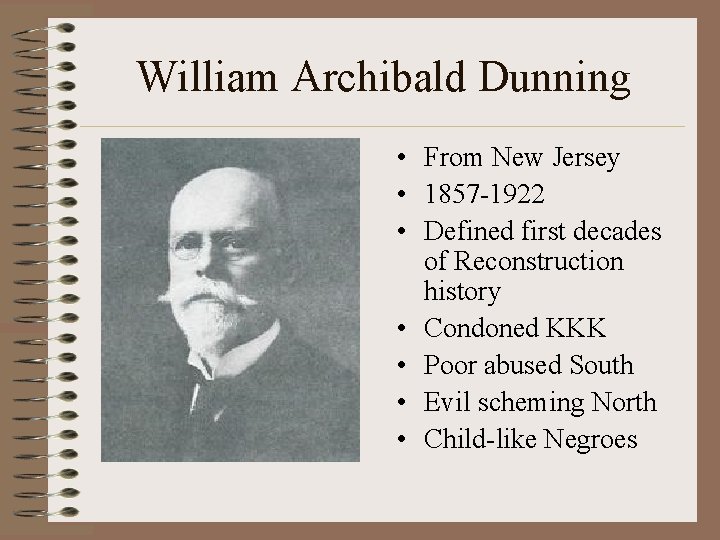
William Archibald Dunning • From New Jersey • 1857 -1922 • Defined first decades of Reconstruction history • Condoned KKK • Poor abused South • Evil scheming North • Child-like Negroes
Claude Bowers • 1878 -1958 • Mass culture absorbed Dunning’s ideas through The Tragic Era (fiction) • Racial inequality necessary
Progressive Historians • • Early 20 th century Second American Revolution Largest issue: ECONOMICS Dominant northern capitalists exploit defeated South • South still exploited, but for different reasons, evil plot nonetheless. • A handful of scholars dispute this view.
Charles A. Beard • 1874 -1948 • Dominant northern capitalists exploit defeated South • Economic interpretation beginning in 1923 • Focused on material self interest, not ideology
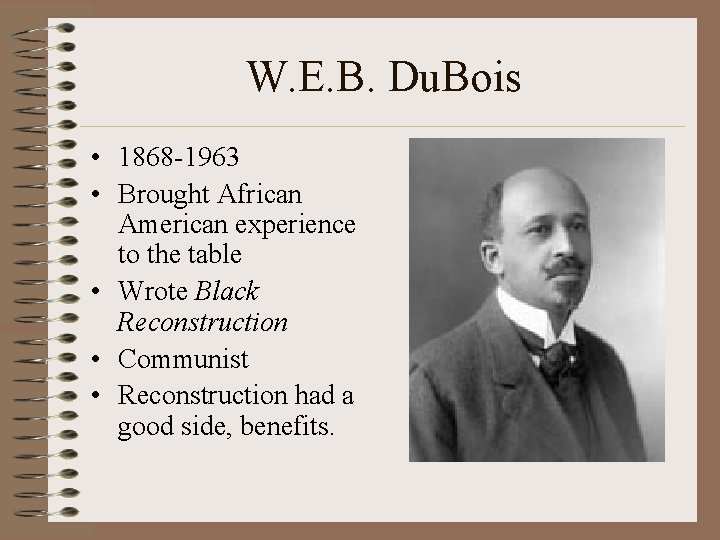
W. E. B. Du. Bois • 1868 -1963 • Brought African American experience to the table • Wrote Black Reconstruction • Communist • Reconstruction had a good side, benefits.
Vernon Parrington • 1871 -1929 • Saw everything in terms of culture and American idealism • Jeffersonian • Wanted to separate states’ rights from slavery issue
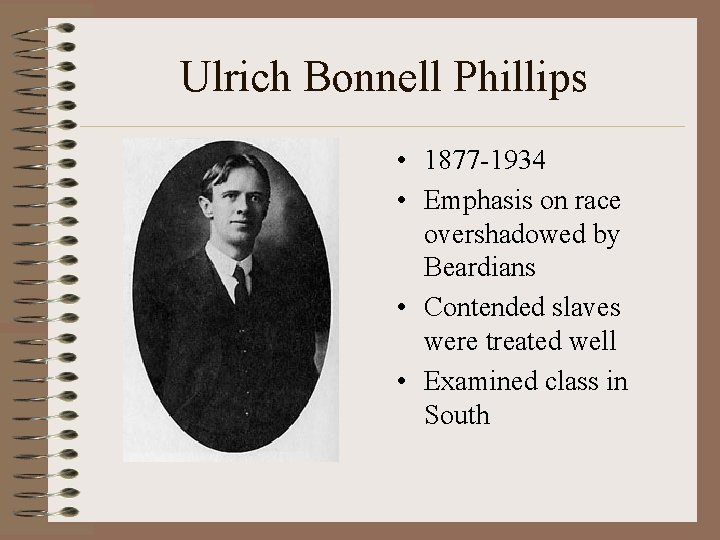
Ulrich Bonnell Phillips • 1877 -1934 • Emphasis on race overshadowed by Beardians • Contended slaves were treated well • Examined class in South
James G. Randall • 1881 -1953 • Argued Civil War a result of failed statesmanship • Analyzed administration and constitutional issues • Wrote Lincoln and the South
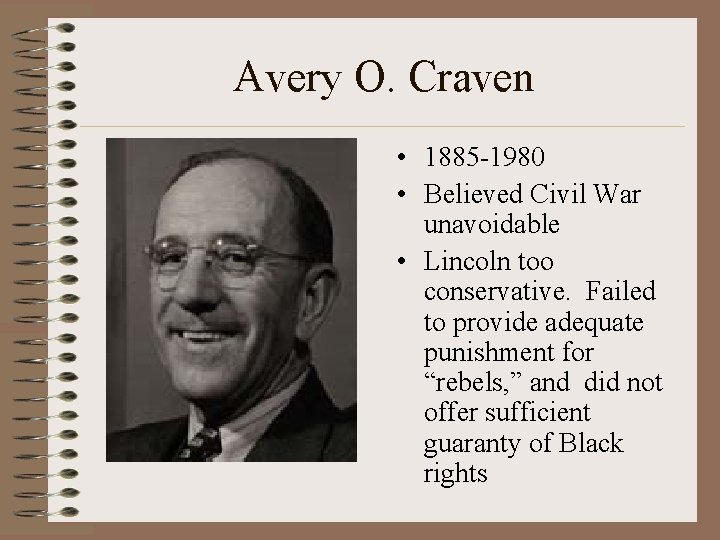
Avery O. Craven • 1885 -1980 • Believed Civil War unavoidable • Lincoln too conservative. Failed to provide adequate punishment for “rebels, ” and did not offer sufficient guaranty of Black rights
Alrutheus A. Taylor • 1893 -1955 • African American historian • Academic dean at Fisk • Study of African. Americans • Destroying stereotypes of 'sambo, ' the ignorant of the carpetbaggers. "
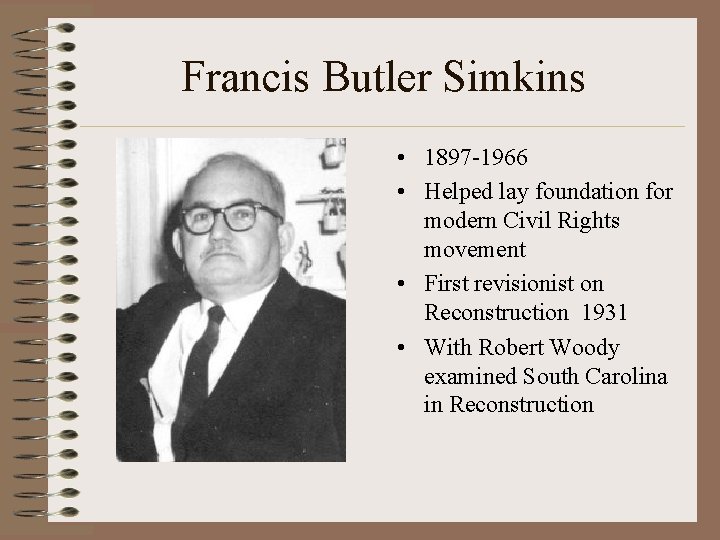
Francis Butler Simkins • 1897 -1966 • Helped lay foundation for modern Civil Rights movement • First revisionist on Reconstruction 1931 • With Robert Woody examined South Carolina in Reconstruction
Revisionist Historians • Second Reconstruction Era: 1950’s and 1960’s • African-Americans at center of issue • Andrew Johnson now a pig-headed racist • Radical Republicans are GOOD guys! • Reconstruction had positive effects! • Revolutionary impulse thwarted
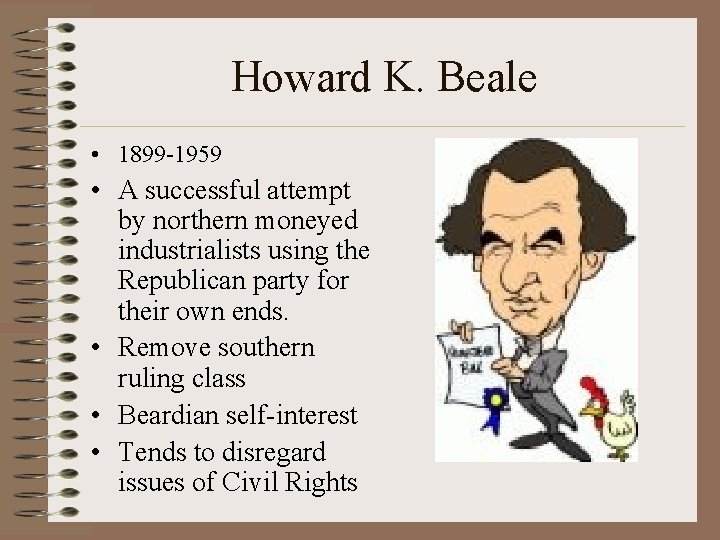
Howard K. Beale • 1899 -1959 • A successful attempt by northern moneyed industrialists using the Republican party for their own ends. • Remove southern ruling class • Beardian self-interest • Tends to disregard issues of Civil Rights
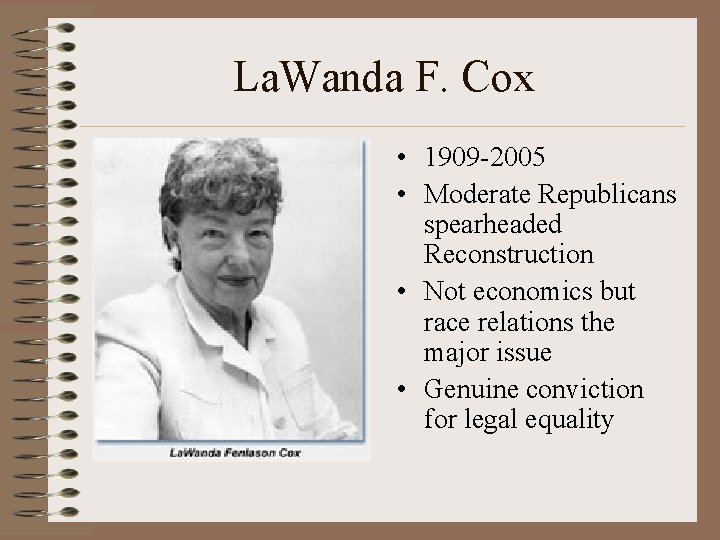
La. Wanda F. Cox • 1909 -2005 • Moderate Republicans spearheaded Reconstruction • Not economics but race relations the major issue • Genuine conviction for legal equality
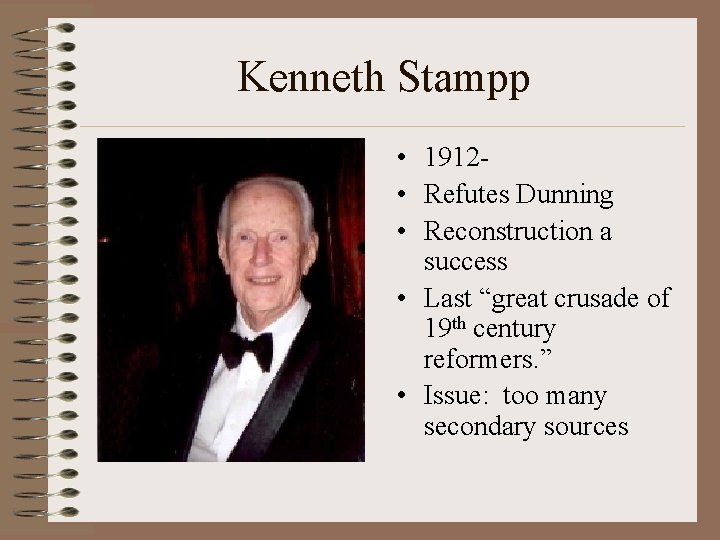
Kenneth Stampp • 1912 • Refutes Dunning • Reconstruction a success • Last “great crusade of 19 th century reformers. ” • Issue: too many secondary sources
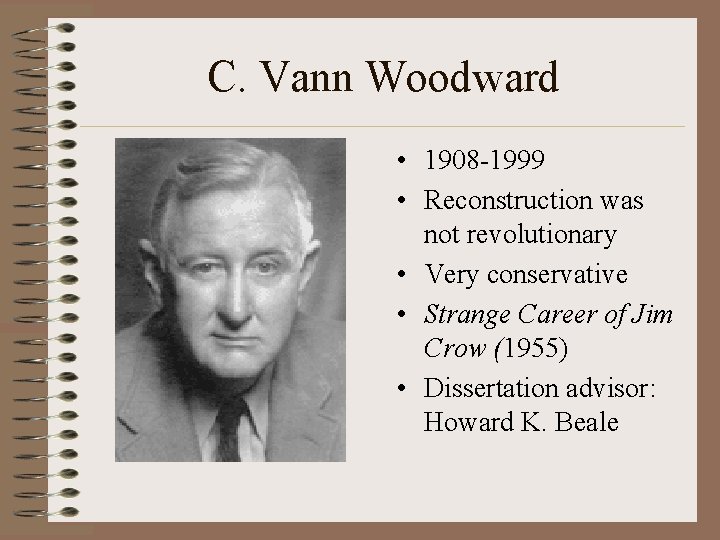
C. Vann Woodward • 1908 -1999 • Reconstruction was not revolutionary • Very conservative • Strange Career of Jim Crow (1955) • Dissertation advisor: Howard K. Beale
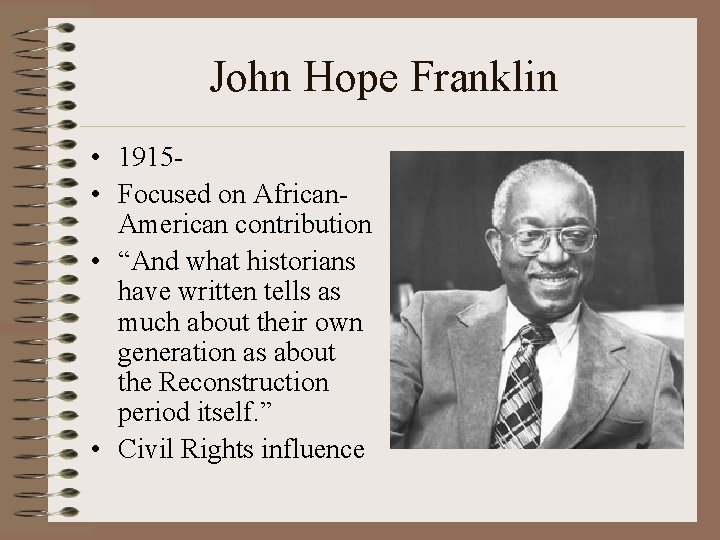
John Hope Franklin • 1915 • Focused on African. American contribution • “And what historians have written tells as much about their own generation as about the Reconstruction period itself. ” • Civil Rights influence
Post-revisionism • 1970’s • Racial prejudice compromised efforts to aid freedmen. • Reconstruction was “superficial” • New South just continuation of Old South • Reconstruction was conservative and not revolutionary at all!
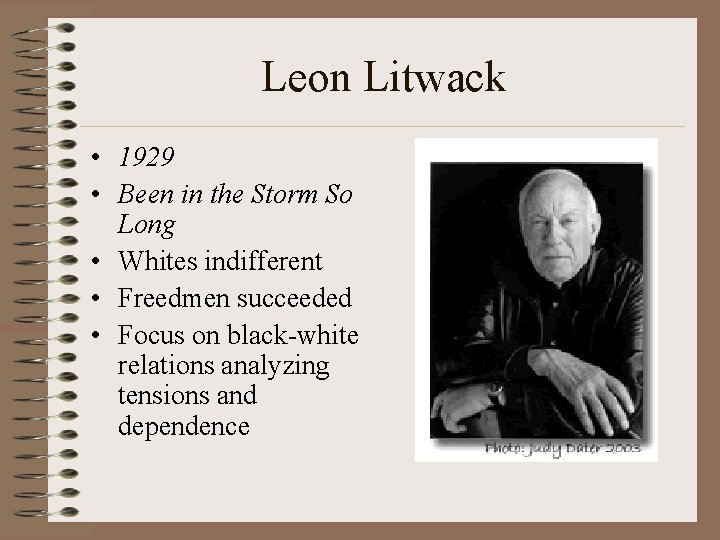
Leon Litwack • 1929 • Been in the Storm So Long • Whites indifferent • Freedmen succeeded • Focus on black-white relations analyzing tensions and dependence
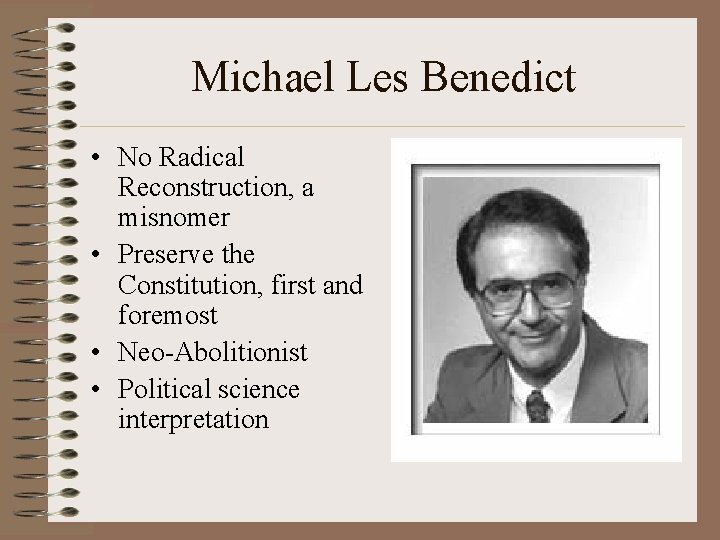
Michael Les Benedict • No Radical Reconstruction, a misnomer • Preserve the Constitution, first and foremost • Neo-Abolitionist • Political science interpretation
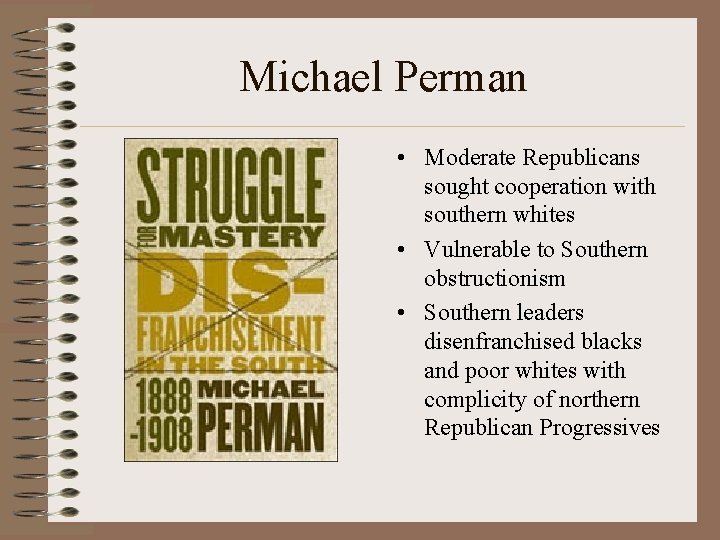
Michael Perman • Moderate Republicans sought cooperation with southern whites • Vulnerable to Southern obstructionism • Southern leaders disenfranchised blacks and poor whites with complicity of northern Republican Progressives
Cultural History • • Late 80’s into 90’s Emphasis on what certain groups did Did Blacks in power ignore Black issues? Issue not integration/segregation, but land. Need comparative studies Alienation ignored in favor of nationalism Class formation and transformation, not race
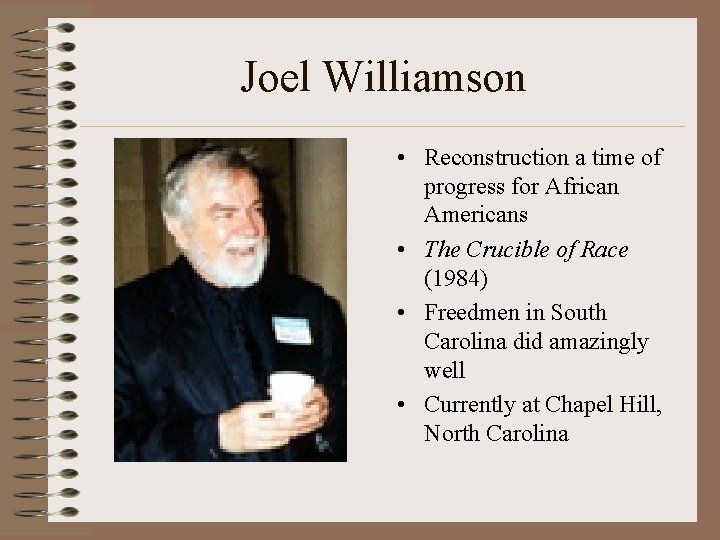
Joel Williamson • Reconstruction a time of progress for African Americans • The Crucible of Race (1984) • Freedmen in South Carolina did amazingly well • Currently at Chapel Hill, North Carolina
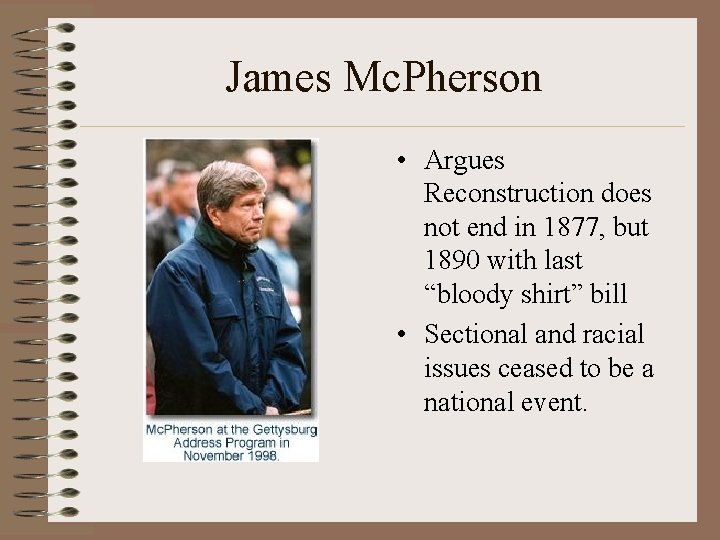
James Mc. Pherson • Argues Reconstruction does not end in 1877, but 1890 with last “bloody shirt” bill • Sectional and racial issues ceased to be a national event.
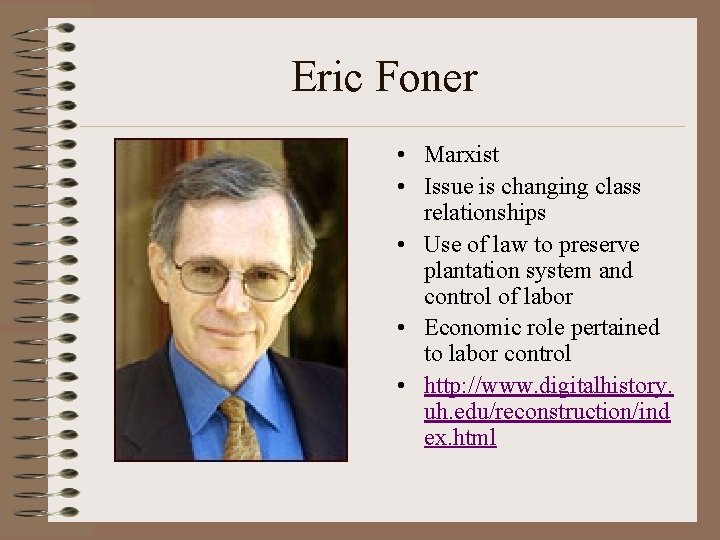
Eric Foner • Marxist • Issue is changing class relationships • Use of law to preserve plantation system and control of labor • Economic role pertained to labor control • http: //www. digitalhistory. uh. edu/reconstruction/ind ex. html
The End