Characteristics of Vitamins Very small amounts are needed


- Slides: 34
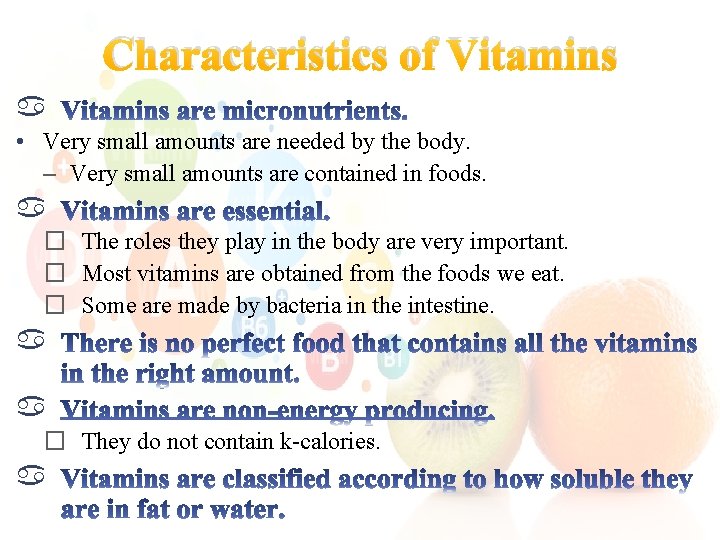
Characteristics of Vitamins • Very small amounts are needed by the body. – Very small amounts are contained in foods. � The roles they play in the body are very important. � Most vitamins are obtained from the foods we eat. � Some are made by bacteria in the intestine. � They do not contain k-calories.
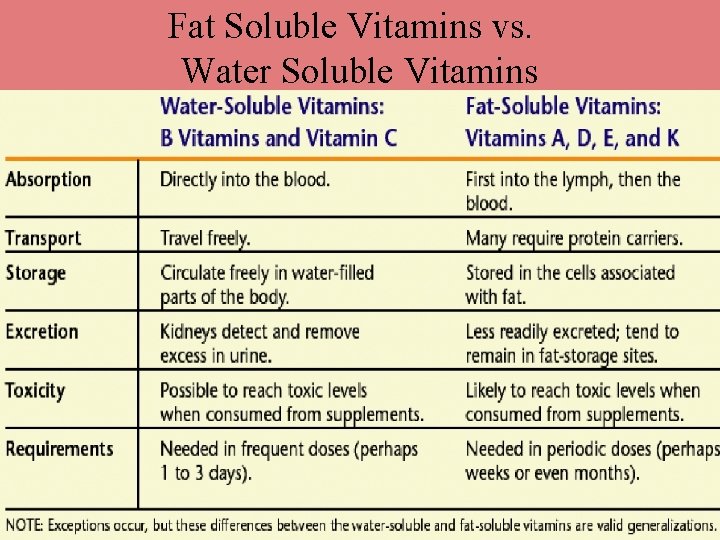
Fat Soluble Vitamins vs. Water Soluble Vitamins
Fat-Soluble Vitamins ¯Found in fats and oils. ¯Require bile for absorption. ¯Enter the lymph, then the blood. ¯Held and stored in fatty tissues. ¯Needed in small amounts. ¯May reach toxic levels. ØNot readily excreted.
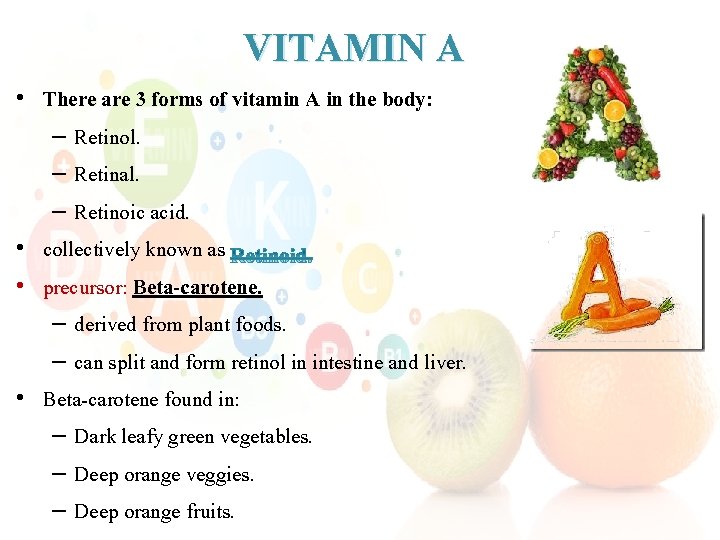
VITAMIN A • There are 3 forms of vitamin A in the body: – Retinol. – Retinal. – Retinoic acid. • collectively known as • precursor: Beta-carotene. – derived from plant foods. – can split and form retinol in intestine and liver. • Beta-carotene found in: – Dark leafy green vegetables. – Deep orange veggies. – Deep orange fruits.
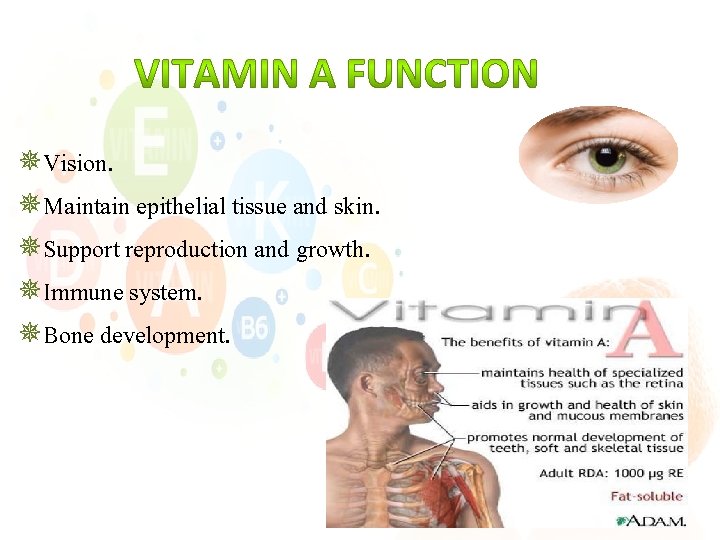
¯Vision. ¯Maintain epithelial tissue and skin. ¯Support reproduction and growth. ¯Immune system. ¯Bone development.
Vitamin A • Deficiency: – Infectious disease. • Pneumonia, measles, diarrhea – Keratinization. • Dry, rough, scaly skin. – Night blindness.
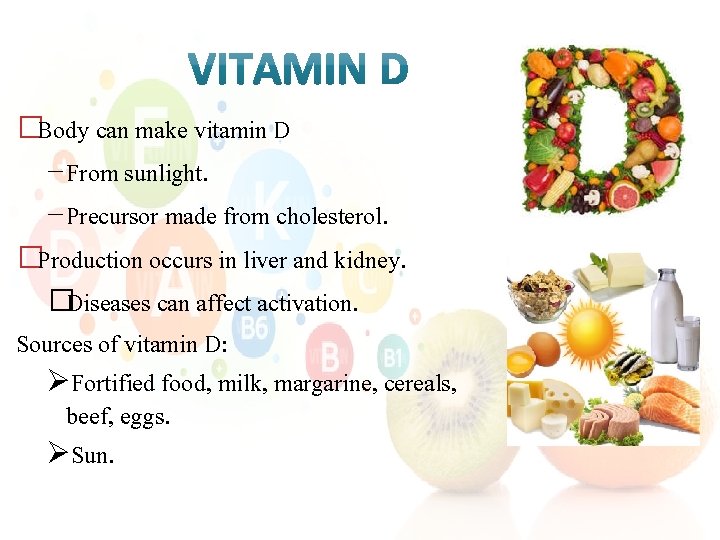
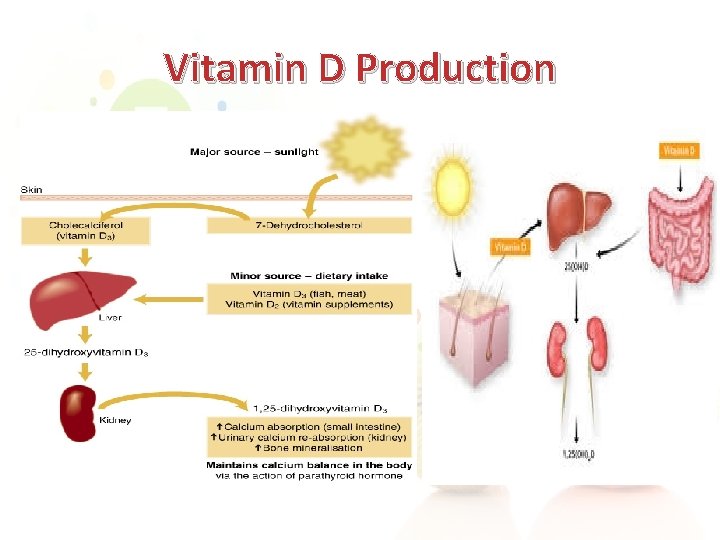
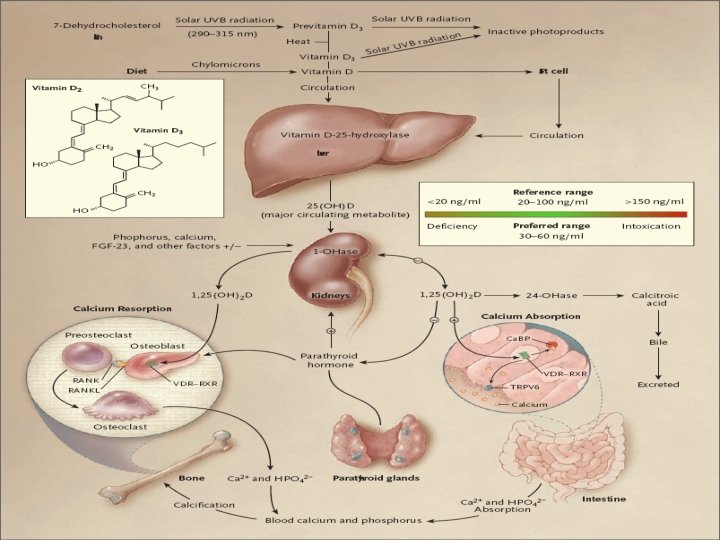
�Body can make vitamin D − From sunlight. − Precursor made from cholesterol. �Production occurs in liver and kidney. �Diseases can affect activation. Sources of vitamin D: ØFortified food, milk, margarine, cereals, beef, eggs. ØSun.
Vitamin D Production
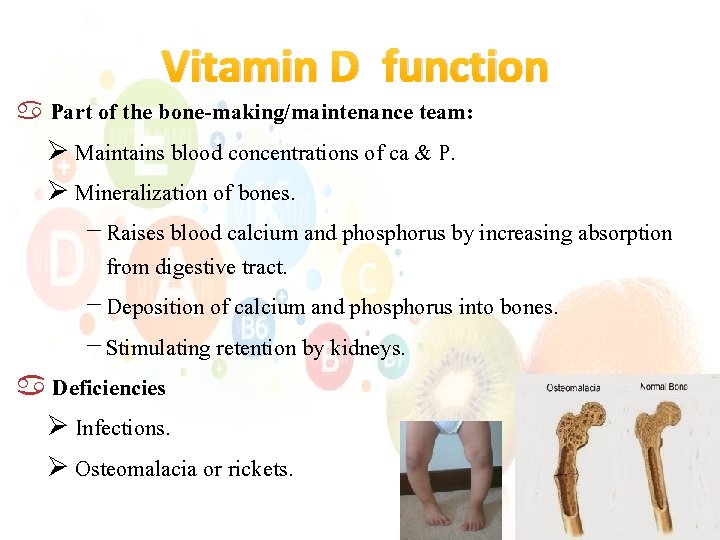
Vitamin D function Part of the bone-making/maintenance team: Ø Maintains blood concentrations of ca & P. Ø Mineralization of bones. − Raises blood calcium and phosphorus by increasing absorption from digestive tract. − Deposition of calcium and phosphorus into bones. − Stimulating retention by kidneys. Deficiencies Ø Infections. Ø Osteomalacia or rickets.
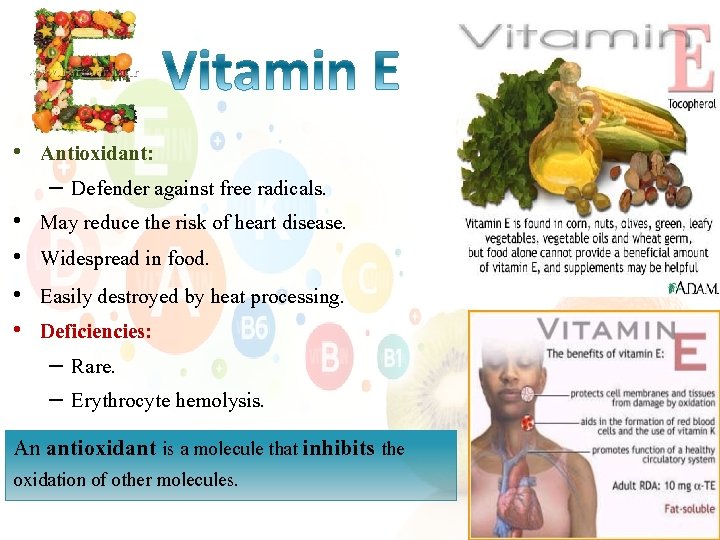
• Antioxidant: – Defender against free radicals. • May reduce the risk of heart disease. • Widespread in food. • Easily destroyed by heat processing. • Deficiencies: – Rare. – Erythrocyte hemolysis. An antioxidant is a molecule that inhibits the oxidation of other molecules.
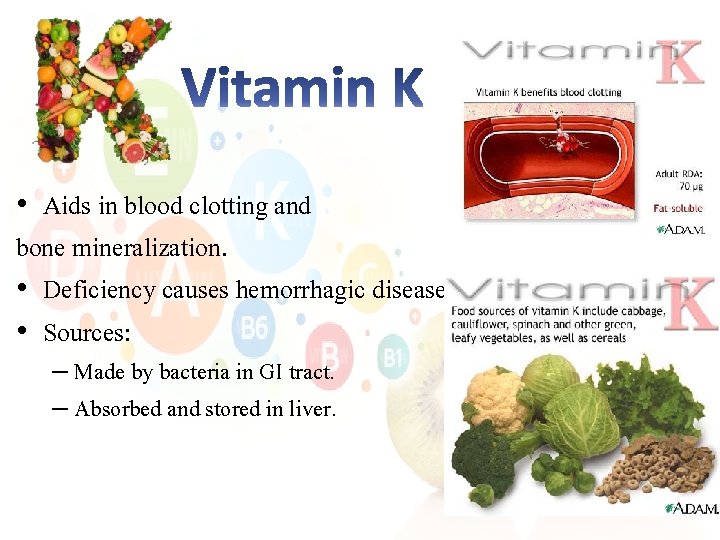
• Aids in blood clotting and bone mineralization. • Deficiency causes hemorrhagic disease. • Sources: – Made by bacteria in GI tract. – Absorbed and stored in liver.
WATER-SOLUBLE VITAMINS
Ø The B-complex vitamins are often associated with giving a person more energy. This is due to the fact that these vitamins each play different roles with energy metabolism in the body. When they are present in the body, they allow energy to be used more readily by the body. Ø Since these vitamins are water soluble, they are not stored in the body like fat soluble vitamins. They dissolve in water and are excreted from the body in urine. Therefore, it is important to consume foods rich in these vitamins each day in order to fulfill the body’s need.
• Co-enzymes (activate enzymes). • Found in the same foods. – Single deficiency rare. • Act together in metabolism. – Metabolic pathways used by protein, carbohydrate, and fat.
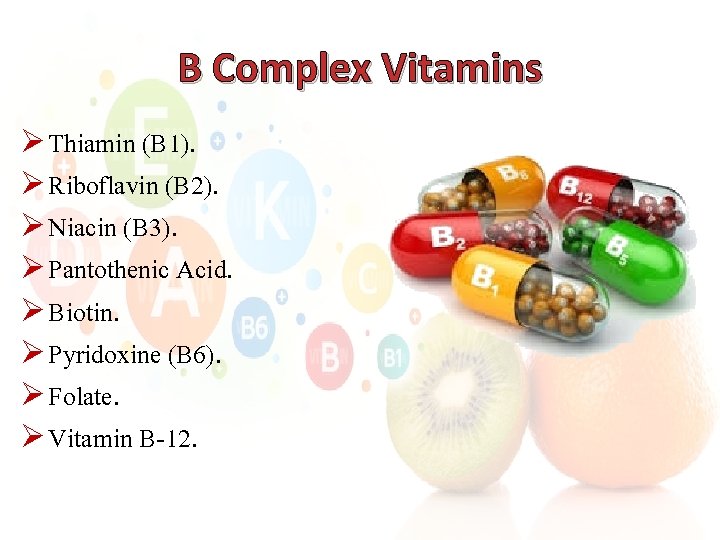
B Complex Vitamins Ø Thiamin (B 1). Ø Riboflavin (B 2). Ø Niacin (B 3). Ø Pantothenic Acid. Ø Biotin. Ø Pyridoxine (B 6). Ø Folate. Ø Vitamin B-12.
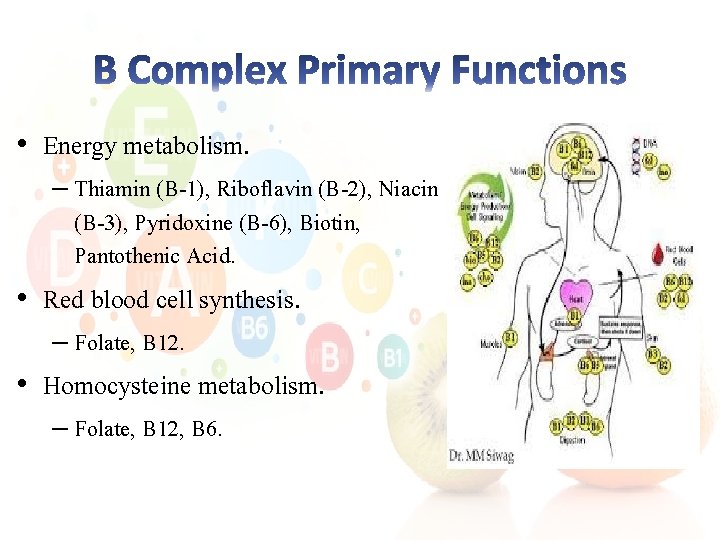
• Energy metabolism. – Thiamin (B-1), Riboflavin (B-2), Niacin (B-3), Pyridoxine (B-6), Biotin, Pantothenic Acid. • Red blood cell synthesis. – Folate, B 12. • Homocysteine metabolism. – Folate, B 12, B 6.
Vitamin C • • Vitamin C (chemical name : ascorbic acid). Synthesized by most animals (not by humans). Decrease absorption with high intakes. Excess excreted.
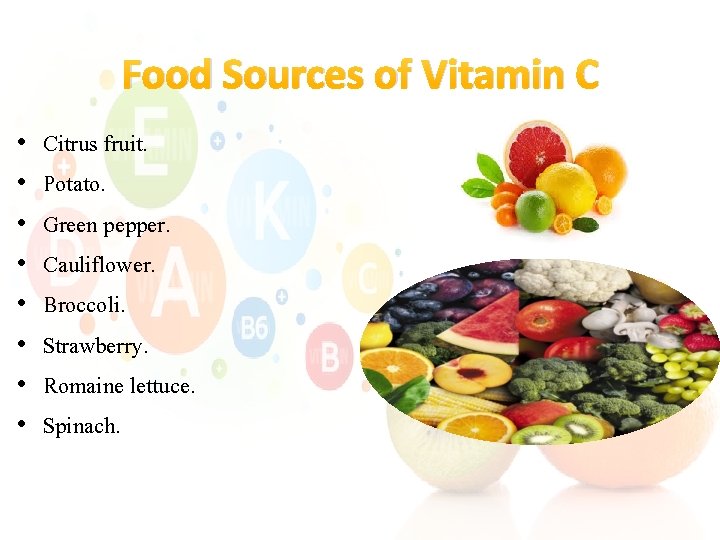
Food Sources of Vitamin C • • Citrus fruit. Potato. Green pepper. Cauliflower. Broccoli. Strawberry. Romaine lettuce. Spinach.
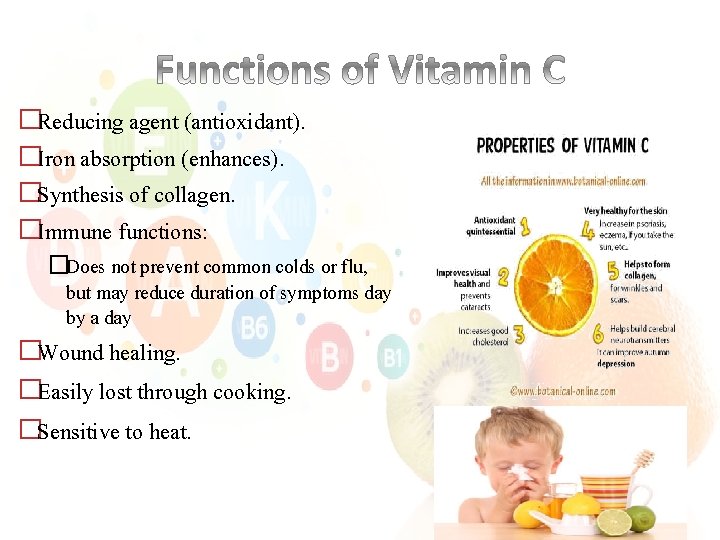
�Reducing agent (antioxidant). �Iron absorption (enhances). �Synthesis of collagen. �Immune functions: �Does not prevent common colds or flu, but may reduce duration of symptoms day by a day �Wound healing. �Easily lost through cooking. �Sensitive to heat.
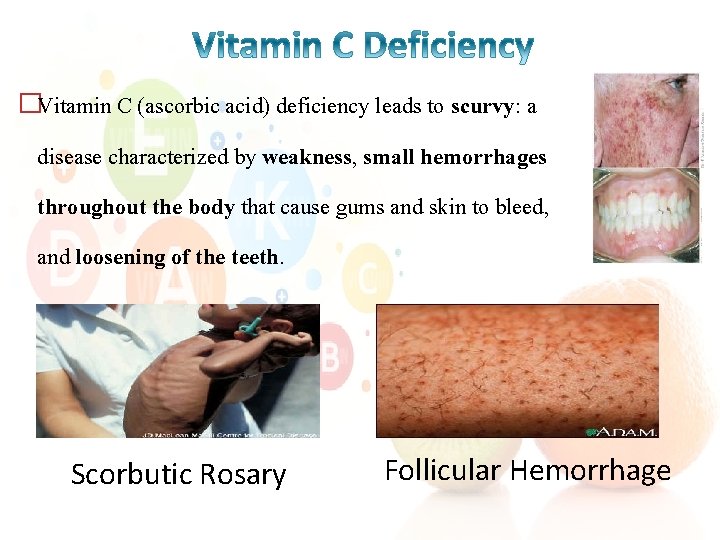
�Vitamin C (ascorbic acid) deficiency leads to scurvy: a disease characterized by weakness, small hemorrhages throughout the body that cause gums and skin to bleed, and loosening of the teeth. Scorbutic Rosary Follicular Hemorrhage
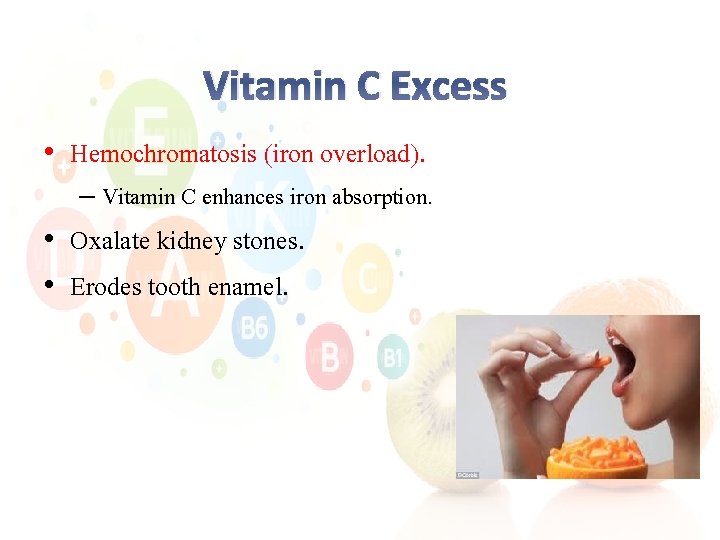
Vitamin C Excess • Hemochromatosis (iron overload). – Vitamin C enhances iron absorption. • Oxalate kidney stones. • Erodes tooth enamel.
Determination of Vitamin C (Ascorbic Acid) Concentration by a Redox Titration with Potassium Iodate (KIO 3) 24
Ø Objective: • To determine vitamin C (C 6 H 8 O 6) by potassium iodate titration. • Vitamin C is sometimes called an anti-oxidant (i. e. , a reducing agent) by pharmacists and food nutritionists. • A suitable method for the determination of vitamin C (C 6 H 8 O 6) quantities is a titration with potassium iodate (KIO 3). • Iodometric titrations. In "iodometric" titrations, the analyte is first reduced with an excess of Iˉ, producing I² (actually, I 3 -) which turns blue in the presence of starch.
• Potassium iodate is used as a titrant and it is added to an ascorbic acid solution that contains strong acid and potassium iodide (KI). • Potassium iodate reacts with HCl in presence of potassium iodide, liberating molecular iodine (I²). • Iodine rapidly oxidizes ascorbic acid, to produce de-hydroascorbic acid (C 6 H 8 O 6). • The addition of acid is necessary to provide the acidic conditions required in reaction above. �Potassium iodide must be added in excess to keep iodine dissolved.
�Once all the ascorbic acid has been consumed, any excess iodine will remain in solution. Since aqueous iodine solutions are brown in color, iodine can act as its own indicator. �However, it is quite difficult to detect endpoints using iodine coloration alone, and it is more usual to add starch, which forms an intensely blue colored complex with iodine but not with the iodide ion. �The endpoint of the titration is the first permanent trace of a dark blue-black color due to the starch-iodine complex.
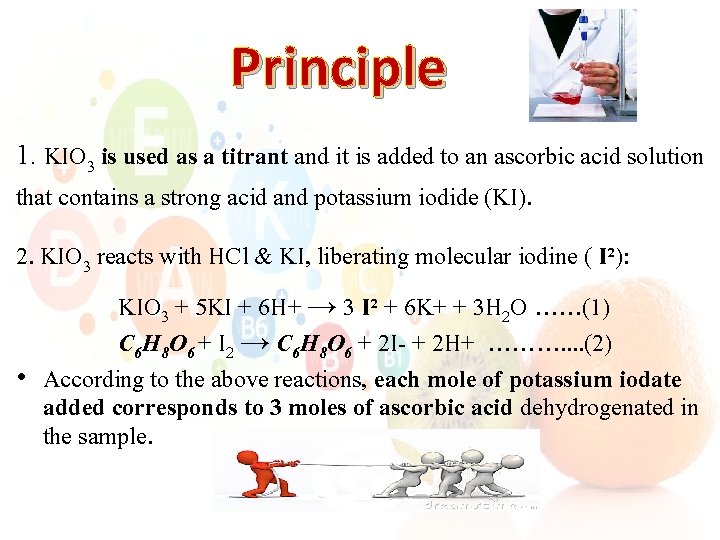
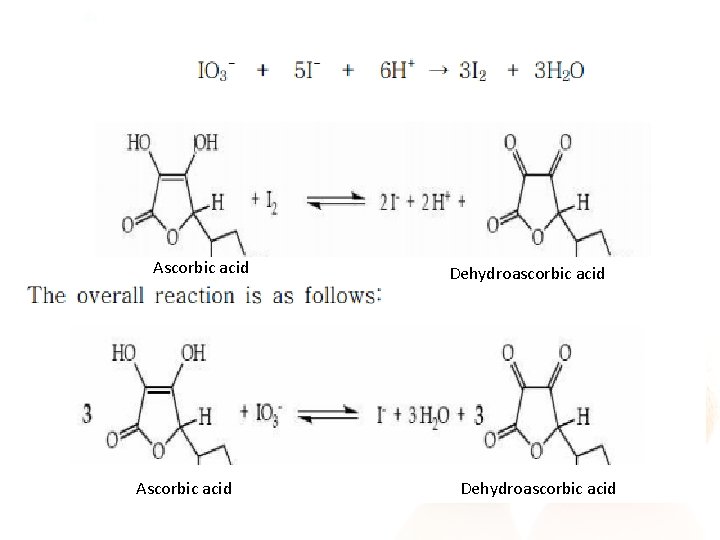
Principle 1. KIO 3 is used as a titrant and it is added to an ascorbic acid solution that contains a strong acid and potassium iodide (KI). 2. KIO 3 reacts with HCl & KI, liberating molecular iodine ( I²): KIO 3 + 5 KI + 6 H+ → 3 I² + 6 K+ + 3 H 2 O ……(1) C 6 H 8 O 6 + I 2 → C 6 H 8 O 6 + 2 I- + 2 H+ ………. . (2) • According to the above reactions, each mole of potassium iodate added corresponds to 3 moles of ascorbic acid dehydrogenated in the sample.
Ascorbic acid Dehydroascorbic acid
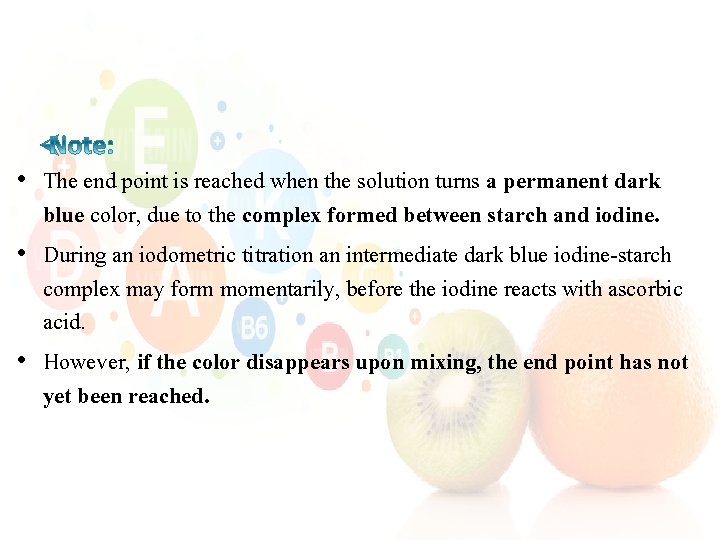
• The end point is reached when the solution turns a permanent dark blue color, due to the complex formed between starch and iodine. • During an iodometric titration an intermediate dark blue iodine-starch complex may form momentarily, before the iodine reacts with ascorbic acid. • However, if the color disappears upon mixing, the end point has not yet been reached.
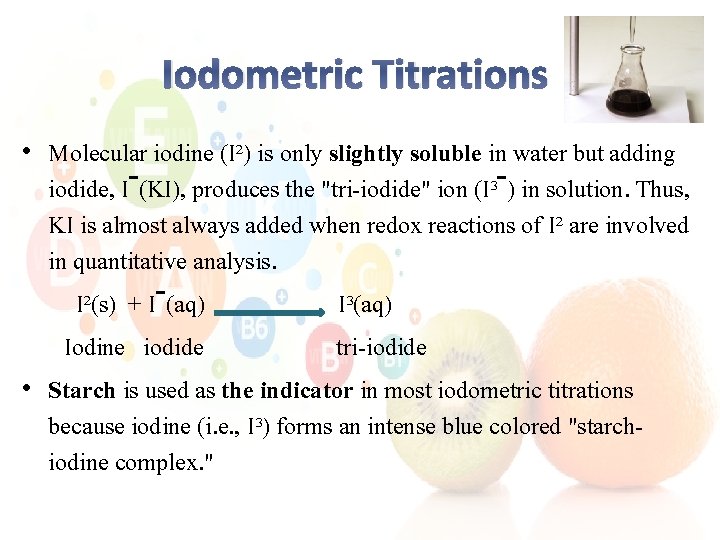
Iodometric Titrations • Molecular iodine (I²) is only slightly soluble in water but adding iodide, Iˉ(KI), produces the "tri-iodide" ion (I³ˉ) in solution. Thus, KI is almost always added when redox reactions of I² are involved in quantitative analysis. I²(s) + Iˉ(aq) I³(aq) Iodine iodide tri-iodide • Starch is used as the indicator in most iodometric titrations because iodine (i. e. , I³) forms an intense blue colored "starchiodine complex. "
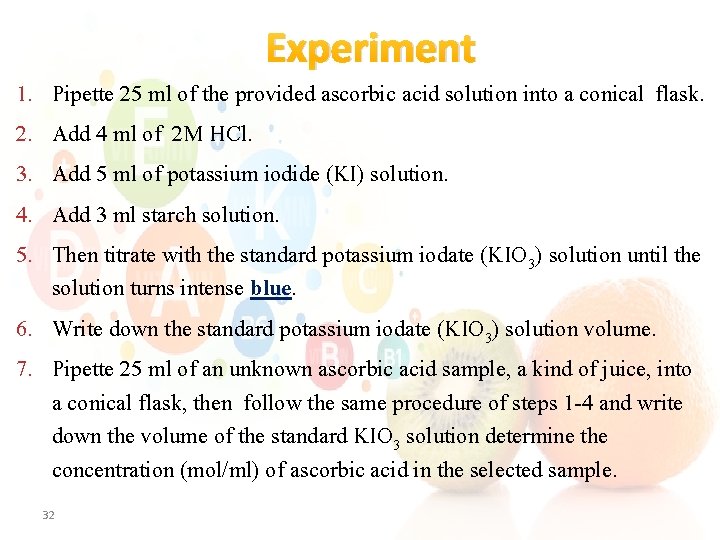
Experiment 1. 2. 3. 4. 5. Pipette 25 ml of the provided ascorbic acid solution into a conical flask. Add 4 ml of 2 M HCl. Add 5 ml of potassium iodide (KI) solution. Add 3 ml starch solution. Then titrate with the standard potassium iodate (KIO 3) solution until the solution turns intense blue. 6. Write down the standard potassium iodate (KIO 3) solution volume. 7. Pipette 25 ml of an unknown ascorbic acid sample, a kind of juice, into a conical flask, then follow the same procedure of steps 1 -4 and write down the volume of the standard KIO 3 solution determine the concentration (mol/ml) of ascorbic acid in the selected sample. 32
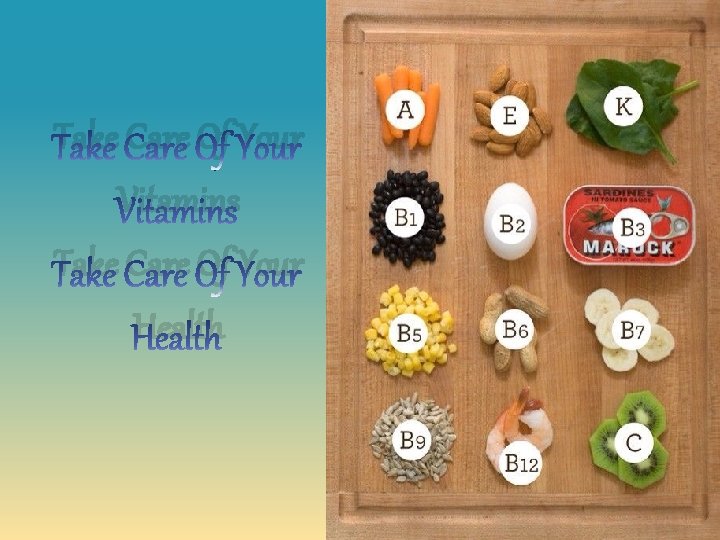
Take Care Of Your Vitamins Take Care Of Your Health