
Nutrition for Foodservice and Culinary Professionals Chapter 6






- Slides: 38
Nutrition for Foodservice and Culinary Professionals Chapter 6 Vitamins © 2017 John Wiley & Sons, Inc. All rights reserved.
Learning Objectives � Identify characteristics of vitamins, including which vitamins are low in the American diet. � Identify functions and food sources of: � Vitamin A � Vitamin D � Vitamin E � Vitamin C � Thiamin, riboflavin, and niacin � Vitamin B 6 � Folate and vitamin B 12 © 2017 John Wiley & Sons, Inc. All rights reserved.
Learning Objectives (cont’d. ) � Identify guidelines for purchasing dietary supplements, including when they are appropriate. � Prepare and present creative and healthy menu dishes using fruits and vegetables, including why fruits and vegetables are important nutritionally. © 2017 John Wiley & Sons, Inc. All rights reserved.
Basics of Vitamins � Vitamins = organic substances that carry out processes in the body that are vital to health 1. Vitamins are not repeating units. 2. Very small amounts are needed—and only small amounts are in foods. 3. Vitamins have very important roles in the body. 4. Most vitamins are obtained by eating foods —some are made by intestinal bacteria and one is made in the skin in sunlight. Sometimes a form of a vitamin in food is a precursor. © 2017 John Wiley & Sons, Inc. All rights reserved.
Basics of Vitamins (cont’d) There is no perfect food that contains all the vitamins in just the right amounts. 6. Vitamins have no kcalories, but they are involved in extracting energy from carbohydrates, fat, and protein. 7. Fresh fruits and veggies are rich in vitamins, but they lose vitamins as they lose their freshness. 8. Whereas you absorb most of the carb you eat, vitamins are absorbed to varying degrees (bioavailability). 5. © 2017 John Wiley & Sons, Inc. All rights reserved.
Two Categories of Vitamins � Fat-soluble ◦ Occur in foods containing fats ◦ Stored in the body until needed ◦ Include vitamins A, D, E, and K ◦ Absorbed and transported around the body in the same way as fats � Water-soluble ◦ Includes vitamin C and Bcomplex vitamins ◦ B vitamins work in every cell where they function as part of coenzymes ◦ A coenzyme combines with an enzyme to allow the enzyme to do its job ◦ The body stores for varying periods of time ◦ Need to be taken in regularly © 2017 John Wiley & Sons, Inc. All rights reserved.
Water-Soluble Vitamins ◦ ◦ ◦ ◦ ◦ Vitamin C Thiamin Riboflavin Niacin Vitamin B 6 Folate Vitamin B 12 Pantothenic acid Biotin © 2017 John Wiley & Sons, Inc. All rights reserved.
Vitamins: Too Little �Americans don’t get enough of these vitamins: ◦ Vitamin A ◦ Vitamin D ◦ Vitamin E ◦ Folate ◦ Vitamin C �Which is the most serious deficiency? Vitamin D © 2017 John Wiley & Sons, Inc. All rights reserved.
Vitamins: Too Much �Tolerable Upper Intake Level (UL) – maximum you should take in of a vitamin. �Vitamins are normally toxic only when you have taken in too many supplements – not food. �The most toxic vitamin in excess: vitamin D. © 2017 John Wiley & Sons, Inc. All rights reserved.
Vitamin A � Functions: Food Sources: ◦ Fat-soluble vitamin; ◦ Milk and eggs maintains the health ◦ Many red, orange, or of the eye and vision yellow fruits and (prevents night vegetables contain blindness) carotenoids— ◦ Promote healthy skin pigments —some of and surface linings of which can be the lungs, GI tract, etc. converted to vitamin A (such as beta ◦ Supports carotene, which is reproduction, growth, also an antioxidant) and development © 2017 John Wiley & Sons, Inc. All rights reserved.
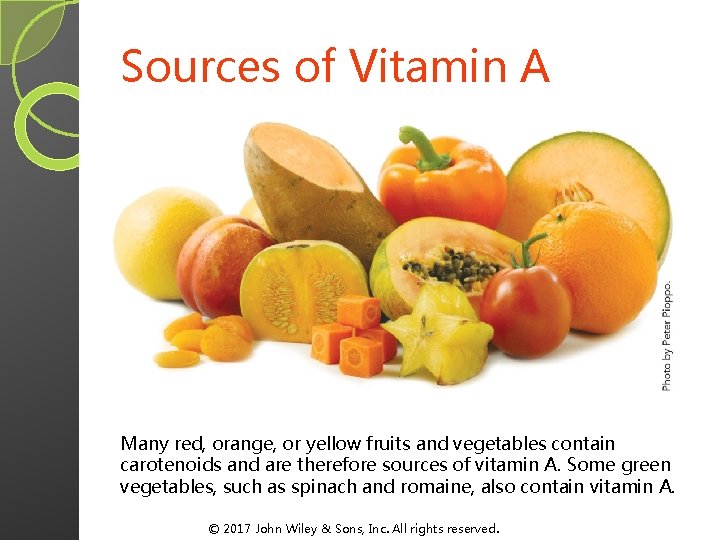
Sources of Vitamin A Many red, orange, or yellow fruits and vegetables contain carotenoids and are therefore sources of vitamin A. Some green vegetables, such as spinach and romaine, also contain vitamin A. © 2017 John Wiley & Sons, Inc. All rights reserved.
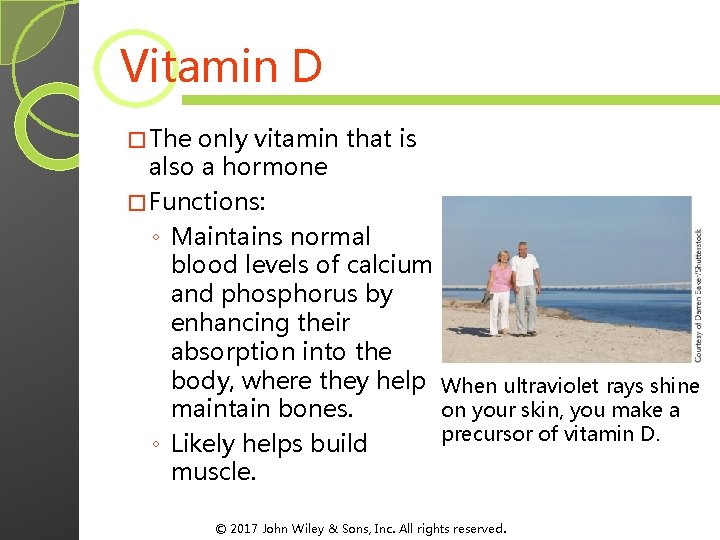
Vitamin D � The only vitamin that is also a hormone � Functions: ◦ Maintains normal blood levels of calcium and phosphorus by enhancing their absorption into the body, where they help When ultraviolet rays shine maintain bones. on your skin, you make a precursor of vitamin D. ◦ Likely helps build muscle. © 2017 John Wiley & Sons, Inc. All rights reserved.
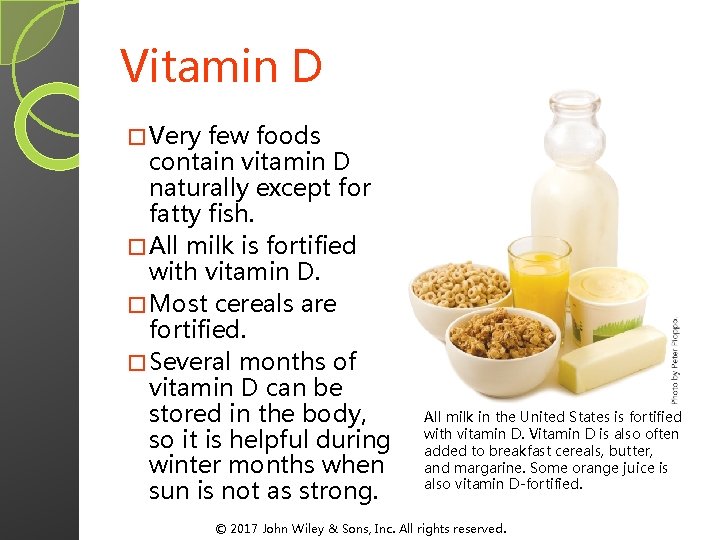
Vitamin D � Very few foods contain vitamin D naturally except for fatty fish. � All milk is fortified with vitamin D. � Most cereals are fortified. � Several months of vitamin D can be stored in the body, so it is helpful during winter months when sun is not as strong. All milk in the United States is fortified with vitamin D. Vitamin D is also often added to breakfast cereals, butter, and margarine. Some orange juice is also vitamin D-fortified. © 2017 John Wiley & Sons, Inc. All rights reserved.
Vitamin D (cont’d) �A majority of adults and many children in the United States do not meet the RDA. � As you get older, the amount of vitamin D your body makes from sun exposure decreases by more than 50 percent. � Vitamin D deficiency in children cause rickets; in adults can cause osteomalacia. � Vitamin D deficiency can contribute to osteoporosis (fragile bones likely to break) —typically seen in older women. � Vitamin D is toxic when taken in excess of the RDA. © 2017 John Wiley & Sons, Inc. All rights reserved.
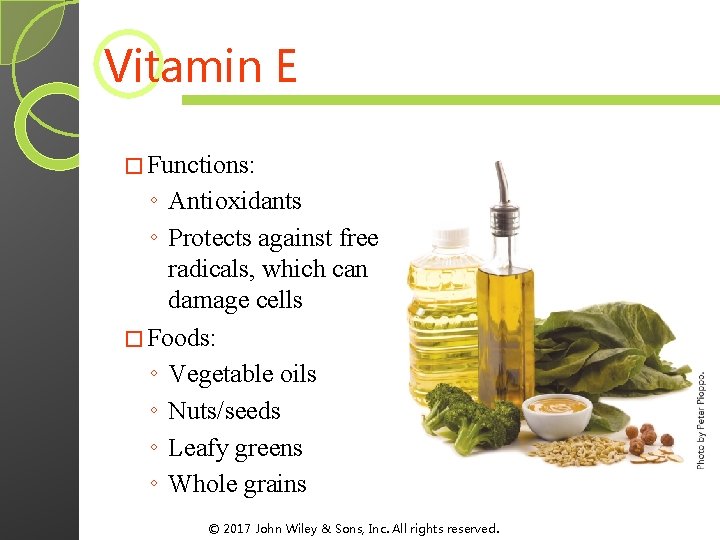
Vitamin E � Functions: ◦ Antioxidants ◦ Protects against free radicals, which can damage cells � Foods: ◦ Vegetable oils ◦ Nuts/seeds ◦ Leafy greens ◦ Whole grains © 2017 John Wiley & Sons, Inc. All rights reserved.
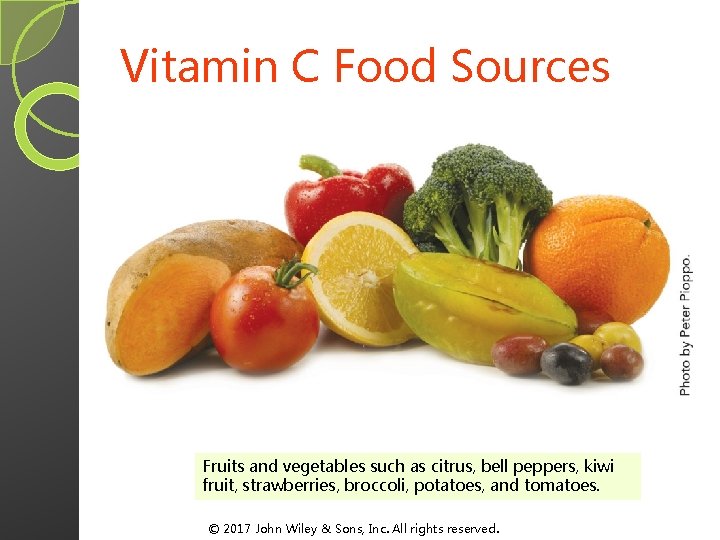
Vitamin C � Functions: ◦ Important to form collagen—a protein substance that provides strength to bones, teeth, skin, etc. and helps heal wounds. Collagen is like cement, holding cells and tissues together. ◦ Makes some hormones. ◦ Stimulates immune system. ◦ Antioxidant. Vitamin C content of food is reduced by prolonged storage and cooking— because it is water-soluble and can be destroyed by heat. � Certain people need more vitamin C: smokers, pregnant and breastfeeding women, children, and anyone with fever or infection. � © 2017 John Wiley & Sons, Inc. All rights reserved.
Vitamin C Food Sources Fruits and vegetables such as citrus, bell peppers, kiwi fruit, strawberries, broccoli, potatoes, and tomatoes. © 2017 John Wiley & Sons, Inc. All rights reserved.
Thiamin, Riboflavin, and Niacin �Functions: Food Sources: ◦ All are part of Thiamin: pork, coenzymes beans, needed to watermelon, extract energy acorn squash from Riboflavin: milk and carbohydrate, milk products, fats, and protein. eggs Niacin: meat, poultry fish, peanut butter, © 2017 John Wiley & Sons, Inc. All rights milk, reserved. and eggs
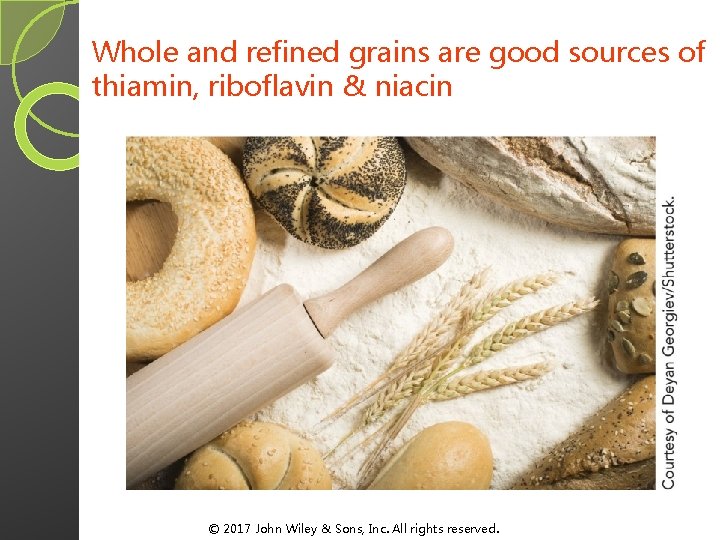
Whole and refined grains are good sources of thiamin, riboflavin & niacin © 2017 John Wiley & Sons, Inc. All rights reserved.
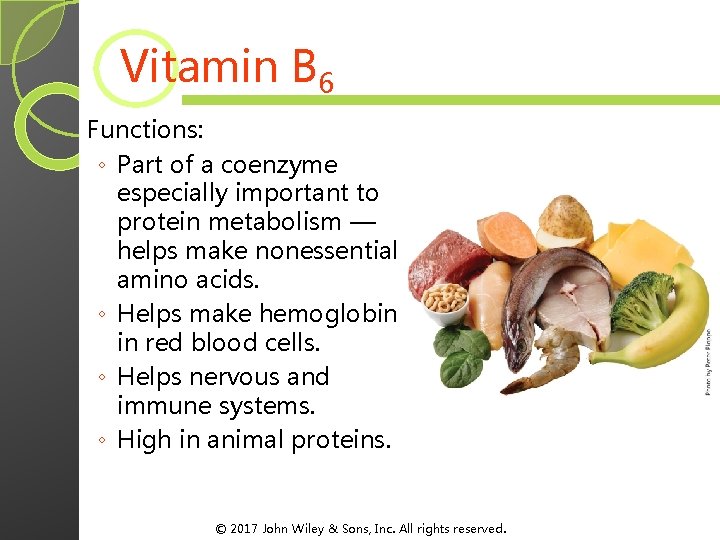
Vitamin B 6 Functions: ◦ Part of a coenzyme especially important to protein metabolism — helps make nonessential amino acids. ◦ Helps make hemoglobin in red blood cells. ◦ Helps nervous and immune systems. ◦ High in animal proteins. © 2017 John Wiley & Sons, Inc. All rights reserved.
Folate and Vitamin B 12 �Functions: ◦ Both are coenzymes that are needed to make new cells. ◦ Vitamin B 12 also is needed to maintain the protective cover around each nerve fiber so your nerves work properly. © 2017 John Wiley & Sons, Inc. All rights reserved.
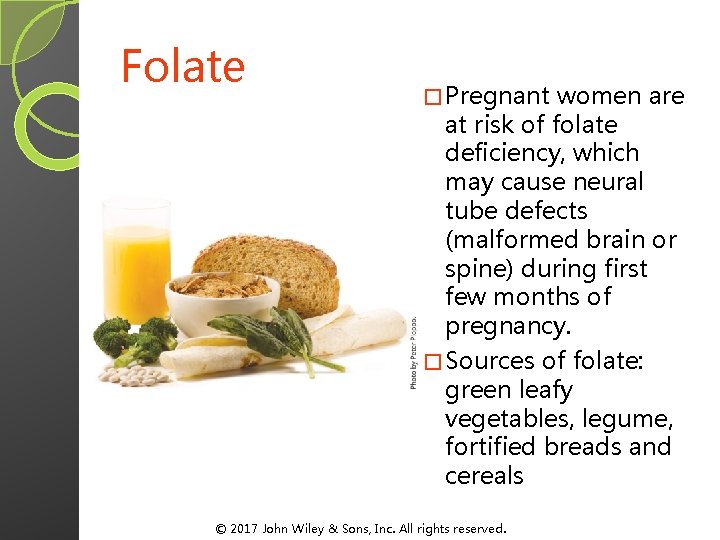
Folate � Pregnant women are at risk of folate deficiency, which may cause neural tube defects (malformed brain or spine) during first few months of pregnancy. � Sources of folate: green leafy vegetables, legume, fortified breads and cereals © 2017 John Wiley & Sons, Inc. All rights reserved.
Vitamin B 12 � Found only in animal foods so could be problem for vegans. � Vitamin B 12 is harder to absorb for elderly, who may need foods fortified with B 12 or supplements that use crystalline vitamin B 12 (easier to absorb). � B 12 deficiency affects nervous system. © 2017 John Wiley & Sons, Inc. All rights reserved.
Vegans need to eat foods fortified with vitamin B 12 such as Soymilk, cold cereals, tofu, and meat substitutes such as sausage or chicken strips. © 2017 John Wiley & Sons, Inc. All rights reserved.
Dietary Supplements � The FDA does not “approve” dietary supplements for safety or effectiveness before they are sold. � Claims that taking a supplement will provide certain health benefits have always been a controversial feature of dietary supplements. Manufacturers often rely on these claims to sell their products. � Dietary supplements are not replacements for conventional diets. Nutritionists recommend food first because foods provide a variety of vitamins and minerals and also dietary factors that are not found in a vitamin or mineral supplement – such as phytochemicals and fiber. © 2017 John Wiley & Sons, Inc. All rights reserved.
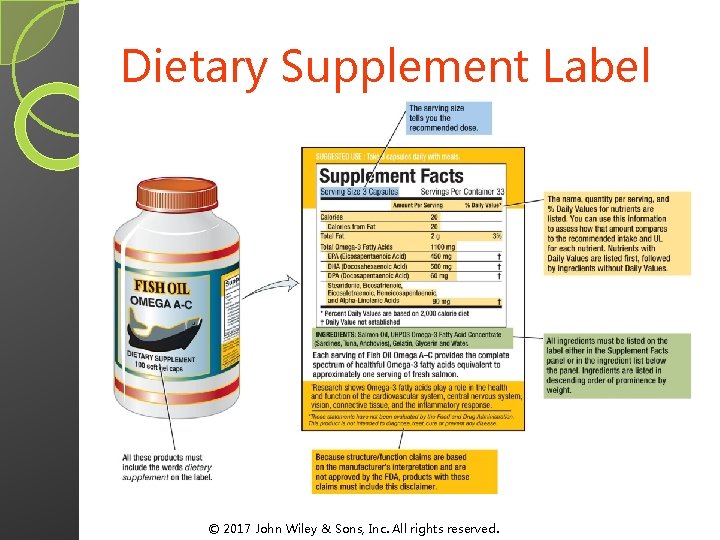
Dietary Supplement Label © 2017 John Wiley & Sons, Inc. All rights reserved.
Tips for Picking a Supplement �Look for “U. S. P. Verified” on the label, or the NSF seal. �Avoid substances that are not known nutrients. �Buy a multivitamin/multiminerals that supplies 100% of the RDA or AI - Taking vitamins and minerals in excess of the RDA can be harmful – such as vitamins A & D. �Buy from a nationally known manufacturer. �Consult your physician. Ask a pharmacist about © 2017 John Wiley & Sons, Inc. possible All rights reserved. interactions.
Tips for Picking a Supplement (cont’d) �Just because a supplement is natural, it does not mean it is safe. �Avoid products that claim to work like prescription drugs, advertise through mass emails, market in other languages, promise weight loss, body-building, or enhanced sexual performance. �Some people need supplements – such as during pregnancy. © 2017 John Wiley & Sons, Inc. All rights reserved.
Culinary Focus: Fruits and Veggies �Three reasons to eat more fruits and vegetables: ◦ Most fruits and vegetables are major contributors of a number of nutrients that are underconsumed—vitamins A and C, folate, dietary fiber, etc. ◦ Consuming them is associated with reduced risk of heart disease and stroke. ◦ Most fruits and vegetables, when prepared without added fats or sugars, are relatively low in kcalories. © 2017 John Wiley & Sons, Inc. All rights reserved.
Tips �To get a healthy variety of fruits and vegetables, think color. �Store fruits and vegetables properly and use at optimum time for freshness, color, flavor, and nutrition. �Keep most fruits and veggies cold. �Do not refrigerate: bananas, whole citrus, hard-rind squash, eggplant, potatoes, sweet potatoes, onions. Also avocados, melons, stone fruits, pears, and tomatoes ripen best at room temp. © 2017 John Wiley & Sons, Inc. All rights reserved.
Ethylene Producers and Ethylene Sensitive Produce © 2017 John Wiley & Sons, Inc. All rights reserved.
Tips (cont’d) � Consider cooking methods such as blanching, stewing, roasting, steaming, grilling, sautéing, baking, boiling, and braising. � When cooking, monitor texture and flavor change. Keep cover off the pot of vegetables such as cabbage, cauliflower, Brussels sprouts. � Do not overcook – cook until just tender but crisp! � Prepare small amounts at a time. � Avoid peeling when possible. © 2017 John Wiley & Sons, Inc. All rights reserved.
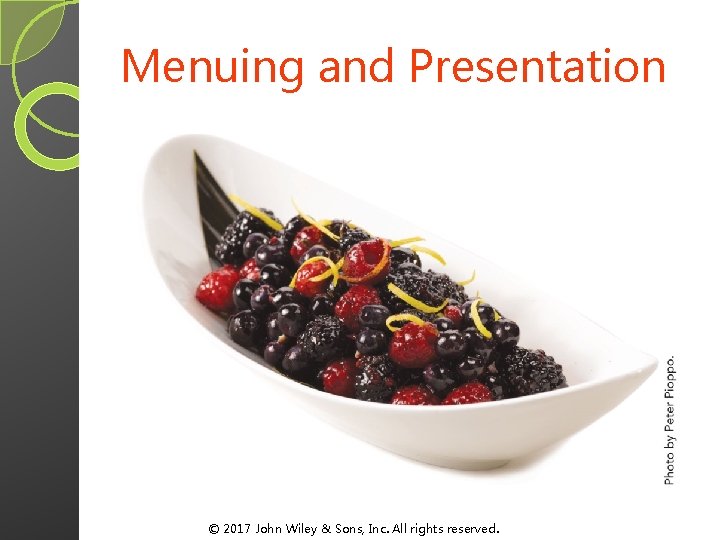
Menuing and Presentation © 2017 John Wiley & Sons, Inc. All rights reserved.
Menuing and Presentation (cont’d) � Fruits are a natural in salads, such as pineapple and raisins with carrots. � Roasted fruits with shallots are a wonderful base on which to place proteins, such as ◦ Chicken paillard (a cutlet pounded and grilled or sautéed) on a bed of roasted peaches and mango with jicama or sautéed bok choy. ◦ Monkfish on a bed of roasted pears, endive, and fennel. � Fruits are a natural for dessert—fresh, roasted, or baked into a cobbler with a oatmeal almond crust. � Berries are great when you want vibrant colors in sauces, purées, toppings, and garnishes. © 2017 John Wiley & Sons, Inc. All rights reserved.
Menuing and Presentation (cont’d) �Vegetables allow you to serve what looks like a big portion with reduced kcalories and no fat or cholesterol. �When using vegetables, be mindful of the season for maximum flavor, visual appeal, and value. Also think variety. �Fermented fruits/vegetables add new flavor profiles. �Olives add exquisite flavor—there are many great varieties, such as Manzanilla or Gaeta. © 2017 John Wiley & Sons, Inc. All rights reserved.
© 2017 John Wiley & Sons, Inc. All rights reserved.
© 2017 John Wiley & Sons, Inc. All rights reserved.
Fermented Fruits and Vegetables �Fermentation: yeast or bacteria convert sugar to acids in fruits/vegetables �Almost any vegetable can be fermented. �Benefits: ◦ Intensifies flavor ◦ Easier to digest ◦ Increases vitamin levels ◦ Keep fresh longer ◦ Healthy for intestines © 2017 John Wiley & Sons, Inc. All rights reserved.