Chapter 8 Segmenting and Targeting Markets MKTG 9


- Slides: 58
Chapter 8 Segmenting and Targeting Markets MKTG 9 Lamb, Hair, and Mc. Daniel © 2016 Cengage Learning. All Rights Reserved.
LEARNING OUTCOMES 8 -1 Describe the characteristics of markets and market segments 8 -2 Explain the importance of market segmentation 8 -3 Discuss the criteria for successful market segmentation 8 -4 Describe the bases commonly used to segment consumer markets 8 -5 Describe the bases for segmenting business markets © 2016 Cengage Learning. All Rights Reserved. 2
LEARNING OUTCOMES 8 -6 List the steps involved in segmenting markets 8 -7 Discuss alternative strategies for selecting target markets 8 -8 Explain how CRM can be used as a targeting tool 8 -9 Explain how and why firms implement positioning strategies and how product differentiation plays a role © 2016 Cengage Learning. All Rights Reserved. 3
8 -1 Markets and Market Segments Describe the characteristics of markets and market segments © 2016 Cengage Learning. All Rights Reserved.
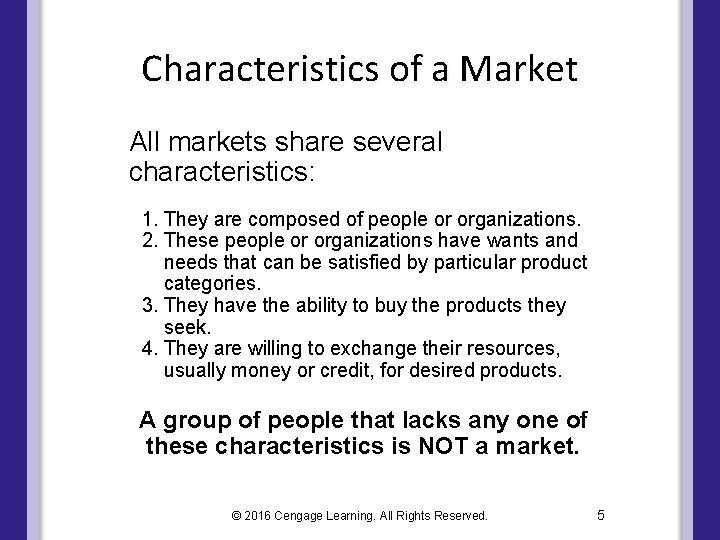
Characteristics of a Market All markets share several characteristics: 1. They are composed of people or organizations. 2. These people or organizations have wants and needs that can be satisfied by particular product categories. 3. They have the ability to buy the products they seek. 4. They are willing to exchange their resources, usually money or credit, for desired products. A group of people that lacks any one of these characteristics is NOT a market. © 2016 Cengage Learning. All Rights Reserved. 5
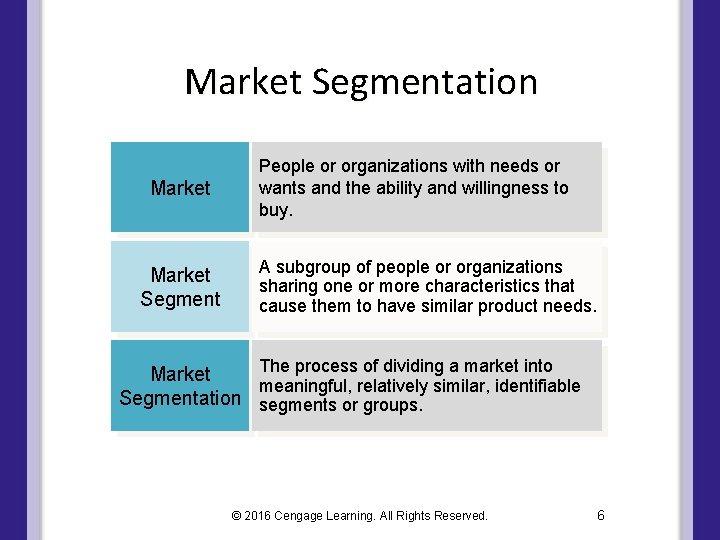
Market Segmentation Market Segment People or organizations with needs or wants and the ability and willingness to buy. A subgroup of people or organizations sharing one or more characteristics that cause them to have similar product needs. The process of dividing a market into Market meaningful, relatively similar, identifiable Segmentation segments or groups. © 2016 Cengage Learning. All Rights Reserved. 6
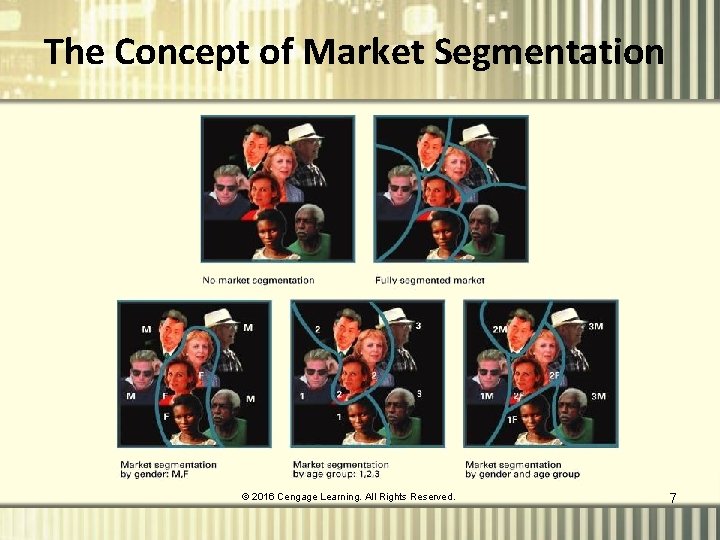
The Concept of Market Segmentation © 2016 Cengage Learning. All Rights Reserved. 7
8 -2 The Importance of Market Segmentation Explain the importance of market segmentation © 2016 Cengage Learning. All Rights Reserved.
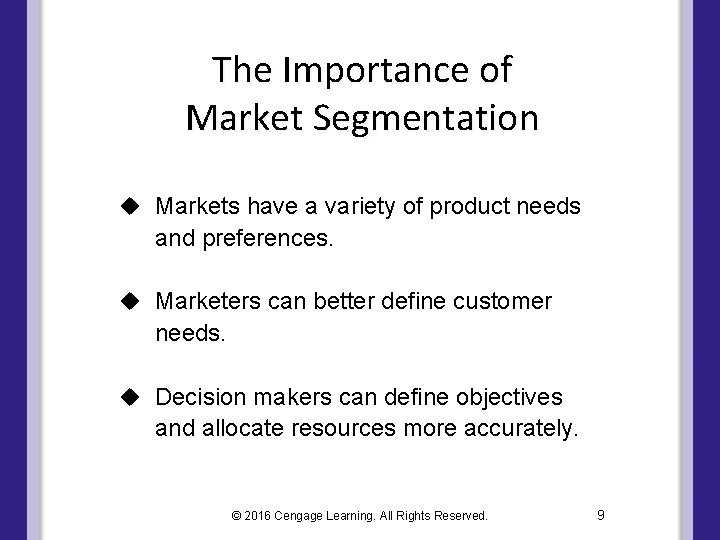
The Importance of Market Segmentation u Markets have a variety of product needs and preferences. u Marketers can better define customer needs. u Decision makers can define objectives and allocate resources more accurately. © 2016 Cengage Learning. All Rights Reserved. 9
8 -3 Criteria for Successful Segmentation Discuss criteria for successful market segmentation © 2016 Cengage Learning. All Rights Reserved.
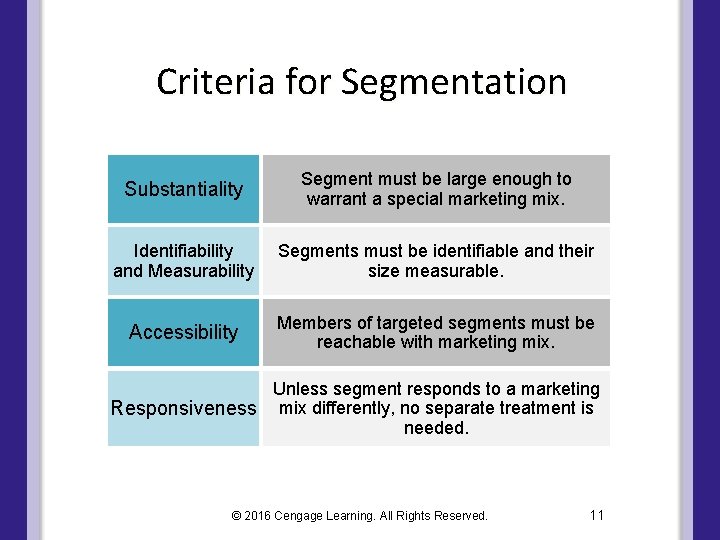
Criteria for Segmentation Substantiality Segment must be large enough to warrant a special marketing mix. Identifiability and Measurability Segments must be identifiable and their size measurable. Accessibility Members of targeted segments must be reachable with marketing mix. Unless segment responds to a marketing Responsiveness mix differently, no separate treatment is needed. © 2016 Cengage Learning. All Rights Reserved. 11
8 -4 Bases for Segmenting Consumer Markets Describe the bases commonly used to segment consumer markets © 2016 Cengage Learning. All Rights Reserved.
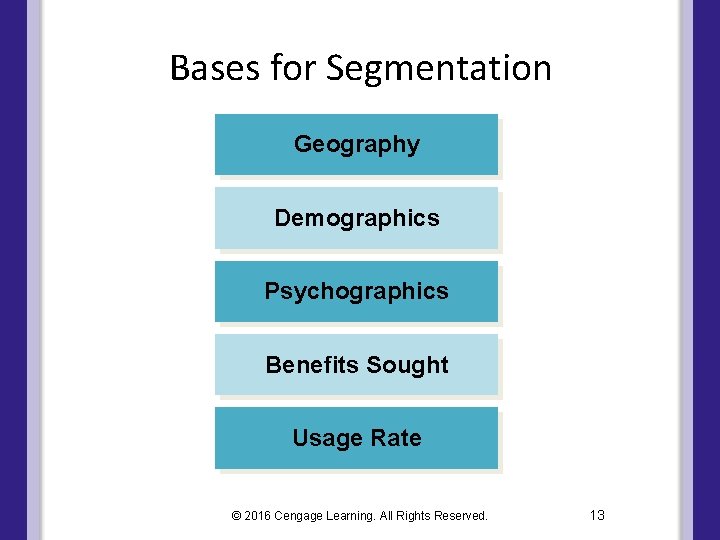
Bases for Segmentation Geography Demographics Psychographics Benefits Sought Usage Rate © 2016 Cengage Learning. All Rights Reserved. 13
Geographic Segmentation u Region of the country or world u Market size u Market density u Climate © 2016 Cengage Learning. All Rights Reserved. 14
Benefits of Regional Segmentation New ways to generate sales in sluggish and competitive markets u Scanner data allow assessment of best selling brands in region u Regional brands appeal to local preferences u Quicker reaction to competition u © 2016 Cengage Learning. All Rights Reserved. 15
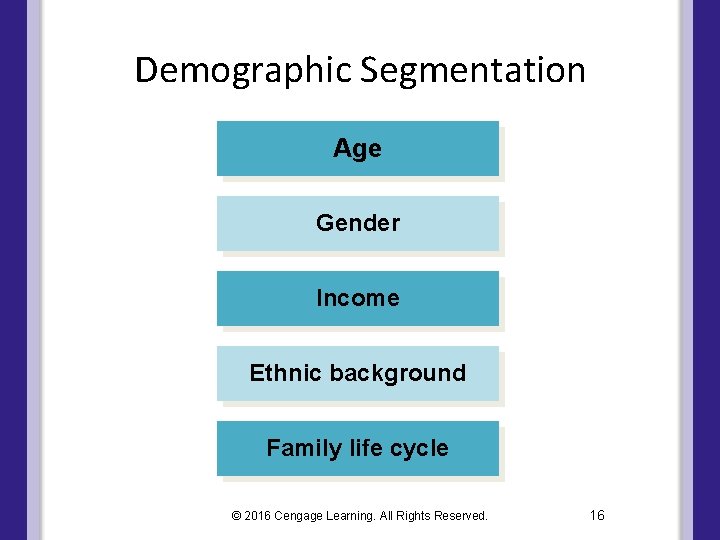
Demographic Segmentation Age Gender Income Ethnic background Family life cycle © 2016 Cengage Learning. All Rights Reserved. 16
Age Segmentation Marketers can segment markets by age using cohorts: • Tweens • Teens • Millennials • Generation X • Baby Boomers • The War Generation • The Great Depression Generation © 2016 Cengage Learning. All Rights Reserved. 17
Gender Segmentation • Women make 85 percent of consumers goods purchases annually. • Marketers of products such as clothing and cosmetics still segment markets by gender, and many of these marketers are going after the less-traditional male market. © 2016 Cengage Learning. All Rights Reserved. 18
Income Segmentation • Income level influences consumers’ wants and determines their buying power. • Retailers can appeal to: – Low-income – High-income – Both © 2016 Cengage Learning. All Rights Reserved. 19
Ethnic Segmentation The three largest ethnic groups in the United States are: u Hispanic Americans u African Americans u Asian Americans To meet the needs and wants of expanding ethnic populations, some companies make products geared toward specific ethnic groups. © 2016 Cengage Learning. All Rights Reserved. 20
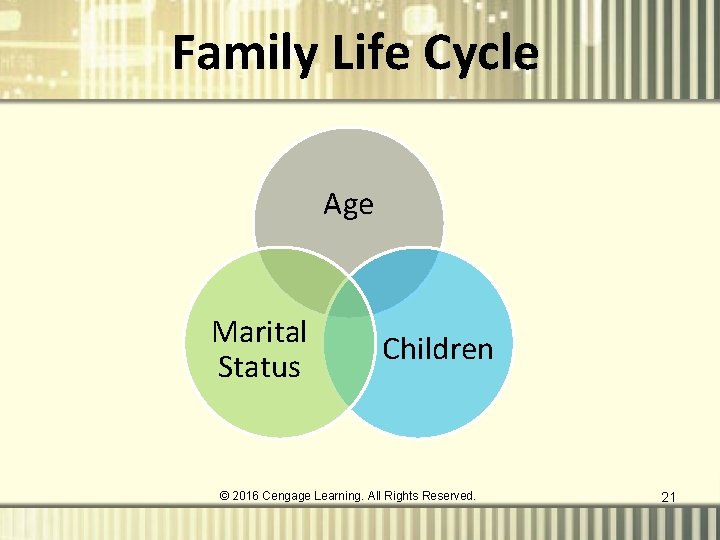
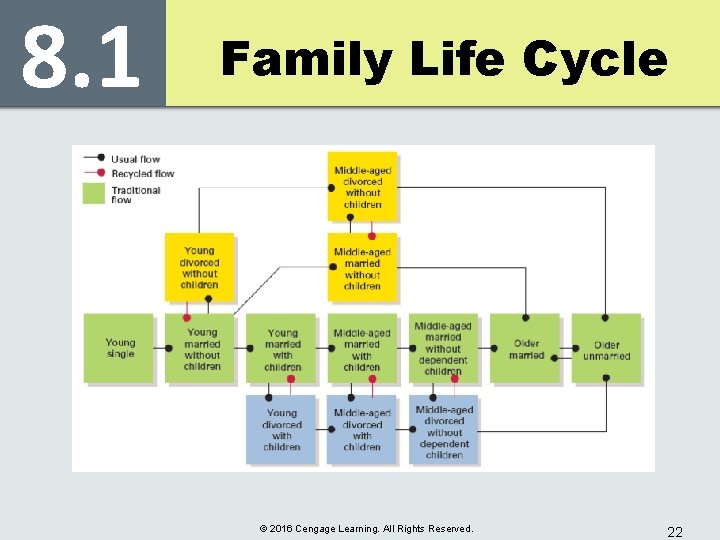
Family Life Cycle Age Marital Status Children © 2016 Cengage Learning. All Rights Reserved. 21
8. 1 Family Life Cycle © 2016 Cengage Learning. All Rights Reserved. 22
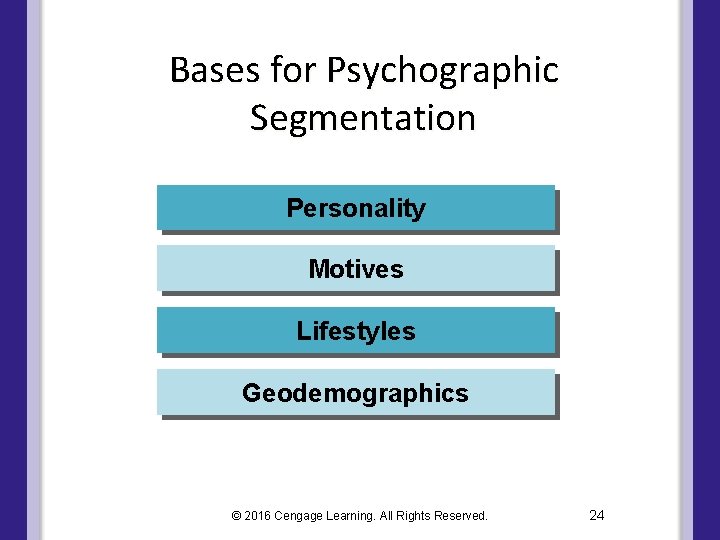
Psychographic Segmentation Market segmentation on the basis of personality, motives, lifestyles, and geodemographics. © 2016 Cengage Learning. All Rights Reserved. 23
Bases for Psychographic Segmentation Personality Motives Lifestyles Geodemographics © 2016 Cengage Learning. All Rights Reserved. 24
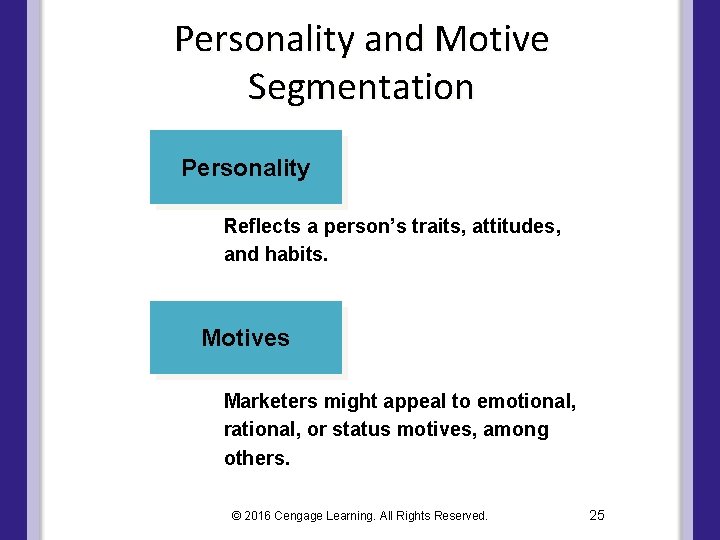
Personality and Motive Segmentation Personality Reflects a person’s traits, attitudes, and habits. Motives Marketers might appeal to emotional, rational, or status motives, among others. © 2016 Cengage Learning. All Rights Reserved. 25
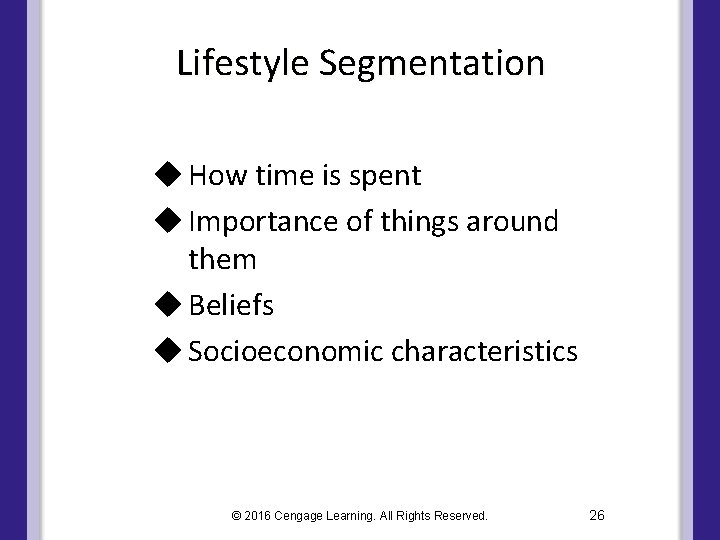
Lifestyle Segmentation u How time is spent u Importance of things around them u Beliefs u Socioeconomic characteristics © 2016 Cengage Learning. All Rights Reserved. 26
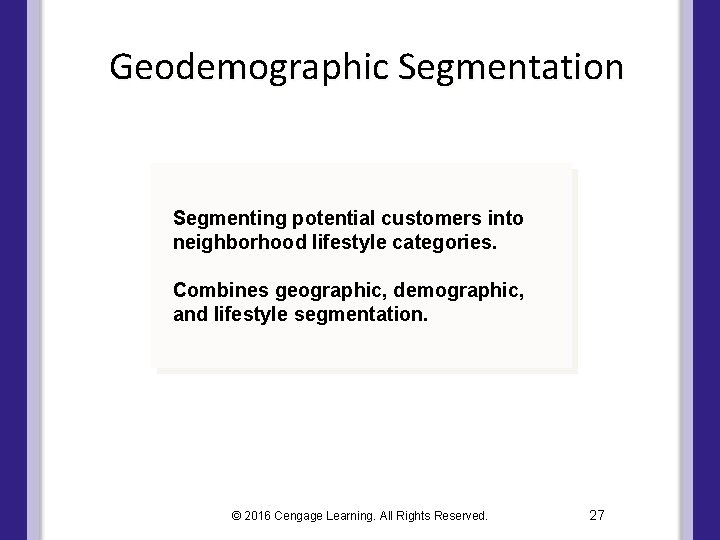
Geodemographic Segmentation Segmenting potential customers into neighborhood lifestyle categories. Combines geographic, demographic, and lifestyle segmentation. © 2016 Cengage Learning. All Rights Reserved. 27
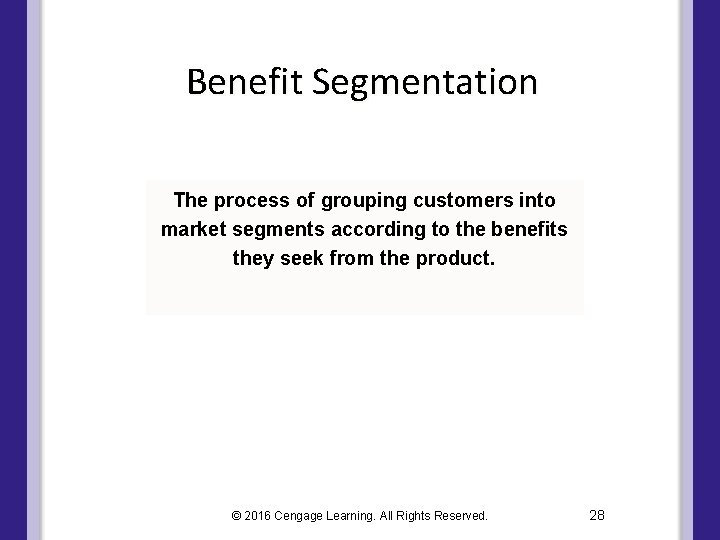
Benefit Segmentation The process of grouping customers into market segments according to the benefits they seek from the product. © 2016 Cengage Learning. All Rights Reserved. 28
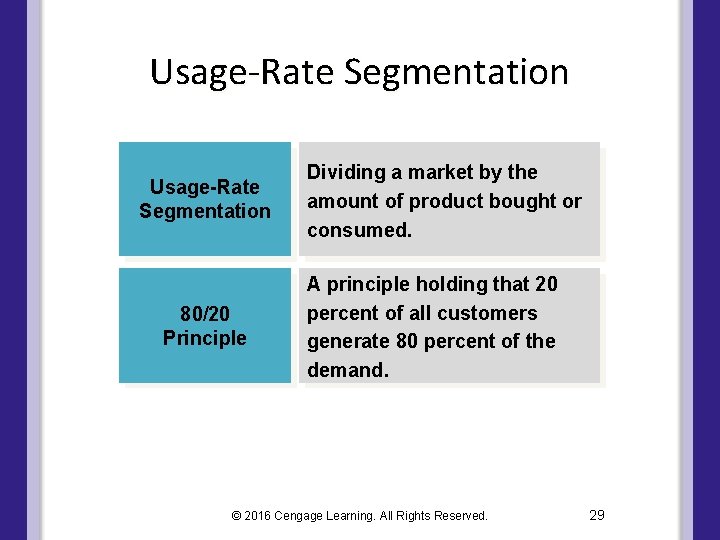
Usage-Rate Segmentation 80/20 Principle Dividing a market by the amount of product bought or consumed. A principle holding that 20 percent of all customers generate 80 percent of the demand. © 2016 Cengage Learning. All Rights Reserved. 29
8 -5 Bases for Segmenting Business Markets Describe the bases for segmenting business markets © 2016 Cengage Learning. All Rights Reserved.
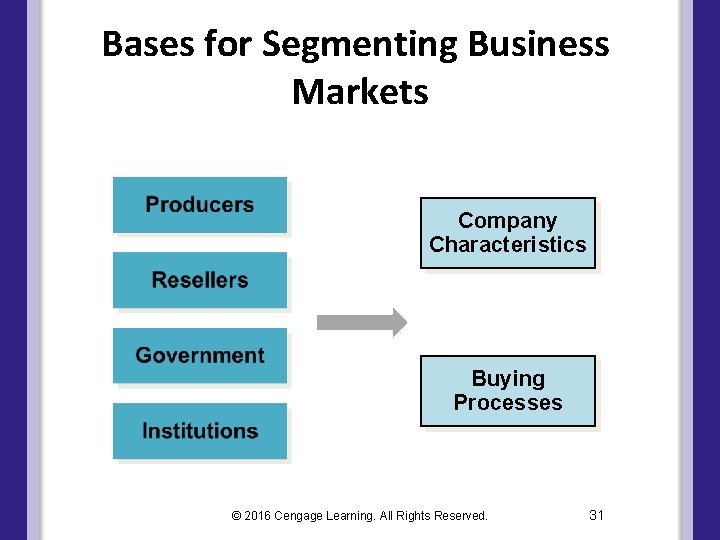
Bases for Segmenting Business Markets Company Characteristics Buying Processes © 2016 Cengage Learning. All Rights Reserved. 31
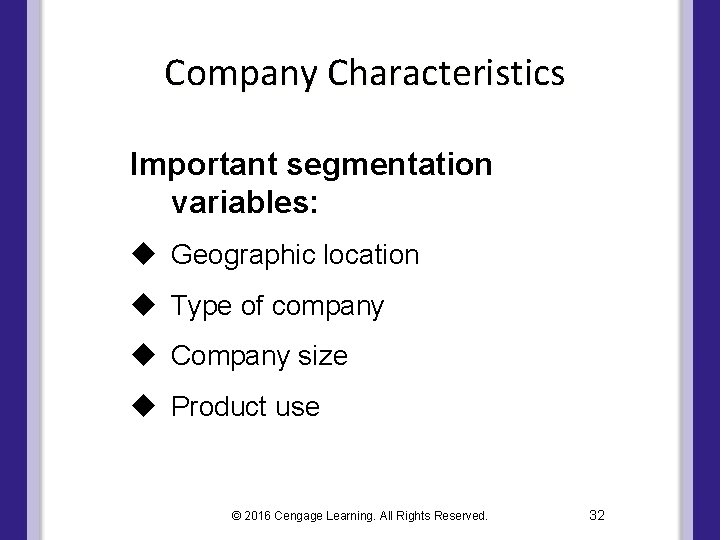
Company Characteristics Important segmentation variables: u Geographic location u Type of company u Company size u Product use © 2016 Cengage Learning. All Rights Reserved. 32
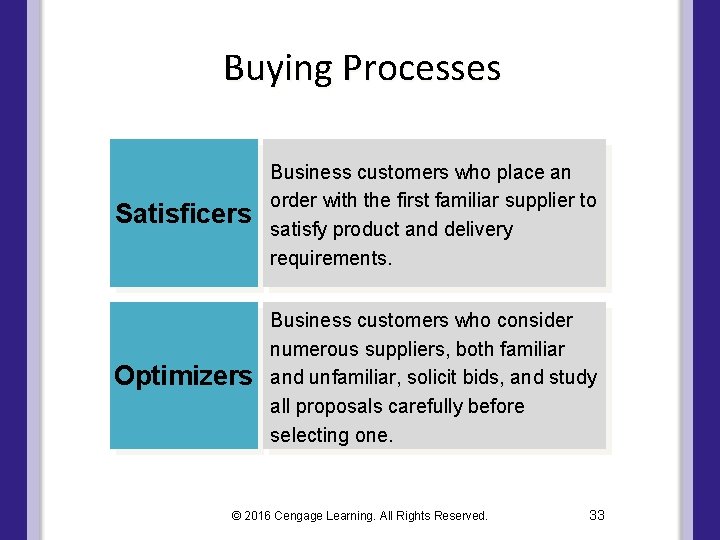
Buying Processes Satisficers Business customers who place an order with the first familiar supplier to satisfy product and delivery requirements. Optimizers Business customers who consider numerous suppliers, both familiar and unfamiliar, solicit bids, and study all proposals carefully before selecting one. © 2016 Cengage Learning. All Rights Reserved. 33
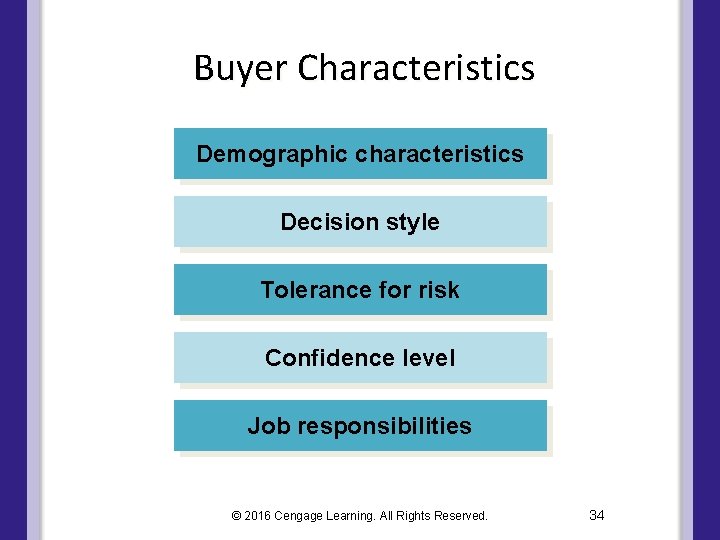
Buyer Characteristics Demographic characteristics Decision style Tolerance for risk Confidence level Job responsibilities © 2016 Cengage Learning. All Rights Reserved. 34
8 -6 Steps in Segmenting a Market List the steps involved in segmenting markets © 2016 Cengage Learning. All Rights Reserved.
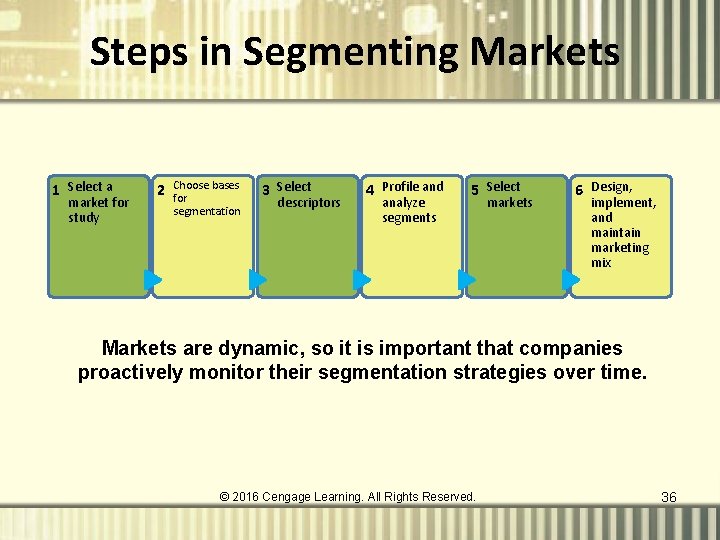
Steps in Segmenting Markets 1 Select a market for study 2 Choose bases for segmentation 3 Select descriptors 4 Profile and analyze segments 5 Select markets 6 Design, implement, and maintain marketing mix Markets are dynamic, so it is important that companies proactively monitor their segmentation strategies over time. © 2016 Cengage Learning. All Rights Reserved. 36
8 -7 Strategies for Selecting Target Markets Discuss alternative strategies for selecting target markets © 2016 Cengage Learning. All Rights Reserved.
Target Market A group of people or organizations for which an organization designs, implements, and maintains a marketing mix intended to meet the needs of that group, resulting in mutually satisfying exchanges. © 2016 Cengage Learning. All Rights Reserved. 38
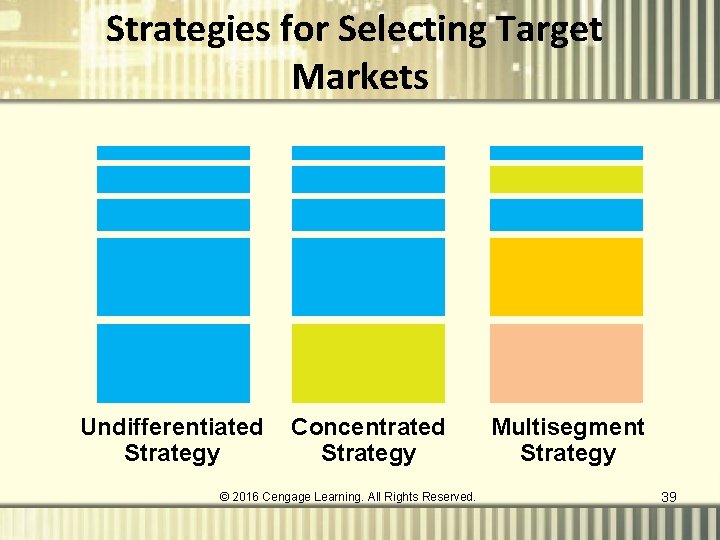
Strategies for Selecting Target Markets Undifferentiated Strategy Concentrated Strategy © 2016 Cengage Learning. All Rights Reserved. Multisegment Strategy 39
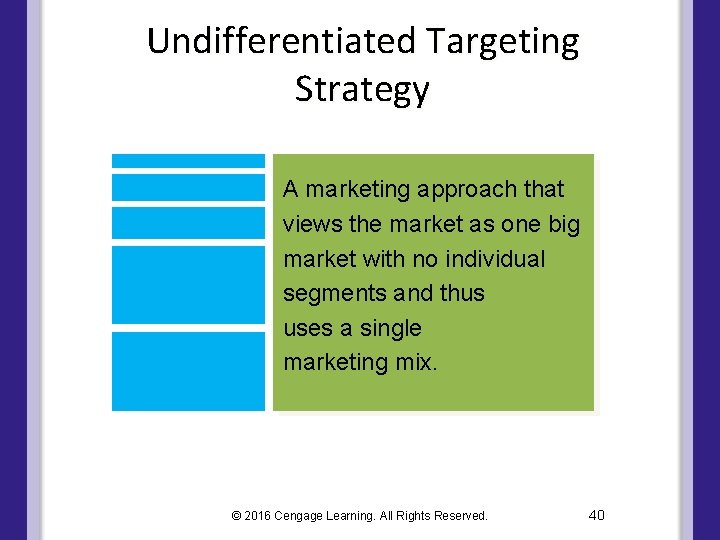
Undifferentiated Targeting Strategy A marketing approach that views the market as one big market with no individual segments and thus uses a single marketing mix. © 2016 Cengage Learning. All Rights Reserved. 40
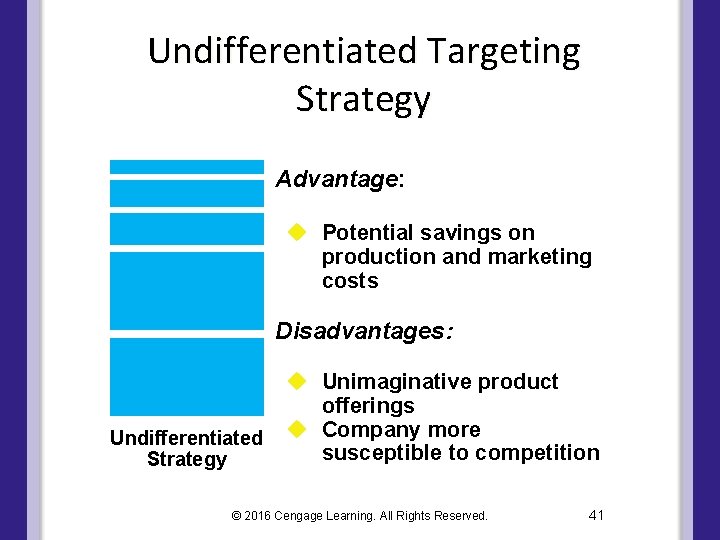
Undifferentiated Targeting Strategy Advantage: u Potential savings on production and marketing costs Disadvantages: u Unimaginative product offerings Undifferentiated u Company more susceptible to competition Strategy © 2016 Cengage Learning. All Rights Reserved. 41
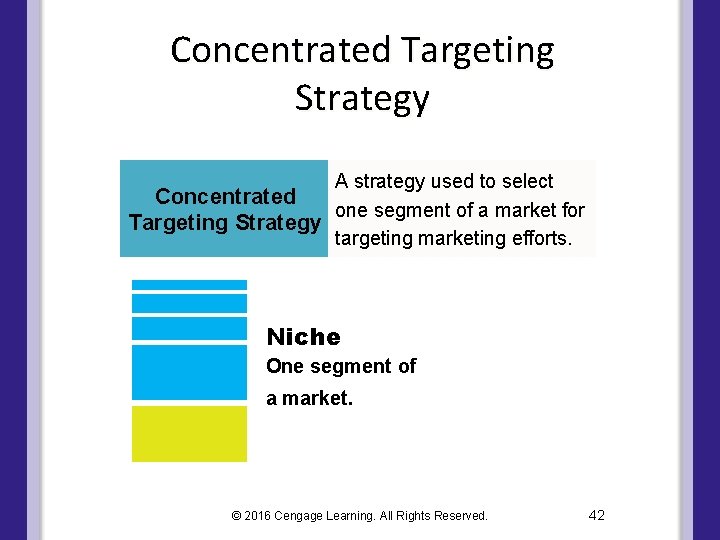
Concentrated Targeting Strategy A strategy used to select Concentrated one segment of a market for Targeting Strategy targeting marketing efforts. Niche One segment of a market. © 2016 Cengage Learning. All Rights Reserved. 42
Concentrated Targeting Strategy Advantage: u Concentration of resources u Meets narrowly defined segment u Small firms can compete u Strong positioning Disadvantages: Concentrated Strategy u Segments too small, or changing u Large competitors may market to niche segment © 2016 Cengage Learning. All Rights Reserved. 43
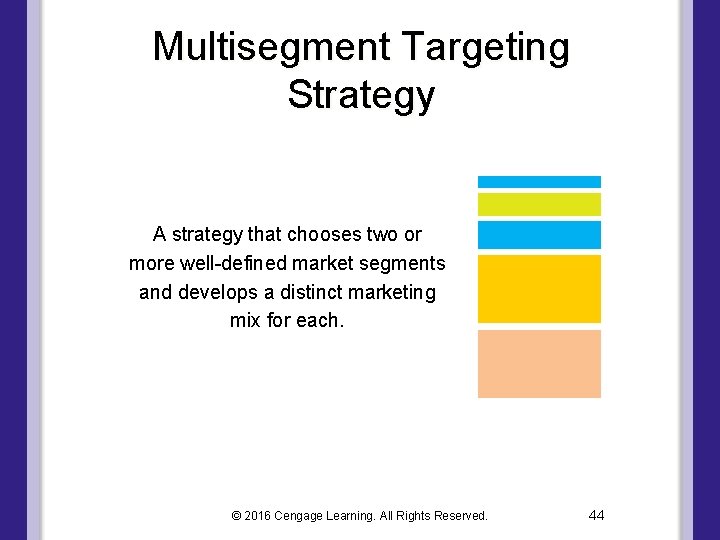
Multisegment Targeting Strategy A strategy that chooses two or more well-defined market segments and develops a distinct marketing mix for each. © 2016 Cengage Learning. All Rights Reserved. 44
Multisegment Targeting Strategy Advantage: u Greater financial success u Economies of scale Disadvantages: u Higher costs Multisegment Strategy u Cannibalization © 2016 Cengage Learning. All Rights Reserved. 45
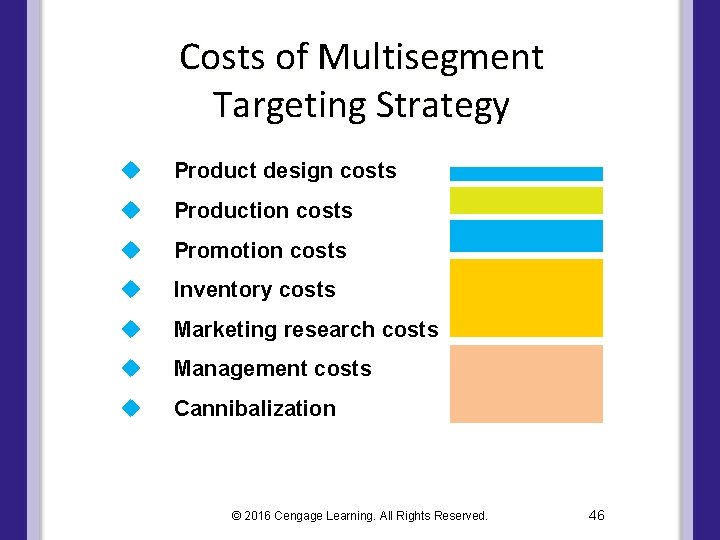
Costs of Multisegment Targeting Strategy u Product design costs u Production costs u Promotion costs u Inventory costs u Marketing research costs u Management costs u Cannibalization © 2016 Cengage Learning. All Rights Reserved. 46
8 -8 CRM as a Targeting Tool Explain how CRM can be used as a targeting tool © 2016 Cengage Learning. All Rights Reserved.
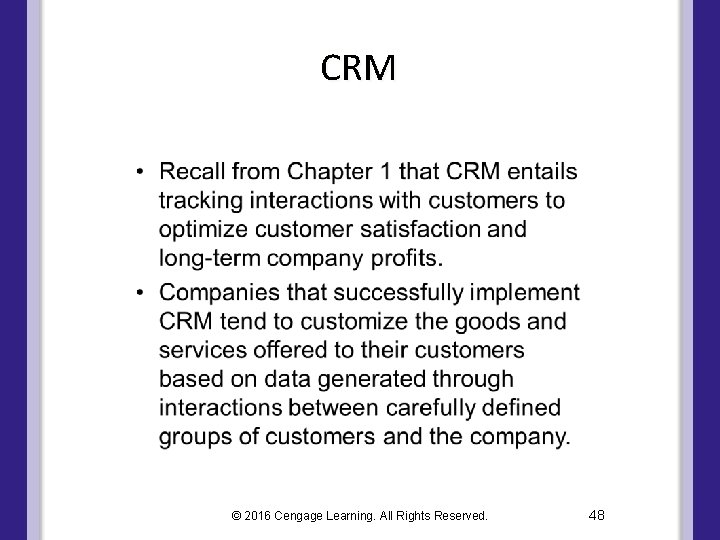
CRM © 2016 Cengage Learning. All Rights Reserved. 48
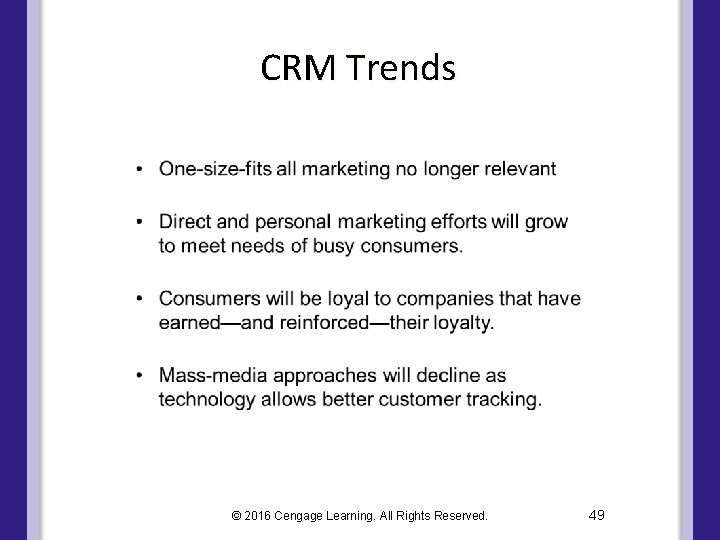
CRM Trends © 2016 Cengage Learning. All Rights Reserved. 49
8 -9 Positioning Explain how and why firms implement positioning strategies and how product differentiation plays a role © 2016 Cengage Learning. All Rights Reserved.
Positioning Developing a specific marketing mix to influence potential customers’ overall perception or a brand, product line, or organization in general. © 2016 Cengage Learning. All Rights Reserved. 51
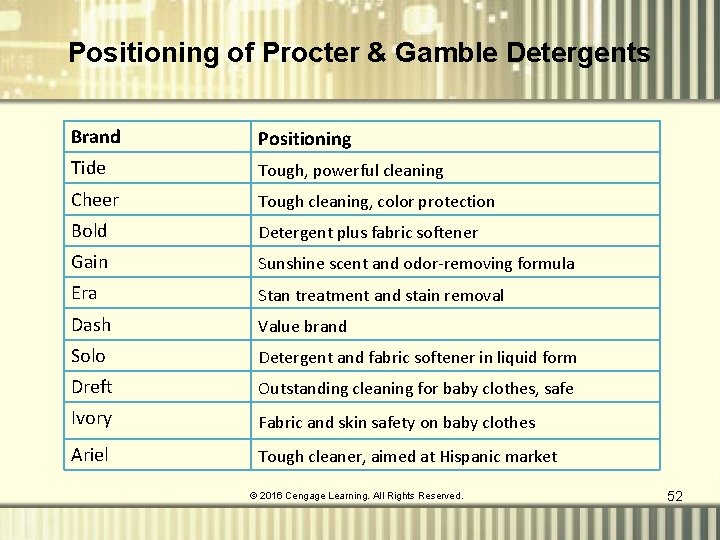
Positioning of Procter & Gamble Detergents Brand Positioning Tide Tough, powerful cleaning Cheer Tough cleaning, color protection Bold Detergent plus fabric softener Gain Sunshine scent and odor-removing formula Era Stan treatment and stain removal Dash Value brand Solo Detergent and fabric softener in liquid form Dreft Outstanding cleaning for baby clothes, safe Ivory Fabric and skin safety on baby clothes Ariel Tough cleaner, aimed at Hispanic market © 2016 Cengage Learning. All Rights Reserved. 52
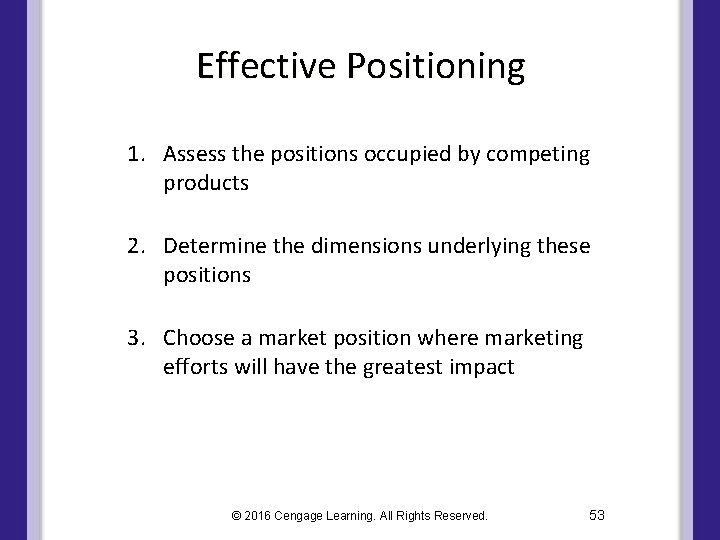
Effective Positioning 1. Assess the positions occupied by competing products 2. Determine the dimensions underlying these positions 3. Choose a market position where marketing efforts will have the greatest impact © 2016 Cengage Learning. All Rights Reserved. 53
Product Differentiation A positioning strategy that some firms use to distinguish their products from those of competitors. © 2016 Cengage Learning. All Rights Reserved. 54
Perceptual Mapping A means of displaying or graphing, in two or more dimensions, the location of products, brands, or groups of products in customers’ minds. © 2016 Cengage Learning. All Rights Reserved. 55
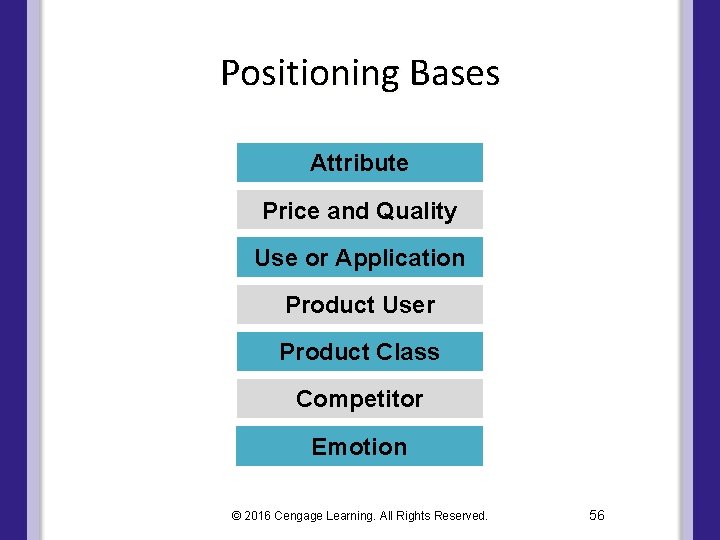
Positioning Bases Attribute Price and Quality Use or Application Product User Product Class Competitor Emotion © 2016 Cengage Learning. All Rights Reserved. 56
Repositioning Changing consumers’ perceptions of a brand in relation to competing brands. © 2016 Cengage Learning. All Rights Reserved. 57
Chapter 8 Video Numi Organic Tea describes how its sampling program helps position the brand with its target markets. Its premium position ties naturally into the customer outlined in the film, but Numi is also interested in expanding outside of the major tea drinker into more casual tea drinkers. CLICK TO PLAY 58 © 2016 Cengage Learning. All Rights Reserved.