
Consumers Producers and the Efficiency of Markets 1
- Slides: 26
Consumers, Producers, and the Efficiency of Markets 1
Consumer Surplus • Welfare economics – How the allocation of resources affects economic well-being • Willingness to pay – Maximum amount that a buyer will pay for a good 2
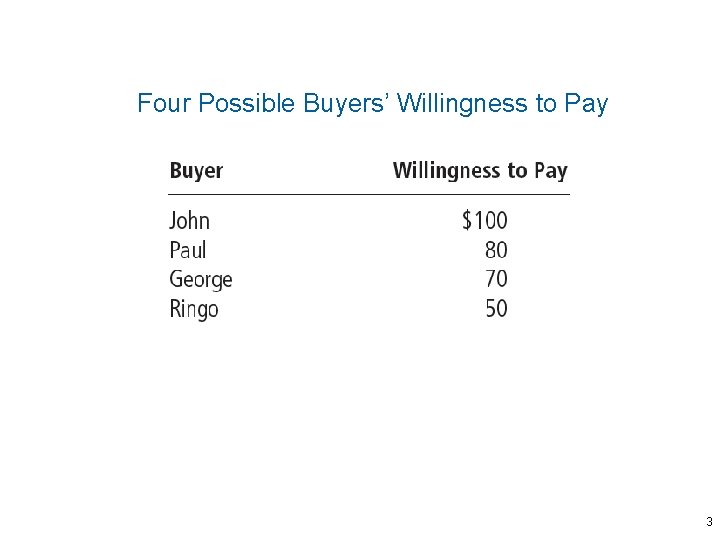
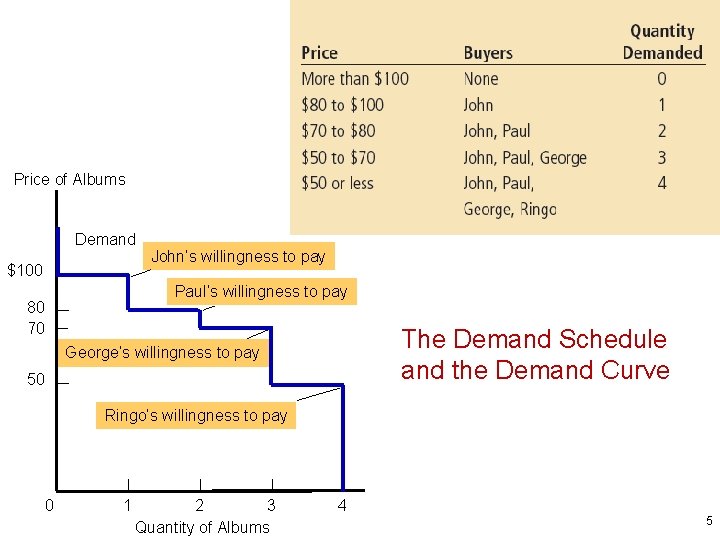
Four Possible Buyers’ Willingness to Pay 3
Consumer Surplus • Consumer surplus – Amount a buyer is willing to pay for a good • Minus amount the buyer actually pays for it – Measures the benefit buyers receive from participating in a market – Closely related to the demand curve • Demand schedule – Derived from the willingness to pay of the possible buyers 4
Price of Albums Demand $100 John’s willingness to pay Paul’s willingness to pay 80 70 The Demand Schedule and the Demand Curve George’s willingness to pay 50 Ringo’s willingness to pay 0 1 2 3 Quantity of Albums 4 5
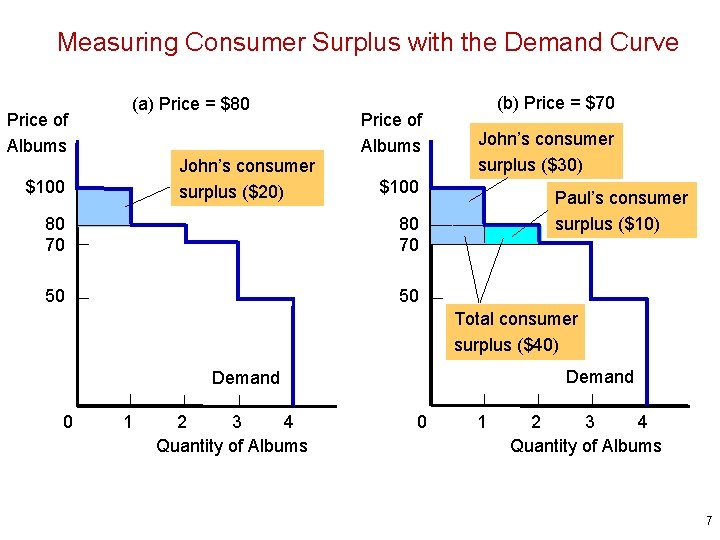
Consumer Surplus • Demand curve – Reflects buyers’ willingness to pay – Measure consumer surplus • Consumer surplus in a market – Area below the demand curve and above the price 6
Measuring Consumer Surplus with the Demand Curve Price of Albums (a) Price = $80 John’s consumer surplus ($20) $100 Price of Albums (b) Price = $70 John’s consumer surplus ($30) $100 80 70 50 50 Paul’s consumer surplus ($10) Total consumer surplus ($40) Demand 0 1 2 3 4 Quantity of Albums 7
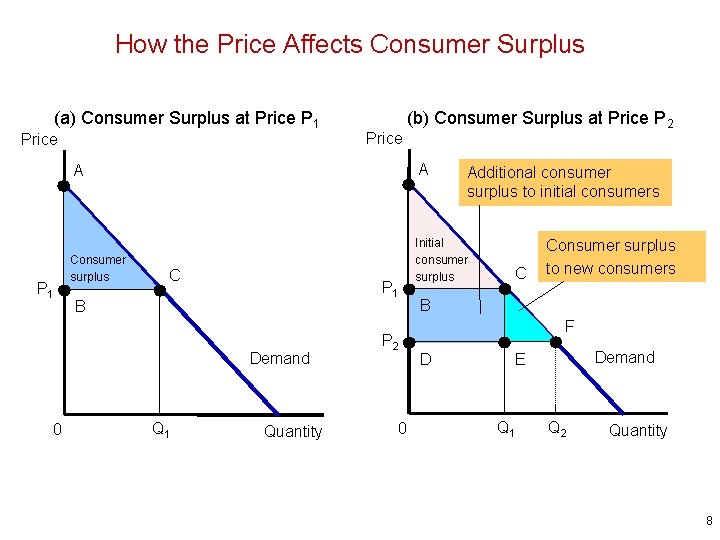
How the Price Affects Consumer Surplus (a) Consumer Surplus at Price P 1 A A Consumer surplus Initial consumer surplus C P 1 B Demand 0 Price (b) Consumer Surplus at Price P 2 Q 1 Quantity P 2 0 Additional consumer surplus to initial consumers C Consumer surplus to new consumers B F D Demand E Q 1 Q 2 Quantity 8
Consumer Surplus • A lower price raises consumer surplus – New, lower price, P 2 • Greater quantity demanded, Q 2 – New buyers • Increase in consumer surplus from area ABC – From initial buyers, add area BCDE – From new buyers, add area CEF 9
Producer Surplus • Cost – Value of everything a seller must give up to produce a good – Measure of willingness to sell • Producer surplus – Amount a seller is paid for a good minus the seller’s cost of providing it 10
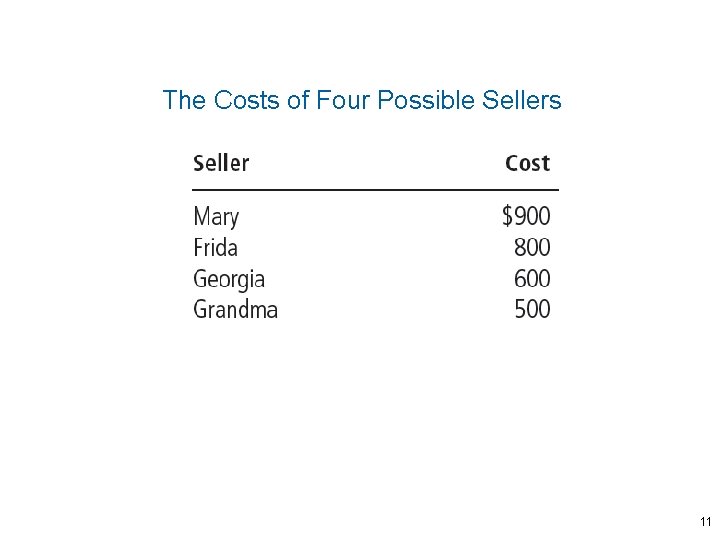
The Costs of Four Possible Sellers 11
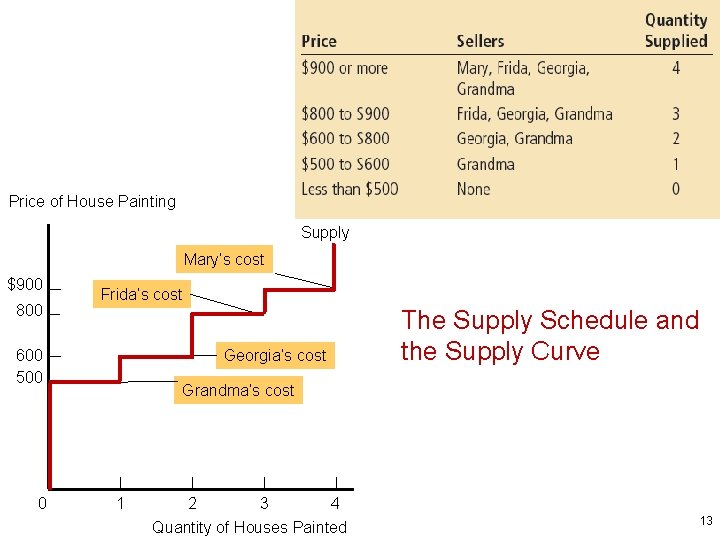
Producer Surplus • Producer surplus – Closely related to the supply curve • Supply schedule – Derived from the costs of the suppliers • At any quantity – Price given by the supply curve shows the cost of the marginal seller 12
Price of House Painting Supply Mary’s cost $900 800 Frida’s cost Georgia’s cost 600 500 0 The Supply Schedule and the Supply Curve Grandma’s cost 1 2 3 4 Quantity of Houses Painted 13
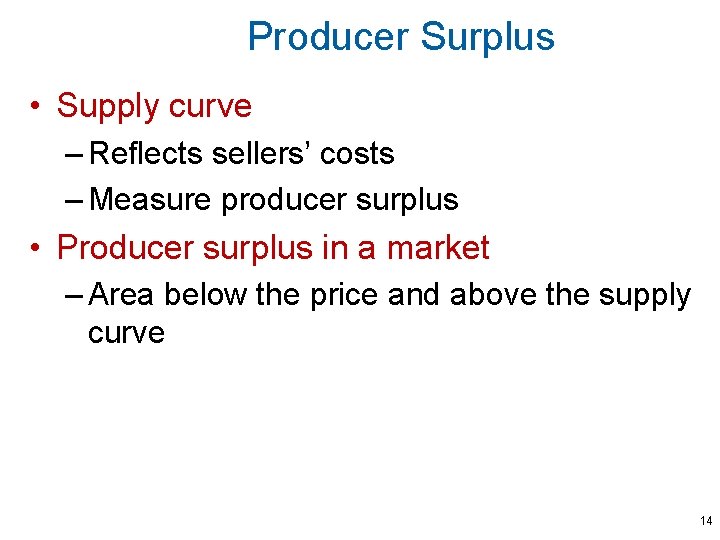
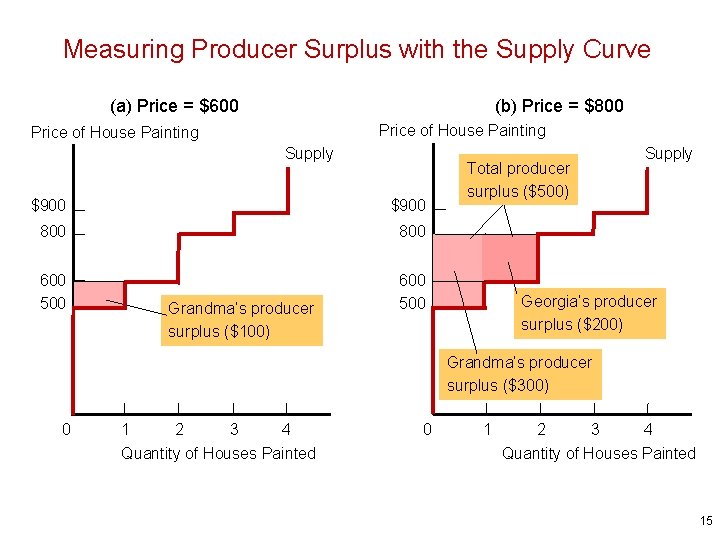
Producer Surplus • Supply curve – Reflects sellers’ costs – Measure producer surplus • Producer surplus in a market – Area below the price and above the supply curve 14
Measuring Producer Surplus with the Supply Curve (a) Price = $600 (b) Price = $800 Price of House Painting Supply $900 800 600 500 Grandma’s producer surplus ($100) Total producer surplus ($500) Supply Georgia’s producer surplus ($200) Grandma’s producer surplus ($300) 0 1 2 3 4 Quantity of Houses Painted 15
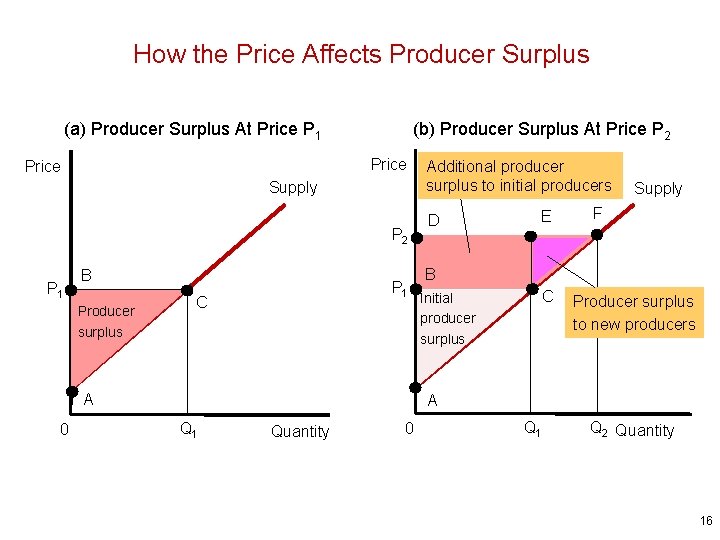
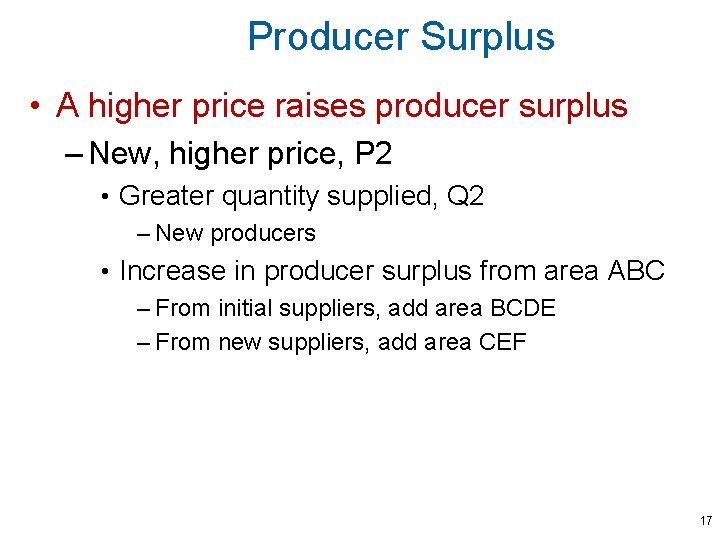
How the Price Affects Producer Surplus (b) Producer Surplus At Price P 2 (a) Producer Surplus At Price P 1 Price Supply P 2 P 1 B Producer surplus P 1 C A 0 Additional producer surplus to initial producers D E Supply F B C Initial producer surplus Producer surplus to new producers A Q 1 Quantity 0 Q 1 Q 2 Quantity 16
Producer Surplus • A higher price raises producer surplus – New, higher price, P 2 • Greater quantity supplied, Q 2 – New producers • Increase in producer surplus from area ABC – From initial suppliers, add area BCDE – From new suppliers, add area CEF 17
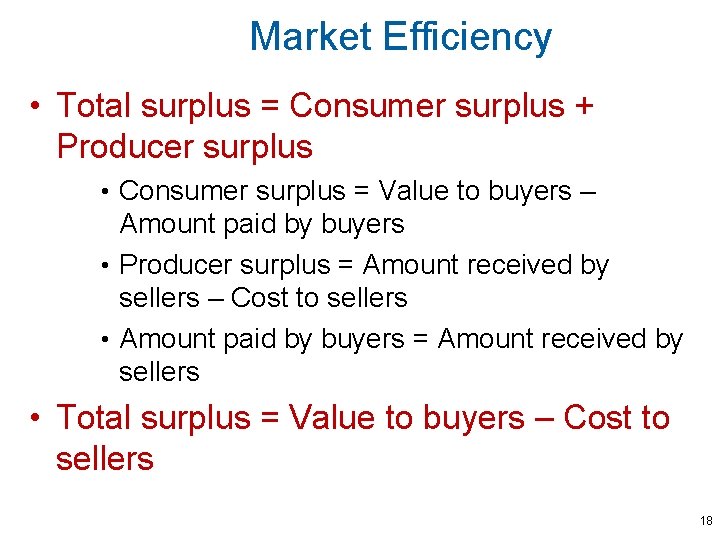
Market Efficiency • Total surplus = Consumer surplus + Producer surplus • Consumer surplus = Value to buyers – Amount paid by buyers • Producer surplus = Amount received by sellers – Cost to sellers • Amount paid by buyers = Amount received by sellers • Total surplus = Value to buyers – Cost to sellers 18
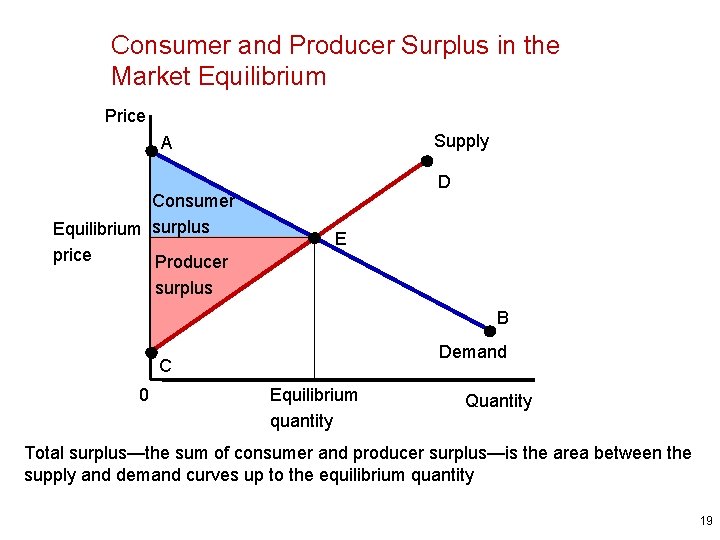
Consumer and Producer Surplus in the Market Equilibrium Price Supply A Consumer Equilibrium surplus price Producer D E surplus B Demand C 0 Equilibrium quantity Quantity Total surplus—the sum of consumer and producer surplus—is the area between the supply and demand curves up to the equilibrium quantity 19
Market Efficiency • Market outcomes 1. Free markets allocate the supply of goods to the buyers who value them most highly • Measured by their willingness to pay 2. Free markets allocate the demand for goods to the sellers who can produce them at the least cost 20
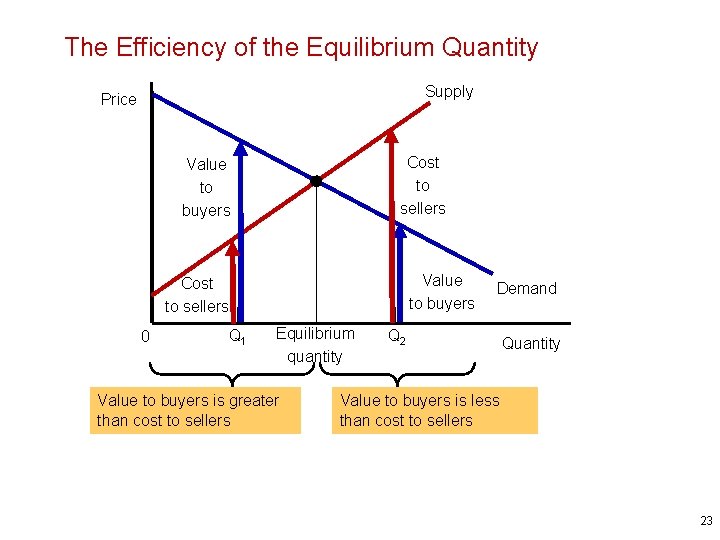
Market Efficiency • Market outcomes 3. Free markets produce the quantity of goods that maximizes the sum of consumer and producer surplus • Market equilibrium – Efficient allocation of resources • The benevolent social planner – “Laissez faire” = “allow them to do” 21
Market Efficiency • Market outcomes – Social planner • Cannot increase economic well-being by – Changing the allocation of consumption among buyers – Changing the allocation of production among sellers • Cannot rise total economic well-being by – Increasing or decreasing the quantity of the good 22
The Efficiency of the Equilibrium Quantity Supply Price Cost to sellers Value to buyers Cost to sellers 0 Q 1 Equilibrium quantity Value to buyers is greater than cost to sellers Demand Q 2 Quantity Value to buyers is less than cost to sellers 23
Market Efficiency & Failure • Forces of supply and demand – Allocate resources efficiently • Several assumptions about how markets work 1. Markets are perfectly competitive 2. Outcome in a market matters only to the buyers and sellers in that market 24
Market Efficiency & Failure • When these assumptions do not hold – “Market equilibrium is efficient” may no longer be true • In the world, competition is far from perfect – Market power • A single buyer or seller (small group) • Control market prices • Markets are inefficient 25
Market Efficiency & Failure • In the world – Decisions of buyers and sellers • Affect people who are not participants in the market at all – Externalities • Cause welfare in a market to depend on more than just the value to the buyers and the cost to the sellers – Inefficient equilibrium • From the standpoint of society as a whole 26