Chapter 1 Accounting as a Form of Communication












- Slides: 39
Chapter 1 Accounting as a Form of Communication Financial Accounting 4 e by Porter and Norton 1
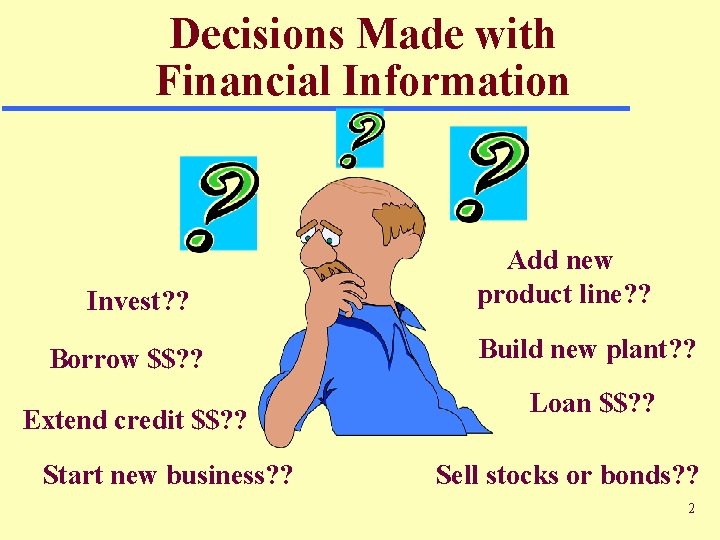
Decisions Made with Financial Information Invest? ? Borrow $$? ? Extend credit $$? ? Start new business? ? Add new product line? ? Build new plant? ? Loan $$? ? Sell stocks or bonds? ? 2
What is Accounting? Identifying Measuring Economic Information to various users Communicating 3
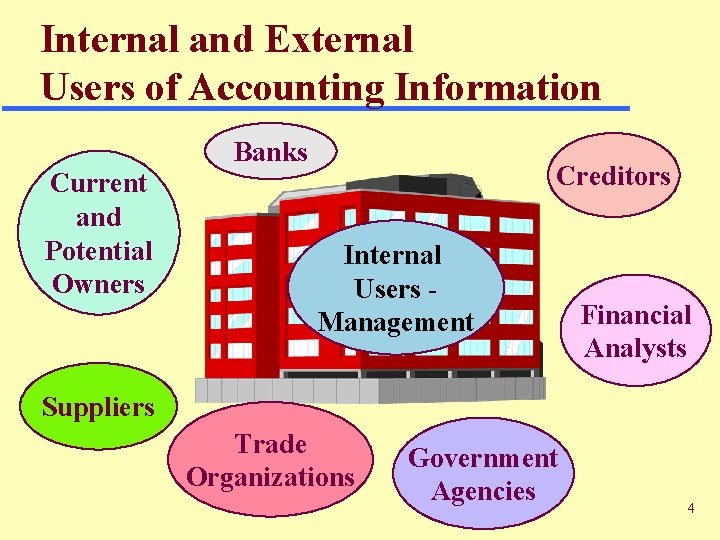
Internal and External Users of Accounting Information Banks Current and Potential Owners Creditors Internal Users Management Financial Analysts Suppliers Trade Organizations Government Agencies 4
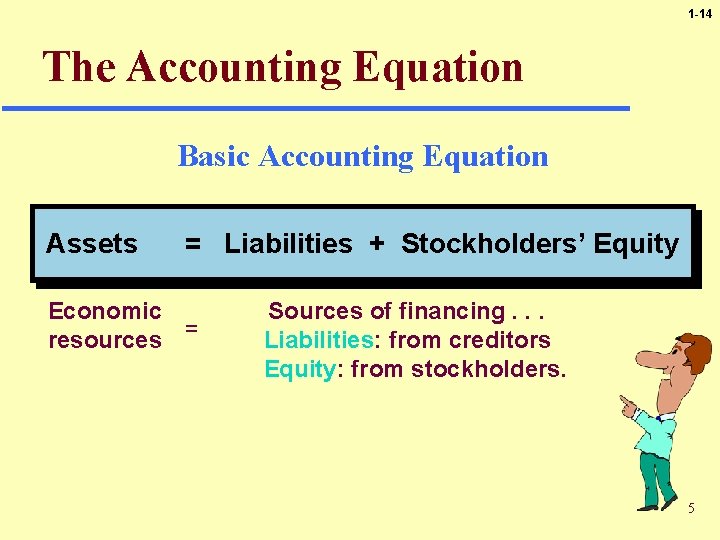
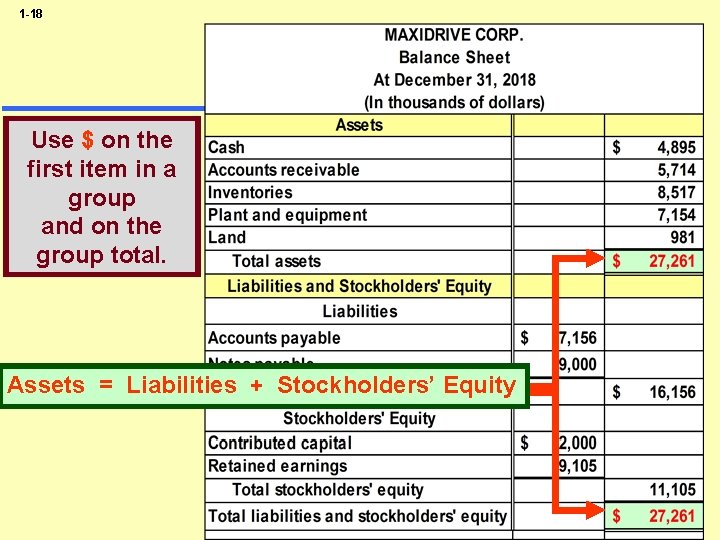
1 -14 The Accounting Equation Basic Accounting Equation Assets = Liabilities + Stockholders’ Equity Economic resources = Sources of financing. . . Liabilities: from creditors Equity: from stockholders. 5
The Accounting Equation Assets = Liabilities + Owners’ Equity (or Stockholders' Equity) Economic Resources Examples: = Creditors' Claims to Assets + Accounts payable Cash Accounts receivable Notes payable Inventory Owners' Claims to Assets Capital stock Retained earnings 6
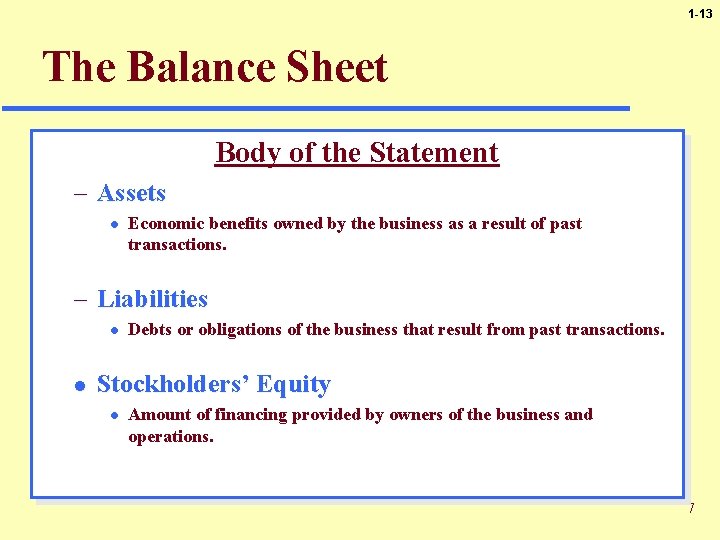
1 -13 The Balance Sheet Body of the Statement – Assets l Economic benefits owned by the business as a result of past transactions. – Liabilities l l Debts or obligations of the business that result from past transactions. Stockholders’ Equity l Amount of financing provided by owners of the business and operations. 7
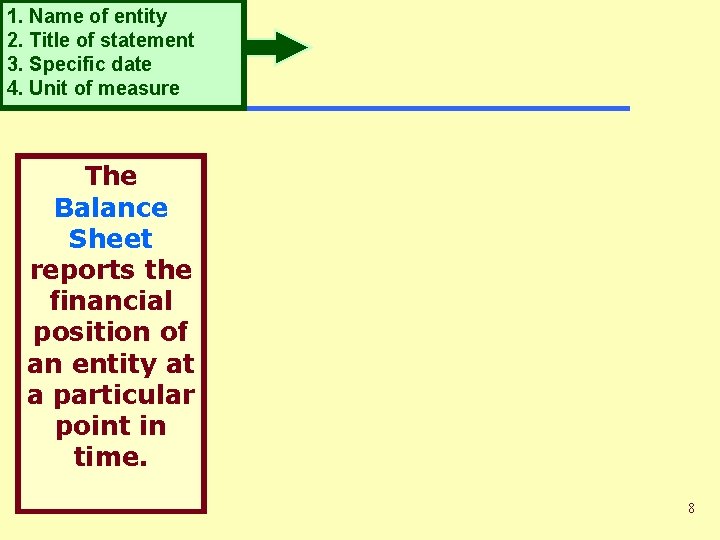
1. Name of entity 2. Title of statement 3. Specific date 4. Unit of measure The Balance Sheet reports the financial position of an entity at a particular point in time. 8
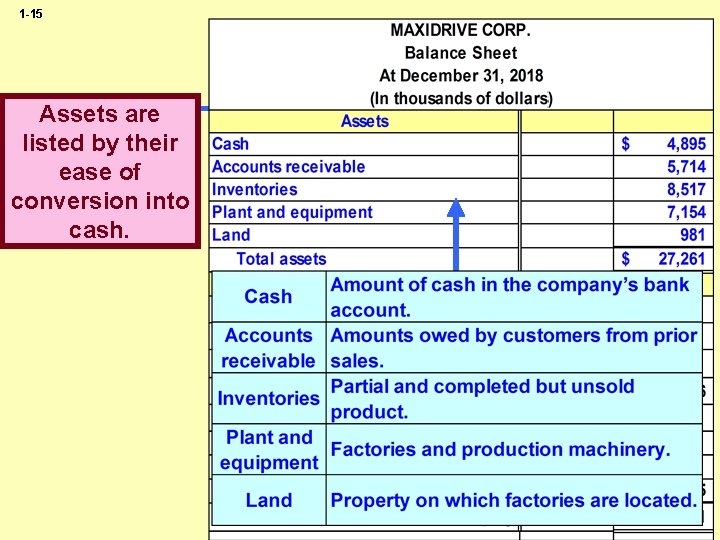
Assets are economic resources owned by the business as a result of past transactions. Assets are listed by their ease of conversion into cash. 9
1 -15 Assets are listed by their ease of conversion into cash. 10
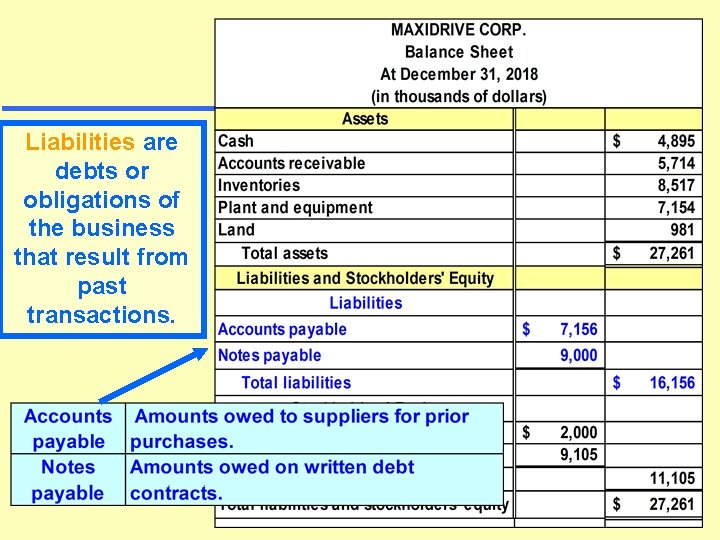
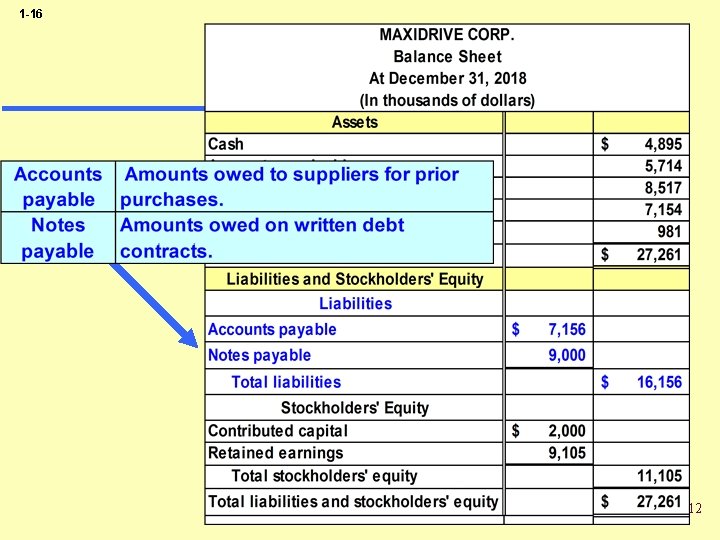
Liabilities are debts or obligations of the business that result from past transactions. 11
1 -16 12
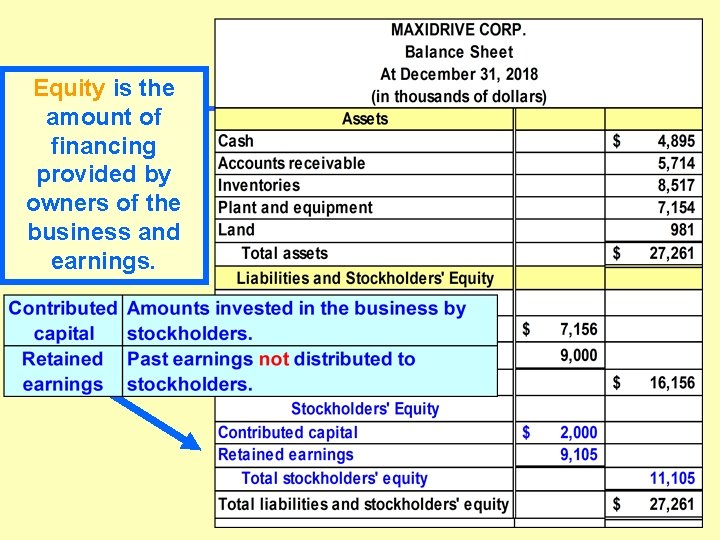
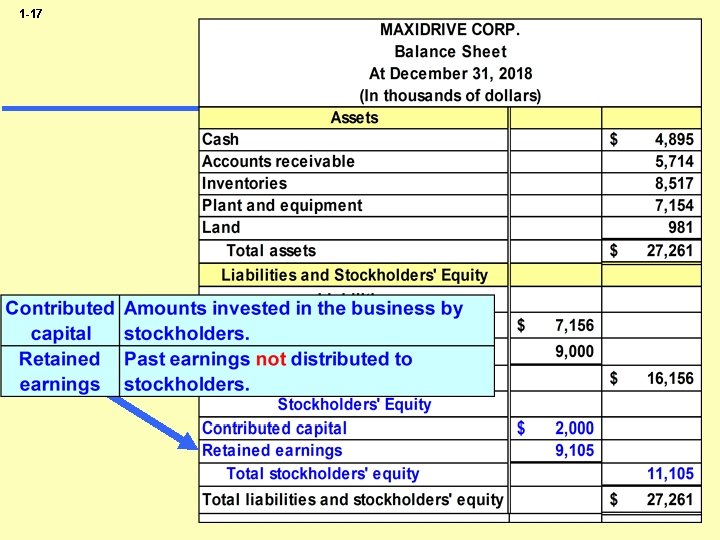
Equity is the amount of financing provided by owners of the business and earnings. 13
1 -17 14
1 -18 Use $ on the first item in a group and on the group total. Assets = Liabilities + Stockholders’ Equity 15
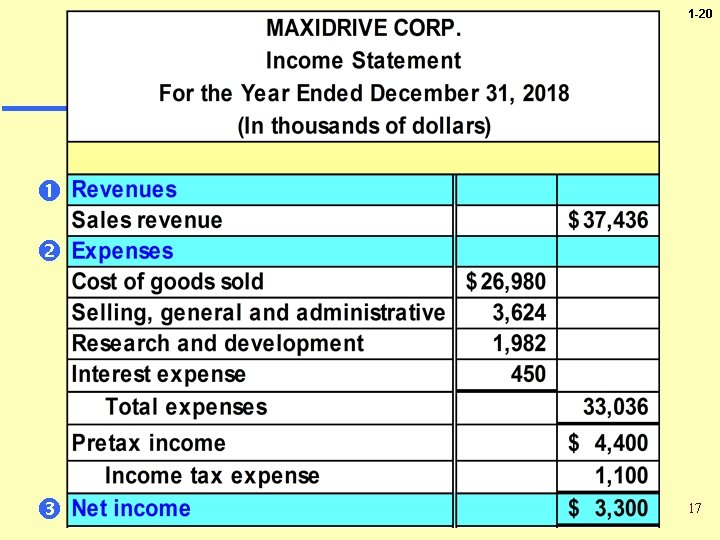
1. Name of entity 2. Title of statement 3. Specific date (Unlike the balance sheet, this statement covers a specified period of time. ) 4. Unit of measure 16
1 -20 17
Revenues are earnings from the sale of goods or services to customers. Revenue is recognized in the period in which goods and services are sold, not necessarily the period in which cash is received. 18
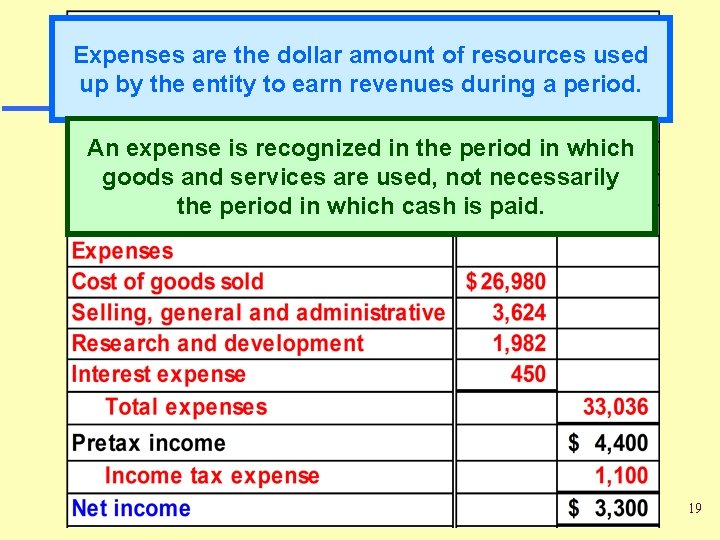
Expenses are the dollar amount of resources used up by the entity to earn revenues during a period. An expense is recognized in the period in which goods and services are used, not necessarily the period in which cash is paid. 19
If expenses exceed revenues, we report net loss. 20
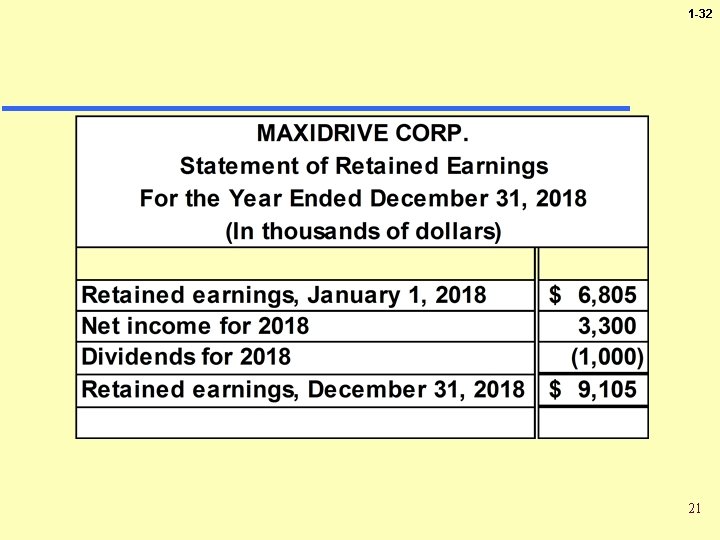
1 -32 21
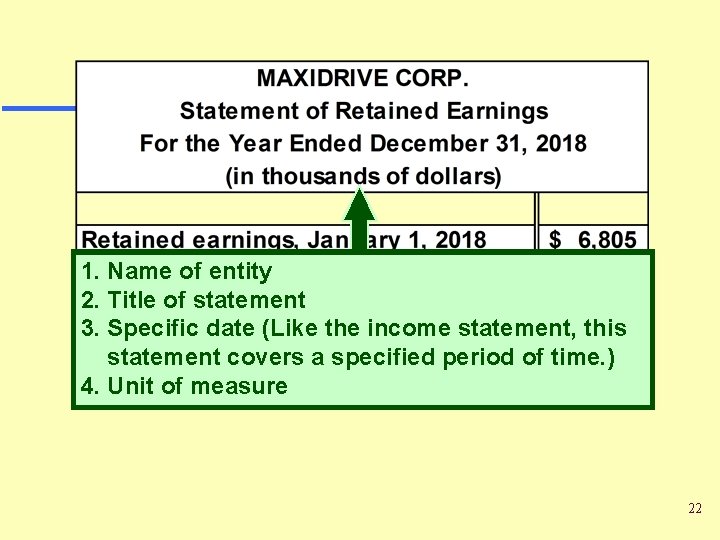
1. Name of entity 2. Title of statement 3. Specific date (Like the income statement, this statement covers a specified period of time. ) 4. Unit of measure 22
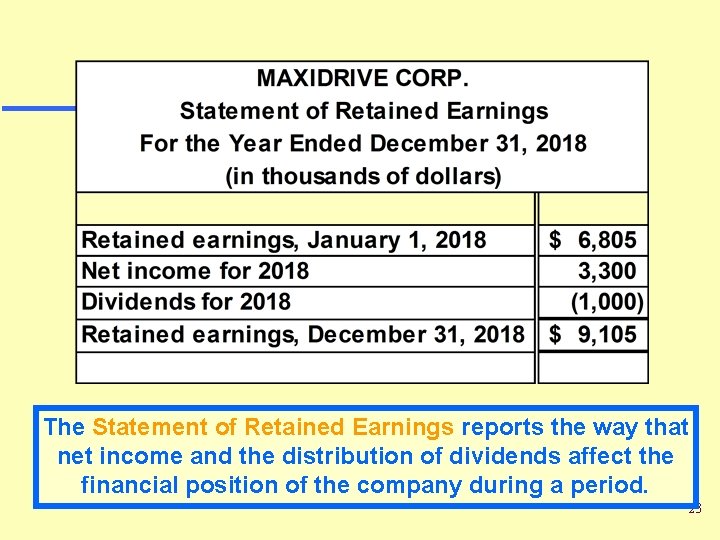
The Statement of Retained Earnings reports the way that net income and the distribution of dividends affect the financial position of the company during a period. 23
1 -35 24
1. Name of entity 2. Title of statement 3. Specific date (Like the income statement and statement of retained earnings, this statement covers a specified period of time. ) 4. Unit of measure 25
The Statement of Cash Flows reports the inflows and outflows of cash during the period in the categories of operating, investing, and financing. 26
The statement ends with a reconciliation of Cash. 27
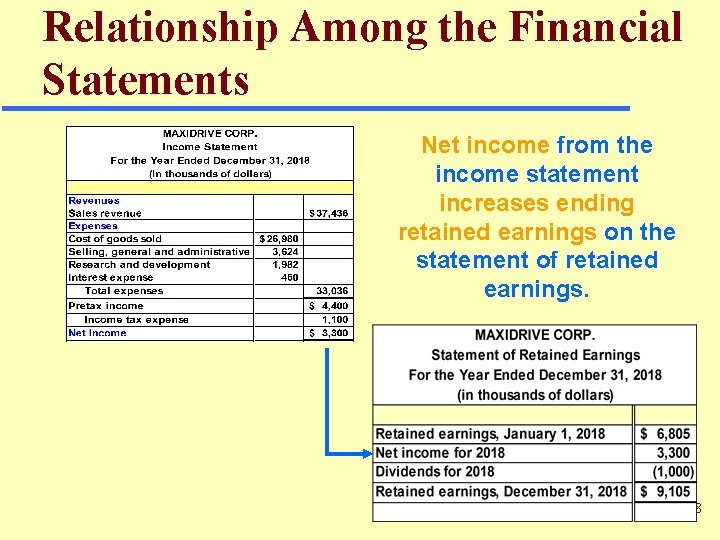
Relationship Among the Financial Statements Net income from the income statement increases ending retained earnings on the statement of retained earnings. 28
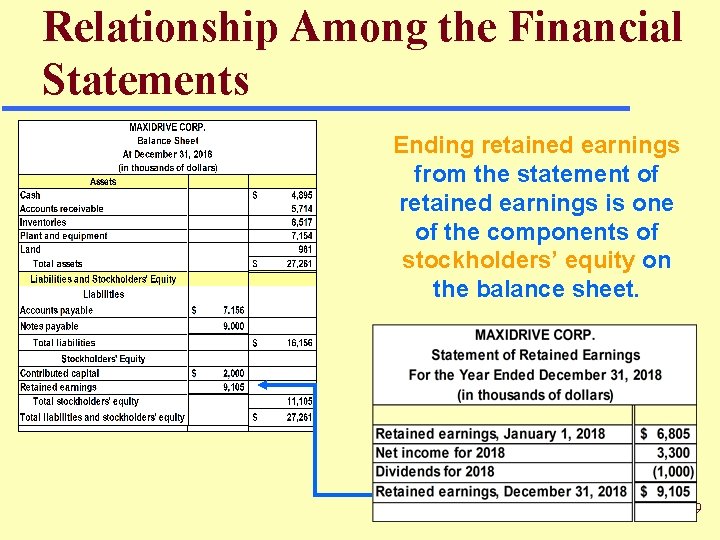
Relationship Among the Financial Statements Ending retained earnings from the statement of retained earnings is one of the components of stockholders’ equity on the balance sheet. 29
Relationship Among the Financial Statements The change in cash on the statement of cash flows added to the beginning of the year balance in cash equals the ending 30 balance in cash on the balance sheet.
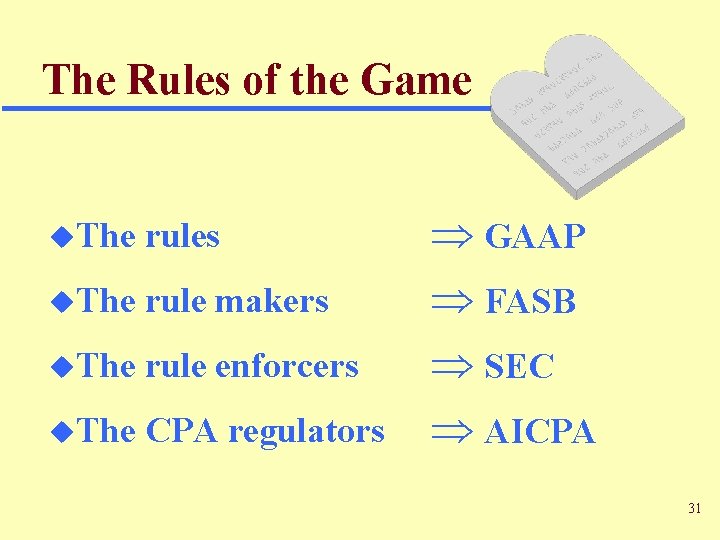
The Rules of the Game u. The rules u. The rule makers u. The rule enforcers u. The CPA regulators Þ GAAP Þ FASB Þ SEC Þ AICPA 31
Financial Statement Assumptions Economic Entity Cost Principle Time Period Going Concern Monetary Unit 32
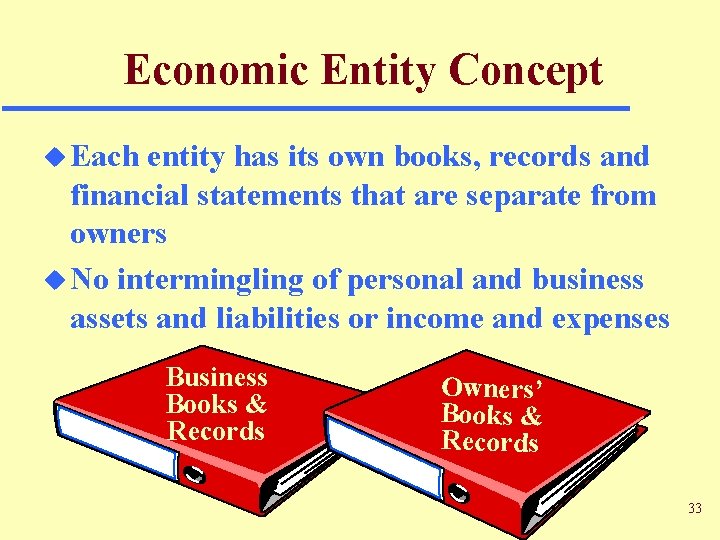
Economic Entity Concept u Each entity has its own books, records and financial statements that are separate from owners u No intermingling of personal and business assets and liabilities or income and expenses Business Books & Records Owners’ Books & Records 33
Cost Principle u Record assets at cost paid to acquire them u Continue to value assets at historical cost until sold u More objective than market value 34
Going Concern u Assume business will continue indefinitely into the foreseeable future u Justifies use of historical cost 35
Monetary Unit u How we measure (e. g. U. S. dollar, Japanese yen, Mexican peso, etc. ) u Assumes economic measure is relatively stable; no adjustment for inflation made in financial statements 36
Time Period Assumption u Assumes it is possible to break up an entity’s earnings in discrete time periods (a month, quarter, year) u Necessary to provide users with financial results on a timely basis u Requires use of estimates 37
Where Accountants Work u Private Business u Nonprofit u Public Organizations Accounting – audit – tax – management consulting u Educational Institutions 38
End of Chapter 1 39