Advertising Any paid form of nonpersonal presentation and











- Slides: 40
Advertising Any paid form of nonpersonal presentation and promotion of ideas, goods, or services by an identified sponsor.
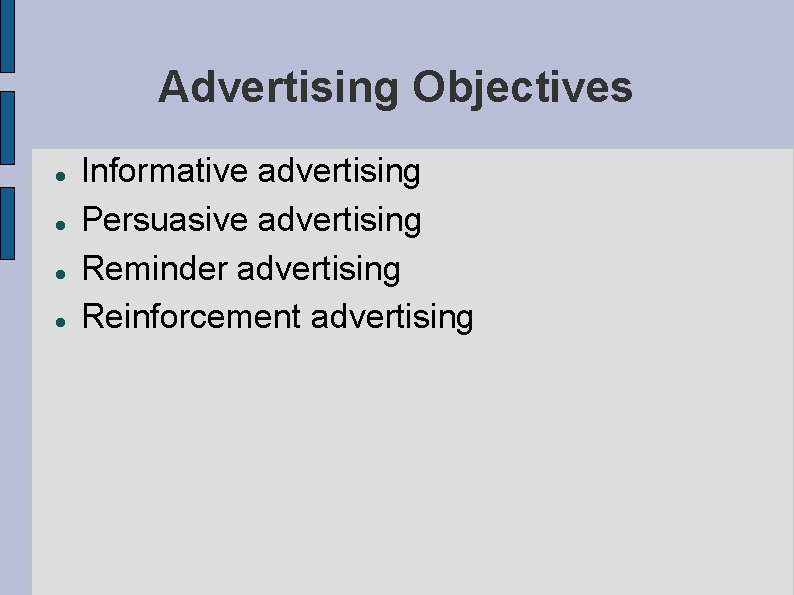
Advertising Objectives Informative advertising Persuasive advertising Reminder advertising Reinforcement advertising
Developing the Advertising Campaign Message generation and evaluation Creative development and execution Social responsibility review
Creative Brief Positioning statement Key message Target market Objectives Key brand benefits Brand promise Evidence of promise Media Background Creative considerations
Developing Effective Communication Step 1: Identifying the Target Audience Affects decisions related to what, how, when, and where message will be said, as well as who will say it Step 2: Determining Communication Objectives Six buyer readiness stages Goal 3: Learn the steps in developing effective marketing communications
Buyer-Readiness Stages Awareness Knowledge Liking Preference Conviction Purchase Goal 3: Learn the steps in developing effective marketing communications
Developing Effective Communication Step 3: Designing a Message AIDA framework guides message design Message content contains appeals or themes designed to produce desired results Rational appeals Emotional appeals Love, pride, joy, humor, fear, guilt, shame Moral appeals Goal 3: Learn the steps in developing effective marketing communications
Message Strategies • Cognitive • Affective • Conative
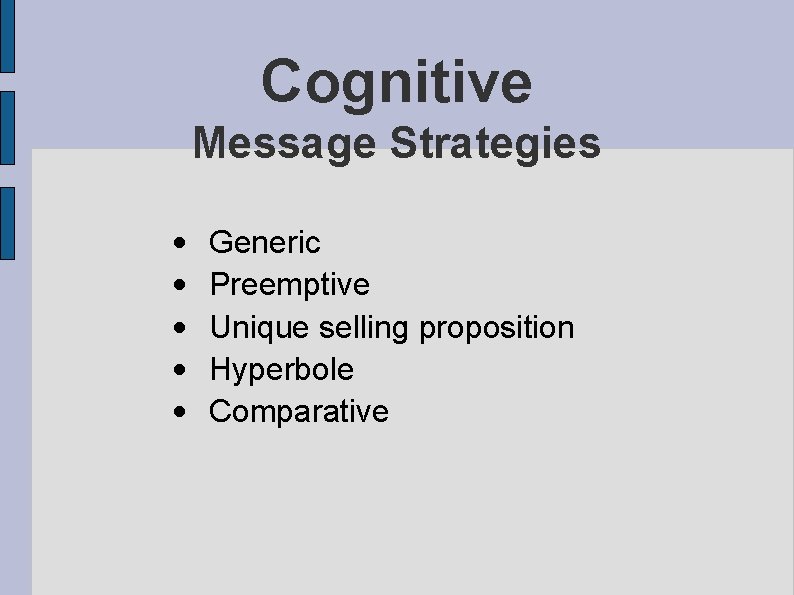
Cognitive Message Strategies • • • Generic Preemptive Unique selling proposition Hyperbole Comparative
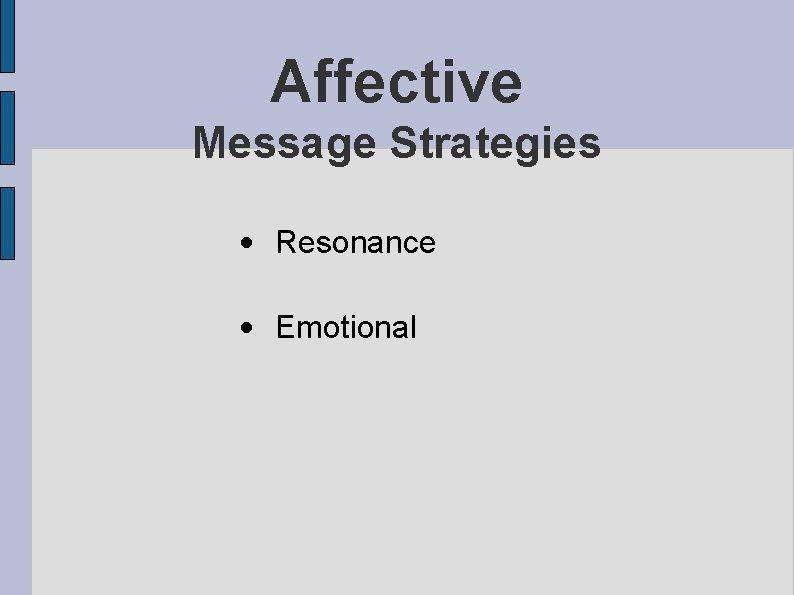
Affective Message Strategies • Resonance • Emotional
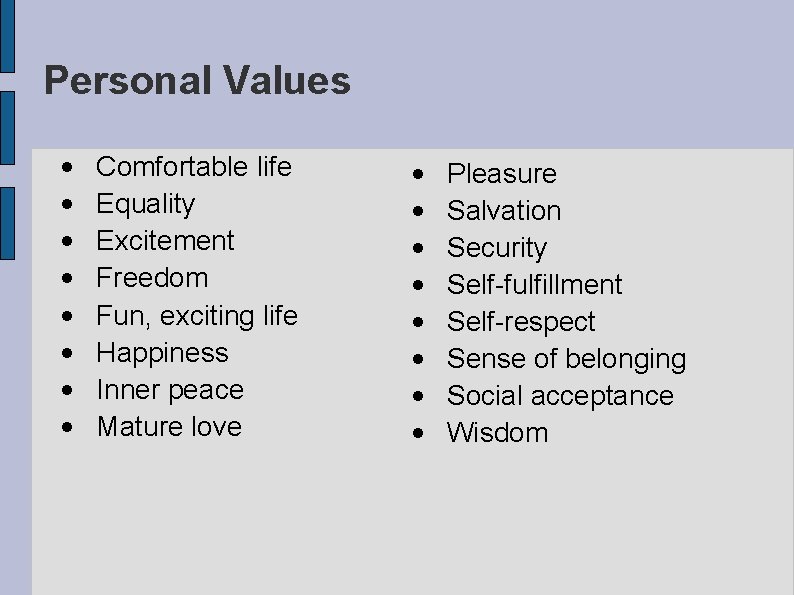
Personal Values • • Comfortable life Equality Excitement Freedom Fun, exciting life Happiness Inner peace Mature love • • Pleasure Salvation Security Self-fulfillment Self-respect Sense of belonging Social acceptance Wisdom
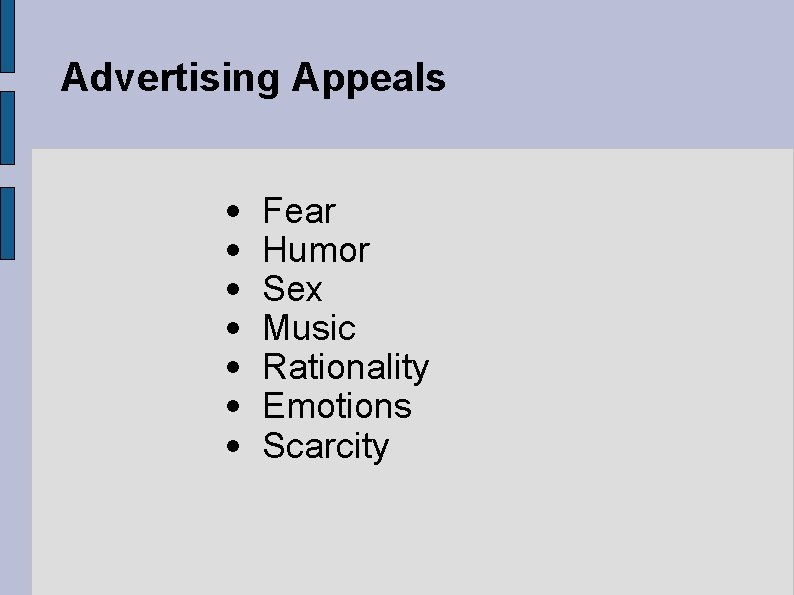
Advertising Appeals • • Fear Humor Sex Music Rationality Emotions Scarcity
Humor Appeal • • Used in 30% of ads. Excellent in capturing attention. Score high in recall tests. Should be related directly to customer benefit.
Sex Appeal • • • Subliminal techniques Nudity or partial nudity Sexual suggestiveness Overt sexuality Sensuality
Music Appeal • • Has intrusive value Gains attention Increases retention of visual information Can increase persuasiveness
Rational Appeal • Based on hierarchy of effects model. • Used by business-to-business advertisers. • Well-suited for Print media Complex products High involvement products
Emotional Appeal • Based on three ideas: Consumers ignore most ads Rational ads go unnoticed Emotional ads can capture attention • • Key to developing brand loyalty. Effie Awards – humor and emotions. Use more in b-to-b advertising. Works well when tied to other appeals.
Scarcity Appeal • Based on Limited supply Limited time to purchase • Tied with promotional tools such as contests, sweepstakes, and coupons. • Encourage customers to take action.
Behavioral Response Model • Severity • Vulnerability • Negative behavior Intrinsic reward Extrinsic reward • Change behaviors Response costs Self-efficacy Response efficiency
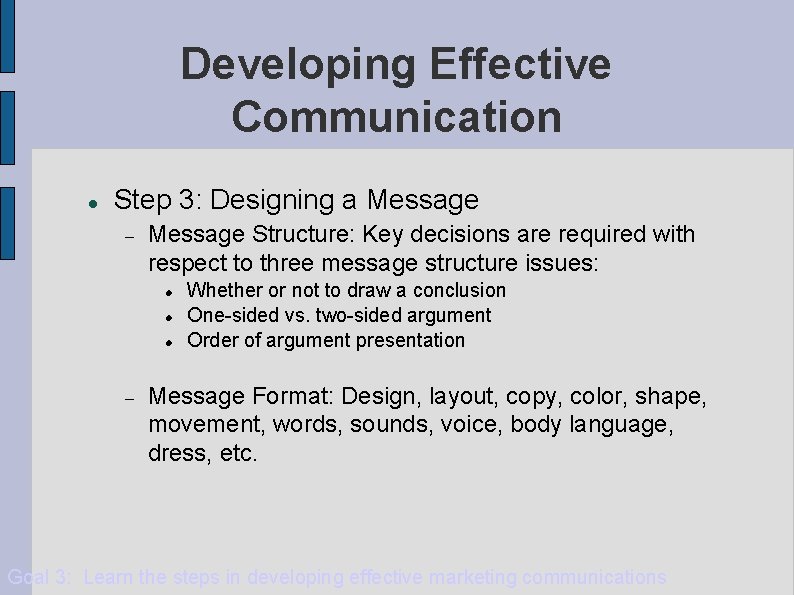
Developing Effective Communication Step 3: Designing a Message Structure: Key decisions are required with respect to three message structure issues: Whether or not to draw a conclusion One-sided vs. two-sided argument Order of argument presentation Message Format: Design, layout, copy, color, shape, movement, words, sounds, voice, body language, dress, etc. Goal 3: Learn the steps in developing effective marketing communications
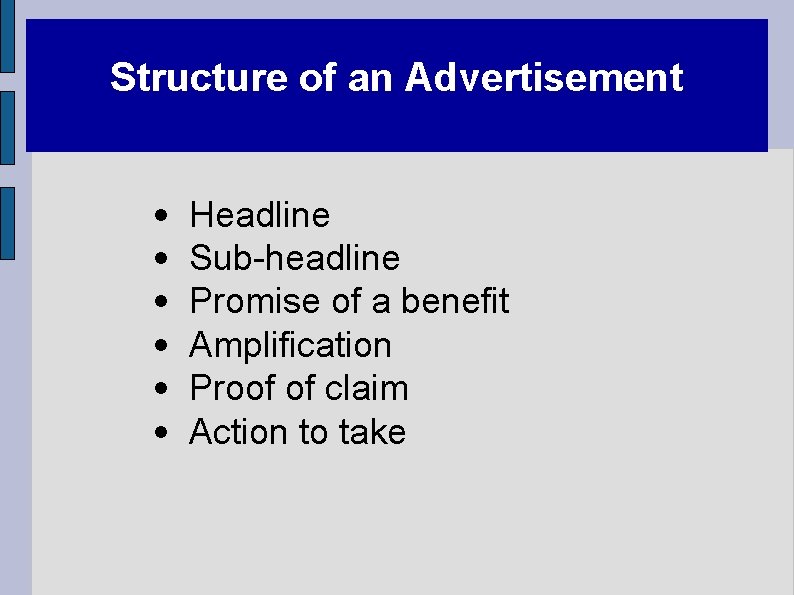
Structure of an Advertisement • • • Headline Sub-headline Promise of a benefit Amplification Proof of claim Action to take
Verbal and Visual Elements • Balance • Visual processing Easier to recall Stored as pictures and words Concrete vs. abstract • Radio visual imagery • Visual esperanto • B-to-B advertisements
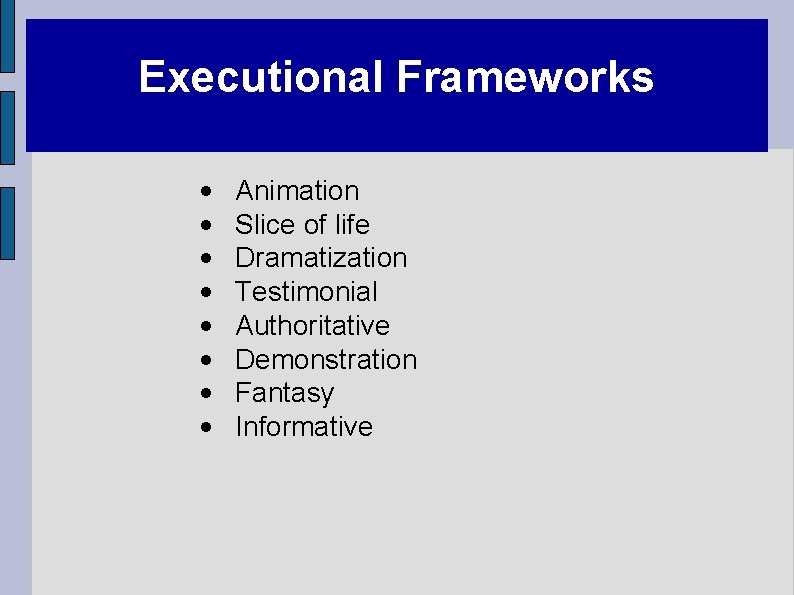
Executional Frameworks • • Animation Slice of life Dramatization Testimonial Authoritative Demonstration Fantasy Informative
Animation • Originally used by firms with small advertising budgets. • Increased use due to advances in computer technology. • Rotoscoping • Clay animation
Slice of Life (Dramatization) • • Encounter Problem Interaction Solution
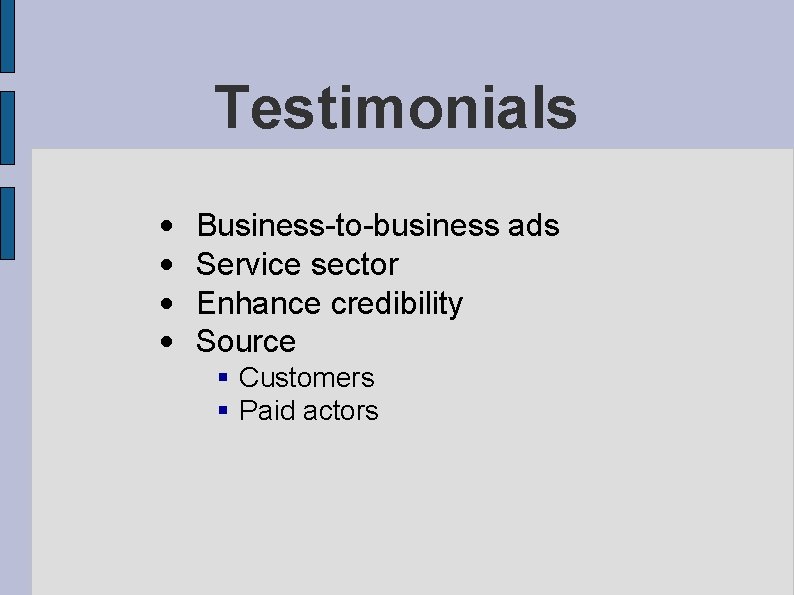
Testimonials • • Business-to-business ads Service sector Enhance credibility Source Customers Paid actors
Authoritative • • • Expert authority Scientific or survey authority Independent evidence Business-to-business ads Cognitive processing Specialty print media
Demonstration • Shows product being used • Business-to-business sector • Television and the Internet
Fantasy • Beyond reality • Common themes Sex Love Romance • Products such as perfume/cologne
Informative • • Used extensively in radio Business-to-business usage Key is buying situation Level of involvement
Developing Effective Communication Step 4: Choosing Media Personal communication channels Includes face-to-face, phone, mail, and Internet chat communications Word-of-mouth influence is often critical Buzz marketing cultivates opinion leaders Nonpersonal communication channels Includes media, atmosphere, and events Goal 3: Learn the steps in developing effective marketing communications
Choosing Among Major Media Types Target audience and media habits Product characteristics Message characteristics Cost
Media Selection • • Reach Frequency Impact Exposure
Major Media Types Newspapers Television Direct mail Radio Magazines Outdoor Yellow pages Newsletters Brochures Telephone Internet
Television Advantages Reaches broad spectrum of consumers Low cost per exposure Ability to demonstrate product use Ability to portray image and brand personality Disadvantages Brief Clutter High cost of production High cost of placement Lack of attention by viewers
Print Ads Advantages Detailed product information Ability to communicate user imagery Flexibility Ability to segment Disadvantages Passive medium Clutter Unable to demonstrate product use
Print Ad Evaluation Criteria Is the message clear at a glance? Is the benefit in the headline? Des the illustration support the headline? Does the first line of the copy support or explain the headline and illustration? Is the ad easy to read and follow? Is the product easily identified? Is the brand or sponsor clearly identified?
Developing Effective Communication Step 5: Selecting the Message Source Highly credible sources are more persuasive A poor spokesperson can tarnish a brand Step 6: Collecting Feedback Recognition, recall, and behavioral measures are assessed May suggest changes in product/promotion Goal 3: Learn the steps in developing effective marketing communications
Principles Effective Advertising • • • Visual consistency Campaign duration Repeated tag lines Consistent positioning Simplicity Identifiable selling point
Beating Ad Clutter • • • Presence of competitive ads Repetition Variability theory Multiple mediums Ads that gain attention Ads that relate to the target audience