Causal Analytics with Social Media Content Lipika Dey
- Slides: 19
Causal Analytics with Social Media Content Lipika Dey Innovation Labs, Delhi 1
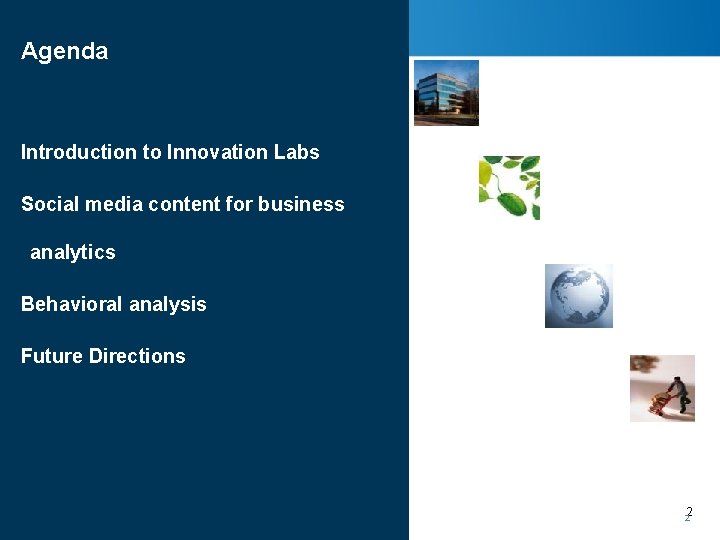
Agenda Introduction to Innovation Labs Social media content for business analytics Behavioral analysis Future Directions 2 2 2
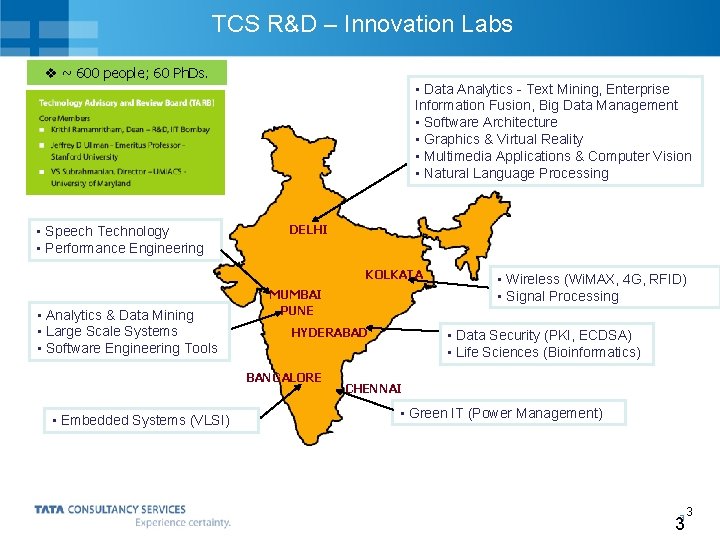
TCS R&D – Innovation Labs ~ 600 people; 60 Ph. Ds. • Speech Technology • Performance Engineering • Data Analytics - Text Mining, Enterprise Information Fusion, Big Data Management • Software Architecture • Graphics & Virtual Reality • Multimedia Applications & Computer Vision • Natural Language Processing DELHI KOLKATA • Analytics & Data Mining • Large Scale Systems • Software Engineering Tools MUMBAI PUNE HYDERABAD BANGALORE • Embedded Systems (VLSI) • Wireless (Wi. MAX, 4 G, RFID) • Signal Processing • Data Security (PKI, ECDSA) • Life Sciences (Bioinformatics) CHENNAI • Green IT (Power Management) 3 3 3
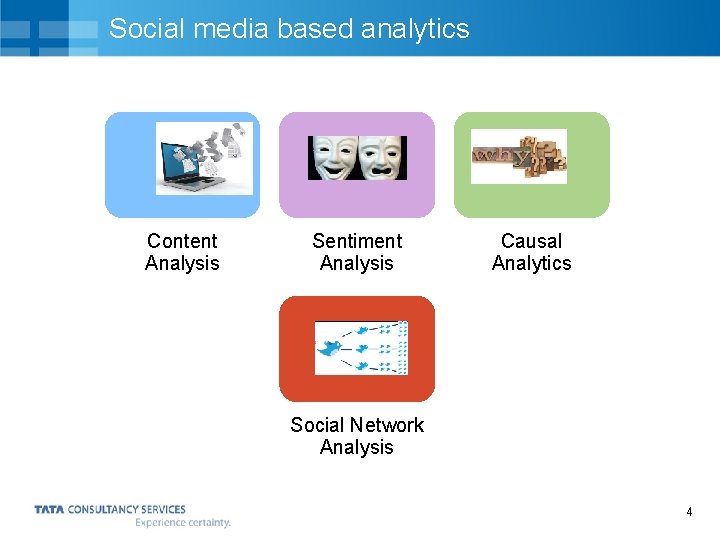
Social media based analytics Content Analysis Sentiment Analysis Causal Analytics Social Network Analysis 4
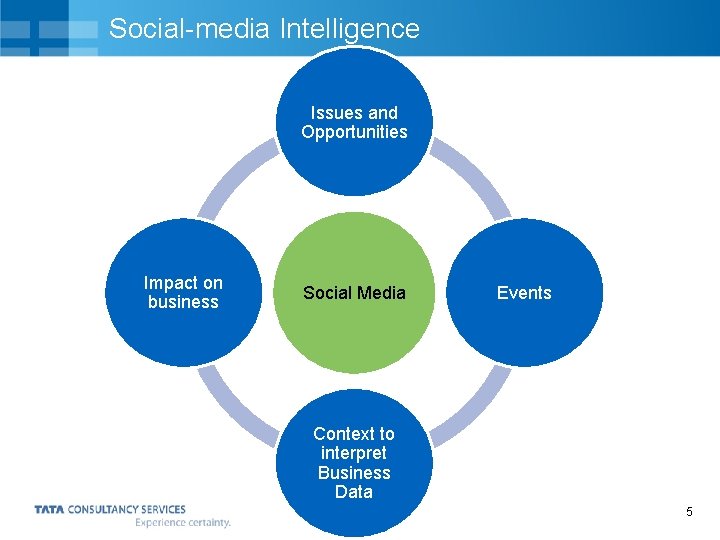
Social-media Intelligence Issues and Opportunities Impact on business Social Media Events Context to interpret Business Data 5
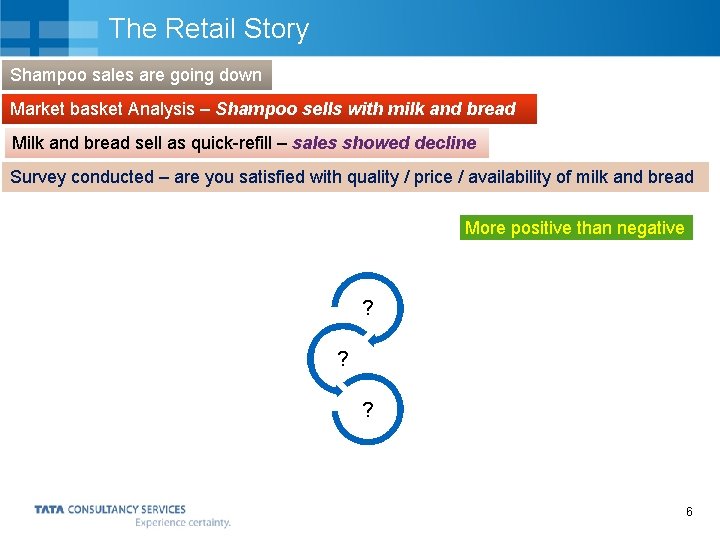
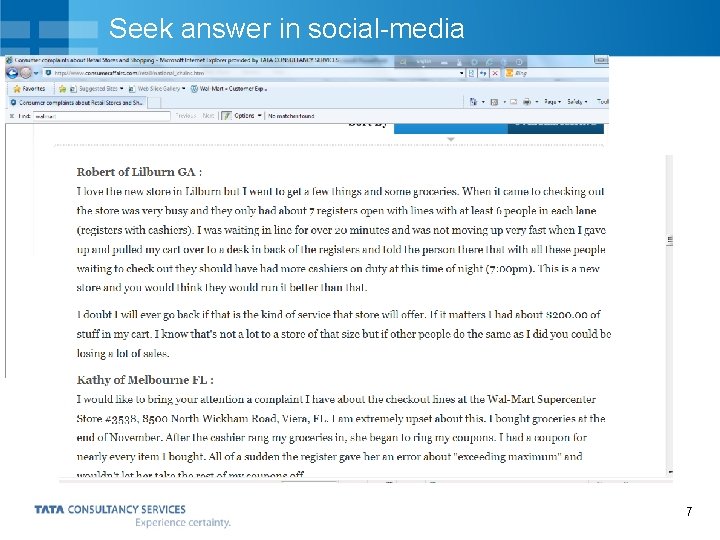
The Retail Story Shampoo sales are going down Market basket Analysis – Shampoo sells with milk and bread Milk and bread sell as quick-refill – sales showed decline Survey conducted – are you satisfied with quality / price / availability of milk and bread More positive than negative ? ? ? 6
Seek answer in social-media 7
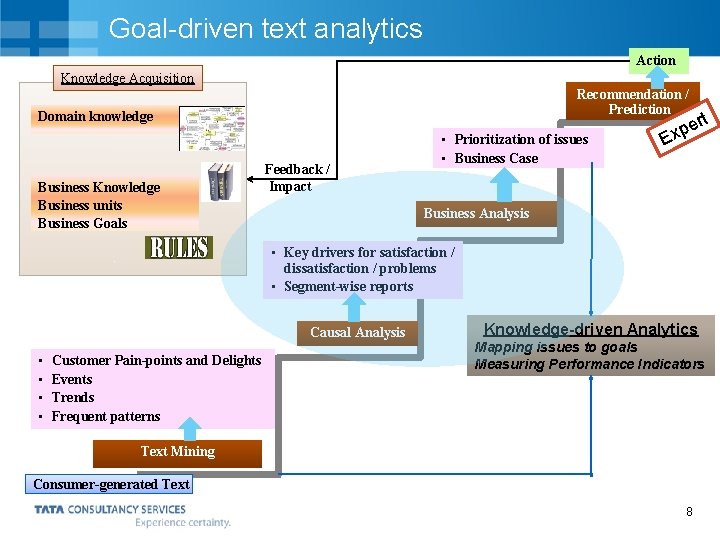
Goal-driven text analytics Action Knowledge Acquisition Recommendation / Prediction Domain knowledge Business Knowledge Business units Business Goals Feedback / Impact • Prioritization of issues • Business Case rt pe x E Business Analysis • Key drivers for satisfaction / dissatisfaction / problems • Segment-wise reports Causal Analysis • • Customer Pain-points and Delights Events Trends Frequent patterns Knowledge-driven Analytics Mapping issues to goals Measuring Performance Indicators Text Mining Consumer-generated Text 8
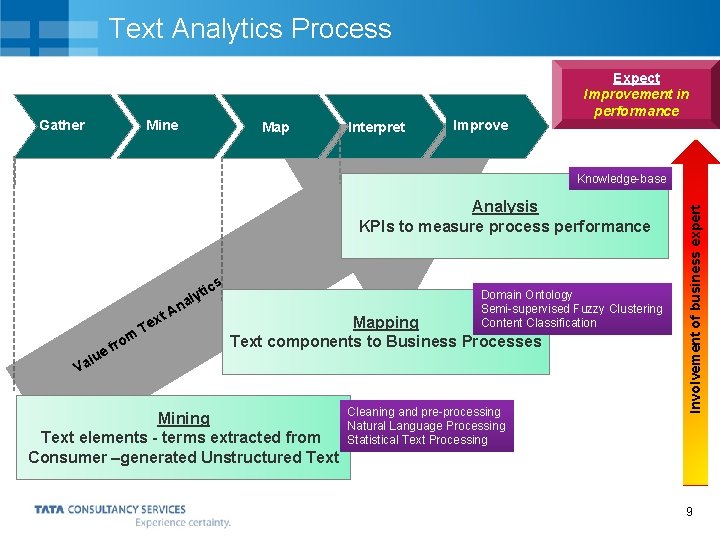
Text Analytics Process Gather Mine Map Interpret Improve Expect Improvement in performance Analysis KPIs to measure process performance s t e lu Va m fro x Te An t ic aly Domain Ontology Semi-supervised Fuzzy Clustering Content Classification Mapping Text components to Business Processes Mining Text elements - terms extracted from Consumer –generated Unstructured Text Cleaning and pre-processing Natural Language Processing Statistical Text Processing Involvement of business expert Knowledge-base 9
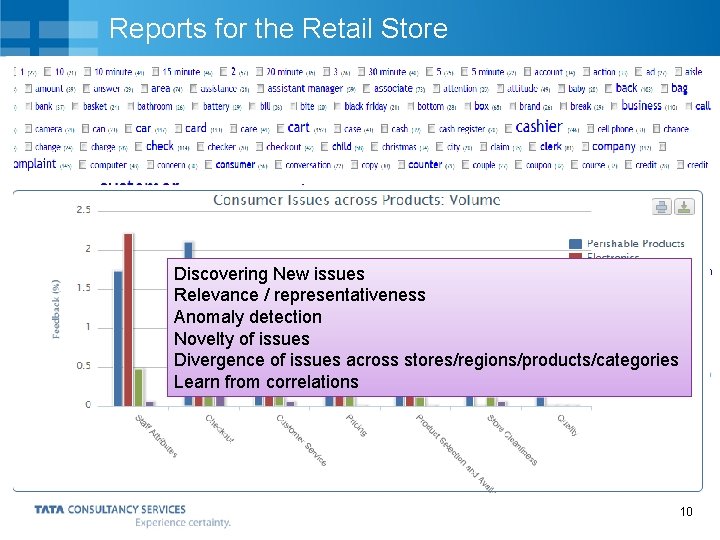
Reports for the Retail Store Discovering New issues Relevance / representativeness Anomaly detection Novelty of issues Divergence of issues across stores/regions/products/categories Learn from correlations 10
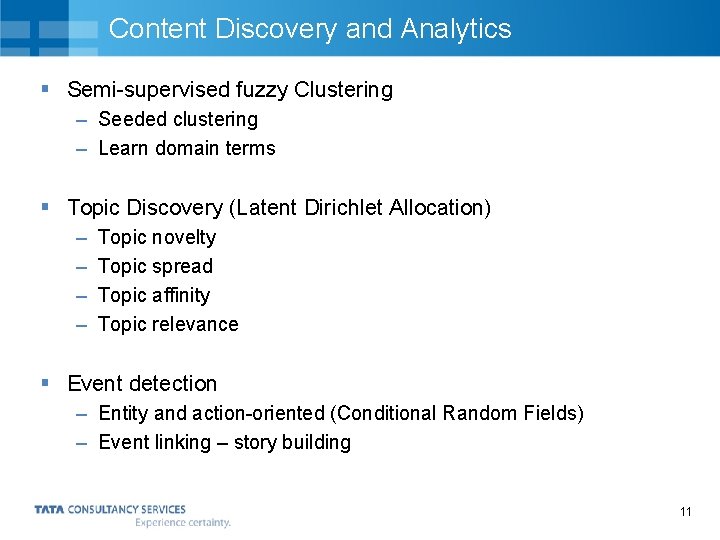
Content Discovery and Analytics § Semi-supervised fuzzy Clustering – Seeded clustering – Learn domain terms § Topic Discovery (Latent Dirichlet Allocation) – – Topic novelty Topic spread Topic affinity Topic relevance § Event detection – Entity and action-oriented (Conditional Random Fields) – Event linking – story building 11
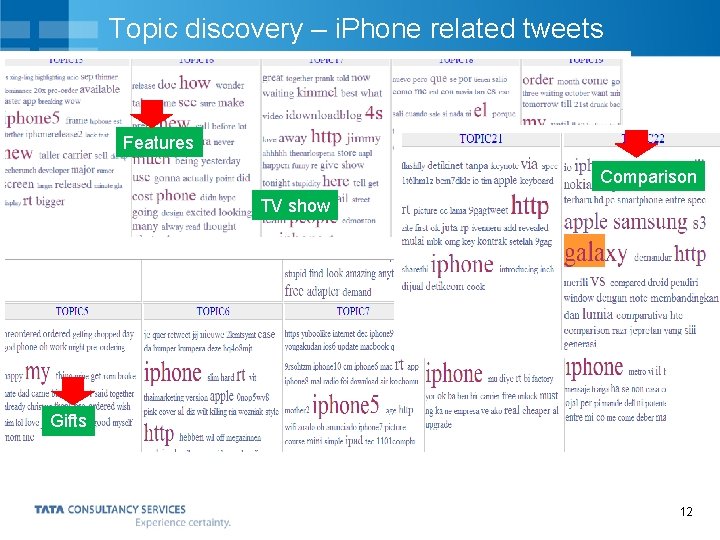
Topic discovery – i. Phone related tweets Features Comparison TV show Gifts 12
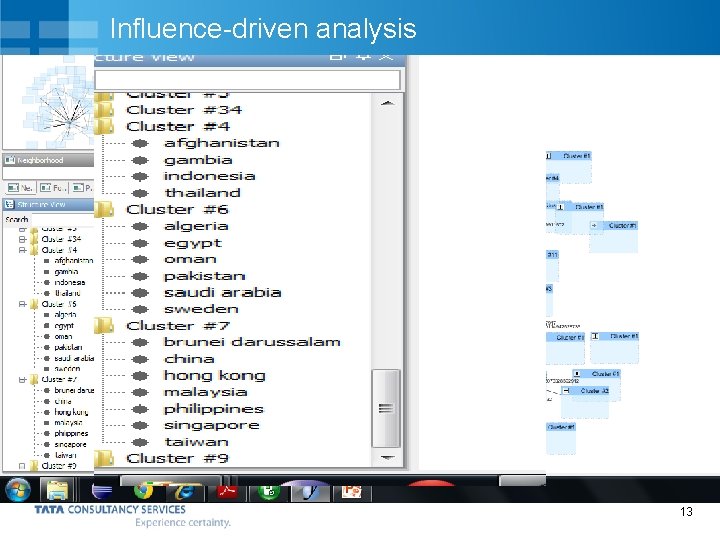
Influence-driven analysis 13
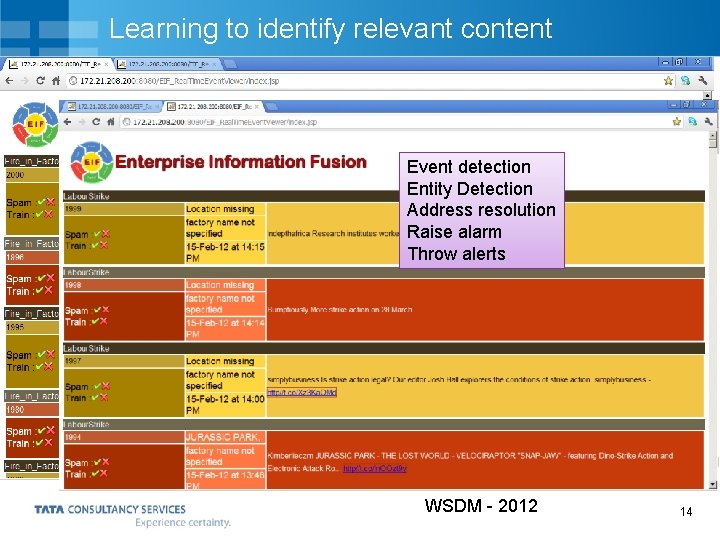
Learning to identify relevant content Event detection Entity Detection Address resolution Raise alarm Throw alerts WSDM - 2012 14
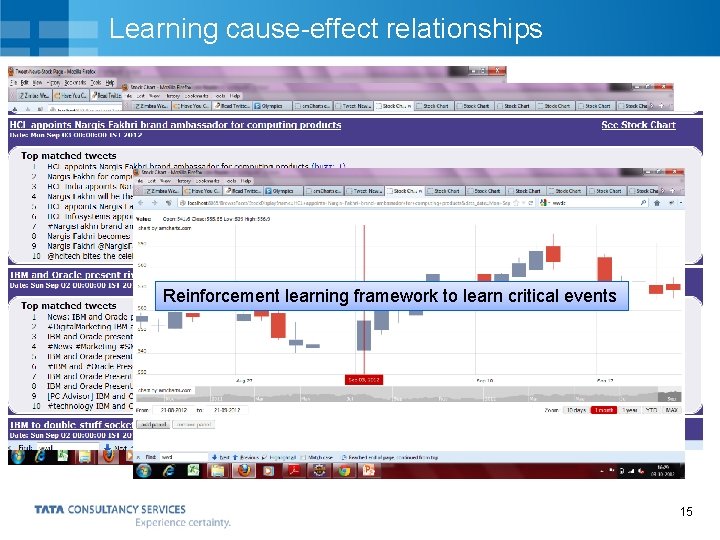
Learning cause-effect relationships Reinforcement learning framework to learn critical events 15
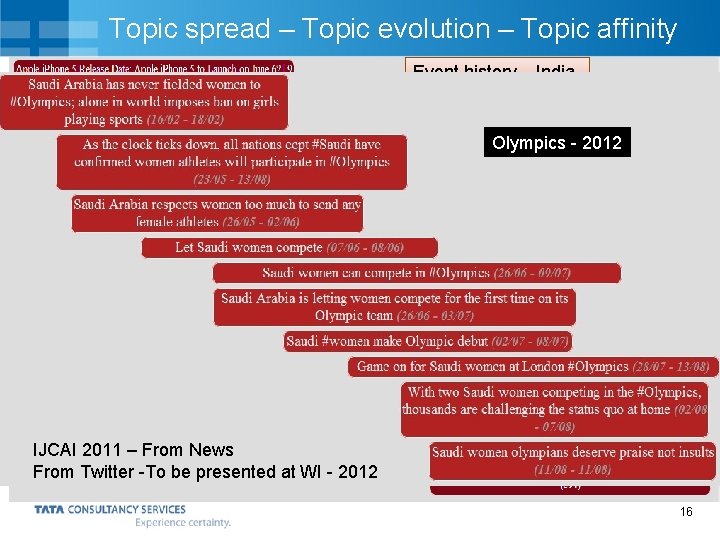
Topic spread – Topic evolution – Topic affinity Event history – India Olympics - 2012 IJCAI 2011 – From News From Twitter -To be presented at WI - 2012 16
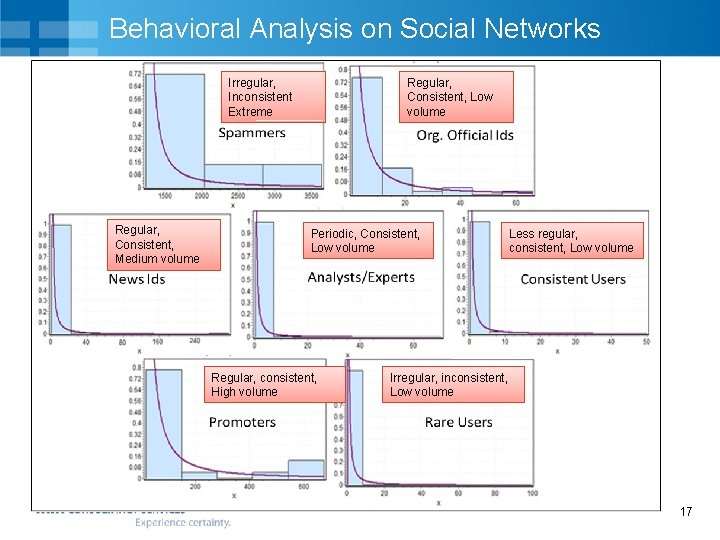
Behavioral Analysis on Social Networks Regular, Irregular, Problem Consistent, Low Inconsistent Clustering and characterizing volumeactivity patterns Extreme users based on their Volume, Regularity, Consistency Use Provides insights about different categories of users (i). Trade Promoters Regular, Periodic, Consistent, (ii). News Agencies Consistent, Low volume Medium volume (iii). Analysts (iv). Regular users (v). Spammers Predict actions and information flow Less regular, consistent, Low volume Methodology Irregular, inconsistent, Regular, consistent, A wavelet-based clustering mechanism that groups Low volumeusers according High volume to their temporal activity profiles (To be presented at ICPR 2012, Japan) 17
Interested in § Content-based analytics – Supply-chain models revisited – Demand forecasting § Identity resolution across social-media – Social CRM § Fraud detection – Spammers – Fake identities § Information diffusion – Across regions – Interestingness – Effect § Intent mining 18
19