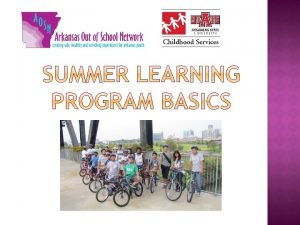
ASU Childhood ServicesArkansas Out of School Network Staff





- Slides: 38
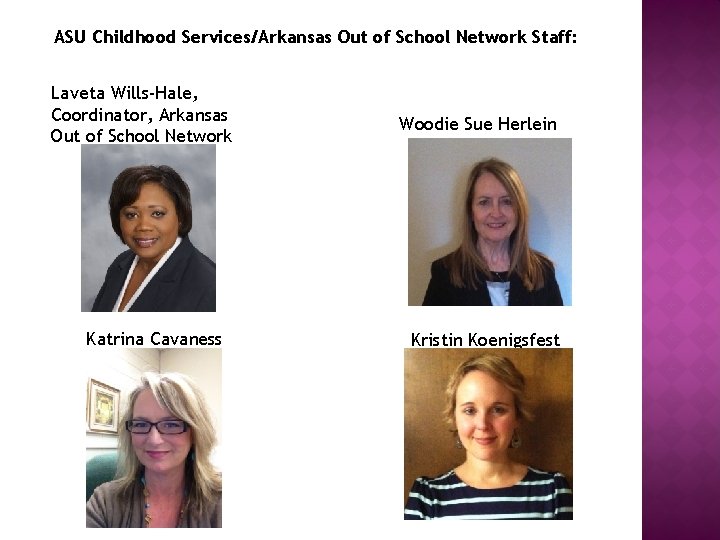
ASU Childhood Services/Arkansas Out of School Network Staff: Laveta Wills-Hale, Coordinator, Arkansas Out of School Network Katrina Cavaness Woodie Sue Herlein Kristin Koenigsfest
Special Guest Presenters: Paula Rogers, UALR Children International Jackie Russell, Little Rock Air Force Base School Age Program
Mission: To create safe, healthy, and enriching learning experiences during out of school time for children and youth ages 5 -19. AOSN is a sponsored initiative of Arkansas State University Childhood Services and is one of 41 statewide afterschool networks in the U. S. supported by the Charles Stewart Mott Foundation.
Summer Learning Program Basics Agenda • Introduction/ Why Summer Learning is Important Laveta Wills-Hale • What Makes a High Quality Summer Learning Program Woodie Sue Herlein • • Program Planning Basics /Who are you Serving? / What are you Doing? Kristin Koenigsfest What Resources are you Enlisting? Katrina Cavaness • Program Perspectives Paula Rogers, Jackie Russell
The ‘Faucet Theory’
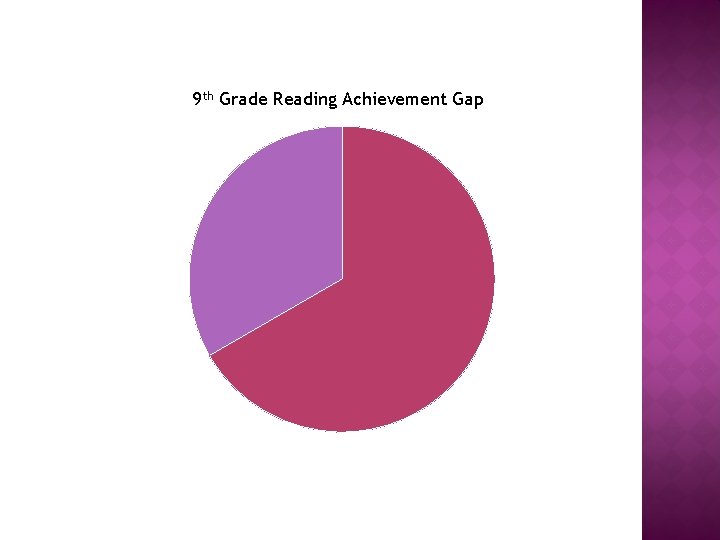
9 th Grade Reading Achievement Gap
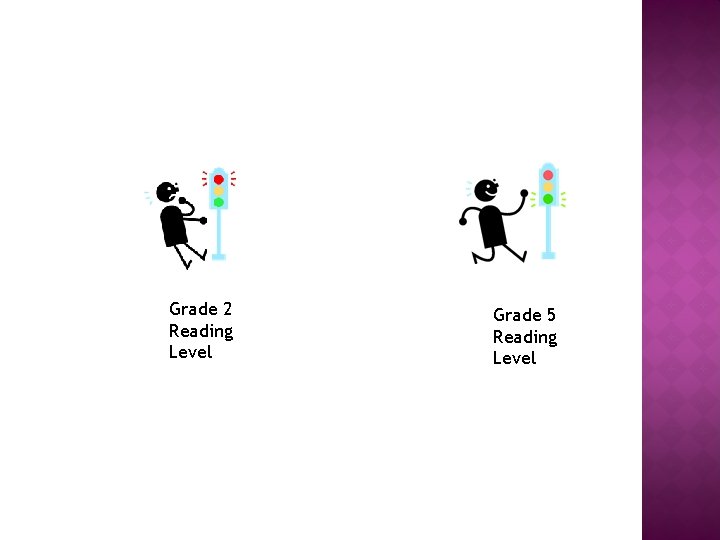
Grade 2 Reading Level Grade 5 Reading Level
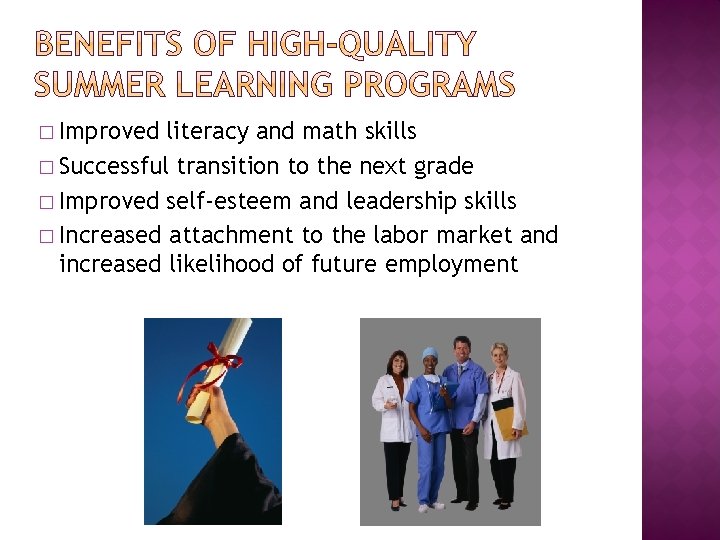
� Improved literacy and math skills � Successful transition to the next grade � Improved self-esteem and leadership skills � Increased attachment to the labor market and increased likelihood of future employment
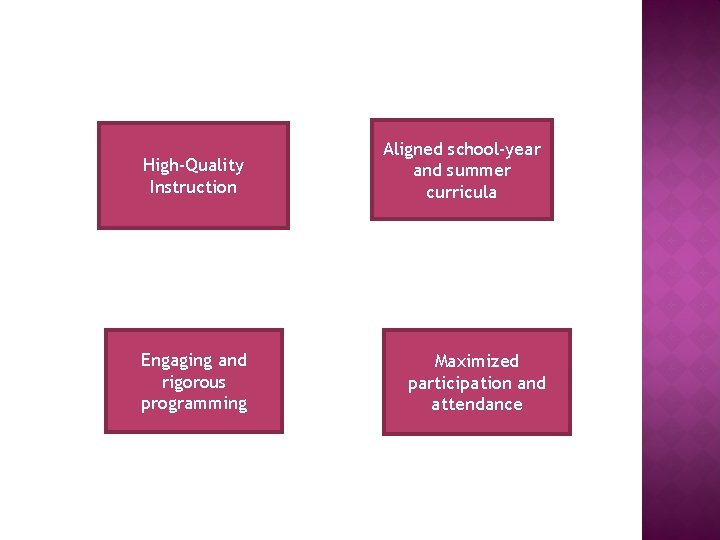
High-Quality Instruction Engaging and rigorous programming Aligned school-year and summer curricula Maximized participation and attendance
Other important components: • • • Intentional focus on learning Parent Involvement and participation Broad array of enrichment opportunities Inclusion of youth voice Intentional relationship building Opportunities for skill-building and mastery Small group or individualized instruction Support for sustainability Early intervention during the primary grades
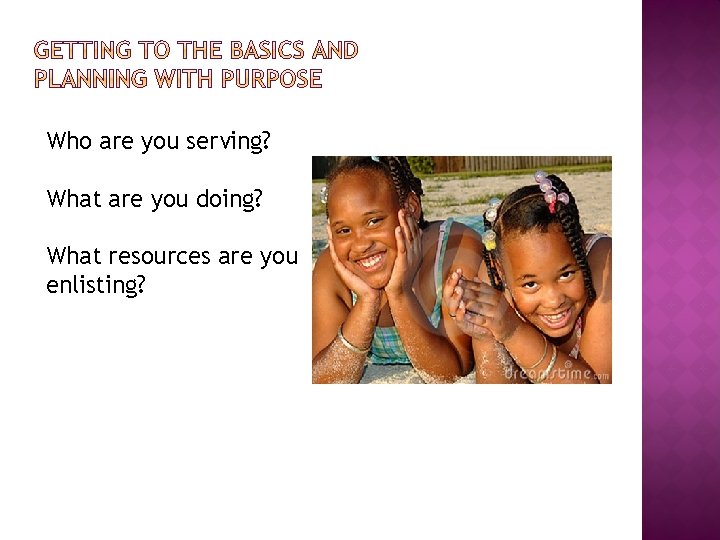
Who are you serving? What are you doing? What resources are you enlisting?
v Community Needs Assessment v Recruitment and Enrollment
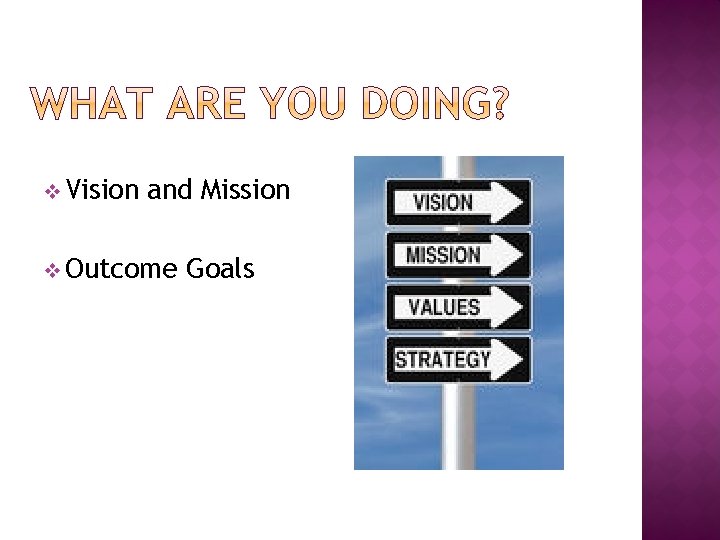
v Vision and Mission v Outcome Goals
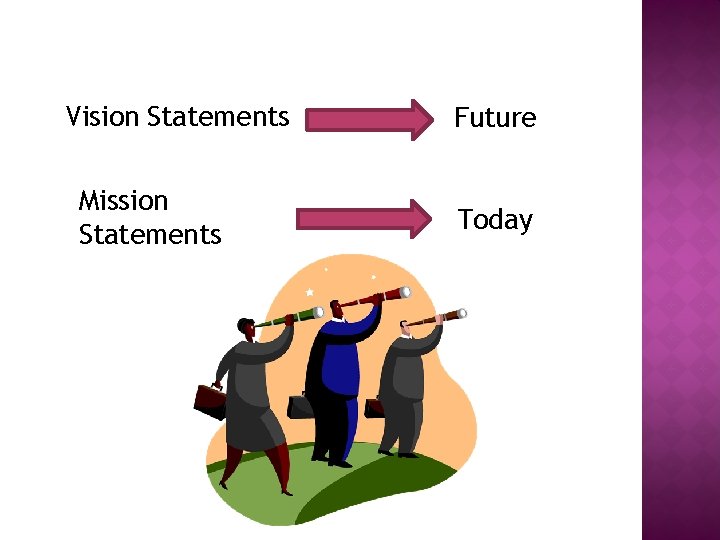
Vision Statements Mission Statements Future Today
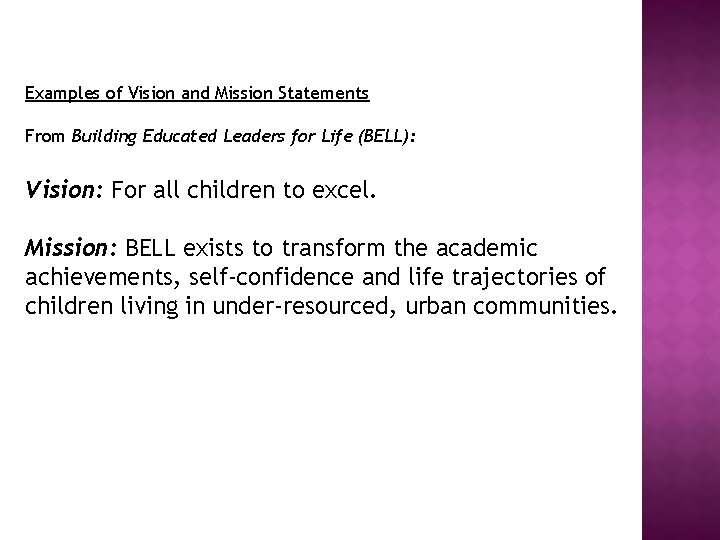
Examples of Vision and Mission Statements From Building Educated Leaders for Life (BELL): Vision: For all children to excel. Mission: BELL exists to transform the academic achievements, self-confidence and life trajectories of children living in under-resourced, urban communities.
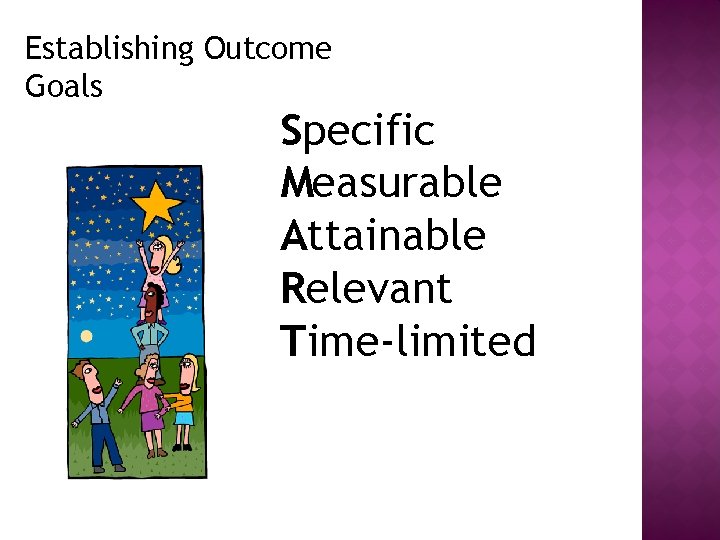
Establishing Outcome Goals Specific Measurable Attainable Relevant Time-limited
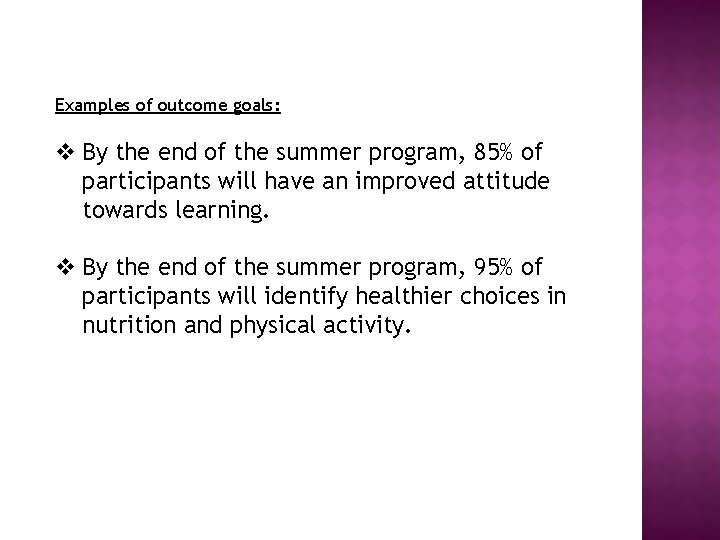
Examples of outcome goals: v By the end of the summer program, 85% of participants will have an improved attitude towards learning. v By the end of the summer program, 95% of participants will identify healthier choices in nutrition and physical activity.
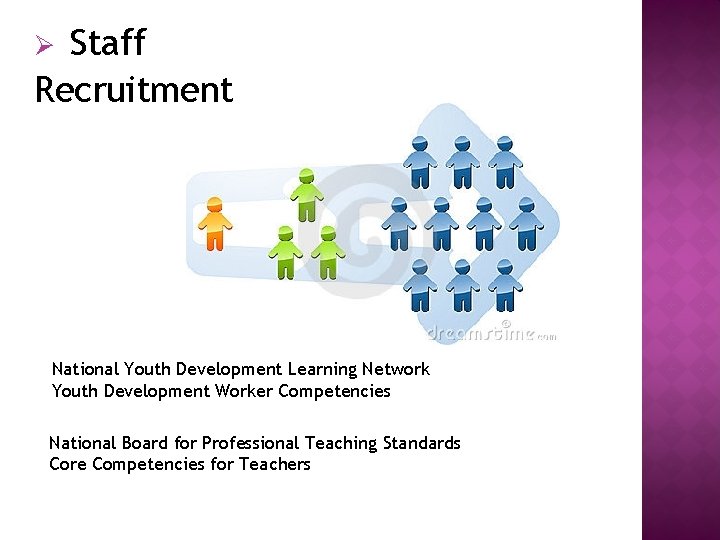
Staff Recruitment Ø National Youth Development Learning Network Youth Development Worker Competencies National Board for Professional Teaching Standards Core Competencies for Teachers
q High school students or other program alumni q Undergraduate and graduate students needing internship credit q Pre-service teachers in alternate routes to certification programs q Parents and other community volunteers
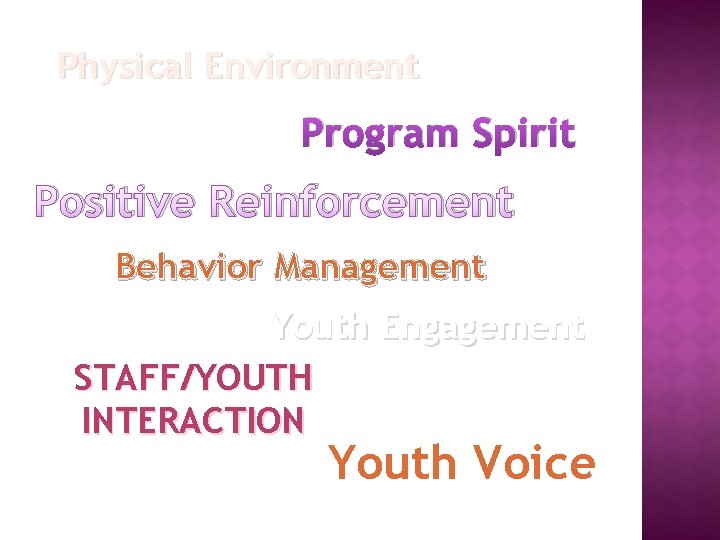
Physical Environment Program Spirit Positive Reinforcement Behavior Management Youth Engagement STAFF/YOUTH INTERACTION Youth Voice
Ø Forming Partnerships
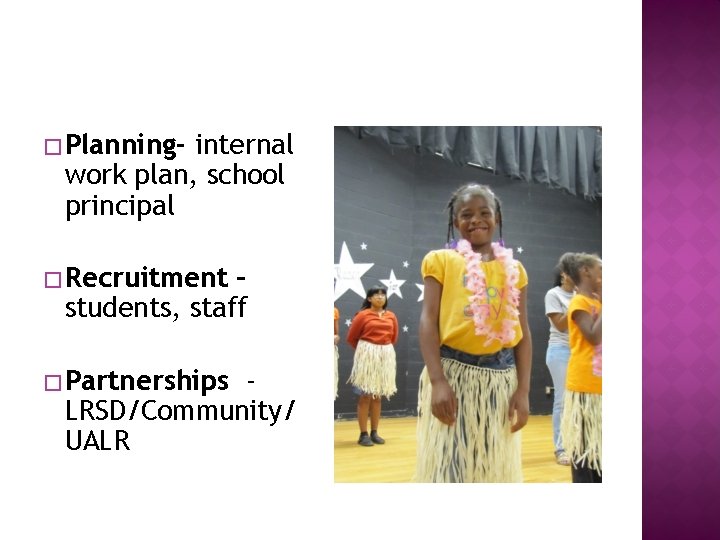
� Planning- internal work plan, school principal � Recruitment – students, staff � Partnerships LRSD/Community/ UALR
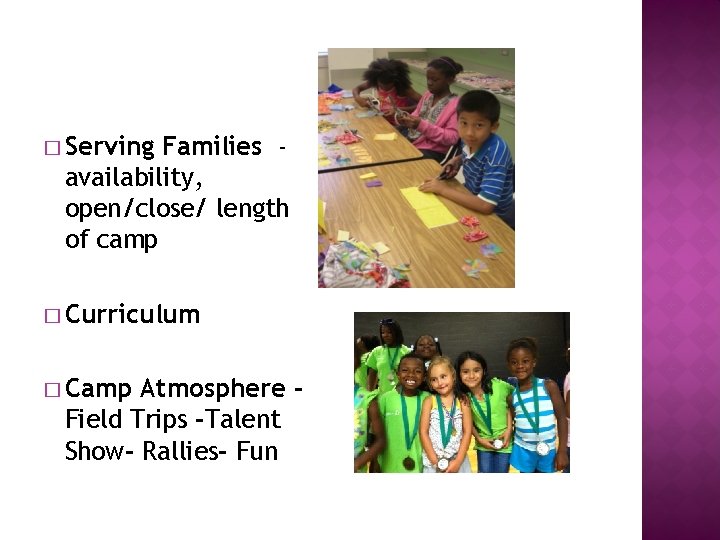
� Serving Families availability, open/close/ length of camp � Curriculum � Camp Atmosphere Field Trips -Talent Show- Rallies- Fun
� Program Marketing � Summer Programming Ø Ø Adventure Club Interest Areas Benefits to Children Training
� Partnerships Ø 4 H ØBoys and Girls Club ØDo. D School Age Programs ØMissoula Theater Children's
Q&A
Effective expanded learning programs help students succeed in school and in life. Expanded learning opportunities are inclusive of before-school, afterschool, summer learning, and extended day or expanded learning time (ELT) programs. Decades of research documenting the outcomes of afterschool and summer programs reveal a core set of key principles that are essential to yielding the best results. Aligning the spectrum of expanded learning opportunities with these principles will ensure quality and consistency across all programs. This document can be used as a guideline at the local, state and federal levels to guide expanded learning policy. Afterschool Alliance, 2012
Information in this webinar has been adapted from the Summer Learning Association’s latest publication, Summer Starts in September. Visit www. summerstartsinseptember. com for more information and resources.
Join us for our next webinar in this series on Becoming a Summer Feeding Site on Thursday, March 13 th at 11 a. m. STEM Academies – February 21 st, Springdale March 7 th , Little Rock Best Practices Academies – April 18 th, Springdale April 25 th, Little Rock Go to www. aosn. org for more details on this professional development opportunity and others.
You will receive an email from mharvey@astate. edu later today with a link to a survey for this webinar. Please take the time to give us your feedback on this webinar so that we can better serve you! THANK YOU!!!!